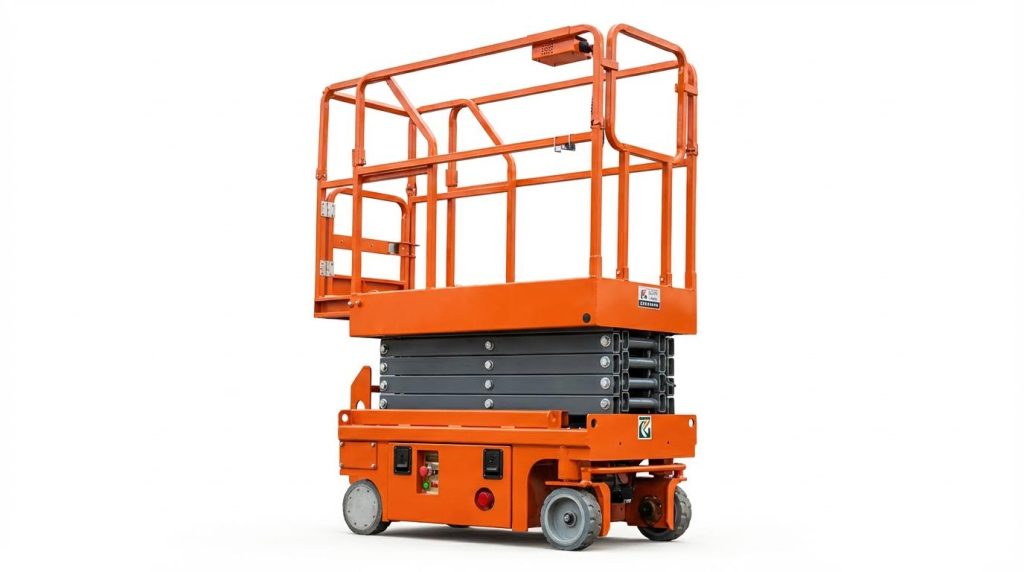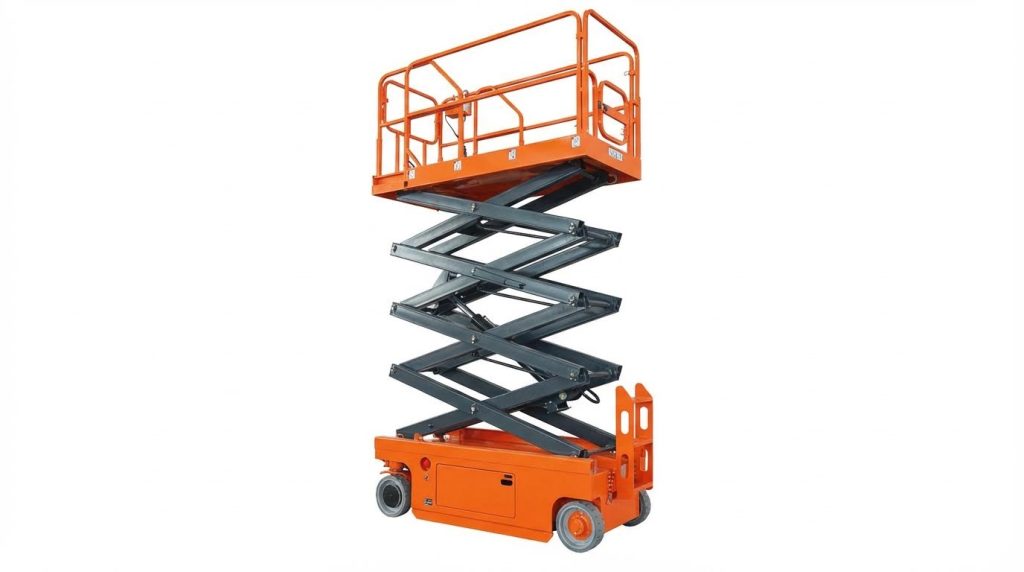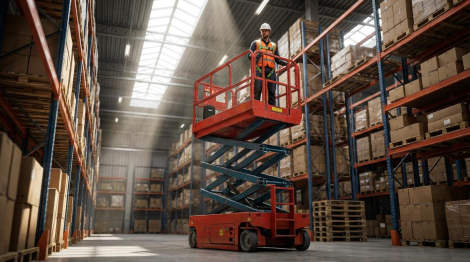
If you have ever asked “what is mobile elevated work platform” in a safety meeting or design review, this guide gives you the engineering view. It explains how MEWPs are defined and classified into groups and types, and how those categories relate to real machines like scissor lifts, boom lifts, and specialty platforms. You will see how platform location, travel controls, and technical characteristics affect reach, stability, and compliance. Use this as a structured reference for safer specifications, better equipment selection, and clearer operator training.
MEWP Fundamentals: Definition, Groups, And Types
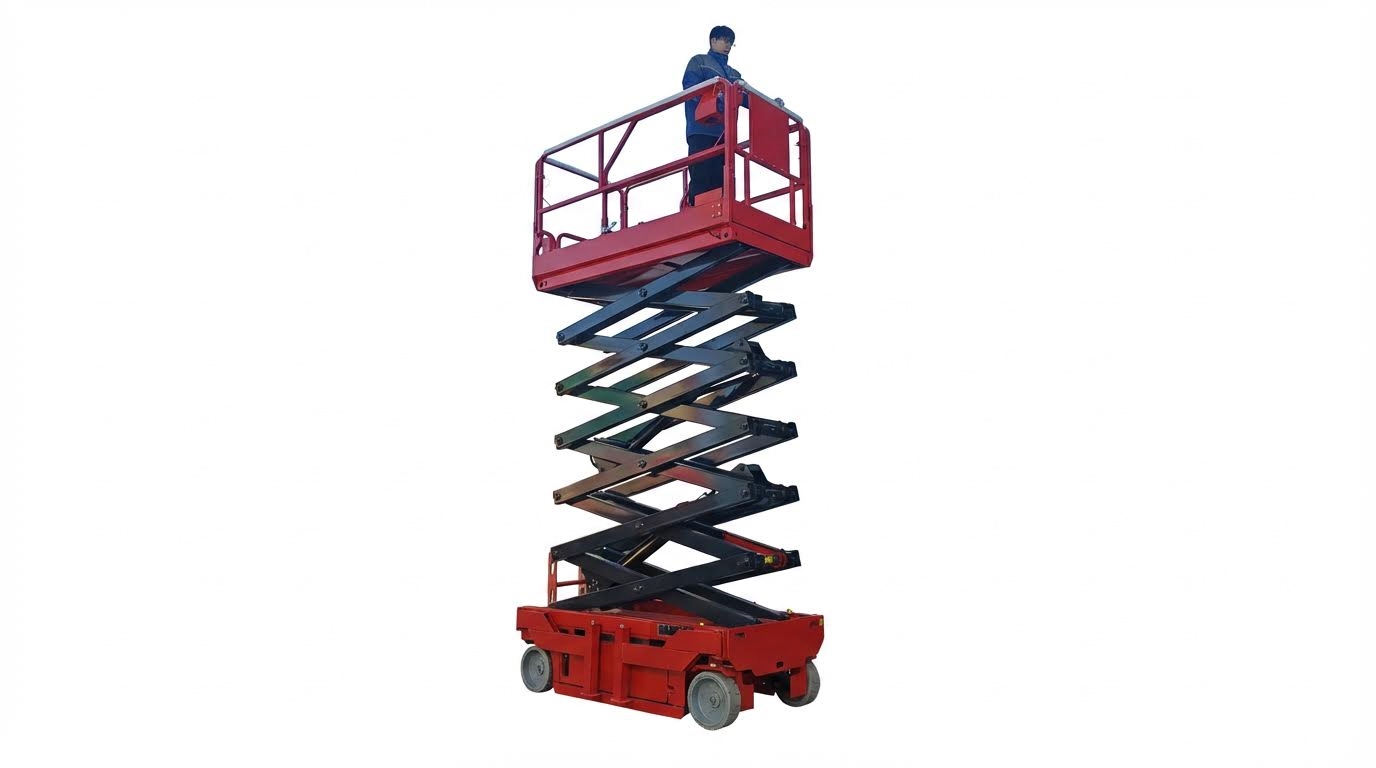
What Is A Mobile Elevating Work Platform?
When people ask “what is mobile elevated work platform,” they refer to powered access equipment that lifts workers, tools, and materials to height for temporary tasks. A Mobile Elevating Work Platform (MEWP) is a mobile machine with a platform, guardrails, and controls, designed to position personnel safely at elevated work areas. It moves vertically, and in some cases horizontally, using a mechanical structure such as scissors, masts, or booms. Modern MEWPs include built‑in safety systems like guardrails, harness anchor points, emergency lowering controls, and often outriggers for stability. These machines follow international safety requirements that define protective measures and verification methods to reduce accidents. ISO 16368:2024 specifies safety requirements for MEWPs.
Key functional elements of a MEWP
- Mobile chassis (wheeled or tracked) to reposition the unit on site.
- Lift structure (scissor, mast, or boom) to provide vertical and/or horizontal reach.
- Guarded work platform with entry gate and toe boards.
- Primary controls on the platform and/or chassis.
- Power source (battery, engine, or hybrid) to drive and lift.
- Safety systems: emergency stop, emergency lowering, load and tilt protection, and sometimes outriggers.
In practical terms, MEWPs replace scaffolds and ladders where repeat access, higher productivity, and better fall protection are required. They are used in construction, maintenance, warehousing, and infrastructure work whenever safe, controlled elevation is needed.
MEWP Groups A And B: Platform Location
MEWP “Groups” describe how the platform moves relative to the machine’s tipping lines. The tipping lines form the stability boundary of the chassis or base. Group A platforms stay within this boundary during normal operation, while Group B platforms can move beyond it using a boom or similar structure. This distinction drives different stability requirements, operator training, and site planning. Industry guidance defines MEWP groups based on platform location.
| Aspect | Group A | Group B |
|---|---|---|
| Platform movement vs tipping lines | Moves only vertically and remains within the tipping lines | Can extend beyond the tipping lines using a boom or similar device |
| Typical lift geometry | Vertical lift (scissor or vertical mast) | Boom lift with outreach (telescopic or articulating) |
| Common examples | Scissor lifts, most vertical mast lifts | Telescopic boom lifts, articulating boom lifts, spider lifts, many vehicle‑mounted platforms |
| Stability behavior | High inherent stability due to load staying over the base | More complex stability envelope because load moves outside base footprint |
| Typical use cases | Indoor maintenance, racking work, flat slab construction, assembly lines | Facade work, steel erection, utilities, tree work, bridge and infrastructure tasks |
Why group classification matters in engineering decisions
- Load charts and outreach: Group B units need detailed working envelope charts because capacity varies with outreach and boom angle.
- Ground bearing pressure: Group B MEWPs may require stronger slabs or outrigger pads due to higher point loads when booms are extended.
- Wind and side loads: Booms are more sensitive to wind, so allowable wind speeds and side load limits are critical.
- Training focus: Group B operator training emphasizes boom swing, tail swing, and overhead/side obstacle clearance.
MEWP Types 1, 2, And 3: Travel And Control
MEWP “Types” describe how and from where the machine can travel (drive) in relation to the platform position. Type 1 machines only travel when fully stowed. Type 2 and Type 3 machines can travel with the platform elevated, but the control position differs. This classification is central to risk assessment and operator procedures. Standard industry definitions describe three MEWP types.
| Type | Travel capability | Control location during travel | Typical machine behavior | Operational implications |
|---|---|---|---|---|
| Type 1 | Can only travel with platform in fully stowed position | Chassis controls | Must be lowered before repositioning; no elevated driving | Slower task cycle but simpler risk profile; suited to small sites or static work zones |
| Type 2 | Can travel with platform elevated | Chassis controls while elevated | Operator steers from ground or lower controls during elevated travel | Requires a spotter and strict procedures; higher risk if communication is poor |
| Type 3 | Can travel with platform elevated | Platform controls while elevated | Operator travels and positions from the platform itself | Most common for modern self‑propelled scissor platform lift; faster positioning but demands strong operator training |
Many common units combine a group and type code (for example, a vertical‑only scissor lift that can drive elevated from the platform falls under Group A, Type 3). A boom lift that reaches out over obstacles and is driven from the platform while elevated is typically Group B, Type 3. Understanding this notation helps match the right MEWP to the job and to the operator’s training record.
- When planning “what is mobile elevated work platform” for a task, always check both its Group (A or B) and Type (1, 2, or 3) on the data plate and in the manual.
- Ensure operator training explicitly covers the group and type that will be used, not just generic MEWP theory.
- Integrate group/type limits into site traffic plans, exclusion zones, and rescue procedures.
Key MEWP Categories And Technical Characteristics
When people ask “what is mobile elevated work platform,” they usually mean one of three broad categories: slab/indoor units, rough‑terrain boom units, or specialty access machines. This section breaks those down into clear groups so you can match platform geometry, reach, and footprint to your job and site constraints.
Scissor Lifts And Vertical Mast Lifts
Scissor lifts and vertical mast lifts are the most common answer to “what is mobile elevated work platform” in warehouses, retail, and maintenance work. Both are Group A machines with primarily vertical movement, but they differ sharply in platform size and footprint. Group A MEWPs move vertically within the tipping lines.
| Feature | Scissor Lifts (Typical Group A, Type 3A) | Vertical Mast Lifts |
|---|---|---|
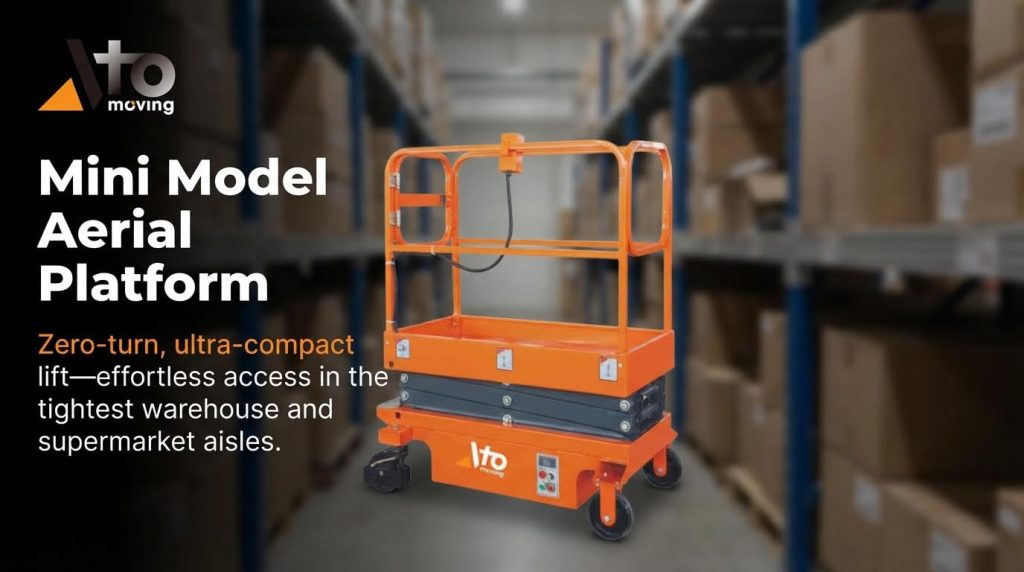
| Primary motion | Vertical only via scissor mechanism | Vertical via telescoping mast |
| Platform area | Large, often supports multiple workers and tools with high stability | Small, single worker or light tools |
| Typical group/type | Group A, Type 3 (drive from platform when elevated) | Group A, usually Type 1 or Type 3 depending on model |
| Footprint | Medium to large; needs aisle width | Very compact; suited to tight aisles and doorways |
| Common environments | Warehouses, construction, facility maintenance | Retail, hospitals, schools, light maintenance |
| Indoor variants | Electric, non‑marking tires for finished floors | Lightweight, often suitable for sensitive flooring |
| Outdoor / rough‑terrain variants | Diesel or hybrid with outriggers and 4WD for construction sites | Limited; mainly firm, level ground |
| Typical advantages | High capacity, stable, efficient for repetitive vertical tasks | Excellent maneuverability, fits in service elevators |
| Typical limitations | No horizontal outreach beyond base | Limited platform size and capacity |
Key engineering points when choosing between them:
- Use scissor lifts when you need high platform capacity, wide work area, and simple vertical access.
- Use vertical mast lifts when aisle width, door clearances, and floor loading are critical constraints.
- Both are best for tasks directly above the base since they lack “up‑and‑over” reach.
Where they fit in the MEWP classification system
In the MEWP classification system, these are Group A machines because the platform stays within the tipping lines. Many are Type 3, meaning you can drive and steer from the platform while elevated. Type 1 and Type 2 machines restrict travel or relocate controls to the chassis, which affects how you plan work sequences.
Telescopic And Articulating Boom Lifts
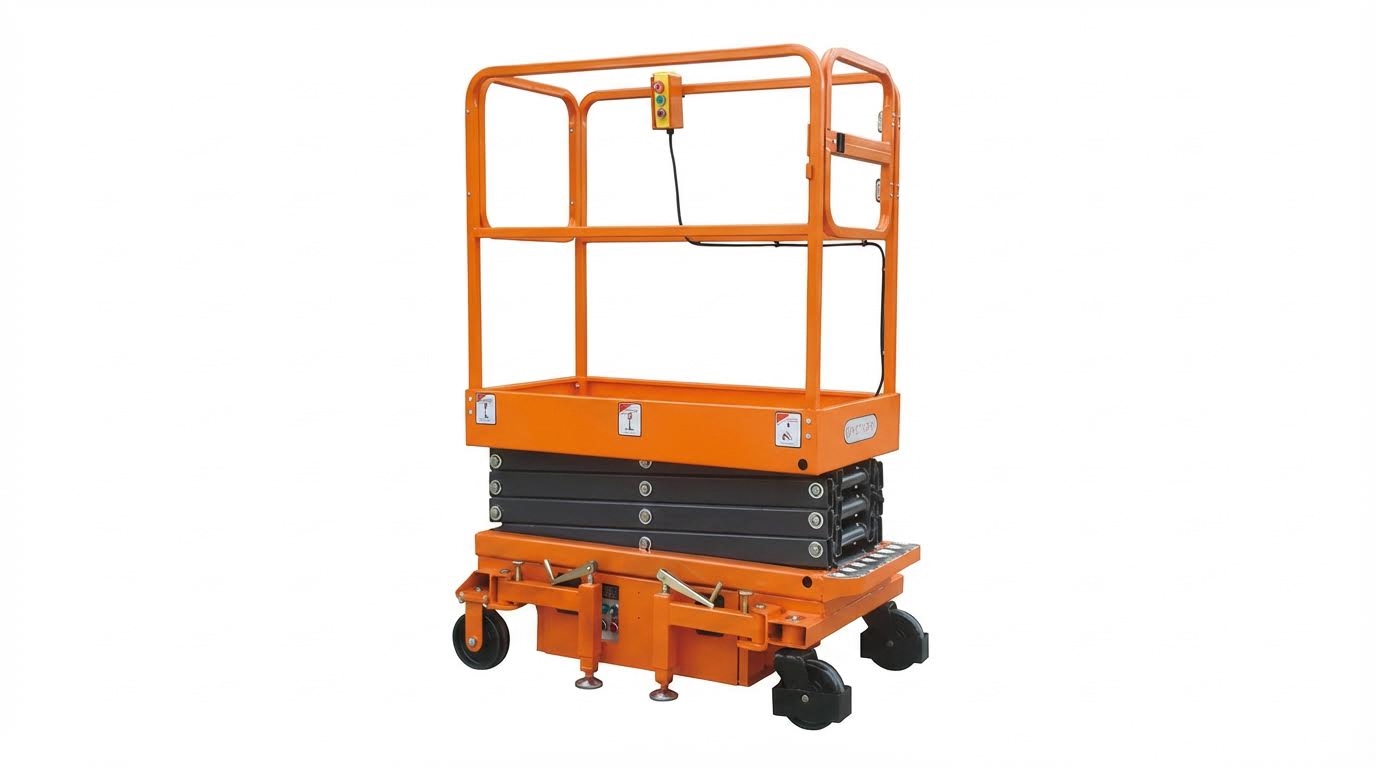
Telescopic and articulating boom lifts are the typical “answer” to what is mobile elevated work platform on outdoor construction, bridge, and façade jobs. They are Group B MEWPs with outreach beyond the base, so stability, ground conditions, and load charts become critical. Group B platforms can extend outside the tipping lines.
| Feature | Telescopic Boom Lifts | Articulating Boom Lifts |
|---|---|---|
| Boom geometry | Straight, extendable sections (“stick boom”) | Multiple hinged sections (“knuckle boom”) |
| Primary strength | Maximum horizontal and vertical reach | “Up‑and‑over” access around obstacles |
| Typical use cases | Bridges, high‑rise exteriors, large open sites where long straight reach is needed | Industrial plants, congested sites, maintenance near pipe racks or structures |
| Platform position vs base | Far outside base with predictable arc | Can reach up, then over, then down behind obstacles |
| Typical group/type | Group B, often Type 3 (platform controls) | Group B, often Type 3 |
| Stability considerations | Highly sensitive to load, wind, and boom angle | Similar, plus extra attention to boom articulation positions |
| Common power options | Diesel or hybrid for rough terrain | Diesel, hybrid, and some electric for indoor/outdoor mixed use |
| Best for | Long straight access with minimal obstacles | Complex geometry where you must reach over or around objects |
Engineering and safety points for boom lifts:
- Always read the load and reach chart; Group B MEWPs can tip if overloaded or over‑reached.
- Account for wind loading; horizontal outreach amplifies overturning moments.
- Plan travel paths carefully; many models are large and need turning room and firm ground.
How boom lifts relate to MEWP groups and types
Boom lifts almost always fall into Group B because their platforms move outside the tipping lines. Many are Type 3, so the operator drives from the platform while elevated. Some designs are limited to travel in the stowed position (Type 1) or have chassis‑based controls when elevated (Type 2), which reduces flexibility but can simplify risk control in constrained areas.
Specialty MEWPs: Spider And Vehicle-Mounted Units
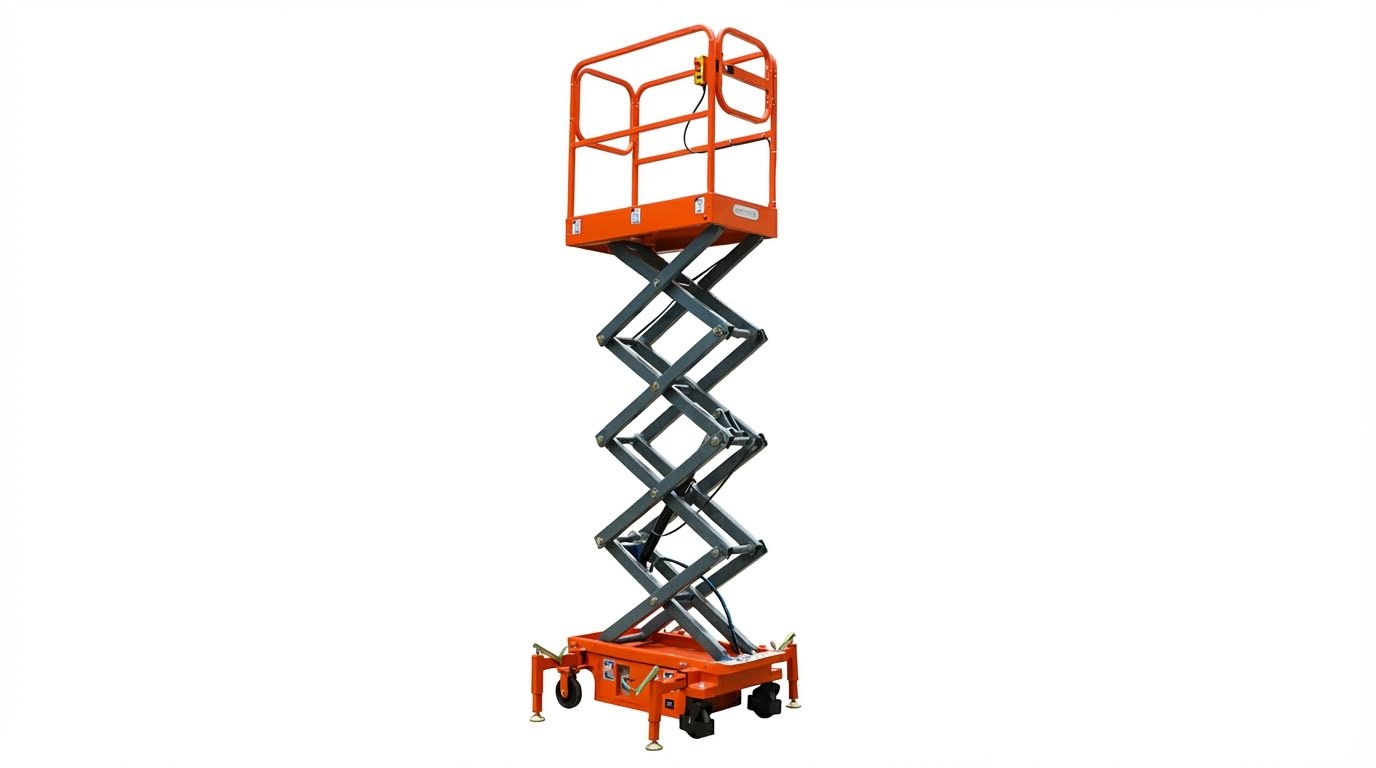
Specialty MEWPs answer “what is mobile elevated work platform” in locations where standard machines cannot go: very soft ground, steep slopes, or work spread across long road distances. Spider lifts and vehicle‑mounted platforms combine unique chassis designs with boom‑type platforms.
| Feature | Spider Lifts | Vehicle-Mounted Platforms |
|---|---|---|
| Chassis type | Tracked base with spider‑like outriggers | Mounted on truck or van chassis |
| Typical boom style | Lightweight telescopic or articulating boom | Telescopic or articulating boom |
| Ground capability | Excellent on uneven or soft terrain via outriggers and low ground pressure tracks | Best on roads and firm verges; stability from vehicle outriggers |
| Mobility range | Short‑range on job site, easy to crane or tow | Long‑distance road travel between sites |
| Access constraints | Very narrow access, doorways, landscaped or sloping ground | Street‑side access to poles, façades, and structures |
| Setup requirements | Precise outrigger placement and load spreading | Parking position, traffic control, and outrigger deployment |
| Typical applications | Tree work, atriums, historic buildings, steep sites | Utilities, signage, lighting, façade and bridge inspections |
Key engineering and operational considerations:
- Spider lifts use low ground pressure and wide outrigger bases to work where wheel loads must stay low.
- Vehicle‑mounted MEWPs trade on‑site maneuverability for rapid relocation between multiple short‑duration tasks.
- Both typically follow Group B behavior because their booms extend beyond the base, so you must respect outreach limits and outrigger loadings.
When to specify specialty MEWPs
Choose a spider lift when standard booms are too heavy for the floor or soil, or cannot pass through access doors. Choose a vehicle‑mounted platform when task time at each location is short but the driving distance between locations is long, such as utility and street‑lighting work. These decisions tie directly back to the question “what is mobile elevated work platform for this job,” because the wrong category can increase accident risk and cut productivity. Using incorrect platforms has been linked to higher accident rates and lower efficiency.
Engineering Criteria For MEWP Selection And Operation
Load, Reach, And Stability Calculations
Understanding how load, reach, and stability interact is the core engineering task when deciding what is mobile elevated work platform suitable for a job. You size the machine so the combined weight, outreach, and working height stay inside the manufacturer’s stability envelope with margin.
| Design Factor | What It Means In Practice | Typical Engineering Checks | Risks If Ignored |
|---|---|---|---|
| Rated load capacity | Maximum allowable weight of people, tools, and materials on the platform | Sum all live loads (operators, PPE, tools, materials) and compare to plate rating with safety margin | Structural overload, component fatigue, tipping risk |
| Vertical reach (working height) | Maximum safe elevation of platform floor and user reach | Confirm required task height vs platform height plus typical 2 m reach allowance | Overreaching, climbing on rails, fall risk |
| Horizontal reach (boom units) | Distance from rotation center / chassis to platform | Check load chart for allowed load at required outreach and slewing angle | Tipping due to reduced stability at long outreach |
| Center of gravity (CoG) | Resultant position of combined machine and platform load | Verify CoG remains inside stability polygon for all positions | Loss of stability on slopes or with asymmetric loading |
| Dynamic effects | Loads from movement, wind, braking, or rotation | Apply dynamic factors to static load (often 1.1–1.3×) when checking capacity ranges | Unexpected overload in gusts or sudden movements |
| Ground bearing pressure | Load transferred to soil, slab, or floor | Compare wheel/outrigger pressures to allowable floor or soil bearing values | Floor cracking, outrigger punch-through, sudden tilt |
Rated capacity and reach must always be evaluated together, not in isolation. Load charts for booms show how allowable platform load typically decreases as outreach or elevation increases, so selection must be based on the worst-case working position, not just maximum height. Evaluating load capacity correctly reduces accidents and equipment failures by ensuring the platform can safely support operators, tools, and materials at the required reach. Evaluating load capacity is crucial to prevent accidents and equipment failure
- Use conservative body weights and tool allowances when calculating live load.
- Consider worst credible wind speed for the site; many MEWPs have strict wind ratings.
- Avoid side loading (e.g., pulling pipes or ducts from the platform) because it reduces stability.
- On sloping ground, verify the machine’s allowable slope and use leveling devices or outriggers where provided.
- For indoor slabs, confirm slab thickness and reinforcement before using heavy rough-terrain units.
Simple engineering check example
Assume a MEWP with 230 kg rated capacity. Two operators at 90 kg each plus 40 kg of tools give 220 kg total. This is within rating but leaves only 10 kg margin, which is poor practice. A safer choice is to select the next capacity class or reduce the number of people and tools on the platform. This type of quick calculation should be standard before every task, especially when planning what is mobile elevated work platform configuration for high-reach work.
Site Conditions, Aisle Space, And Power Source
Site conditions often decide which MEWP group and type you can use, even before you look at height. Ground quality, aisle width, overhead obstructions, and access routes all influence whether a scissor, mast, boom, or specialty unit is appropriate. Selecting the appropriate mobile elevated work platform by analyzing the work environment improves both safety and efficiency. Selecting the appropriate mobile elevated work platform involves analyzing the work environment to ensure safety and efficiency
| Site Factor | Engineering Considerations | Typical MEWP Choices |
|---|---|---|
| Indoor vs outdoor | Ventilation, emissions, turning space, floor capacity | Indoor: electric scissor or mast; Outdoor: rough-terrain scissor or boom |
| Ground / floor condition | Soil bearing capacity, slab thickness, levelness, drains, pits | Soft/uneven: tracked spider or outriggers; Smooth slab: electric scissor/mast |
| Aisle width and turning radius | Minimum clear width, end-of-aisle turning, door openings | Narrow: vertical mast lift; Wide: standard scissor or boom |
| Overhead obstructions | Beams, pipework, conveyors, services, low roofs | Complex overhead: articulating boom; Clear vertical: scissor or mast |
| Access route to work area | Ramps, gradients, thresholds, lifts, internal doors | Confined access: compact mast or spider lift; Open access: truck-mounted or self-propelled boom |
| Power availability and emissions | Access to charging, noise limits, exhaust restrictions | Low emission: electric or hybrid; High duty outdoor: diesel or dual-power |
Understanding site conditions like ground surface, height requirements, and overhead obstructions can reduce accidents significantly when you match them to the correct MEWP category. Understanding site conditions like ground surface, height requirements, and overhead obstructions can reduce accidents by 74%, according to IPAF
- Confirm maximum machine width and height against all doorways and internal clearances.
- Check gradient limits for ramps and loading docks; many MEWPs have tight slope ratings.
- For finished floors, choose non-marking tires and lighter machines such as mast lifts.
- In noise-sensitive areas (hospitals, schools), favor electric drives and quiet hydraulic systems.
- Where power is intermittent, consider hybrid units with onboard charging or generator support.
Checklist before locking in MEWP type
- Measure actual aisle widths, not just nominal drawing dimensions.
- Identify all overhead hazards along the driving and working path.
- Verify floor loading data with facility engineering, especially on mezzanines.
- Confirm charging locations and duty cycle to size batteries correctly.
- Plan travel paths to avoid steep ramps or tight turns that exceed machine limits.
Safety, Standards, And Predictive Maintenance
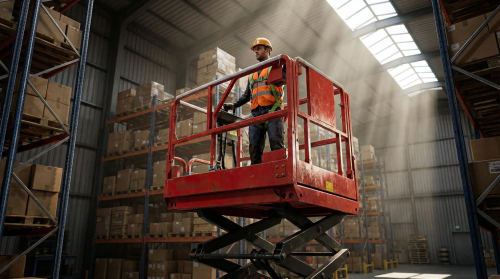
Safety and compliance define the minimum engineering envelope for any MEWP. Once you know what is mobile elevated work platform classification and how it will be used, you must align the machine, training, and maintenance regime with current standards. This includes design standards, operating regulations, and a structured inspection and predictive maintenance program.
| Safety / Compliance Element | Key Requirements | Impact On Engineering And Operation |
|---|---|---|
| Design and safety standards | MEWPs used to elevate personnel and tools must meet defined safety requirements, protective measures, and verification methods. ISO 16368:2024 specifies safety requirements, protective measures, and verification methods for MEWPs | Influences guarding, stability factors, control logic, and emergency systems you must specify. |
| National regulations | In many regions, MEWP use is governed by specific safety regulations and complementary design and training guidelines. In the U.S., OSHA 29 CFR 1926 Subpart L governs MEWP safety, complemented by ANSI A92 guidelines | Drives requirements for risk assessments, fall protection, and documented operator training. |
| Key safety features | Extendable platforms, guardrails, harness anchor points, outriggers, and emergency lowering systems. Extendable platforms, guardrails and harness points, outriggers, and emergency lowering systems enhance worker security | Must be specified and checked during design review and pre-use inspections. |
| Updated safety devices | Modern standards require improved load and tilt sensing, and higher guardrails. ANSI updated its A92 standard, adding alarm sensors for load limits, tilt sensors, and higher platform railings | Affects selection of newer vs older fleets and retrofit decisions. |
| Training and competence | Operators, supervisors, and maintenance staff must complete theory and hands-on training reflecting current classifications and standards. ANSI requires all MEWP training to reflect updated group classifications and operating standards | Directly influences incident rates and correct response to alarms and faults. |
| Pre-use inspection | Check fluid levels, tires, outriggers, emergency systems, and controls; verify load capacity and environmental conditions. Operators must inspect fluid levels, tires, outriggers, emergency systems, and controls before use | Prevents many mechanical failures and misuse events before elevation. |
| Common hazard controls | Tipping, falls, power-line contact, and collisions mitigated by correct MEWP selection, job hazard analysis, and safe distances. Tipping over, falls from height, power line contact, and collisions are primary hazards | Feeds directly into method statements and exclusion-zone design. |
Falls remained one of the main causes of workplace deaths in construction, and the right MEWP with proper guardrails and environment-matched design can significantly reduce fall-related incidents. Falls account for over 33% of workplace deaths in construction, and platforms with guardrails and environment-specific design can reduce fall-related incidents by about 50%
- Embed pre-use inspections into daily routines; do not rely only on periodic service.
- Ensure harness anchor points and guardrails meet current dimensional standards.
- Use load and tilt alarms as hard limits, not as advisory signals.
- Keep documented risk assessments and rescue plans at each job site.
- Align internal training intervals with best practice, even if local standards are less strict.
Predictive maintenance uses data from sensors, inspections, and usage logs to plan interventions before failures occur. Machine learning models can detect subtle trends and anomalies that precede faults, allowing maintenance during off-peak hours and reducing unplanned downtime. Predictive maintenance leverages historical and real-time data to anticipate potential failures before they occur
Practical predictive maintenance actions for MEWPs
- Log all fault codes, alarms, and hydraulic temperature trends by machine ID.
- Track key components (chains, cylinders, pins, tires, batteries) against hours and duty cycles.
- Use remote monitoring where available to flag abnormal usage patterns.
- Schedule inspections and parts replacement just before the predicted failure window, not only by calendar.
- Feed field failure data back into selection decisions for future MEWP purchases or rentals.
Final Considerations For MEWP Specification And Compliance
Engineering teams must treat MEWP selection as a structural and systems design problem, not a catalog choice. Group and Type classifications, platform geometry, and boom kinematics define how the center of gravity moves and how close the machine operates to its tipping lines. Load, reach, and ground bearing checks turn those abstract limits into clear go/no‑go rules for each task and site layout.
Site surveys then link those calculations to reality. Aisle width, slab capacity, gradients, and overhead congestion decide whether a compact mast, scissor, boom, or specialty spider or vehicle‑mounted unit fits safely. Power source choices must reflect emissions rules, duty cycle, and charging access, not only purchase price.
Standards, training, and predictive maintenance close the loop. ISO‑based design, local regulations, structured operator training, and sensor‑driven maintenance keep the machine operating inside its engineered envelope over its full life. The best practice is clear: define the task, quantify loads and geometry, verify site conditions, then select a compliant MEWP configuration—such as those offered by Atomoving—and back it with disciplined training, inspection, and data‑driven maintenance.
Frequently Asked Questions
What is a Mobile Elevated Work Platform (MEWP)?
A Mobile Elevated Work Platform (MEWP) is a machine designed to lift workers, tools, and materials to elevated positions. It includes self-propelled, trailer-mounted, or vehicle-mounted devices that provide temporary access to heights. MEWPs are commonly used in construction, maintenance, and other industries requiring work at height. Examples include boom lifts, scissor lifts, and vertical mast lifts. Types of MEWPs Guide.
Is a Scissor Lift Considered a MEWP?
Yes, a scissor lift is classified as a type of Mobile Elevated Work Platform (MEWP). Specifically, scissor lifts fall under Group A, Type 3 MEWPs, which are self-propelled machines with vertical lifting capabilities. These lifts are ideal for tasks requiring vertical elevation rather than horizontal outreach. Scissor Lift Classification.
What Safety Precautions Should Be Taken When Using a MEWP?
When operating a MEWP, it’s crucial to follow safety guidelines to prevent accidents:
- Always wear appropriate personal protective equipment (PPE), such as hard hats, safety harnesses, and non-slip footwear.
- Ensure the platform is stable and avoid operating near overhead cables or hazardous machinery.
- Reposition the platform instead of leaning or extending outside its boundaries to reach distant objects.
- Follow manufacturer instructions for safe movement, especially when the platform is elevated.
Do You Need Special Training to Operate a MEWP?
Yes, operators must undergo specific training to use a MEWP safely. For instance, OSHA requires training for workers who operate aerial and scissor lifts under standard 1926.454. This training ensures operators understand safety protocols, equipment operation, and emergency procedures. Certifications typically need renewal every three years. Aerial Lift Training Info.