
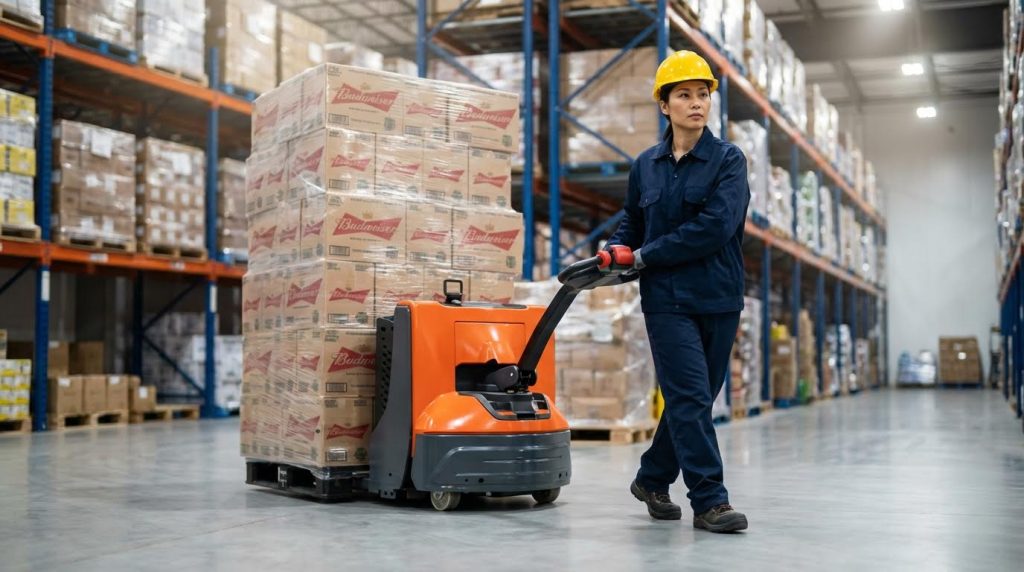
Pallet jack load ratings and lifting capacity labels define how much weight a jack can safely raise and move without overstressing its structure, hydraulics, or stability. Understanding these ratings directly reduces tip-overs, product damage, and back injuries while keeping your site aligned with OSHA/ISO material-handling safety expectations. This guide explains what is the lifting capacity of the pallet jack in real-world terms, how load center and fork length change usable capacity, and what engineering limits sit behind the numbers. You will also learn how to read capacity labels correctly and select the right pallet truck for your load profile and duty cycle.
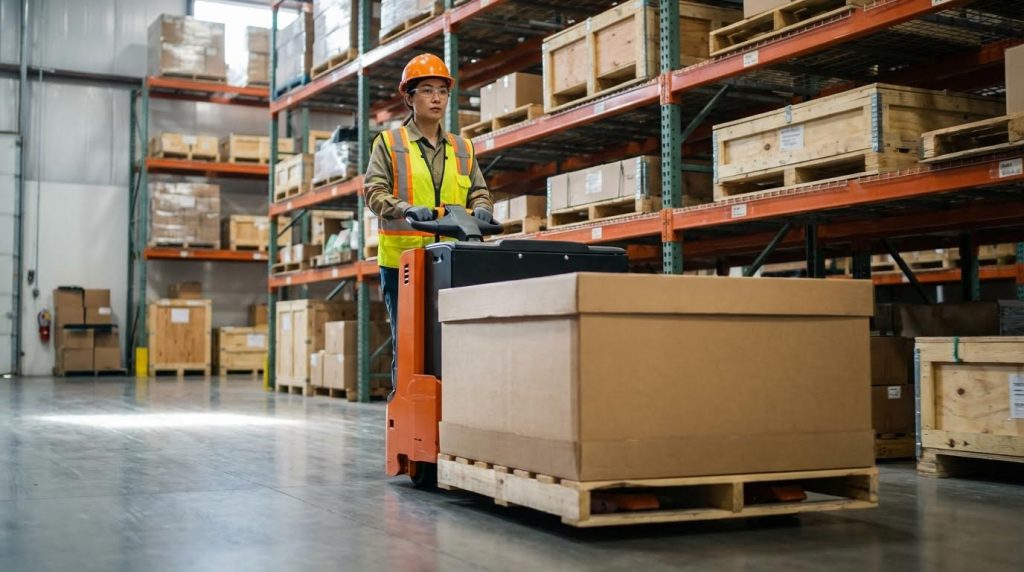
Core Principles Of Pallet Jack Load Capacity
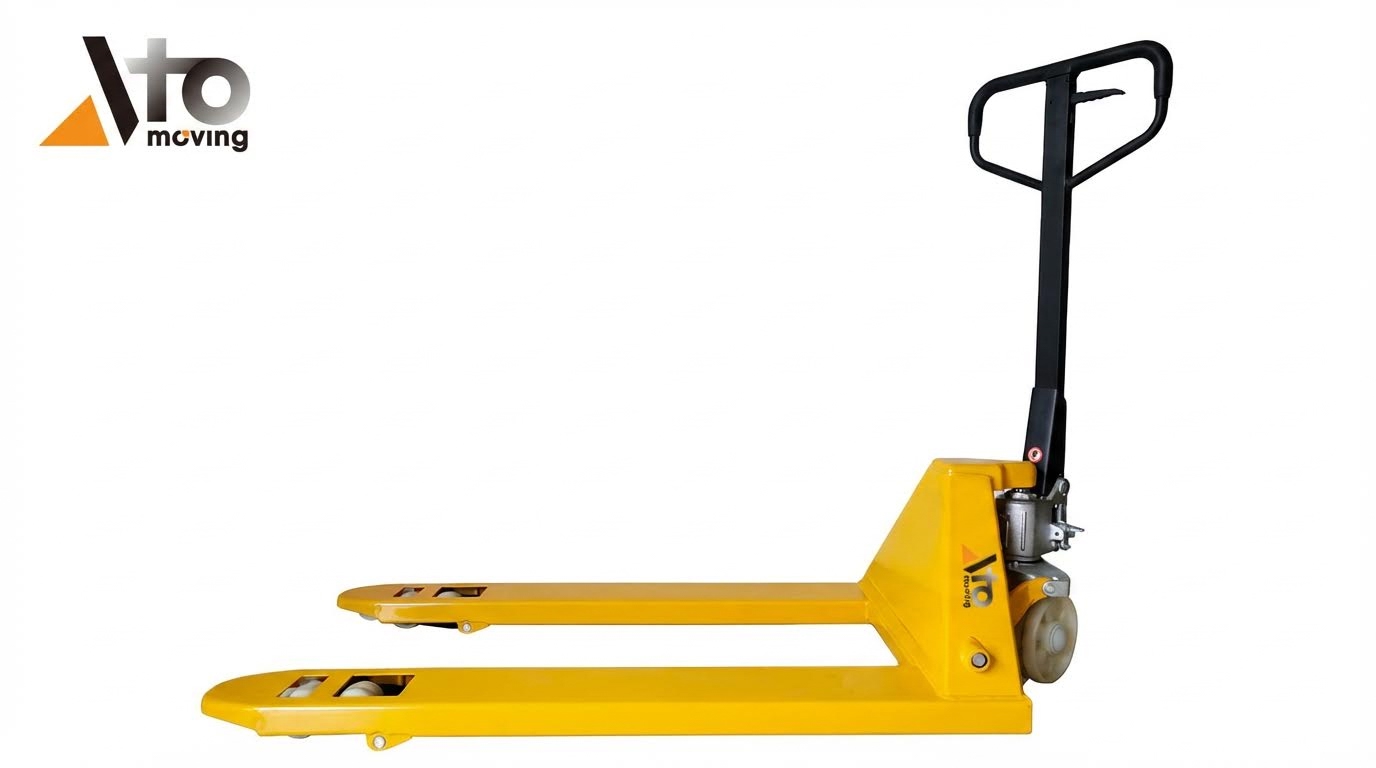
Pallet jack load capacity is the maximum weight the truck can safely lift and move at a defined load center and fork length, under ideal floor and stability conditions.
What “lifting capacity” on a pallet jack really means
The “lifting capacity” on a pallet jack rating plate is the engineered upper safety limit, not a target weight, defined at a specific load center on level, suitable flooring.
When people ask “what is the lifting capacity of the pallet jack,” they are really asking for its rated capacity: the maximum load the hydraulic unit, forks, and wheels can safely support together at the specified load center. This value is validated by design calculations and testing, not guessed in the field. Typical manual pallet jacks rate between 2,000 kg and 5,000 kg (about 4,400–11,000 lbs) on flat, smooth floors. Reference for typical capacity ranges
That printed number assumes ideal conditions: correct load center, good hydraulics, straight forks, and appropriate wheels on a sound floor. Real-world usable capacity often drops below the plate value due to off‑center loads, uneven slabs, slopes, or worn components. Engineers therefore treat the plate rating as a hard ceiling, and best practice is to operate with a safety margin below it.
| Term | Typical Value / Meaning | Field Impact |
|---|---|---|
| Rated capacity | e.g. 2,500 kg at specified load center | Maximum safe weight under ideal conditions; do not exceed in daily operation. |
| Usable capacity | Rated capacity minus real‑world losses | Often lower due to floor slopes, bad pallets, or worn parts; use this for planning. |
| Hydraulic capacity | Limit set by pump, ram, and seals | If hydraulics are weak or leaking, jack may not lift rated load even if structure is sound. |
| Structural capacity | Limit set by fork and frame strength | Bent or cracked forks invalidate the rating; jack must be removed from service. |
| Stability limit | How far the center of gravity can move | High, tall, or shifted loads can tip or overload wheels even below rated kg. |
💡 Field Engineer’s Note: If a pallet jack will barely lift a load or the handle “creeps” down, treat that weight as above your safe working capacity until the hydraulics are repaired and the unit is re‑inspected.
Why rated capacity is not a “goal weight”
Designers build in safety factors so the jack survives shock loads and long‑term fatigue, but those factors are not spare capacity for operators to “use up.” They cover unknowns like minor impacts, material variability, and occasional overloads. Running at the nameplate limit all shift accelerates wear on forks, pins, and hydraulics, and can push you over the stability limit whenever the floor or pallet is less than perfect.
How load center, fork length, and pallet size interact
Load center, fork length, and pallet size interact to create a lever: as the load’s center of gravity moves farther out along the forks, the effective lifting capacity of the pallet jack decreases.
The capacity number on the jack assumes a specific load center, usually near the geometric center of a standard pallet. As the center of gravity moves forward (longer pallets, overhang, or poorly placed product), the overturning moment increases and the safe capacity falls. This is the same principle used for forklifts. Reference for load center effects
| Factor | Typical Design Assumption | What Changes in the Field | Field Impact |
|---|---|---|---|
| Load center | Measured from fork heel to load CG (often around 600 mm for standard pallets) | CG moves forward with longer pallets or top‑heavy stacks | Forward CG reduces effective capacity and increases risk of tipping or wheel overload. |
| Fork length | Commonly 1,150–1,220 mm for EUR/US pallets | Longer forks used for double‑pallet or custom loads | Long forks tempt operators to carry longer, overhanging loads, increasing bending and stability demands. |
| Pallet size | Standard footprints (e.g., 1,200 × 800 mm, 1,200 × 1,000 mm) | Oversized or damaged pallets, non‑standard skids | Non‑standard pallets shift the load center and can concentrate weight on one fork or roller. |
| Load placement | Evenly distributed across both forks | Heavy items stacked to the front or one side | Uneven placement overloads a single fork or wheel, causing premature failure or sudden instability. |
| Overhang | Minimal overhang beyond fork tips | Product extends 100–300 mm past tips | Overhang pushes CG outward, effectively derating capacity even if total kg is unchanged. |
In practical terms, if you extend the load farther from the fork heel than the design load center, the same jack that is rated for 2,500 kg might only be safe at, say, 1,800–2,000 kg in that configuration. Because the rating plate usually only shows one capacity at one load center, supervisors should train operators to keep the heaviest mass as close as possible to the fork heels and to avoid unnecessary overhang.
- Keep heavy product back: Place the densest items over the fork heels, not at the pallet’s leading edge.
- Watch double‑pallet moves: Two light pallets can still exceed safe load center distance if stacked longways.
- Avoid extreme overhang: If product sticks far past the tips, reduce the allowed weight or split the load.
- Check pallet condition: Broken deck boards shift the center of gravity as boards flex or fail.
- Standardize pallets: Using consistent pallet sizes makes capacity behavior predictable across the fleet.
💡 Field Engineer’s Note: A quick rule on the floor: if you have to pull the jack noticeably harder to start a load rolling or to turn it, treat that load as “effectively heavier” and assume your true safe capacity is lower than the rating plate.
How to visualize load center without formulas
Imagine balancing the loaded pallet on a single point between the forks. Where that “balance point” sits along the fork length is your load center. The farther that point is from the fork heel, the more leverage the load has to bend the forks and overload the wheels. When in doubt, shorten that distance by repalletizing or splitting the shipment.
Engineering Factors Behind Capacity Ratings
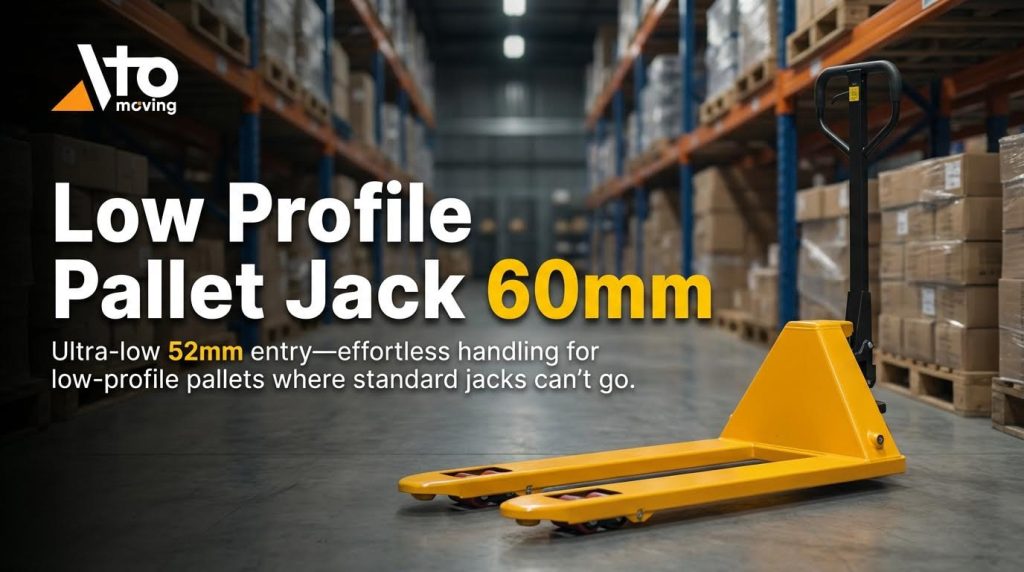
Engineering factors behind capacity ratings are the hydraulic limits, fork strength, and wheel–floor interaction that together decide what is the lifting capacity of the pallet jack under real warehouse conditions, not just in theory.
Engineers do not pick a single “magic number” for capacity; they design every component so that hydraulic pressure, steel stress, and ground contact all stay within safe limits at the rated load. The published rating assumes a specific load center, fork length, and floor condition, and it already includes safety factors so the jack still behaves safely with minor wear and normal operator variability.
💡 Field Engineer’s Note: If a pallet jack struggles to lift a load it used to handle easily, treat that as a red flag: either the load is heavier than you think, or your hydraulic and wheel components are no longer supporting the original rating.
Hydraulic unit sizing and pressure limits
Hydraulic unit sizing and pressure limits set the upper bound on what is the lifting capacity of the pallet jack by defining how much force the pump, ram, and seals can safely generate without leaking or bursting.
A manual pallet jack converts handle strokes into hydraulic pressure, which pushes a ram that raises the forks. Engineers size the pump piston, cylinder bore, and wall thickness so the system reaches the target capacity at a defined working pressure, with a built‑in safety margin. Exceeding that pressure risks seal failure, internal leakage, or even burst components, so the capacity rating is always tied to a maximum allowable hydraulic pressure. Hydraulic system limits are a core part of the rating logic.
- Determine target load and load center: Engineers start from the desired rated load (for example 2,500 kg) at a specified load center, then calculate the required lifting force at the forks.
- Convert force to hydraulic pressure: They size the ram area so that required fork force divided by ram area equals a working pressure that steel tubes, seals, and hoses can safely contain.
- Apply safety factors: They apply safety factors to cover temperature changes, minor leaks, and operator abuse so normal use never reaches burst pressure.
- Match pump effort to human input: For manual units, they balance piston size and handle leverage so an average operator can generate the needed pressure without excessive effort.
- Validate through testing: Prototypes are pressure‑tested and cycle‑tested at and above rating to confirm that long‑term use does not cause leaks or loss of lift capacity.
Why leaks and low oil reduce usable lifting capacity
Minor internal or external leaks let pressure bleed off, so the ram cannot reach the force assumed in the rating. Low oil level introduces air, which compresses and makes the handle feel “spongy,” further reducing effective lift.
Fork strength, bending, and deflection control
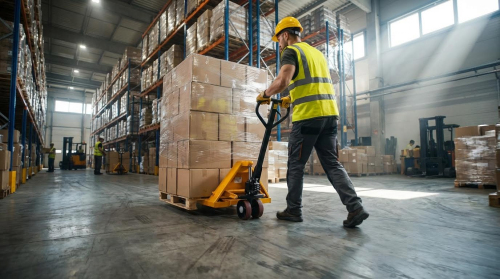
Fork strength, bending, and deflection control determine whether the forks can support the rated load without permanent bending, excessive sag, or loss of ground clearance that would make the pallet jack unsafe.
At the rated capacity, forks act like cantilevered beams: the load at the tips creates a bending moment that tries to sag the steel. Engineers choose high‑strength steel grades and fork profiles so that, at full load and specified load center, stress stays below allowable limits and deflection stays within a few millimetres. Excessive deflection can cause the underside of the forks or load rollers to drag, while permanent bending or cracks immediately invalidates the original capacity rating. Fork structural design is therefore central to how capacity is set.
| Fork Factor | Typical Engineering Approach | Impact on Capacity Rating | Field Impact |
|---|---|---|---|
| Steel grade and thickness | Use high‑strength plate and formed sections sized for target bending stress | Higher strength and thickness allow higher rated loads | Heavier jacks feel more solid under load but weigh more to push empty |
| Allowable deflection | Limit fork tip sag at full load to a controlled value | Controls how much the forks “droop” at rated capacity | Too much sag reduces ground clearance and causes dragging on uneven floors |
| Fork length vs. load center | Rate capacity at a defined distance from fork heel | Longer loads increase bending moment and reduce effective capacity | Overhanging pallets can bend forks even if total weight seems “within rating” |
| Damage tolerance | Design for elastic bending only, no permanent deformation at rating | Any visible bend means design limits were exceeded | Bent or cracked forks must be removed from service; rating no longer applies |
💡 Field Engineer’s Note: If you can see daylight changes under the forks when you load a heavy pallet—tips dropping several millimetres compared to empty—you are flirting with the structural limits that defined the original rating.
How operators can spot fork issues early
Check if forks sit level and parallel when unloaded, compare fork tip height side‑to‑side, and look for hairline cracks at the heel welds. Any asymmetry or visible crack is a stop‑use condition.
Wheel materials, floor conditions, and stability margins

Wheel materials, floor conditions, and stability margins control how safely the rated load transfers to the ground, because even if hydraulics and forks can handle the weight, the wheels and floor may not.
Steer wheels and load rollers concentrate the entire pallet weight into small contact patches on the floor. Their diameter, width, and material (often polyurethane or nylon) are chosen so contact stress and rolling resistance remain acceptable at the rated load on smooth, level floors. As wheels wear—typically once they lose around 6 mm of diameter—the contact stress rises and stability decreases, especially on rough or sloped surfaces, reducing the practical answer to what is the lifting capacity of the pallet jack in that environment. Wheel–floor interaction is therefore part of the capacity story, not an afterthought.
- Wheel material: Polyurethane usually rolls easier and runs quieter on smooth concrete, while harder plastics tolerate higher point loads but transmit more shock into the frame.
- Wheel diameter and wear: Larger diameters climb small obstacles better; wear that removes several millimetres of diameter increases stress and makes impacts harsher.
- Floor flatness and hardness: Rated capacities assume relatively flat, hard floors; potholes, ramps, or soft asphalt introduce tilt and shock loads that eat into stability margins.
- Slope and braking: On ramps, the effective load on the lower wheels increases and stopping distances grow, so safe working load should be derated below the plate value.
- Stability triangle: The jack’s wheelbase and load position must keep the combined center of gravity inside a “stability triangle”; rough floors and sudden stops can push it outside that safe zone.
💡 Field Engineer’s Note: A pallet jack rated for 2,500 kg on smooth warehouse concrete can struggle at half that weight on soft asphalt in a yard; ground pressure and rolling resistance, not the hydraulic unit, become the limiting factors.
Practical tip: matching wheels to your floor
For long indoor runs on smooth floors, choose low‑resistance, softer wheels to reduce push force. For mixed indoor–outdoor use, prioritize harder, larger‑diameter wheels that survive expansion joints, dock plates, and occasional debris without chunking.
Reading Labels And Selecting The Right Pallet Jack
Reading pallet jack labels correctly means translating the printed capacity, load center, and usage limits into a safe, real-world answer to “what is the lifting capacity of the pallet jack in this application?”
💡 Field Engineer’s Note: Never treat the number on the label as a target to hit; treat it as a hard ceiling that already assumes perfect pallets, level floors, and a centered load.
### Interpreting capacity plates and safety markings
Capacity plates and safety markings state the maximum rated load, the assumed load center, and any restrictions so you can decide what is the lifting capacity of the pallet jack in real operating conditions.
| Label / Marking Item | Typical Content | What It Really Means | Field Impact |
|---|---|---|---|
| Rated capacity | e.g. 2,500 kg (5,500 lbs) | Maximum static load under ideal geometry and floor conditions. | Do not plan loads above ~80–90% of this for everyday work, especially with mixed pallets. |
| Load center | e.g. 600 mm | Distance from fork heel to the load’s center of gravity used for the rating. Source for capacity vs. load center | If your load’s center is further forward (long pallets, overhang), usable capacity drops. |
| Fork length | e.g. 1,150 mm | Fork length assumed in the capacity calculation. | Longer forks tempt operators to carry longer loads that shift the center of gravity forward and reduce stability. |
| Maximum lift height | e.g. 190 mm | Height at which the rating applies. | Once the load is just clear of the floor (20–50 mm), extra height adds risk without benefit. |
| Model / type code | Manual, electric, low-profile, etc. | Indicates design family and intended use conditions. | Low‑profile or short‑fork models often have lower capacities; don’t assume “all jacks are the same.” |
| Warning icons | Tip‑over, crush, uneven floor symbols | Pictograms summarizing main failure modes. | Icons often highlight things labels don’t spell out, like “no use on ramps” or “no side pulling.” |
Rated capacity on the plate assumes the pallet is fully supported by the forks, with the load stacked evenly and centered. Off‑center, tall, or unstable loads reduce the real safe limit even if the gross weight is under the printed number. Engineers therefore treat the plate value as an upper bound, not a production target, because dynamic effects like braking, bumps, and turns all increase effective loading on the structure and hydraulics. Reference for rated vs usable capacity
How to quickly sanity‑check a capacity label on the floor
Confirm the capacity matches your heaviest pallet plus a safety margin; verify the load center is appropriate for your pallet length; and ensure the jack type (manual vs. electric) matches your travel distance and slope.
### Matching capacity to application and duty cycle
Matching pallet jack capacity to application means selecting a rating that covers your heaviest realistic load, floor conditions, and duty cycle so operators never have to guess what is the lifting capacity of the pallet jack in daily use.
| Application Scenario | Recommended Capacity Band* | Key Selection Criteria | Field Impact |
|---|---|---|---|
| Light retail / back‑room | 1,000–2,000 kg | Short travel, smooth floors, low utilization. | Lower capacity reduces purchase cost and rolling resistance; adequate for mixed cartons and light pallets. |
| Standard warehouse pallet moves | 2,000–2,500 kg | Standard 1,000–1,200 kg pallets, occasional heavy loads. | Most common band; balances maneuverability and safety margin for typical SKUs. |
| Heavy manufacturing / bulk materials | 3,000–5,500 kg | High pallet weights, dense materials, frequent use. | Heavy‑duty frames and hydraulics resist fatigue; needed when many pallets approach 2,000+ kg. |
| Cold storage / wet floors | 2,000–3,000 kg | Low temperatures, higher rolling resistance, corrosion. | Extra capacity and suitable wheels offset higher push forces and slippery surfaces. |
| High‑throughput cross‑dock (electric) | Similar kg band, but duty‑rated | Continuous use, long travel, ramps. | Choose by both capacity and duty cycle rating to avoid overheating and premature wear. |
*Use these as engineering bands, then refine with actual pallet weights and safety policies.
- Know your real pallet weights: Weigh representative “worst‑case” pallets, not just average ones, and size capacity to comfortably exceed that by a safety margin.
- Account for load geometry: Long pallets or stacked product move the center of gravity forward, reducing effective capacity even if the weight is unchanged.
- Consider floor and ramp conditions: Rough floors, slopes, and dock plates increase dynamic loading and push forces, so overspec capacity and choose appropriate wheels.
- Match to duty cycle, not just weight: High‑frequency use demands stronger hydraulics and frames, even if individual loads are moderate, to avoid fatigue failures.
- Standardize by zone: Use higher‑capacity jacks in heavy‑load zones and lighter models where loads and aisles are smaller to reduce strain and errors.
In practice, the answer to “what is the lifting capacity of the pallet jack we should buy?” is the smallest capacity that safely covers your heaviest realistic load, adjusted for load center, floor quality, and how many hours per day the equipment will run. Using this approach keeps operators within the label limits while maintaining good ergonomics and long equipment life.
“”
Final Thoughts On Safe Pallet Jack Loading
Pallet jack capacity is not a guess; it is the outcome of linked engineering limits in hydraulics, forks, wheels, and stability. The rating on the label assumes a specific load center, fork length, and smooth, level floors. Once loads get longer, higher, off‑center, or the floor gets rough or sloped, the true safe capacity drops below that printed value.
Hydraulic pressure, fork bending, and wheel contact all reach their limits together, so overloading stresses every system at once. That is why bent forks, creeping hydraulics, or heavily worn wheels must trigger immediate derating or removal from service. Ignoring these signs turns a simple move into a tip‑over or crush risk.
The most reliable approach is simple. Treat the nameplate as a hard ceiling, then plan daily work at a clear margin below it. Keep the heaviest mass close to the fork heels, standardize pallet sizes where possible, and match wheel type to your floor. Select pallet jacks whose rated capacity covers your heaviest real pallet, at its real load center, for your real duty cycle. When in doubt, step up a capacity band or split the load. This discipline keeps operators safe, product intact, and Atomoving pallet trucks working at peak life and efficiency.
Frequently Asked Questions
What is the maximum weight a pallet jack can lift?
A pallet jack’s lifting capacity depends on its type and design. Manual pallet jacks typically support loads ranging from 2,000 to 2,500 kg (4,500 to 5,500 lbs). Heavy-duty models can handle even larger loads, sometimes up to 4,500 kg (10,000 lbs), while lighter-duty pallet jacks are better suited for smaller tasks. For more details, you can refer to this Pallet Jack Capacity Guide.
Can a pallet jack lift a car?
No, a pallet jack is not designed to lift a car. While some heavy-duty pallet jacks can handle significant weight, cars are too large and awkwardly shaped for safe handling with a pallet jack. Attempting to lift a car with a pallet jack could damage both the jack and the vehicle and create safety hazards. For proper automotive lifting equipment, consider options like boom lifts or specialized vehicle lifts. Learn more about material handling equipment uses in this Forklift vs Pallet Jack Guide.