
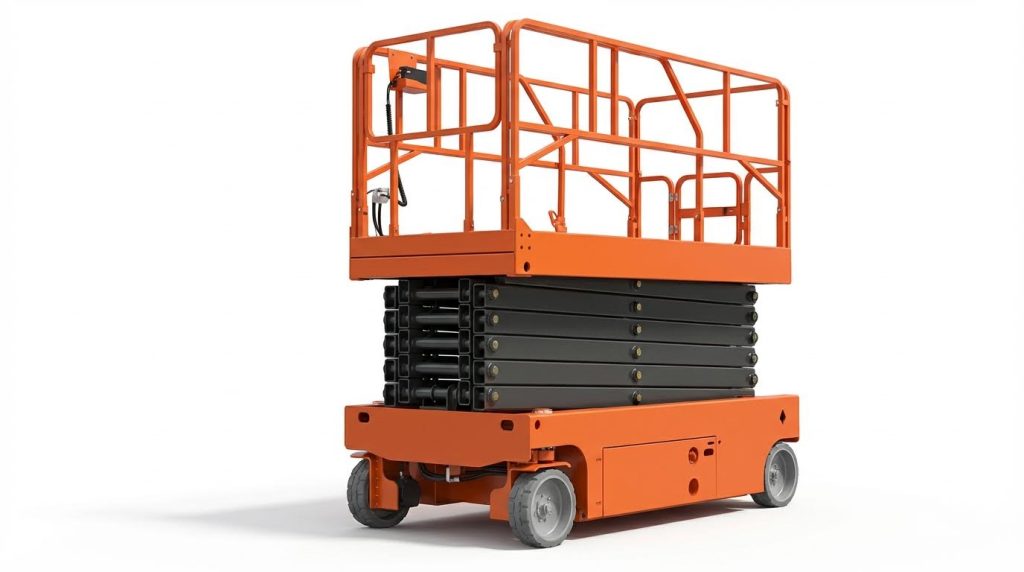
An aerial work platform (AWP), also called a mobile elevated work platform (MEWP), is a powered device that lifts people and tools safely to work at height. This guide explains what is aerial work platform technology, how it works, the main types, and how to choose and use it safely. You will see working-height ranges, load limits, ground and power requirements, and key safety rules drawn from real jobsite practice. Use this as a fast, engineering-grade reference before specifying, renting, or buying any AWP.
Main AWP Types, Powertrains, and Design Trade-Offs
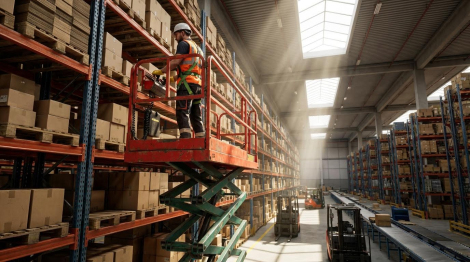
Main aerial work platform types differ in lift geometry and powertrain, which directly affects reach, floor loading, and running cost. Understanding these trade‑offs is essential when you ask what is aerial platform and which design fits your site.
Scissor lifts vs. vertical masts vs. boom lifts
Scissor lifts, vertical masts, and boom lifts mainly differ in how they move the platform in space: straight up, vertical with small outreach, or full 3D reach. The right choice depends on height, outreach, and aisle width.
| AWP Type | Typical Working Height Range | Outreach Capability | Typical Platform Capacity | Best For… | Operational Impact |
|---|---|---|---|---|---|
| Scissor lift | 8–15 m (26–49 ft) for many indoor electric models industrial MEWPs | Almost zero (vertical only) | Up to about 400 kg (900 lbs, 3 people) platform capacity | Wide indoor work, straight‑up access, maintenance bays | Most efficient where work is directly above; requires wider aisles but gives high deck space for tools. |
| Vertical mast / vertical tower | Up to about 8–12 m in many compact units (within 26–49 ft MEWP band) electric MEWPs | Minimal; some models offer small outreach | Lower than large scissors (typically 1–2 people) | Narrow aisles, congested plants, indoor picking and light maintenance | Small footprint fits tight spaces; limited capacity means more trips for heavy materials. |
| Boom lift (articulated or telescopic) | 8–26 m (26–85 ft) for many MEWPs, including all‑terrain booms boom ranges | High horizontal reach; can work above/around obstacles | Up to about 400 kg (900 lbs, 3 people) capacity example | Outdoor construction, façade work, over‑roof access, complex obstacle clearance | Maximizes coverage from one set‑up point but needs more training and stricter ground assessment. |
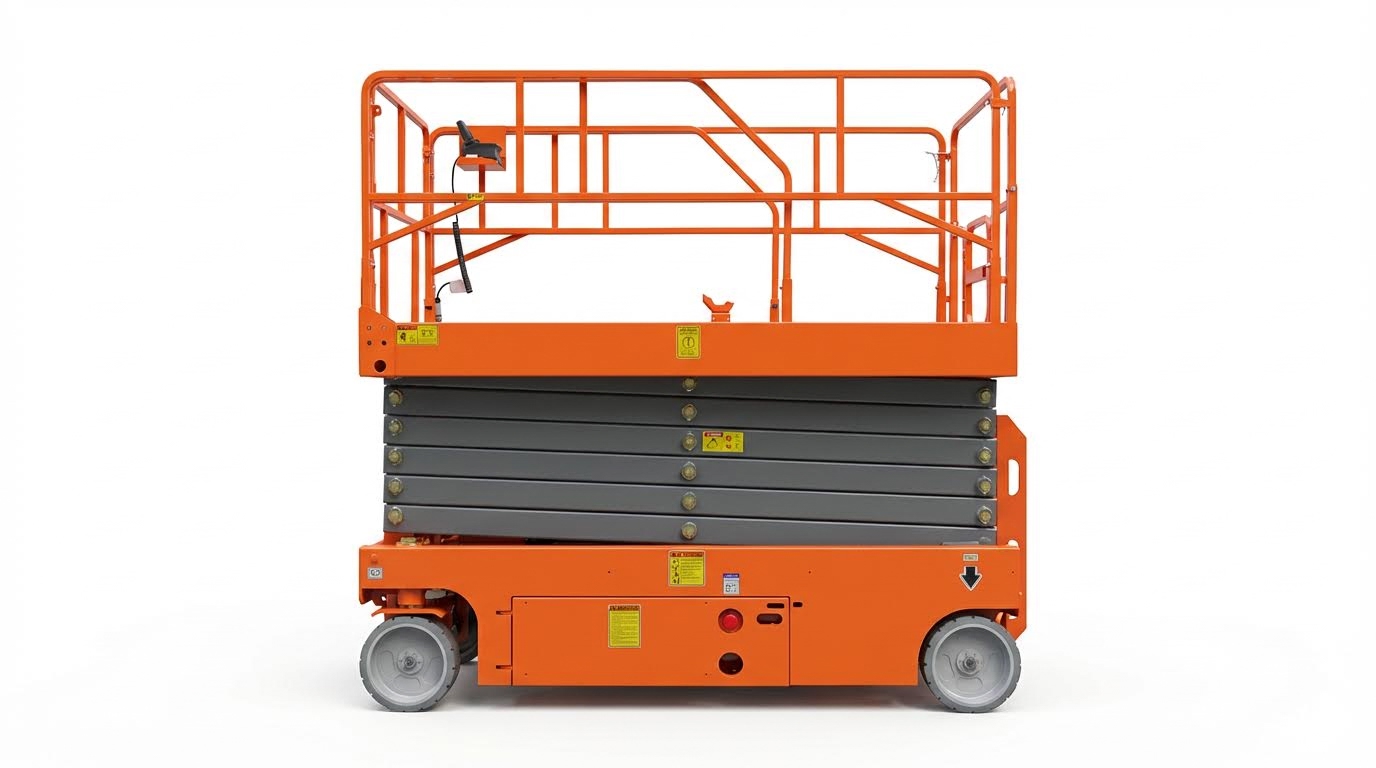
- Scissor lifts: Vertical lifting platforms with criss‑cross arms – Ideal when the job is directly overhead and you want maximum deck space and capacity with simple controls.
- Vertical masts / towers: Compact, often single‑mast lifts – Minimize footprint and floor loading, reducing disruption in narrow aisles or crowded production lines.
- Boom lifts: Extendable booms with baskets – Reach over machinery, conveyors, or roofs, cutting time spent on re‑positioning scaffolds or ladders.
- Vehicle‑mounted aerial lifts: Truck or van‑mounted booms OSHA aerial lift types – Enable rapid deployment along long routes, such as utilities or street lighting.
How this ties back to “what is aerial work platform”
When you ask what is aerial platform in practical terms, these three core geometries (scissor, mast, boom) define how safely and efficiently you can put people and tools at height in your specific environment.
💡 Field Engineer’s Note: For routine indoor maintenance under 12 m, I default to scissors or masts. Booms only come in when obstacles or outdoor wind loads make straight‑up lifts inefficient or unsafe.
Articulated vs. telescopic booms and reach geometry
Articulated booms use multiple joints to “go up and over” obstacles, while telescopic booms extend in a straight line for maximum horizontal reach. The choice affects ground bearing, setup space, and maintenance cost.
| Boom Type | Typical Working Height Range | Reach / Geometry Strength | Maintenance & Wear | Best For… | Operational Impact |
|---|---|---|---|---|---|
| Articulated boom | About 9–18 m (32–60 ft) for many all‑terrain models articulated booms | Excellent “up‑and‑over” reach around obstacles | Hydraulic oil changes needed every 500 h; articulated bearings show ~12% higher failure rate than scissor lifts, with repairs around $500–$2,000 per event maintenance data | Working over machinery, pipe racks, canopies, or inside congested plants | Reduces repositioning but increases pivot wear and hydraulic service frequency, which must be budgeted in TCO. |
| Telescopic boom | Up to about 26 m (85 ft) in many all‑terrain models telescopic booms | Maximum straight‑line horizontal reach | Hydraulic oil changes around every 800 h (less frequent than articulated) service intervals | High façades, shipyards, tank farms, and open sites where access is clear | Fast to position for long horizontal reaches but demands stronger ground and larger swing radius clearance. |
- Articulated geometry: Multiple knuckles allow the platform to pass over parapets and ducts – Minimizes the number of set‑up points in cluttered industrial areas.
- Telescopic geometry: Sliding boom sections extend like a telescope – Delivers the longest outreach for tasks such as tower work or large building façades.
- All‑terrain variants: Articulated and telescopic booms are available in off‑road versions with working heights around 9–18 m and up to 26 m respectively all-terrain examples – Increase productivity on rough or unfinished construction sites.
Ground bearing and stability considerations
Boom lifts with around 30 m reach typically need a hardened pad roughly 3.5 m × 3.5 m; on loose soil, steel plates are often required, adding about $500–$1,000 per project for ground preparation ground bearing spec. Indoor use is usually restricted where floor strength is below roughly 5 t/m² for large (40 m+) units, which shapes which boom type is even permissible on a given slab.
💡 Field Engineer’s Note: When in doubt between articulated and telescopic, I sketch the building elevation and obstructions. If I need to reach “behind” something (e.g., over a pipe rack), I choose articulated even if its spec sheet shows slightly less horizontal reach.
Power options, Li-ion trends, and duty-cycle sizing
Aerial work platforms are available with electric, diesel, and dual‑power options, and increasingly with Li‑ion batteries. Correct power choice depends on duty cycle, indoor air limits, and terrain rather than just headline working height.
| Power Option | Typical Use Case | Key Characteristics | Cost & TCO Notes | Operational Impact |
|---|---|---|---|---|
| Electric (lead‑acid or Li‑ion) | Indoor and mixed indoor/outdoor, congested sites with heights about 8–15 m electric MEWPs | Zero local emissions, low noise, compact design for tight aisles | Electric units eliminate fuel cost line items in TCO models; one analysis shows fuel at about $800 over 5 years for combustion units, while electric models avoid this cost TCO example | Best for long indoor shifts; Li‑ion reduces charging downtime and supports opportunity charging between tasks. |
| Diesel / combustion | Outdoor construction and all‑terrain booms up to about 26 m (85 ft) outdoor booms | High power density, better on slopes and rough ground | In one 5‑year TCO model, fuel adds roughly $800, with total cost of ownership around $67,000 for a boom lift including maintenance and insurance 5-year TCO | Supports heavy‑duty, multi‑shift outdoor work but may be restricted indoors due to fumes and noise. |
| Dual power (electric + combustion) | Sites that mix indoor and outdoor tasks | Switchable power source to match environment | Dual‑power options are offered to match specific industry needs and reduce the number of machines required on site dual power options | Improves utilization; one machine can cover yard work and indoor maintenance, cutting rental or purchase count. |
- Duty‑cycle sizing: Estimate hours per shift and number of elevation cycles – This drives battery capacity or fuel tank sizing and ensures the platform finishes a full shift without unsafe “limping” back to charge or refuel.
- Compact electric MEWPs: Designed for congested worksites, often with working heights between 8–15 m – Reduce traffic conflicts and allow work in narrow corridors where combustion units are impractical.
- Smart technology add‑ons: AI obstacle avoidance and remote hydraulic monitoring can cut collision repairs by about 15% and improve uptime by roughly 85% smart tech impact – Important for fleets running high‑utilization duty cycles.
Example: 5‑year cost picture for a boom lift
One documented case shows a boom lift purchased at around $18,500 with annual maintenance of $2,400, fuel about $800 (for combustion models), and insurance around $1,200. With a 5‑year residual value near $5,500, the 5‑year total cost of ownership is about $67,000, and extended warranties can reduce annual repair costs by roughly $300 Industrial Use Cases, Sizing, and Selection Criteria
Industrial users choose aerial work platforms by matching height, reach, and capacity to the task, then checking ground conditions and lifetime cost. This section turns “what is aerial platform” into concrete, project-ready decisions.
In industrial settings, you size a MEWP around three constraints: access geometry (height and outreach), environment (indoor/outdoor, floor strength, congestion), and economics (own vs rent and total cost of ownership). Working heights for mobile elevated work platforms typically range from about 8 m to 26 m, covering most maintenance, construction, and facility tasks. Typical MEWP height ranges help narrow the options before you refine by power source, capacity, and terrain.
Matching platform type to task and environment
You match platform type to task and environment by combining required working height/reach with indoor vs outdoor use, floor conditions, and needed maneuverability. This is the practical side of answering “what is aerial platform” for your site.
Different MEWP structures exist to solve different access problems, from tight indoor aisles to rough outdoor construction sites. Industrial electric MEWPs with vertical or articulated booms are optimized for congested indoor work, while all-terrain articulated and telescopic booms target outdoor, uneven ground. Height and terrain capabilities are the starting filter before you add safety and productivity requirements.
| Typical Industrial Task / Environment | Recommended AWP / MEWP Type | Typical Working Height Range | Key Reason | Operational Impact |
|---|---|---|---|---|
| Indoor maintenance in congested plant rooms, warehouses | Electric vertical mast or compact articulated boom | 8–15 m (26–49 ft) | Compact design and tight turning radius for narrow aisles | Reaches lighting, ducting, and cable trays without blocking aisles. Designed for congested worksites |
| Outdoor construction on uneven or rough ground | All-terrain articulated boom lift | 9–18 m (32–60 ft) | Articulation clears obstacles; chassis handles off-road surfaces | Maintains productivity where slabs are incomplete or ground is rutted. Engineered for off-road conditions |
| High-rise façade work, steel erection, tall tanks | All-terrain telescopic boom lift | Up to about 26 m (85 ft) | Long straight outreach to reach façades and structures | Allows work at height with a 2.3 m platform carrying up to about 410 kg (900 lbs). Supports three people at height |
| Utility work, electrical-insulator cleaning near lines | Insulated boom or vertical tower aerial lift | Task-dependent; often 10–20 m | Vehicle-mounted with insulation and outreach | Maintains required 3 m clearance from power lines while giving stable access. OSHA requires distance from power lines |
| Short-duration facility tasks (window washing, HVAC swap) | Rented scissor or boom lift | 8–20 m typical | Rental avoids ownership cost for occasional work | Lower upfront spend; rental firm handles major maintenance. Best for occasional use |
| Specialized sectors (aeronautics, rail, refineries) | Custom or sector-specific platforms | Project-specific | Adapted geometry, controls, and features | Improves safety and ergonomics around complex assets. Custom solutions for niche industries |
- Indoor vs outdoor: Electric MEWPs minimize fumes and noise indoors – reduces ventilation needs and improves worker comfort.
- Terrain and floor strength: All-terrain models handle rough ground – prevents bogging and tip risks on unfinished sites.
- Obstacle layout: Articulated booms “up-and-over” obstacles – reach behind pipe racks or mezzanines without relocating the base machine.
- Required reach vs footprint: Vertical masts fit narrow aisles – maintain operations in racking aisles while maintenance works at height.
- Task duration and frequency: Rental suits one-off projects – avoids idle capital when the platform sits unused most of the year.
How to quickly pre-select an AWP from a floor plan
Mark the work point and required working height (floor-to-task height + 1–2 m for operator). Measure horizontal offset from safe machine position. If obstacles block a straight line, consider articulated booms; if not, scissor or telescopic may be enough.
💡 Field Engineer’s Note: When you ask “what is scissor platform” on a real job, start with your worst-case task: tightest spot, highest point, and roughest ground. If one platform safely covers that scenario, it will usually cover everything else on site.
Capacity, ground bearing, and TCO considerations
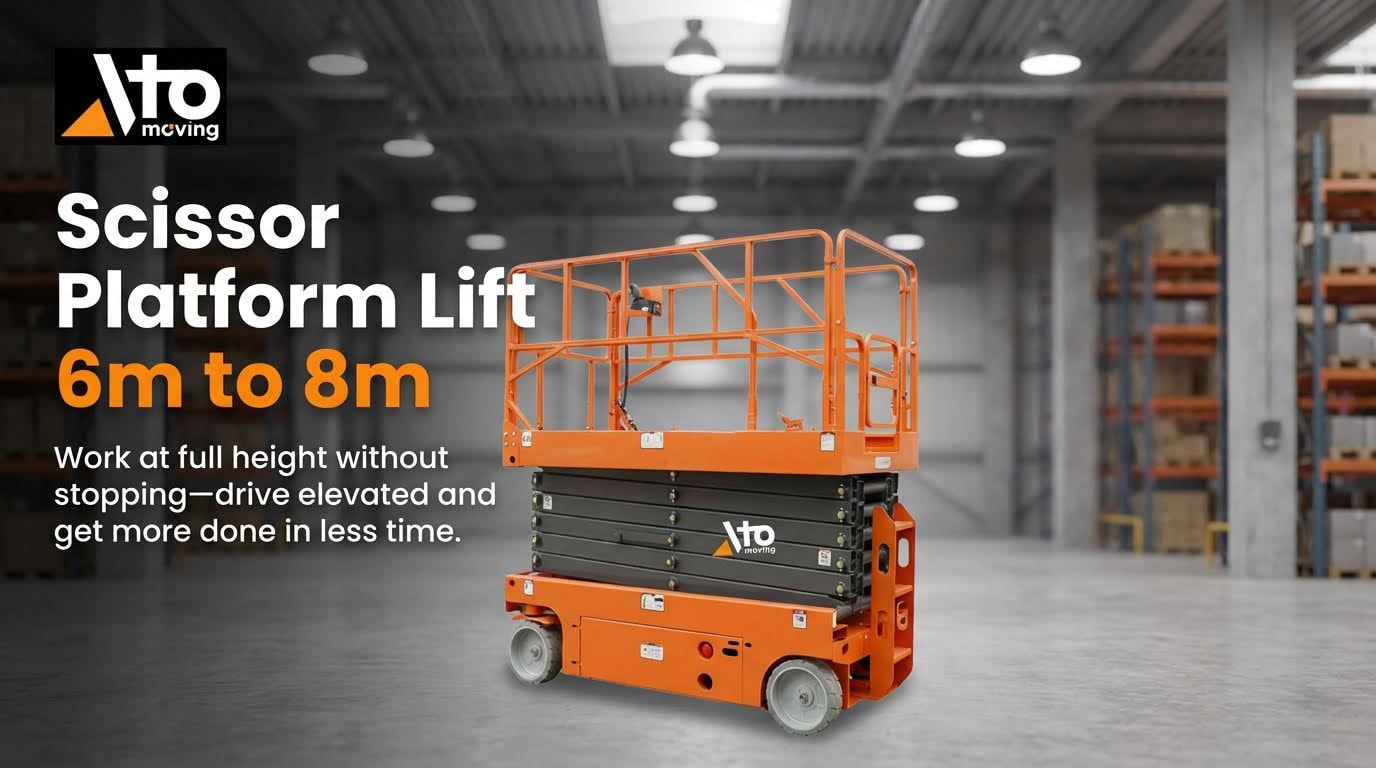
You finalize AWP selection by checking platform capacity, ground bearing pressure, and total cost of ownership (TCO), then comparing that against how often and how long you will use the machine.
Platform capacity must cover people plus tools without exceeding the manufacturer rating, and ground bearing must stay within floor or soil limits. Operating costs, including maintenance, fuel, insurance, and residual value, determine whether buying, leasing, or renting is best over the project or asset life. OSHA capacity rules and real-world TCO examples keep decisions grounded in safety and economics.
| Selection Factor | Typical Data / Requirement | Engineering / Cost Implication | Operational Impact |
|---|---|---|---|
| Platform capacity | Up to about 410 kg (900 lbs) or 3 people on some boom platforms. Typical capacity figure | Must include workers, tools, and materials; cannot exceed rating. OSHA requires compliance | Correct sizing avoids overload alarms, structural stress, and OSHA violations. |
| Ground bearing for large booms | 30 m reach machines may require 3.5 m × 3.5 m hardened surface; loose soil needs steel plates costing about $500–$1,000 per project. Ground bearing spec | Insufficient bearing capacity can cause settlement or tipping; mitigation adds cost and logistics. | May rule out big booms indoors if floor strength is below about 5 t/m², or require engineered mats outdoors. |
| Maintenance costs | Example boom lift: annual maintenance about $2,400; some articulated booms need hydraulic oil every 500 h vs 800 h for telescopic, adding roughly $800–$1,200 per year. Maintenance intervals and costs | Higher joint count and articulation raise bearing failure rates and repair spend. | Impacts annual budget and spares planning; articulated units may need more downtime slots. |
| TCO example for a purchased boom lift | Purchase about $18,500, annual maintenance $2,400, fuel $800 (diesel), insurance $1,200, 5-year residual $5,500; 5-year TCO about $67,000. TCO breakdown | Real cost per year is purchase minus residual plus operating costs, not just sticker price. | Helps compare with rental rates; heavy daily use often justifies purchase. |
| Rent vs buy decision | Reconditioned units cost about 50–60% of new; renting shifts major maintenance to the rental company. Acquisition choices | Frequent or long-term use favors purchase; occasional or short-term projects favor rental. | Optimizes cash flow and tax treatment; leasing can preserve capital and allow trial before purchase. |
| Smart technology add-ons | AI obstacle avoidance can cut collision repairs by about 15%; remote hydraulic monitoring improves uptime by about 85%. Smart tech benefits | Higher initial price but fewer repairs and better availability. | Useful on large fleets or critical-path construction where downtime is very costly. |
- Load calculation: Sum body weight, tools, and materials against rated capacity – prevents overload and structural failure.
- Floor and soil verification: Compare machine ground pressure with slab or soil bearing – avoids cracked slabs and tip incidents.
- Usage profile: Estimate hours/year and project duration – allows realistic TCO vs rental comparison.
- Maintenance regime: Check service intervals and part failure rates – reduces unplanned downtime and emergency repairs.
- Acquisition strategy: New, reconditioned, rental, or lease – aligns capital spending with corporate finance strategy.
Quick TCO vs rental comparison method
Calculate annual ownership cost: (Purchase price − Residual value) ÷ years + annual maintenance + fuel + insurance. Compare this to expected annual rental spend for equivalent machines. If rental exceeds ownership cost for several years running, buying or leasing is usually better.
💡 Field Engineer’s Note: Before committing to a big boom, get geotechnical or structural confirmation of ground or slab capacity. I have seen 30 m units rejected at the last minute because indoor floor strength was below 5 t/m², forcing costly re-planning and emergency rentals.
Final Thoughts on Safe and Cost-Effective AWP Deployment
Safe and cost-effective aerial platform deployment comes down to matching machine type to task, enforcing strict safety practice, and planning lifecycle costs before you buy, rent, or lease. Anyone asking “what is aerial work platform” should also ask “what will it cost and how will we keep it safe over 10 years?”.
From an engineering and operations view, you should lock in three decisions before committing to any AWP or MEWP: safety standards you will enforce, acquisition strategy (buy vs rent vs lease), and how you will manage ground conditions and maintenance over the full duty life.
| Decision Area | Typical Options | Key Metrics / Standards | Operational Impact |
|---|---|---|---|
| Regulatory safety baseline | General industry vs construction rules | OSHA 29 CFR 1910.67 and 1926.453 safety requirements | Defines training, inspections, fall protection and operating limits; non‑compliance drives accidents and fines. |
| Acquisition model | Buy new, buy reconditioned, rent, or lease | New units: highest reliability, highest upfront cost; reconditioned: 50–60% of new price cost comparison | Aligns capital spend and risk with how often and how long you actually use the platform. |
| Usage profile | Occasional vs frequent/daily | Occasional/short-term: rent; frequent or long-term: purchase or long lease decision guidance | Prevents over‑investing in idle machines or overpaying long‑term rental bills. |
| Ground and floor capacity | Outdoor soil vs hardened yard vs indoor slab | 30 m reach machines may need 3.5 m × 3.5 m hardened pad; floors below 5 t/m² limit large booms ground bearing data | Avoids slab cracking, tip‑over risk and last‑minute steel plate or crane costs. |
| Lifecycle maintenance & TCO | Standard vs extended warranty, electric vs engine | Example 5‑year TCO ≈ $67,000 on a boom lift including maintenance, fuel and insurance TCO example | Prevents budget shocks and supports realistic hourly cost rates for projects. |
| Technology level | Basic vs smart/connected | AI obstacle avoidance can cut collision repairs by ~15%; remote diagnostics can improve uptime by ~85% smart tech impact | Reduces unplanned downtime and repair spend, especially in multi‑shift or rental fleets. |
Translating “What Is Aerial Work Platform” Into Policy and Practice
In practical terms, the answer to “what is aerial work platform” is incomplete unless it includes how you will operate, inspect, and train around that machine every day. An AWP is a vehicle‑mounted device that elevates people using extendable booms, vertical towers, or combined mechanisms, and it must be operated under strict safety rules. OSHA defines aerial lifts as extendable boom platforms, aerial ladders, articulating booms, and vertical towers used to elevate personnel, with structural materials such as metal or reinforced plastic.
- Codify OSHA compliance: Write site rules that mirror OSHA 1910.67 and 1926.453 – this locks in minimum design, operation, and maintenance safety requirements for every AWP on site.
- Mandatory pre‑shift inspections: Require operators to check vehicle and lift components each shift – this catches hydraulic leaks, damaged guardrails, or worn tires before they become incidents. Inspection guidance
- Enforce load limits: Never exceed rated capacity for people, tools, and materials – this preserves stability margins and prevents structural overload of the boom or basket. Capacity rules
- Fall protection as standard PPE: Require full‑body harness and lanyard attachment to the designated anchor – this mitigates ejection risk from jolts or unexpected movement in manlifts. Fall protection requirements
- Respect tilt and movement limits: Operate only on firm, level surfaces within about 5° out of level and obey “no driving while elevated” rules unless allowed – this keeps the machine inside its tested stability envelope. Stability guidance
- Control electrical hazards: Maintain at least 3 m clearance from power lines and treat all lines as live – this reduces arc and contact risk, even with insulated lifts. Overhead hazard rules
- Train and retrain operators: Limit operation to trained, authorized people and retrain after incidents or when changing lift types – this keeps skills aligned with actual hazards and machine behavior. Training requirements
💡 Field Engineer’s Note: I treat every new AWP on a site as a “new machine type” for training, even if it looks similar. Different control response, tilt alarms, or auto‑level logic can catch experienced operators off‑guard and cause basket jolts or near‑misses.
Balancing Purchase, Rental, and Leasing for Cost Control
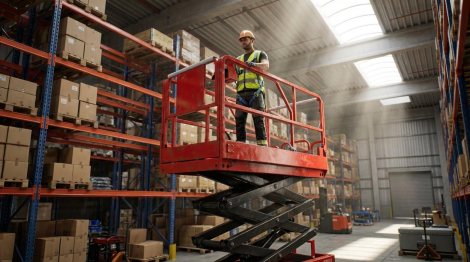
To keep scissor platform costs under control, align the acquisition method with how often and how long you will use the unit, then add maintenance, ground preparation, and technology into your total cost of ownership (TCO) model. Buying new suits heavy, long‑term use; renting or leasing suits short‑term or intermittent tasks.
| Option | Typical Use Case | Cost & Financial Traits | Operational Impact |
|---|---|---|---|
| Buy new AWP | Daily or multi‑shift use over many years | Highest upfront price; lowest early repair risk; can depreciate over several years financial traits | Best uptime and control for core operations; requires in‑house or contracted maintenance capability. |
| Buy reconditioned | Regular but not critical use; cost‑sensitive sites | About 50–60% of new cost; higher maintenance and shorter remaining life reconditioned overview | Lower capital barrier but plan for more repairs and downtime; inspect structural and hydraulic components carefully. |
| Rent | Short, one‑off or seasonal projects | No ownership costs; rental is fully expensed; rental firm handles major maintenance rental guidance | Ideal for infrequent use or special heights/reaches; avoid long‑term rentals that exceed purchase TCO. |
| Lease | Medium‑ to long‑term, predictable use | Preserves capital; payments are expensed; allows “try before buy” and easier model upgrades leasing benefits | Smooths cash flow and keeps fleet modern; check who is responsible for maintenance and inspections. |
- Map frequency and duration: Quantify expected hours per week and project length – this quickly shows whether rental bills will overtake ownership costs. Needs assessment
- Include ground prep in budgets: For large booms, add the cost of hardened pads or steel plates where soil is weak – this avoids surprise project overruns of several hundred to a thousand dollars. Ground bearing costs
- Model full TCO, not just purchase price: Add maintenance, fuel/energy, insurance, and residual value over 5–10 years – this exposes “cheap to buy, expensive to own” machines. TCO calculation
- Choose powertrain strategically: Use electric MEWPs in congested indoor areas and diesel or hybrid for rough outdoor sites – this optimizes energy cost and emissions while still hitting required working heights. MEWP power options
- Consider smart safety tech: Where collision risk is high, specify AI obstacle avoidance and remote diagnostics – this can cut repair incidents and keep utilization high. Smart technology benefits
Example: 5‑Year Boom Lift Cost Snapshot
One documented case shows a boom lift purchased at about $18,500 with annual maintenance around $2,400, fuel about $800 (for engine models), and insurance about $1,200. With a 5‑year residual value of $5,500, the 5‑year total cost of ownership reached roughly $67,000, before any productivity gains or downtime penalties were considered. Electric versions remove most fuel cost, and
Safe, economical aerial work platform use depends on a clear link between geometry, ground, and cost. Reach diagrams, floor strength, and platform capacity are not just catalog data. They define the safe working envelope and decide if a task is even feasible with a given machine.
When you match scissor, mast, or boom geometry to real access paths, you cut repositioning and reduce risky improvisation with ladders or makeshift platforms. When you check ground bearing against slab or soil capacity, you protect against settlement and tip risk. When you size duty cycle and powertrain correctly, you avoid mid‑shift failures and hidden fuel or charging costs.
Operations and engineering teams should lock in one rule set. First, choose the platform type from the worst‑case task: highest point, tightest space, and weakest ground. Second, verify capacity and ground bearing with numbers, not assumptions. Third, model total cost of ownership over the planned life and compare it with rental or leasing.
Use these steps as a standard checklist. They will help you deploy Atomoving and other AWPs with fewer incidents, fewer surprises, and a clear, defensible cost per hour at height.
Frequently Asked Questions
What is an aerial work platform?
An aerial work platform (AWP), also known as an aerial device, aerial lift, boom lift, bucket truck, cherry picker, elevating work platform (EWP), mobile elevating work platform (MEWP), or scissor lift, is a mechanical device used to provide temporary access for people or equipment to inaccessible areas, usually at height. Scissor Lift Basics.
What are the main components of an aerial work platform?
Aerial work platforms typically consist of three main components: a base structure (usually mounted on wheels or tracks), an extendable structure or lifting mechanism, and a platform or bucket where operators can stand and work. These components make the AWP both mobile and versatile. Aerial Work Platform Components.
What types of jobs are commonly performed using aerial work platforms?
Aerial work platforms are used for a variety of tasks including building and construction, safety inspections, window cleaning and repairs, tree work, electrical wiring repair, tall tree trimming, entertainment events, and sporting events. These machines provide safe and efficient elevated access for such jobs. Common Uses of Aerial Lifts.
What are the safety requirements for operating an aerial work platform?
Operators must receive formal instruction, practical evaluation, and demonstrate safe operation according to ANSI A92 standards and OSHA regulations. This includes classroom or online training on OSHA rules, fall protection, and safe lift operation. Practical evaluations should be conducted by a qualified person on the specific equipment in use. Aerial Lift Safety Training.