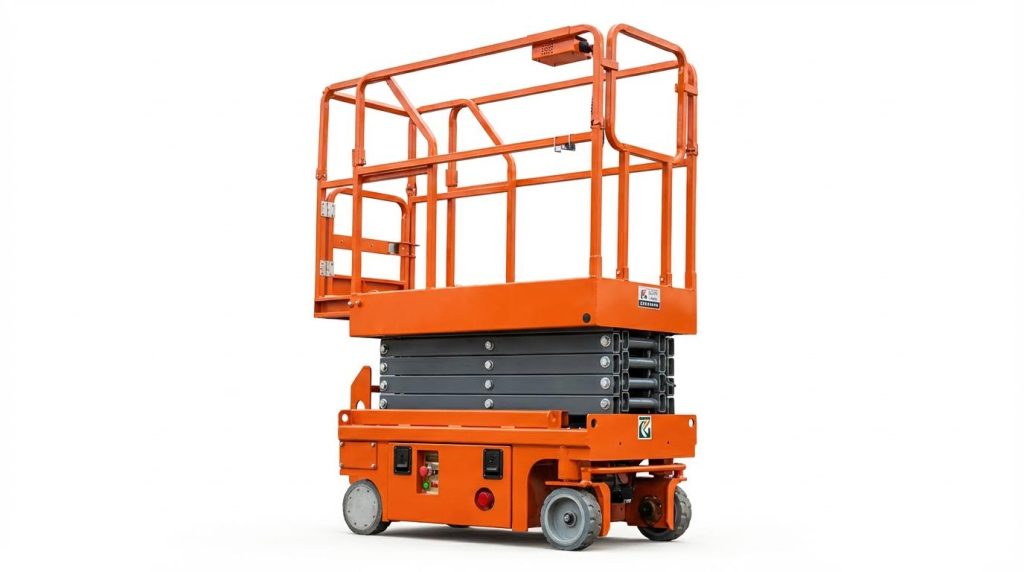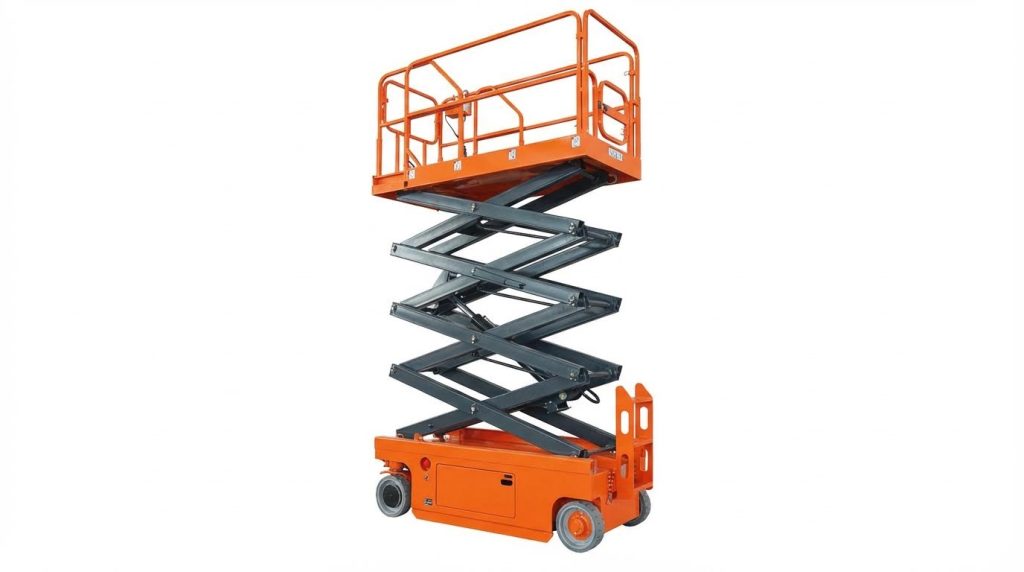
Electric scissor lifts are powered by on-board rechargeable battery packs and controlled charging systems that convert stored DC energy into safe, usable power for lift and drive motors. If you are asking what are electric scissor lifts powered by in real-world fleets, the answer is deep-cycle lead-acid, AGM, and lithium iron phosphate batteries managed by smart chargers and battery management systems. This guide explains how those power systems are built, sized, and maintained so you can maximize runtime, safety, and total cost of ownership across your scissor platform fleet.
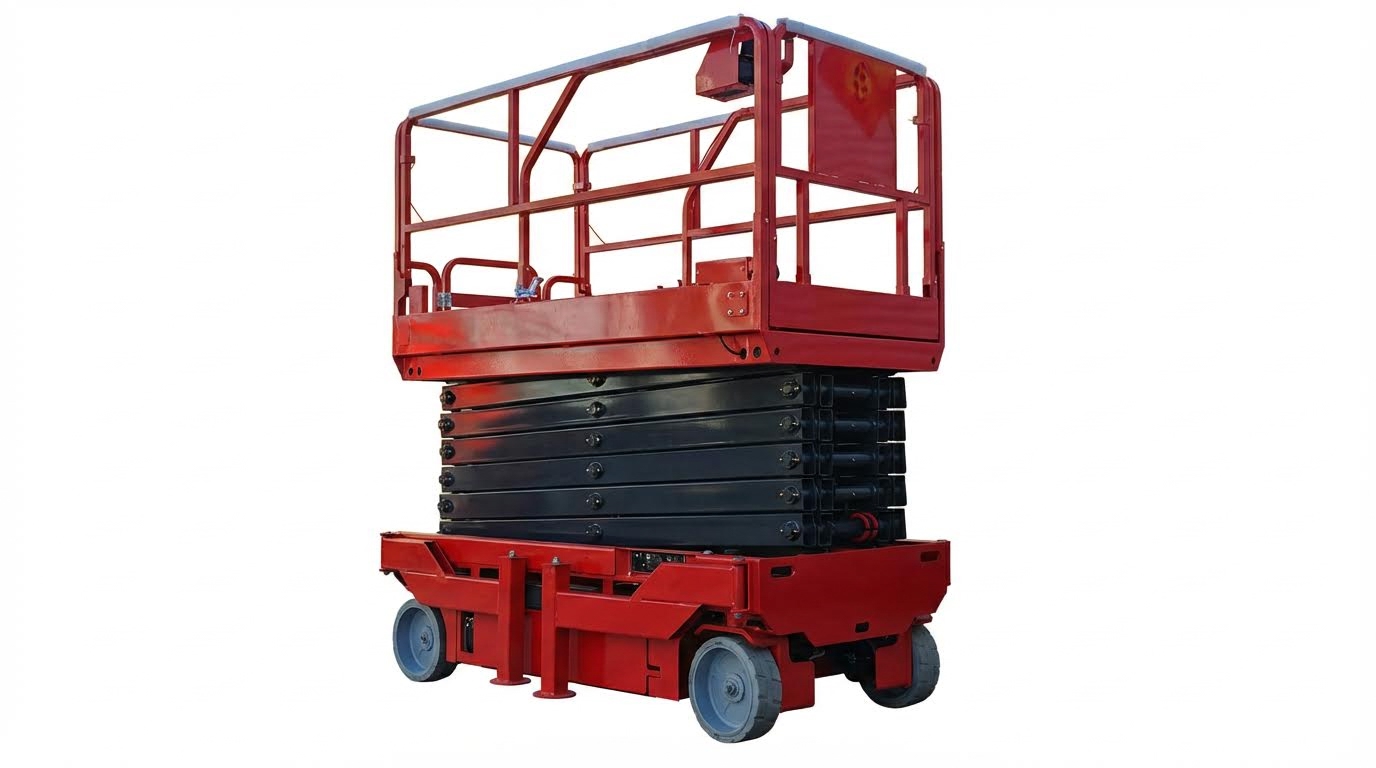
Power Sources Behind Electric Scissor Lifts
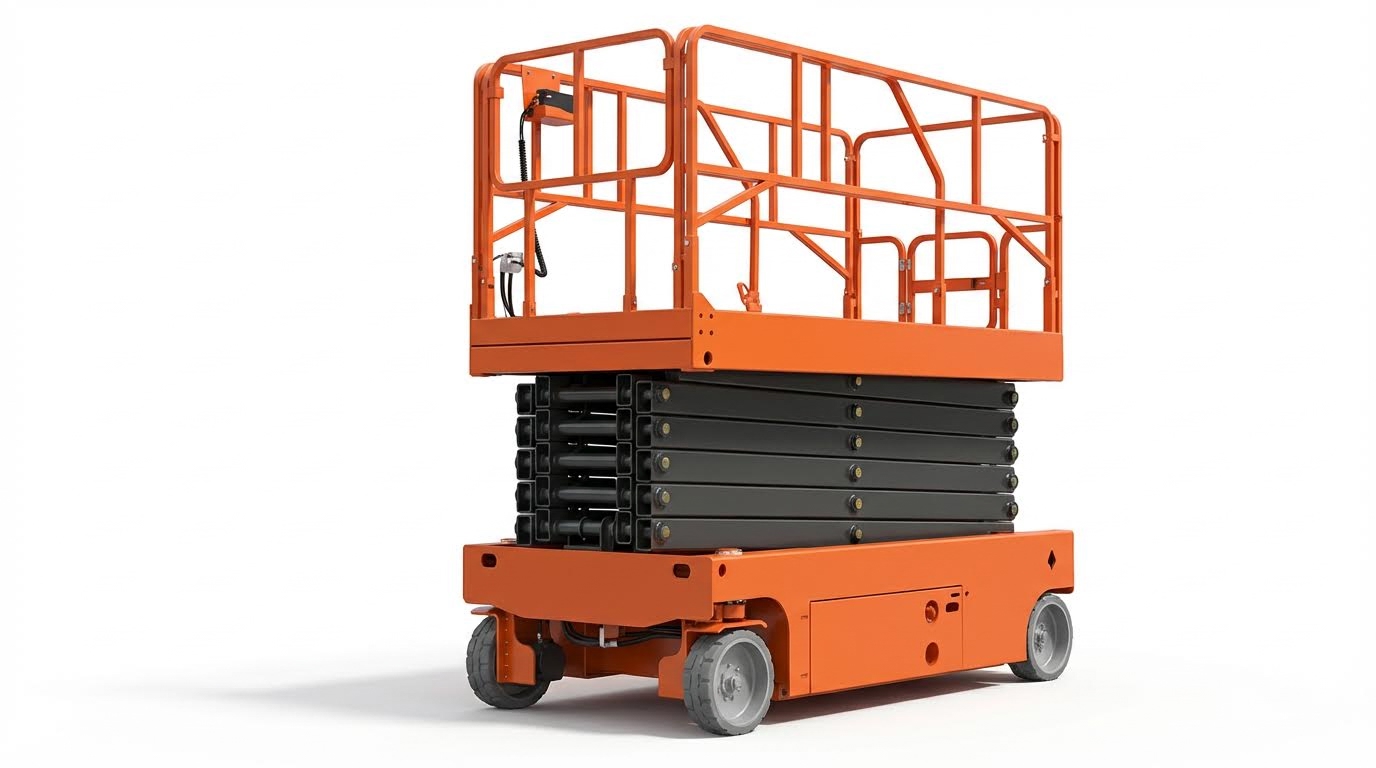
Electric scissor lifts are powered by on‑board rechargeable DC battery packs, most commonly 24 V or 48 V systems built from deep‑cycle lead-acid, AGM/VRLA, or lithium iron phosphate cells. Understanding these chemistries and voltage architectures is the real answer to “what are electric scissor lifts powered by.”
From an engineering standpoint, the power source defines runtime, weight, maintenance load, and safety envelope for every lift in your fleet. This section breaks down the chemistries and pack configurations that sit under the platform and quietly run your business.
Core battery chemistries used in scissor lifts
Electric scissor lifts are primarily powered by three battery chemistries: flooded lead-acid, sealed AGM/VRLA lead-acid, and lithium iron phosphate (LiFePO4) lithium-ion packs. Each chemistry trades off cost, maintenance, and lifecycle in a very different way.
If you want a search-ready answer to “what are electric scissor lifts powered by,” the practical response is: deep-cycle 24–48 V battery banks using one of these three chemistries, sized around 180–400 Ah depending on duty cycle. The table below compares how they behave in real work.
| Chemistry | Typical System Voltage | Typical Capacity Range | Key Characteristics | Operational Impact / Best For… |
|---|---|---|---|---|
| Flooded deep-cycle lead-acid | 24–48 V DC (multiple 6–12 V blocks in series) reference | ≈180–260 Ah at 24 V; 300–400 Ah at 48 V (20 h rate) reference | Lowest upfront cost, 6–8 h charge time, needs watering and equalization; sensitive to deep discharge and poor maintenance. | Best for single-shift, predictable overnight charging where trained staff can manage weekly watering and cleaning. |
| AGM / VRLA (sealed lead-acid) | 24–48 V DC (sealed blocks in series) reference | Similar Ah ranges to flooded lead-acid for same frame size. | Maintenance-free, sealed construction, higher cycle life than flooded, better vibration tolerance, no routine watering. | Best for rental fleets and sites with limited maintenance skills or where acid exposure must be minimized. |
| Lithium iron phosphate (LiFePO4) | 24–48 V DC nominal with integrated BMS reference | Often lower Ah than lead-acid for same usable energy due to deeper allowable discharge (e.g. 70–90% DoD). | Very long cycle life (>3,500–5,000 cycles in controlled use), fast charge in ≈1 h, high energy density, maintenance-free. reference | Best for multi-shift, high-utilization fleets needing fast charging, minimal downtime, and reduced overall battery replacements. |
- Flooded lead-acid: Requires regular watering, terminal cleaning, and equalization charging – low purchase price but high dependence on disciplined maintenance.
- AGM/VRLA: Sealed, spill-resistant, and maintenance-free – cuts labor and safety risk in tight indoor work zones.
- LiFePO4 lithium-ion: High cycle life, fast charging, and lighter packs – extends effective runtime and supports opportunity charging without sulfation penalties.
How battery chemistry affects daily runtime
For a given frame size, lithium packs typically deliver more usable kWh because they tolerate 70–90% depth of discharge versus 50–80% for lead-acid, and they hold voltage flatter under load. That translates into longer or more consistent runtime per charge for the same nominal Ah rating. reference
💡 Field Engineer’s Note: In real fleets, flooded lead-acid packs almost never hit their brochure life because watering and equalization slip under pressure. If your sites are busy and decentralized, sealed AGM or lithium often “wins” on uptime even if the spreadsheet says lead-acid is cheaper.
Voltage architectures and pack configurations
Most modern electric scissor lifts are powered by 24 V or 48 V DC architectures built by wiring multiple 6 V, 8 V, or 12 V batteries in series to reach the required system voltage. The exact configuration controls current levels, cable sizing, voltage sag, and how the machine behaves under heavy lift or drive loads.
From a controls and safety perspective, the voltage architecture is as important as chemistry when answering “what are electric scissor lifts powered by.” It dictates how the pack interacts with motor controllers, BMS, and smart chargers, and whether the lift trips low-voltage cutouts on steep ramps or fully loaded platforms.
| System Voltage | Typical Series Configuration | Use Case / Machine Class | Engineering Considerations | Operational Impact |
|---|---|---|---|---|
| 24 V DC | 4 × 6 V in series, or 2 × 12 V in series reference | Compact indoor scissors, lower platform heights, lighter duty cycles. | Higher currents for a given power level, so busbars and cables must handle more amperes; more sensitive to voltage sag. | Good for short wheelbase units in warehouses; may feel “sluggish” at low state of charge on ramps if batteries age or are undersized. |
| 36 V DC | Often 6 × 6 V in series (less common in new scissors, but used in some platforms). | Intermediate size machines and some legacy designs. | Balances current and voltage but increases series cell count and balancing complexity. | Transitional architecture; fleets often standardize either 24 V or 48 V for simplicity. |
| 48 V DC | 8 × 6 V in series, or 4 × 12 V in series for lead-acid; multi-cell lithium modules with integrated BMS for LiFePO4. reference | Larger platform heights, outdoor-capable scissors, heavier-duty cycles. | Lower current for same power, improving efficiency and reducing cable size; demands robust insulation and clearances. | Better hill-climb and drive performance with less voltage sag, especially with modern AC drive motors and regenerative features. |
- Series connection: Increases voltage while keeping Ah constant – lets you run higher power motors without massive current and copper losses.
- Voltage sag management: Controllers and BMS watch pack voltage under load – prevents brownouts and nuisance shutdowns when lifting at full height.
- BMS integration (lithium): Cell balancing and protection against over/under-voltage – maintains pack health and consistent runtime over thousands of cycles.
Why 24 V vs 48 V matters in tight aisles
At 48 V, the same kW demand draws roughly half the current of a 24 V system. That reduces cable I²R losses and voltage drop along harnesses, which is critical when operators feather drive and steer controls in 2.0–2.5 m aisles. Less sag means smoother proportional control and fewer low-voltage trips on acceleration.
💡 Field Engineer’s Note: If your lifts frequently “die” halfway up a ramp or during tight maneuvering, the issue is often pack voltage sag, not nominal capacity. Moving from a tired 24 V flooded bank to a well-sized 48 V lithium pack with a good BMS can transform drive feel and cut nuisance callouts.
“”
Selecting And Managing Power Systems For Your Fleet
Fleet managers should select and manage scissor lift power systems by matching battery chemistry and capacity to duty cycle, environment, and maintenance capability, then enforcing disciplined charging, inspection, and safety practices across all sites.
Matching chemistry and capacity to application profile
Electric scissor lifts are powered by on-board rechargeable battery packs, so the “right” power system depends on how hard and where your machines actually work.
When you ask what are electric scissor lifts powered by in a fleet context, the answer is usually deep‑cycle lead‑acid, AGM/VRLA, or lithium iron phosphate packs sized in the 24–48 V, 180–400 Ah range, tuned to your shift pattern and climate. Deep‑cycle flooded lead‑acid offers low upfront cost but needs watering and equalization, with typical 24 V systems using 200–260 Ah batteries and 48 V units 300–400 Ah or more for heavier work in industrial fleets. AGM/VRLA variants remove watering and improve cycle life, while lithium iron phosphate can exceed 3,500–5,000 cycles and support fast charging in roughly one hour, with much higher energy density and lower self‑discharge for demanding multi‑shift duty.
| Chemistry | Typical Voltage & Capacity | Maintenance Level | Best Application Profile | Operational Impact |
|---|---|---|---|---|
| Flooded lead-acid (deep-cycle) | 24–48 V, 180–260 Ah (24 V); 300–400 Ah (48 V) | High – watering, cleaning, equalization | Single-shift, predictable overnight charging | Low capex but needs skilled maintenance and 6–8 h charge windows |
| AGM / VRLA | 24–48 V, similar Ah to flooded | Low – sealed, no watering | Rental fleets, moderate multi-shift, limited maintenance staff | Higher purchase price, reduced downtime and acid exposure |
| Lithium iron phosphate (LiFePO4) | 24–48 V, Ah can be downsized due to deeper usable DoD | Very low – BMS-managed | High-utilization, multi-shift, fast-charge operations | Fast 1 h charging, >3,500–5,000 cycles; offsets higher capex over life |
Correct capacity sizing starts with measuring ampere‑hour draw per hour, multiplying by maximum shift length, then adding at least 20% safety factor to keep depth of discharge in a healthy band (about 50–80% for lead‑acid, 70–90% for lithium) under peaky lift/drive loads. For multi‑shift sites, lithium packs with fast chargers or controlled opportunity charging can replace oversized lead‑acid banks while still delivering 4–8 hours of effective work per full charge window, depending on terrain and loading in real-world duty cycles.
- Indoor warehouses: Favor AGM or lithium – low emissions, minimal maintenance, good cold-start behavior in chilled zones.
- Outdoor construction: Favor LiFePO4 with higher IP-rated enclosures – handles vibration, dust, and wide temperature swings.
- Low-skill maintenance regions: Favor AGM or lithium – reduces risk from missed watering and acid handling.
- Capex-constrained projects: Use flooded lead-acid with training – lowest purchase cost but higher lifetime labor and downtime.
How to translate Ah into expected runtime
Record average current draw (A) over at least one full shift. Multiply A by shift hours to get required Ah. Divide usable pack Ah (nominal Ah × allowable depth of discharge) by average A to estimate runtime, then validate against real field tests.
💡 Field Engineer’s Note: For fleets mixing 24 V and 48 V lifts, standardize chemistries by site. Mixed chemistries on common chargers cause more “mystery” failures than any other power decision, especially when operators swap connectors between incompatible charge profiles.
Maintenance practices, safety, and regulatory factors
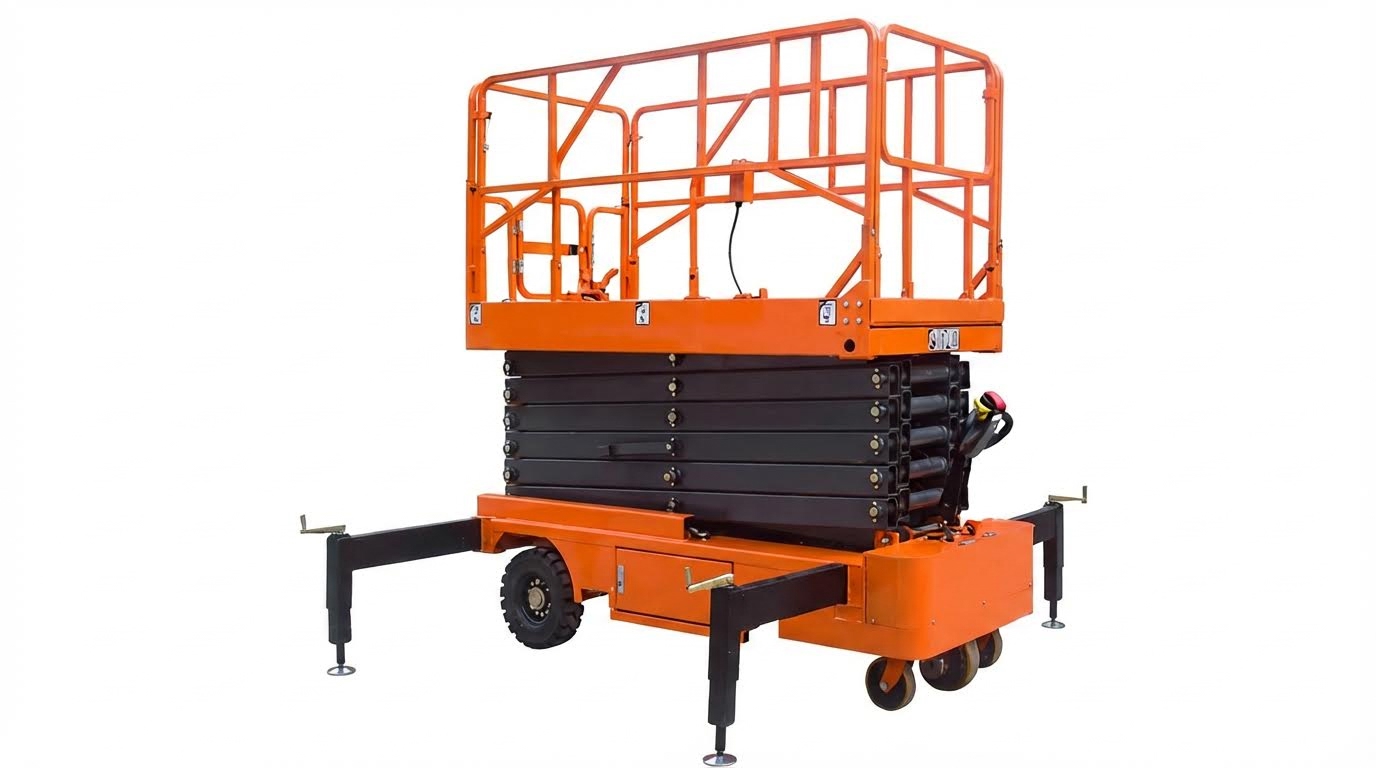
Once you choose what electric scissor lifts are powered by, disciplined maintenance and safety procedures determine whether you reach the advertised battery life or scrap packs in half the time.
Flooded lead‑acid batteries typically lasted 3–5 years under good care but dropped to 2–3 years or even 1–2 years with deep discharges, poor watering, and chronic undercharging in heavy-use fleets. Lithium-ion and LiFePO4 systems, protected by BMS and smart chargers, supported two to four times more cycles and aligned more closely with chassis life, provided charging profiles, temperature limits, and connector integrity were respected in modern designs. Across chemistries, routine visual inspection of cables, insulation, and terminals, plus cleaning with mild baking‑soda solution and terminal protectant, reduced resistance, heat, and voltage sag under lift or drive peaks during operation.
- Flooded lead-acid care: Check electrolyte weekly in heavy use – keep plates covered, avoid overfill to prevent spills during charge expansion.
- Equalization charging: Schedule controlled equalize cycles – limits cell imbalance and sulfate buildup on hard-worked packs.
- Smart charging policy: Use full overnight bulk/absorption/float cycles – avoid repeated 15–30 minute “opportunity” charges on lead-acid that shorten life.
- Lithium/BMS integration: Ensure chargers match BMS limits – protects against over-voltage, deep depletion, and over-temperature events.
- Telematics and analytics: Stream SoC/SoH and temperature data – lets you spot abnormal resistance growth or deep discharges before failures.
| Practice | Applies To | Key Action | Operational Impact |
|---|---|---|---|
| Watering and vent cap checks | Flooded lead-acid | Maintain electrolyte level after charging with distilled water | Prevents sulfation and plate exposure, extending life toward 3–5 years |
| Terminal cleaning & protection | All chemistries | Neutralize acid residue, remove corrosion, apply protectant | Reduces heat and voltage drop during heavy lifting or driving |
| Smart charger use in ventilated zones | All, critical for flooded | Follow correct voltage curves and temperature compensation | Mitigates overcharge, gas buildup, and fire/explosion hazards |
| Remote monitoring & alerts | AGM, lithium with BMS | Track depth of discharge, temps, and charge patterns | Supports predictive maintenance and better shift/charger planning |
| Environmental and RoHS compliance | All chemistries | Manage lead/acid handling, favor LiFePO4 to reduce toxic metals | Simplifies audits and reduces environmental liability at end-of-life |
Key safety and compliance checkpoints for charging areas
Provide ventilation to disperse hydrogen from flooded batteries. Keep battery compartments open during charge. Enforce PPE (goggles, gloves) for electrolyte handling. Ban smoking and open flames. Follow local electrical codes for wiring, breakers, and signage, and document procedures for inspections and incident response.
💡 Field Engineer’s Note: The fastest way to cut unexpected downtime is to standardize a 5-minute “plug-in and glance” routine at shift end: confirm charger status, cable strain relief, and that pack temperature feels normal by hand. Catching one cooked connector early often saves an entire pack.
Final Thoughts On Optimizing Scissor Lift Power Systems
Battery chemistry, voltage architecture, and maintenance discipline work together to decide how safe and productive your scissor lifts stay. The chemistry sets lifecycle, charge time, and maintenance load. The voltage system shapes current levels, cable sizing, and how the lift behaves on ramps and at full height. Maintenance and charging practice then either protect that design margin or destroy it early.
Operations teams should start by mapping real duty cycles, terrain, and maintenance skills at each site. Then they should pick flooded, AGM, or lithium packs and 24 V or 48 V systems that match that profile, not a brochure average. Lead-acid can work well where shifts are short and staff manage watering. Lithium with a good BMS suits high-utilization fleets that need fast, repeatable charging.
Once the power system is in place, enforce clear rules. Use matched smart chargers. Standardize charge windows. Inspect cables, connectors, and terminals on a fixed schedule. Tie BMS or telematics data into fleet planning. When you treat batteries, chargers, and controls as one engineered system, you cut downtime, reduce safety incidents, and extend pack life across your Atomoving scissor lift fleet.
Frequently Asked Questions
What are electric scissor lifts powered by?
Electric scissor lifts are powered by batteries, which provide energy to an electric motor. The most common types of batteries used are lead-acid and lithium-ion. Lithium-ion batteries are becoming increasingly popular due to their longer lifespan and faster charging times. Battery Comparison Guide.
Do electric scissor lifts use hydraulics?
No, electric scissor lifts do not rely on hydraulics for lifting. Instead, they use an electric motor powered by batteries to operate the lifting mechanism. This makes them more environmentally friendly as they don’t produce harmful emissions or require hydraulic fluids. Hydraulic vs Electric Lifts.