This guide explains how to get aerial platform operation certificate in clear, practical steps, from legal requirements to hands-on skills tests. You will see how regulations, hazards, and training content link together so your operators stay safe, efficient, and fully compliant. We cover platform types, OSHA and ANSI rules, course structure, documentation, and recertification cycles. Use it as a blueprint to design or audit your own AWP training program.
Understanding Aerial Work Platforms And Certification Scope
This section explains what aerial work platforms are, how their risks differ, and why certification rules tightly control who can operate each type. It sets the foundation for how to get aerial platform operation certificate in a compliant way.
To understand certification, you first need a clear picture of the main aerial platform families and the hazards they introduce. You then map those risks to the standards that govern training, evaluation, and operator authorization.
Common aerial platform types and risk profiles
Common aerial work platform types include boom lifts, scissor platform, vehicle‑mounted lifts, mast lifts, and specialty devices, and each carries a distinct risk profile that drives different training needs. Certification must match both the platform class and its typical operating environment.
Regulators and safety bodies group aerial work platforms by how they move people: straight vertical, vertical plus outreach, or vehicle‑mounted access. Those motion patterns, plus working height in meters, largely determine fall, tip‑over, and electrocution exposure. Understanding this is step one in how to get aerial platform operation certificate that actually fits your job.
| Platform Type | Typical Working Height Range | Key Motion Pattern | Dominant Hazards | Operational Impact / Best For… |
|---|---|---|---|---|
| Boom lift (telescopic or articulating) | 6–56 m (20–185 ft) height data | Vertical + horizontal outreach, rotation | Falls, tip‑overs, electrocution near power lines, swing radius strikes hazard overview | Best for façade work, steel erection, utilities; requires strict load, wind, and line‑clearance discipline. |
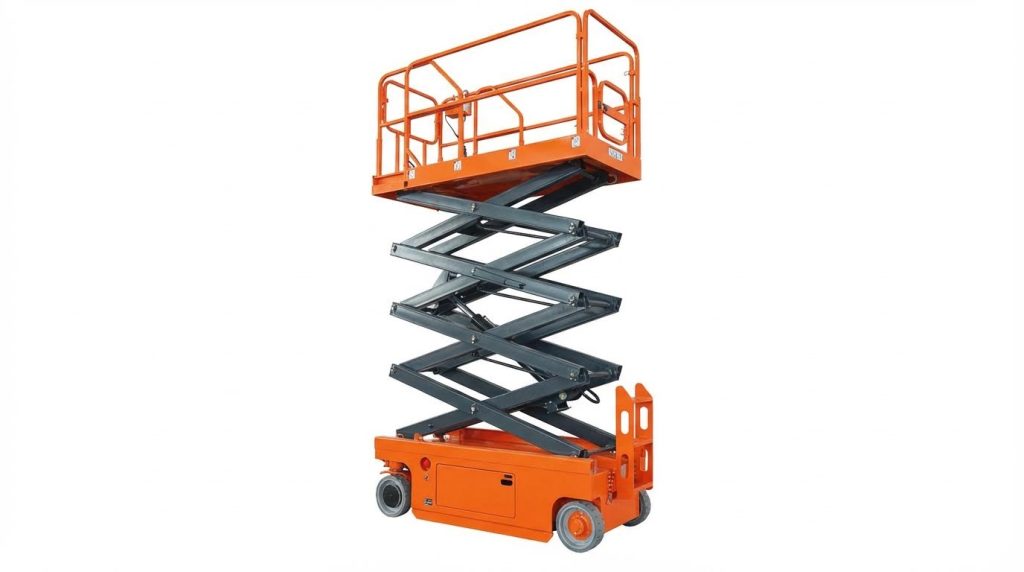
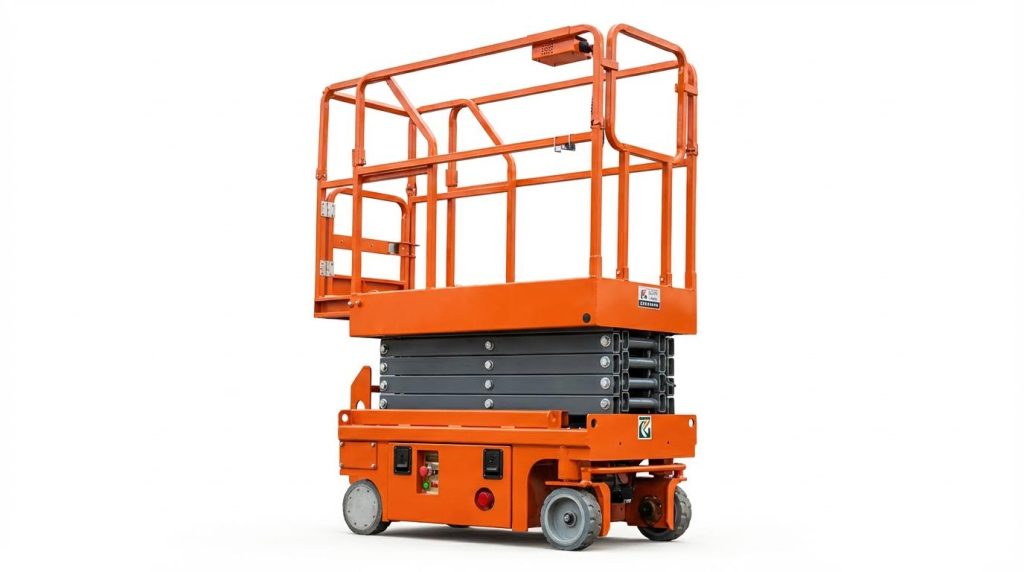
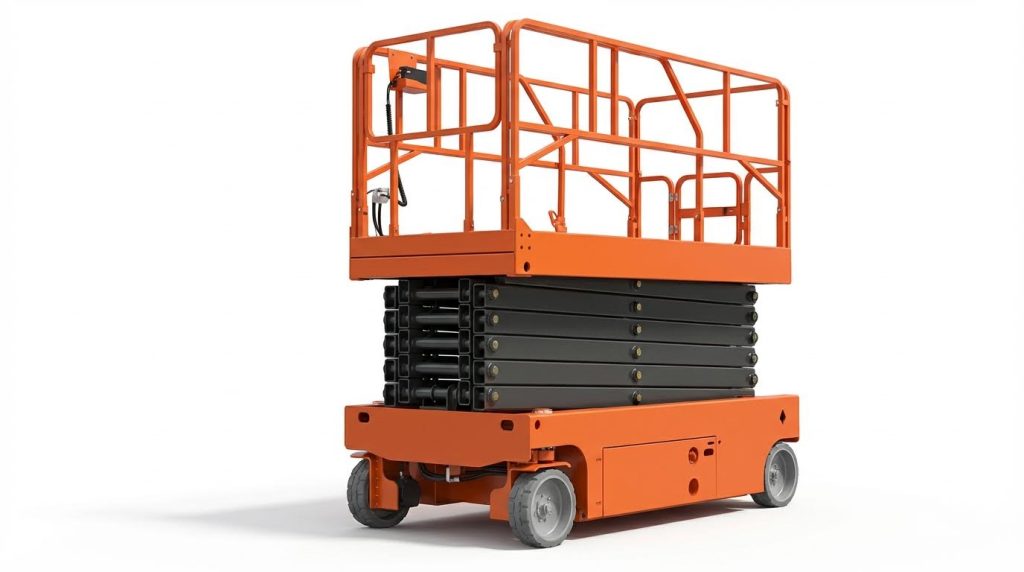
| Scissor lift | Up to ~18 m (60 ft) for common units height data | Vertical only, no outreach | Falls through open gates, platform ejection on sudden movement, tip‑over on slopes or holes risk description | Best for indoor maintenance, warehousing, fit‑out work on flat floors with tight lateral clearances. |
| Vehicle‑mounted aerial device | Typically 10–30+ m depending on chassis and boom definition | Outreach from truck or van, often roadside | Traffic impact, electrocution, tip‑over from poor outrigger setup, ground failure | Best for street lighting, telecom, tree work; demands traffic control and outrigger pad training. |
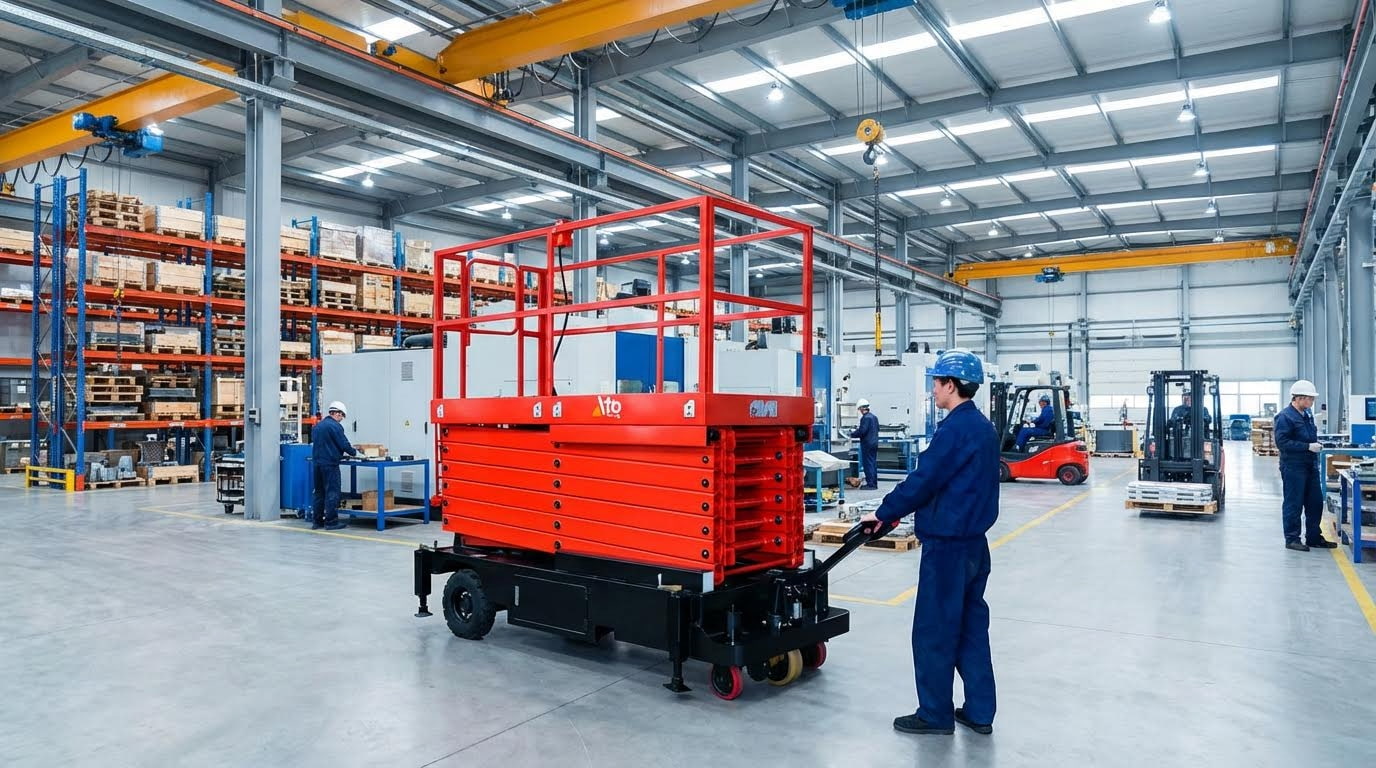
| Mast / vertical personnel lift | Up to ~12 m (40 ft) for light‑duty units height data | Compact vertical elevation, minimal outreach | Falls if guardrails misused, tip hazard on uneven floors, entrapment near ceilings | Best for single‑person inventory, light maintenance in tight aisles or congested plant areas. |
| Specialty units (spiders, rail‑mounted, insulated devices) | Varies; often 15–30 m on lightweight chassis | Tracked or rail motion plus boom articulation | Ground bearing failure, insulation damage, complex set‑up errors insulated device definition | Best for sensitive floors, inside malls, on slopes, or on energized lines where insulation integrity is critical. |
From a certification standpoint, boom‑type platforms usually need deeper coverage of outreach limits, swing hazards, and electrical approach distances. Scissor and mast lifts focus more on ground conditions, guardrail discipline, and safe driving in narrow aisles.
- Boom lifts: Long reach and rotation – require strong spatial awareness and strict wind/load control.
- Scissor lifts: Pure vertical motion – simpler controls but very unforgiving of holes, slopes, and open gates.
- Vehicle‑mounted lifts: Truck plus platform – add traffic, outrigger, and parking geometry to the risk mix.
- Insulated aerial devices: Electrically rated booms – demand training on insulation care and power‑line approach limits.
How platform type affects your certification card
OSHA requires that employers train and evaluate operators on the specific equipment used, not just “aerial lifts” in general. A boom‑only certificate does not automatically qualify someone for scissor lifts, and vice versa, unless the employer’s evaluation clearly covers both categories. See OSHA 1910.67 and related guidance.
💡 Field Engineer’s Note: In real plants, more tip‑overs have come from small scissor lifts on bad floors than from big booms. Operators underestimate 30–50 mm floor height changes, drain covers, or ramp transitions; training must drill ground scanning, not just joystick skills.
Regulatory standards that drive certification
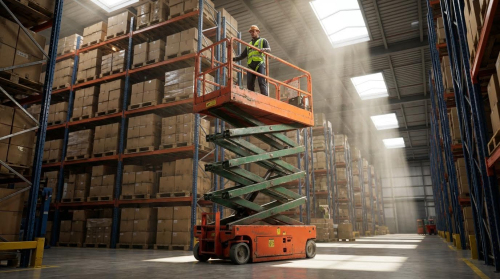
Regulatory standards such as OSHA 29 CFR 1910.67, 1926.453, and the ANSI A92 series define when aerial lift certification is required, what training must cover, and how employers document operator authorization. These rules are the legal backbone of how to get scissor platform lift operation certificate that will stand up to an audit.
In the United States, OSHA regulations mandate that only trained and authorized workers operate aerial lifts, and that employers provide both instruction and evaluation before use. ANSI standards then add engineering and safe‑use detail that training programs typically adopt as best practice.
| Standard / Rule Set | Scope | Key Certification Requirements | Operational Impact |
|---|---|---|---|
| OSHA 29 CFR 1910.67 (General Industry) | Vehicle‑mounted elevating and rotating work platforms in non‑construction settings regulation text | Only trained personnel may operate; daily control tests; compliance with ANSI A92.2‑1969 for design and modification. | Employer must prove operators were trained for the specific aerial device and that daily checks are done before use. |
| OSHA 29 CFR 1926.453 (Construction) | Aerial lifts on construction sites framework summary | Training, evaluation, and authorization of each operator; adherence to manufacturer’s instructions and load limits. | Site‑specific authorization is required; a wallet card alone is not enough without employer sign‑off. |
| ANSI A92 series | Design, safe use, and training guidance for mobile elevating work platforms (MEWPs) standard overview | Defines platform classes, stability criteria, and recommended training content for operators and supervisors. | Training programs align content to platform class (e.g., boom vs scissor), improving relevance and audit defensibility. |
| OSHA eTool guidance | Practical safe‑use guidance and inspection checklists for aerial lifts inspection and hazard guidance | Pre‑start inspections, work‑area hazard assessment, and safe‑operation practices. | Forms the backbone of many theory modules and pre‑use checklists in certification courses. |
| International rules (example: Japan) | Local aerial platform safety laws outside the U.S. international example | Special education below 10 m; skills training required at or above 10 m; minimum age often 18 years. | Multinational sites must map each facility to its own rule set rather than assuming OSHA rules apply everywhere. |
OSHA also makes clear that employers, not training vendors, are responsible for the final authorization. Even if a worker passes an online course, the employer still has to ensure hands‑on evaluation on the actual equipment and keep written proof of training and evaluation on file. Typical certification programs bundle this into theory modules, practical testing, and a card valid for about three years, with retraining required after incidents or equipment changes.
- Employer duty: Train, evaluate, and document – OSHA places legal responsibility on the company, not the operator alone.
- Operator duty: Follow procedures and refuse unsafe work – certification is conditional on ongoing safe behavior. Responsibility split
- Rental companies: Explain basic controls only – they cannot issue site‑specific authorization under OSHA.
How standards translate into a real certificate
In practice, “how to get aerial work platform operation certificate” means completing OSHA‑aligned formal instruction, passing written and practical tests, and then receiving employer authorization that lists the platform types you may operate. The certificate is only as strong as the documentation trail behind it: training dates, content, trainer identity, and equipment classes covered all need to be recorded. Online course flows and OSHA recordkeeping guidance support this.
💡 Field Engineer’s Note: During audits, inspectors rarely argue about slide decks; they ask for operator names, the specific lift types they were evaluated on, and dates tied to incidents. If those three fields are clean, your certification program usually holds up under OSHA and insurer scrutiny.
Technical Path To Earning An Operator Certificate
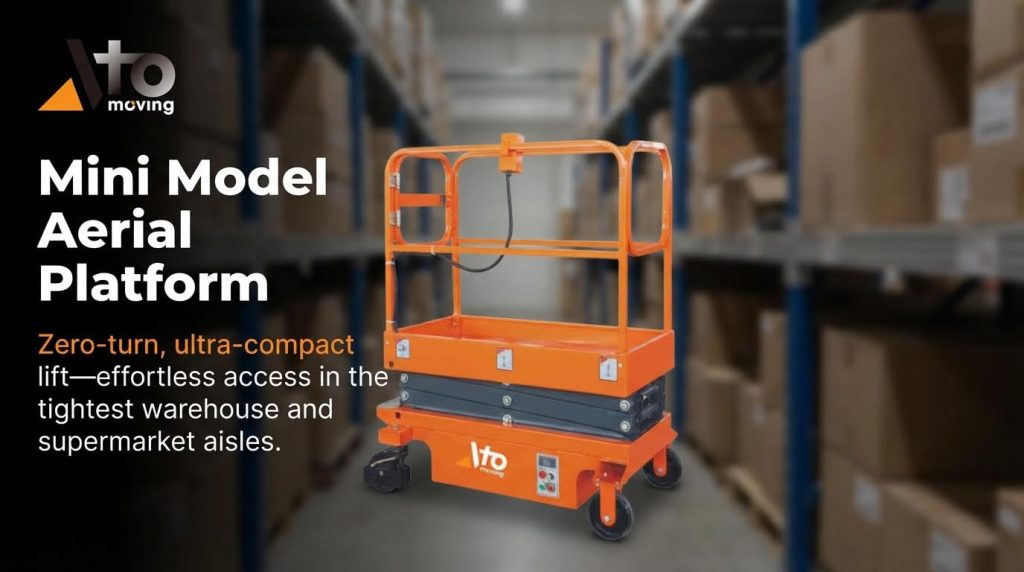
The technical path for how to get aerial work platform operation certificate follows a fixed sequence: meet entry criteria, complete formal theory, pass a hands-on skills evaluation, and receive employer-issued authorization that matches specific lift types and job tasks. This path must align with OSHA 29 CFR 1910.67 and 1926.453, plus relevant ANSI A92 standards. Regulations require documented training, evaluation, and certification before use.
Entry requirements, medical fitness, and age limits
The entry gate for aerial platform training focuses on legal age, basic literacy, and fitness to work at height and operate mobile machinery safely. Employers must screen candidates before they start any formal or practical modules.
- Minimum age: Commonly 18 years – Aligns with typical labor rules for hazardous work and aerial platform courses in many countries. Some jurisdictions explicitly require 18 years for aerial platform training.
- Literacy and language: Able to read safety instructions and labels – Ensures operators understand decals, load charts, and site rules.
- Medical fitness: No uncontrolled vertigo, seizures, or severe heart / balance disorders – Reduces risk of collapse or panic at 10–20 m working height.
- Vision and hearing: Adequate corrected vision and hearing – Supports spotting obstacles, reading instruments, and hearing spotter or alarm signals.
- Physical capability: Sufficient strength and mobility – Needed for emergency descent, manual lowering, and climbing in/out of platforms safely.
- Behavior and attitude: Low tolerance for risk-taking and substance abuse – Supports a safety-first culture around high-consequence equipment.
How employers typically document fitness
Many employers use a short medical questionnaire, supervisor review, and where required by local law, an occupational health exam. Records stay with HR or safety, not in the lift itself.
💡 Field Engineer’s Note: When planning how to get aerial work platform operation certificate for night-shift or cold-storage crews, factor in cold-induced vertigo and reduced dexterity below 0°C; borderline candidates may be safe at 4–6 m but not at 15 m in wind.
Formal theory training: OSHA, ANSI, and hazard modules
The formal theory phase explains regulations, equipment types, and key hazards so operators know the “why” behind every control and limit. It usually combines classroom or online modules with quizzes tied to OSHA and ANSI content.
OSHA requires that operators receive formal instruction covering regulations, equipment, and hazards before they are evaluated in the field. Typical courses cover 29 CFR 1910.67, 1926.453, equipment types, pre-use checks, fall protection, and emergency procedures.
| Theory Module | Key Content | Linked Standard / Source | Operational Impact |
|---|---|---|---|
| Regulatory overview | OSHA 1910.67, 1926.453 duties; employer vs operator roles | OSHA aerial lift standard | Clarifies that only trained, evaluated operators may use lifts. |
| Equipment types and limits | Boom vs scissor vs vehicle-mounted; height and outreach ranges | Risk profiles by lift type | Ensures certification matches actual platform class on site. |
| Core hazards | Falls, tip-overs, electrocution, collisions, entrapment | Hazard breakdown | Reduces high‑energy incidents at heights above 6–10 m. |
| Fall protection | Harness use, anchor points, guardrail rules, travel restraint | OSHA fall protection guidance | Prevents falls when gates open or platforms jolt. |
| Pre-use inspection | Daily control tests, structural checks, tyres, outriggers | Pre-start checklist | Catches defects before raising people to 10–20 m. |
| Work area assessment | Overhead lines, slopes, holes, wind, traffic, obstructions | Work area hazards | Prevents power-line contact and tip-overs on poor ground. |
| Emergency procedures | Emergency lowering, loss of power, platform entrapment | Course content outline | Improves survival odds when hydraulics or controls fail at height. |
- Delivery mode: Classroom or online, self-paced – Allows large crews to complete modules without stopping all production.
- Assessment: Short quizzes plus a final written test (often ≥70% pass score) – Confirms operators absorbed hazard and rule content. Typical online courses use module quizzes and a final exam.
- Documentation: Attendance, test scores, and topics covered – Forms the theory part of the operator’s certification record. Digital systems store course completions and quiz scores.
💡 Field Engineer’s Note: When people ask how to get aerial work platform operation certificate fast, resist the urge to skip deep hazard modules; most serious incidents I investigated came from operators who “knew the controls” but never understood wind, slope, or power-line limits.
Practical skills evaluation on specific platform classes
The final step in how to get aerial work platform operation certificate is a hands-on skills test on the exact lift types the operator will use. OSHA requires employers to evaluate performance and document that evaluation before authorizing operation.
Hands-on training and evaluation move trainees from theory to real equipment. Trainers demonstrate start-up, function tests, safe driving, elevation, and emergency actions, then observe trainees repeating each task. Failed evaluations should trigger extra coaching and retest.
- Step 1: Match platform class – Test on each category the operator will actually use (e.g., boom vs scissor vs vehicle-mounted) to reflect different stability and control layouts. Risk profiles differ by lift type.
- Step 2: Pre-use inspection drill – Operator walks around the unit, checking tyres, outriggers, guardrails, placards, and control labels to catch defects before elevation. OSHA details pre-start inspection points.
- Step 3: Control function test – Operator tests all movements from ground and platform controls to verify safe operation before leaving ground level. Lift controls must be tested daily before use.
- Step 4: Safe mounting and fall protection – Operator demonstrates 3‑point contact, closes gates, and properly uses harness or restraint system to prevent falls. OSHA requires fall protection systems and closed gates.
- Step 5: Driving and positioning – Operator drives, turns, and positions the lift around obstacles while respecting speed limits, slopes, and clearances to avoid collisions and tip-overs. Tip-overs and collisions are major risks.
- Step 6: Elevating and working aloft – Operator raises to a realistic working height, maintains stable position, keeps within guardrails, and handles tools without overreaching.
- Step 7: Power-line and overhead clearance demo – Operator shows they can maintain at least 3 m (10 ft) from energized lines and avoid overhead obstructions. OSHA requires 3 m clearance from power lines.
- Step 8: Emergency lowering and shutdown – Operator or evaluator uses emergency controls to lower the platform, then parks, secures, and powers down the lift correctly.
- Evaluator role: A “qualified person” observes and scores each task – Ensures only competent operators receive certificates. Employers must evaluate operator performance.
- Outcome: Pass = operator certified on that platform type; Fail = remedial coaching plus retest – Prevents weak operators from being turned loose at height.
- Recordkeeping: Employer keeps written proof linking person, platform type, and evaluation date – Provides evidence during OSHA or insurance audits. Digital systems store evaluation dates and certificates.
💡 Field Engineer’s Note: For mixed fleets, do not assume a scissor-lift card covers booms; boom lifts add swing, outreach, and much higher tip-over risk, so run a separate practical evaluation for every major platform class on site.
Designing A Compliant, Efficient Training Program
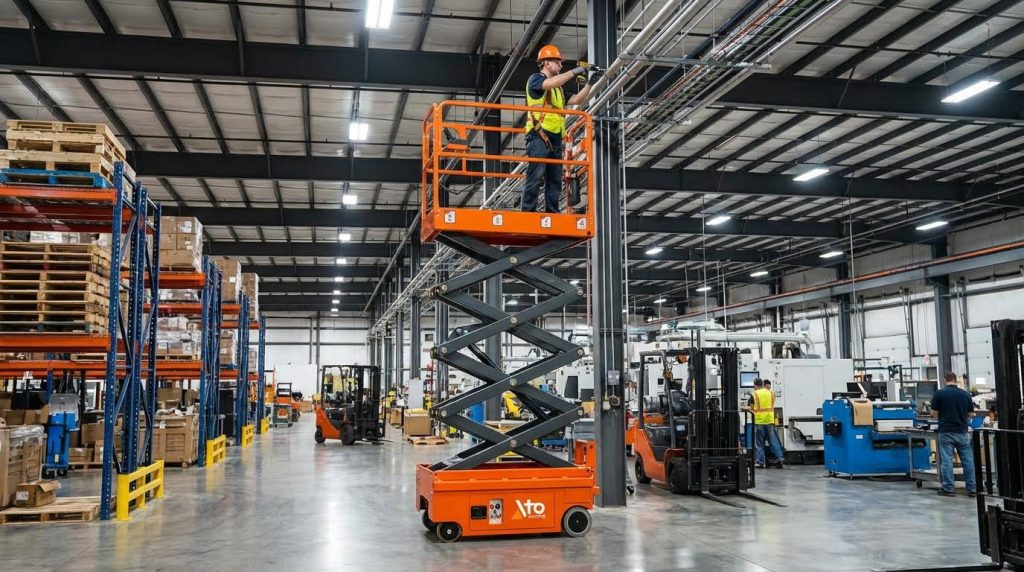
Designing a compliant, efficient aerial work platform training program means mapping OSHA/ANSI rules to your exact machines, sites, and job tasks so operators earn valid certificates with minimum downtime and maximum risk reduction. This is the real backbone of how to get aerial work platform operation certificate inside a business, not just pass an online test.
OSHA requires employers to train, evaluate, and authorize each operator before aerial lift use, and to document that process for every person and equipment type. A well-designed program turns those legal obligations into a repeatable, auditable workflow that fits production schedules and budget limits.
Matching training content to platform type and job tasks
Matching training content to platform type and job tasks ensures each operator is certified only on the aerial platform they actually use, under the hazards they really face. This is the first engineering step in how to get aerial work platform operation certificate that truly protects people, not just paper compliance.
OSHA standards for aerial devices in general industry and construction require training that covers regulations, equipment types, and key hazards such as falls, tip-overs, and electrocution. Formal instruction must be paired with hands-on practice and a performance evaluation. Different aerial work platforms—boom lifts, scissor lifts, vehicle-mounted lifts, and vertical towers—have distinct stability limits, outreach patterns, and control layouts, so training content must mirror those differences. Risk profiles depend heavily on movement pattern and working height, which should drive your lesson plans and practical exercises.
| Platform Type | Typical Working Height Range | Key Risk Profile | Training Focus Areas | Operational Impact |
|---|---|---|---|---|
| Boom lift (articulating / telescopic) | 6–56 m (20–185 ft) height capacity data | High fall and tip-over risk due to outreach and rotation | Fall protection use, wind limits, load charts, swing radius, power line clearance | Best for outdoor, high-reach work; needs strong emphasis on stability and electrocution hazards |
| Scissor platform | Up to ~18 m (60 ft) for common units scissor lift range | Mainly vertical motion; crush and guardrail misuse risks | Guardrails, gate use, platform loading, indoor traffic, floor loading | Best for warehouses and maintenance with tight aisles and flat floors |
| Vehicle-mounted lift / aerial device | Typically 10–30 m (approximate common utility ranges) | Traffic hazards, roadside setup, power line proximity | Outrigger placement, work zone protection, truck positioning, insulated vs non-insulated buckets | Best for utility, street lighting, and roadside tree work with strong focus on traffic control |
| Personnel / mast lift | Up to ~12 m (40 ft) personnel lift data | Confined-space maneuvering, entrapment, and overhead obstructions | Pre-use checks, tight turning, overhead clearance, emergency lowering | Best for light maintenance and inventory work inside buildings |
- Map platform classes: List every aerial work platform type and model on site – ensures operators are trained on the actual control layouts they will use.
- Map job tasks: Link each job (e.g., façade cleaning at 20 m, warehouse picking at 9 m) to platform types – aligns training scenarios with real exposure.
- Define hazard set: For each task, define likely hazards: falls, tip-over, electrocution, traffic – drives targeted modules rather than generic slide decks.
- Assign learning outcomes: For each platform/task pair, specify what the operator must do safely – gives clear pass/fail criteria for evaluation.
Example: Task-to-training mapping for a warehouse project
For a warehouse installing sprinkler pipe at 11 m using scissor lifts, theory should emphasize load limits, overhead obstructions, and floor loading. Practical training must include driving elevated in narrow aisles, positioning under beams, and emergency lowering drills.
💡 Field Engineer’s Note: In mixed fleets, operators often assume all joysticks behave the same. Always include a walk-through of each control console and an on-ground function test whenever they switch between models, even within the same platform class.
Recordkeeping, digital tools, and audit readiness
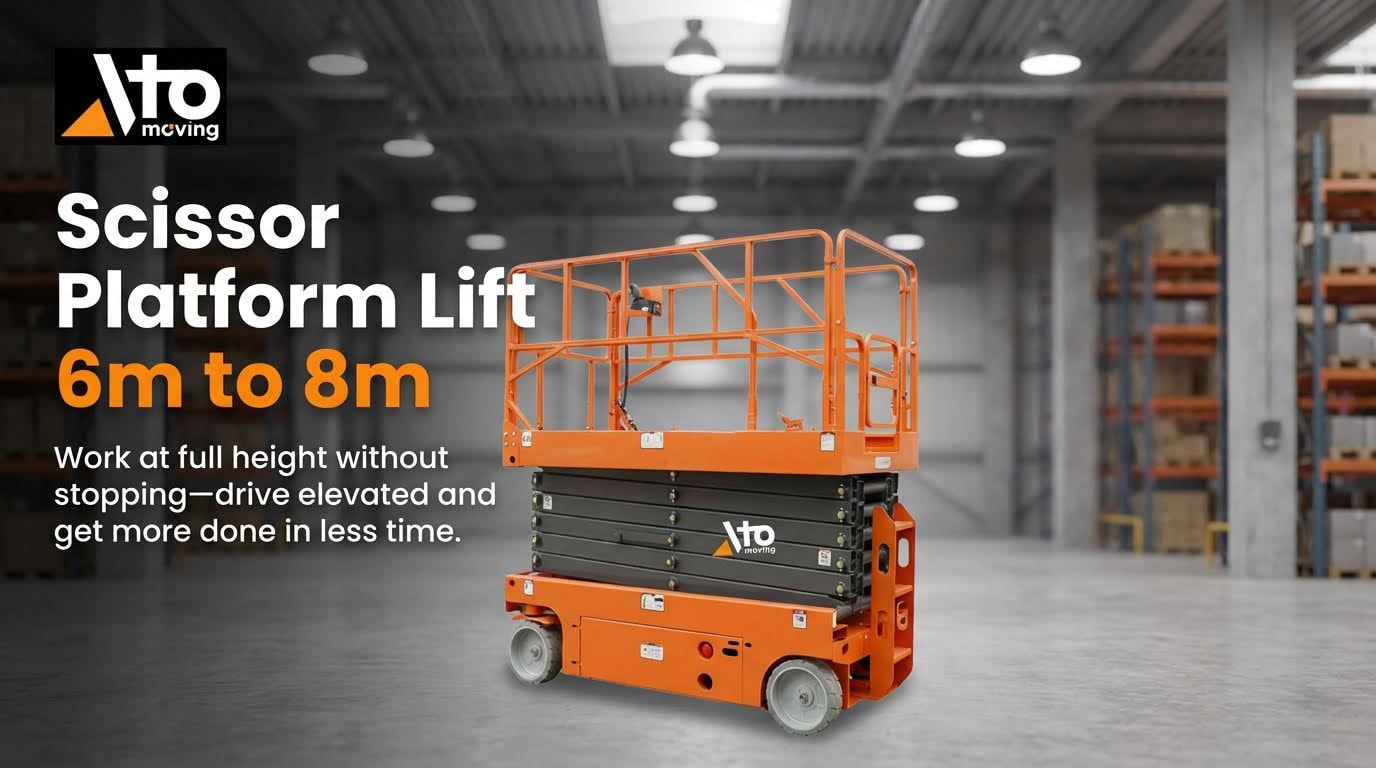
Robust recordkeeping and digital tools make your aerial work platform training program auditable, easy to manage, and ready for OSHA or client inspections at any time. This is where many companies either prove or lose their story of how to get aerial work platform operation certificate for every operator on site.
OSHA requires written proof that each operator was trained and evaluated, and that records link the person, the equipment type, and the evaluation date. Good practice extends this by using digital systems that store certificates, refresher due dates, and incident history in one database. Integrating training records with equipment asset IDs shows that training covered the actual platform type and control layout in use, which is critical when justifying authorizations to regulators or insurers.
| Record Type | Minimum Content | Storage Method | Operational Impact |
|---|---|---|---|
| Training roster | Names, dates, course title, trainer identity, platform types covered employer documentation duty | Digital LMS or spreadsheet | Proves who attended which course; simplifies recertification planning. |
| Evaluation checklist | Site, platform model, tasks performed, pass/fail items, evaluator signature performance evaluation requirement | Mobile app or scanned forms | Defensible evidence that operators demonstrated skills on real equipment. |
| Operator certificate/card | Operator name, platform class(es), issue date, expiry date | Digital wallet + printable card | Enables quick field checks; supports contractor prequalification. |
| Incident and near-miss log | Date, platform, operator, description, corrective actions | Safety system integrated with HR | Feeds trigger-based retraining and trend analysis. |
- Centralize data: Use one digital system for all aerial work platform training – prevents gaps when operators move between sites or supervisors.
- Link to assets: Tie each training event to specific platform models or asset IDs – proves that training matched the real machine configuration.
- Automate reminders: Configure alerts 90, 60, and 30 days before certificate expiry – avoids last-minute scrambles and unplanned downtime.
- Enable field access: Give supervisors mobile access to training status – lets them verify authorization before handing over keys.
What an OSHA-friendly digital training record should show
For each operator, an inspector should be able to see completed theory modules, quiz scores, hands-on sessions, the evaluator’s name, the date of evaluation, the platform type, and any follow-up coaching after incidents or unsafe behavior.
💡 Field Engineer’s Note: During client audits, the fastest way to build trust is to pull an operator’s record on a tablet beside the machine they are using. If the platform class, model, and evaluation date all line up, auditors usually move on quickly.
Recertification triggers, intervals, and cost control
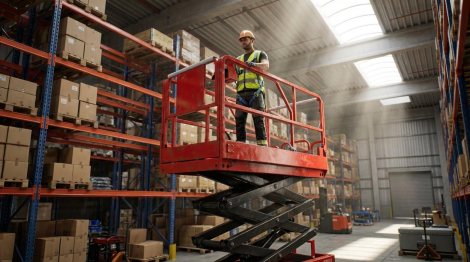
Defining clear recertification intervals and trigger events keeps operators competent while controlling training costs and downtime. This is the final piece in how to get aerial work platform operation certificate to stay valid over the long term, not just on day one.
Aerial lift certifications commonly run on a three-year validity period, after which employers must recertify operators. OSHA-aligned programs typically pair this cycle with retraining after accidents, near misses, or equipment changes. Separate guidance on aerial work platforms notes that employers must retrain or re-evaluate operators when there is a recordable incident, evidence of unsafe behavior, introduction of new equipment, or long gaps without operating the equipment. These trigger events are as important as the calendar interval.
| Recertification Element | Typical Value / Practice | Cost Range (Per Person) | Operational Impact |
|---|---|---|---|
| Standard recertification interval | Every 3 years for aerial lift certification validity 3-year cycle | 50–150 USD for refresher courses recertification cost | Allows planning of training blocks during low-production periods. |
| Trigger: accident or near miss | Immediate retraining and re-evaluation after incident | Same as refresher; may include overtime | Addresses root causes; shows regulators a corrective action trail. |
| Trigger: new equipment type | Task-specific and model-specific training before use | Varies; can be bundled in on-site group training | Prevents misuse when outreach, controls, or stability differ. |
| Trigger: long inactivity | Short skills check after long periods without operating | Minimal; usually 1–2 hours of internal trainer time | Restores muscle memory and hazard awareness. |
| Initial certification | Full theory + practical + evaluation | 75–400 USD depending on online vs in-person format cost range | Highest cost; best minimized by batching new hires into groups. |
- Standardize the interval: Publish a simple rule: “All aerial work platform operators recertify every 3 years” – reduces confusion and missed deadlines.
- Define triggers in policy: List incidents, unsafe acts, new machines, and long inactivity as automatic retraining triggers – gives supervisors clear authority to pull operators for refreshers.
- Batch training: Group operators by platform type and expiry month – cuts per-head cost and reduces repeated downtime.
- Use blended learning: Put theory online and keep practical on-site – operators can study off-shift, leaving work hours for hands-on evaluation.
How to budget recertification for a 20-operator fleet
If recertification costs about 75–150 USD per person and you stagger 20 operators over 3 years, you are typically budgeting 500–1,000 USD per year for refreshers, plus internal trainer time. Batching by site and platform type usually recovers this in reduced incidents and avoided regulatory fines.
💡 Field Engineer’s Note: The cheapest recertification is the one you plan 6–12 months ahead. When plants wait until certificates expire, they end up paying rush fees, overtime, or accepting production delays because nobody is legally allowed to take a platform up.
Final Thoughts On Safe, Compliant AWP Operation
Safe aerial work platform operation depends on three linked pillars: correct platform selection, standards-based training, and hard proof of competence. Geometry, reach, and motion pattern define the hazard set for each lift. Your training and authorization must follow those limits, not a generic “aerial” label. When you map tasks to platform type and risk profile, you cut tip-overs, power-line contacts, and falls before they start.
OSHA and ANSI rules give a clear engineering framework. They tell you who may operate, what theory to teach, how to test skills, and what to record. Your job is to turn that framework into a tight workflow: pre-screen operators, deliver focused theory, run platform-specific practical tests, then document everything in a system you can show an inspector in minutes.
The best practice is simple. Treat every new platform class, incident, or long inactivity as a trigger to retrain. Keep digital records tied to real machine models. Never let a card outrun the operator’s actual skills. If you follow that discipline, your aerial work platforms stay productive tools instead of high-risk liabilities, and your Atomoving equipment runs under operators you can trust at any height.
Frequently Asked Questions
How to Get an Aerial Work Platform (AWP) Operation Certificate?
To operate an aerial work platform, you need proper certification. This process typically involves completing training and passing an assessment. First, go through educational material covering safety and operational guidelines. Then, complete an in-person evaluation to demonstrate your skills. AWP Certification Details.
- Complete online or classroom training.
- Pass a practical evaluation.
- Receive certification validating your competence.
Do You Need a Special License to Operate an Aerial Work Platform?
Yes, you need certification to operate an aerial work platform. This certification ensures you understand safety protocols and can operate the equipment safely. While not a “license” in the traditional sense, it is mandatory for both operators and supervisors. Boom Lift Certification Guide.