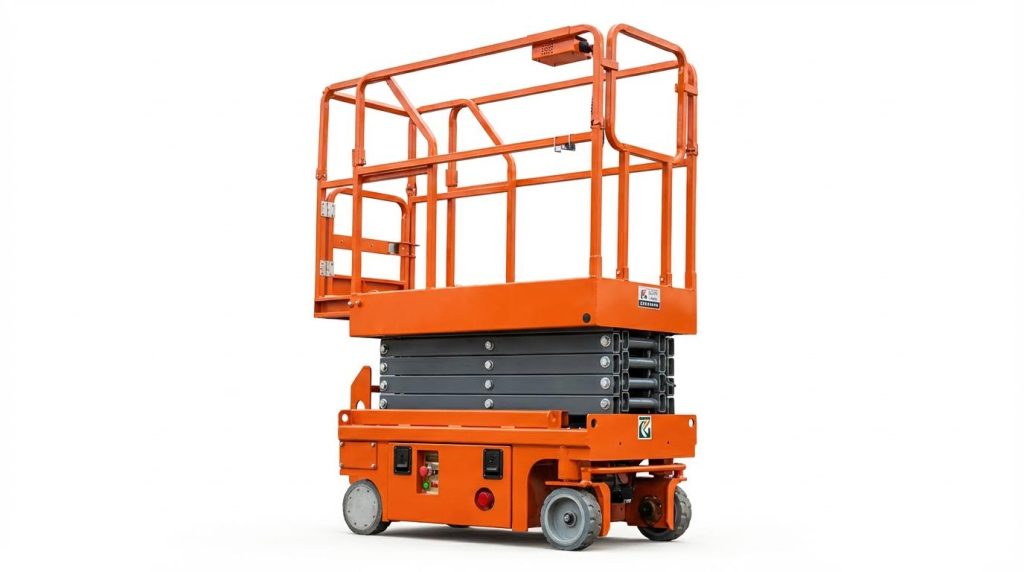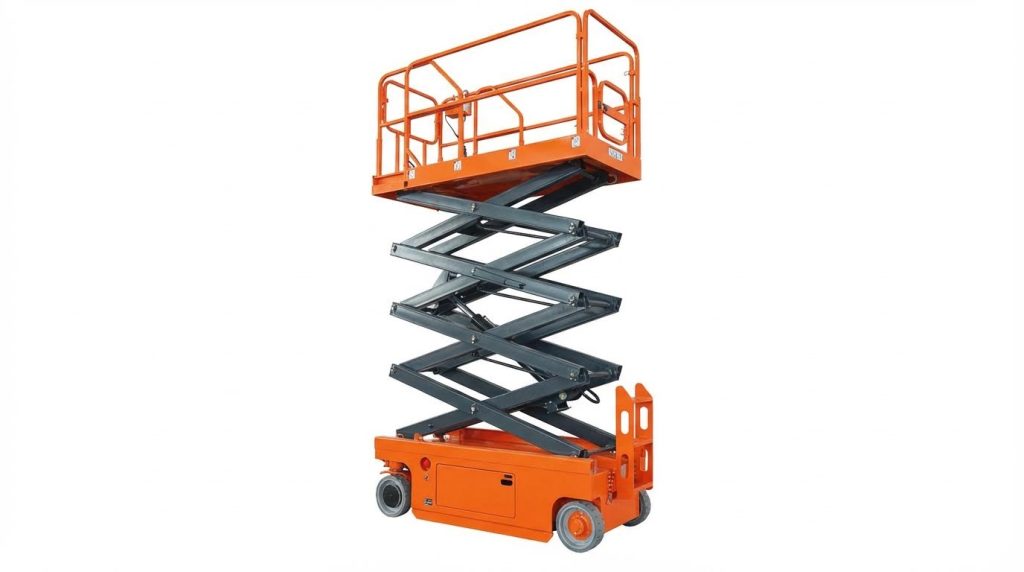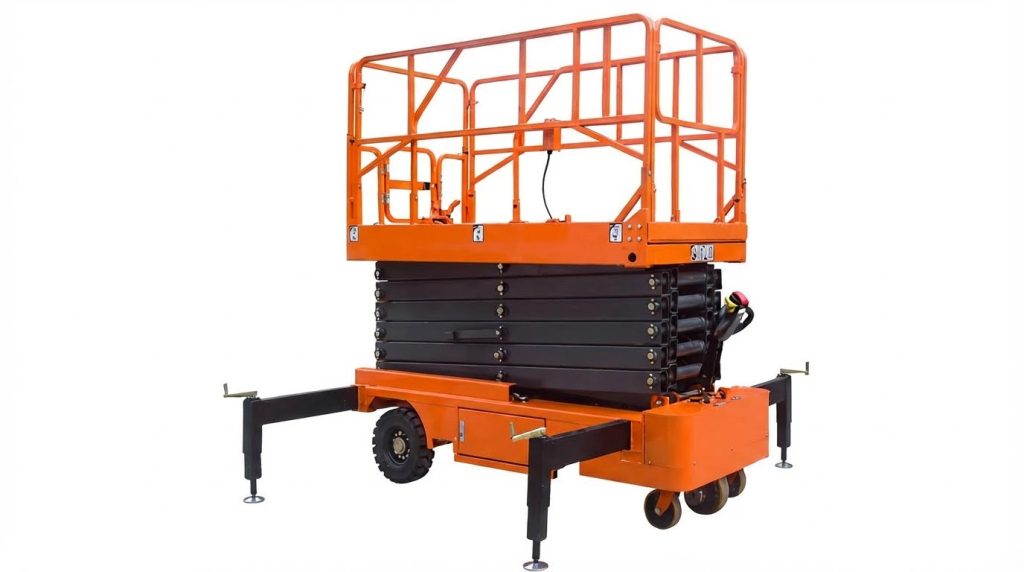
Scissor lift fall protection starts with guardrails, but harnesses become critical when those rails or work practices no longer keep you inside the platform envelope. This guide explains when a harness is required, how to size the system safely, and how to train operators so they can answer “is fall protection required in scissor platform lifts” correctly on every job.
You will see how OSHA views guardrails versus personal fall arrest, what engineering limits matter (forces in kilonewtons and clearances in meters), and how to build simple, repeatable inspection and training routines that actually work in the field—not just on paper.
When Scissor Lift Fall Protection Is Required
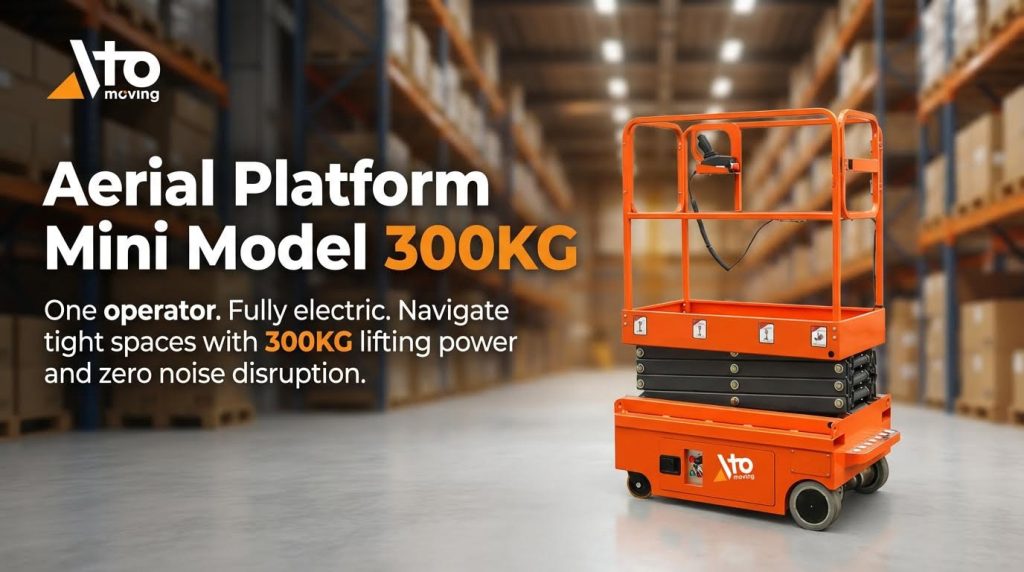
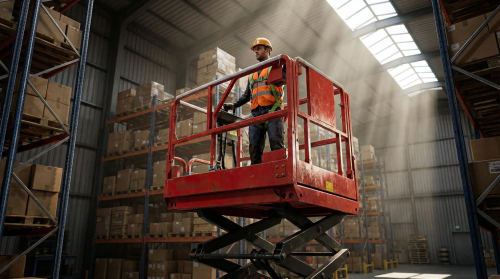
Fall protection on scissor lifts is required whenever guardrails are not providing full protection, when workers move or lean outside the rail envelope, or when manufacturer instructions or a site risk assessment demand a harness system. If you are asking “is fall protection required in scissor lifts,” the practical rule is: intact guardrails are usually enough, but the moment they are compromised or bypassed, a harness-based system becomes mandatory.
OSHA view: guardrails vs. harnesses
OSHA treats properly installed guardrails on scissor platform lift as the primary and usually sufficient form of fall protection, and only requires a harness when those guardrails are missing, damaged, removed, or otherwise ineffective. Understanding this hierarchy answers most routine questions about when extra fall gear is needed.
- Guardrails as default protection: On scissor lifts, OSHA classifies the platform and its guardrails as the main fall protection system, similar to a mobile scaffold. A worker who stays inside intact rails, with gates closed and no climbing or leaning out, is considered protected.
- Guardrail condition is critical: Employers must ensure a compliant guardrail system is installed and in good condition before work starts, and workers must verify this as part of pre-use checks. If the rails are damaged, missing, or altered, the platform no longer meets OSHA’s baseline protection expectations. OSHA scissor lift guidance emphasizes confirming a guardrail system is in place before use.
- When harnesses come into play: OSHA guidance accepts guardrails as adequate fall protection in normal conditions, but a full-body harness with a fall restraint or arrest system becomes necessary if guardrails are missing, damaged, or removed. The harness is a backup only once the primary engineered barrier is compromised. OSHA’s fact sheet clearly states this escalation.
- Platform behavior and stability: OSHA also expects employers to follow manufacturer instructions for movement, surface conditions, and wind limits to keep the lift stable. If poor stability or misuse increases tip or ejection risk, additional fall protection may be required by company policy or risk assessment even if rails are intact. This links fall protection decisions to overall machine stability, not just rail height. OSHA guidance highlights level surfaces and wind limits (below about 12.5 m/s or 28 mph).
💡 Field Engineer’s Note: In real jobsites, the “guardrails vs. harness” debate often misses the point: once workers start carrying long materials, working in high winds, or repositioning close to edges, the effective protection of guardrails drops fast. That is when I recommend locking in a short, restraint-style lanyard anchored inside the platform, even if not explicitly mandated, to prevent any chance of a worker being pulled or tripped over the top rail.
Situations that mandate a harness
A harness and compatible lanyard become mandatory on a aerial platform when guardrails are compromised, when work practices move the worker outside the guardrail envelope, or when the specific lift model or site rules require a Personal Fall Arrest or restraint system. These are the practical “yes, you must wear it” answers when someone asks “is fall protection required in scissor lifts” for a given task.
- Guardrails missing, damaged, or removed: If any section of the guardrail system is absent, bent, loose, or taken off for material handling, OSHA guidance expects a full-body harness with a fall restraint or arrest system to compensate. The platform is no longer a compliant guarded surface, so personal fall protection must close the gap. This follows the principle in OSHA’s scissor lift fact sheet that extra protection is needed when guardrails are not fully functional. OSHA fact sheet
- Open or bypassed access gates: Working with access gates open or unlatched exposes a direct fall hazard at floor level. In that condition, a properly anchored harness and lanyard (often in restraint, not full arrest) is required until the gate is closed and secured again. This is common when operators leave gates open for frequent loading, which is a high-risk practice without PFAS.
- Leaning or reaching outside the rails: If workers must reach beyond the guardrail footprint to perform the task, such as installing overhead pipe or duct just out of reach, they effectively defeat the guardrail system. A fall restraint system that physically prevents the worker’s center of gravity from crossing the rail line is required. This converts the question “is fall protection required in scissor lifts” into “does the task pull the worker outside the safe envelope?”
- Standing on objects or climbing the rails: Climbing guardrails, standing on boxes, pallets, or ladders placed on the platform to gain extra height is strictly prohibited under OSHA’s approach to safe scissor lift use. If this unsafe practice cannot be engineered out, the work method must be changed; if any temporary exception is engineered (for example, a custom-approved platform extension), a full PFAS with a properly engineered anchor is mandatory. In practice, the correct answer is to change equipment, not just add a harness.
- Manufacturer-specified harness use: Some scissor lift models or configurations require a harness and lanyard by design. When the manufacturer specifies that a fall restraint system must be used (for example, with a maximum lanyard length such as 0.76 m on certain platforms), that instruction becomes enforceable under OSHA’s requirement to follow manufacturer guidance. If the manual says “harness required,” then fall protection is required on that scissor lift every time it is used.
- High-risk environments and site rules: Work near unprotected edges, over water, in high wind zones, or above sensitive equipment often triggers stricter site policies that mandate harness use even with intact guardrails. Employers must evaluate hazards such as tipping, collision, and ejection and may require PFAS or restraint as part of their written program. From a risk engineering perspective, this is a reasonable layer of protection beyond the minimum code requirement.
💡 Field Engineer’s Note: When I audit sites, the most common “hidden” harness trigger is material handling: long pipe, cable trays, or duct runs stored on the platform tempt operators to lean or shift their weight outside the rails. If the material is longer than the platform by more than about 0.5–1.0 m, I treat that task as requiring a restraint system, because a sudden slip or snag can lever the worker over the rail in a fraction of a second.
Role of manufacturer instructions
Manufacturer instructions effectively set the minimum fall protection rules for each scissor lift model, and OSHA expects employers and operators to follow these instructions as part of compliant use. If the manual says a harness or restraint is required, then for that machine and configuration, the answer to “is fall protection required in scissor lifts” is always yes.
- OSHA ties safety to the manual: OSHA’s scissor lift guidance requires employers to train workers on and comply with manufacturer instructions for safe operation, including stability limits and use of fall protection. Ignoring the manual is treated as unsafe operation and undermines OSHA compliance. The fact sheet stresses following manufacturer directions for movement, surface conditions, and other limits. OSHA scissor lift guidance
- Harness and lanyard limits set by design: Some manufacturers specify that only fall restraint, not fall arrest, may be used on certain scissor lifts, and may cap lanyard length (for example, around 0.76 m) to prevent a worker from reaching beyond the platform footprint. These limits are based on the lift’s geometry and tipping stability; exceeding them can increase overturning moment in a fall.
- Anchor point ratings and locations: Manuals typically specify approved anchor points and their rated capacity (commonly designed to meet at least 22.2 kN per user under OSHA and ANSI concepts for personal fall arrest anchorage). If no anchor is provided or approved, improvised tie-off to guardrails or structural members is not acceptable. From an engineering standpoint, unauthorized anchors can overload the structure or shift the center of gravity enough to tip the lift.
- Training content must match the manual: OSHA requires that scissor lift training include manufacturer instructions for operation and hazard control, including fall protection use and limits. That means your written training and toolbox talks should directly reference the specific model’s manual, not just generic rules. The OSHA fact sheet calls out training on manufacturer instructions, weight limits, and hazard recognition. OSHA fact sheet
- Documentation for inspections and enforcement: Maintenance and pre-use inspection checklists should include items directly drawn from the manufacturer’s fall protection and guardrail requirements, such as verifying rails are intact and anchors (if present) are clearly marked and undamaged. This link between the manual and inspection records is what OSHA inspectors look for when evaluating whether a fall protection program is truly in control of scissor lift risks. OSHA guidance stresses regular inspection of guardrail systems and controls before use. OSHA scissor lift guidance
💡 Field Engineer’s Note: When in doubt, I treat the manufacturer’s manual as the “design standard” and OSHA as the “legal floor.” If the manual is stricter and demands a harness or shorter lanyard, that stricter rule wins every time. From a liability and engineering standpoint, you never want to be in a position where an incident report shows you chose a looser rule than the one the equipment was designed around.
Engineering The Right Fall Protection System
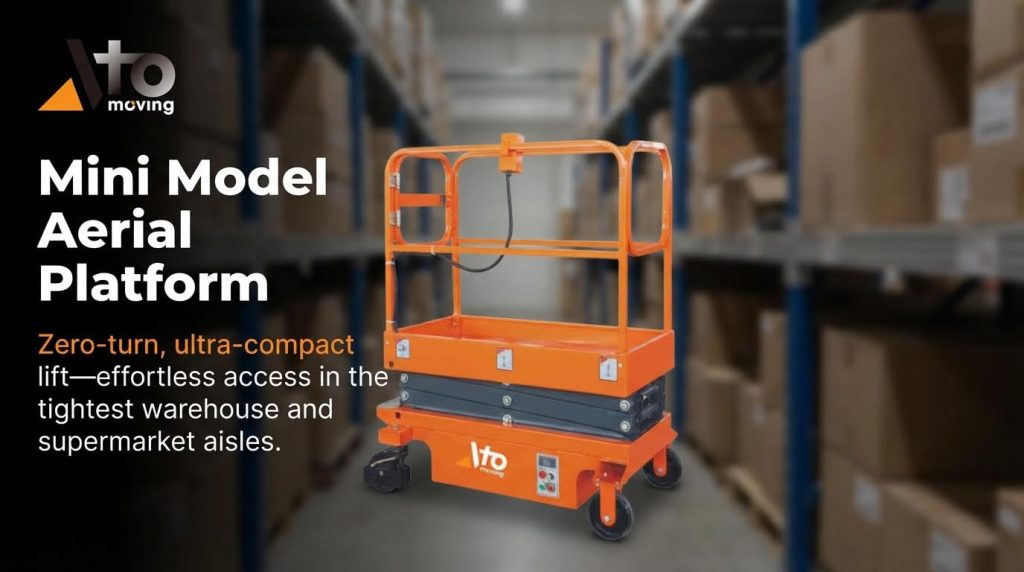
Engineering the right fall protection system for scissor lifts means treating guardrails as the primary control, then layering harness, lanyard, and anchor systems where risk or regulations demand more. This section answers “is fall protection required in scissor lifts” from a design, not just legal, perspective.
In practical terms, you design fall protection around three pillars: compliant guardrails, correctly sized PFAS or restraint systems, and hard numbers for fall distance and arrest forces. All three must work together so a real fall in a 10 m warehouse or a 20 m construction shaft still stays within safe clearances and structural limits.
Guardrail design and performance criteria
Guardrails on scissor platform lift are the default fall protection system, and when intact and used correctly they usually answer the question “is fall protection required in scissor lifts” with “guardrails alone are enough.” OSHA treated scissor lifts as mobile scaffolds, so a compliant guardrail set is your first engineering control, not an accessory.
Before you start adding harnesses everywhere, you confirm the guardrail system meets height, strength, and continuity requirements. Then you check how operators actually use the platform: standing inside the rails, gates shut, no climbing, no leaning out.
| Guardrail Element | Typical Requirement / Value | Engineering Purpose | Operational Impact |
|---|---|---|---|
| Top rail height | ≈1,070 mm ± 80 mm above platform | Keep worker’s centre of mass inside rail envelope during normal work. | Prevents simple step-off and lean-over falls for workers 1.6–1.9 m tall. |
| Mid-rail / infill | Mid-rail around 530 mm or equivalent infill | Block falls below top rail, stop sliding under top rail. | Reduces risk when kneeling or handling materials at deck level. |
| Load capacity | Withstand ≈890 N outward/downward force | Resist body impact and minor impacts from materials. | Limits rail failures if a worker stumbles into the rail. |
| Toe boards | Typically ≥100 mm high | Prevent tools and small parts from falling off the deck. | Mitigates struck-by hazards for people below. |
| Gates / chains | Closed and equivalent to top/mid rail strength | Maintain continuous barrier at access point. | Stops step-through falls at entry while raising or working. |
OSHA guidance stresses that workers must verify a guardrail system is in place and in good condition before using the aerial platform, stand only on the work platform, and keep work within easy reach to avoid leaning away from the lift OSHA scissor lift safety alert. This means even a perfectly designed rail becomes ineffective if workers bypass it with ladders, boxes, or open gates.
- Guardrail continuity: No large openings – Prevents “fall-through” paths when carrying materials or turning.
- Structural integrity: No bent, cut, or missing sections – Avoids weak points that fail under a minor impact.
- Surface condition: No sharp edges or corrosion – Reduces cuts, snags, and progressive weakening of joints.
- Interface to chassis: Secure posts and welds/bolts – Ensures the whole assembly moves with the platform without loosening.
💡 Field Engineer’s Note: On older lifts, the weak link is often the gate latch or removable chain. If you see tape, bungee cords, or improvised fixes at the entrance, treat the guardrail system as non-compliant and upgrade or repair before relying on it as your sole fall protection.
Harness, lanyard, and anchor selection
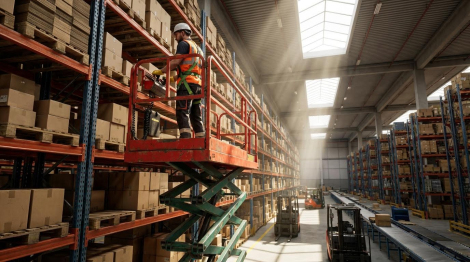
Harness, lanyard, and anchor selection becomes critical when guardrails are missing, damaged, removed, or when risk assessments show that guardrails alone are not enough. In those cases, you move from “passive” protection to engineered Personal Fall Arrest or fall restraint systems that match both OSHA rules and the lift’s geometry.
OSHA guidance notes that when guardrails are missing or removed, workers must use a full-body harness with a suitable fall restraint or arrest system OSHA scissor lift safety alert. This is where many teams incorrectly assume “any harness is fine”; in reality, the whole system must be sized to the platform and anchor capacity.
| Component | Key Requirement / Typical Spec | Operational Impact | Best For… |
|---|---|---|---|
| Full-body harness | Dorsal D-ring, compliant with OSHA/ANSI; correct size range. | Distributes arrest forces over thighs, pelvis, chest, shoulders. | All PFAS or restraint use on scissor lifts. |
| Buckles | Withstand ≈8.9 kN tension with ≤0.4 mm permanent deformation OSHA 1926.954. | Prevents buckle failure under dynamic fall loads. | Any harness used for personal fall arrest. |
| D-rings | Withstand ≈22 kN tensile test without cracking or breaking OSHA 1926.954. | Ensures the main attachment point survives worst-case fall. | Critical for anchoring the lanyard or SRL. |
| Restraint lanyard | Fixed or adjustable, sized so worker cannot reach beyond rails. | Prevents any free fall; keeps worker inside platform envelope. | Answers “is fall protection required in scissor lifts” by preventing edges from being reachable. |
| Energy-absorbing lanyard | Limits free fall to ≤1.8 m and reduces arrest force. | Controls arrest forces below ≈8 kN on the body. | When fall arrest is permitted and adequate clearance exists. |
| Self-retracting lifeline (SRL) | Automatic take-up; short free fall distance. | Reduces total fall distance in tight indoor spaces. | High platforms where under-clearance is limited. |
| Anchorage point | Supports ≈22 kN (5,000 lbf) per worker; one worker per anchor OSHA 1926.954. | Prevents structural failure of the tie-off point. | Any PFAS or restraint connection on the lift. |
- Restraint vs arrest: Prefer restraint where possible – It physically stops the worker from getting into a fall position, so you do not need large clearances.
- Anchor location: Keep within platform footprint – Reduces overturning moment if the system loads the lift in a fall.
- Compatibility: Match connectors and hardware ratings – A strong anchor is useless if a weak snap hook or buckle fails first.
- Environment: Consider arc-flash or corrosion exposure – OSHA requires arc-tested equipment in high-energy electrical environments OSHA 1926.954.
💡 Field Engineer’s Note: Many scissor lifts in North America limit lanyard length (for example, around 760 mm) and allow only fall restraint, not fall arrest, to avoid overturning during a dynamic fall. Always check the platform decal and manual; if the manufacturer prohibits arrest, design a pure restraint system and train operators accordingly.
Calculating fall distance and arrest forces
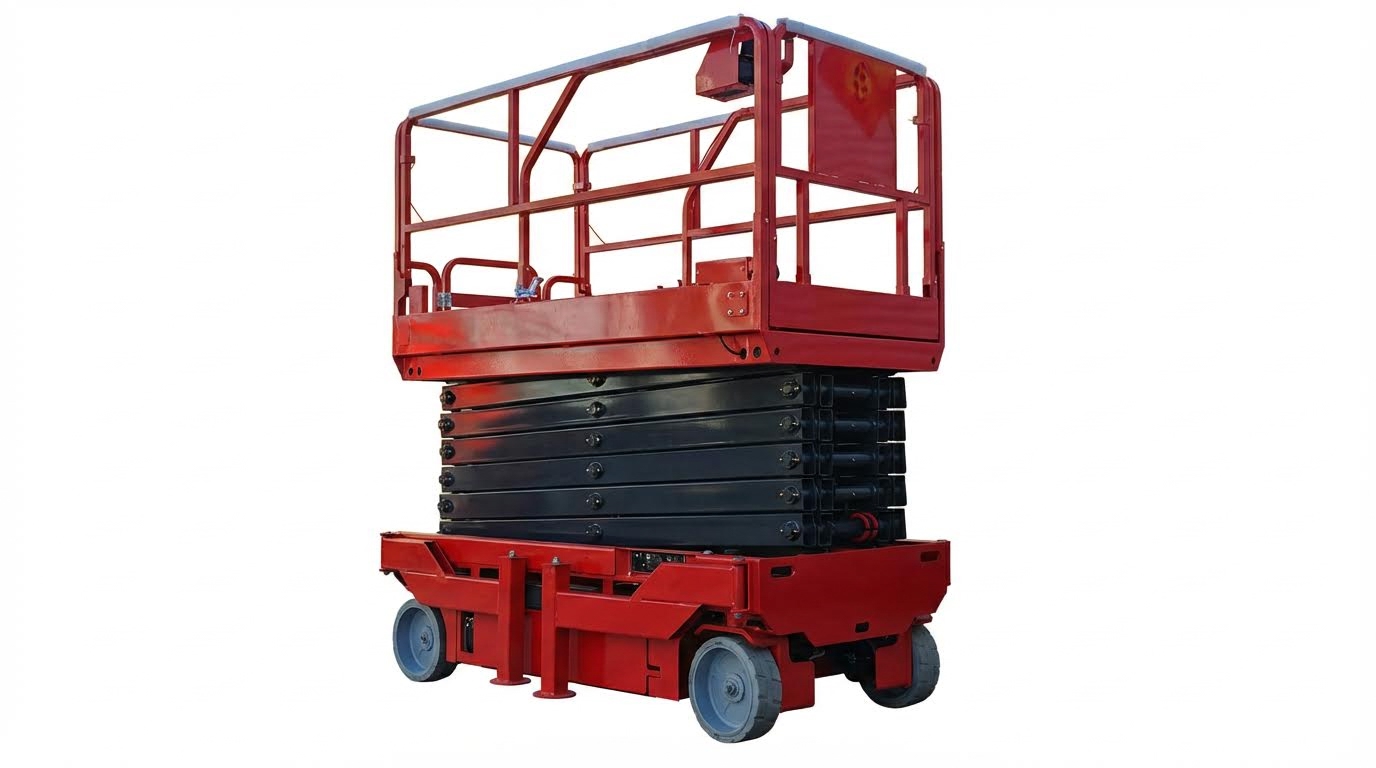
Calculating fall distance and arrest forces is how you confirm that your chosen harness and lanyard setup will actually keep the worker above lower levels and within acceptable g-loads. Without these numbers, “is fall protection required in scissor lifts” cannot be answered safely because you do not know if a real fall will clear the floor, rail, or nearby structure.
Engineers treat a fall as an energy problem: potential energy from the worker’s mass and free fall converts into deformation in the lanyard, deceleration device, harness webbing, and the worker’s body. Design rules therefore limit free fall distance and peak arrest force, and require anchors and hardware to exceed those dynamic loads with a safety margin.
| Design Element | Typical Requirement / Consideration | Why It Matters | Operational Impact |
|---|---|---|---|
| Free fall distance | Limit to ≈1.8 m or less for PFAS | More free fall equals higher impact energy and arrest forces. | Controls how long the lanyard can be relative to anchor point and worker height. |
| Deceleration distance | Energy absorber deployment (often ≈1.0 m typical range) | Provides a controlled “braking” zone to keep forces below ≈8 kN. | Must be added to free fall and body stretch in clearance calculations. |
| Harness stretch & body movement | Allow ≈0.3–0.6 m combined | Webbing elongation and body posture changes add to total fall distance. | Prevents underestimating clearance by ignoring real-world stretch. |
| Required clearance | Sum of free fall + deceleration + stretch + safety margin | Ensures worker does not strike a lower level or obstruction. | Critical in indoor spaces with beams, conveyors, or racking below. |
| Anchor strength | ≈22 kN (5,000 lbf) per person minimum OSHA 1926.954. | Must resist peak arrest load with safety factor. | Guides whether platform-built anchors are adequate or need engineering verification. |
| Arrest force on worker | Target <≈8 kN | Reduces risk of internal injuries during arrest. | Drives choice of energy absorber or SRL vs simple lanyard. |
Simple clearance calculation example (conceptual)
To check if a PFAS is feasible on a scissor lift, you conceptually add: (1) Maximum free fall (for example, 1.5 m), plus (2) deceleration distance (for example, 1.0 m), plus (3) harness stretch and body movement (for example, 0.5 m), plus (4) a safety margin (for example, 1.0 m). In this example, total clearance needed under the anchor is 4.0 m. If your platform floor is only 3.0 m above a lower obstruction, PFAS is not acceptable there; you must redesign to a restraint system that prevents any free fall.
- Use restraint where clearance is tight: Zero free fall – Solves the clearance problem by design instead of trying to “fit” arrest into a small vertical space.
- Keep anchors low and inside the platform plan: Minimize overturning – Reduces tipping risk if the PFAS loads the lift during a fall.
- Include swing-fall in layout: Limit lateral distance to anchor – Prevents the worker from swinging into rails, structures, or adjacent equipment.
- Respect equipment limits: Follow manufacturer rules on PFAS vs restraint – Some scissor lifts explicitly forbid fall arrest and allow only short-lanyard restraint systems.
💡 Field Engineer’s Note: When I review jobs where a harness is used “just to be safe” on a scissor lift, the most common hidden hazard is inadequate under-clearance. A 1.8 m free fall plus deceleration can easily exceed the lift’s working height over mezzanines or conveyors, turning a well-meant PFAS into a strike hazard. Always run the numbers first, or default to a short, fixed restraint lanyard that physically prevents a fall.
Safe Operation, Training, And Inspection Programs
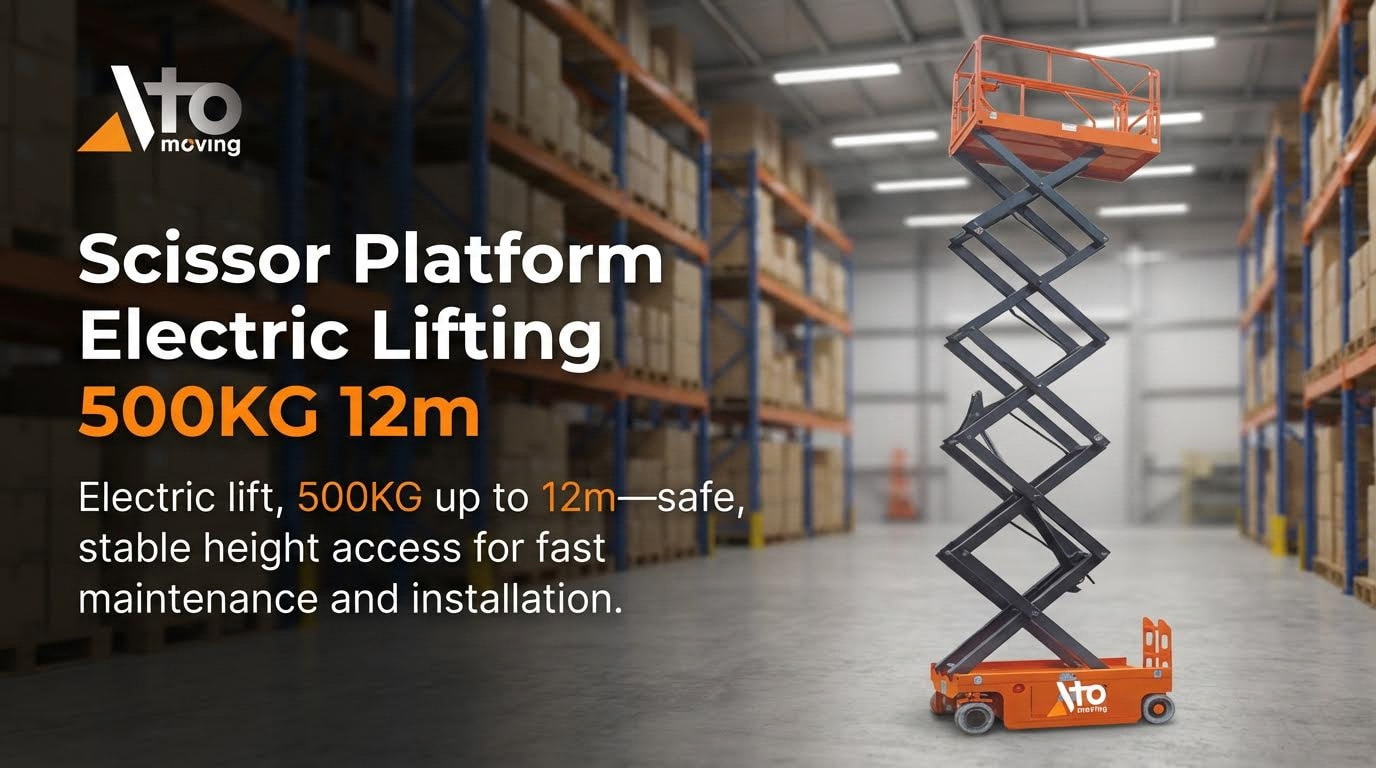
Safe scissor platform work depends on three pillars: stable operation, trained operators, and documented inspections that prove the lift and fall protection are ready before every shift.
These programs also answer a key site question: is fall protection required in scissor lifts for today’s job, given the condition of guardrails, platform use, and manufacturer rules.
- Integrate rules into SOPs: Tie lift movement, load limits, and fall protection use directly into written procedures – reduces “I didn’t know” incidents.
- Use checklists, not memory: Standardize pre-use and training checklists – keeps OSHA-critical steps from being skipped on busy shifts.
- Document everything: Record who was trained, what was inspected, and when – protects workers and the company during audits or incident reviews.
💡 Field Engineer’s Note: Many “mystery” near-tips and platform jolts trace back to skipped daily checks on brakes, pothole protection, or surface slope. Treat the checklist like a lockout-tagout card: no signature, no operation.
Operator training and documentation
Operator training for scissor lifts must cover hazards, controls, stability, and when additional fall protection is required, with written records proving who was trained, on what, and when.
OSHA requires employers to train workers on how to work safely with or near scissor lifts, including following manufacturer instructions, staying within rated load, and recognizing worksite hazards such as overhead electrical lines and unstable surfaces for scissor lifts. Training must also address fall protection decisions, including answering “is fall protection required in scissor lifts for this task?” by checking guardrail condition, platform use, and manufacturer guidance.
- Core topics: Controls, emergency lowering, stability limits, guardrail use, and fall protection rules – operators understand both how to move and when not to move.
- Hazard recognition: Wind, slopes, traffic, and overhead power lines – prevents tip-overs and electrocution.
- Load management: Staying within platform capacity and even load distribution – keeps the scissor mechanism within design stresses.
- Defect reporting: How to tag out lifts and PFAS when defects are found – stops unsafe equipment from re-entering service.
- Fall protection decision-making: When intact guardrails are enough and when a harness and lanyard are mandatory – aligns practice with OSHA and manufacturer expectations.
For documentation, training records should be structured and searchable, not just a signed sheet in a binder.
| Training Record Element | What To Capture | Operational Impact |
|---|---|---|
| Trainee identification | Full name, role, employee ID | Links authorization to specific people, not “the crew”. |
| Equipment type | Model, platform height range (e.g., 6–12 m) | Shows they trained on the actual lift type in use. |
| Topics covered | Controls, stability, fall protection, emergency descent, hazard recognition | Evidence that OSHA-required topics were addressed. |
| Instructor details | Name, qualifications, company | Supports competence of the trainer in audits or investigations. |
| Dates and duration | Initial and refresher training dates, hours | Confirms training is current and not expired. |
| Evaluation method | Written test, practical demo, sign-off | Proves the operator demonstrated understanding, not just attendance. |
| Refresher triggers | Incidents, near-misses, new equipment, observed unsafe acts | Documents why retraining occurred and what changed. |
When to schedule refresher training
Plan refresher training at fixed intervals (often every 3 years or less) and immediately after any incident, near-miss, or major rule change. Add a refresher when new lift models, new fall protection systems, or new work methods are introduced.
Daily inspections and maintenance routines
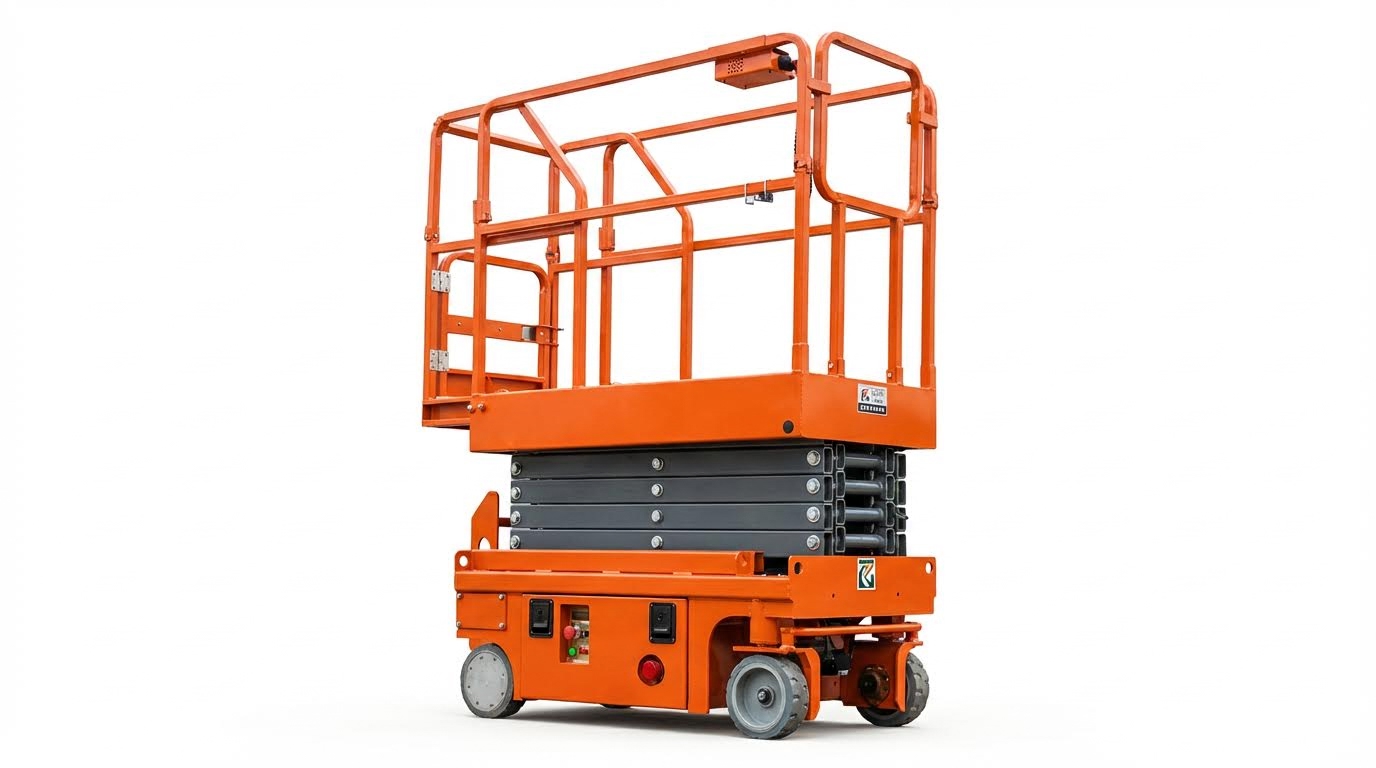
Daily inspections for scissor platform lift must verify structural integrity, controls, stability systems, and fall protection elements such as guardrails before the lift is used each shift.
OSHA guidance emphasizes testing and inspecting controls and components before each use, confirming guardrail systems are in good condition, and verifying that brakes hold the lift in position for scissor lifts. These checks work alongside regular maintenance to ensure the lift is safe and that existing guardrails can still serve as the primary fall protection, answering whether additional harness-based protection is required that day.
| Daily Check Item | What To Verify | Operational Impact |
|---|---|---|
| Guardrails and gates | All rails present, undamaged, gates self-closing and latched | Determines if guardrails alone can provide fall protection or if harnesses are required. |
| Platform and deck | No oil, ice, debris; toe boards in place | Reduces slip risk and dropped-object hazards from 6–12 m height. |
| Controls and emergency stop | All functions respond correctly; E-stop halts movement | Prevents uncontrolled elevation or travel. |
| Brakes and wheel condition | Brakes hold on level ground; wheels free of damage | Maintains position during work; reduces roll-away risk. |
| Surface and slope | Firm, level within about 3°; no pits or holes | Limits tipping moments and scissor frame twisting. |
| Power source | Battery charge, cables, hydraulic hoses leak-free | Prevents mid-air failures and hydraulic collapse risk. |
| Fall protection gear (if used) | Harness, lanyard, anchor labels legible; no cuts, deformation, corrosion | Ensures PFAS will perform if a fall or restraint load occurs. |
- Shift-based routine: Perform and log the inspection at the start of each shift or change of operator – captures new damage or changes in site conditions.
- Escalation rule: Any critical defect (guardrails, controls, structure) triggers immediate tag-out – prevents “just one quick job” on unsafe equipment.
- Maintenance cadence: Layer daily checks with scheduled weekly, monthly, and annual services – catches slow-developing issues like corrosion or fatigue.
How inspections support fall protection decisions
If the inspection finds intact, compliant guardrails and normal work inside the platform envelope, guardrails typically satisfy fall protection requirements. If rails are missing, damaged, or workers must lean or reach beyond them, the inspection should trigger either repair before use or a switch to a task plan that includes a properly designed harness, lanyard, and anchor system, in line with manufacturer instructions and OSHA expectations.
Final Thoughts On Scissor Lift Fall Protection
Scissor lift fall protection works only when engineering, procedures, and training line up. Guardrails form the first barrier, but they protect workers only if the structure is intact and operators stay inside the platform envelope. Once tasks, damage, or site conditions defeat that envelope, a correctly engineered restraint or arrest system must take over.
Harnesses, lanyards, and anchors must match the lift’s geometry, available clearance, and anchor strength. Restraint systems that prevent any free fall usually offer the safest and most stable answer, especially on compact indoor platforms. Calculating fall distance and arrest forces is not paperwork; it proves that a real fall will clear lower levels and will not overload the lift or the worker’s body.
Safe operation then depends on training and inspection. Operators must know when guardrails are enough, when a harness is mandatory, and how manufacturer instructions and OSHA rules drive that choice. Daily inspections must flag any change in guardrail condition, stability, or PFAS readiness before the lift moves.
The best practice for operations teams is clear: treat the manual as your design standard, use guardrails as the default system, default to short-lanyard restraint when risk increases, and back everything with documented training and inspections. That is how Atomoving customers keep scissor lift work both productive and safe.
Frequently Asked Questions
Is fall protection required when operating a scissor lift?
Fall protection is not required if the scissor lift has properly designed and maintained guardrails in place, according to OSHA standards. However, if the guardrails are missing or incomplete, a full-body harness or fall restraint system is strongly recommended and may be necessary. OSHA Scissor Lift Safety.
What PPE is required for a scissor lift?
Personal Protective Equipment (PPE) such as a fall protection harness is only required if the scissor lift’s guardrails are absent or inadequate. Employers must ensure workers are trained to check that guardrails are in place before use and to never stand on them. Scissor Lift Safety Guidelines.
When should a harness be used on a scissor lift?
A harness should be used if the work platform is more than 3 meters (10 feet) above the ground or if guardrails are unavailable. Workers should never lean on or use guardrails for stability. Scissor Lift Harness Use.