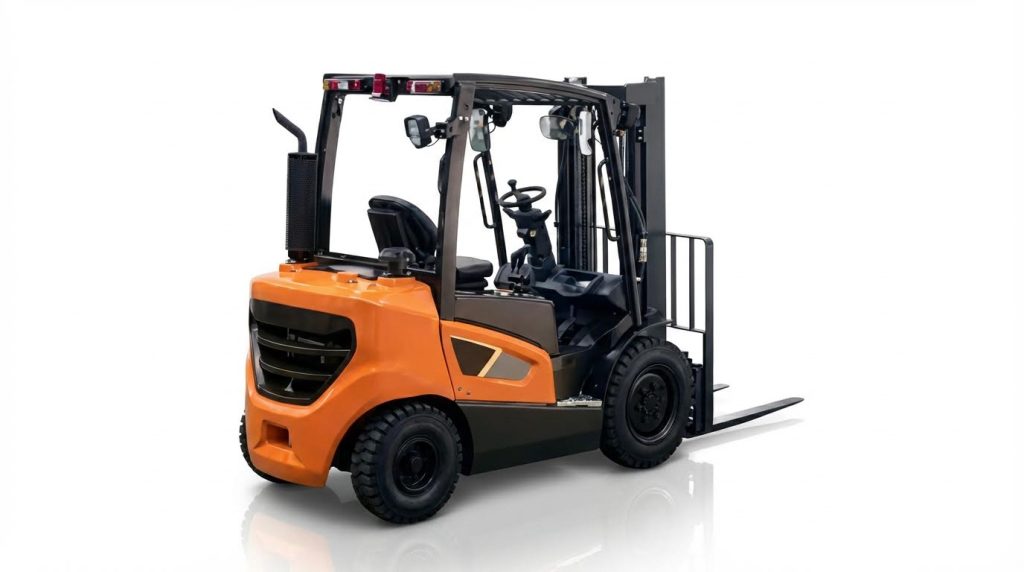
Learning how to drive a diesel forklift safely starts with understanding its controls, stability limits, and daily safety checks. This guide breaks down practical steps, from pre-start inspection to load handling and compliant operation, using real-world engineering logic.
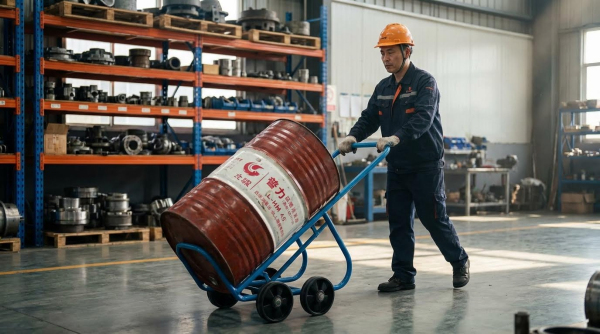
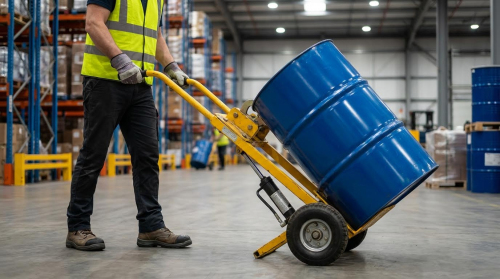
We will connect every control, checklist item, and driving rule to what it means on the warehouse floor: fewer tip-overs, less downtime, and safer operators. Use this as a structured, field-ready reference for training and daily operations. For equipment like manual pallet jack, proper handling is crucial.
Core Diesel Forklift Controls And Stability Basics
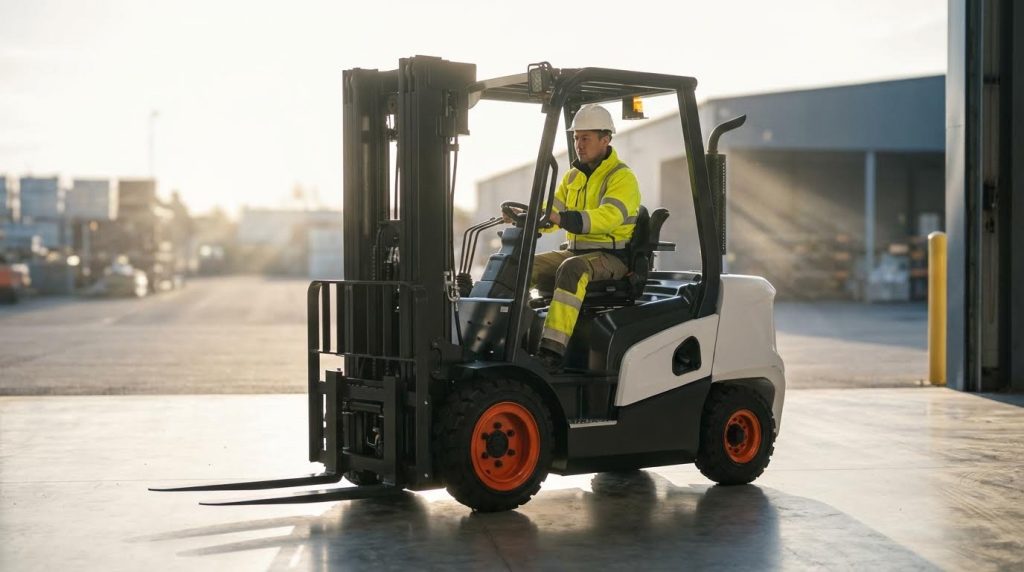
This section explains how to drive a diesel forklift by mastering cab controls and understanding stability limits before you move a single pallet. Get these basics wrong and every other “skill” becomes unsafe.
💡 Field Engineer’s Note: In real fleets, most near-tip events came from operators misusing tilt and side shift, not from “bad ground.” Treat every extra centimeter of tilt or side shift as eating into your stability margin, especially at height.
Operator compartment layout and control functions
The operator compartment groups travel, hydraulic, and safety controls so you can move, lift, and stop the truck without taking your eyes off the load. Knowing each control’s function is the first step in learning how to drive a diesel forklift safely.
| Control / Feature | Function | Typical Driver Action | Operational Impact |
|---|---|---|---|
| Seat, seat belt, mirrors | Positioning and restraint of operator | Adjust seat, fasten belt, set mirrors before start | Improves visibility and keeps you inside the protective zone during tip or impact |
| Steering wheel | Controls steer axle angle | Turn smoothly, anticipate rear-end swing | Rear steering allows tight turns but increases tail swing risk near racking and pedestrians |
| Accelerator pedal | Controls engine RPM and travel speed | Press lightly for smooth starts, release early to slow | Lower RPM reduces fuel use and keeps loads stable during starts and turns under load |
| Service brake pedal | Slows and stops truck | Apply progressively, avoid stabbing the brake | Prevents load shift and reduces risk of skidding on dusty or wet floors |
| Parking brake | Holds truck when parked | Engage whenever leaving seat or on ramps | Prevents roll-away incidents during loading, fueling, or breaks |
| Directional control lever | Selects Forward / Neutral / Reverse | Select direction at a stop, then apply accelerator | Prevents transmission shock and loss of traction when changing direction after braking |
| Lift / lower hydraulic lever | Raises and lowers forks / attachment | Pull back to lift, push forward to lower | Controls vertical position of load; fine control is critical near racking beams when placing loads |
| Tilt lever | Tilts mast forward / backward | Tilt back to travel, forward to level at stacking height | Tilting back brings the load toward the truck, improving stability in motion and against the backrest |
| Side shift lever (if fitted) | Moves forks left / right | Use small corrections, re-center before travel | Reduces need to reposition truck but shifts load center sideways, eating into lateral stability |
| Auxiliary hydraulic levers | Operate clamps, rotators, etc. | Follow site-specific attachment procedures | Enables special handling but can change rated capacity and load center |
| Instrument panel | Shows engine, warning, and system status | Monitor lamps for oil pressure, coolant temp, fuel | Early warning of faults so you can stop before damage or failure occurs |
| Lights, horn, alarms | Communication and visibility devices | Test at start of shift, use at blind corners | Mandatory for OSHA-compliant operation and pedestrian awareness checks |
- Three-point contact: Always mount/dismount using two hands and one foot – reduces slips when steps are oily or wet.
- Cab housekeeping: Keep floor clear of bottles, tools, and shrink-wrap – prevents pedals from being jammed during braking.
- Neutral start habit: Start in neutral with parking brake set – avoids unintended movement on ignition.
- Control familiarity: Practice lever functions with empty forks – builds muscle memory before handling real loads.
Where each control usually sits in the cab
Most diesel forklifts place travel pedals on the floor, steering wheel front and center, hydraulic levers on the right side console, and the directional selector either on the steering column or right console. Exact layouts vary, so always review the operator manual and decals before driving an unfamiliar truck.
Load stability triangle, capacity plate, and load center
The stability triangle, capacity plate, and load center tell you exactly how much you can lift and how high, before the truck becomes unstable. Reading these correctly is non‑negotiable for anyone learning how to drive a diesel forklift.
| Stability Concept | What It Means | Typical Value / Example | Operational Impact |
|---|---|---|---|
| Stability triangle | Imaginary triangle between front wheels and steer axle pivot | Truck center of gravity must stay inside this triangle | If combined truck + load CG moves outside, the forklift tips over forward or sideways during handling |
| Truck center of gravity (unloaded) | Balance point of the bare truck | Located low and near the drive axle | Gives a stable base when unloaded, but shifts forward and upward as you lift a load |
| Load center (LC) | Horizontal distance from fork face to load’s center of gravity | Typical rated LC: 500 mm (about 20 in) for palletized loads in examples | |
| Rated capacity | Maximum load at a specified LC and mast height | Example: 2,700 kg at 500 mm LC | Exceeding this at the actual LC pushes the CG forward, increasing tip‑over risk |
| Actual capacity at longer LC | Real capacity falls as LC increases | If LC grows from 500 mm to 600 mm, safe capacity can drop significantly | Long, bulky loads must often be derated or handled with different equipment |
| Capacity plate (data plate) | Metal plate showing capacity, LC, mast height, and truck type | Lists capacities for different lift heights and attachments | Primary reference for “Can I lift this here?” decisions; must be readable at all times for operators |
| Attachment effects | Clamps, rotators, etc. add weight and move LC | Effective LC may increase by 50–150 mm | Capacity plate must reflect attachments, or you risk lifting beyond the truck’s real limit |
- Always read the data plate: Before lifting, check rated kg at your planned height – prevents overloading when stacking high racks.
- Keep loads tight to the heel: Fully insert forks under the load – minimizes load center and improves stability.
- Travel with mast tilted back: Slight back tilt keeps the load against the backrest – moves the combined center of gravity closer to the truck.
- Avoid high travel: Move with forks about 100–150 mm above floor – keeps center of gravity low and stable over uneven ground.
How to “read” a capacity plate in under 10 seconds
First, find the rated capacity in kilograms at the standard load center (often 500 mm). Second, note the lift height column that matches your racking beam (for example 3,000 mm). Third, confirm any attachment is listed. If your load weight or dimensions exceed any of those values, you must reduce height, split the load, or use a higher‑capacity truck.
Safety Inspections, Driving Techniques, And OSHA Compliance
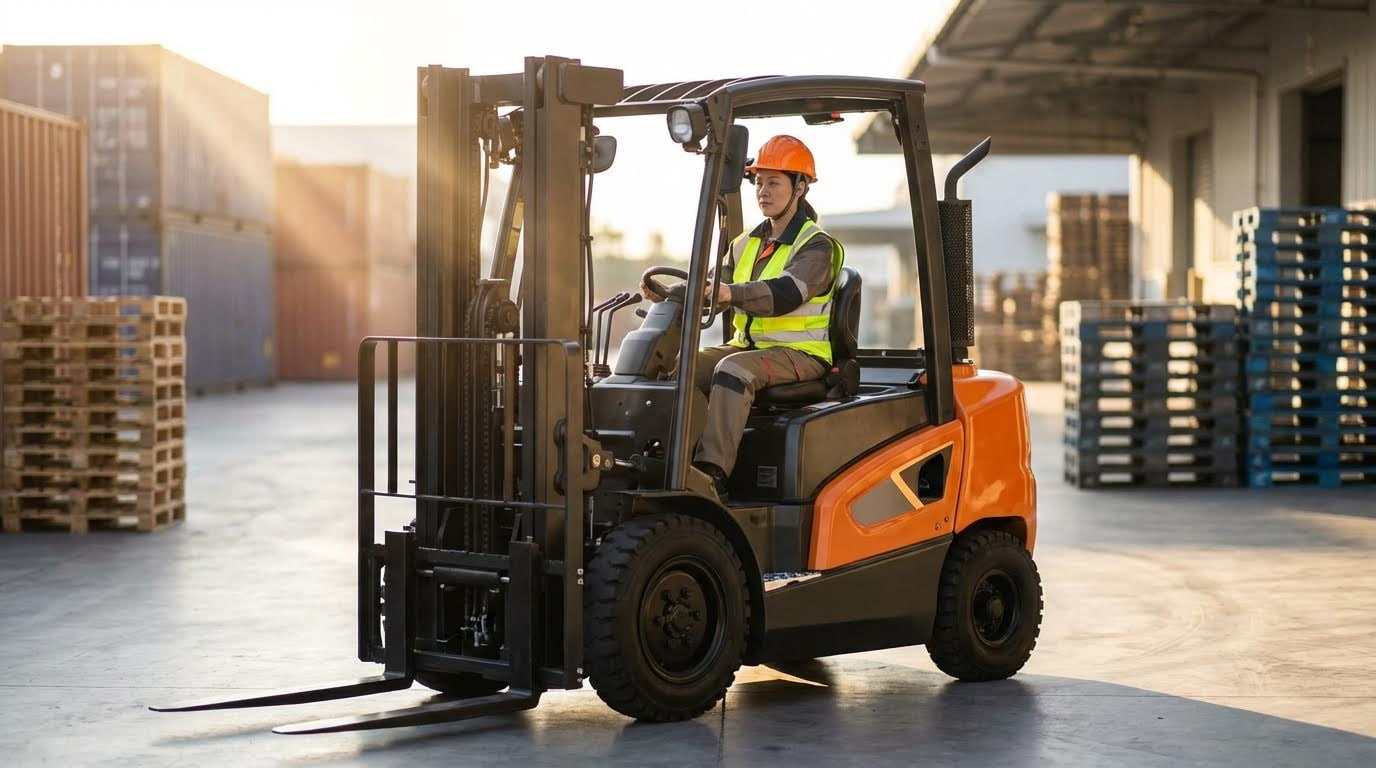
This section explains how to drive a diesel forklift safely by combining OSHA-required inspections, correct driving techniques, and controls for exhaust and hazardous areas. Use it as a practical framework for daily, shift, and site rules.
- Goal: Integrate checks, driving habits, and environment controls – reduces tip-overs, breakdowns, and OSHA citations.
- Scope: Pre-start checks, on-board tests, ramp and load handling, exhaust and area classification – covers most real accident causes.
- Standard Basis: Powered industrial truck rules – aligns with OSHA daily inspection and safe-use requirements.
Pre-start visual checks and operational inspections
Pre-start visual checks and operational inspections verify your diesel forklift is mechanically safe before you ever move a load. They are the first step in any method for how to drive a diesel forklift responsibly.
OSHA requires every forklift to be inspected at least daily, and once per shift for 24‑hour operations, before it is placed into service. You must perform a key-off walk‑around visual inspection and then a key-on operational inspection with the engine running. If you find unsafe conditions, you do not operate the truck. OSHA daily inspection requirements
| Check Item | What To Look For | Typical Frequency | Operational Impact |
|---|---|---|---|
| Fluid levels | Engine oil, coolant, hydraulic and brake fluid at specified marks | Daily / per shift | Prevents engine seizure and loss of lift or braking during a load |
| Leaks under truck | Fresh oil, diesel, or hydraulic spots under frame or mast | Daily / per shift | Flags failing hoses or seals before pressure loss or fire risk |
| Tires | Cuts, chunking, low pressure, missing lugs | Daily / per shift | Maintains stability triangle and predictable stopping distance |
| Forks and mast | Cracks, bent forks, damaged mast rails, chains, rollers | Daily visual; deeper weekly | Reduces risk of fork failure or mast collapse under load |
| Safety devices | Seatbelt, horn, lights, backup alarm, fire extinguisher | Daily / per shift | Ensures people can see and hear the truck and operator stays restrained |
| Operator compartment | Clean floor, no loose tools, seat adjusts and locks | Daily | Prevents pedal obstruction and improves reaction time |
For pre-operation inspection, OSHA highlights fluid levels, leaks, tire condition and pressure, fork condition including the top clip retaining pin and heel, load backrest, finger guards, decals, operator manual, cleanliness, and all safety devices such as seat belts. OSHA pre-operation checklist
After the walk‑around, you carry out an operational inspection with the engine running. OSHA specifies checking accelerator linkage, brakes, steering, drive control (forward/reverse), tilt control, hoist and lowering controls, attachment control, horn, lights, backup alarm, and hour meter, while listening for unusual noises or vibrations. Operational inspection checklist
- Key-off visual check: Walk fully around truck – catches obvious damage and leaks before start-up.
- Key-on functional check: Test all motions and safety devices – ensures controls respond correctly under power.
- Report and tag out: Any unsafe defect means remove from service – prevents “just this one job” accidents.
OSHA is clear that any powered industrial truck not in safe operating condition must be removed from service until repaired by authorized personnel. Trucks emitting sparks or flames from the exhaust, or with parts exceeding normal temperature, must be taken out of service. Removal from service and maintenance
💡 Field Engineer’s Note: Treat a small hydraulic drip like a brake warning light on a car. On diesel forklifts, minor leaks often worsen under full lift pressure, causing sudden mast drift or loss of steering exactly when you are handling your heaviest pallet.
Step-by-step: Fast pre-start routine you can repeat every shift
- Step 1: Walk around the truck – spot leaks, tire damage, and obvious structural issues before you climb in.
- Step 2: Check fluids and mast area – low oil or damaged chains show up here, not later under load.
- Step 3: Inspect forks and attachments – cracks or bent heels reduce real capacity and can snap without warning.
- Step 4: Sit in seat and buckle up – confirms seatbelt and ergonomics before moving.
- Step 5: Start engine and test all controls in neutral – verifies steering, brakes, lift, tilt, and horn before travel.
Safe load handling, travel on ramps, and visibility control

Safe load handling, ramp travel, and visibility control define how to drive a diesel forklift without losing stability or striking people or structures. This is where physics, line of sight, and speed discipline meet.
When picking up a load, you approach the pallet squarely and slowly, insert forks fully past the load’s center of gravity, lift slightly, and tilt the mast fully back so the load sits against the backrest. You then travel with the load as low as possible, typically 100–150 mm (4–6 in) above the ground, with the mast tilted back. If the load blocks your view, you travel in reverse, looking over your shoulder and using mirrors. Load pickup and travel practices
| Driving Situation | Correct Technique | Physics / Safety Reason | Best For… |
|---|---|---|---|
| Picking up pallet | Square approach, forks level, fully under load, lift then tilt back | Keeps center of gravity inside stability triangle | Preventing broken pallets and front‑tip events |
| Travelling with load | Load low (≈100–150 mm), mast tilted back, steady speed | Reduces overturning moment and impact energy | Indoor aisles and yard travel with mixed surfaces |
| Ramp – loaded | Always keep load facing uphill; descend in reverse | Stops load from sliding off forks or flipping truck | Dock plates and yard ramps up to typical grades |
| Ramp – unloaded | Forks downgrade; ascend in reverse, descend forwards | Keeps drive wheels loaded for traction and braking | Returning from trailer or mezzanine without pallet |
| Poor visibility | Travel in reverse, use mirrors and spotter if needed | Maintains clear line of sight to pedestrians and obstacles | High or bulky loads blocking forward view |
On ramps, guidance is specific: loaded forklifts should go up the slope with the load uphill and come down in reverse with the load still uphill. Unloaded forklifts reverse this orientation. Ramp travel recommendations
- Load security: Always keep the load against the backrest – stops sliding and reduces fork bending stress.
- Speed control: Avoid sudden starts, stops, and sharp turns – prevents side‑tip and falling loads.
- Visibility: Never drive “blind” under raised loads – use reverse travel and spotters rather than guessing.
- Parking: Lower forks, neutral, parking brake, engine off – eliminates roll‑away and mast drop hazards.
When placing a load, you approach squarely, raise to shelf height, level the forks, drive forward to position, lower the load, then tilt slightly forward to free the forks and back out slowly. When parking, you lower forks fully, tilt mast slightly forward, apply parking brake, set directional control to neutral, and shut down the engine, ideally allowing heavy‑worked diesel engines to idle briefly to cool down before stopping. Load placement and parking
💡 Field Engineer’s Note: Most dock accidents happen within 2 m of an edge or ramp break-over. Mark these zones on the floor and enforce crawl-speed with the load low; diesel torque can easily push a truck over a lip before the operator can react.
Practical visibility and signaling checklist while driving
- Horn: Use at blind corners and doorways – alerts pedestrians before you appear.
- Lights: Keep front and rear work lights clean – improves depth perception in dim warehouses.
- Mirrors: Adjust at start of shift – reduces neck strain when reversing frequently.
- Eye contact: Make eye contact with pedestrians – confirms they have seen you before you proceed.
Exhaust, indoor air quality, and hazardous-area operation

Exhaust management, indoor air quality, and hazardous-area rules ensure your diesel forklift does not turn into a poisoning or ignition source. This is central to OSHA’s guidance on where and how internal-combustion trucks may operate.
Forklifts with internal combustion engines create indoor air quality hazards when used in enclosed spaces, especially in cold weather when doors and windows stay closed. Exhaust gases, including carbon monoxide, can accumulate to dangerous levels in warehouses, trailers, and other confined spaces if ventilation is inadequate. Indoor air quality hazards
OSHA notes that internal combustion engine forklifts can generate high carbon monoxide levels in enclosed work areas, leading to unconsciousness or death from overexposure. Employees must be trained to recognize warning signs and symptoms of excessive exposure, and special precautions are advised in tight environments such as ships. Carbon monoxide risks
| Risk Area | OSHA / Safety Focus | Control Measure | Operational Impact |
|---|---|---|---|
| Indoor diesel use | CO and exhaust buildup in confined spaces | Ventilation, CO monitoring, limit engine run time | May restrict how long and where diesel units can run indoors |
| Hazardous locations | Ignition of flammable vapors, dust, fibers | Use only correctly designated truck types (D, DS, DY, etc.) | Matches truck design to zone classification to avoid explosions |
| Enclosed trailers | Concentrated exhaust at head height | Short engine-on times, fans, door open policy | Requires tighter time control for loading/unloading cycles |
OSHA defines several truck designations for powered industrial trucks. Diesel-powered units include D (basic), DS (additional safeguards to exhaust, fuel, and electrical systems), and DY (all DS safeguards plus no electrical equipment and temperature limitation features). Only certain designations are allowed in specific hazardous location classifications, and these areas should be clearly posted with signs. Truck designations and hazardous areas
- Designation check: Verify the truck’s designation plate before entering hazardous zones – prevents using an unapproved diesel unit in explosive atmospheres.
- Ventilation planning: Coordinate with supervisors for fan placement and door policies – keeps exhaust levels within safe limits.
- Exposure training: Learn symptoms of CO exposure (headache, dizziness, nausea) – enables early evacuation and medical response.
💡 Field Engineer’s Note: In winter, I treat every closed dock as a potential gas chamber. If you can see diesel haze hanging in the air or smell exhaust strongly, assume ventilation is inadequate and stop work until airflow is restored or trucks are swapped.
Quick rule-of-thumb for choosing where diesel forklifts may operate
- Step 1: Identify the area type (open yard, standard indoor, classified hazardous) – sets your baseline risk.
- Step 2: Check the truck’s designation on its nameplate – confirms if it is allowed in that area.
- Step 3: Evaluate ventilation (doors, fans, extraction) – determines whether diesel exhaust can disperse safely.
- Step 4: Monitor air and people – watch for visible haze or workers reporting headaches or nausea.
Maintenance Practices, Common Issues, And Fleet Management
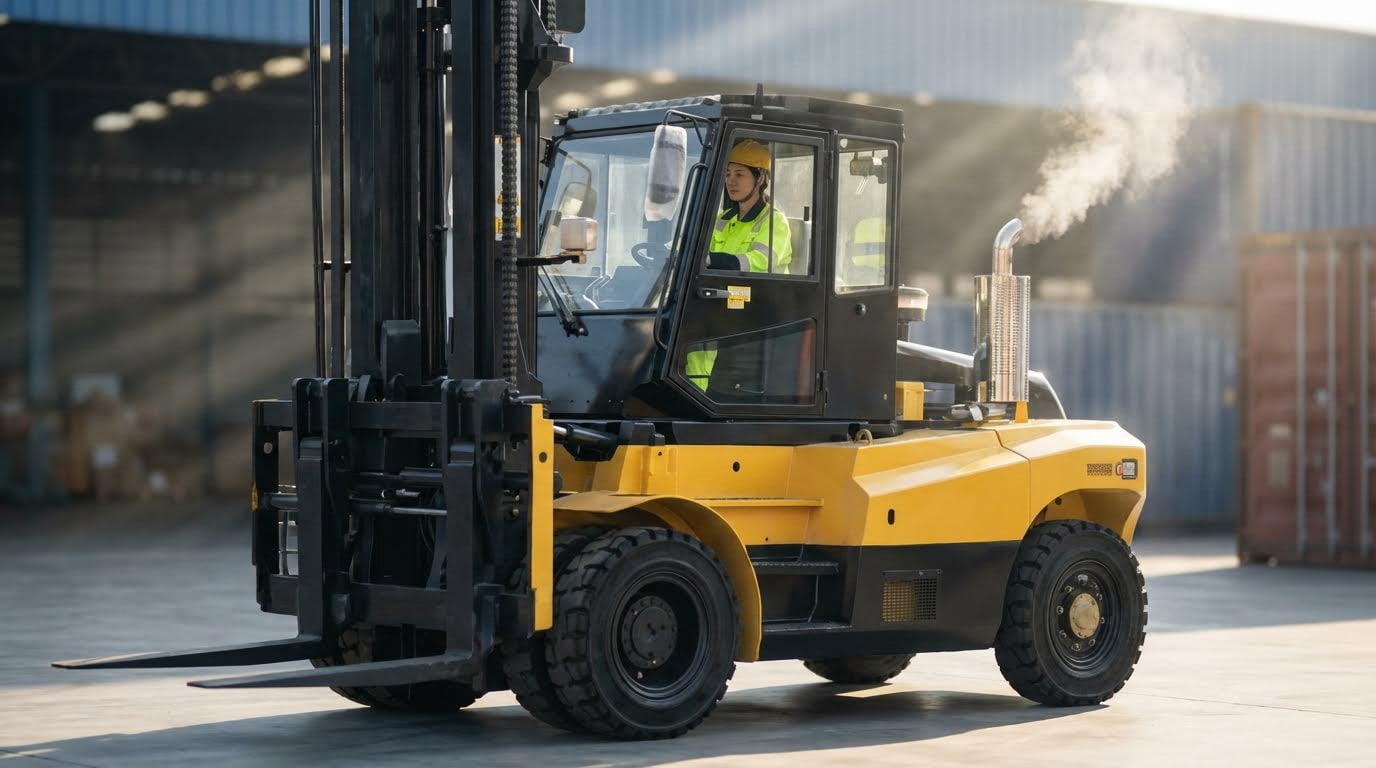
This section explains how disciplined maintenance and fast fault diagnosis keep diesel forklifts safe, reliable, and profitable, and how that directly supports operators learning how to drive a diesel forklift efficiently and safely.
Daily and scheduled maintenance for diesel forklifts
Daily and scheduled maintenance for diesel forklifts means structured checks from walk-around to full services that prevent breakdowns, unsafe conditions, and costly unplanned downtime.
At operator level, maintenance starts with the daily inspection before the truck moves. This combines a visual walk-around with fluid checks and basic function tests to catch problems early. OSHA required that forklifts be checked at least once per day, and once per shift for 24-hour operations. Daily Inspection Requirements Operators who understand how to drive a diesel forklift properly must treat this inspection as part of the driving routine, not an optional extra.
| Inspection / Maintenance Task | Typical Frequency | Key Checkpoints | Operational Impact |
|---|---|---|---|
| Pre-start visual inspection | Daily / per shift | Leaks, damage, loose parts, debris in compartment | Prevents starting an unsafe truck; reduces on-shift failures. |
| Fluid level check | Daily | Engine oil, coolant, hydraulic, brake fluid, diesel fuel | Avoids engine/hydraulic damage and brake fade during lifting. |
| Tire and wheel check | Daily | Tread, cuts, inflation, lug nuts | Maintains stability and rated capacity; reduces tip-over risk. |
| Safety device test | Daily | Seat belt, horn, lights, backup alarm, fire extinguisher | Ensures the truck can warn pedestrians and protect the operator. |
| Brake and steering test | Daily (operational check) | Service brake, parking brake, steering response | Guarantees control in tight aisles and on ramps. |
| Air filter cleaning / replacement | Per schedule | Filter element condition, restriction | Maintains engine power and fuel efficiency. |
| Hydraulic system inspection | Daily + scheduled | Hoses, cylinders, leaks, fluid condition | Prevents loss of lift or uncontrolled mast movement. |
| Mast, chain, and fork inspection | Weekly to monthly | Cracks, bends, chain wear, lubrication | Keeps rated lifting capacity and safe load handling. |
| Full scheduled service | Per manufacturer hours/months | Filters, oils, adjustments, wear parts | Extends truck life and maximizes uptime. |
OSHA emphasized that pre-operation inspections must cover fluid levels, leaks, tire condition and pressure, fork condition including the top clip retaining pin and heel, load backrest, safety decals, operator manual presence, compartment cleanliness, and all safety devices including seat belts. Pre-Operation Inspection Checklist With the engine running, operators must also verify accelerator linkage, brakes, steering, drive control, tilt, hoist and lowering controls, attachments, horn, lights, backup alarm, and listen for unusual noises or vibrations. Operational Inspection Checklist
- Fluid levels: Check engine oil, hydraulic fluid, coolant, and brake fluid – protects major components from overheating and wear. Routine Maintenance Tasks
- Tires and wheels: Inspect for damage and maintain correct pressure – maintains stability and correct ride height for the mast.
- Hydraulic leaks: Look for oil on cylinders, hoses, and under the truck – prevents loss of lift and slippery floors.
- Cleanliness: Keep the truck free of excess oil and grease – reduces fire risk and makes leaks easier to spot. Maintenance Practices
- Lubrication: Grease mast rails, chains, and pivot points per schedule – reduces friction and chain stretch, keeping mast motion smooth.
- Filters: Replace fuel, oil, hydraulic, and air filters as scheduled – prevents contamination that causes premature wear.
Daily vs. scheduled maintenance: who does what?
Daily checks are usually the operator’s job, completed at the start of the shift. Scheduled services (weekly, monthly, or by engine hours) should be handled by trained maintenance staff or contractors following the manufacturer’s preventive maintenance plan and OSHA guidance. Scheduled Maintenance
💡 Field Engineer’s Note: In dusty yards and cement plants, air filters on diesel forklifts often clog well before the “book” interval. If operators notice power loss or black smoke when they accelerate, inspect and clean the air filter immediately rather than waiting for the next scheduled service.
Typical engine and hydraulic faults and quick diagnosis
Typical engine and hydraulic faults on diesel forklifts usually come from fuel contamination, low or dirty fluids, leaks, or clogged filters, and many can be diagnosed quickly with simple checks.
Engine problems on diesel forklifts often trace back to the fuel system. Water contamination in diesel fuel can cause rough running, hard starting, or stalling. The recommended response is to drain the water separator regularly and use quality diesel fuel. Common Issues and Solutions When operators know how to drive a diesel forklift and understand these symptoms, they can report issues early instead of pushing the truck until it fails in the middle of a shift.
| System / Symptom | Likely Cause | Quick Diagnosis Step | Operational Impact |
|---|---|---|---|
| Engine – hard starting, rough idle | Water in fuel, clogged fuel filter | Check water separator, inspect/replace fuel filter | Truck may stall under load or fail to start at shift change. |
| Engine – loss of power under load | Restricted air filter, low fuel quality | Inspect air filter, check for black smoke and filter condition | Sluggish acceleration, unsafe merging into aisle traffic. |
| Engine – overheating | Low coolant, blocked radiator, fan issues | Check coolant level and radiator fins for blockage | Risk of engine damage and unplanned downtime. |
| Hydraulics – slow or weak lifting | Low hydraulic fluid, aerated fluid, worn pump | Check fluid level and look for foaming or leaks | Inability to lift rated loads to full height. |
| Hydraulics – jerky mast or tilt | Contaminated fluid, sticky valves, dry mast channels | Inspect fluid condition and mast lubrication | Reduced load control, risk of product damage. |
| Hydraulic – visible oil leaks | Damaged hoses, seals, or fittings | Trace leak source along hoses and cylinders | Slippery floors and gradual loss of system pressure. |
| Brakes – long stopping distance | Low brake fluid, worn linings | Check fluid level and pedal feel | Increased collision risk, especially on ramps. |
Hydraulic system issues typically involve leaks or fluid contamination. The recommended practice is to address leaks immediately to prevent environmental damage and maintain system pressure, and to replace hydraulic fluid according to the manufacturer’s recommendations. Hydraulic system issues Basic troubleshooting for minor issues such as low fluid levels or clogged filters can often restore normal performance without taking the truck out of service for long.
- Unusual noises or vibration: Always report immediately – these often signal early mechanical failure. Operational Inspection
- Visible damage or leaks: Remove the truck from service – OSHA requires unsafe forklifts to be taken out of use until repaired. Removal from Service Criteria
- Overheating or exhaust flames/sparks: Stop and tag out – these conditions must be corrected by authorized personnel only.
- Hydraulic drift (load slowly lowers): Suspect cylinder seals or valve leakage – do not work under elevated loads until repaired.
When must a diesel forklift be removed from service?
Any powered industrial truck not in safe operating condition must be removed from service, and defects must be reported and corrected. Vehicles emitting hazardous sparks or flames from the exhaust or with parts exceeding normal operating temperatures must not operate until repaired by authorized personnel. Removal from Service
💡 Field Engineer’s Note: Many “mysterious” hydraulic problems on yard trucks come from operators topping up with the wrong oil from open drums. Standardize hydraulic fluid, label containers clearly, and lock bulk oil stores; contamination and mix-ups can destroy pumps and valves far faster than heavy lifting ever will.

Final Thoughts On Safe, Efficient Diesel Forklift Operation
Safe diesel forklift operation depends on one integrated system: trained operators, stable loads, healthy machines, and controlled environments. Controls, the stability triangle, and the capacity plate work together to define hard geometric limits. When operators respect these limits, they keep the combined center of gravity inside the triangle and avoid tip-overs, even at height or on ramps.
OSHA-based inspections and disciplined driving habits turn that theory into daily practice. Pre-start checks catch leaks, cracked forks, weak brakes, and failing tires before a shift starts. Correct load pickup, low travel height, and strict ramp rules then keep forces predictable and within design margins.
Maintenance and fast fault reporting close the loop. Clean fluids, sound hydraulics, and timely filter changes keep rated performance and reduce surprise failures. Exhaust and area-classification rules ensure diesel units do not turn into hidden gas or ignition sources, especially indoors.
For operations and engineering teams, the best practice is clear: treat the capacity plate as law, inspections as non-negotiable, and defects as stop-work triggers. Standardize training, checklists, and maintenance across the fleet, including equipment like Atomoving pallet handling tools. This approach delivers fewer incidents, higher uptime, and predictable, compliant warehouse performance.
Frequently Asked Questions
What’s the first thing you need to do before using a forklift?
Before starting a diesel forklift, conduct a pre-operation inspection. After starting the engine, perform an operational check. Always ensure your path is clear and use a horn or spotter if visibility is limited. OSHA Forklift Guide.
How do you safely drive a diesel forklift?
To safely drive a diesel forklift, always inspect the equipment before use. Ensure loads are balanced and secure. Drive slowly around corners and use the horn in high-traffic areas. Keep an eye out for obstacles and never operate with an obstructed view without assistance.