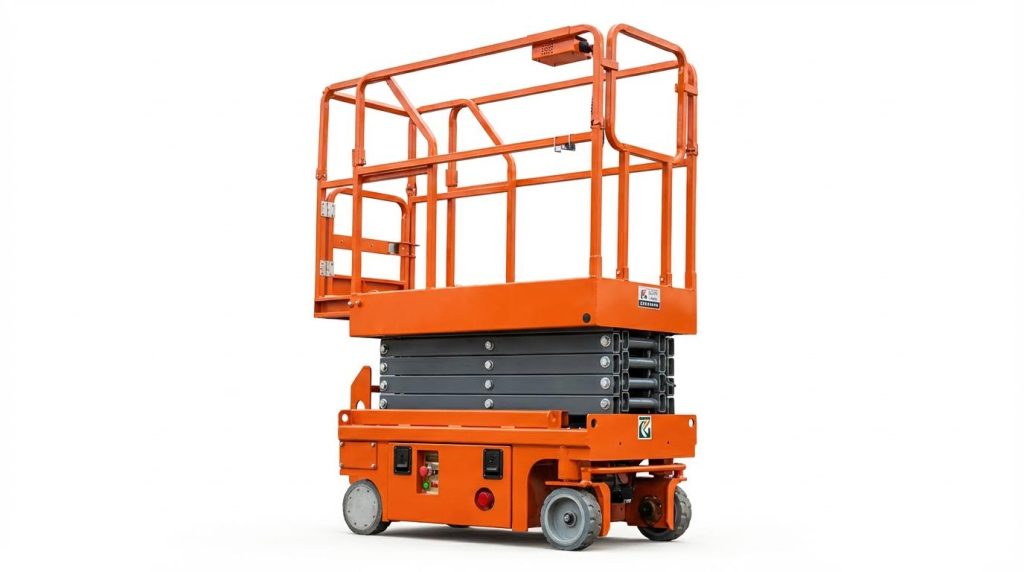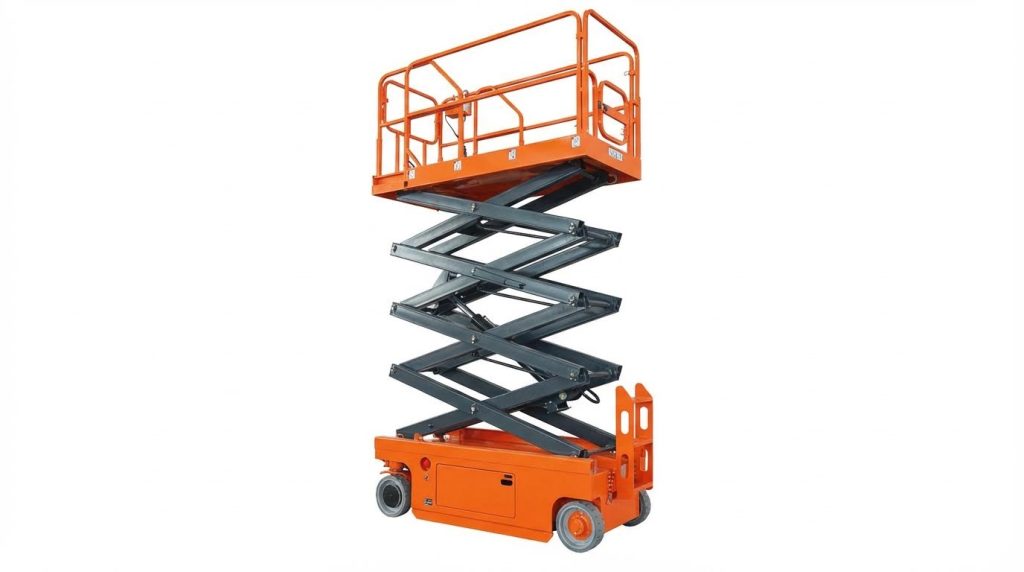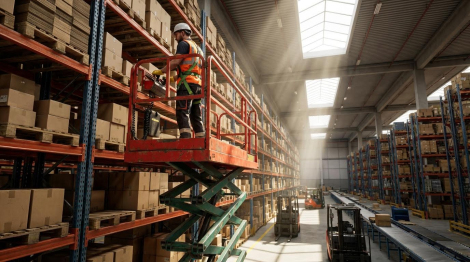
Scissor lift fall protection design required a precise understanding of how OSHA classified these machines, how guardrails functioned, and when harnesses became mandatory. Engineers and safety managers had to balance regulatory minimums with best-practice design of tie-off points and Personal Fall Arrest Systems. This article walked through regulatory basics, engineering of compliant anchor points, and the selection and implementation of harness systems on scissor lifts. It concluded with practical, field-ready recommendations to achieve robust compliance while maintaining operational efficiency.
Regulatory Basics For Scissor Lift Fall Protection
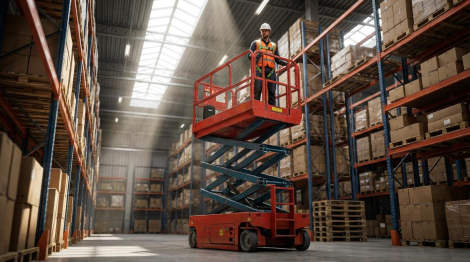
Regulatory fall protection for scissor lifts treated the platform as a mobile scaffold rather than an aerial boom device. OSHA historically accepted compliant guardrail systems as primary fall protection, provided rails met scaffold requirements and remained intact. However, standards and interpretations also required engineers and employers to evaluate manufacturer instructions, site hazards, and local rules before deciding on harness use. Understanding this framework allowed engineers to design lifts, tie-off systems, and procedures that aligned with OSHA, ANSI, and employer policies.
How OSHA Classifies Scissor Lifts And Guardrails
OSHA classified scissor lifts as mobile scaffolds under 29 CFR 1926 Subpart L, not as boom-type aerial lifts. As scaffolds, they had to support their own weight plus at least four times the maximum intended load under §1926.451(a)(1). Guardrail systems on these platforms functioned as the primary means of fall protection and had to meet scaffold guardrail criteria. OSHA considered compliant guardrails sufficient fall protection in typical warehouse and industrial applications, assuming operators stayed on the platform floor and did not climb or sit on rails.
Because scissor lifts fell under scaffold rules, employers did not automatically need to equip operators with personal fall arrest systems. Instead, they had to ensure guardrails were present, correctly installed, and in good condition before each use. Operators also had to follow safe-use rules, including never standing on guardrails and avoiding excessive leaning outside the platform envelope. This classification affected design decisions for platform geometry, rail stiffness, and access gate integrity.
When Harnesses Are Required Versus Recommended
Harnesses on scissor lifts became mandatory whenever guardrail systems were missing, damaged, removed, or otherwise inadequate. They were also required when manufacturers specified personal fall protection in the manual or decals, or when employer policy imposed stricter rules. Additional triggers included custom platforms, atypical configurations, or exposure to non-standard fall hazards such as adjacent openings or unprotected edges. In these cases, engineers had to provide a compliant anchorage and a properly designed Personal Fall Arrest System or fall restraint system.
Even when not strictly required, regulators and safety bodies recommended harness use as an added safeguard. This was especially true when platforms operated above approximately 1.8 m without robust guardrails, during work that required leaning or reaching, or when workers exited an elevated platform to another surface. Engineers and safety managers balanced the benefits of restraint against risks of swing falls, inadequate anchorage, or misuse. Clear criteria in procedures helped operators decide when to wear a harness and how to tie off correctly.
Key OSHA And ANSI Standards Engineers Must Know
Engineers working on scissor lift safety needed to understand several core OSHA provisions. OSHA 29 CFR 1926.451 defined scaffold design, loading, and guardrail criteria, while §1926.451(f) prohibited exceeding maximum intended loads. Fall protection performance and PFAS design fell under §1926.502, including the 5,000 pound (22.2 kN) per-worker anchor requirement and the prohibition in §1926.502(d)(23) against attaching PFAS to guardrails. General fall protection triggers at 1.8 m elevation appeared in §1926.501, and training requirements resided in §1926.503 and 29 CFR 1910.30.
ANSI standards such as ANSI A92.20 and A92.22 provided design, safe-use, and training guidance for mobile elevating work platforms. These documents addressed platform rail heights, access gates, tie-off point design, and stability considerations during arrested falls. Engineers used ANSI to complement OSHA’s performance-based rules, especially when specifying anchorage hardware, labeling, and documentation. Together, OSHA and ANSI frameworks guided the mechanical design, structural verification, and operational procedures for scissor lift fall protection systems.
Differences Between Scissor Lifts And Boom Lifts
Regulatory treatment of boom lifts differed significantly from scissor lifts. Boom-type aerial platforms fell under 29 CFR 1926.453, which explicitly required workers to use a body belt or full-body harness
Engineering Proper Tie-Off Points On Scissor Lifts
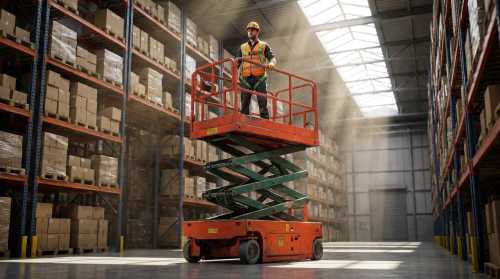
Engineering tie-off points on scissor lifts required a structured approach that combined regulatory compliance, structural design, and human-factor considerations. Designers had to recognize that scissor lifts were treated as mobile scaffolds under OSHA, yet tie-off behavior followed personal fall arrest system rules rather than scaffold guardrail assumptions. Properly engineered anchor points needed to carry arrested fall loads without degrading lift stability or service life. A systematic design process reduced misuse, simplified training, and supported defensible compliance for owners, rental fleets, and end users.
Why Guardrails Are Prohibited As Anchor Points
OSHA 29 CFR 1926.502(d)(23) explicitly prohibited attaching personal fall arrest systems to guardrail systems. Guardrails were designed primarily as fall prevention barriers, not as structural anchors for dynamic fall arrest loads. Interpretation letters and Subpart L scaffold provisions indicated that typical guardrail posts and mid-rails could not safely resist the shock loads from a falling worker. Using guardrails as anchors risked rail deformation, weld failure, or post pull-out, which could cause a secondary fall or platform instability. Engineers therefore had to separate guardrail design from anchor design and provide dedicated tie-off hardware sized and located for PFAS or restraint use.
Anchor Load Ratings, Safety Factors, And PFAS Design
OSHA fall protection rules required each PFAS anchorage to support at least 22.2 kilonewtons (5,000 pounds-force) per attached worker. Alternatively, a qualified person could design an anchor for lower loads if they limited maximum arrest forces and maintained a minimum safety factor of 2. However, for mobile elevating work platforms, industry practice usually targeted 5,000 pounds-force with a 4:1 structural safety factor to align with scaffold and aerial lift load provisions. Engineers had to consider full-body harness use, lanyard or self-retracting lifeline (SRL) characteristics, and a maximum free-fall distance of 1.8 meters to limit arrest forces. They also needed to check that the lift chassis, scissor stack, or platform structure could transmit these loads without buckling, yielding, or overstressing welds and fasteners.
Locating, Labeling, And Validating Anchor Points
Anchor points worked effectively only when operators could easily identify and reach them from normal working positions. Designers usually located tie-off points on the platform floor structure, deck edge brackets, or reinforced posts that were independent of guardrail rails. Each anchor required clear, durable labeling indicating its purpose, rated capacity, maximum number of users, and any restrictions such as “restraint only” or “no SRL.” Validation involved analytical calculations, finite element verification when needed, and physical testing that simulated worst-case fall directions and dynamic loading. Documentation of design assumptions, test methods, and inspection criteria supported OSHA and ANSI compliance and guided periodic in-service verification by owners or rental fleets.
Integration With Lift Structure And Stability Analysis
Anchor design had to integrate with the global structural and stability behavior of the scissor lift. When a PFAS arrested a fall, it introduced high, localized forces that could shift the center of gravity and increase tipping moments, especially at maximum platform elevation. Engineers therefore evaluated overturning risk under arrested fall load cases, considering platform height, outreach, and worker position relative to the chassis footprint. They also assessed load paths through the platform frame, scissor arms, and base frame to ensure compatibility with scaffold requirements for supporting at least four times the maximum intended load. Coordination with manufacturer manuals and ANSI A92 structural criteria ensured that tie-off provisions did not conflict with rated capacities, wind restrictions, or use on slopes, preserving both structural integrity and operational safety.
Selecting And Implementing Harness Systems Safely
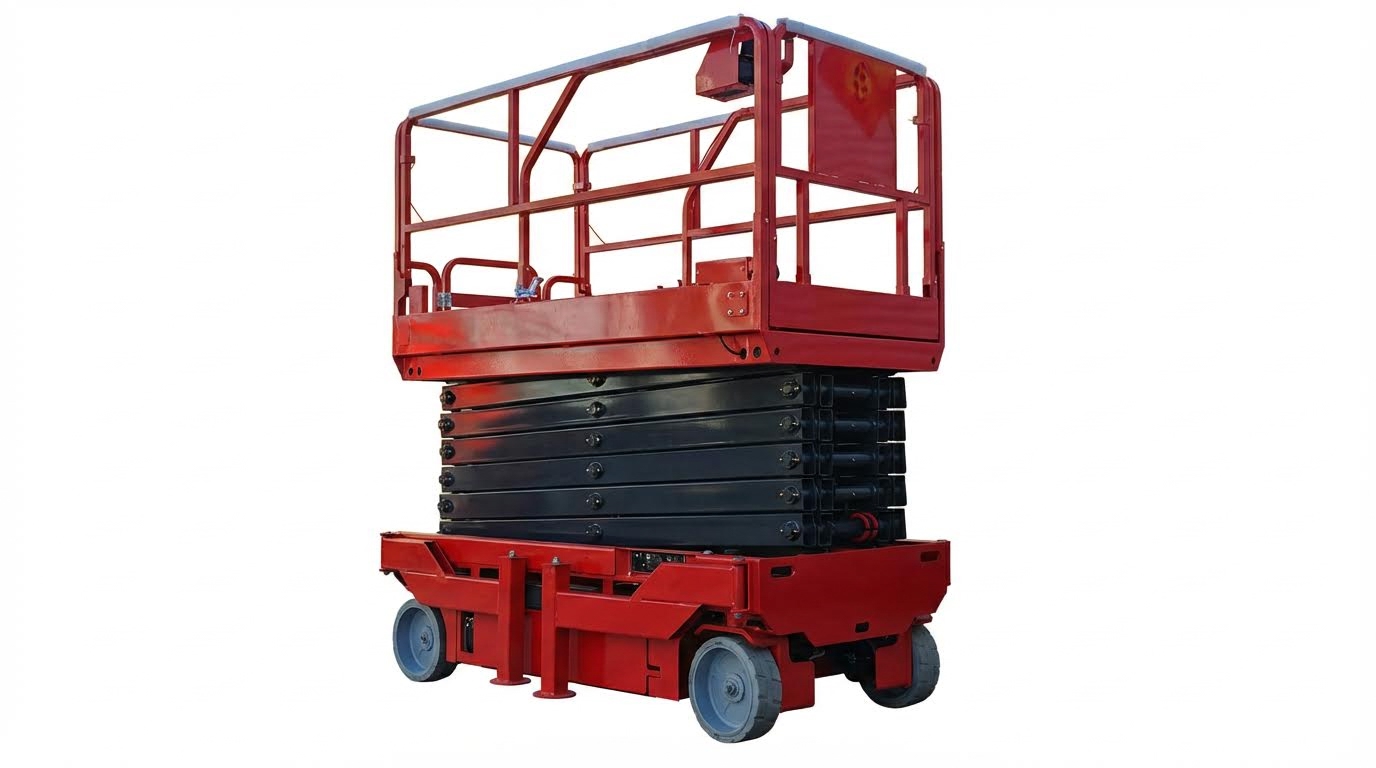
Engineers must match fall protection systems to scissor lift hazards, platform configuration, and regulatory triggers. The selection process links OSHA/ANSI requirements with manufacturer instructions and structural capacity of the lift. Properly engineered harness systems reduce fall risk, limit arrested fall loads, and support defensible employer compliance. This section focuses on choosing between PFAS and restraint, component selection, and lifecycle management of the system.
PFAS Versus Fall Restraint On Scissor Lifts
On scissor lifts, guardrails provided compliant fall protection in most standard warehouse and construction tasks. A Personal Fall Arrest System (PFAS) became necessary when guardrails were missing, modified, or when the manufacturer or employer policy required tie-off. PFAS design limited free fall distance to 1.8 m or less and controlled arresting forces per OSHA and ANSI criteria. In contrast, fall restraint systems were configured so the worker could not reach a fall edge, effectively preventing any free fall.
Engineers typically preferred fall restraint on scissor lifts where feasible, because restraint minimized dynamic loads into the structure. PFAS remained the only viable option when the work envelope required operators to approach unprotected edges or leave the platform while elevated. Both PFAS and restraint required certified anchor points on the lift, never on guardrails, and documented compatibility of harness, lanyard, and anchorage. Design choices had to consider work height, platform geometry, and allowable deceleration clearances to avoid secondary impact with lower levels or the lift structure.
Harness, Lanyard, And SRL Selection Criteria
Engineers specified full-body harnesses meeting ANSI Z359 requirements, with dorsal D-rings as the primary PFAS attachment point. Harness sizing had to match worker anthropometrics to avoid suspension trauma and ensure proper load distribution over thighs, pelvis, and shoulders. For scissor lifts, shock-absorbing lanyards or self-retracting lifelines (SRLs) were selected based on platform height and available clearance below the basket. Lanyards with integrated energy absorbers helped keep maximum arresting forces below 6 kN, as required for most PFAS designs.
Shorter, restraint-rated lanyards or adjustable restraint lines worked best when the goal was to prevent the operator from reaching the guardrail edge. SRLs offered advantages on higher lifts or where workers moved frequently, because they limited free fall distance and reduced swing fall risk. All connectors, hooks, and carabiners required double-locking mechanisms and strength ratings consistent with at least 22.2 kN static load. Compatibility between harness hardware, connecting devices, and lift anchor points needed formal verification to avoid roll-out, side loading, or unapproved attachment modes.
Training, Inspection, And Maintenance Programs
OSHA required employers to train scissor lift operators in fall protection use, hazard recognition, and manufacturer-specific procedures. Effective programs combined classroom instruction with hands-on demonstrations of donning harnesses, adjusting fit, and connecting to approved anchor points. Operators learned that guardrails could not serve as anchorages and that anchor locations had to match manufacturer markings and documentation. Training also covered rescue planning, including how to respond to a suspended worker and how to lower the lift in an emergency.
Before each use, operators inspected harness webbing, stitching, hardware, and labels for cuts, UV damage, corrosion, or deformation. They checked lanyards and SRLs for shock pack deployment, cable kinks, housing cracks, and retraction performance. Employers scheduled competent-person inspections at least every six months, with more frequent checks in harsh environments. Maintenance programs documented inspection dates, findings, and retirement decisions, and removed any equipment with unknown history, failed inspection, or exposure to a fall arrest event.
Digital Tools For Inspections And Predictive Safety
Digital platforms increasingly supported inspection workflows for harnesses, lanyards, SRLs, and lift anchor points. Mobile applications allowed operators to complete standardized checklists referencing OSHA and ANSI criteria and manufacturer instructions. QR codes on harnesses or lifts linked to digital records, enabling traceability of inspections, maintenance, and incident history. This approach reduced paper-based gaps and supported audit-ready compliance documentation.
Aggregated inspection data enabled engineers and safety managers to identify recurring defects, high-risk
Summary And Practical Compliance Recommendations
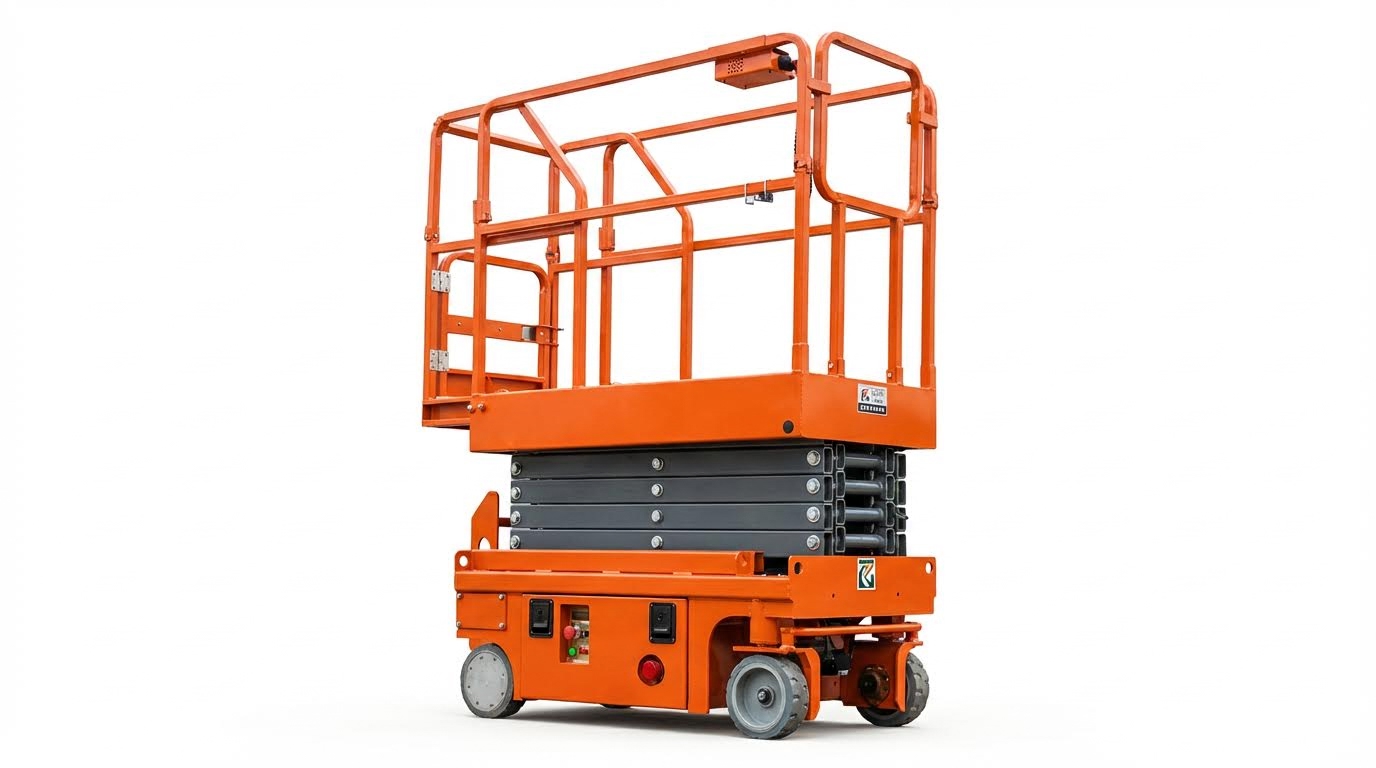
Scissor lift fall protection design relied on a clear regulatory distinction: guardrails provided primary protection, while harnesses and tie‑off points addressed exceptional or higher‑risk scenarios. OSHA treated scissor lifts as mobile scaffolds, so compliant guardrail systems typically satisfied fall protection requirements. However, standards such as 29 CFR 1926.451, 1926.501, and 1926.502, together with ANSI A92.22, still governed when and how personal fall protection systems should operate. Engineers therefore needed to design lifts and tie‑off points that met scaffold load requirements, PFAS anchorage capacities, and a 4:1 structural safety factor without compromising stability.
Industry practice increasingly moved toward conservative use of harnesses and engineered anchor points, especially at greater heights, near edges, or where guardrails were incomplete or modified. Future trends pointed to wider adoption of integrated tie‑off systems, sensor‑based interlocks, and digital inspection tools that linked structural data, maintenance history, and operator training records. These developments aimed to reduce misuse of guardrails as anchors, improve anchor verification, and support predictive maintenance of critical structural and safety components.
For practical implementation, organizations needed a structured program: verify guardrail compliance; define when PFAS or restraint systems were mandatory; and specify approved anchor locations, load ratings, and compatible harness systems. Pre‑use and periodic inspections had to cover both the lift structure and the fall protection gear, with defects triggering lockout and repair. A balanced approach recognized that over‑reliance on harnesses without proper anchors created a false sense of security, while exclusive reliance on guardrails ignored non‑standard hazards. Aligning engineering design, written procedures, operator training, and digital recordkeeping allowed employers and rental providers to maintain compliance, manage liability, and keep elevated work within acceptable risk tolerances.