Used forklifts offered buyers significant cost savings, but only when inspection and selection processes were disciplined and systematic. This article outlined how to define technical requirements and total ownership cost before looking at machines. It then detailed a structured technical inspection checklist aligned with OSHA expectations, covering structure, powertrain, hydraulics, electrics, and safety systems. Finally, it explained how to evaluate maintenance history, perform functional testing, and assess seller credibility so that buyers could choose reliable equipment with predictable operating risk.
Defining Requirements And Total Ownership Cost
Clear technical requirements defined the success of a used forklift purchase. Engineers and fleet managers reduced risk when they translated load cases, environment, and uptime targets into measurable specifications. A structured requirement phase also allowed realistic budgeting, because acquisition price was only a fraction of lifecycle cost. The following subsections outlined how to align performance, safety, and economics before shortlisting any used unit.
Matching Capacity, Mast, And Attachments To The Job
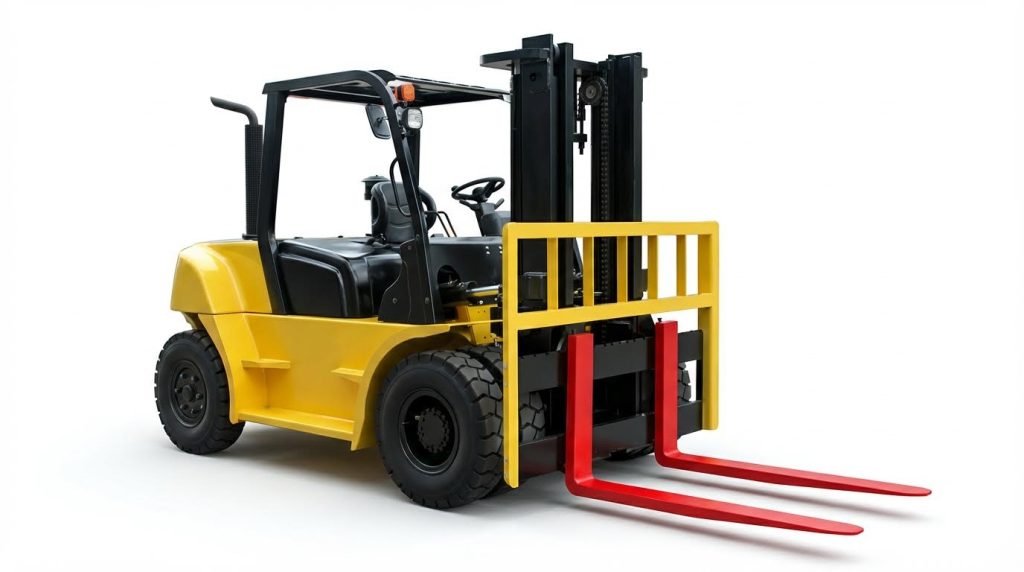
Selection started with the heaviest load, its load center, and required lift height. Rated capacity on the data plate applied only at the specified load center and with the standard mast and carriage. When buyers added attachments such as side-shifters, clamps, or extended forks, the effective capacity reduced and the manufacturer’s derating chart governed safe limits. Engineers had to check that the mast free lift, overall lowered height, and collapsed mast height matched door clearances, racking beam levels, and trailer dimensions. For dock work, a standard two‑stage mast often sufficed, while high‑bay warehousing usually required three‑stage full free‑lift masts. Attachment choice also affected visibility, residual capacity, and hydraulic circuit requirements, so buyers needed to confirm that the hydraulic valve block and hoses supported the intended tooling.
Duty Cycle, Environment, And Power Source Selection
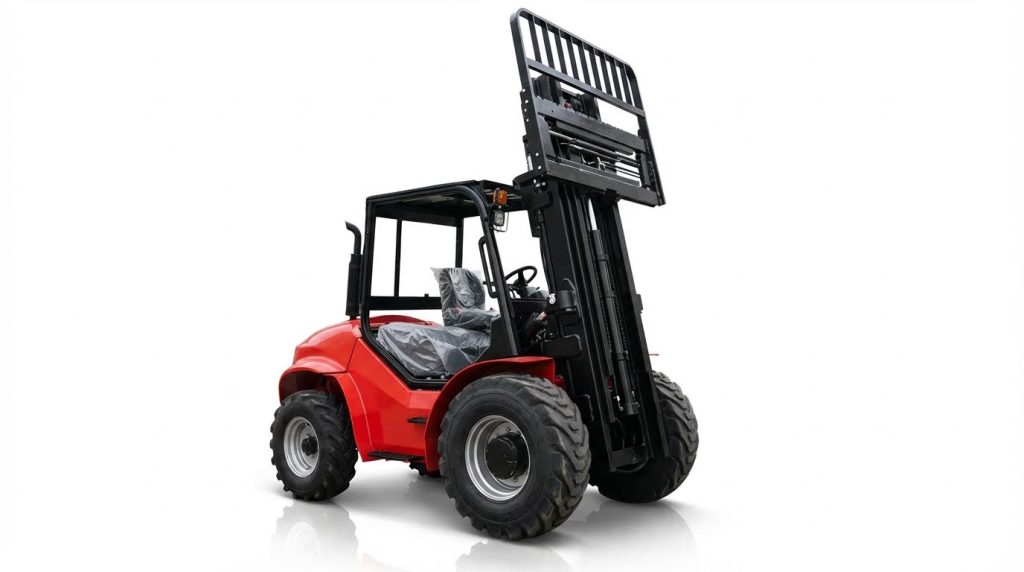
Duty cycle defined how hard the truck worked per shift, including load weight, travel distance, lift frequency, and operating hours. Light, intermittent indoor use often suited electric counterbalanced stacker or reach trucks, while high‑intensity outdoor loading on rough yards favored diesel or LPG units. Environment constraints such as ventilation, emission limits, and noise restrictions strongly influenced power source choice; electric units eliminated exhaust gases and reduced noise but required adequate charging infrastructure and battery management. Operations on wet, uneven, or debris‑covered surfaces needed appropriate tire types, ground clearance, and sealed components to protect brakes and steering linkages. Buyers also had to consider ambient temperature ranges, because extreme cold or heat affected battery performance, hydraulic oil viscosity, and operator comfort.
Lifecycle Cost, Downtime Risk, And Parts Support
Total ownership cost combined acquisition price, energy or fuel consumption, planned maintenance, unplanned repairs, tires, and operator training. A cheaper used forklift with high hours and poor service history often generated higher lifetime cost through breakdowns and lost production. Evaluating downtime risk required reviewing past maintenance records, typical failure modes for the model, and availability of local service technicians. Brands with strong regional support and readily available spare parts reduced lead times for critical components such as hydraulic pumps, controllers, and mast bearings. Buyers benefited from estimating annual operating hours, applying realistic maintenance intervals, and modeling expected tire and battery replacement cycles. This lifecycle view allowed a fair comparison between different models and power sources and prevented decisions based solely on the purchase price.
Technical Inspection Checklist For Used Forklifts
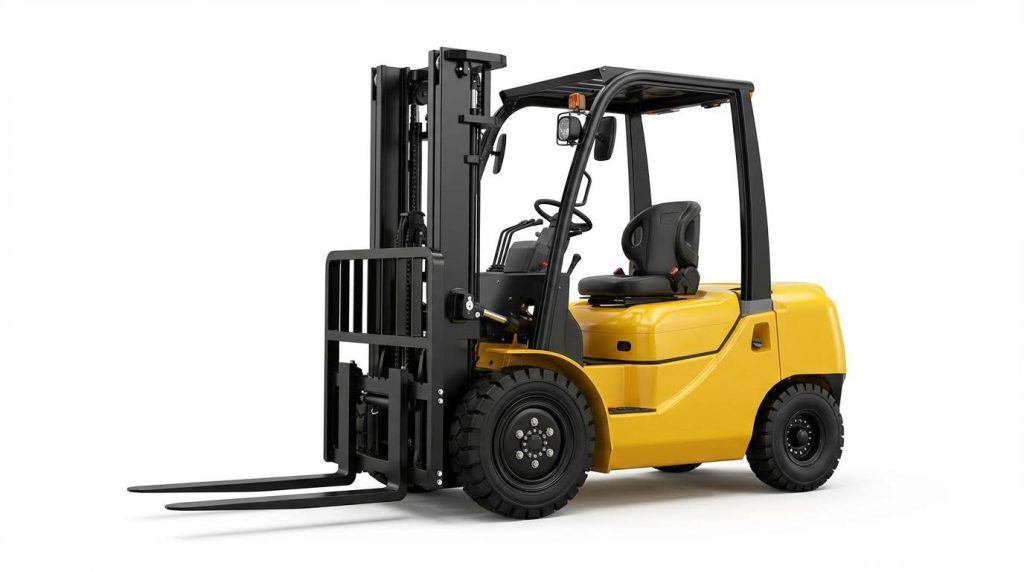
A structured technical checklist reduced safety risk and unplanned downtime. It also supported OSHA compliance and improved resale value. A thorough inspection covered documentation, structure, functional systems, and operator interface. The following subsections broke the task into practical, auditable steps for buyers and fleet managers.
Compliance With OSHA And Safety Documentation
Inspectors verified that the truck met OSHA 29 CFR 1910.178 requirements for powered industrial trucks. They checked that the data plate and capacity plate were present, legible, and matched the actual configuration and attachments. Documentation included the truck ID or serial number, manufacturer and model, and any attachment ratings. Buyers requested prior daily or shift inspection records, maintenance logs, and any incident or repair reports. They confirmed that the truck carried required markings, safety labels, and, for exported units, CE or equivalent conformity documentation. Before purchase, they ensured that future operators would be trained and certified for that truck class, as OSHA required.
Structural Frame, Mast, And Fork Integrity Checks
Inspectors examined the chassis, overhead guard, and counterweight for cracks, corrosion, or evidence of structural repairs. Welds around the mast mounts, steer axle mounts, and overhead guard feet received particular attention because failures there affected stability. The mast rails were checked for straightness, twist, and damage to channels and rollers. They raised and lowered the mast through full stroke to detect binding, jerking, or abnormal noise. Forks were measured for heel thickness loss and inspected for bends, cracks, and mismatched pairs. Locking pins and fork positioners had to engage positively. Any structural defect near load paths or the operator envelope usually justified rejection or a professional engineering assessment.
Powertrain, Hydraulics, And Electrical System Review
The powertrain inspection started with cold and hot engine behavior or, for electric units, battery performance under load. Technicians looked for oil, fuel, or coolant leaks, listened for abnormal knocks or whine, and checked exhaust or smoke characteristics. Transmission engagement in forward and reverse had to be smooth, without delay, slipping, or harsh shocks. Hydraulic systems were cycled for lift, tilt, and side shift, while inspectors watched hoses, fittings, and cylinders for seepage or pressure loss. For electric forklifts, they checked battery age, charge level, case condition, connectors, and cable insulation. All gauges, indicator lamps, and safety interlocks had to function, including hour meter, warning lights, and any battery or engine diagnostic indicators. Any unresolved leaks or electrical faults increased lifecycle cost and justified price adjustment or rejection.
Tires, Brakes, Steering, And Operator Ergonomics
Tires were checked for correct type, tread depth, chunking, flat spots, and sidewall damage, with solid or cushion tires inspected for separation. Wheel rims and fasteners had to be intact, with no missing or loose lug nuts. Brake tests included service brake stopping distance at low speed and parking brake holding on an incline. Steering response had to be precise, with minimal free play and no hydraulic noise or binding at full lock. Inspectors verified horn, lights, backup alarm, mirrors, and seat belt function. They assessed seat condition, control reach, visibility through the mast, and step and handhold design. Poor ergonomics indicated higher operator fatigue and incident risk, which influenced suitability for high-duty-cycle operations.
Evaluating History, Testing, And Seller Credibility
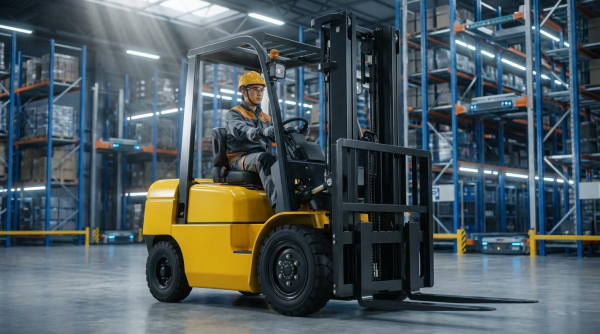
Evaluating a used forklift went beyond its current appearance. Buyers assessed documented history, real operating behavior, and the seller’s transparency before committing capital. This section outlined how to combine records, testing, and commercial due diligence into a structured decision process.
Maintenance Records, Hours, And Usage Profile
Maintenance records provided the most objective view of prior care. Buyers checked for regular fluid changes, filter replacements, and hydraulic inspections at intervals consistent with the manufacturer’s schedule. They reviewed work orders for repeated failures in the same subsystem, which indicated chronic issues or abusive operation. Hour meters below roughly 10 000 hours suited typical users, but hours alone were not decisive without context.
Usage profile mattered as much as total hours. A unit that operated in clean indoor warehousing with moderate loads usually experienced less structural and corrosion stress than one used outdoors on rough yards. Records that documented application type, shift pattern, and load ranges helped estimate remaining life. Buyers verified that hour meter readings aligned with service dates and parts replacement frequency to detect tampering or undocumented downtime.
Test Drive, Load Handling, And Leak Detection
A structured test drive validated what the paperwork suggested. Buyers started with cold engine behavior, checking for hard starting, smoke, or abnormal noise. They then evaluated acceleration, directional changes, and steering response under no-load and loaded conditions. Smooth mast lifting, tilting, and side shifting without jerks or stalls indicated healthy hydraulics and mast channels.
Load tests used a known weight within the rated capacity from the data plate. The forklift had to lift, hold, and travel without excessive mast sway or instability. After cycling all hydraulic functions, inspectors parked the truck, shut it down, and checked under the chassis and at hose connections for engine oil, coolant, fuel, or hydraulic leaks. Any fresh drips or wet fittings signaled pending repair costs that needed pricing into negotiations or pre-purchase remediation.
Brand Support, Parts Availability, And Warranty
Brand and local support strongly influenced lifecycle cost. Established manufacturers with regional dealer networks provided faster access to critical spares, technical bulletins, and trained technicians. Buyers confirmed part availability for wear items such as tires, brake components, hoses, and contactors, as well as for high-value assemblies like controllers, pumps, or transmissions. Long lead times or obsolete components increased downtime risk.
Seller credibility improved when they supplied complete documentation, including CE or equivalent conformity marks, capacity plates, manuals, and detailed inspection reports. Certified pre-owned programs, where applicable, indicated that technicians had already addressed major defects. Warranty terms, even limited ones, revealed the seller’s confidence in the unit; buyers examined coverage scope, duration, labor inclusion, and claim procedures rather than relying on verbal assurances.
Pricing, Negotiation, And Hidden Cost Assessment
Rational pricing started with benchmarking similar models by capacity, power type, hours, and configuration. Buyers then adjusted for condition, documented maintenance, and any included attachments or chargers. Test findings and inspection notes translated directly into a repair budget covering leaks, worn tires, brake work, mast chain replacement, or battery refurbishment. This budget formed the basis for negotiation rather than generic discount requests.
Hidden costs often exceeded initial price differences. Older internal combustion units could incur higher fuel consumption and emissions-related maintenance, while electric trucks with degraded batteries required costly replacements. Limited parts support created downtime and rental substitution costs. Buyers also considered training, transport, commissioning, and any required upgrades to meet site safety standards. A seller who openly discussed these factors and provided itemized quotes for remedial work typically proved more trustworthy over the long term.
Summary And Key Takeaways For Used Forklift Buyers
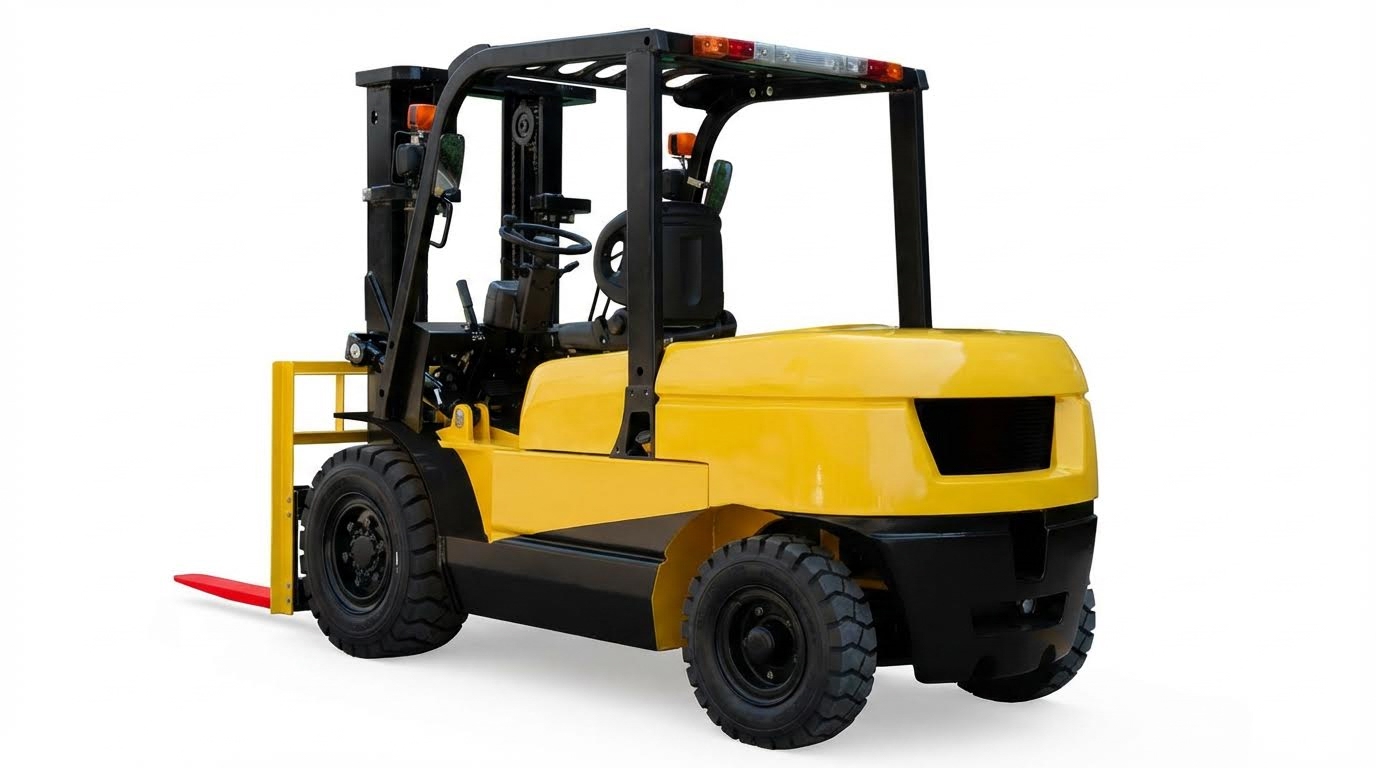
Used forklifts offered a cost-effective route to build or expand fleets when buyers applied disciplined engineering and safety criteria. A structured inspection aligned with OSHA 29 CFR 1910.178 required daily pre-use checks and verification of data plates, capacity ratings, and operator authorization. Technically sound selection started with defining lift capacity, mast height, attachments, duty cycle, and environment, then matching diesel, LPG, or electric power sources to those requirements and infrastructure constraints.
Thorough physical and functional inspection reduced downtime risk. Buyers needed to confirm structural integrity of frame, mast, and forks, evaluate powertrain, hydraulics, electrical systems, and verify smooth mast operation and effective brakes and steering. Cross-checking hour meter readings with maintenance records, service logs, and repair history provided a realistic view of remaining life and likely failure modes. Test drives under representative loads helped reveal hidden issues such as leaks, overheating, weak batteries, or marginal hydraulics.
Brand support, parts availability, and qualified service access strongly influenced lifecycle cost, especially for high-hour or heavy-duty applications. Reputable sellers that provided detailed documentation, third-party inspection reports, and at least limited warranty coverage reduced technical and financial uncertainty. Buyers benefited from total cost of ownership thinking: purchase price, expected maintenance, tire and battery replacement, fuel or energy consumption, and downtime impact. Looking forward, increased telematics use, stricter safety enforcement, and tighter emissions standards were expected to push fleets toward better-documented, well-maintained used units and more transparent condition reporting. A balanced approach that combined regulatory compliance, rigorous engineering inspection, and commercial due diligence gave the highest probability of securing a reliable, safe, and economically viable lift stacker.