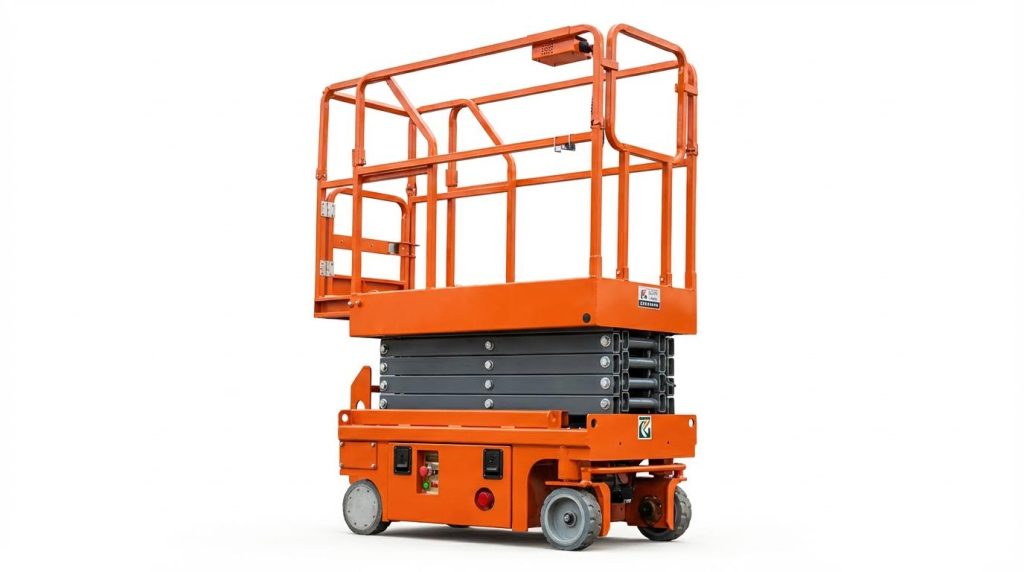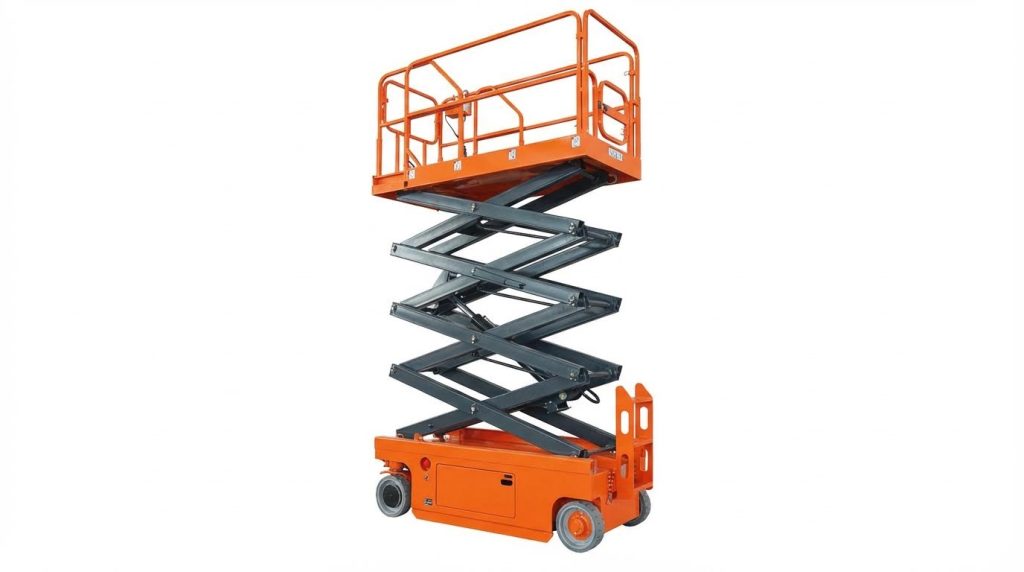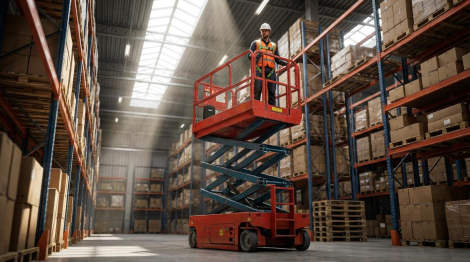
Scissor lifts functioned as mobile elevated work platforms across construction, manufacturing, maintenance, and event operations. Their compact footprint and vertical reach improved productivity but introduced scaffold-like hazards, including falls, tip-overs, crushing, and electrocution. This article examined core hazard profiles and accident case lessons, then linked them to OSHA and ANSI A92 requirements and documented human-factor failure patterns. It then detailed engineering controls, design limits, and safe operation practices; structured inspection and preventive maintenance regimes; and concluded with a practical implementation checklist for organizations seeking robust, standards-compliant scissor platform safety programs.
Core Hazard Profiles And Accident Case Lessons
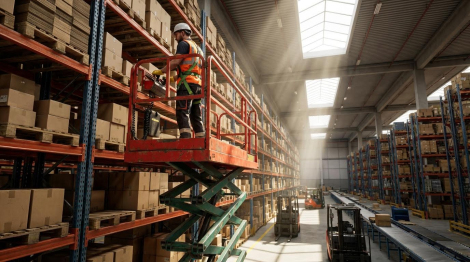
Core hazard profiles for scissor lifts centered on falls from height, structural or stability-related tip-overs, and contact incidents involving crushing or electrocution. Accident reviews showed that these modes often combined with poor site conditions, inadequate training, or ignored design limits. Understanding these patterns allowed engineers and safety managers to build layered controls that integrated equipment design, procedures, and operator behavior.
Common Failure Modes: Falls, Tip-Overs, Contact
Falls occurred when workers climbed guardrails, stood on improvised platforms, or worked without respecting reach limits. Incomplete or damaged guardrail systems, missing gates, and unsecured access points increased fall probability. Tip-overs typically resulted from operating on uneven or soft ground, exceeding rated load or maximum slope, or driving elevated in high winds. Contact incidents included crushing between the platform and fixed structures, vehicle impacts on the base, and electrocution from encroaching within 3.05 m of energized lines. These failure modes shared precursors: poor pre-use inspection, weak site control, and deviation from manufacturer instructions.
Lessons From High-Profile Scissor Lift Fatalities
High-profile fatalities, such as the 2010 Notre Dame incident, highlighted the interaction between wind loading, elevation, and equipment selection. The lift tipped in wind above 22.4 m/s while elevated and exposed, exceeding typical outdoor wind ratings below 12.5 m/s. Investigations showed gaps in wind monitoring, risk assessment, and enforcement of manufacturer limits. Other fatal events involved lifts struck by trucks or mobile plant because exclusion zones and spotters were absent. Cases where workers were crushed against overhead beams demonstrated that vertical motion near fixed structures required strict slow-speed operation and dedicated ground guides. These lessons drove industry emphasis on formal risk assessments, documented lift selection, and environmental monitoring.
Regulatory Framework: OSHA And ANSI A92 Series
OSHA treated scissor lifts as mobile supported scaffolds, so employers had to comply with 29 CFR 1910 and 1926 scaffold and aerial-lift provisions. Relevant clauses included 1910.28 and 1910.29 for fall protection, 1926.451 and 1926.452(w) for scaffold design and use, and 1926.20 and 1926.21 for safety programs and training. Guardrails meeting 1910.29(b) or 1926.451(g) were mandatory on platforms to control fall hazards. ANSI A92.3 and A92.6 defined design, stability, testing, and operating requirements for manually and self-propelled elevating work platforms. These consensus standards informed manufacturer ratings for load, wind, and slope, and shaped control layouts and safety devices. Compliance required integrating OSHA minimums with ANSI design assumptions into site-specific procedures and operator training.
Human Factors, Training Gaps, And Misuse Patterns
Accident analyses consistently showed that human factors amplified technical risks. Operators often underestimated wind, ground softness, or proximity to power lines, especially under schedule pressure. Training gaps appeared when workers received only informal familiarization instead of model-specific instruction covering load charts, wind limits, and emergency descent. Misuse patterns included driving at height, bypassing interlocks, overloading beyond safe working load, and using unauthorized objects to gain extra reach. Inadequate communication with spotters and other trades led to vehicle strikes and crushing events in congested areas. Effective programs addressed these patterns with competency-based training, clear visual placards, pre-task briefings, and enforcement of no-exception rules for load, slope, and exclusion zones.
Engineering Controls, Design Limits, And Safe Operation
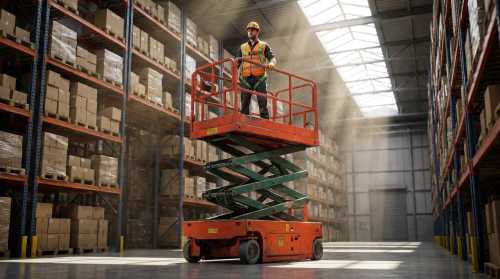
Engineering controls defined the safe operating envelope for scissor lifts. Designers specified load limits, stability margins, and environmental constraints to prevent structural or stability failures. Operators had to understand these limits and apply them consistently in the field. Safe operation depended on integrating design capabilities with disciplined work practices and site controls.
Load Ratings, Stability, And Wind Speed Limits
Scissor lift load ratings covered the combined mass of people, tools, and materials on the platform. Exceeding the rated capacity reduced stability and could overload structural members, leading to buckling or collapse. Manufacturers stated maximum platform load and allowed side loads on the data plate and in the manual. Engineers also defined maximum slope and tilt limits; operating beyond these values shifted the center of gravity outside the base footprint and increased tip-over risk.
Wind loading played a critical role, especially for outdoor use. Scissor lifts rated for outdoor service typically had maximum allowable wind speeds below 13 m/s (28 mph). Exceeding this limit, as seen in the 2010 Notre Dame fatality at over 22 m/s (50 mph), dramatically increased overturning moments. Operators had to consider gusts, not only average wind speed, and avoid use near large structures that channeled or amplified wind.
Stability improved when operators used outriggers or stabilizers where fitted and ensured solid, level ground. Soft soil, voids, or ramps reduced effective contact area and could cause sudden settling. Good practice required verifying ground bearing capacity and avoiding operation on slopes beyond the manufacturer’s specified maximum, even if the unit appeared visually stable.
Fall Protection: Guardrails, PPE, And Platform Behavior
Guardrails served as the primary fall protection system on scissor lifts. OSHA standards 29 CFR 1926.451(g) and 1910.29(b) required compliant guardrail systems on supported platforms, including top rails, midrails, and toe boards where applicable. Operators had to verify guardrail integrity, correct height, and secure gates or chains before elevation. Missing or damaged components invalidated the fall protection system and required immediate removal from service.
Workers had to remain within the guardrail envelope and stand only on the platform floor. Standing on midrails, top rails, or improvised objects like ladders or boxes changed the effective fall protection geometry and violated manufacturer instructions. Where site rules or specific hazards justified it, additional PPE such as personal fall arrest systems could supplement guardrails, but anchorage points had to be rated and designated by the manufacturer.
Platform behavior affected fall risk. Sudden control inputs, abrupt travel movements, or rapid elevation changes could cause loss of balance, especially near the rail. Operators had to move the platform smoothly, keep work within easy reach, and secure tools with lanyards or belts to prevent dropped-object hazards. Pre-use checks of emergency stop functions and descent controls ensured that operators could quickly stabilize the situation if an unsafe condition developed.
Positioning To Avoid Crushing And Electrocution
Proper positioning minimized crushing and entrapment risks between the platform and fixed structures. Crushing hazards occurred when lifts operated close to ceilings, beams, pipe racks, or building facades. Operators had to maintain clearance above and around the platform and avoid driving under low structures when elevated. Modern units often included overhead warning systems, but engineering controls did not replace the need for careful positioning.
Electrocution hazards arose when lifts worked near energized conductors. OSHA required minimum approach distances, typically at least 3 m (10 ft) from power lines for standard voltages, with larger distances for higher voltages. Scissor lifts themselves usually did not provide electrical insulation, so contact or arcing remained possible even without direct touch. Only workers trained in electrical safety under standards such as 29 CFR 1910.269 and 1910.333 should worked near energized systems.
Traffic and mobile equipment also influenced positioning strategy. Lifts placed in vehicle paths or near mobile plant faced collision risks that could cause tip-overs or crush workers between the platform and adjacent objects. Effective controls included physical barriers, exclusion zones, and designated spotters to manage movement in congested areas. Operators had to avoid positioning the lift where rotation or travel of other equipment could sweep into the platform envelope.
Site
Inspection, Preventive Maintenance, And New Technologies
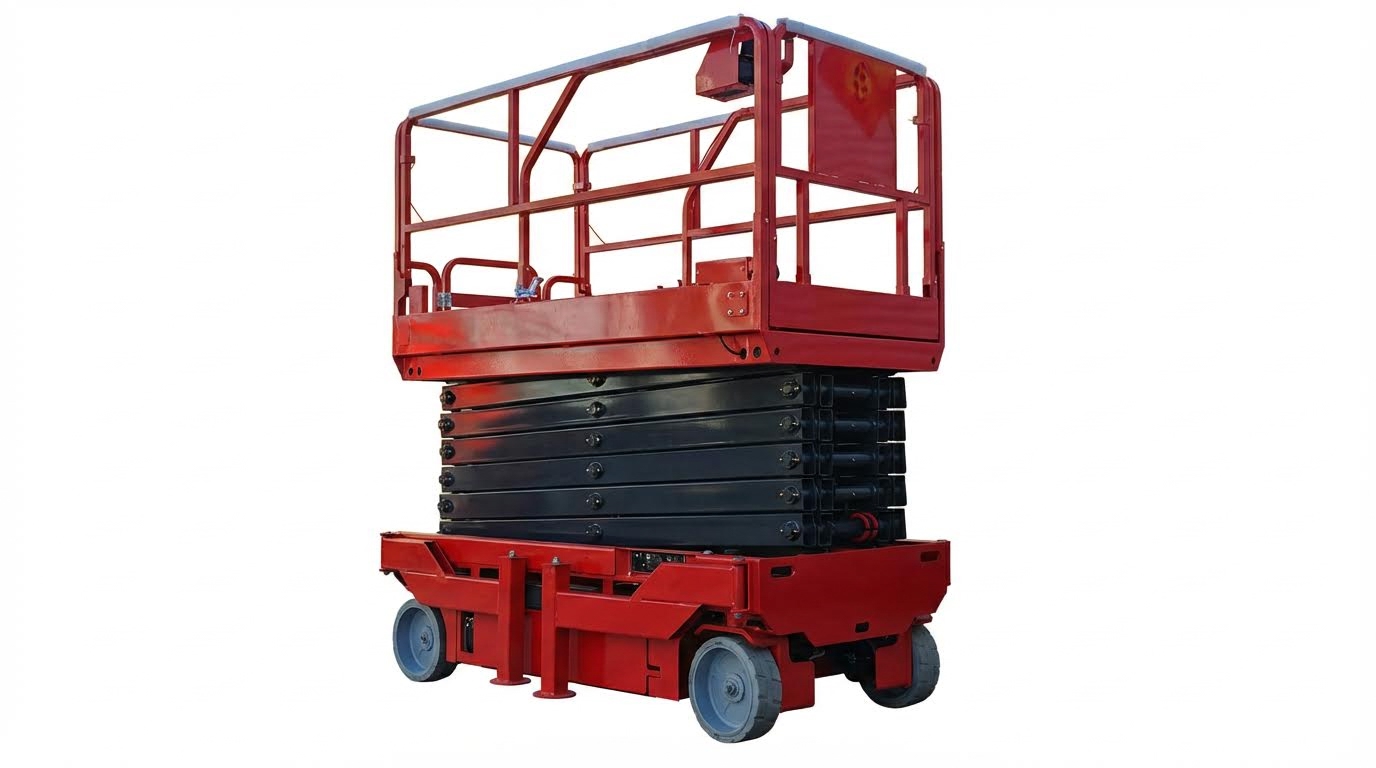
Inspection and preventive maintenance formed the backbone of scissor lift safety management. Structured regimes, supported by modern monitoring technologies, reduced failure probability and extended equipment life. This section focused on time-based inspection strategies, key failure mechanisms, energy storage management, and the role of sensors and telematics in predictive maintenance.
Daily, Monthly, And Annual Inspection Regimes
Daily inspections targeted obvious, high-risk defects that could cause immediate incidents. Operators checked hydraulic systems for visible leaks, verified fluid levels, tested emergency stops, and confirmed that guardrails, gates, and interlocks functioned correctly. They also inspected tires for wear or underinflation, confirmed steering and brakes performance, and ensured that controls responded correctly in all directions. These checks occurred before elevating the platform or moving the unit in a work area.
Monthly inspections involved deeper functional and structural checks, usually by maintenance personnel rather than operators. Tasks included examining hydraulic hoses and fittings for abrasion or seepage, inspecting scissor arms, pins, and welds for cracks or deformation, and checking drive systems and wheel hubs. Technicians also tested emergency lowering systems, verified battery health, and reviewed the condition of placards, warning labels, and control markings for legibility and completeness.
Annual or semi-annual inspections followed manufacturer recommendations and applicable standards, and qualified technicians performed them. These inspections typically included load testing to confirm rated capacity, detailed structural assessments for corrosion and fatigue, and verification of electrical insulation and protective earth continuity. Inspectors documented findings for compliance purposes and to support lifecycle planning. A documented regime of daily, monthly, and annual inspections aligned with OSHA maintenance expectations and manufacturer instructions, which together formed the minimum acceptable safety baseline.
Hydraulic, Structural, And Electrical Failure Prevention
Hydraulic system failures often manifested as leaks, slow creep, or uncontrolled descent, so prevention focused on integrity of pressure-containing components. Maintenance teams periodically inspected hoses for blistering, cuts, and kinking, and replaced them at the first sign of damage rather than waiting for rupture. They checked cylinders for rod scoring and seal wear, and verified that relief valves and check valves operated correctly during functional tests. Keeping hydraulic oil clean and within specified viscosity reduced internal wear and minimized valve sticking.
Structural failure prevention relied on systematic inspection of load paths and joints. Technicians examined scissor arms, pivot pins, and welds for cracks, elongation of holes, or permanent deformation, which indicated overload or impact history. Corrosion control, through cleaning and coating, remained critical on outdoor units, especially around weld toes and pin bores where stress concentrations existed. Any structural defect in primary members required immediate removal from service and evaluation by a qualified person before returning the lift to operation.
Electrical failure prevention addressed both functional reliability and shock or fire hazards. Maintenance personnel checked wiring harnesses for chafing, loose connectors, and damaged insulation, particularly around moving joints and control boxes. They tested emergency stop circuits, limit switches, tilt sensors, and interlocks to ensure that safety functions operated as designed. Battery connections had to be tight and free from corrosion to avoid overheating and voltage drops. Regular verification against the manufacturer’s electrical schematics helped ensure that no unauthorized modifications compromised protective devices or control logic.
Battery Management And All-Electric Lift Innovations
Battery management strongly influenced both availability and lifecycle cost of electric scissor lifts. Operators performed daily checks of state of charge, electrolyte levels for flooded lead-acid batteries, and cleanliness of terminals to prevent stray resistance. Charging followed manufacturer profiles, avoiding deep discharges below recommended thresholds and preventing chronic undercharging, which accelerated sulfation and capacity loss. Well-maintained batteries typically achieved service lives approaching three years, while neglected batteries often required replacement within one year.
Monthly maintenance included equalization charges for applicable chemistries, inspection of charger cables and connectors, and verification that onboard chargers delivered correct voltage and current. Fleet managers tracked battery performance trends to identify units with abnormal degradation. This data supported targeted replacements and reduced unplanned downtime. Correct battery selection, matched to duty cycle and ambient temperature, also reduced stress and improved reliability.
All-electric lifts with lithium-ion batteries and hydraulic-free architectures represented a significant shift in maintenance profiles. Designs that eliminated hydraulic circuits removed leak risks and associated environmental contamination, and also reduced the number of wear components requiring lubrication. Integrated battery management systems monitored state of charge, temperature, and fault conditions in real time, enabling fast charging and long calendar life. These innovations reduced routine service
Practical Summary And Implementation Checklist
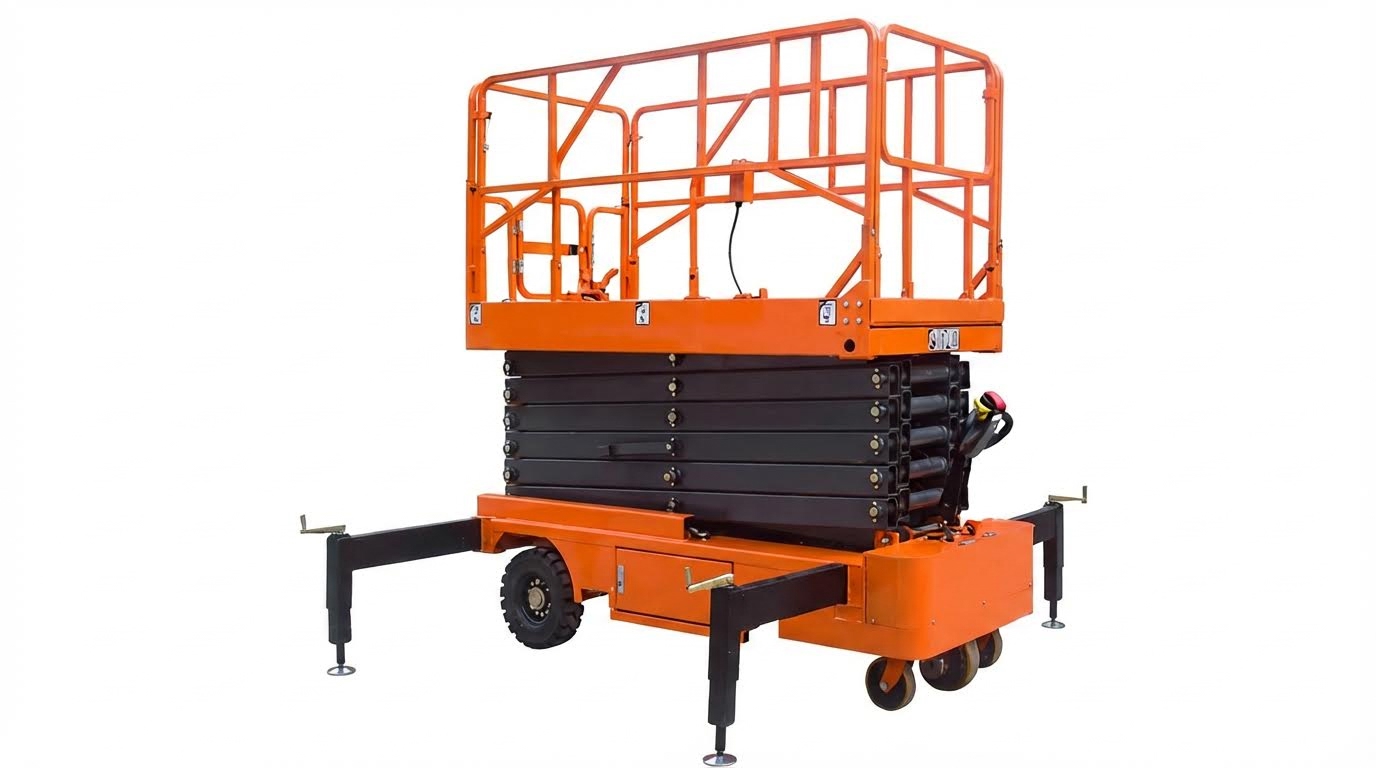
Scissor lift safety depended on integrating engineering controls, regulatory compliance, and disciplined operating practices. Organizations that reduced accident rates treated lifts as engineered systems with defined design limits, not as generic access equipment. A practical program translated OSHA and ANSI A92 requirements into clear procedures, checklists, and training that operators could execute reliably in the field.
From a technical perspective, the core controls clustered around four themes: stability, fall protection, electrical and crushing hazard control, and maintenance. Stability required operation within rated load, slope, and wind limits, with outriggers or stabilizers deployed where fitted and use restricted to firm, level ground. Fall protection relied on compliant guardrail systems, correct platform behavior by operators, and PPE where site rules required it. Electrical and crushing risk control depended on minimum approach distances to power lines, controlled travel around fixed structures and vehicles, and use of spotters and traffic management in congested areas.
Maintenance and inspection regimes formed the backbone of accident prevention. Daily pre-use checks addressed hydraulics, controls, tires, brakes, guardrails, and emergency systems. Deeper monthly and annual inspections verified structural integrity, drive and lift systems, and compliance with manufacturer and OSHA requirements. Newer technologies, including all-electric architectures, advanced batteries, and embedded sensors with telematics, enabled predictive maintenance and reduced hydraulic-related failures, but did not remove the need for procedural discipline.
Implementation in practice worked best through a structured checklist approach. This included pre-job planning and site assessment, model-specific operator training, documented pre-use inspections, controlled setup and barricading, monitored operation with clear communication protocols, and post-use shutdown and defect reporting. A balanced strategy recognized that technology could reduce certain failure modes, yet human factors, training quality, and supervisory enforcement continued to dominate overall risk. Organizations that periodically reviewed incident data, updated procedures, and aligned equipment selection with task and environment stayed ahead of both regulatory expectations and emerging technical trends.