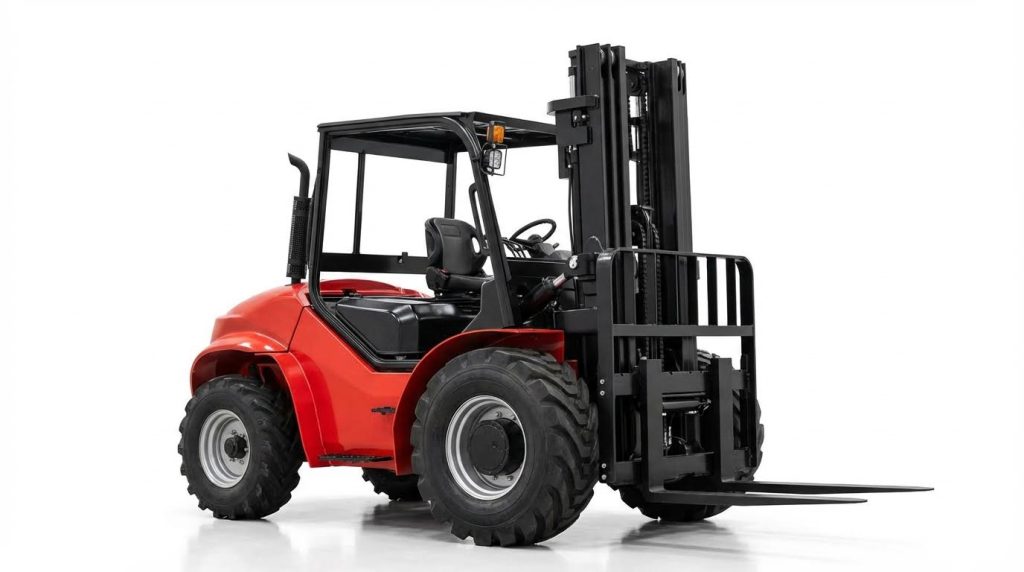
Modern forklift fleets increasingly mixed legacy lead-acid batteries with newer lithium-ion systems, each with distinct electrical, thermal, and maintenance behaviors. This article examined how chemistry differences drove variations in voltage windows, depth of discharge limits, temperature performance, and lifecycle cost.
It then analyzed the engineering design of traction batteries and connectors, including sizing to duty cycle, C‑rate constraints, connector keying, torque specifications, charger matching, and CAN/BMS integration for both new builds and lithium drop‑in retrofits. Subsequent sections addressed maintenance regimes, optimal charging strategies for multi‑shift operations, and safety compliance requirements, including OSHA-driven practices for handling, ventilation, and fire protection.
Finally, the article provided summary guidance to help engineers and fleet managers specify, retrofit, and operate forklift battery systems and connectors that balance performance, safety, and total cost of ownership across mixed lead-acid and lithium-ion fleets.
Core Differences Between Lead-Acid And Lithium Forklift Power
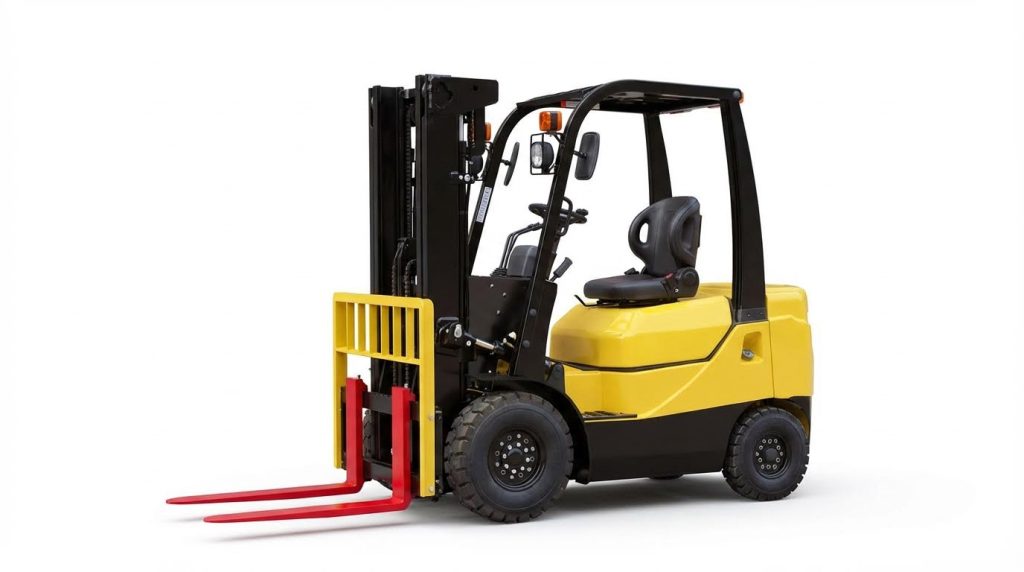
Lead-acid and lithium-ion forklift batteries used distinct electrochemistries, which drove different voltage windows and state-of-charge (SOC) behavior. Lead-acid cells operated around 2.0–2.45 V/cell, with SOC estimation mainly based on open-circuit voltage and specific gravity. Lithium iron phosphate (LiFePO4) cells worked near 3.0–3.65 V/cell and relied on a Battery Management System (BMS) for accurate SOC tracking. These fundamental differences affected charging profiles, charger compatibility, and connector keying across mixed fleets.
Chemistry, Voltage Windows, And SOC Behavior
Lead-acid batteries stored energy through reversible lead and lead dioxide reactions in sulfuric acid, which produced gassing and water loss during overcharge. Their voltage dropped progressively with SOC, so operators could estimate SOC from terminal voltage and electrolyte specific gravity. LiFePO4 lithium packs used intercalation chemistry with flat discharge curves, keeping voltage nearly constant until late in the cycle. This flat curve required BMS-based coulomb counting and cell-level voltage monitoring to avoid overcharge or over-discharge, and chargers needed tightly controlled constant-current/constant-voltage profiles.
Cycle Life, Depth Of Discharge, And Usable Capacity
Cycle life depended strongly on depth of discharge (DoD) for both chemistries, but lithium retained an advantage across all ranges. Typical traction lead-acid batteries delivered about 1,200 cycles at 100% DoD and around 1,500 cycles at 80% DoD, with sulfation and plate shedding as dominant failure modes. LiFePO4 forklift batteries reached roughly 2,000 cycles at 100% DoD and about 4,000 cycles at 80% DoD, retaining near 65–90% capacity depending on duty profile. In practice, operators limited lead-acid to 50–80% DoD to control degradation, while lithium packs comfortably supported higher DoD in multi-shift operations, increasing usable daily capacity.
Temperature Limits And Cold-Storage Performance
Lead-acid performance decreased sharply at low temperatures because electrolyte viscosity increased and diffusion slowed, reducing available discharge power by roughly 30% near -20°C. Lithium forklift batteries, especially LiFePO4, maintained 80–90% of rated discharge power between -20°C and 60°C, which improved cold-storage throughput. However, both chemistries faced strict charging limits: lead-acid charging above about 35°C accelerated water loss, while lithium charging below 0°C risked lithium plating and permanent capacity loss. BMS-controlled lithium systems mitigated overheating by throttling current above roughly 45°C, whereas lead-acid relied on charger temperature compensation and operator discipline.
Lifecycle Cost, Downtime, And Fleet Utilization
Lead-acid batteries had lower purchase prices but incurred higher lifecycle costs through watering, equalization, spill management, and frequent replacements. Typical lead-acid charging required 8–12 hours plus cool-down, forcing spare-battery inventories or shift-based downtime. Lithium-ion packs cost about three times more upfront but reduced maintenance hours by up to 60–80% and supported fast or opportunity charging in 1.5–3 hours. In three-shift warehouses, lithium fleets increased truck availability, cut labor tied to battery changes, and lowered energy costs due to higher round-trip efficiency near 95% versus roughly 75% for lead-acid, improving total cost of ownership over the battery’s life.
Engineering Design Of Forklift Batteries And Connectors
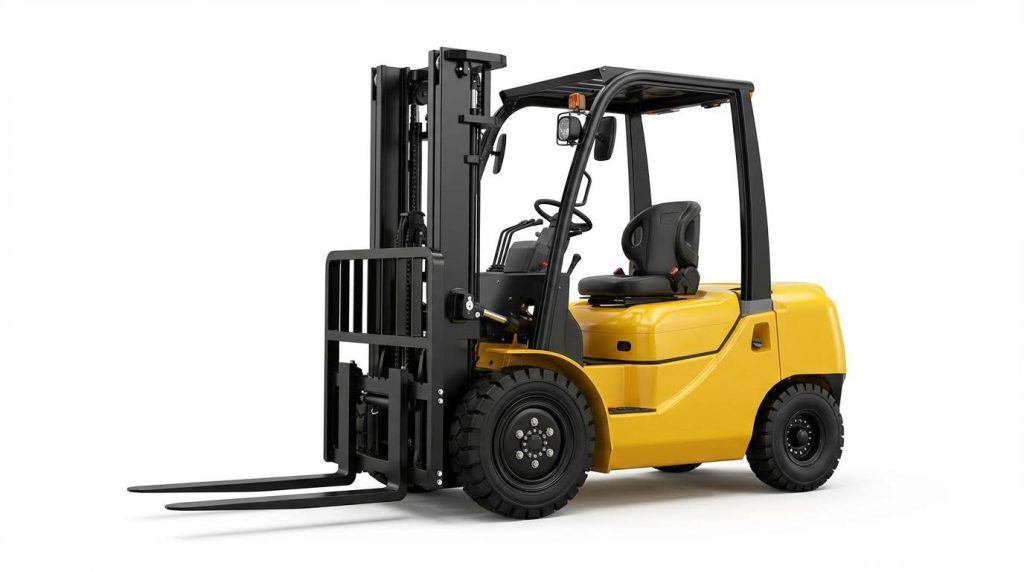
Engineering forklift battery systems required coordinated decisions on chemistry, capacity, connectors, and charging interfaces. Designers balanced energy, peak power, and thermal limits against shift patterns and safety rules. Connector geometry, torque, and keying controlled compatibility and reduced mis‑charging risks. Modern lithium packs added BMS, CAN communication, and drop‑in retrofit features to upgrade legacy lead‑acid fleets.
Battery Sizing, C-Rate, And Duty-Cycle Matching
Engineers sized forklift batteries from measured duty cycles, not nameplate ratings. They logged average and peak currents, daily ampere‑hours, and typical depth of discharge (DoD). For lead-acid, they usually limited continuous discharge to 0.2–0.3C and designed around 80% DoD to achieve 1,200–1,500 cycles. Lithium iron phosphate (LiFePO4) packs tolerated 1C continuous and 80% DoD while still delivering about 4,000 cycles.
Duty-cycle matching required separating traction and hydraulic peaks. For example, a 5 kW traction load plus 10 kW hydraulic spikes at 48 V demanded roughly 300 A surge capability. Designers selected cell formats and busbars to keep internal resistance low so terminal temperature stayed below about 60°C under worst‑case current. They verified that voltage sag under peak load remained within the forklift controller’s undervoltage limits.
Lead-acid batteries suffered accelerated sulfation when operated routinely below 50% state of charge. Engineers therefore sized capacity so typical daily use remained above that threshold or scheduled equalization charges. Lithium packs allowed higher usable capacity, often 90–95% of nameplate, but deep discharges below 20% state of charge still reduced cycle life by 30–50%. Correct sizing minimized both underutilization and premature aging.
Connector Types, Keying, And Torque Specifications
Forklift battery connectors followed standardized housings and color‑coded keying to prevent cross‑chemistry charging. Lead-acid systems used high‑current, genderless connectors with mechanical keys that matched only the intended voltage class and charger family. Lithium systems often adopted the same physical envelope but changed keying or color to enforce separation from legacy chargers. This reduced the risk of applying equalization profiles to lithium packs, which could overcharge cells within minutes.
Connector design considered continuous current ratings, insertion force, and contact resistance. Engineers targeted low milliohm contact resistance because even 0.5 Ω at 500 A wasted 125 W as heat and could soften housings. They specified anti‑corrosion treatments: petroleum jelly or anti‑corrosion spray for lead-acid terminals, and dielectric grease for lithium connectors to block moisture. Annual laser or abrasive cleaning was recommended for high‑current fleets.
Torque specifications on terminal lugs were critical to avoid loosening or stud damage. Typical values were 9–11 N·m for lead-acid posts and 7–9 N·m for lithium terminal blocks, aligned with OEM data. Under‑torqued joints increased resistance and hotspot risk; over‑torqued fasteners cracked posts or stripped inserts. Maintenance procedures required insulated tools and compliance with OSHA 29 CFR 1910.178(g), including PPE and prohibition of bridging tools across terminals.
Charger Matching, CAN Integration, And BMS Interfaces
Charger selection depended on battery chemistry, voltage, and recommended charge profile. Lead-acid chargers used temperature‑compensated constant‑current/constant‑voltage with equalization stages around 2.45 V per cell at 25°C. Lithium LiFePO4 chargers applied CC‑CV profiles terminating near 3.65 V per cell and omitted equalization. Using a lead-acid charger on lithium packs risked overvoltage, while lithium chargers lacked gassing stages required to desulfate lead-acid plates.
Modern lithium forklift packs integrated Battery Management Systems (BMS) that monitored cell voltages, currents, and temperatures. The BMS enforced cell balancing, over‑current protection, and charge/discharge cut‑offs. Advanced implementations logged historical data and supported predictive maintenance by flagging rising internal resistance or cell imbalance weeks before capacity loss became obvious. Designers specified BMS cell deviation thresholds, for example ±0.2 V, and validated pack behavior under fault injection tests.
CAN bus integration allowed the battery to communicate state of charge, available power, and fault codes directly to the truck and smart chargers. Chargers adjusted current based on pack temperature
Maintenance, Charging Strategy, And Safety Compliance

Maintenance, charging, and safety practices determined real-world forklift battery life and uptime. Lead-acid systems required routine watering, equalization, and specific gravity tracking, while lithium packs shifted the focus to BMS data and firmware. Charging strategy had to align with shift patterns and chemistry limits, especially for fast and opportunity charging. Regulatory frameworks such as OSHA shaped handling, ventilation, and fire protection requirements for both chemistries.
Lead-Acid Watering, Equalization, And SG Monitoring
Lead-acid forklift batteries relied on liquid electrolyte, so watering discipline directly affected cycle life. Technicians topped up cells with distilled or deionized water (conductivity below 5 µS/cm) after full charge and cooldown, keeping electrolyte 6–8 mm above the plates. Underfilling exposed plates and caused sulfation, while overfilling led to acid spillage during gassing and increased corrosion. Typical watering intervals ranged from every 5–10 cycles to weekly under heavy duty, with automated watering systems reducing labor hours by about 70%.
Equalization charging restored capacity by breaking sulfate buildup and rebalancing cell voltages. Fleets scheduled equalization according to OEM guidance, usually weekly or based on specific gravity deviation between cells. Chargers used elevated voltage setpoints, around 2.45 V per cell at 25 °C with temperature compensation, and technicians monitored electrolyte temperature to stay below 50 °C. Skipping equalization reduced charge acceptance, increased sulfation, and shortened useful life.
Specific gravity monitoring validated state of charge and electrolyte health beyond simple voltage checks. Technicians used hydrometers or refractometers with about ±0.002 SG accuracy after full charge and rest, targeting 1.265–1.299 SG for healthy industrial cells at 25 °C. They applied temperature corrections, since a 10 °C rise reduced SG by roughly 0.004. Maintenance logs recorded SG, voltage, service date, and any boost charges, enabling trend analysis for early detection of stratification, contamination, or impending cell failure.
Lithium BMS Data, Predictive Maintenance, And Firmware
Lithium-ion forklift batteries, especially LiFePO4, shifted maintenance from fluid management to electronics and data. Packs integrated Battery Management Systems that monitored cell voltages, temperatures, and currents in real time, enforcing limits on charge, discharge, and cell imbalance. Healthy systems maintained cell deviation within about ±0.2 V, for example around 3.3 V per cell in a 48 V pack at roughly 52.8 V total. The BMS blocked over-discharge and overcharge events that otherwise would have caused rapid capacity loss.
Predictive maintenance relied on logged BMS data such as cycle count, depth of discharge, temperature excursions, and internal resistance trends. Operators correlated rising impedance and frequent thermal throttling with future capacity loss, often 3–6 months before failure became obvious. Weekly or monthly reviews of alarms and data exports supported targeted module replacements instead of full-pack swaps. Some systems provided Bluetooth or CAN connectivity, enabling remote diagnostics and integration into fleet management software.
Firmware management became a distinct maintenance task for lithium fleets. Manufacturers released updates to refine charge algorithms, balancing strategies, and fault thresholds, improving both safety and cycle life. Technicians scheduled firmware revisions during planned downtime, following OEM validation and rollback procedures. Regular updates supported advanced features such as adaptive current limits during hot weather, opportunity-charging optimization, and more accurate state-of-charge estimation across the pack’s 10-year design life.
Opportunity And Fast Charging In Multi-Shift Operations
Charging strategy strongly influenced lifecycle cost and uptime in multi-shift warehouses. Lead-acid batteries typically required full 8–10 hour charge windows plus cool-down, which constrained operations to one charge per day and encouraged battery swapping. In contrast, lithium-ion packs supported fast and opportunity charging without memory effect, allowing short, frequent boosts during breaks. A lithium system could charge from roughly 10% to 100% in about 1.5–3 hours using appropriately sized chargers.
Depth of discharge and charge rate shaped cycle life for both chemistries. Lead-acid batteries degraded quickly under partial state-of-charge operation and deep discharges; cycling to 100% depth of discharge yielded around 1,200 cycles, while limiting to 50% depth increased life to about 2,000 cycles. LiFePO4 packs tolerated deeper use, delivering roughly 2,000 cycles at 100% depth and up to 6,000 cycles at 50% depth. Operators programmed alerts near 20–25% state of charge to avoid harmful deep discharges, especially for lithium where very low levels increased internal resistance.
Fast charging demanded rigorous thermal management and
Summary And Practical Selection Guidelines
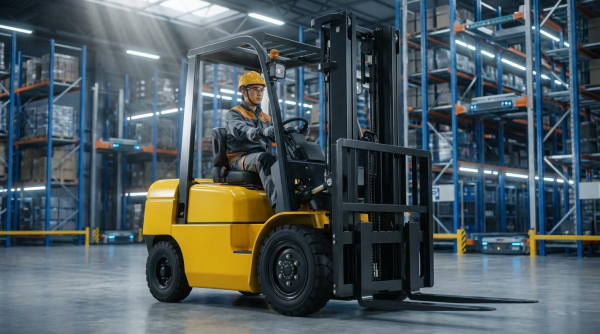
Forklift battery selection required a balanced view of chemistry, duty cycle, and regulatory constraints. Lead-acid batteries offered low upfront cost but demanded intensive maintenance: watering every 5–10 cycles, equalization, SG checks, and strict ventilation due to hydrogen off-gassing. Lithium-ion, especially LiFePO4, delivered 3–4× cycle life, 60–80% lower maintenance hours, and fast or opportunity charging with no memory effect, at roughly triple initial cost. For multi-shift fleets, reduced downtime and labor often offset the higher capital expense within a few years.
Engineering decisions had to start from load profile and shift pattern. High-throughput, 24/7 warehouses benefited from lithium systems with opportunity charging and CAN-connected chargers, eliminating battery swaps and cool-down periods. Single-shift or intermittent-use trucks could still justify lead-acid, provided facilities invested in compliant charging rooms, wash stations, and trained technicians. Connector selection, torque control, and charger keying were critical to prevent cross-chemistry charging, which risked thermal damage and BMS lockout.
Safety and compliance considerations strongly influenced technology choice. Lead-acid required hydrogen detection, spill containment, PPE for electrolyte handling, and disciplined equalization practices. Lithium shifted the focus toward BMS diagnostics, thermal monitoring, and Class D fire preparedness, while simplifying day-to-day handling. Future trends pointed toward wider adoption of smart LiFePO4 packs with onboard data logging, predictive maintenance, and standardized communication interfaces, tightening integration between truck, charger, and fleet-management software.
In practice, decision-makers needed a structured evaluation: define duty cycle and allowable downtime, quantify labor and energy costs, audit existing infrastructure, and model total cost of ownership over 8–10 years. Mixed-chemistry fleets remained viable, but operators should segregate chargers, procedures, and training by chemistry. By aligning battery type, connector standard, and charging strategy with operational requirements and safety regulations, facilities could maximize uptime while controlling lifecycle cost and risk exposure.