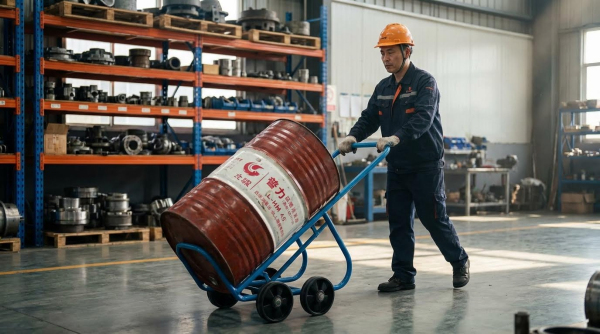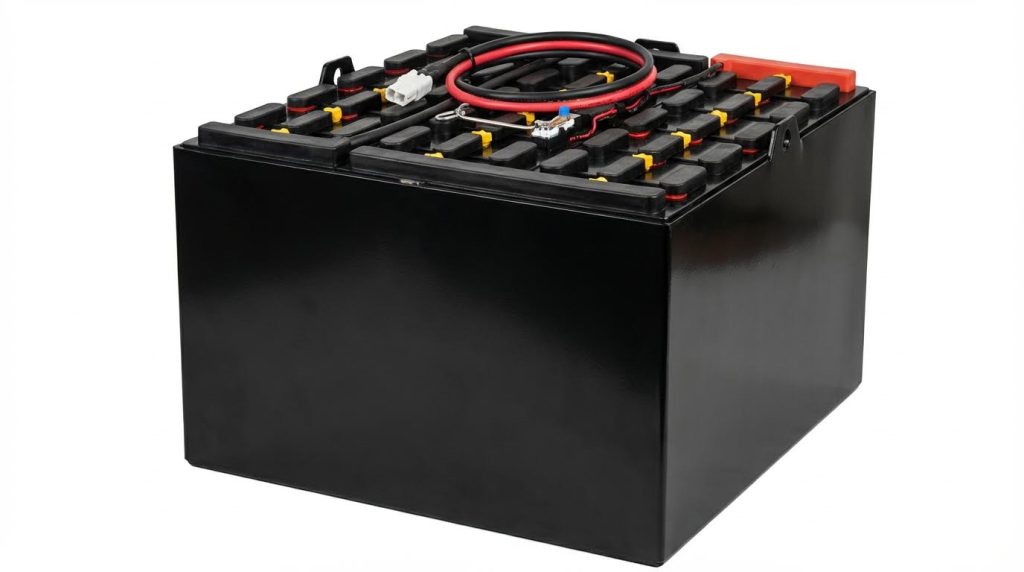
Electric forklift battery strategy directly affected energy cost, uptime, and safety in modern material handling operations. This article covered battery lifespan fundamentals, engineering-driven charging strategies, and battery-room maintenance practices for both lead-acid and lithium-ion systems. It also addressed monitoring technologies, ventilation and hydrogen management, and operator training to limit thermal and electrical stress on traction batteries. The closing section translated these technical insights into concise, practical guidelines that plant teams could apply in daily operation and long-term fleet planning.
Battery Lifespan Basics For Electric Forklifts
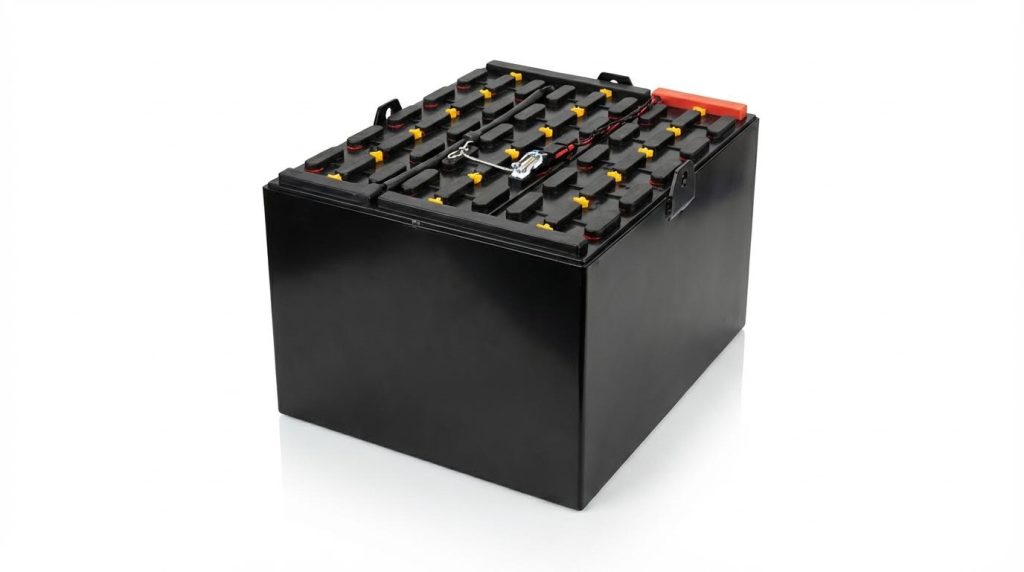
Battery lifespan in electric forklifts depended on chemistry, operating profile, and maintenance quality. Engineers needed to understand cycle life, environmental stresses, and sizing to match batteries to shift patterns. Correct selection and operation reduced total cost of ownership and unplanned downtime. The following subsections outlined the core technical drivers of service life.
Typical Cycle Life: Lead-Acid vs. Lithium-Ion
Industrial lead-acid traction batteries typically achieved 1,000–1,500 full cycles, or roughly 3–5 years in single-shift use. With optimized maintenance and equalization, some units reached 1,500–2,000 cycles, but only under controlled conditions. Lithium-ion forklift packs usually delivered 2,000–3,000 cycles in conservative operation, and advanced designs exceeded 5,000 cycles. This translated to 5–7 years or more in comparable duty, with less capacity fade and reduced maintenance. However, lithium systems required strict charger compatibility and BMS integration to realize this theoretical life. When operators used opportunity charging correctly, lithium batteries supported frequent partial charges without the cycle penalties seen in lead-acid.
Key Factors That Shorten Forklift Battery Life
Depth of discharge strongly influenced life for both chemistries. Regular discharges beyond 80% state of charge reduction accelerated plate degradation in lead-acid and cell stress in lithium. Over-discharging lead-acid packs and then leaving them in a discharged state promoted sulfation, which caused longer charging times, shorter run times, and eventual failure. Overcharging increased temperature, released more hydrogen gas, and damaged active materials or lithium cell interfaces. Improper charging profiles, including chronic undercharging, also reduced usable capacity and cycle count. High ambient temperatures above 35–45°C, combined with dust and moisture, further accelerated aging and increased safety risks. Poor terminal torque, corrosion, and damaged cables raised resistance, producing localized heating and uneven current distribution within the pack.
Duty Cycles, Shifts, And Sizing For Longevity
Battery sizing relative to the duty cycle determined how hard each pack worked per shift. A correctly sized lead-acid battery typically supported one 8-hour shift with discharge limited to about 70–80% depth. Plants that ran two or three shifts either adopted battery changing regimes or moved to lithium systems designed for opportunity charging. Oversized packs reduced per-cycle depth of discharge, extending life but increasing capital cost and mass. Undersized packs forced frequent deep discharges and extra charging cycles, which could halve expected service life. Engineering teams needed to analyze average and peak current draw, lift frequency, travel distances, and load mass to specify ampere-hour capacity. Matching chemistry and capacity to shift structure, with realistic margins for seasonal temperature variation, minimized thermal stress and avoided chronic over-discharge events.
Engineering Best Practices For Charging Strategy

Charging strategy strongly influenced electric forklift battery life, safety, and availability. Engineers had to balance depth of discharge, charging speed, and temperature to meet shift requirements without accelerating degradation. A structured approach to state of charge control, charger selection, and environmental management allowed both lead-acid and lithium-ion systems to reach or exceed their design cycle life.
State Of Charge Windows And Depth Of Discharge Limits
Depth of discharge (DoD) directly determined cycle life for both lead-acid and lithium-ion batteries. Lead-acid packs typically reached about 1,000–1,500 full cycles at 80% DoD, but shallow cycling at 40–50% DoD extended life significantly. Lithium-ion packs often achieved 2,000–5,000 cycles when kept within a 20–80% state of charge (SoC) window. Engineers therefore specified recharge points around 20–30% SoC and avoided routine discharges below this threshold. Over-discharging below 80% DoD increased internal resistance, promoted sulfation in lead-acid cells, and accelerated capacity fade in lithium-ion chemistries.
Opportunity, Fast, And Conventional Charging Compared
Conventional charging followed an 8-hour charge, 8-hour cool, 8-hour run profile, which suited single-shift operations. This method used full, uninterrupted charge cycles and maximized life for lead-acid batteries by respecting their limited cycle count. Opportunity charging, where operators topped up during breaks, worked best with lithium-ion systems that tolerated frequent partial charges without memory effects. In contrast, repeated opportunity charging of lead-acid packs effectively doubled or tripled daily cycle counts and could halve service life. Fast charging provided high current in short windows and supported multi-shift fleets but increased heat generation and required strict temperature and current limits to prevent plate damage or lithium plating.
Temperature Management During Charging And Storage
Battery temperature strongly affected charge acceptance, safety, and aging. Optimal charging conditions centered near 25°C, with acceptable ranges typically 0–45°C for both lead-acid and lithium-ion forklift batteries. Charging above 45°C increased side reactions, gas evolution, and risk of thermal runaway, while low temperatures reduced ionic mobility and caused lithium plating in lithium-ion cells below 0°C. Engineers implemented thermal monitoring, forced ventilation, and sometimes active cooling to hold batteries within the target band during charge. For storage, they specified cool, dry, well-ventilated rooms and avoided direct solar gain, while maintaining lithium-ion packs around 50% SoC and lead-acid packs fully charged with periodic maintenance charges.
Charger Selection, Compatibility, And Safety Controls
Charger-battery compatibility underpinned both performance and life expectancy. Lead-acid systems required chargers with correct voltage, current profile, and equalization capability, while sealed designs needed current limits, often below about 25 A for smaller units, to avoid vent overpressure. Lithium-ion packs depended on chargers matched to the battery management system (BMS); incompatible chargers caused BMS faults and could reduce life by more than 20%. Modern chargers integrated temperature feedback, charge timers, and cut-off logic to prevent overcharge and over-temperature conditions. Engineering standards for charging areas included dedicated, well-ventilated spaces, clearly marked emergency stops, and interlocks that inhibited charging if temperature, wiring integrity, or ventilation fell outside specified limits.
Maintenance, Monitoring, And Safety In The Battery Room
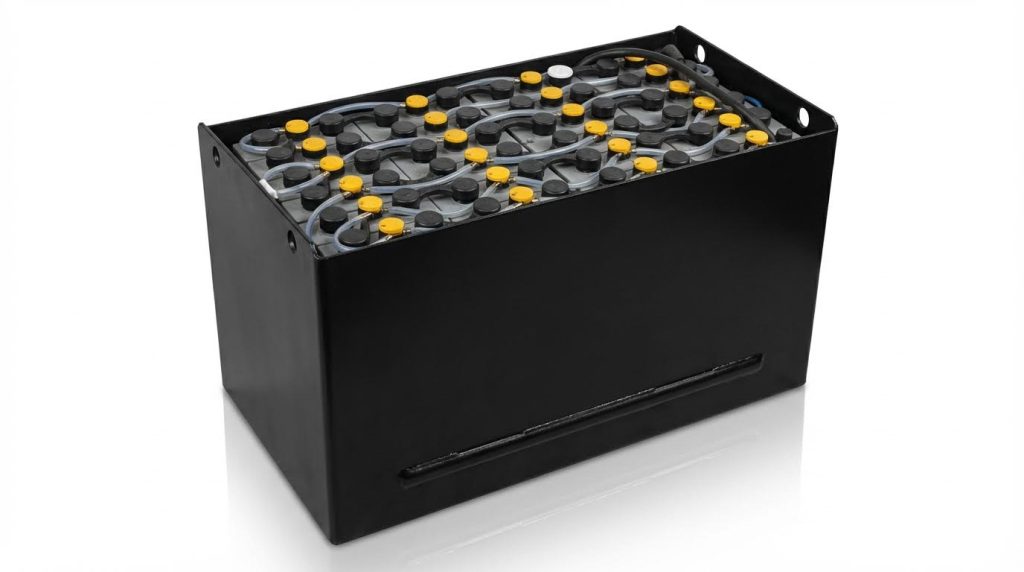
Effective battery room programs combined preventive maintenance, condition monitoring, and robust safety engineering. Well-structured routines reduced unplanned downtime, extended service life, and kept charging areas compliant with safety regulations. The following subsections outlined practical procedures that plant engineers could standardize across lead-acid and lithium-ion fleets.
Inspection, Cleaning, And Fluid Management Routines
Routine inspections identified failure modes before they caused outages. Technicians typically checked cases for swelling, cracks, and electrolyte leakage, and removed any damaged battery from service immediately. Visual checks included terminals, inter-cell connectors, and cables for corrosion, insulation damage, and loose hardware. Quarterly torque checks around 10–12 N·m on terminals limited resistance growth and overheating.
Clean batteries operated cooler and reduced stray currents. Monthly cleaning with approved battery cleaner or warm water removed conductive acid films and dust from the cover and tray. Plants avoided high-pressure water, solvents, and metal brushes that damaged labels or insulation. For lead-acid units, teams neutralized acid residue carefully and ensured trays and racks remained dry to prevent corrosion.
Flooded lead-acid batteries required structured fluid management. Technicians checked electrolyte after charging, not before, to avoid overflow on the next cycle. They topped up with distilled or de-ionized water only, keeping the level about 5 mm above the element protector. Pilot-cell checks every 5–10 cycles confirmed stable levels; abnormal consumption indicated overcharging or plate damage.
BMS, Sensors, And Predictive Maintenance Technologies
Lithium-ion systems relied on an integrated battery management system to protect cells. The BMS monitored cell voltages, pack current, and temperatures, enforcing upper and lower limits for safe operation. Accurate state-of-charge and state-of-health estimation helped planners schedule charging and replacement without deep discharges. Plants periodically updated BMS firmware, typically once or twice per year, to correct algorithms and improve fault handling.
Sensors and data logging transformed batteries into monitored assets rather than consumables. Temperature probes, current shunts, and voltage taps fed data to fleet management software or warehouse management systems. Engineers used this data to identify chronic over-discharge events, high peak currents, and thermal hotspots. Establishing thresholds for alarms allowed intervention before failures, such as derating trucks or rescheduling charging.
Predictive maintenance tools further reduced lifecycle cost. Thermal imaging cameras detected localized heating at lugs, cables, and busbars that standard inspections missed. Plants that implemented regular infrared surveys cut replacement costs significantly by correcting loose joints and overloaded circuits early. Trend analysis of capacity tests and internal resistance helped forecast end-of-life and plan capital budgets.
Ventilation, Hydrogen Management, And PPE Requirements
Lead-acid charging produced hydrogen and oxygen, which required controlled ventilation. Engineering calculations used gas evolution rates, such as roughly 25 liters of hydrogen from a 500 ampere-hour battery per charge, to size exhaust systems. Designers targeted at least 5–10 air changes per hour in charging rooms to keep concentrations well below the 4% lower explosive limit. Locating chargers away from ceilings or corners reduced gas pockets.
Battery rooms used non-sparking equipment and clear “No Smoking” and “No Open Flame” signage. Electrical installations followed relevant standards for hazardous locations where required. Racks for wet batteries often used grounded, polyethylene-lined steel to manage spills and static. Operators avoided charging flooded batteries on wooden manual pallet jack that could soak electrolyte and degrade structurally.
Personal protective equipment protected workers from chemical and electrical hazards. Handling flooded lead-acid batteries required acid-resistant gloves, goggles or face shields, and chemical-resistant aprons and footwear. Work on energized circuits demanded voltage-rated gloves and dielectric shoes, especially with high-voltage lithium packs. Supervisors ensured eyewash stations, safety showers, and fire extinguishers were accessible within the battery room.
Operator Training To Reduce Thermal And Electrical Stress
Operator behavior strongly influenced battery temperature and cycle life. Training emphasized smooth acceleration, controlled braking, and avoiding unnecessary high-speed travel to limit current peaks. Drivers learned to respect rated load limits and to distribute loads correctly on forks, reducing peak discharge currents and traction motor demand. Consistent practices kept battery temperatures below recommended thresholds, typically under 45 °C during operation and charging.
Charging discipline formed another core training topic. Operators were instructed to avoid over-discharging below recommended state-of-charge limits, commonly 20–30%. They learned not to interrupt conventional charge cycles for lead-acid batteries, except for emergencies, to preserve cycle life. Training also covered correct connection and disconnection sequences, verifying charger compatibility, and recognizing fault indicators.
Safety procedures reduced risk during routine handling. Operators removed metallic jewelry, used appropriate PPE, and followed site rules for entering the battery room. They learned to identify early warning signs such as unusual odors, hissing, excessive heating, or visible swelling. Clear escalation protocols ensured that any abnormal condition triggered immediate isolation of the battery and notification of maintenance staff.
Summary And Practical Guidelines For Plant Teams

Electric forklift battery life depended on chemistry, charging discipline, temperature, and maintenance quality. Lead-acid packs typically delivered 1,000–1,500 full cycles, while lithium-ion units achieved 2,000–5,000 cycles when correctly managed. Depth of discharge, average operating temperature, and charge interruption history all shifted real-world life away from catalog values. Plants that aligned battery sizing, duty cycles, and charging windows reduced replacements and unplanned downtime significantly.
Future battery rooms increasingly integrated smart chargers, connected BMS, and predictive analytics. Thermal imaging, current logging, and event tracking already cut replacement costs by up to 40% in documented cases. Lithium technologies enabled opportunity charging, higher energy efficiency, and lower routine maintenance, but required strict charger compatibility and firmware management. Regulatory pressure around ventilation, hydrogen management, and electrical safety pushed sites toward engineered charging stations with defined airflow, spill control, and emergency provisions.
For implementation, plant teams should standardize on clear SOC bands, typically operating between 20% and 80% for life-critical assets. They should define when to use conventional, fast, or opportunity charging based on shift patterns rather than convenience. Battery rooms need verified ventilation rates, documented PPE requirements, and written lockout and emergency procedures. Maintenance schedules should separate daily operator checks from monthly technical inspections and periodic equalization or firmware updates.
From a technology evolution standpoint, lead-acid remained cost-effective for single-shift or low-intensity fleets with disciplined maintenance. Lithium-ion suited multi-shift, high-throughput operations that valued fast charging and reduced service labor. A balanced roadmap evaluated total cost of ownership, safety risk, and infrastructure constraints, not only purchase price. Plants that treated batteries as engineered assets, with data-driven policies and trained operators, consistently realized longer life, higher uptime, and safer material handling operations.