Forklift reliability depended heavily on how well operators and technicians managed critical fluids across engine, hydraulic, cooling, brake, and driveline systems. This guide covered core fluid roles, engineering fundamentals, and application strategies for demanding material handling environments. It drew on OEM-style specifications, field maintenance practices, and condition monitoring methods to connect theory with workshop reality. The final section integrated these insights into a practical, system-wide approach to forklift fluid management for safe, cost-effective fleet operation.
Core Roles Of Forklift Fluids In System Performance
Forklift fluids formed the backbone of reliable powertrain, hydraulic, braking, and cooling performance. Each fluid type provided lubrication, heat removal, force transmission, and corrosion protection under high load and stop‑start duty cycles. Correct selection and maintenance of these fluids directly influenced uptime, safety margins, and total lifecycle cost. Poor fluid control accelerated wear, increased energy use, and raised the probability of critical failures during material handling operations.
How Fluids Affect Uptime, Safety And Lifecycle Cost
Engine oil, hydraulic oil, coolant, brake fluid, and transmission fluid each supported a distinct functional subsystem. Engine oil maintained film strength between bearings, rings, and cam surfaces, stabilizing combustion efficiency and reducing unplanned engine overhauls. Hydraulic oil quality determined mast lift speed, tilt smoothness, and steering response, which affected cycle time and operator control. Coolant and brake fluid governed thermal stability and stopping performance, which were key safety parameters in high-density warehouse traffic. When operators respected change intervals, such as 200–250 hours for engine oil and 500–600 hours for hydraulic oil and coolant, fleets typically experienced lower failure rates and more predictable maintenance budgets.
Neglected fluids degraded through oxidation, contamination, and additive depletion. This degradation increased internal leakage in hydraulic components, elevated operating temperatures, and reduced viscosity control in engines and transmissions. The result was higher fuel consumption, more frequent seal failures, and earlier replacement of pumps, valves, and clutches. Structured fluid programs, including daily level checks and scheduled analysis, allowed planners to shift from reactive repairs to planned interventions. Over the full forklift lifecycle, disciplined fluid management reduced total cost of ownership by limiting catastrophic events and extending overhaul intervals.
Fluid Compatibility, Seals And Component Wear
Forklift systems relied on precise interactions between fluids, elastomer seals, and metallic surfaces. Hydraulic and brake seals were usually formulated for specific base oil types and additive chemistries, so using mechanical oil instead of dedicated hydraulic oil risked swelling, shrinking, or embrittlement of seals. Incompatible fluids also altered friction characteristics on clutch packs and wet brakes, which could cause shudder, slip, or reduced braking torque. Mixing different hydraulic oils, even within similar viscosity grades, introduced uncertainty about additive compatibility and foam or sludge formation.
Contaminants such as particles, water, and oxidation products accelerated abrasive and corrosive wear. Simple field checks, like spotting dark dot patterns on filter paper samples, indicated when hydraulic oil contamination had reached damaging levels. Excessive wear in pumps, cylinders, and gear sets then translated directly into pressure losses and mechanical backlash. Cleaning reservoirs, flushing lines with dedicated cleaning oil for 15–20 minutes, and servicing filters during oil changes significantly reduced residual debris. When matched with appropriate grease at pins, mast channels, and bearings, compatible fluids helped maintain seal integrity, surface finish quality, and dimensional tolerances throughout the service life.
Standards, OEM Specs And Regulatory Compliance
Standards and OEM specifications provided the baseline for fluid selection and maintenance intervals. Engine oils for diesel forklifts were typically required to meet at least API CF‑4 with 10W‑30 viscosity, while gasoline engines needed API SH or ILSAC GF‑1 or higher. Hydraulic fluids had to meet defined viscosity ranges, anti‑wear performance, and air release properties to avoid cavitation and control lag. Transmission and axle fluids followed gear oil classifications such as GL‑4 or GL‑5, with capacities and viscosities specified for powershift or manual layouts.
Manufacturers defined change intervals in operating hours, such as 200–250 hours for engine oil and 500–600 hours for hydraulic oil, coolant, and brake fluid. These schedules balanced fluid degradation rates against downtime and labor cost. Regulatory frameworks, including OSHA requirements, mandated daily pre‑shift inspections that included checks for fluid levels and leaks. Compliance with these rules reduced environmental releases, slip hazards from leaked oil, and braking failures. Using fluids that met OEM and international standards, and documenting maintenance, supported warranty validity and audit readiness. This standards‑driven approach anchored safe, predictable forklift operation in industrial and logistics environments.
Engine Oil, Coolant And Brake Fluid Engineering Basics
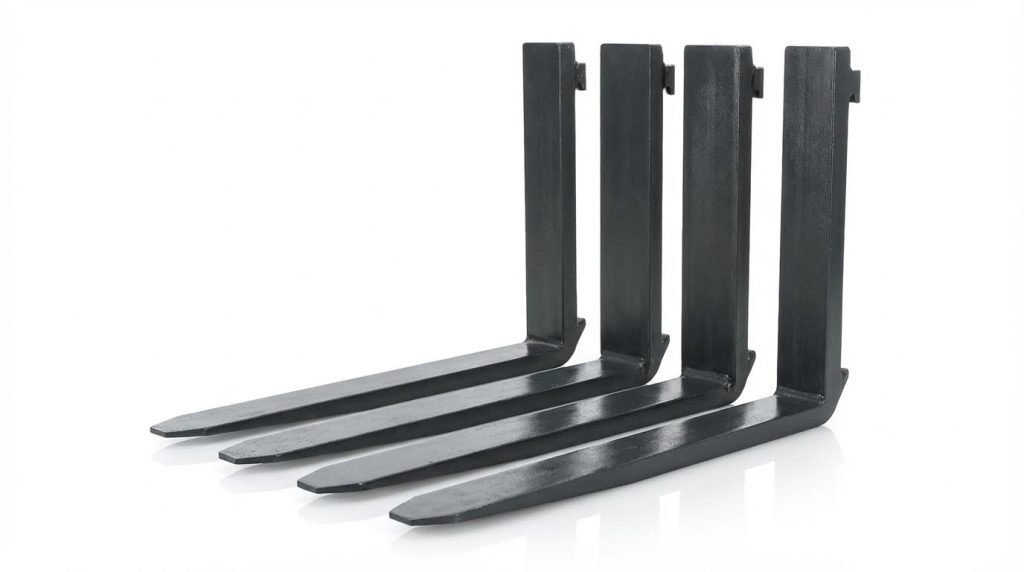
Engine oil, coolant, and brake fluid governed core reliability in internal combustion forklifts. Each fluid performed a distinct thermodynamic or tribological role while sharing common requirements for cleanliness, chemical stability, and compatibility with system materials. Engineering teams specified these fluids based on viscosity grade, additive package, boiling and freezing characteristics, and interaction with elastomers and metals. Correct selection and disciplined maintenance intervals reduced unplanned downtime, protected high-value components, and ensured compliance with safety regulations.
Engine Oil Grades, API Specs And Change Intervals
Engine oil in diesel and gasoline forklifts provided hydrodynamic lubrication, boundary film protection, and piston cooling. Engineers selected viscosity grades such as SAE 10W-30, 10W-40, or 5W-40 based on ambient temperature range, starting behavior, and OEM clearances. For diesel engines, API CF-4 or higher performance levels ensured adequate detergency, soot handling, and oxidation resistance, while gasoline engines required API SH or higher or ILSAC GF-1 or higher. Field practice set change intervals around 200–250 operating hours for conventional oils, extended to 600 hours when OEM-approved higher-spec oils and clean operating conditions applied.
Typical diesel forklift engines, such as units using an Isuzu C240, used multigrade oils like 10W-30 with capacities near 5 liters. Operators had to monitor oil level daily and top up to the dipstick’s upper range without overfilling, which could cause aeration and foaming. Change procedures included draining hot oil, replacing the spin-on or cartridge filter, inspecting for metal particles, and refilling with the specified quantity. Documented intervals, tied to hour meters rather than calendar time alone, allowed maintenance planners to coordinate engine service with other fluid changes for minimal downtime.
Coolant Chemistry, Corrosion Control And Heat Load
Forklift coolant functioned as both a heat transfer medium and a corrosion inhibitor for mixed-metal cooling circuits. Modern coolants used ethylene glycol or propylene glycol bases combined with organic or hybrid inhibitor packages to protect aluminum heads, cast-iron blocks, soldered joints, and pump components. Products such as organic acid technology (OAT) coolants rated to -38 °C or -26 °C allowed stable operation across wide ambient ranges while limiting scale formation. Correct concentration, typically around 50% glycol by volume, balanced freeze protection, boiling point elevation, and pumpability.
Heat load in forklifts was highly cyclic due to stop-start duty, high rack lifting, and constrained airflow in warehouse aisles. Engineers sized radiators and expansion tanks based on peak engine output and expected ambient temperature, then specified coolant volumes near 10 liters for mid-size trucks. Maintenance practice required coolant replacement every 500–600 operating hours or annually to replenish depleted inhibitors and remove corrosion products. Technicians checked coolant for discoloration, suspended solids, or oil contamination, and used hydrometers or refractometers to verify concentration, preventing overheating, cavitation erosion, and internal corrosion.
Brake Fluid Types, Hygroscopicity And Seal Health
Hydraulic brake systems in forklifts typically used glycol-ether-based fluids such as DOT 3, chosen for compatible boiling point and seal materials. These fluids were inherently hygroscopic, gradually absorbing moisture from the atmosphere through hoses, reservoirs, and seals. Increased water content reduced the wet boiling point and raised the risk of vapor lock during heavy braking or operation on ramps. Moisture also accelerated corrosion in master cylinders, wheel cylinders, and steel lines, compromising long-term safety.
Forklift brake circuits held relatively small fluid volumes, often around 0.2 liters, which made contamination effects proportionally more severe. Engineering guidance set replacement intervals at roughly 500–600 operating hours, or at least annually, to maintain boiling margin and corrosion protection. During service, technicians inspected fluid color, checked for sediment, and verified that reservoir levels stayed within marked limits without unexplained loss. Seal compatibility required matching DOT grade and chemistry to OEM specifications; incorrect fluid selection could cause seal swelling, softening, or cracking, leading to internal leakage and reduced braking efficiency.
Hydraulic And Transmission Fluids In Material Handling
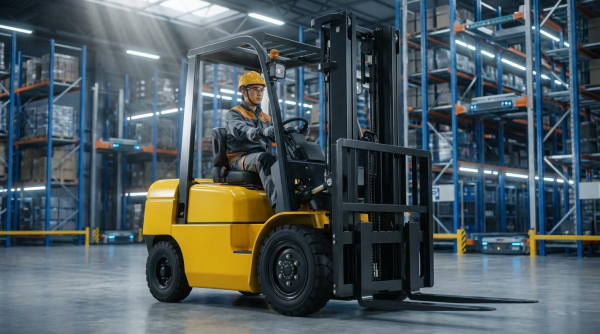
Hydraulic and transmission fluids determined how reliably forklifts lifted, steered, and transmitted power. Correct selection, cleanliness, and monitoring reduced failures, stabilized operating temperatures, and extended component life. This section focused on engineering choices for hydraulic, transmission, axle, and differential fluids, and how these choices supported predictive maintenance and energy efficiency in fleets.
Hydraulic Oil Selection, Cleanliness And Filtration
Hydraulic oil for forklifts required dedicated hydraulic formulations, not generic mechanical oils. Engineers specified viscosity grades according to ambient temperature and OEM charts, for example ISO VG 32 or 10W hydraulic oils for moderate climates. The oil also needed anti-wear, oxidation-control, and corrosion-inhibitor additive packages compatible with pumps, valves, and seal materials. Mixing different hydraulic oils increased the risk of additive clash, sludge formation, and seal degradation, so maintenance plans kept one approved grade per fleet segment.
Cleanliness controlled valve spool sticking, pump wear, and tilt-cylinder scoring. Technicians routinely checked oil level with the dipstick or sight glass and sampled oil from the tank bottom using a glass tube, then evaluated contamination on filter paper. A light yellow ring pattern indicated acceptable cleanliness, while dark central spots signaled high particulate or sludge and triggered oil change or filtration. Before each oil change, they drained the tank via the bottom plug, opened the cleaning cover, and wiped sediments with non-fibrous tools such as sponges to avoid lint.
Filtration strategy combined in-tank strainers, pressure-line or return-line filters, and good refueling practices. Filters were removed and soaked in kerosene or replaced according to hour-based schedules, typically every 500–600 operating hours for hydraulic circuits. During changeover, technicians filled the tank with cleaning oil, ran the system for 15–20 minutes to flush residual degraded oil through cylinders and lines, then drained completely. They used funnels and dedicated, clean containers when refilling to prevent new contamination, and bled air by cycling mast and tilt functions until movements became smooth and noise levels stabilized.
Transmission, Axle And Differential Fluid Strategies
Transmission, axle, and differential fluids carried torque, provided hydrodynamic lubrication, and controlled wear under high contact stresses. Powershift transmissions often used multifunctional 10W fluids or automatic transmission fluids with specific friction modifiers, while manual transmissions and differentials shared gear oils meeting GL-3, GL-4, or GL-5 performance categories. Engineers matched viscosity grades such as 80W or 80W-90 to expected ambient temperatures and duty cycles, ensuring adequate film thickness at low speed and manageable drag losses at higher speed.
Capacities and intervals were defined by OEMs but typically followed hour-based or annual schedules. For example, differential oil changes around 2,000 operating hours aligned with major services, while transmission fluids in powershift units were checked frequently and changed according to thermal severity and contamination levels. Incorrect fluid type, such as using a high-EP GL-5 oil where synchronizers required GL-4, accelerated yellow-metal wear and caused shift quality issues. Conversely, under-specified oils led to pitting, scuffing, and elevated operating temperatures in heavily loaded gears.
Maintenance programs included daily leak checks around axle seals, transmission housings, and drain plugs. During scheduled services, technicians drained oils fully, inspected magnetic plugs for metal debris, and replaced transmission filters. They refilled to specified levels, then operated the truck to stabilize temperature and rechecked levels, compensating for oil distribution into torque converters and clutches. Coordinating engine, transmission, and axle fluid changes with other tasks such as brake and coolant service minimized downtime and supported compliance with safety regulations that required forklifts to be inspected before each shift.
Condition Monitoring, Oil Analysis And Predictive Tools
Condition monitoring shifted fluid management from fixed intervals to data-driven decisions. Regular oil analysis on engine, hydraulic, and driveline fluids measured viscosity, oxidation, particle counts, and water content. Technicians correlated trends with operating hours, load profiles, and ambient conditions to refine change intervals, often extending them safely beyond conservative baseline values. Early detection of abnormal wear metals or rapid viscosity shift allowed targeted component inspections before functional failures occurred.
In hydraulic circuits, increased noise, sluggish mast response, higher operating temperatures, and visible contamination signaled degradation. For transmissions and axles, symptoms included harsh shifts, vibration, and discolored or burnt-smelling oil. Predictive programs used these field observations together with laboratory data to prioritize maintenance actions. Fleets that implemented routine sampling ports and standardized sampling procedures reduced variability and improved data quality.
Advanced filtration and offline kidney-loop systems supported predictive strategies by continuously removing fine particles and moisture. Cleanliness control reduced valve sticking and extended pump and cylinder life, which in turn reduced unplanned downtime. Integrating oil analysis results into maintenance management systems helped planners align fluid changes with OSHA-mandated inspections and OEM service milestones. Over time, fleets built failure histories and used them to adjust fluid specifications, filter ratings, and inspection intervals, creating a closed feedback loop between field performance and engineering standards.
Fluid Choices For Sustainable, Energy-Efficient Fleets
Fluid selection influenced energy consumption, component longevity, and environmental impact. Correct viscosity reduced internal friction in pumps, transmissions, and axles, lowering energy losses while still maintaining protective films. In cold or variable climates, multigrade hydraulic and engine oils with stable viscosity-temperature behavior improved cold-start efficiency and reduced warm-up times. Cleaner-running systems with optimized fluids operated at lower temperatures, which further reduced oxidation rates and extended oil life.
Sustainability strategies considered oil life extension, reduced waste generation, and compliant disposal. Fleets adopted high-oxidation-stability fluids and robust filtration to lengthen change intervals without compromising component protection. They stored oils away from direct sunlight and extreme temperatures to preserve additive performance and prevent condensation-driven water contamination. Used oils were collected in dedicated containers and sent for recycling or re-refining according to local environmental regulations, avoiding uncontrolled discharge.
Condition-based maintenance supported both cost control and environmental objectives. By using oil analysis to confirm when fluids remained serviceable, operators avoided premature changes and reduced total lubricant consumption. At the same time, they prevented the efficiency losses and safety risks associated with degraded fluids, such as sluggish hydraulics or overheating transmissions. Coordinated fluid strategies across engine, hydraulic, brake, and driveline systems allowed fleets to standardize a limited set of high-performance lubricants, simplifying logistics while meeting OEM specifications and regulatory expectations.
Summary: Best Practices For Forklift Fluid Management
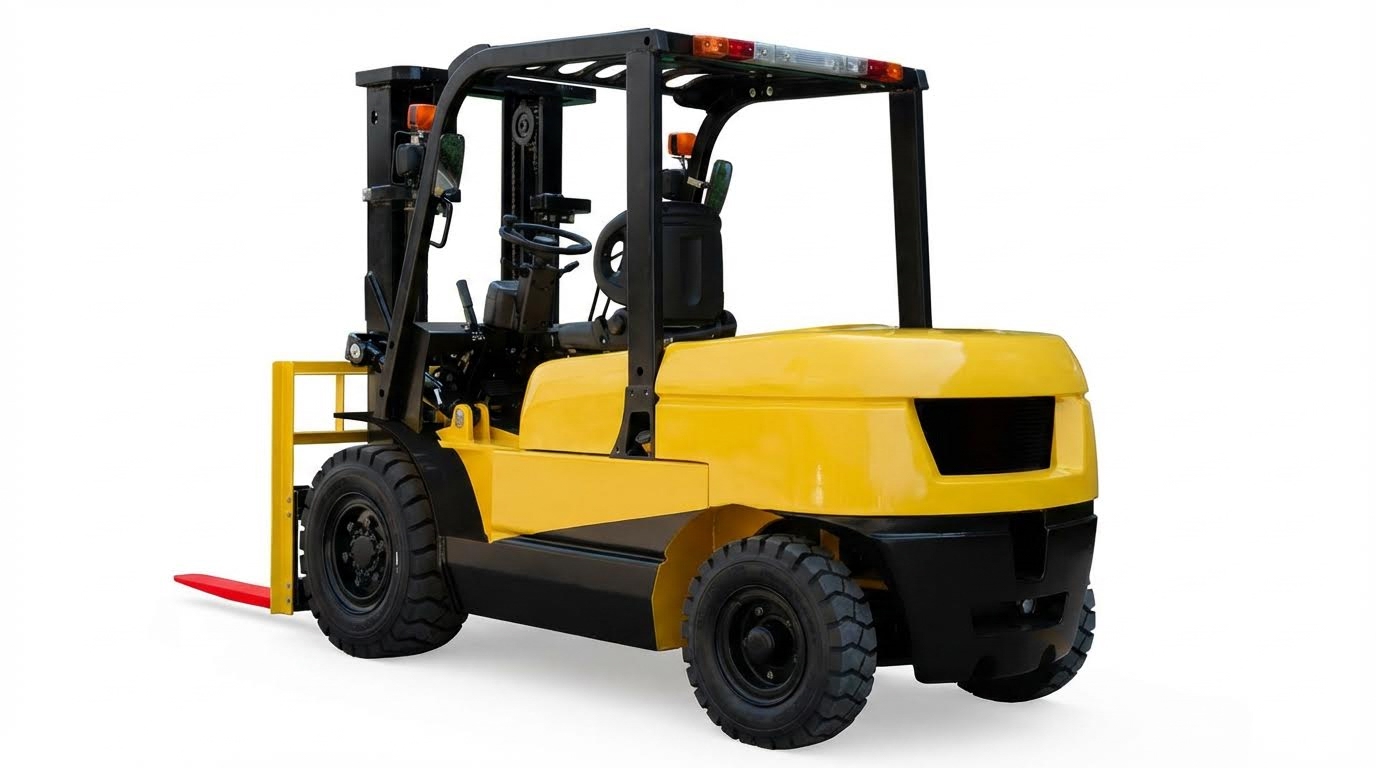
Effective forklift fluid management relied on correct product selection, disciplined change intervals, and rigorous cleanliness control. Engine oils needed to meet at least API CF-4 for diesel and SH or ILSAC GF-1 for gasoline, with viscosity aligned to climate and OEM guidance. Hydraulic systems required dedicated hydraulic oils, not mechanical or engine oils, and operators had to avoid mixing different hydraulic oil types to prevent additive incompatibilities and seal damage.
Structured maintenance schedules formed the backbone of fluid reliability. Typical practice used 200–250 hours for engine oil changes, 500–600 hours for hydraulic oil, coolant, and brake fluid, and up to 2,000 hours for transmission oils, always cross-checked against manufacturer data. Daily level checks, contamination inspections using simple field tests, and periodic oil analysis with particle counting and water content measurements allowed early detection of wear, overheating, or ingress. Cleaning reservoirs, flushing circuits, and changing filters during oil replacement significantly reduced tilt cylinder and valve failures.
From an industry standpoint, fluid management increasingly integrated with predictive maintenance and environmental compliance. Connected service programs and oil analysis extended safe drain intervals while lowering lifecycle cost, provided that operators maintained filtration efficiency and avoided top-up with incompatible fluids. Environmentally, correct disposal and recycling of used oils and coolants became mandatory under local regulations, pushing fleets toward structured collection and re-refining partnerships. Looking ahead, more energy-efficient fluids and longer-life additive packages would continue to reduce downtime, but only fleets that enforced procedural discipline—correct fluids, clean handling, documented intervals, and trained technicians—would capture the full safety and cost benefits.