Diesel forklift fuel consumption per hour directly affected operating cost, fleet sizing, and equipment selection in industrial facilities. This guide covered typical consumption by capacity class, the influence of load profiles, terrain, and operator behavior, and how these factors interacted over full 8-hour shifts. It also examined engineering strategies to reduce hourly fuel burn, including right-sizing, preventive maintenance, telematics-driven optimization, and evaluation of electric and hybrid alternatives. The final section integrated these insights into a practical framework for reducing diesel forklift fuel cost per hour while maintaining productivity and regulatory compliance.
Typical Diesel Forklift Fuel Use By Capacity
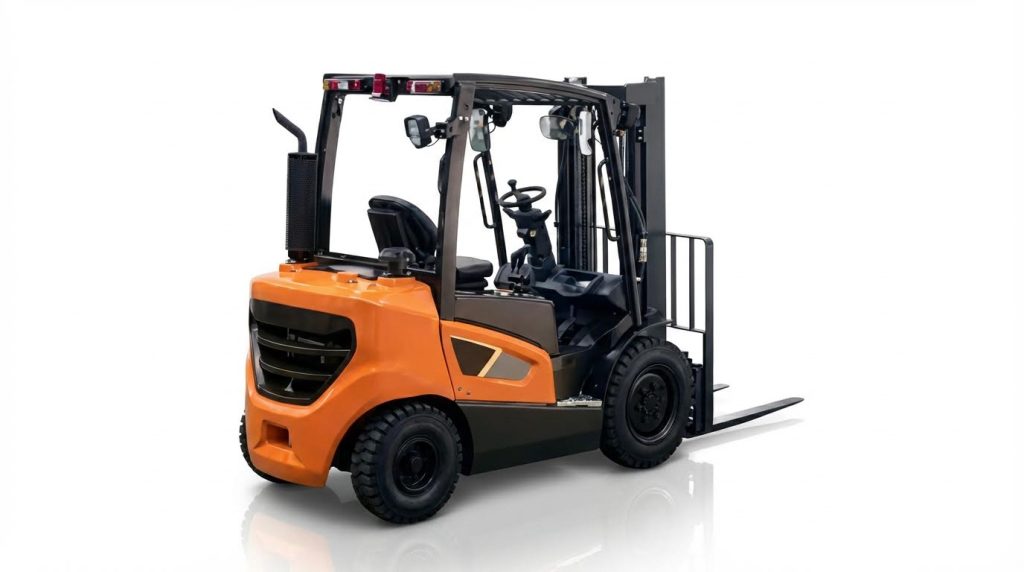
Typical diesel forklift fuel use scaled with rated capacity, duty cycle, and environment. Engineers used hourly consumption bands to estimate operating cost and tank sizing. Understanding these bands by tonnage class helped match trucks to workloads and select alternatives such as LPG or electric units. The following sections broke down expected ranges, shift examples, and cost comparisons.
Fuel Consumption Ranges By Tonnage Class
Field data indicated that light-duty diesel forklifts under 2.5 tonnes typically consumed 2–3 liters per hour under mixed-duty operation. Mid-range units around 3–5 tonnes usually used 3–4 liters per hour when handling rated loads on level concrete. Heavy-duty forklifts of 6 tonnes and above often drew 4–5 liters per hour or more, especially on rough ground or continuous heavy lifting. Real fleets saw higher values when trucks worked near maximum capacity, climbed ramps frequently, or operated in high ambient temperatures.
These ranges assumed engines in good condition with properly inflated tires and clean filters. Poor maintenance, such as clogged air filters or worn injectors, could raise fuel use by 10–20 percent. Overloading smaller trucks or using undersized forklifts for heavy pallet truck also pushed hourly consumption above the nominal class range. Engineers therefore treated the bands as planning values, then adjusted with site-specific correction factors for terrain, duty cycle, and maintenance quality.
Example Calculations For 8-Hour Shifts
Engineers often translated hourly fuel rates into shift totals to estimate daily diesel demand. For example, a 5-tonne diesel forklift consuming 3–4 liters per hour under normal warehouse conditions would burn roughly 24–32 liters during an 8-hour shift of active work. If the same truck idled for 2 hours within that shift with the engine running but not lifting, additional unproductive fuel of approximately 4–6 liters could occur, depending on idle consumption rate. Reducing idle time by half through shutdown policies could therefore save 2–3 liters per shift per truck.
For a fleet of ten similar forklifts working two shifts, daily fuel use could reach 480–640 liters without optimization. Applying maintenance improvements that delivered up to 20 percent efficiency gains, as reported in several case studies, might reduce this to approximately 384–512 liters. Engineers used these calculations for fuel tank sizing, delivery scheduling, and cost modeling in total cost of ownership studies. They also combined shift-based estimates with telematics data to refine assumptions about active hours, idle ratios, and peak versus average loading.
Comparing Diesel, LPG, And Electric Hourly Costs
Hourly energy cost comparisons required pairing typical consumption rates with local fuel or electricity prices. Diesel forklifts usually sat in the medium to high fuel-cost band per operating hour, but offered high torque and durability for outdoor heavy-duty work. LPG forklifts had medium fuel costs with moderate to high maintenance needs, and suited applications needing fast refueling and mixed indoor–outdoor operation where emissions limits permitted. Electric forklifts generally showed the lowest energy cost per hour and lower routine maintenance costs, which made them attractive for indoor, high-utilization, clean environments.
However, electric fleets required investment in chargers, battery management, and sometimes facility electrical upgrades. Diesel fleets incurred ongoing fuel and emission-control system costs, including diesel particulate filter service where applicable. LPG fleets faced cylinder logistics and periodic fuel system inspections. Engineers therefore compared not only hourly energy cost but also infrastructure, uptime requirements, and environmental constraints. This structured comparison supported decisions on whether to retain diesel units for heavy outdoor roles, supplement them with electric trucks indoors, or move toward hybrid fleet configurations over time.
Key Factors Driving Fuel Burn Per Hour
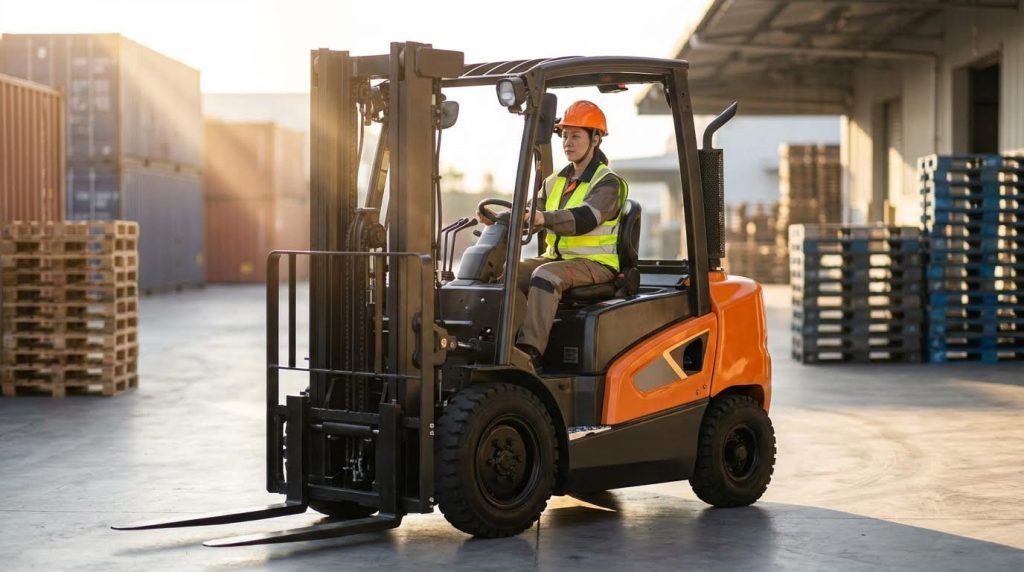
Diesel forklift fuel consumption depended on interacting mechanical, operational, and environmental factors. Engineers evaluated these parameters together to predict hourly liters burned and to benchmark fleets. Understanding these drivers allowed sites to separate avoidable losses from unavoidable load-related demand. This section focused on load profile, terrain, operator behavior, maintenance, and fuel quality as the primary levers.
Load, Duty Cycle, And Work Pattern Effects
Load magnitude and distribution directly set engine torque demand and therefore fuel flow. A 5 tonne diesel forklift working near rated capacity typically consumed about 3–4 liters per hour under normal conditions, while lighter units below 2.5 tonnes averaged 2–3 liters per hour. Continuous heavy lifting, long travel distances with full pallets, and high mast cycles pushed engines toward higher brake mean effective pressure, raising specific fuel consumption. Conversely, mixed cycles with partial loads, optimized stacking patterns, and minimized empty travel reduced energy per unit throughput. Engineers modeled duty cycles using time-at-load histograms and lift-travel-lower sequences to estimate realistic hourly burn instead of relying on nameplate figures alone.
Terrain, Surface Conditions, And Facility Layout
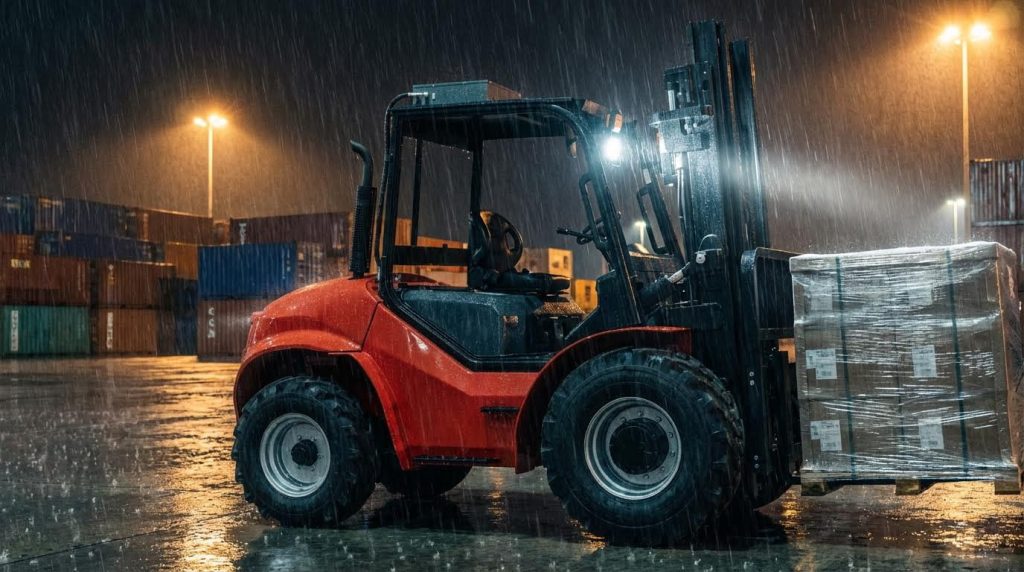
Surface resistance and grade angle significantly influenced diesel draw at a given load. Forklifts operating on smooth indoor concrete typically showed the lowest hourly consumption because rolling resistance and wheel slip remained minimal. Rough gravel, potholes, and outdoor yards increased vibration, required higher throttle openings, and often pushed fuel use toward the upper range, above 4 liters per hour for heavy units. Steep ramps or frequent level changes forced engines to deliver sustained high torque, further increasing burn. Facility layout also mattered: long, indirect routes, tight turning zones, and congestion extended travel time and idle periods. Engineering reviews of traffic flows, one-way systems, and staging locations helped shorten average trip distance and reduce the number of lift-travel cycles needed per shift.
Operator Behavior And Driving Techniques
Operator technique often created the largest variation between theoretical and actual fuel consumption. Hard acceleration, late braking, and aggressive directional changes wasted diesel as hydraulic and driveline losses converted extra fuel into heat instead of productive work. Extended idling during breaks or while waiting at docks consumed fuel without moving any load; auto-idle shutdown or strict idling policies reduced this waste. Trained drivers who planned routes, maintained steady speeds, and avoided unnecessary mast movements typically delivered measurable savings, often approaching 10–20% relative to untrained peers. Telematics and onboard monitoring allowed managers to track idle percentage, harsh events, and liters per operating hour by operator, enabling targeted coaching and incentive schemes.
Maintenance Condition And Fuel Quality Impacts
Engine and drivetrain condition strongly affected how many liters per hour were required for a given workload. Clogged air filters, fouled injectors, degraded engine oil, and underinflated tires all increased parasitic losses and reduced combustion efficiency, pushing fuel use above expected benchmarks. Studies and field reports indicated that rigorous preventive maintenance, including timely oil and filter changes, injector cleaning, and tire pressure checks, could improve efficiency and cut consumption by up to roughly 20%. Fuel quality was another critical variable: diesel that met manufacturer specifications and contained appropriate detergents supported cleaner injectors and more complete combustion. Contaminated or low-grade fuel promoted deposits, rough running, and higher specific consumption. Facilities that combined high-quality fuel, documented service schedules, and periodic performance checks on emissions systems such as DPF and EGR maintained lower and more stable liters-per-hour figures over the equipment life.
Engineering Strategies To Cut Fuel Consumption
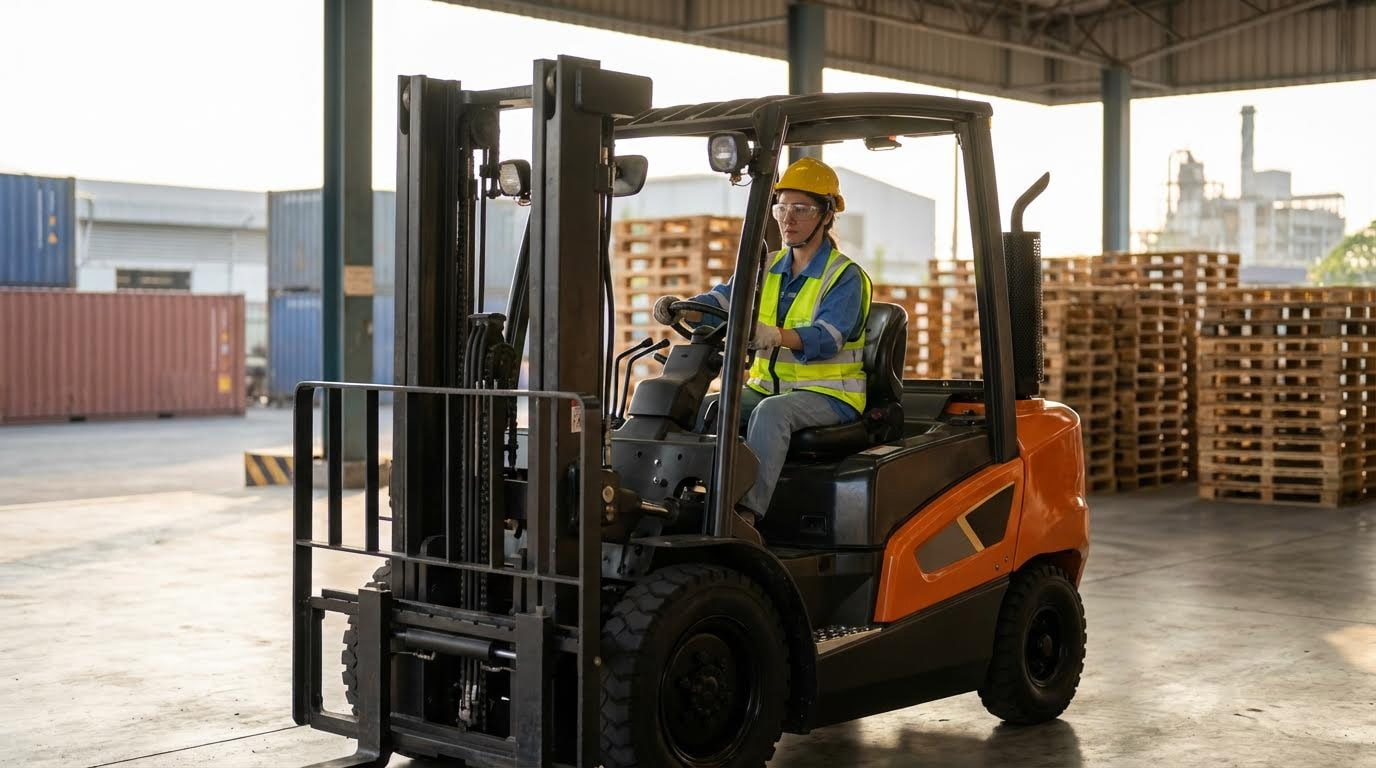
Engineering teams reduced diesel forklift fuel consumption by combining correct fleet specification, disciplined maintenance, and data-driven operations. They treated fuel burn as a controllable engineering variable, not a fixed operating cost. The following strategies focused on matching machine capability to real loads, stabilizing duty cycles, and removing avoidable losses in both hardware and human behavior.
Right-Sizing And Specifying Diesel Forklifts
Right-sizing started with a detailed analysis of actual load distributions, lift heights, and duty cycles over full shifts. Engineers selected nominal capacities with a safety margin of about 15–25% above typical loads, rather than sizing for rare peak cases. Oversized forklifts operated at low engine load, which kept them in inefficient regions of the brake-specific fuel consumption map. Undersized units ran near maximum capacity, raised engine temperatures, and increased hourly fuel use. Correct specification also included transmission type, tire selection, and mast configuration to reduce rolling resistance and unnecessary mass, especially for 3–5 tonne and 5–8 tonne classes.
Preventive Maintenance And Inspection Planning
Structured preventive maintenance programs typically reduced diesel consumption by up to 20%. Planners scheduled oil, air, and fuel filter changes by engine hours and environment severity, not only calendar time. Clean filters and correct oil viscosity preserved efficient combustion and minimized internal friction. Technicians inspected injectors, turbochargers, cooling systems, and exhaust aftertreatment to keep engines in tune and compliant with emission limits. Checklists also covered tire pressure, wheel alignment, and brake drag, because excessive rolling resistance directly increased liters per hour on rough or long-travel routes.
Telematics, Data Tracking, And AI Optimization
Telematics systems logged engine hours, fuel use, idle time, and load profiles at the individual forklift level. Engineers benchmarked liters per hour by shift, operator, and route, then flagged outliers for corrective action. AI-based analytics identified patterns such as chronic high idle ratios or inefficient travel paths through the facility. Systems triggered alerts when fuel burn deviated from expected values for a given duty cycle, suggesting maintenance or retraining. Integration with maintenance software aligned service intervals with actual usage, while auto-idle shutoff and eco-modes reduced non-productive engine time.
Operator Training And Route Optimization
Operator behavior had a first-order effect on hourly fuel consumption. Training programs emphasized smooth acceleration, anticipatory braking, and strict avoidance of unnecessary idling. Instructors used telematics reports to give individualized feedback and to demonstrate the fuel impact of aggressive driving. Engineers and supervisors jointly reviewed facility layouts to shorten travel distances, reduce tight turns, and separate pedestrian and truck flows. Optimized routes, standardized staging areas, and clear one-way traffic patterns cut cycle times and lowered fuel burn per pallet moved.
Evaluating Alternatives: Electric And Hybrid Fleets
Fleet engineers evaluated diesel, LPG, electric, and hybrid solutions using total cost of ownership models. They compared diesel liters per hour and maintenance costs with kilowatt-hour consumption and charging infrastructure costs for electric units. Electric forklifts offered lower energy cost per operating hour and minimal local emissions, which suited indoor and food-grade environments. Diesel units remained advantageous outdoors, on rough surfaces, and for heavy-duty multi-shift work. Some operations adopted mixed fleets, assigning diesel to high-load, long-distance tasks and electric units to short-haul or indoor roles, thus minimizing overall fuel spend and emissions while maintaining throughput. Additionally, certain facilities integrated manual pallet jack solutions for lightweight tasks, further optimizing efficiency. For heavier material handling needs, options like the counterbalanced stacker were considered to balance performance and energy savings.
Summary: Reducing Diesel Forklift Fuel Cost Per Hour
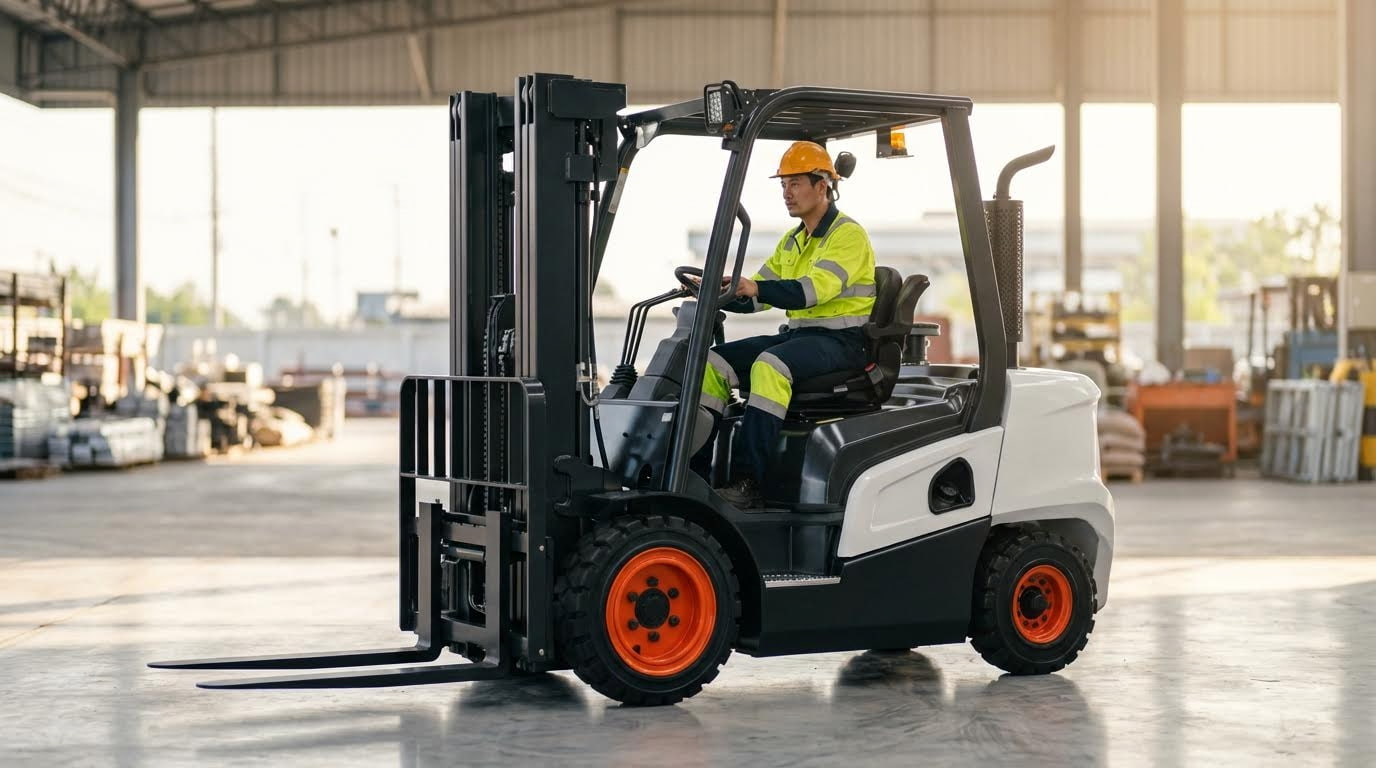
Diesel forklifts typically consumed between 2 and 5 liters per hour, with 3 to 4 liters per hour common for 5-ton units under normal conditions. Actual hourly fuel burn depended on load level, duty cycle, terrain, and operator behavior, with rough ground, steep ramps, and continuous heavy lifting pushing consumption to the upper range. Well-maintained engines with clean filters, correct oil, and healthy injectors operated up to roughly 20% more efficiently than neglected machines, which directly lowered cost per operating hour.
Industry practice showed that no single measure transformed fuel usage; instead, cumulative improvements in specification, maintenance, and operation delivered meaningful savings. Right-sizing forklifts to typical loads, avoiding chronic overloading, and keeping tires correctly inflated reduced engine strain and rolling resistance. Telematics and fuel monitoring allowed managers to track idle time, detect abnormal consumption, and link fuel use to operators and routes, enabling targeted interventions. Modern engines with advanced combustion and emissions systems, combined with auto-idle shut-off and eco modes, supported lower specific fuel consumption and cleaner operation.
In practical implementation, facilities benefited from structured preventive maintenance plans, standardized operator training on smooth driving and idle reduction, and periodic reviews of traffic routes and yard layouts to shorten travel distances. Evaluating walkie pallet truck or mixed fleets helped match energy source to application, with electric units favored for clean indoor work and diesel retained for high-capacity outdoor tasks. Over time, data-driven optimization, incremental technology upgrades, and disciplined operating practices offered a balanced path to reducing diesel forklift fuel cost per hour while maintaining productivity and complying with tightening emissions expectations.