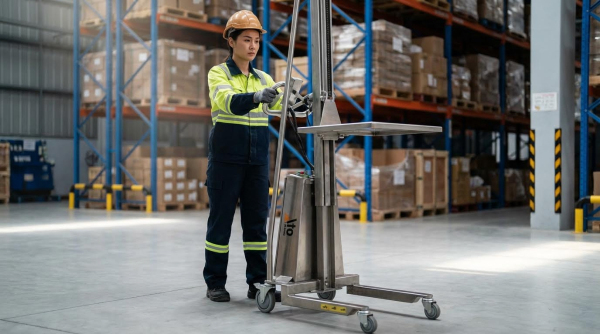
Mobile work positioners supported industrial tasks by lifting people, tools, and materials to precise working heights while reducing manual handling risks. Their safe and efficient use depended on robust mechanical design, rigorous compliance with standards, disciplined operator training, and structured maintenance practices. This article examined core engineering principles, safety regulations, inspection and training frameworks, and lifecycle maintenance strategies for mobile elevating work platforms. It also connected emerging tools such as telematics and predictive maintenance to practical site controls, helping organizations manage these assets safely from commissioning through long-term storage.
Core Functions And Engineering Design Of Work Positioners
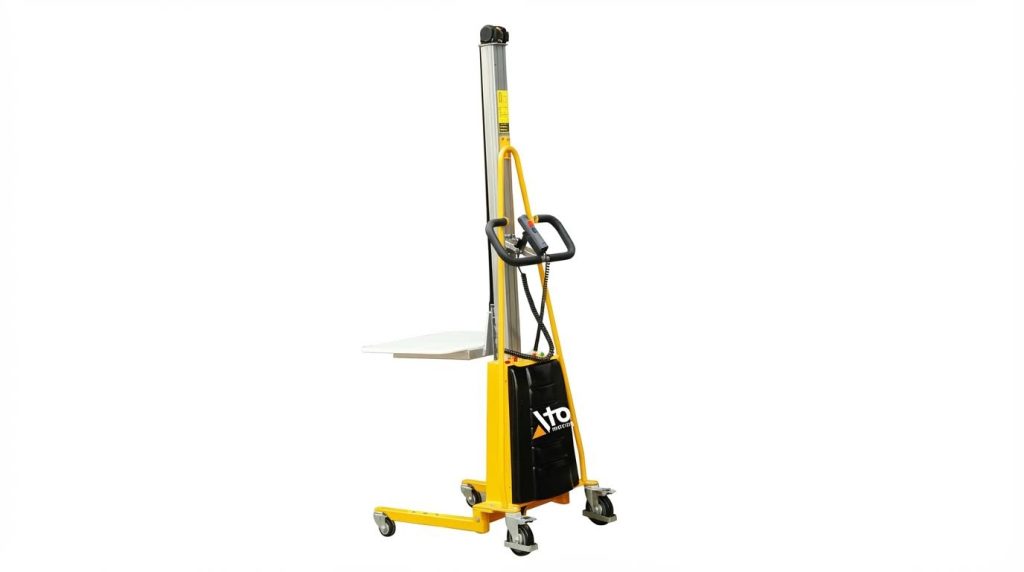
Core engineering decisions for mobile work positioners determined safety, productivity, and lifecycle cost. Designers balanced lifting performance, stability, ergonomics, and regulatory compliance while limiting mass and complexity.
Definitions: Work Positioners vs MEWPs And Platforms
Work positioners supported, lifted, and oriented loads or workers to an optimal working height or reach. Mobile elevating work platforms (MEWPs) formed a regulated subset that lifted personnel with guarded platforms and fall protection anchorage. Standards classified MEWPs by drive type, support configuration, and intended use, while general work positioners also included turntables, tilters, and welding positioners. Engineering teams distinguished devices by whether they primarily handled people, materials, or both, because this changed applicable codes and design safety factors.
Key Mechanical Subsystems And Actuation Options
Typical mobile work positioners integrated a chassis or base, lifting structure, platform or fixture, and powertrain. The lifting structure used scissor linkages, telescopic masts, articulated booms, or mast-climbing racks depending on stroke, footprint, and stiffness requirements. Actuation options included hydraulic cylinders for high force density, electric screw or ball-screw actuators for precise positioning, and electrohydraulic systems that combined fine control with compact power units. Designers selected actuation based on duty cycle, required speed, environment, and maintainability, while routing hoses or cables to avoid pinch points and impact zones.
Load Ratings, Stability, And Structural Design Factors
Engineers established rated load based on worst-case static and dynamic conditions, then applied code-defined safety factors. Structural members used finite element analysis to verify stress, deflection, and fatigue life under vertical loads, side loads, and braking or wind-induced forces. Stability analysis considered center-of-gravity travel, wheelbase, outrigger geometry, and allowable platform extension with or without outreach. Design documents specified rated capacity, maximum occupants when applicable, permitted tools, and prohibited loading practices such as overhanging or concentrated point loads beyond the platform’s structural reinforcement.
Ergonomic Positioning And Human–Machine Interface
Ergonomic design focused on keeping work within preferred reach zones and reducing awkward postures, twisting, and overhead tasks. Platforms or fixtures offered height, tilt, and sometimes rotation adjustments so operators could access workpieces without excessive manual handling. Controls used intuitive layouts with distinct tactile feedback, guarded emergency-stop devices, and clear pictograms to support quick comprehension. Designers minimized vibration, step heights, and trip hazards, and positioned guardrails, anchor points, and access gates to support safe entry, exit, and continuous fall protection during normal tasks and emergency egress.
Safety Standards, Compliance, And Operator Training
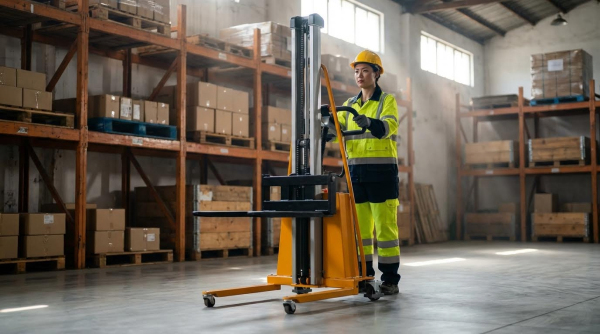
Safety performance of mobile work positioners depended on strict adherence to formal standards and structured training. Engineering controls, administrative procedures, and personal protective systems worked together to control fall, crush, and tip-over risks. Organizations integrated national codes with local regulations to build coherent safety programs. This section outlined how standards, operating limits, inspections, and training requirements interacted across the equipment lifecycle.
Applicable Codes: CSA, ANSI, NFPA, NR-18, And Local Law
Mobile elevating work platforms and work positioners operated under overlapping international and local standards. In Canada, employers followed CSA B354 series for self-propelled, boom-supported, and mast-climbing platforms, and CSA C225 for vehicle-mounted units. Crane-supported platforms followed CSA Z150, while fire-fighting elevating platforms aligned with NFPA 1901 and NFPA 1911 for design and in-service testing. In Brazil, NR-18 defined requirements for MEWPs, including leveling, emergency stops, audible alarms, electrical protection, and event logging through horometers. Local workplace regulations, such as Nova Scotia’s Workplace Health and Safety Regulations, referenced these standards and imposed recordkeeping, inspection, and training obligations. In the United States and other jurisdictions, ANSI and equivalent standards governed annual inspections, safe operating envelopes, and labeling. Compliance programs therefore mapped each equipment type to the correct standard set, then embedded those requirements into procurement, commissioning, and operating procedures.
Fall Protection, Wind Limits, And Operating Restrictions
Fall protection provisions treated MEWPs and work positioners as high-risk access systems, even when guardrails were present. Operators and occupants wore full-body harnesses with lanyards anchored to designated attachment points, using personal fall arrest systems that met regulatory performance criteria. Standards and regulations prohibited lifting people in equipment not designed for personnel, such as loader buckets or backhoes, unless a specific legal exemption applied. Operating restrictions addressed environmental conditions, especially wind. Typical rules limited platform operation to wind speeds below approximately 40.2 km/h, except for controlled movement to a storage position. Installations exposed to exterior wind loads used fixed or portable anemometers to monitor real-time velocities and compared readings with local forecasts. Additional restrictions banned height extension through makeshift devices, use of platforms as cranes, work on unstable snow or ice without removal, and operation near corrosive or high-heat processes without protective measures and post-exposure component replacement.
Inspection Protocols: Initial, Daily, Annual, And Post-Project
Inspection regimes followed a layered structure that addressed commissioning, routine use, statutory checks, and end-of-project refurbishment. Initial inspections verified that new or newly arrived positioners conformed to applicable CSA, ANSI, or NR-18 requirements before site deployment, with records retained on-site for regulated projects. Daily inspections occurred at the start of each shift and combined walk-around, pre-start, and functional checks. Operators examined tires or tracks, hoses, lines, fluid levels, controls, safety devices, structural members, harness anchor points, decals, and emergency systems. Annual inspections, typically mandated by ANSI or CSA, were conducted by qualified mechanics within a 13‑month maximum interval and covered joysticks, emergency stops, hydraulic circuits, brakes, fasteners, and structural integrity. Post-project inspections focused on returning MEWPs to a fully serviceable state, including detailed structural and functional assessments, cleaning, decal replacement, and documentation updates before redeployment. Any unit with detected hazards was tagged out, repaired under a preventive maintenance program, and released only after a competent person signed off.
Operator Qualification, Documentation, And Site Controls
Safe operation depended on clearly defined competencies and robust site-level controls. Operators of mobile work positioners were required to be qualified by training or verifiable experience for each specific machine type. Training covered equipment controls, load charts, fall protection, wind limits, emergency procedures, and signaling protocols, with certification records documenting trainee identity, trainer signature, and completion date. Supervisors and Site Safety and Health Officers reviewed daily inspection forms, confirmed corrective actions, and ensured only trained personnel operated or signaled around the equipment. Site layouts accounted for safe access routes, haul roads, and exclusion zones for ground personnel, who maintained clearance, obtained permission before approaching cabs, and followed standardized hand signals. Documentation systems stored training records, inspection checklists, maintenance logs, and red-tag reports for audit by regulators or internal ESQ teams. This integration of qualification, paperwork, and physical site controls created a closed-loop framework that supported continuous compliance and reduced incident probability.
Maintenance, Telematics, And Predictive Reliability
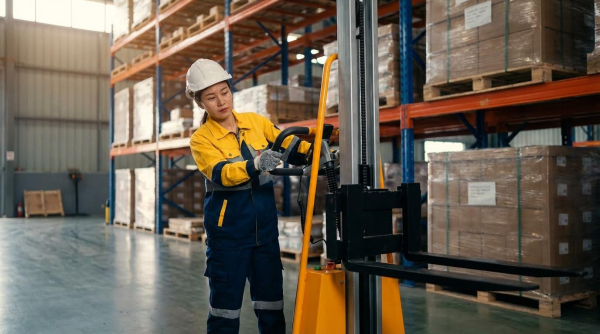
Maintenance strategies for mobile work positioners and MEWPs directly influenced safety, uptime, and lifecycle cost. Modern fleets combined structured preventive routines with data-driven diagnostics to detect degradation before it reached a critical state. Telematics and remote monitoring tools expanded visibility to component-level performance, enabling targeted interventions. A robust program integrated checklists, scheduled work, predictive analytics, and disciplined documentation.
Preventive Maintenance Programs And Checklists
Preventive maintenance programs relied on manufacturer schedules and regulatory requirements as the baseline. Construction superintendents or fleet managers typically implemented site-specific procedures that aligned with OEM intervals for lubrication, filter replacement, and structural inspection. Daily pre-shift inspections by qualified operators covered tires or tracks, hoses, hydraulic lines, brakes, steering, controls, safety devices, and emergency equipment such as fire extinguishers and spill kits. Findings were documented on checklist forms, with defects triggering “Red Tag” lockout until a competent person completed and signed off repairs.
Annual inspections by trained mechanics were required under ANSI and CSA standards, with maximum intervals of 13 months between inspections. These detailed checks included joysticks, emergency stop switches, guardrails, nuts and bolts, hydraulic cylinders, pumps, valves, slew bearings, and braking systems. Preventive programs also specified fluid-level checks and replacements for hydraulic oil, engine oil, and coolant, as well as inspection and replacement of filters and seals. For welding or rotating positioners, routines included cleaning slag and spatter, inspecting cables and air pipes, and lubricating bearings, gears, and guide rails.
Checklists standardized the inspection process and ensured traceability. Typical forms captured date, machine ID, operating hours, inspector identity, items inspected, defects found, corrective actions, and clearance to return to service. Supervisors and Site Safety and Health Officers reviewed these records to verify timely repairs and to identify recurring failure modes that might indicate design, application, or training issues.
Condition-Based, Usage-Based, And Predictive Strategies
Maintenance planning for work positioners evolved beyond fixed time-based intervals. Usage-based strategies tied service tasks to operating hours, duty cycles, or number of elevation cycles, which better reflected actual wear than calendar time alone. Rough-terrain operation, frequent boom articulation, or high-load welding cycles increased stress, so fleets adjusted inspection and service frequencies based on these patterns. Condition-based approaches relied on direct observation of wear indicators such as leaks, abnormal noise, temperature rise, or increased backlash in pivot points.
Documented inspection findings formed the core of condition-based maintenance. Technicians recorded crack initiation, corrosion, hose abrasion, seal sweating, and tire chunking, then scheduled component replacement before failure. Oil analysis for hydraulic or gearbox systems provided additional insight into contamination, oxidation, and metal particle content. Predictive maintenance added real-time or high-frequency monitoring of parameters like vibration, pressure, flow, and motor current to detect anomalies.
In a predictive framework, fleet managers used historical data to model normal behavior for each asset type. Algorithms then flagged deviations that suggested impending faults, such as slow cylinder extension due to internal leakage or elevated motor current indicating bearing degradation. Predictive strategies reduced unplanned downtime and allowed maintenance windows to be aligned with project schedules. Integration with spare-parts planning minimized stockouts for critical components like pumps, valves, and electronic controllers.
Telematics, Remote Diagnostics, And Digital Workflows
Telematics systems on mobile work positioners captured machine location, operating hours, fuel consumption, battery state, and utilization profiles. These data streams supported accurate scheduling of usage-based maintenance and prevented overrun of service intervals. Remote diagnostics extended this capability by transmitting fault codes, sensor readings, and event logs to fleet managers or service providers. Technicians could often diagnose issues before visiting the site, improving first-time fix rates and reducing travel time.
Digital workflows replaced paper-based forms with mobile applications and cloud platforms. Operators completed pre-start inspections on tablets or smartphones, attaching photos of defects and automatically routing reports to supervisors and safety officers. Maintenance work orders were generated directly from inspection findings or telematics alerts, with status tracking from initiation to closure. This ensured that unsafe units remained locked out until authorized release.
Telematics also supported compliance and audit readiness. Systems stored inspection records, service histories, and training certifications in centralized repositories accessible to SSHOs and external auditors. Analytics dashboards highlighted underutilized assets, chronic problem units, and cost drivers such as repeated hose failures or excessive idling. Over time, these insights informed equipment selection, specification changes, and operator training content.
End-Of-Project Overhaul, Storage, And Long-Term Care
Returning mobile work positioners from a project required a structured end-of-project overhaul process. Technicians first performed a detailed visual inspection of frames, platforms, structural welds, tires, tracks, and guardrails to identify cracks, dents, loose fasteners, and excessive wear. They followed with full function tests covering hydraulic and electrical systems, boom and lift mechanisms, safety interlocks, and harness anchorage points. Fluid levels and quality for hydraulic oil, engine oil, and coolant were checked and corrected, with sampling where long service periods or harsh conditions occurred.
Cleaning was critical before storage or redeployment. Crews removed dirt, mud, concrete splatter, slag, and debris that could trap moisture or interfere with moving components. Decals and safety labels, including load charts and warning placards, were inspected for legibility and replaced where faded or damaged. All findings and corrective actions were documented in post-project inspection reports and service records, which confirmed regulatory compliance before the machine entered the next project.
For long-term shutdown, equipment was parked on level ground, with booms retracted and platforms lowered to stable positions. Power sources were isolated, batteries maintained according to OEM guidance, and exposed metal surfaces protected against corrosion. Moving parts were placed in positions that minimized seal compression and spring preload. Protective covers reduced dust accumulation and UV exposure on hoses and cables. These measures preserved reliability, reduced restart issues, and extended the overall service life of the scissor platform lift fleet.
Summary: Safe, Efficient Use Of Mobile Work Positioners
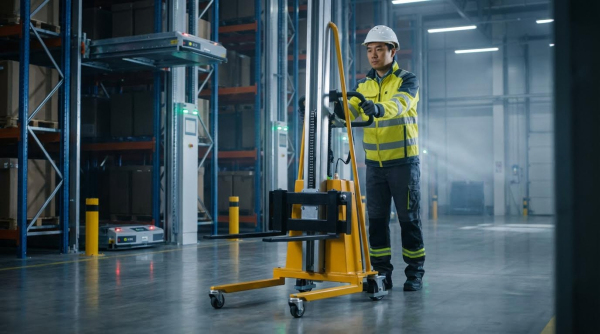
Mobile work positioners and elevating work platforms operated safely increased productivity and reduced musculoskeletal and fall-related incidents. Effective use depended on integrating sound engineering design, rigorous compliance with CSA, ANSI, NFPA, NR-18, and local regulations, and disciplined lifecycle management. Core safety outcomes relied on correct load rating application, structural stability, ergonomic setup, and a clear human–machine interface that supported precise, low-effort positioning.
Across jurisdictions, regulators required that design, construction, inspection, and use followed current CSA series for MEWPs and mast climbers, NFPA standards for fire-fighting platforms, and national rules such as NR-18 in Brazil. Mandatory fall protection, wind-speed limits, prohibition of improvised platforms, and strict operating restrictions around weather, corrosives, and heat sources formed the backbone of risk control. Operator qualification, documented training, and site-level controls by supervisors and safety officers ensured that procedures translated into field practice.
Lifecycle safety and availability depended on structured maintenance: initial acceptance checks, daily walk-arounds and function tests, scheduled annual inspections by qualified mechanics, and defined post-project overhauls before redeployment. Preventive programs based on manufacturer guidance, combined with condition- and usage-based adjustments, reduced unplanned downtime. Telematics and remote diagnostics already enabled data-driven scheduling and underpinned emerging predictive maintenance models that identified faults before failure.
Looking forward, increased sensor integration, better ergonomics, and more intuitive controls would likely reduce operator error and physical strain. At the same time, digital workflows for training, inspection, and certification would tighten traceability and regulatory compliance. Organizations implementing mobile work positioners most effectively would treat them as engineered systems within a managed lifecycle, not just scissor platform lift tools: matching device type to task, enforcing conservative operating limits, maintaining robust documentation, and continuously feeding field data back into design, training, and maintenance strategies.