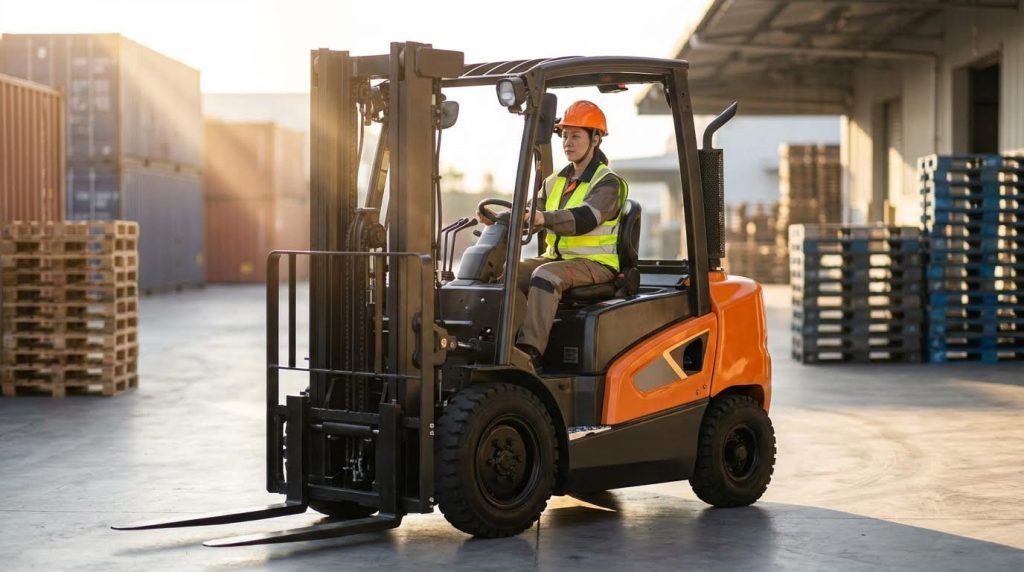
Diesel and electric forklifts followed very different engineering paths, and those differences directly affected torque delivery, uptime, and outdoor performance. This article examined torque characteristics and drive-system fundamentals, then connected them to behavior on slopes, rough terrain, and in harsh climates. It also compared lifecycle cost, uptime, and infrastructure trade-offs, including the role of emerging hybrid powertrains. The goal was to give engineers and fleet planners a data-grounded framework for selecting the right torque platform for demanding material-handling applications.
Torque Characteristics And Drive-System Fundamentals
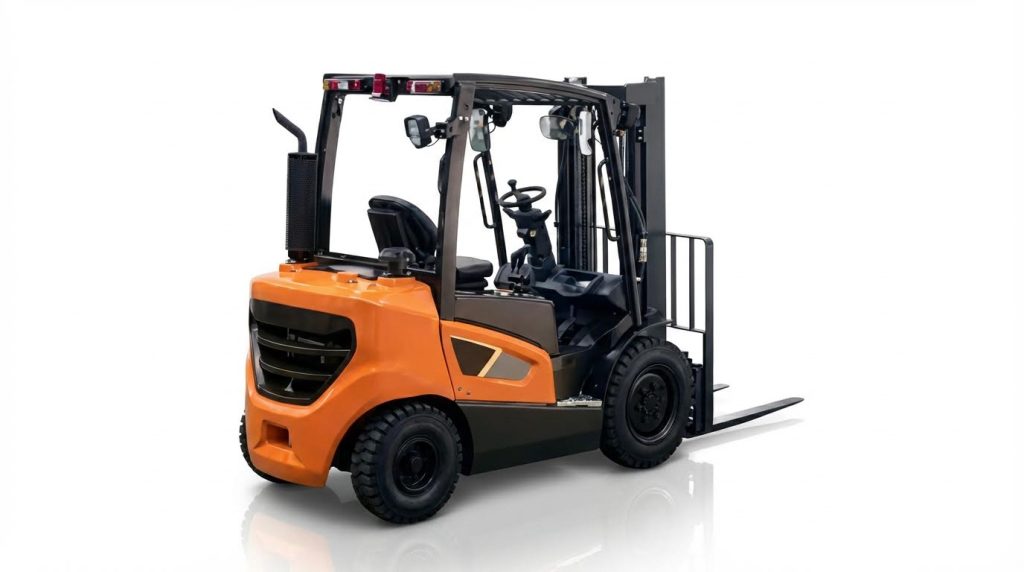
Torque behavior defined the real-world capability of diesel and electric forklifts in outdoor work. Engineers evaluated not only peak values but also how drivetrains transferred torque to the ground under variable loads and terrain. This section compared engine and motor characteristics, control strategies, and supporting subsystems such as tires and hydraulics. The goal was to link torque theory with observable differences in traction, acceleration, and stability.
Diesel Engine Torque Curves And Converters
Diesel forklift engines typically operated in the 74–140 horsepower range and produced high torque at low to mid engine speeds. Their torque curves peaked between roughly 1,400 and 1,800 revolutions per minute, which aligned with common loading and travel conditions outdoors. A hydrodynamic torque converter multiplied engine torque during launch and low-speed pushing, improving startability on grades and in sticky soils. However, prolonged operation in low converter ratios increased oil temperature and reduced efficiency, so designers sized coolers to keep transmission fluid between about 70 °C and 95 °C. Proper converter selection and stall torque ratio ensured that the engine stayed within its efficient band while still delivering enough tractive effort for deep mud or loose gravel.
Electric Motor Torque Delivery And Control
Electric traction motors delivered near-instant maximum torque from zero speed, which gave rapid response in confined areas and during precise positioning. Their torque did not depend on a torque converter, so drivetrains used fixed or limited-range gear reductions with electronic speed and torque control. Vector-controlled inverters regulated current to maintain commanded torque, but continuous high-torque demand increased current and thermal loading in the motor and power electronics. When battery state of charge dropped below roughly 50 percent, available power fell by about 30–40 percent, forcing controllers to derate torque to protect cells and components. This behavior made electric forklifts very effective indoors yet more sensitive to sustained high-demand outdoor duty cycles.
Torque Consistency Across RPM And Battery State
Torque consistency strongly influenced traction and operator confidence on irregular ground. Diesel forklifts maintained approximately 95 percent of their rated power output on rough terrain, with torque variation typically within ±5 percent over the usable speed band. Electric forklifts matched diesel units in initial torque sensation but showed larger power deviations, around ±18 percent, as battery voltage sagged and thermal limits engaged. Independent tests reported a 30–40 percent drop in effective power once batteries passed mid-discharge, which reduced climb speed and acceleration with heavy loads. In contrast, diesel engines preserved torque in cold weather and under repeated load peaks, so cycle times remained stable over multi-shift operation.
Impact Of Tires, Hydraulics, And Ground Contact
Driveline torque translated into usable tractive effort only if tires and hydraulics maintained effective ground contact. Diesel all-terrain forklifts often used large pneumatic tires combined with hydraulic shock absorbers, which limited lifting-capacity loss on unstable ground to about 20 percent. For example, a unit rated at 12,000 pounds could still safely handle roughly 9,600 pounds in rutted or uneven terrain. Electric forklifts typically required a larger derating margin, near 25 percent, under similar conditions because power fluctuations and stiffer tire packages reduced contact stability. Hydraulic system design, including pressure settings and flow control, also affected how smoothly torque reached the ground, influencing wheel slip, mast oscillation, and load security on slopes or soft surfaces.
Performance On Slopes, Rough Terrain, And Harsh Climates
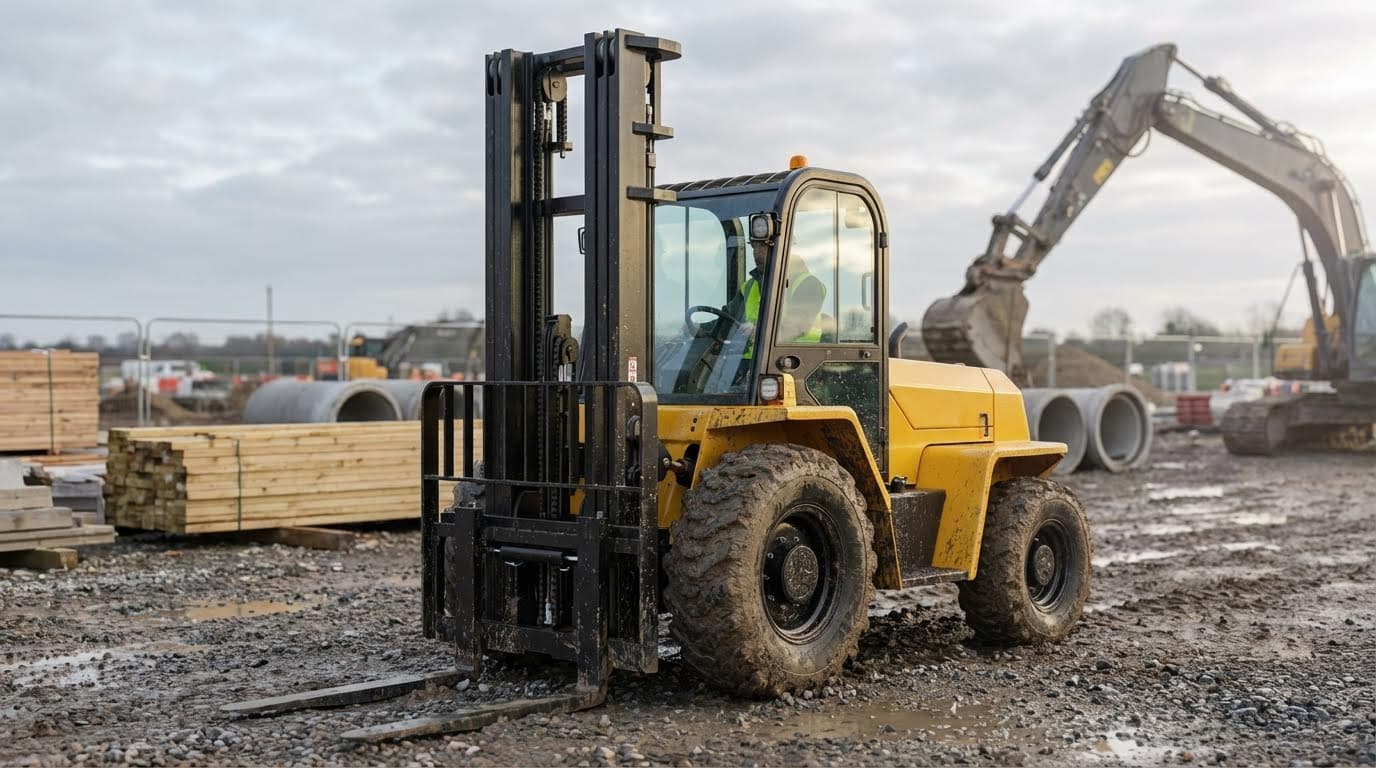
Outdoor duty cycles exposed large differences between diesel and electric forklifts in traction, speed, and environmental robustness. Engineers evaluated gradeability, acceleration, surface interaction, and temperature limits using quantified field tests and standardized slope trials. These metrics directly affected layout decisions for construction sites, ports, and outdoor logistics yards. Understanding these behaviors allowed correct sizing of fleets and torque platforms for demanding terrain.
Gradeability, Acceleration, And Cycle-Time Metrics
Diesel forklifts historically achieved higher gradeability, typically up to 25° inclines, compared with about 15° for electric units. Test programs with 8,000 lb (≈3,630 kg) loads on 10° ramps showed diesel machines accelerating almost twice as fast as comparable electric forklifts. This advantage came from diesel torque curves peaking around 1,400–1,800 rpm and torque converters multiplying wheel torque at low travel speed. Measured work cycles on mixed-slope routes finished roughly twelve minutes faster for diesel units, which significantly affected throughput on multi-shift projects. On inclined surfaces, diesel forklifts climbed approximately 15% faster with high loads, reducing queuing at ramps and elevated work platforms.
Operation In Mud, Gravel, Frozen Ground, And Cold Weather
In deep mud with 150 mm penetration, diesel forklifts showed a 72% lower engine speed drop than electric units under equivalent load. Electric forklifts depleted batteries about 28% faster in these high-drag conditions, which shortened usable shift length and increased charging events. On loose gravel and sticky clay, data indicated diesel models delivered 18–22% more low-rpm torque, improving traction and reducing wheel spin. Frozen ground and sub-zero environments further widened the gap because diesel powertrains did not suffer cold-induced battery loss, while electric forklifts experienced up to 40% performance reduction from hydraulic and battery issues. Diesel units operated reliably between approximately −40 °C and 50 °C, whereas electric forklifts remained within an effective range of about −5 °C to 40 °C.
Lifting Capacity Derating On Uneven Or Soft Surfaces
Uneven or soft ground required systematic derating of nominal lifting capacity to maintain stability and structural safety. Diesel forklifts equipped with pneumatic tires and hydraulic shock absorbers limited effective capacity loss to about 20% on rough ground; a 12,000 lb (≈5,440 kg) unit could still handle around 9,600 lb (≈4,350 kg). Electric forklifts typically needed a 25% capacity margin under similar conditions due to higher sensitivity to traction loss and dynamic mast deflection. Field data showed that rough-terrain diesel machines maintained about 95% of their power output on irregular surfaces, while electric models dropped to roughly 78%, which indirectly reduced effective lift capability during simultaneous travel and hoisting. Engineers therefore applied more aggressive derating curves to electric forklifts for off-pavement operation, especially where ruts, potholes, or compacted fill created variable support conditions.
Reliability, Service Life, And Environmental Limits
Long-term outdoor exposure affected drivetrain reliability and economic life differently for diesel and electric platforms. Diesel all-terrain forklifts with robust cast iron engine blocks and mechanical fuel systems commonly operated 15–20 years under proper maintenance. Electric forklifts typically achieved 10–12 years in clean indoor warehouses but reached end of life earlier when exposed to moisture, dust, and temperature cycling outdoors. Studies in 2024 reported that about one-third of early electric forklift failures in outdoor service resulted from damaged connectors and degraded insulation. Electric units also required 25–40 extra hours of specialized maintenance per year for battery, cooling, and corrosion issues in harsh climates. Diesel forklifts, with simpler mechanical architectures and immunity to voltage fluctuations, maintained higher uptime and tolerated ice, snow, and sub-zero starts with less impact on reliability.
Lifecycle Cost, Uptime, And Infrastructure Trade-Offs
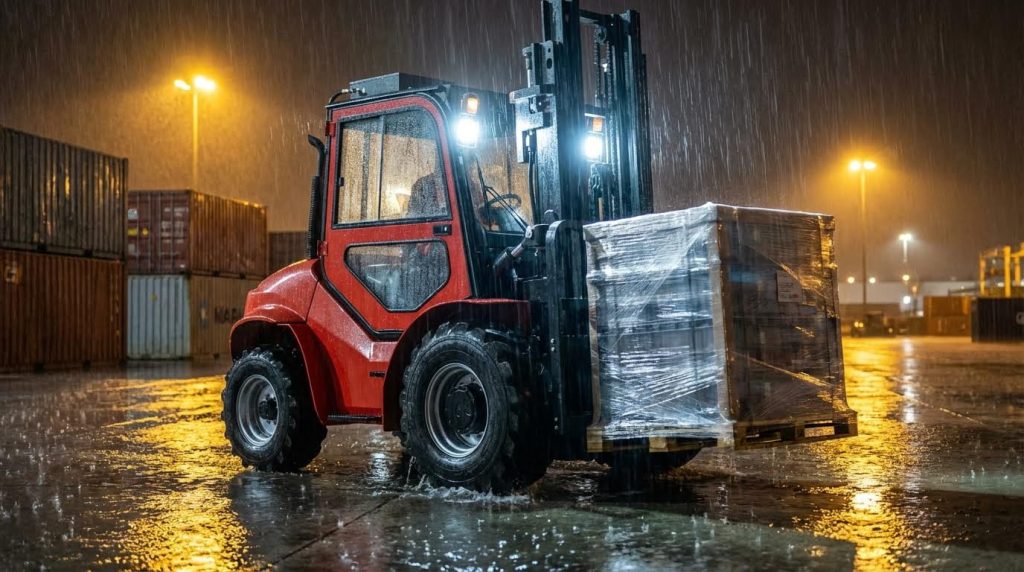
Lifecycle analysis compared diesel and electric forklifts across fuel, maintenance, uptime, and infrastructure. Engineers evaluated these factors over multi-year duty cycles with outdoor and mixed-use profiles. The section also considered hybrid concepts that combined diesel generators with traction batteries. The goal was to link torque capability with real-world cost and availability.
Fuel, Energy, And Maintenance Cost Comparison
Diesel forklifts incurred annual fuel expenses between USD 18,000 and 25,000 for heavy outdoor workloads. Comparable electric fleets consumed electricity worth roughly USD 7,200 to 9,500 per year for the same output. This gap reflected both higher diesel energy price per kilowatt-hour and engine efficiency limits. However, electric fleets required significant capital for traction batteries over the life of the truck.
Maintenance patterns differed. Electric drive systems needed about two-thirds less expenditure on oil, filters, and combustion-related components than diesel units. Electric trucks eliminated engine overhauls, injector servicing, and complex exhaust aftertreatment. Diesel fleets instead followed structured engine, transmission, and hydraulic service intervals, which raised labor hours but remained predictable.
When engineers modeled total cost of ownership, diesel units showed higher operating expense per hour but lower initial infrastructure outlay. Electric fleets reversed that profile with cheaper energy and routine maintenance but higher upfront spending on batteries and charging. The optimal choice depended on annual hours, load profile, and whether the site already had high-capacity electrical service.
Uptime, Downtime Cost, And Multi-Shift Utilization
Operational uptime remained a critical metric for outdoor applications with tight project schedules. Diesel forklifts maintained about 98% available capacity during multi-shift operations when supported by on-site fuel logistics. Electric units operated at roughly 89% effective capacity due to charging, battery swaps, and performance derating in harsh conditions. This difference translated directly into lost productive hours.
Industry assessments estimated each hour of downtime cost operators around USD 540 in delayed handling, idle labor, and schedule disruption. Over a year, the 9% availability gap between diesel and electric platforms accumulated into substantial indirect cost. Sites with continuous two- or three-shift patterns felt this impact more sharply than single-shift indoor warehouses.
Battery aging further reduced uptime for electric units used outdoors. After three to five years in rugged conditions, field reports showed a 30–35% reduction in available working time per charge. Diesel platforms, by contrast, preserved cycle times more consistently over 15–20 years when maintained correctly. Fleet planners therefore treated uptime as a financial parameter, not only a technical one.
Charging, Refueling, And Remote-Site Constraints
Refueling logistics strongly influenced powertrain selection at remote or temporary sites. Diesel forklifts refueled in approximately 5–7 minutes, restoring full range with minimal disruption. Fuel storage required tanks, transfer pumps, and spill-control measures but did not depend on grid strength. This profile suited construction projects, mining operations, and seasonal yards.
Electric forklifts instead needed 1.5–3 hours to recharge for full-shift operation, unless operators used battery swapping systems. Establishing high-capacity charging in remote areas demanded stations rated between 230 and 400 kilowatts. According to recent analyses, such installations cost roughly USD 85,000 to 120,000 per site excluding grid extension.
Cold weather and rough terrain reduced electric range by about 20–30%, forcing either oversizing of battery capacity or additional chargers. Diesel systems avoided grid constraints and retained performance across a wider temperature band. Engineers therefore evaluated not only energy price but also site access to reliable power and project duration before committing to infrastructure.
Role Of Hybrid And Next-Generation Powertrains
Hybrid forklift platforms emerged as an intermediate solution between pure diesel and pure electric concepts. These systems combined diesel engines or generators with battery storage to buffer load peaks and recover braking energy. Field data indicated energy transportation costs dropped by roughly 34% during project phase transitions when hybrids replaced standalone diesel units. The generator could run at more efficient operating points while the battery supported transient torque demands.
Hybrid drivetrains also reduced refueling frequency without requiring full-scale high-power charging infrastructure. Smaller battery packs charged from onboard generators or modest grid connections, easing deployment at remote sites. This architecture allowed engineers to retain diesel-grade torque and gradeability while shaving fuel consumption and emissions.
Next-generation designs focused on advanced battery chemistries and improved thermal management to mitigate outdoor performance losses. Control strategies integrated torque-sharing logic between engine and motor to prevent overload and maintain stable traction. Over time, these developments aimed to narrow the uptime gap with diesel while preserving the lower routine maintenance profile of electric drives. For fleet owners, hybrids created a flexible pathway to transition toward higher electrification without sacrificing operational resilience.
Summary: Selecting The Right Forklift Torque Platform
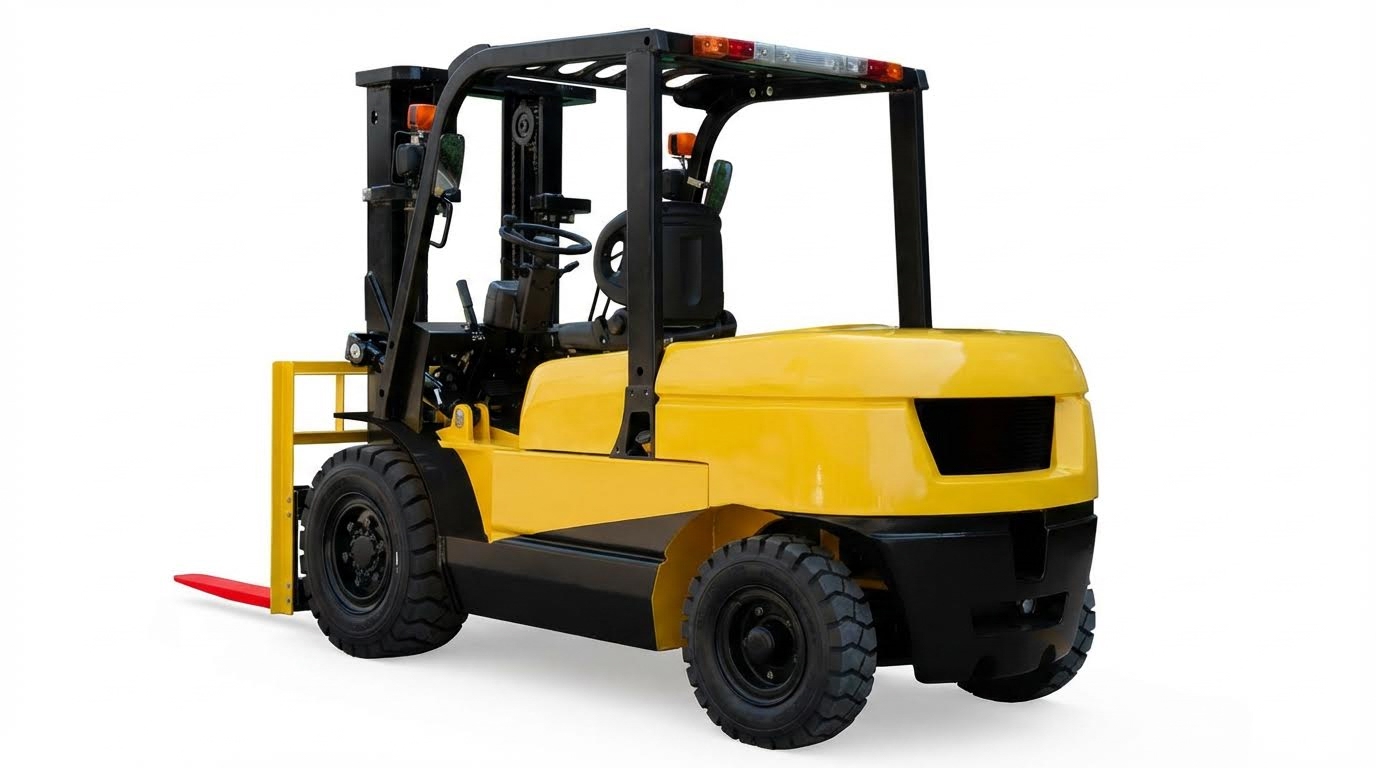
Diesel and electric forklifts delivered distinctly different torque and uptime profiles in outdoor applications up to early 2026. Diesel units provided 18–22% higher low‑RPM torque and maintained about 95% power on rough terrain, while electric units dropped to roughly 78% and lost a further 30–40% when battery charge fell below 50%. On 10° ramps with 3.6 t loads, diesel forklifts accelerated nearly twice as fast and completed duty cycles about twelve minutes quicker than comparable electric models. They also climbed gradients up to 25°, versus about 15° for electric platforms, and retained performance in deep mud, frozen ground, and sub‑zero temperatures.
These torque and environmental advantages had clear lifecycle and infrastructure implications. Diesel machines typically operated 15–20 years outdoors, with about 98% uptime in multi‑shift work, at the expense of higher annual fuel cost and emissions. Electric forklifts reduced energy and routine maintenance costs and offered clean, quiet operation, but required high‑capacity charging infrastructure, suffered 20–35% range loss in cold or harsh terrain, and showed 10–12 year service lives mainly in controlled environments. Each hour of downtime cost operators around 510–570 USD, so power consistency and refueling or charging strategy directly impacted total cost of ownership.
Hybrid powertrains that combined diesel generators with battery storage emerged as a compromise, cutting energy transport costs by roughly one‑third and smoothing torque delivery across variable terrains. When selecting a torque platform, engineers needed to match gradeability, surface conditions, ambient temperature range, and shift structure against fuel or energy price, infrastructure availability, and regulatory constraints. Diesel remained the robust choice for high‑torque outdoor duty in mud, gravel, and cold climates, while electric suited indoor or light outdoor work where emissions, noise, and floor conditions were tightly controlled. Hybrid concepts indicated a gradual technology evolution toward higher efficiency without sacrificing torque stability in demanding field operations.