Straddle stackers played a central role in modern warehousing, bridging the gap between manual pallet handling and full-scale lift trucks. Their design allowed efficient lifting, transport, and stacking of palletized loads in constrained aisles and mixed storage environments.
This article examined core functions and design, safe operation and maintenance, and engineering-based selection criteria for straddle stackers. It also explored how digital tools, predictive maintenance, and automation reshaped performance expectations and lifecycle management for this equipment class.
Core Functions And Design Of Straddle Stackers
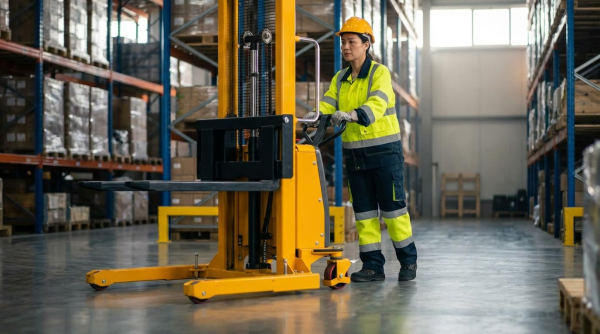
Core functions and design features determined how straddle stackers supported dense, safe storage in modern warehouses. Engineers evaluated kinematics, load paths, and stability margins to specify suitable configurations for different facilities. Understanding component layout, capacity ratings, and comparative vehicle types allowed robust equipment selection and risk control.
What A Straddle Stacker Is And How It Works
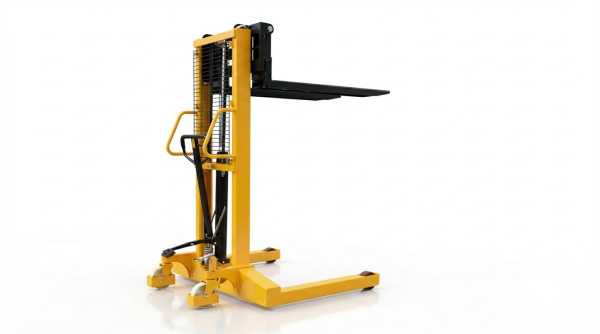
A straddle stacker was a pedestrian‑ or ride‑controlled lift truck that lifted, transported, and stacked palletized loads. Its straddle legs passed on either side of the pallet or load, so the forks could work with closed‑base pallets and still keep a compact chassis. The drive unit provided traction and steering, while an electro‑hydraulic system raised and lowered the mast and forks. Operators positioned the truck, adjusted fork height, and then traveled with the load at a reduced, controlled speed to maintain stability and visibility. In tight aisles, the short wheelbase and steering geometry enabled precise maneuvering compared with larger counterbalanced stacker.
Key Components: Mast, Straddle Legs, And Forks
The mast formed the primary vertical structure and carried the carriage and forks through chains and hydraulic cylinders. Designers specified single, duplex, or triplex masts depending on required lift heights, which in advanced units exceeded 9 m. Straddle legs supported the load laterally and transferred forces into the floor through load wheels, increasing the stability triangle without adding counterweight mass. Forks engaged the pallet openings and transmitted load into the carriage; engineers sized fork section, length, and class to match rated capacity and pallet geometry. Wheels, drive unit, control handle, and braking system completed the load path and motion system, and all required coordinated sizing to avoid overstressing any component under rated loads.
Load Center, Capacity Ratings, And Stability
Capacity ratings depended on both rated load mass and specified load center distance, typically 500 mm for standard pallets. If the actual load center exceeded this value due to long or uneven loads, the safe capacity dropped according to the manufacturer’s derating curves. The stability of a straddle stacker relied on the polygon formed by drive and load wheels plus the elevated load’s center of gravity. As the mast extended, the combined center of gravity moved forward and upward, reducing the stability margin, especially during turning or braking. Operators therefore had to respect nameplate capacity, keep loads low while traveling, and avoid lateral slopes or abrupt maneuvers that shifted the center of gravity outside the support base.
Straddle Vs. Reach Trucks And Counterbalance Trucks
Straddle stackers differed from reach trucks because they supported the load on fixed straddle legs rather than extending a pantograph or moving mast into racking. Reach trucks usually achieved higher lift heights and deeper racking reach but required floor conditions and aisle widths tailored to their wheelbase and outrigger geometry. Counterbalance trucks used a rear counterweight instead of straddle legs, which allowed them to handle a wider range of load shapes and interface directly with docks and trailers. However, they needed wider aisles and imposed higher floor loads because of the concentrated counterweight mass. Straddle stackers therefore suited short to medium travel distances, moderate lift heights, and narrow aisles where compact size, lower energy use, and precise positioning outweighed the need for long‑reach capability.
Safe Operation, Inspection, And Maintenance Practices
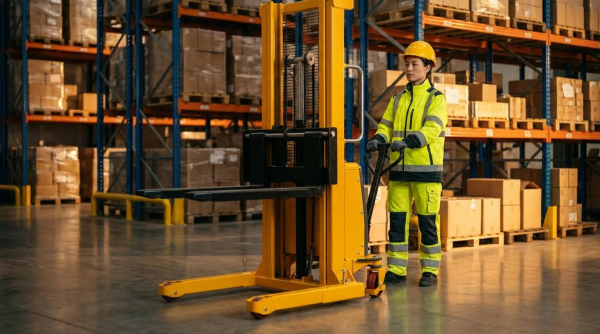
Safe operation of straddle stackers depended on disciplined inspection routines, trained operators, and adherence to rated capacities. Engineering teams specified procedures that integrated pre-use checks, driving rules, and structured maintenance intervals to control risk. Robust practices reduced unplanned downtime, limited structural fatigue, and extended component life across the mast, hydraulics, and drive systems.
Pre-Operation Checks And Functional Tests
Operators first parked the straddle stacker on a level surface with the key switch off and all controls in neutral. They visually inspected for oil, water, or hydraulic leaks, checked tire condition, wheel fastening, and verified that forks rested fully lowered with the mast vertical. Opening service covers allowed checks of hydraulic oil, brake fluid, battery electrolyte, and, where applicable, engine or drive-unit lubricants. With the key switch on, operators confirmed warning lights, horn, lamps, emergency stop, and brake functions before moving the truck. Functional tests then verified smooth lifting, lowering, and tilting, without abnormal noises or jerky motions in the mast or chains.
Safe Driving, Lifting, And Stacking Techniques
Safe travel required operators to keep the load low, typically 100–200 mm above the floor, and drive at controlled speed. Steering geometry and short wheelbases allowed tight turns, but operators maintained clear sightlines and avoided sudden direction changes under load. During lifting, they centered the pallet between the straddle legs, positioned the forks fully under the load, and respected the rated capacity at the specified load center. When stacking, they aligned square to the rack, raised to the target height, inched forward, then lowered the pallet until it rested before withdrawing the forks. Procedures for crossing dock plates, truck beds, or rail cars emphasized reduced speed, verified plate capacity, and maintaining the mast tilted slightly back for stability.
Routine Maintenance, Forks, Masts, And Chains
Maintenance plans typically defined daily, 250-hour, and annual tasks aligned with manufacturer instructions and local regulations. Daily checks covered fluid levels, visible leaks, tire wear, and function of safety devices such as interlocks and limit switches. Technicians inspected forks for cracks, heel wear, bending, and correct locking pin engagement, removing forks that exceeded wear limits. Mast and carriage inspections focused on rail straightness, weld integrity, and smooth roller travel over the full stroke. Lift chains required cleaning, lubrication with specified products, and periodic measurement of elongation, with replacement once stretch exceeded the allowable percentage. Documented maintenance logs helped identify recurring issues and supported compliance audits.
Battery Care, Downtime Handling, And Tie-Down
Electric straddle stackers relied on correct battery charging cycles, electrolyte level control, and temperature management to maintain capacity. Operators followed charging procedures that avoided deep discharge below recommended state-of-charge and allowed proper equalization when specified. During downtime or when the truck was disabled, procedures described how to lower the forks, chock wheels, and, if necessary, raise drive or load wheels on blocks before service. Moving a disabled unit required using approved towing points or lift points, never the mast or forks, to avoid structural damage. For transport on trailers or rail cars, tie-down standards required lowering the mast, securing parking brakes, and using rated chains or straps at designated anchor locations to prevent shifting in transit.
Selection Criteria, Applications, And Emerging Trends
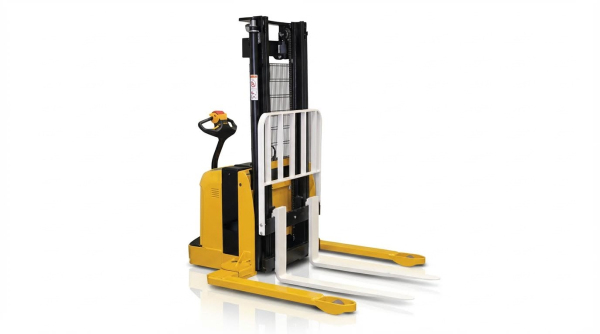
Straddle stackers played a critical role in aligning intralogistics performance with space, safety, and cost targets. Engineering teams evaluated these machines not only as lifting devices but as configurable platforms that interacted with pallets, racking, floors, and digital systems. Sound selection depended on quantifying constraints, codifying use cases, and projecting lifecycle costs under realistic duty cycles.
Matching Straddle Stackers To Facility Constraints
Engineers first defined aisle width, turning radii, and transfer points before shortlisting straddle stackers. Straddle leg width and overall chassis length determined whether the truck could navigate dock plates, truck bodies, and staging lanes. Mast height, including free lift and collapsed height, had to clear door lintels while still reaching the top storage level. Floor flatness, point-load capacity, and transitions between surfaces constrained wheel size and suspension selection. Duty cycle, expressed in operating hours per shift and lifts per hour, guided choices between lighter-duty walkie pallet truck and higher-spec electric models.
Load Types, Pallet Styles, And Attachment Choices
Selection depended heavily on load geometry, mass, and center of gravity. Closed-base pallets and stillages required forks that could lower fully to the floor and straddle legs that bypassed bottom deckboards. Wide or irregular loads pushed engineers to specify increased inside straddle clearances or adjustable forks to maintain stability. Attachments such as clamps, booms, or fork positioners expanded use cases but reduced net rated capacity at a given load center. Engineering teams validated each attachment against the capacity plate and ensured operators understood revised limits and handling techniques.
Lifecycle Cost, Energy Use, And Safety Compliance
Total cost of ownership included acquisition, energy, planned maintenance, and unplanned downtime. Electric straddle stackers with efficient drive and lift motors reduced kilowatt-hour consumption per tonne-meter of work. Maintenance plans followed daily and 8-hour inspection intervals, covering hydraulics, chains, forks, wheels, and electrical systems. Compliance reviews referenced applicable standards for industrial trucks and local occupational safety regulations. Design features such as interlocks, emergency lowering, and clear capacity labeling supported risk assessments and reduced incident likelihood.
Digital Twins, Predictive Maintenance, And Automation
Engineering teams increasingly modeled straddle stacker fleets within digital twins of warehouses. These models evaluated travel paths, congestion, and lift cycles to optimize fleet size and battery infrastructure. Sensor data from hydraulic pressures, motor currents, and vibration signatures supported predictive maintenance algorithms. These systems flagged developing issues such as chain stretch, bearing wear, or hydraulic leaks before failures caused downtime. Progressive facilities integrated semi-automated guidance, enhanced visibility aids, and connectivity to warehouse management systems to coordinate human-operated stackers with automated equipment.
Summary And Key Takeaways For Engineering Teams
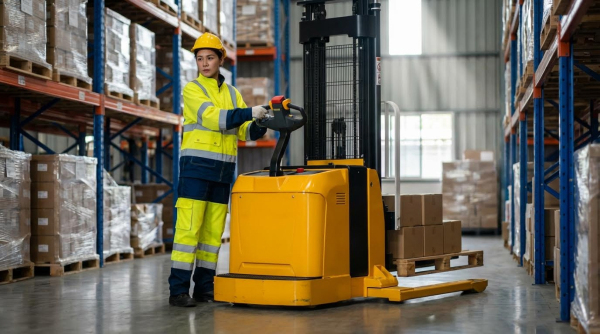
Engineering teams treated straddle stackers as configurable systems rather than generic lift trucks. The most effective deployments aligned equipment geometry, capacity ratings, and energy systems with quantified facility constraints and load cases. This required clear definitions of aisle widths, racking heights, pallet designs, and duty cycles before specification or procurement. Safety performance depended on disciplined pre-operation checks, validated operator training, and strict adherence to load center and capacity charts.
From an industry perspective, straddle stackers evolved into higher-reaching, higher-capacity machines with better visibility and control ergonomics. The sector increasingly integrated digital tools, including maintenance logging, condition monitoring, and early forms of predictive diagnostics. Automation-ready controls and interface points prepared these trucks for future semi electric order picker or fully automated operation. Regulatory frameworks on lifting equipment, batteries, and operator safety continued to shape design envelopes and documentation requirements.
For practical implementation, teams needed structured inspection regimes, typically at 8-hour or daily intervals, covering hydraulics, forks, masts, chains, wheels, and safety circuits. Battery care plans, including charging profiles and electrolyte management, directly influenced uptime and lifecycle cost. Clear procedures for power-loss scenarios, manual lowering, disabled-equipment handling, and transport tie-down reduced incident severity. A balanced technology roadmap combined proven mechanical architectures with incremental adoption of sensors, connectivity, and automation, ensuring compatibility with existing infrastructure while preparing for higher warehouse density and throughput demands. For instance, integrating tools like the manual pallet jack or walkie pallet truck could optimize specific workflows.