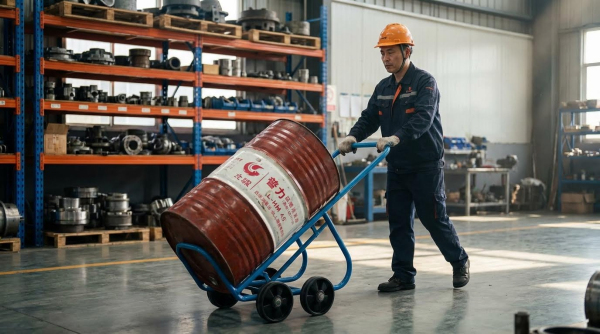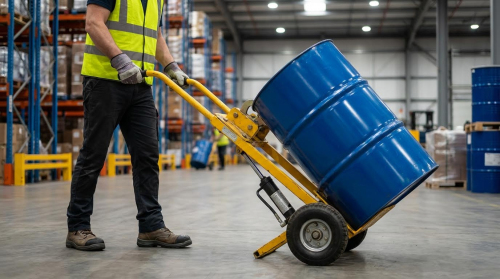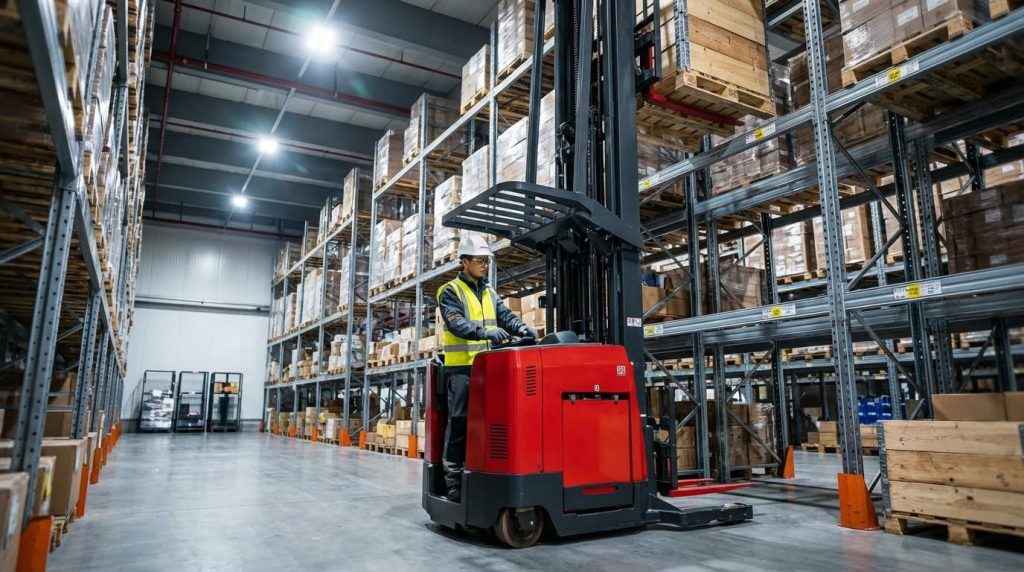
Safe, efficient pallet handling with forklifts depends on disciplined pre-use checks, precise pallet engagement, and controlled travel techniques. This guide explains how to lift a pallet with a manual pallet jack from a professional, standards-compliant perspective, following the full workflow from pre-operation checks to shutdown. You will see how operator training, equipment inspection, load assessment, and route planning all influence stability at every stage. The later sections detail exact approaches to positioning, lifting, transporting, stacking, and parking, then conclude with the key steps and safety essentials to standardize in your facility. Additionally, tools like the hydraulic pallet truck or the walkie pallet truck can enhance efficiency when integrated into the workflow.
Pre-Operation Checks and Load Assessment
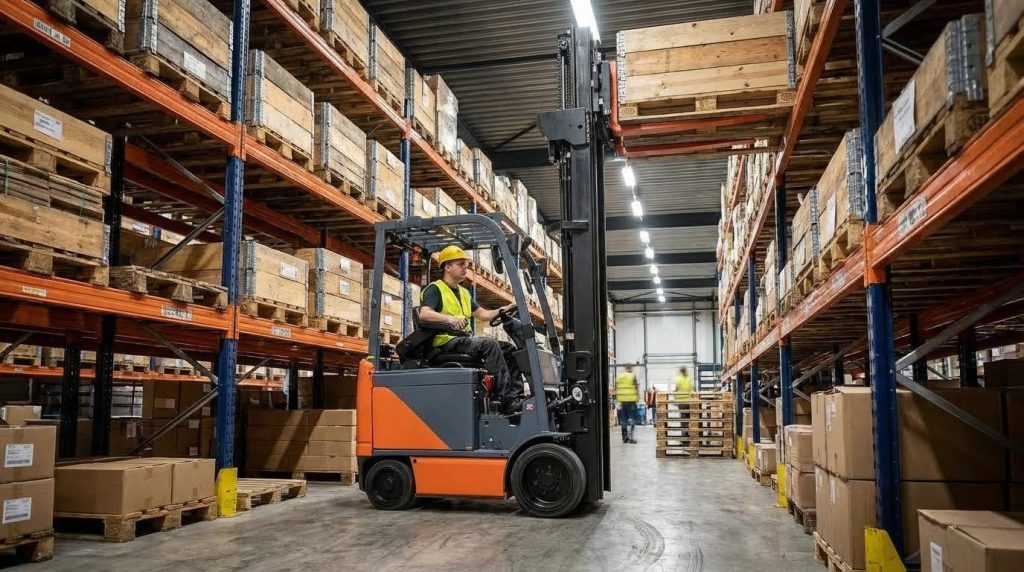
Pre-operation checks and load assessment form the foundation of safe practice when learning how to lift a pallet with a forklift. These steps reduce tip-over risk, protect operators, and prevent damage to racking and product. Before any fork approaches a pallet, the operator must confirm personal readiness, truck condition, load integrity, and route safety. Skipping any of these checks significantly increases the likelihood of incidents during lifting, travel, or placement.
Operator training, licensing, and PPE
Only trained, authorized, and licensed personnel should operate a forklift when deciding how to lift a pallet with a forklift safely. Operators needed formal instruction, practical evaluation, and site-specific familiarization that met OSHA or equivalent national regulations. They also required refresher training after incidents, near-misses, or equipment changes. Appropriate PPE typically included high-visibility clothing, safety footwear with toe protection, and hard hats where overhead work occurred. Operators had to avoid loose clothing, jewelry, or accessories that could catch on controls or the mast. Hands and footwear needed to remain dry and clean to prevent slips when mounting or dismounting the truck.
Forklift inspection and functional tests
Before each shift, operators had to complete a documented pre-use inspection of the forklift. They checked structural components such as forks, carriage, mast channels, chains, overhead guard, and load backrest for cracks, bends, or deformation. Tires required examination for cuts, chunking, flat spots, or low pressure, especially on cushion or pneumatic types. Operators verified fluid levels for fuel, engine oil, coolant, and hydraulic oil, and inspected for leaks beneath the truck. With the engine running, they tested steering response, service brake, parking brake, and hydraulic functions for lift, lower, and tilt. Safety devices, including horn, backup alarm, lights, and seat belt, had to operate correctly before the truck was considered safe to use. Any defect that could affect safe lifting or travel required immediate reporting and removal of the truck from service until repaired by qualified personnel.
Verifying load weight, size, and pallet condition
Understanding the load was critical to mastering how to lift a manual pallet jack with a forklift without exceeding capacity. Operators compared the estimated or measured load weight with the truck’s data plate, considering rated capacity at the specified load center, typically 500 mm. Oversized or high loads effectively increased the load center distance and reduced the allowable mass, even if nominal weight seemed acceptable. The pallet itself required close inspection for broken deck boards, split stringers, protruding nails, or decay that could fail under fork pressure. Loads had to be stable, banded, wrapped, or otherwise secured, with the heaviest items positioned closest to the fork heel to keep the combined center of gravity near the front axle. Off-center loads, such as long pipes or tall unbalanced stacks, demanded reduced travel speed, minimal mast tilt, and sometimes additional securing or alternative handling methods.
Route planning and hazard identification
Before engaging the pallet, operators planned the entire route from pickup to final placement. They walked or visually scanned the path to identify uneven floors, potholes, dock plates, ramps, spilled liquids, or loose debris that could compromise stability. Overhead clearances required verification, including door headers, sprinkler pipework, lighting, and the underside of mezzanines, especially when raising loads to high racks. Traffic conditions mattered: intersections, blind corners, pedestrian walkways, and crossing points had to be noted, with horn use and speed reduction planned in advance. Operators selected travel directions that preserved visibility, choosing to drive in reverse when the load blocked the forward view, except on upward ramps. They also confirmed that floor loading limits and dockboard capacities could support the combined mass of forklift and load, preventing structural failure during pallet lifting and transport.
Approaching and Engaging the Pallet
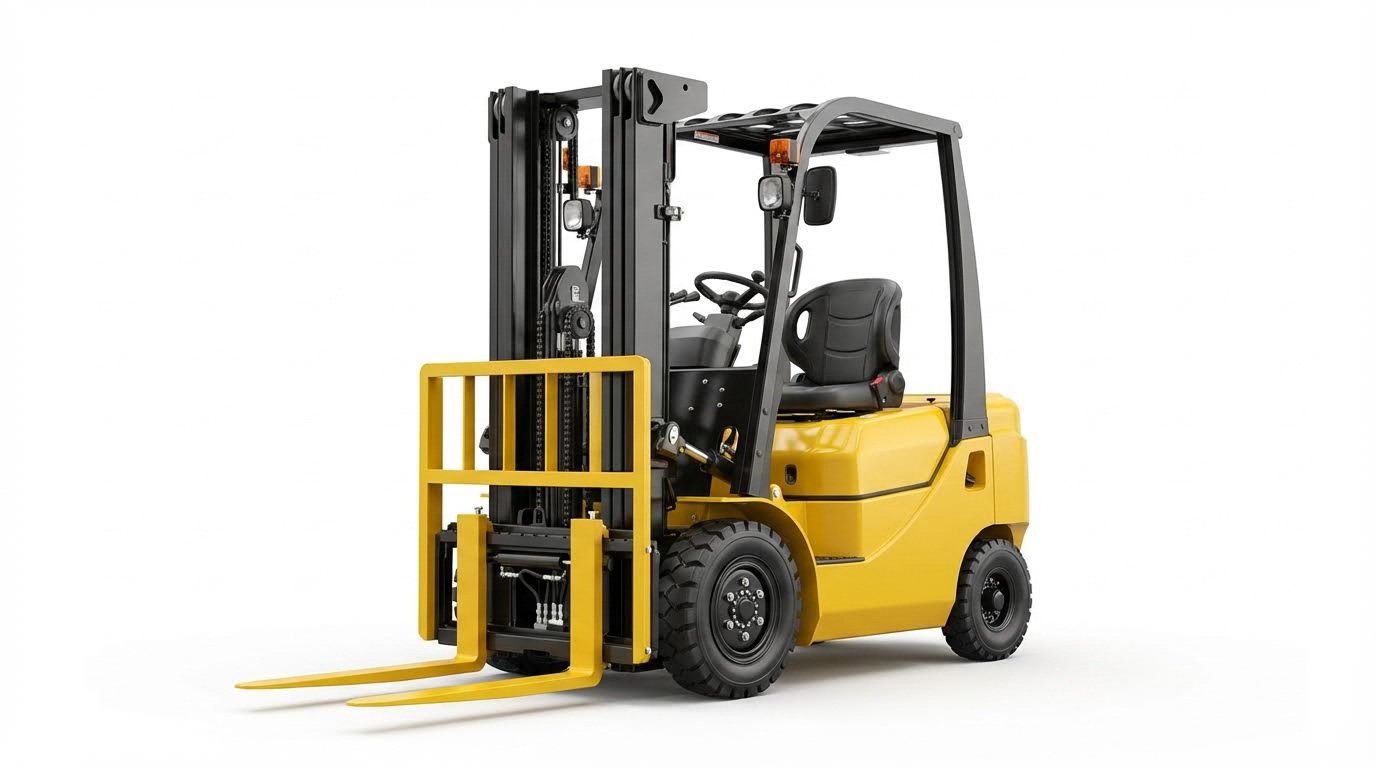
Understanding how to lift a pallet with a forklift safely starts with the approach. Correct positioning, fork setup, and mast control directly affect truck stability and load integrity. This phase determines whether the center of gravity stays within the stability triangle and whether the pallet survives handling without damage.
Positioning, alignment, and fork spacing
Approach the pallet slowly and squarely, keeping the mast vertical and the forks 15–20 cm above the floor. Stop with the fork tips approximately 20–30 cm in front of the pallet to finalize alignment. The truck centerline should align with the pallet centerline to keep the combined load center on the longitudinal axis. Adjust fork spacing so each fork sits equidistant from the pallet center, supporting stringers or blocks rather than deck boards. Use the lift and tilt controls only with the direction selector in neutral and the parking brake applied during fine positioning. For block pallets or four-way pallets, verify the entry side suits the fork height and length to avoid striking bottom deck boards.
Fork insertion depth and load centering
Level the forks before entry, then move forward slowly until the forks are fully inserted under the pallet. As a rule, the forks should support at least two-thirds of the load length; full insertion is preferred when space allows. Avoid pushing the forks through the pallet if another pallet or obstruction is tight behind it, leaving a 10–20 cm margin where required. Once inserted, verify the load’s heaviest portion sits as close as possible to the carriage and evenly spans both forks. Reposition if the load appears off-center, unstable, or overhanging excessively on one side, since this increases tip-over risk and may exceed rated capacity at the effective load center. Before lifting, confirm there are no broken deck boards, split stringers, or visibly damaged components that could fail under load.
Mast tilt, load stability, and overhead clearance
When learning how to lift a pallet with a manual pallet jack, mast tilt control is critical for stability. Raise the pallet just clear of the support surface, typically 5–10 cm, and then apply a slight rearward tilt to bring the load against the backrest. Do not tilt forward while the load is elevated except when actually depositing or picking up the pallet. Check overhead clearance before any lift, including lights, sprinkler pipes, door headers, trailer roofs, and rack beams. For loads near the truck’s rated capacity, keep the mast as vertical as possible during lifting and minimize tilt changes at height. After confirming the load does not snag any structure and remains stable against the backrest, lower it to a safe travel height of roughly 15–20 cm above the floor, maintaining a slight back tilt before moving off.
Lifting, Transporting, and Placing the Pallet
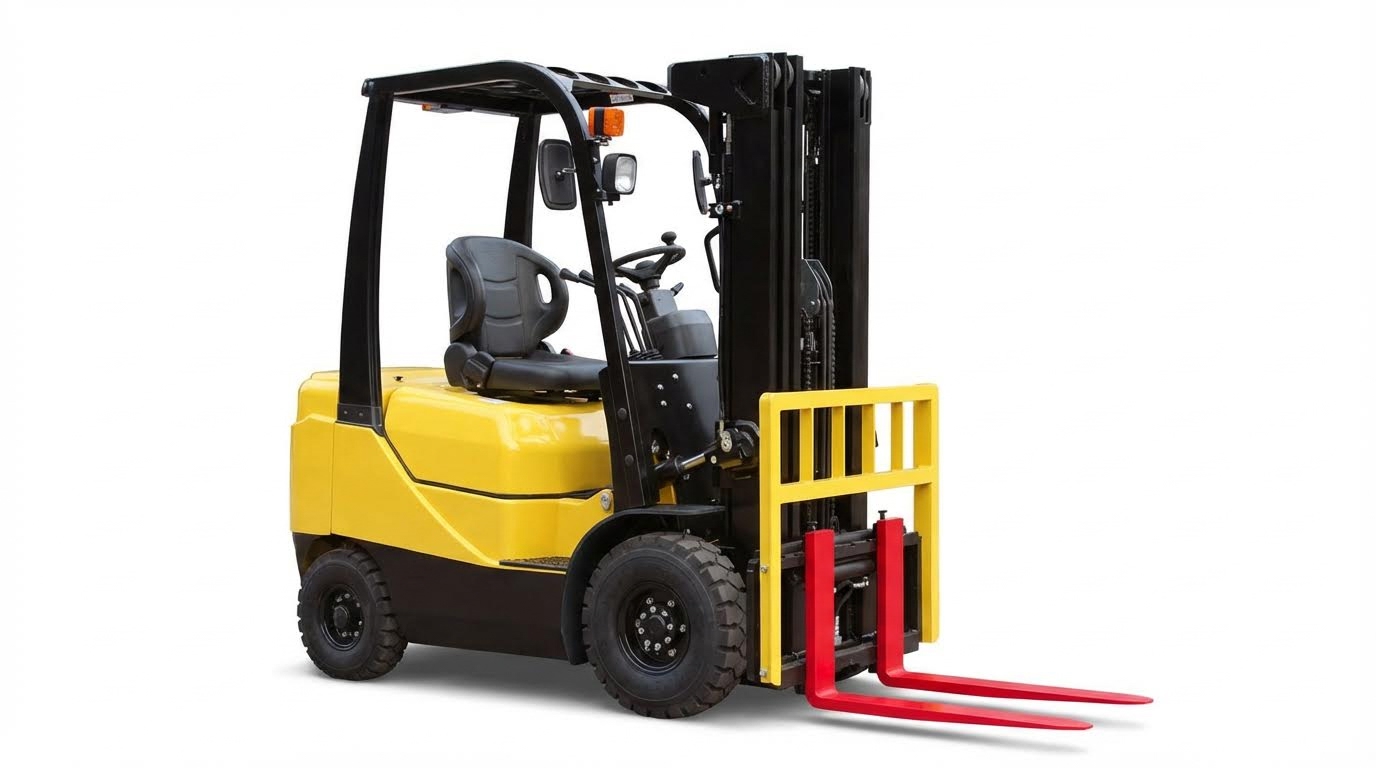
Understanding how to lift a pallet with a forklift safely requires strict control during lifting, travel, and placement. This stage determines overall truck stability, load integrity, and protection of racking and building structures.
Controlled lifting and initial stability check
Before lifting, verify the load weight is within the forklift’s rated capacity shown on the data plate. Center the pallet load across both forks, with the heaviest portion as close as possible to the carriage and front axle. Insert the forks fully, or at least two thirds of the load length, and keep them level before lifting. Raise the pallet slowly to about 0.10–0.20 m above the ground or support surface and pause to check for shifting, deflection, or pallet damage. Tilt the mast slightly backward so the load rests against the load backrest, improving stability and reducing forward tip risk. Confirm there is adequate overhead clearance for the mast, backrest, and load, especially when working under mezzanines, sprinklers, or trailer roofs. If the load appears unstable, lower it, reposition or re-stack, and do not travel until stability is acceptable.
Traveling with the load and visibility control
When you know how to lift a pallet with a forklift correctly, the next step is controlled travel. Keep the load low during travel, typically 0.15–0.20 m above the floor, with the mast slightly tilted back. Maintain a low, steady speed, generally not exceeding walking pace indoors, and avoid sharp turns, sudden braking, or rapid acceleration. Drive with the forks pointed uphill when on gradients and descend in reverse when loaded to keep the center of gravity inside the stability triangle. If the load obstructs forward view, travel in reverse while looking in the direction of travel, or use a trained spotter. Sound the horn at intersections, doorways, and blind spots, and obey site speed limits, floor loading limits, and marked pedestrian priority routes. Maintain safe separation from other trucks and pedestrians, allowing enough distance to stop smoothly on dry or potentially slippery floors.
Stacking, unstacking, and rack placement steps
For stacking, approach the rack or stack squarely at low speed with the pallet centered between the uprights or stack edges. Stop 0.20–0.30 m from the rack, select neutral, and apply the parking brake before lifting. Raise the pallet just above the target beam level or top of the stack while keeping the mast as vertical as possible, then creep forward using inching control. Level the forks, position the pallet so it is fully supported on the beams or stack, and then lower the load smoothly until it bears completely. Once the weight transfers to the rack or stack, lower the forks slightly to clear the pallet, then reverse slowly until the forks are fully clear before lowering them to travel height. For unstacking, reverse the sequence: align, level forks, insert to the correct depth, lift just clear, tilt back slightly, confirm stability, and then withdraw. Use reduced loads and extra care for high-tiering operations to limit mast deflection and sway.
Parking, shutdown, and post-use reporting
After handling pallets, park the forklift in a designated, level area away from doors, emergency exits, and traffic routes. Lower the forks fully to the floor, tilt the mast forward to neutral, place the directional control in neutral, and apply the parking brake. Shut down the power unit, turn off any auxiliary systems, and remove the key to prevent unauthorized use. If required, connect chargers or refueling systems only in approved, ventilated areas with the truck switched off. Inspect the truck for damage incurred during operation, including forks, mast, hydraulics, tires, and overhead guard. Report defects, unusual noises, fluid leaks, or impact incidents immediately according to site procedures so maintenance can isolate and repair the truck before the next shift. Proper shutdown and reporting close the loop on how to lift a pallet with a manual pallet jack safely and keep the equipment compliant with regulatory inspection requirements.
Summary: Key Steps and Safety Essentials
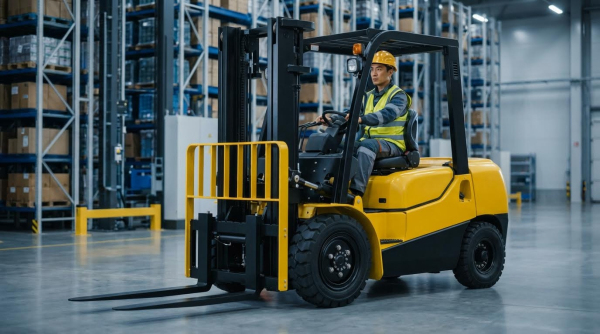
Knowing how to lift a pallet with a forklift safely required a disciplined, stepwise process that covered preparation, handling, travel, and shutdown. Trained and licensed operators started with thorough pre-use inspections, route checks, and load assessments to keep operations within the truck’s rated capacity and site rules. During pallet engagement and lifting, correct fork spacing, full fork insertion, load centering, and controlled mast tilt helped maintain the combined truck–load center of gravity within the stability triangle. Travel with the load low and slightly tilted back, along with strict speed control and visibility management, reduced tip-over and collision risks.
From an industry perspective, standardized procedures for how to lift a pallet with a forklift aligned closely with OSHA requirements for daily inspections, defect reporting, and operator training. These practices reduced incidents, protected racking and building structures, and lowered product damage rates in warehouses, manufacturing plants, and logistics hubs. Future trends pointed toward greater use of telematics, proximity sensors, and geo-fenced speed limits that supported safer operation without replacing the need for solid fundamentals in load evaluation, route planning, and stacking technique.
For practical implementation, facilities needed clear traffic plans, marked pedestrian zones, and defined stacking patterns that respected floor load limits and rack ratings. Supervisors should enforce pre-shift checklists, competency-based refresher training, and strict rules on load limits, pallet condition, and ramp operation. A balanced approach combined proven mechanical principles—low center of gravity, even load distribution, controlled mast tilt—with digital monitoring and analytics. Sites that integrated these elements into daily practice achieved safer, more repeatable outcomes every time an operator lifted a pallet with a manual pallet jack, hydraulic pallet truck, or walkie pallet truck.