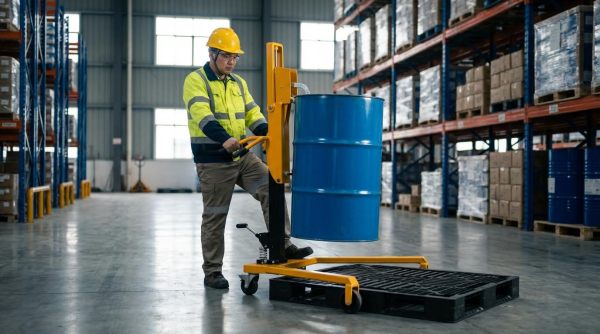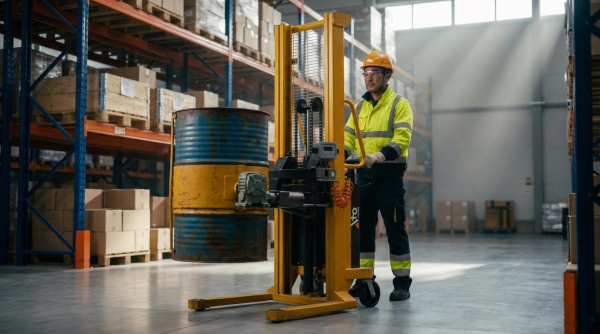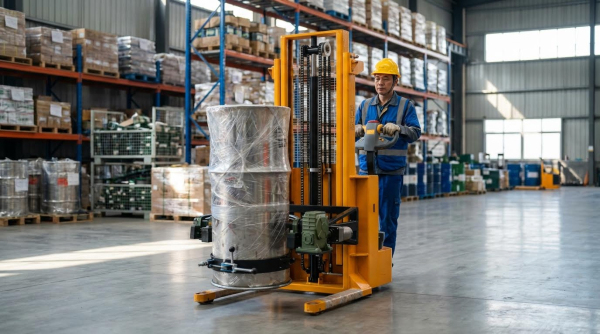
Drum stacker operation required a structured approach that combined correct handling procedures, systematic safety checks, and awareness of storage hazards. This article outlined drum stacker types, core operating principles, and how indoor layout influenced safe maneuvering and stacking. It then detailed step-by-step procedures for how to use a drum stacker, from pre-use inspection to shutdown and battery care. Finally, it examined safety standards, common risks such as spills, fire, and instability, and concluded with guidance for deploying electric drum stackers safely and efficiently in industrial facilities.
Drum Stacker Types And Core Operating Principles
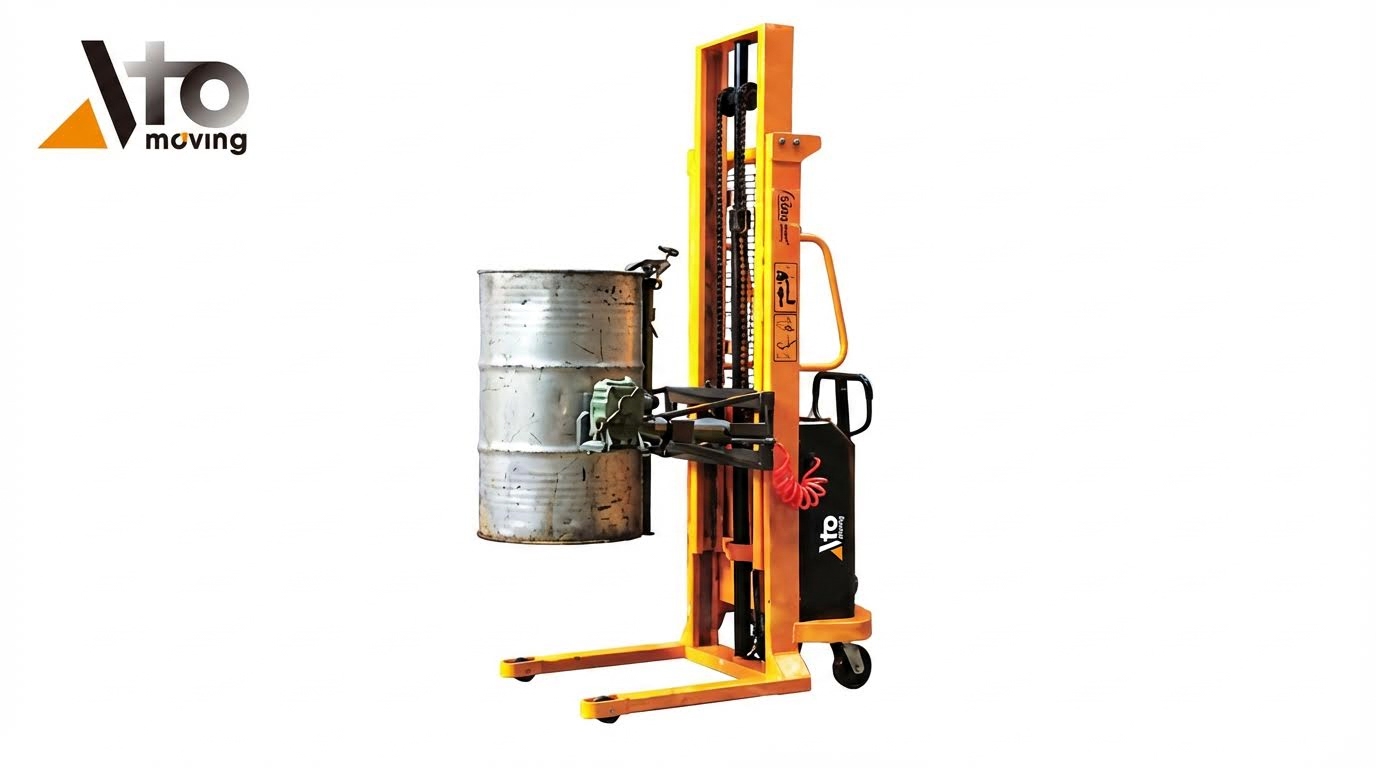
Understanding how to use a drum stacker efficiently starts with knowing the main equipment types and their operating principles. Drum stackers support safe lifting, rotation, and stacking of heavy drums in chemical plants, warehouses, and logistics terminals. Correct selection and use depend on drive type, load rating, drum characteristics, and the indoor layout. The following subsections explain these fundamentals so engineers can match stacker design to task, floor, and safety requirements.
Manual Vs. Powered Drum Stackers
Manual drum stackers relied on a hydraulic pump actuated by a tiller or foot pedal. The operator generated lifting pressure and provided all traction force. These units typically handled up to about 350 kg and lifted to 1.6–3.0 m, which suited low-throughput areas or backup duties. Powered drum stackers used battery, pneumatic, or electric drives for the lift function and sometimes for travel. They allowed repeatable lifting of drums up to roughly 360 kg (≈800 lb) to heights near 2.5 m and above with lower operator effort. For choosing how to use a drum stacker in a given plant, engineers weighed duty cycle, aisle length, and grade conditions. Manual units fit short distances and occasional use, while powered units fit high-frequency stacking, truck loading, or racking up to about 101 inches. Both types still required trained operators and adherence to rated capacity and stability limits.
Key Components And Control Interfaces
Drum stackers combined a load frame, mast, and drum gripping attachment with running gear and brakes. The gripping head usually engaged the top rim of 200 L drums using a cam jaw, clamp, or chain, which locked automatically under load and released only when the drum rested on a surface. Hydraulic cylinders or electro-hydraulic power packs provided vertical motion, while casters or drive wheels supported travel. Control interfaces included a tiller or push handle, lift and lower levers, and on powered units, travel direction and speed controls plus an emergency stop. For safe operation, operators needed to understand how to position the drum centrally between the legs, lower the jaw to the rim, and then lift smoothly without shock loading. Clear labeling of lift controls, battery state indicators, and parking brakes helped standardize how to use a drum stacker across shifts and crews.
Load Ratings, Drum Types, And Center Of Gravity
Every drum stacker carried a rated capacity at a specified drum size, grip position, and lift height. Typical ratings reached about 350 kg for manual models and up to approximately 360 kg for industrial powered units. Operators had to verify that drum gross mass, including contents, did not exceed this rating. Drum material and contents affected center of gravity and stacking rules. Standard steel or plastic 200 L drums with liquids of specific gravity up to about 1.5 usually allowed four-high stacking, while higher specific gravity or sustained temperatures above 30 °C reduced safe stacking to three-high. When planning how to use a drum stacker in a warehouse, engineers considered the elevated center of gravity during travel and turning. The drum should remain close to the mast with minimal lift height during travel to reduce overturning moments. Compliance with stacking tests such as 49 CFR §178.606 for steel drums ensured that container strength matched the compressive loads imposed by multi-tier storage.
Indoor Layout, Aisle Width, And Floor Conditions
Indoor layout strongly influenced drum stacker selection and operating procedures. Aisle width had to exceed the stacker’s overall length plus turning radius and drum overhang, with additional clearance for operator escape paths and pallet corners. Narrow aisles favored compact manual stackers or walk-behind powered units with tight turning radii, while wider aisles could accommodate higher-mast models for racking or truck loading. Floor conditions also governed how to use a drum stacker safely. The surface should be flat, hard, and in good repair, ideally concrete without steps, potholes, or significant slopes. Uneven floors increased dynamic tilting and could compromise grip on the drum rim. Where drums sat directly on the floor, the area needed to be level and dry to prevent base deformation and sliding. When drums were palletized, engineers typically specified pallets around 1 200 mm × 1 200 mm to provide full support and minimize sag under stacked loads.
Step-By-Step Drum Stacker Operating Procedures
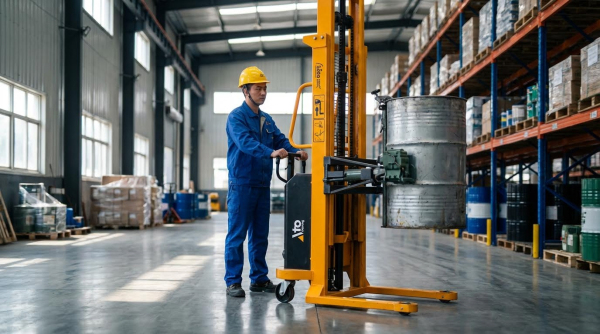
Understanding how to use a drum stacker safely requires a structured, repeatable procedure. Operators should move from inspection, to controlled lifting, to special-handling techniques, and finally to secure parking and power management. Each step affects stability, equipment life, and compliance with facility safety rules. The following subsections describe a practical sequence that facilities can adapt into site-specific work instructions.
Pre-Use Inspection And Start-Up Sequence
Before operating, verify that the drum stacker matches the task and drum type. Check the data plate for rated capacity, maximum lift height, and drum size compatibility. Inspect the mast, frame, and drum gripping head for cracks, deformation, or corrosion. Examine chains, pivot pins, and clamps for wear and proper lubrication. Confirm that wheels and casters roll freely and that brakes lock the unit without slip.
For manual units, cycle the hydraulic pump without load and check for smooth travel and absence of leaks. For powered units, confirm battery charge level, cable integrity, and secure terminals. Test all controls in a clear area: lift, lower, tilt or rotate (if fitted), and travel functions. Verify that emergency stop, horn, and any interlocks operate correctly. Only start normal operation when the inspection log is complete and any defects are resolved.
Correct Drum Engagement, Lifting, And Stacking
Position the drum centrally between the stacker legs with the long axis vertical. Maintain the mast vertical and keep the gripping mechanism above the drum rim before engagement. Lower the jaw or clamp until it contacts the rim or body at all designated points. For rim-grip systems, ensure the jaw seats fully under the chime before lifting. For strap or chain grips, tension the restraint until the drum cannot rotate or slip by hand.
Lift the drum a minimal clearance above the floor or pallet, typically 50–100 millimetres. Travel at low speed with the load close to the ground to maintain a low centre of gravity. Approach the rack or stack squarely, avoiding diagonal entry that could twist the mast. Raise the drum to the target height, pause, then advance slowly until the drum is directly over its final position. Lower the drum until it fully bears on the pallet or support surface before releasing the grip.
Handling Hot-Filled, Hazardous, And High-SG Drums
When learning how to use a drum stacker with hot-filled product, treat drum rigidity and internal pressure as critical variables. Allow hot-filled drums to cool to ambient temperature before final torqueing of closures and multi-tier stacking. Elevated temperatures reduce steel strength and increase bulging, which lowers stacking stability. For hazardous contents, follow the facility’s chemical handling procedures and material safety data requirements.
Check the specific gravity of the drum contents against the drum and stacker ratings. High-SG liquids increase the effective load and can exceed both equipment capacity and regulatory stacking limits. As a reference, steel drums with contents up to approximately 1.5 specific gravity usually allowed four-high stacking under suitable conditions, while higher SG or high ambient temperatures often required limiting stacks to three-high. Keep hazardous and flammable drums within designated containment and fire-protection zones, and avoid impact loads or sudden movements that could compromise closures.
Parking, Shutdown, And Battery Management
At the end of a task, park the drum stacker on a flat, strong surface, preferably concrete. Lower the mast and any attachments fully to reduce stored energy and improve stability. Apply parking brakes or wheel chocks according to site rules. Ensure no drum remains suspended; all loads must rest on pallets, racks, or the floor. For manual units, release hydraulic pressure if the design allows a neutral, unloaded state.
For battery-powered units, follow a consistent charging routine that avoids deep discharge. Connect the charger with the stacker switched off and parking brake applied. Inspect electrolyte levels and ventilation in the charging area, in line with local electrical and battery safety codes. Avoid opportunity charging that repeatedly adds short, partial charges unless the battery type and manufacturer guidance support that practice. Document operating hours and charging cycles to support predictive maintenance and timely battery replacement.
Safety Checks, Standards, And Common Hazards
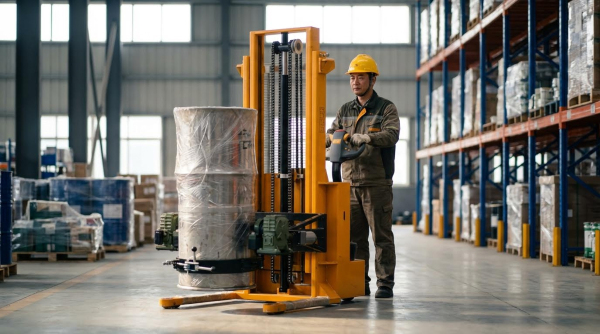
Safe drum handling depends on disciplined checks, clear standards, and a precise understanding of how to use a drum stacker in real facilities. This section links daily inspections, regulatory stacking rules, and hazard controls into a single operating framework. It focuses on practical measures that reduce spill, fire, and mechanical risks while supporting high-density drum storage.
Daily Safety Checks, PPE, And Operator Training
Operators should start every shift with a structured checklist before using a drum stacker. They inspect the mast, jaws or rim grippers, chains, and hydraulics for cracks, leakage, or deformation. They verify wheels, casters, and brakes roll freely and lock correctly, because steering faults quickly lead to impacts in tight aisles. They also test lift, lower, and emergency stop controls under no-load before engaging any drum.
Personal protective equipment is mandatory whenever drums move. Reinforced-toe safety footwear protects against crush injuries if a drum or stacker wheel contacts the foot. High-visibility vests or jackets improve detection by forklift and truck drivers in mixed-traffic warehouses. Depending on drum contents, operators also use chemical-resistant gloves, safety glasses, and sometimes flame-resistant clothing when flammable liquids are present.
Training programs explain not only how to use a drum stacker, but also why specific limits exist. Courses cover rated capacity, center-of-gravity effects, and proper approach to position the drum between the stacker legs. Instructors demonstrate correct jaw placement on the drum rim and emphasize that the gripping mechanism must never be bypassed or modified. Refresher training and documented competency assessments help maintain safe habits and regulatory compliance.
Stacking Limits, Stability, And Regulatory Codes
Stacking rules start with the drum itself, then extend to pallets and building geometry. Steel drums loaded with liquids of specific gravity up to 1.5 could be stacked four-high under typical ambient temperatures. When specific gravity exceeded 1.5, or when temperatures stayed above 30 °C, industry guidance limited stacks to three-high to control bulging and instability. Operators must know these limits before deciding how high to lift with a drum stacker.
Regulations such as 49 CFR §178.606 required drums to pass a stacking test equivalent to a three-metre top load for 24 hours. However, passing this test did not eliminate the need for correct palletization and floor conditions. Good pallets with at least 1 168 mm × 1 168 mm (48 in × 48 in) size supported four drums with full deck contact, reducing local sagging. Floors had to be flat, solid, and usually concrete, because soft or damaged surfaces increased tilt and rack misalignment.
Operators planning how to use a drum stacker in racked or block storage also considered fire codes. NFPA 30 set maximum building heights, stack heights, and sprinkler densities for flammable and combustible liquids. For example, three-high palletized drum stacks required at least 0.45 gallons per minute per square foot foam-water discharge, while four-high stacks required 0.60. Aligning stacker operating procedures with these codes ensured that storage layouts remained both stable and legally compliant.
Spill, Fire, And Explosion Risks In Drum Storage
Spill risk rose whenever operators mishandled drums, exceeded capacity, or gripped the rim incorrectly. A misaligned jaw could deform the chime, leading to slow leaks at closures during storage. Overfilling or stacking hot-filled drums before cooling to ambient temperature increased internal pressure and product expansion. That combination sometimes forced closures to weep or fail, especially under solar heating or poor ventilation.
Fire and explosion risks centered on flammable liquids and vapors. NFPA 30 required pressure-relieving drum plugs and compatible closures, which vented excess pressure while remaining liquid-tight. Facilities storing such drums needed automatic sprinklers, usually with extra-large orifice pendant heads above stacks. Operators learned to keep ignition sources, including hot work, far from drum aisles and transfer points, and to respect designated hazardous zones.
Effective emergency planning complemented safe day-to-day use of drum stackers. Spill response kits with absorbents, neutralizers, and overpack drums had to be available near storage areas. Staff trained to isolate the area, shut down stacker movement, and raise alarms quickly. Clear evacuation routes, visible signage, and regular drills ensured that a drum puncture, valve failure, or rack impact did not escalate into a large incident.
Preventive Maintenance And Predictive Monitoring
Preventive maintenance kept drum stackers mechanically reliable and reduced hazard probability. Maintenance teams scheduled inspections of hydraulic cylinders, hoses, and seals for leaks or micro-cracks. They checked chain tension, pivot pins, and mast rollers, because slack or worn components increased mast deflection and reduced gripping precision. Lubrication of moving joints with the correct grade and quantity of grease minimized friction and overheating.
Predictive monitoring used trend data to catch problems early. Technicians logged hydraulic oil temperature, unusual noise, and vibration signatures from drive wheels or pumps. Abnormal patterns often indicated internal wear long before visible failure. For high-utilization fleets, maintenance teams sometimes used vibration analysis or thermal imaging to identify overloaded bearings or electrical hot spots in power units.
Spare-part strategies also influenced how safely operators could use a drum stacker over its life. Facilities kept critical components such as wheel assemblies, hydraulic hoses, and grip mechanisms in stock to avoid improvised repairs. Clear reporting channels encouraged operators to stop using any stacker that showed performance changes, like slower lifting or inconsistent jaw release. Combining operator feedback with structured maintenance and monitoring created a closed loop that steadily reduced incidents and unplanned downtime.
Summary: Safe, Efficient Drum Stacker Deployment
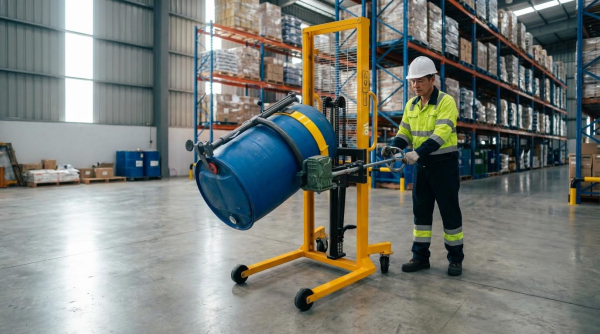
Safe, efficient drum stacker deployment depended on disciplined procedures, structured safety checks, and rigorous maintenance. Facilities that understood how to use a drum stacker as part of a wider drum-handling system reduced manual handling, improved stacking accuracy, and lowered incident rates. Correct use started with matching the stacker type and capacity to drum mass, specific gravity, and target stacking height, then applying a consistent pre-use inspection and operating routine.
From a technical standpoint, operators needed to position the drum correctly between the legs, engage the rim or clamp fully, and lift only within rated load and reach. Handling hot-filled, hazardous, or high-specific-gravity drums required tighter limits on stacking height, verified closure torque, and controlled ambient temperature, in line with regulations such as 49 CFR §178.606 and fire codes like NFPA 30. Pallet quality, floor flatness, and aisle width strongly influenced stability and determined safe travel speeds and turning strategies.
Industry practice moved toward integrating drum stackers with engineered storage layouts, sprinkler design, and spill containment. Predictive monitoring of hydraulics, wheels, and structural components, combined with scheduled preventive maintenance, extended equipment life and reduced unplanned downtime. Future trends pointed to wider use of sensors, assisted braking, and visual aids to support operators in tight aisles and mixed-traffic zones.
For organizations optimizing how to use a drum stacker, practical focus areas included standardized checklists, documented training and certification, and clear limits for stacking arrays based on specific gravity and temperature. Balanced adoption of technology, sound engineering controls, and operator competency allowed facilities to handle heavy drums at height while maintaining compliance, protecting people, and preserving equipment integrity. Additionally, integrating tools like a forklift drum grabber further enhanced operational efficiency.