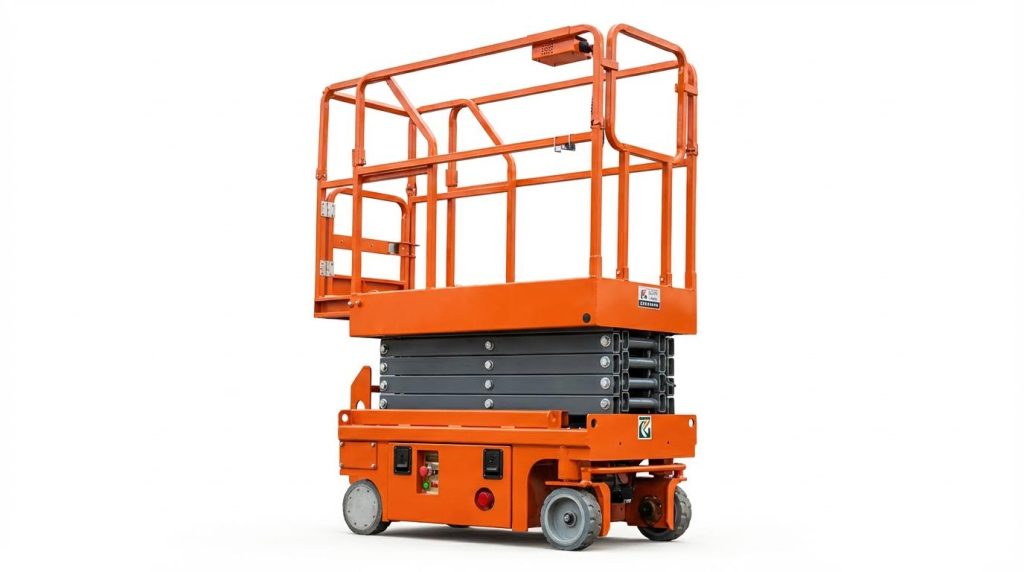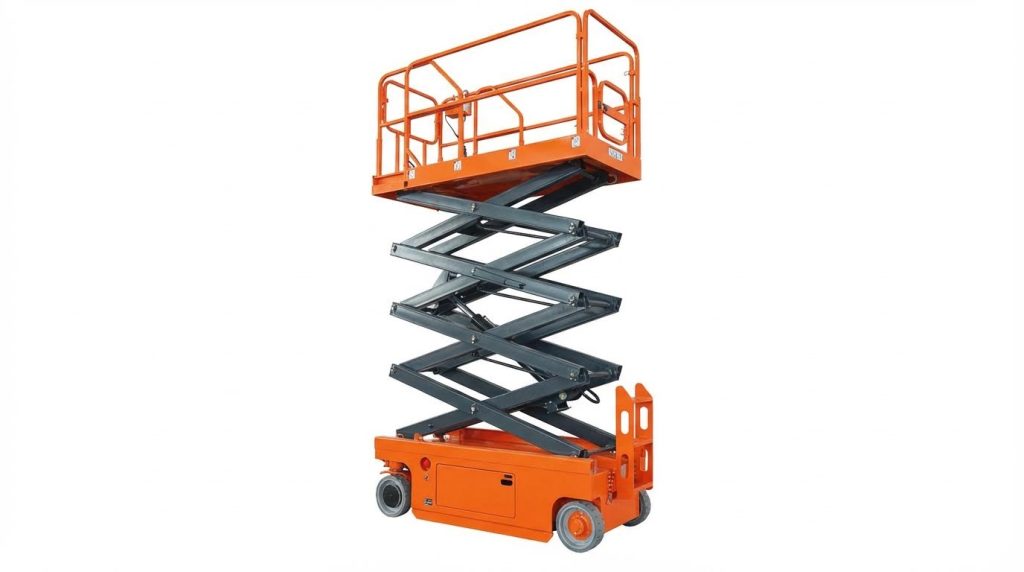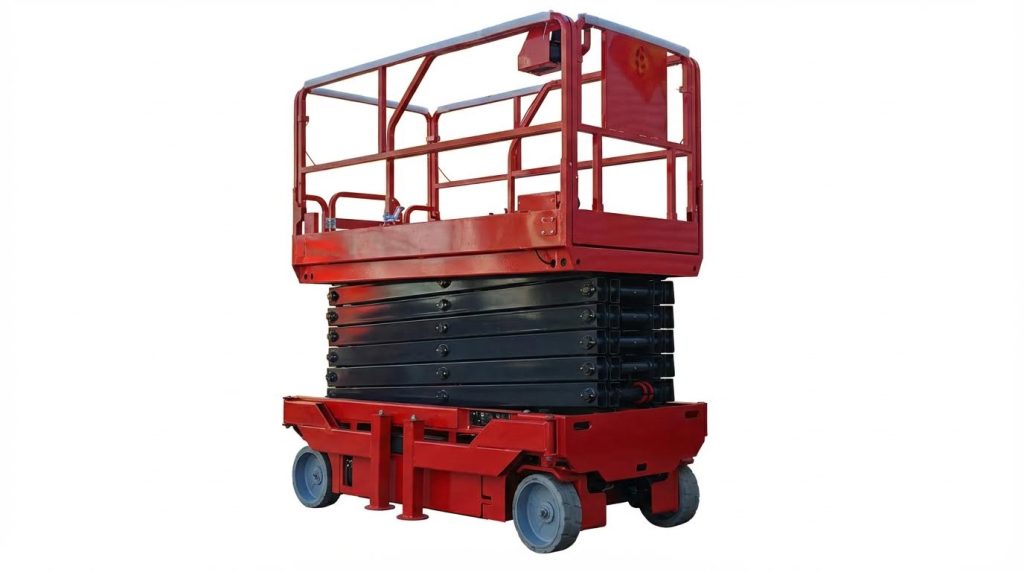
Towable aerial work platforms allowed crews to move elevated access equipment between jobsites quickly, but they also introduced unique transit risks. This article covered pre-move inspections, manual relocation by hand, and towing practices that controlled stability, braking, and ground support. It also examined how force limits, outriggers, and center-of-gravity management answered questions like “can you move a towable aerial platform by hand” while remaining compliant with safety standards. The final section tied these practices together into a concise summary of safe movement and regulatory considerations for modern fleet operations.
Pre-Move Inspections And Stability Checks
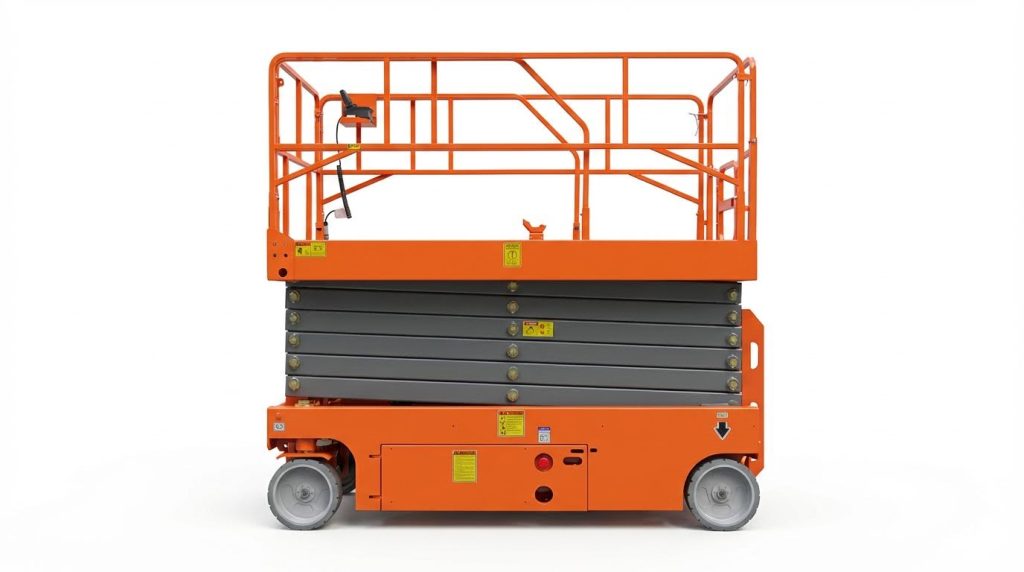
Pre-move inspections determine whether you can move a towable aerial platform by hand or must tow it. Stability checks verify that structural, hydraulic, and environmental conditions will not allow a tip-over during movement. A systematic inspection sequence reduces the risk of falls, loss of control, and equipment damage. These checks should occur before every relocation, whether on a jobsite or for road transport.
Structural, Tires, And Fastener Condition
Start with the chassis, boom structure, and tow frame. Look for cracks, bent members, corrosion, or deformation at welds, pivot points, and the tongue. Any structural defect reduces the allowable margin against tipping or failure during manual movement or towing. Inspect tires for correct inflation pressure, sidewall cuts, exposed cords, and flat spots. Damaged or underinflated tires change the effective base width and increase rolling resistance, which raises the manual push or pull force needed. Check wheel assemblies for loose or missing lug nuts and verify hubs show no leakage or overheating signs. Confirm all mechanical fasteners, locking pins, and retaining clips on the boom, basket, and tow components are present and fully engaged. If you plan to move the towable scissor platform by hand, higher rolling resistance or loose fasteners are clear stop conditions until repairs occur.
Hydraulic, Electrical, And Power Systems
Examine hydraulic circuits before any movement. Look for leaks at hoses, fittings, cylinders, and the pump housing, because fluid on tires or ground severely reduces traction and braking effectiveness. Verify fluid levels meet the manufacturer’s specification; low levels may cause erratic boom or outrigger behavior if you need to reposition during the move. Inspect electrical harnesses along the chassis and boom for abrasion, crushed insulation, or loose connectors. Faulty wiring can disable brakes, emergency lowering, or lighting during towing. For engine- or battery-powered units, check battery terminals for corrosion, secure mounting, and adequate charge indication. Confirm that ground and platform controls function correctly, including emergency stop and descent systems. Reliable power and control systems are essential when deciding whether short repositioning by hand is feasible or whether powered movement is safer.
Guardrails, Outriggers, And Safety Devices
Guardrail integrity directly affects fall protection once the platform is in its new location. Ensure top rails, midrails, and toe boards are straight, securely fastened, and free of excessive corrosion or impact damage. Test access gates and latches to confirm they close and lock fully, because open or damaged gates contributed to past scissor platform lift falls. Inspect outriggers and stabilizers for structural damage, bent legs, worn pads, or contamination that could reduce friction with the ground. Confirm outrigger frames deploy and lock symmetrically and that any interlocks or level sensors operate correctly. Check safety devices such as tilt alarms, load limiters, and travel or speed limit switches. If tilt or overload warning systems are inoperative, you should not move the towable aerial work platform by hand or tow it until a qualified person restores functionality.
Environmental And Ground-Condition Survey
Before deciding whether you can move a towable aerial work platform by hand, evaluate the travel path and surrounding environment. The surface should be firm, level within the manufacturer’s specified limit, and free of holes, depressions, or loose material. As a rule of practice, avoid manual movement where slopes exceed approximately 5% unless the manufacturer explicitly permits it. Remove debris, cords, and obstructions that could cause sudden wheel drop or snagging, which might exceed safe manual push or pull forces. Identify nearby drop-offs, ditches, and unprotected edges where a wheel could roll off and destabilize the unit. Survey overhead for low structures and electrical conductors; contact or arcing risks remain even while the platform is stowed. In windy or stormy conditions, postpone movement, because gusts can impose lateral loads that reduce stability, especially when the lift is on uneven or marginal ground.
Moving A Towable Lift Manually On Site
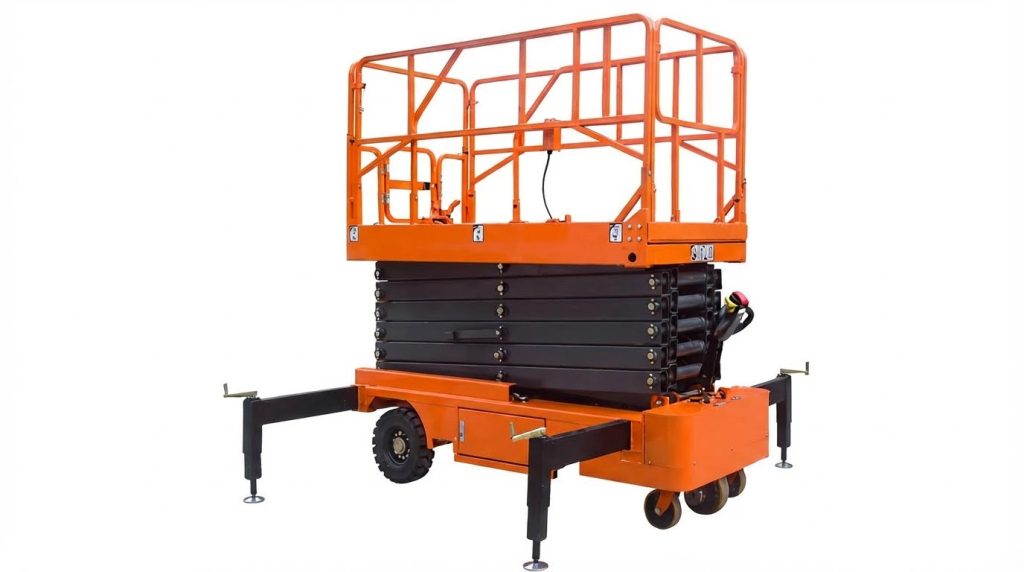
Manual repositioning of a towable aerial work platform required disciplined planning, even over short distances. Engineers and supervisors evaluated force, ground conditions, and stability before answering the question: can you move a towable aerial work platform by hand. Correct techniques reduced musculoskeletal risk, prevented uncontrolled movement, and minimized tip-over probability. This section focused on criteria, ground support, and outrigger strategy for safe on-site manual movement.
Criteria For Manual Movement And Force Limits
Whether you could move a towable aerial work platform by hand depended on weight, configuration, and surface conditions. Most towable units weighed between 1 800 kilograms and 2 500 kilograms, so only short, controlled repositioning on level, firm ground was acceptable. Industry ergonomics guidance typically limited sustained push or pull forces to roughly 200 newtons for a single worker, with brief peak forces below 400 newtons. Supervisors therefore assigned enough trained personnel so the required force per person stayed within these limits, and prohibited manual movement if brakes or steering did not function correctly. Personnel applied force as low and close to the chassis as practical, within about 1.5 meters of the ground, to avoid overturning moments. No one pushed on the platform, boom, or guardrails, because horizontal forces at height significantly reduced stability.
Ground Support, Slopes, And Wheel Chocking
Before deciding if you could move a towable aerial work platform by hand, the team verified that the travel path provided uniform, high bearing capacity. Surfaces had to be compacted soil, concrete, or asphalt, free from loose gravel, mud, ice, or standing water that could reduce friction. The slope stayed within the manufacturer’s maximum, which typically did not exceed 5% for manual movement, and transitions at ramps or thresholds were assessed for grounding risk. Workers removed debris, cords, and offcuts that could block casters or create sudden resistance changes. When stopping on any gradient, even a slight one, they applied the parking brake and installed wheel chocks on the downhill side of at least two wheels. Chocks had to match tire diameter and contact the surface fully; improvised blocks, such as offcut lumber, did not provide reliable restraint. Spotters monitored both the path ahead and the area behind to prevent personnel from entering the roll path.
Outrigger Use, Load Limits, And Center Of Gravity
Personnel only asked whether you can move a towable aerial work platform by hand when the platform and boom were fully lowered, with no one on the platform. The total load, including tools and materials, stayed within the rated capacity shown on the data plate, even though the platform was not elevated. Loads were distributed evenly across the platform floor to keep the center of gravity within the manufacturer’s defined envelope. No materials extended beyond the guardrails or hung from the side, because these offsets shifted the center of gravity laterally and increased tip-over risk during movement. Outriggers remained fully retracted and properly locked before any manual movement; dragging partially deployed outriggers could catch on surface irregularities and create abrupt overturning moments. Once the lift reached its new position, operators set the parking brake, chocked wheels if the surface was not perfectly level, and only then deployed outriggers according to the operator’s manual and applicable stability standards such as ANSI A92-series requirements.
Towing Aerial Work Platforms With Vehicles
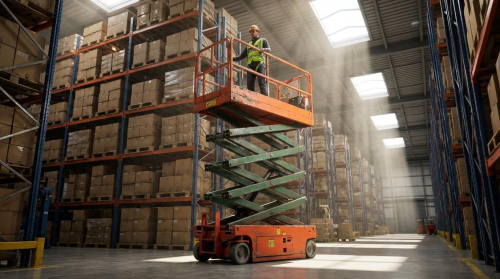
Towing a towable aerial work platform required strict adherence to both vehicle and equipment limitations. Safe movement in transit depended on correct hitch selection, verified tow ratings, disciplined driving, and controlled jobsite positioning. These controls directly reduced risks of tip-over, jackknifing, or loss of control, which historically caused severe incidents. This section explained how to integrate towing best practices with pre-move inspections when planning whether you can move a towable aerial work platform by hand or with a vehicle.
Verifying Tow Ratings, Hitch, And Connections
Before towing, operators had to confirm that the towing vehicle’s rated towing capacity exceeded the combined weight of the towable aerial work platform and any accessories. Most towable aerial work platforms weighed below 2 500 kilograms, so light trucks and sport-utility vehicles could often tow them, but only if the manufacturer’s tow rating allowed it. The ball hitch size needed to match the trailer coupler, typically 50 millimetres or 2 5/16 inches, and the hitch class had to support the imposed tongue weight. Safety chains required crossing under the hitch, with adequate slack for turning but not enough to drag. Breakaway brake cables and electrical connectors, including lighting and electric brakes where fitted, had to be fully engaged and tested before departure.
Pre-Transport Walk-Around And Stowage
A systematic walk-around inspection reduced the likelihood of in-transit failures. Operators verified that the boom or mast was fully stowed, locked with mechanical pins, and secured so that no component could swing or telescope during transport. Outriggers needed to be fully retracted, pinned, and clear of the ground, while the jack or tongue stand had to be raised to provide sufficient road clearance. Technicians checked that tires were correctly inflated and free from visible cuts or bulges, and that wheel fasteners were tight. They confirmed that platform gates latched, hatches and battery covers closed, charging cords stored, and the parking brake released to prevent tire drag during towing. Trailer lighting, including brake, turn, and hazard lamps, had to function correctly to remain compliant with road regulations.
Driving Practices, Speed Limits, And Jackknifing
Transporting a towable aerial work platform required driving techniques different from normal passenger-vehicle operation. Operators maintained longer following distances because the combined mass increased stopping distances and brake temperatures. They limited speed to the lower of the equipment manufacturer’s towing speed, often around 97 kilometres per hour, and any road or site-specific limit, reducing this further on wet, uneven, or gravel surfaces. Smooth steering, braking, and throttle inputs minimized trailer sway and jackknifing risk, especially on descents and in crosswinds. Drivers avoided abrupt lane changes or tight cornering and reduced speed before curves so that lateral forces stayed within the stability envelope of the trailer and lift.
Jobsite Positioning, Setup, And Spotter Use
On arrival at the jobsite, operators selected a parking and setup area that was firm, level within the manufacturer’s stated slope limit, and free from potholes, drop-offs, or soft soil. Before uncoupling, they applied the towing vehicle’s parking brake and often used wheel chocks on the trailer to prevent unintended movement. A spotter assisted with final positioning near obstacles or structures, maintaining clear communication and line of sight to monitor clearances and ground conditions. Only after confirming adequate overhead clearance, safe approach paths, and absence of underground hazards did the crew deploy outriggers and begin leveling. If the question arose whether you can move a towable scissor platform by hand for short repositioning, supervisors compared required manual push or pull forces against site policies and standards, and then chose manual movement or vehicle towing accordingly to maintain stability and control.
Summary Of Safe Movement And Compliance Considerations
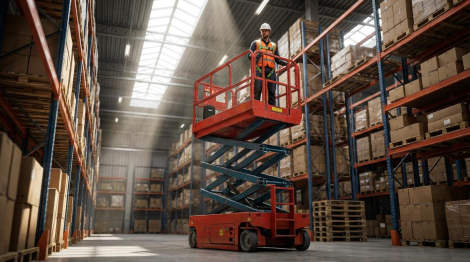
Safe movement of towable aerial work platforms in transit depended on disciplined inspection, correct choice of propulsion method, and strict adherence to stability limits. From a compliance perspective, the operator’s manual, applicable ANSI/SAIA A92 standards, and local occupational safety regulations defined the baseline requirements. These documents answered practical questions such as “can you move a towable aerial work platform by hand” by specifying when manual movement was permissible, how much force operators could apply, and what surface conditions were acceptable. A structured approach that combined pre-move inspection, ground assessment, and controlled motion by hand or vehicle minimized tip-over, collision, and fall risks.
Technically, safe movement started with verified equipment integrity: sound structural members, correctly inflated tires, intact fasteners, leak-free hydraulic and fuel circuits, and functional guards, brakes, and emergency controls. Stability controls such as outriggers, tilt alarms, and load-limit devices had to operate correctly before any repositioning. Ground conditions required equal attention; firm, level support within the manufacturer’s slope limits, usually below about 5%, was essential whether the platform moved manually or under tow. Operators needed to keep the platform’s center of gravity within the base footprint by respecting rated load, avoiding overhanging materials, and preventing horizontal pushing or pulling on external structures.
In practice, moving a towable scissor platform by hand remained acceptable only over short distances, on suitable surfaces, and with forces kept within ergonomic and manufacturer limits. When towing with a vehicle, operators had to match trailer weight to verified tow ratings, use the correct hitch size, cross safety chains, confirm lighting and brakes, and drive at conservative speeds below the stated maximum, often 97 km/h or less. Industry trends pointed toward more integrated sensors, interlocks, and telematics to monitor slope, loading, and motion in real time, but these technologies complemented rather than replaced operator training and procedural controls. A balanced strategy combined engineered safeguards, methodical pre-move checks, conservative driving and manual-handling practices, and continuous reference to the operator’s manual to maintain compliance and reduce incident rates across diverse jobsites.