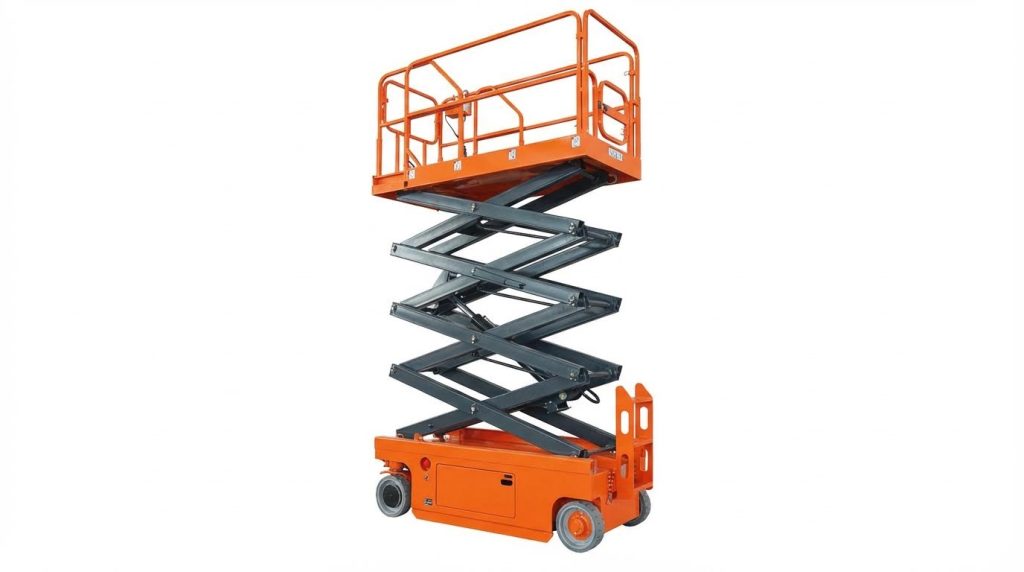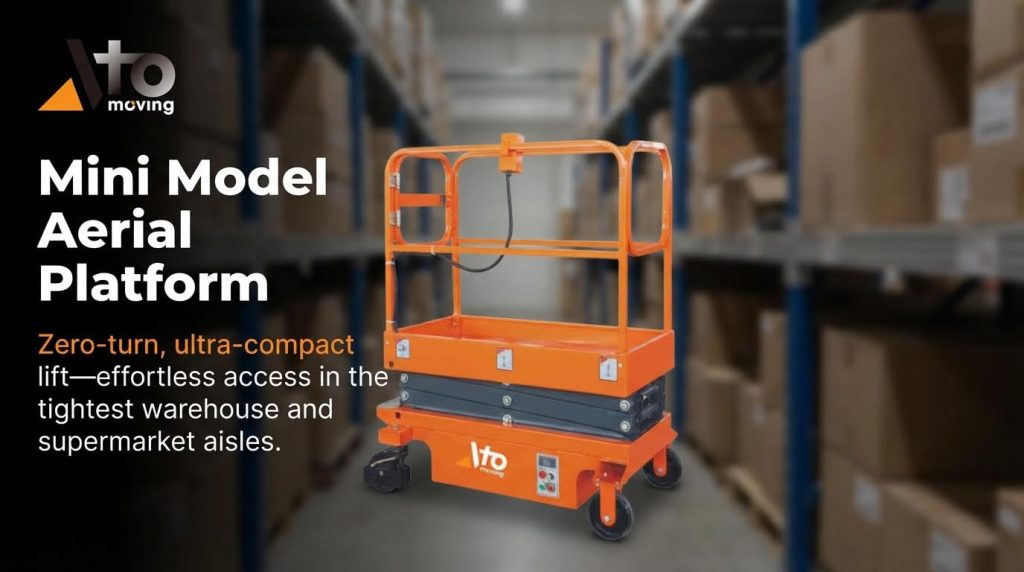
Aerial work platform training answers a core safety question that appears in many searches: what is aerial work platform training and how does it keep people safe at height. This article explains the regulatory framework, required topics, and competency checks for mobile elevating work platforms in construction, maintenance, and industrial sites.
You will see how OSHA and ANSI/SAIA rules define when training is mandatory, what content it must include, and which roles need different depth of instruction. The middle sections break down operator theory, hands-on practice, hazard control, and recordkeeping so safety managers and engineers can align programs with real site conditions. The final section links these technical elements into a single training strategy that supports compliance, reduces incidents, and improves MEWP uptime.
Regulatory Framework For Aerial Work Platform Training
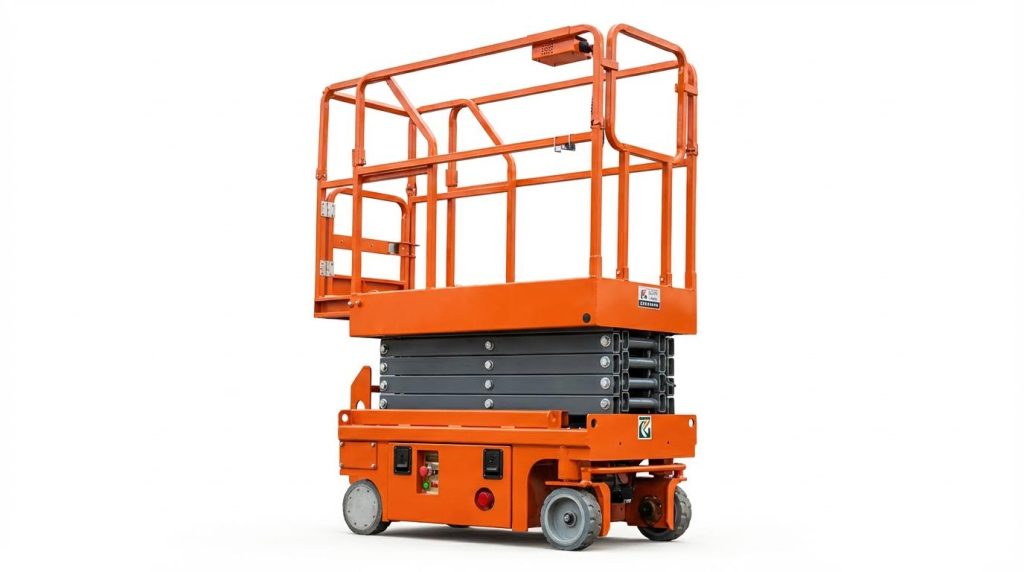
When safety teams ask what is aerial work platform training, they must start with the regulatory framework. Training content, frequency, and documentation all trace back to OSHA rules and ANSI/SAIA MEWP standards. This section explains how these requirements shape day‑to‑day training programs, record systems, and role definitions for operators and support staff.
OSHA And ANSI/SAIA Standards For MEWPs
OSHA standards in 29 CFR 1910 and 1926 set the legal minimum for aerial lift and MEWP training. Key sections included 1926.453 for aerial lifts and 1926.454 for training on scaffolds and similar platforms. These rules required employers to train anyone who operated or worked near aerial lifts, including scissor and boom lifts. They focused on electrical hazards, falls, tip‑overs, and safe operating procedures.
ANSI/SAIA A92.22 and A92.24 standards became mandatory in 2020 and added more detailed guidance. ANSI defined MEWP classifications, risk assessments, and safe use plans that training must reflect. While OSHA standards were law, ANSI/SAIA standards acted as industry consensus and often set the benchmark in civil cases. Effective programs treated OSHA as the floor and ANSI/SAIA as the design guide for modern MEWP training systems.
| Aspect | OSHA | ANSI/SAIA A92.22 / A92.24 |
|---|---|---|
| Legal status | Mandatory federal regulation | Consensus standard, widely adopted |
| Scope | Who must be trained and when | How to design and deliver training |
| Hazard focus | Falls, electrocution, tip‑overs | Full risk assessment and control hierarchy |
| MEWP detail | Generic aerial lifts | Specific MEWP types and categories |
Employer Legal Duties And Documentation
OSHA placed the legal duty for MEWP training on employers, not rental firms or course vendors. Employers had to ensure training met OSHA content requirements and matched the actual equipment and site hazards. They also had to verify that each worker could operate the platform safely.
Documentation played a central role. Employers needed written records that showed:
- Worker identity and job role
- Date and type of training or evaluation
- Equipment models or MEWP categories covered
- Name and qualifications of the trainer or evaluator
These records supported incident investigations, audits, and contract prequalification. Digital systems helped track expiry dates, refresher needs, and site‑specific familiarization logs. However, OSHA did not approve or endorse any specific course or provider.
When Initial And Refresher Training Are Required
Initial MEWP training was required before a worker first operated an aerial platform. This training had to combine formal instruction, practical demonstration, and hands‑on evaluation. Workers also needed familiarization on each new MEWP type or model they used, especially when control layouts or stability behavior differed.
Refresher or retraining triggers included:
- Accident or near miss involving a MEWP
- Observed unsafe operation or skill gaps
- Changes in worksite conditions that introduced new risks
- Introduction of new equipment types or technologies
Industry practice often used a three‑year certification cycle, consistent with many commercial courses. This interval aligned with ANSI guidance and helped keep skills current with evolving standards and equipment features. Employers could shorten this interval where risk levels were higher, such as heavy construction or complex industrial sites.
Who Must Be Trained: Operators, Spotters, And Technicians
Regulations did not limit training to platform operators. OSHA required training for any employee who operated or worked near scissor platform lift. This included signalers, spotters, and workers who shared the work area with MEWPs. Each role needed content that matched its exposure and responsibilities.
Typical role coverage included:
- Operators: Full MEWP theory, controls, stability, inspections, and emergency procedures.
- Spotters / ground workers: Exclusion zones, communication methods, overhead hazard awareness, and rescue support.
- Technicians and mechanics: Lockout procedures, maintenance hazards, test operations, and verification of safety devices.
Supervisors also needed enough knowledge to verify safe planning and correct unsafe behavior. Clear role‑based training matrices helped safety managers answer what is aerial work platform training for each job function and demonstrate compliance during audits.
Core Topics Covered In MEWP Operator Training
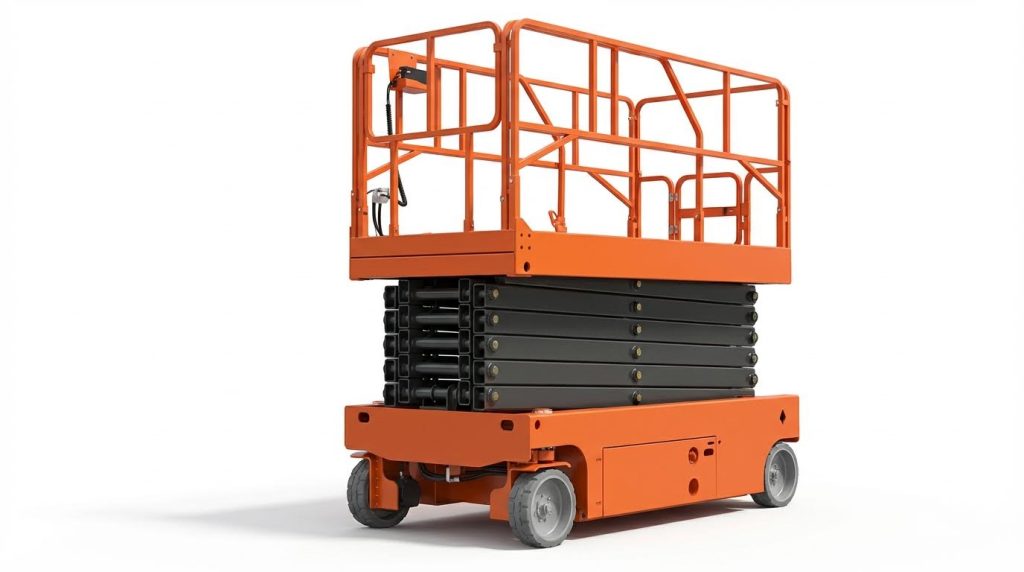
Core topics in mobile elevating work platform training answer a key question: what is aerial work platform training in practice. The content links equipment design, site hazards, inspections, and emergency actions into one structured skill set. Effective programs follow OSHA 29 CFR 1926 and 1910, plus ANSI/SAIA A92.22 and A92.24 requirements. The aim is consistent operator behavior that keeps people, loads, and structures safe at height.
Equipment Types, Components, And Stability Principles
Training starts with the main MEWP families. These include scissor lifts, boom lifts, truck-mounted platforms, vertical mast lifts, and trailer-mounted units. Operators learn key components such as platform controls, ground controls, emergency stop circuits, guardrails, gates, tilt sensors, and load-sensing systems.
Instructors explain how stability depends on the combined center of gravity of the machine, platform load, and any attachments. Content covers:
- Effect of platform height and outreach on overturning moment
- Use of outriggers, axle locks, and wheel chocks where required
- Manufacturer load limits in kilograms and maximum occupants
- Impact of slopes, potholes, and soft ground on stability
Operators also review transport modes, drive speed limits, and boom slew ranges so they can predict how the MEWP reacts before moving.
Hazard Recognition: Falls, Tip-Overs, And Electrocution
Modern courses treat hazard recognition as a separate, testable block. Falls from height remain the primary risk, usually linked to missing guardrails, open gates, or misuse of personal fall protection. Training explains correct harness selection, lanyard anchorage, and platform positioning to avoid climbing or overreaching.
Tip-over risk receives equal focus. Instructors use real incident examples to show how overloading, driving elevated, side slopes, high wind, and striking fixed objects create instability. Electrocution content covers minimum approach distances to overhead lines, line voltage categories, and the limits of fiberglass or insulated booms.
Courses also address crushing and trapping between the platform and overhead steel, doors, or pipework. Operators learn to plan travel paths, maintain clearances, and use spotters in congested areas.
Pre-Use Inspection, Function Tests, And Shutdown
Daily pre-use checks are a mandatory part of what is aerial work platform training under OSHA and ANSI rules. Training breaks the process into three stages: walk-around inspection, function tests, and documentation. Typical checklists include fluid leaks, tire or track condition, guardrails, gates, decals, emergency lowering systems, and visible structural damage.
Function tests verify that all motions stop on command and that emergency stops, tilt alarms, and load-sensing devices work as designed. Operators also test descent controls and any emergency lowering valves from the ground station.
Shutdown procedures cover safe parking on level ground, stowing booms and platforms, applying brakes, and removing keys or access cards. Courses stress lockout and tagout interfaces for maintenance staff, plus how to report defects so the MEWP is removed from service until repaired.
Safe Operation, Rescue Planning, And Emergency Response
This training block links theory to real work tasks. Instructors coach operators on speed control, smooth joystick use, and precise positioning near work faces. Content also covers travel rules, such as not driving on slopes beyond manufacturer limits and not moving with the platform elevated unless allowed by the manual.
Rescue planning is a core requirement in ANSI/SAIA A92.22 and A92.24. Operators and supervisors learn how to develop site-specific rescue plans that define who will lower a stuck platform, which ground controls or auxiliary systems they will use, and how long rescue should take. Training also reviews communication methods between platform and ground.
Emergency response topics include power failure, medical incidents at height, contact with power lines, and entrapment. Trainees practice using emergency lowering systems and learn when to call external emergency services versus internal rescue teams. This section closes the loop between daily operation and the higher-level question: what is aerial work platform training meant to achieve in terms of real-world safety outcomes.
Training Delivery, Competency Evaluation, And Records
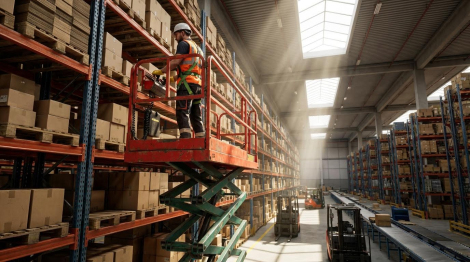
When safety teams ask what is aerial work platform training, they usually need details on delivery, evaluation, and records. This section explains how classroom, online, and blended formats work, how hands-on checks prove competence, and how records support OSHA and ANSI/SAIA compliance. It links training structure to real site risks such as falls, tip-overs, and electrocution. The goal is a system that is practical to run and defensible during audits or after incidents.
Classroom, Online, And Blended Training Formats
Formal instruction is mandatory before any hands-on operation. Providers used classroom, online, and blended formats to meet this requirement. Each format must still cover OSHA 29 CFR 1926/1910 topics and ANSI/SAIA A92.22 and A92.24 content.
Classroom delivery works well when crews share the same site and schedule. It allows direct discussion of local hazards, past incidents, and company rules. Typical agendas include regulatory basics, equipment types, stability, hazard recognition, and emergency procedures. Instructors can adjust depth for construction, maintenance, or warehouse work.
Online delivery supports flexible timing and remote workers. Courses often run 1–2 hours with short modules, quizzes, and a final exam. Many platforms allow 24/7 access within a set window, for example 90 days. This format suits refresher training or large multi-site fleets.
Blended training combines online theory with short in-person sessions. Operators complete modules and exams first. A qualified person then reviews key points on site and links theory to actual machines and layouts. This reduces classroom time while keeping strong knowledge checks.
Hands-On Evaluation And Site-Specific Familiarization
OSHA and ANSI expected more than theory tests. Operators must show practical skill on each MEWP type they use. That is where hands-on evaluation and familiarization fit into what is scissor platform training.
Hands-on evaluation normally covers:
- Pre-use inspection and function tests
- Safe driving, positioning, and elevation
- Use of fall protection and controls at height
- Emergency lowering and communication
A qualified evaluator observes the operator perform tasks on the actual or similar equipment. The evaluator checks control use, awareness of surroundings, and responses to simulated faults. Typical evaluations take less than one hour per person if planning is tight.
Site-specific familiarization focuses on the exact model and workplace. It reviews control layouts, safety devices, load charts, and any auxiliary systems. It also covers local hazards such as power lines, slopes, soft ground, traffic routes, and overhead steel. Short familiarization sessions, often about one hour, are needed whenever operators use a new MEWP model or work in a new environment.
Certification Validity, Recertification, And Recordkeeping
Certification for MEWP operators usually stayed valid for about three years. This matched common industry practice and many provider policies. However, employers had to retrain sooner after incidents, near misses, observed misuse, or major changes in equipment or site conditions.
Typical certification steps included:
- Formal instruction that met OSHA and ANSI topics
- Written or online exam with a defined pass score, often 70–80%
- Documented hands-on evaluation by a qualified person
Training providers issued completion certificates or wallet cards. These documents showed operator name, equipment class, training date, and provider details. Employers then accepted or supplemented these records with their own site-specific approvals.
OSHA did not approve courses, but it required employers to document that training met 29 CFR 1926.454 and related sections. Robust record systems stored certificates, evaluation checklists, and familiarization logs. Digital storage simplified retrieval after an incident or regulator visit. Clear records also helped plan recertification cycles and track which workers were qualified on which MEWP categories.
Summary: Aligning MEWP Training With Safety And Compliance
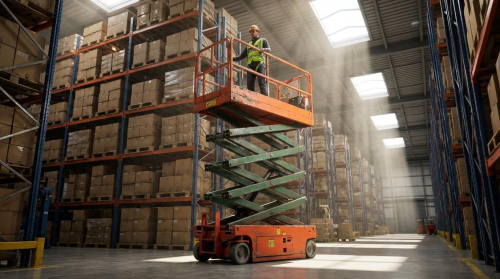
Understanding what is aerial work platform training helps safety teams link daily practice with legal duties. MEWP training aligned with OSHA 29 CFR 1926/1910 and ANSI/SAIA A92.22 and A92.24 created a clear structure for theory, hands-on practice, and evaluation. Programs covered equipment types, stability, inspections, hazard controls, and emergency response for operators, spotters, and technicians. When done well, this training reduced falls, tip-overs, electrocutions, and crushing incidents across construction, maintenance, and industrial sites.
From an industry view, MEWP training became a core control in risk management and contractor prequalification. Digital and blended formats improved access, while site-specific familiarization kept training relevant to real layouts and loads. Future programs will likely add more data-driven content, such as near-miss trends and telematics feedback, and closer integration with broader work-at-height and electrical safety systems.
For implementation, employers should map tasks and equipment, select compliant courses, and then add local rules, rescue plans, and supervision. Clear triggers for refresher training, robust recordkeeping, and periodic field audits keep certification meaningful, not just a card. Technology can streamline delivery and tracking, but competent instructors, realistic practical tests, and a strong safety culture will continue to define effective aerial work platform training.