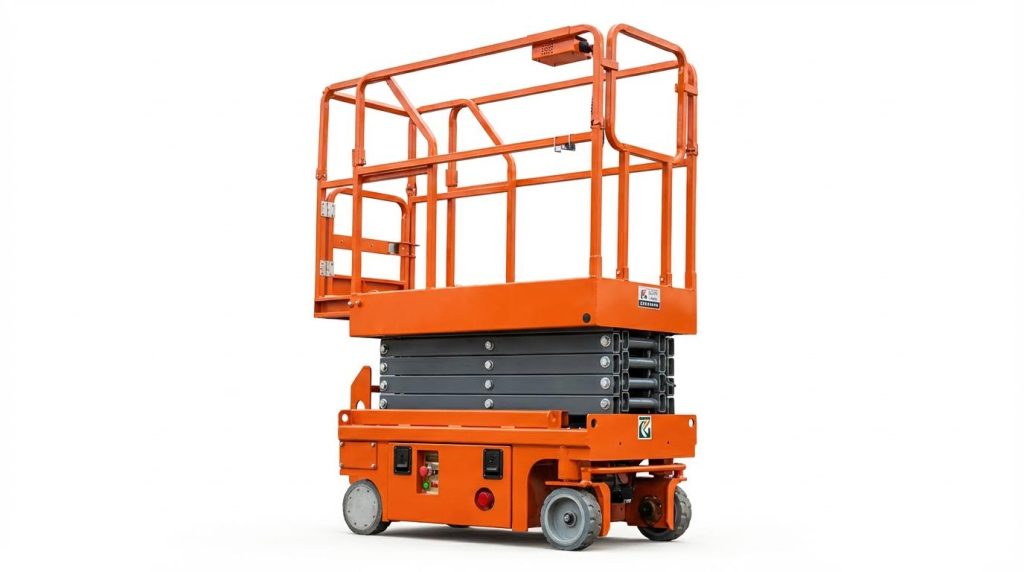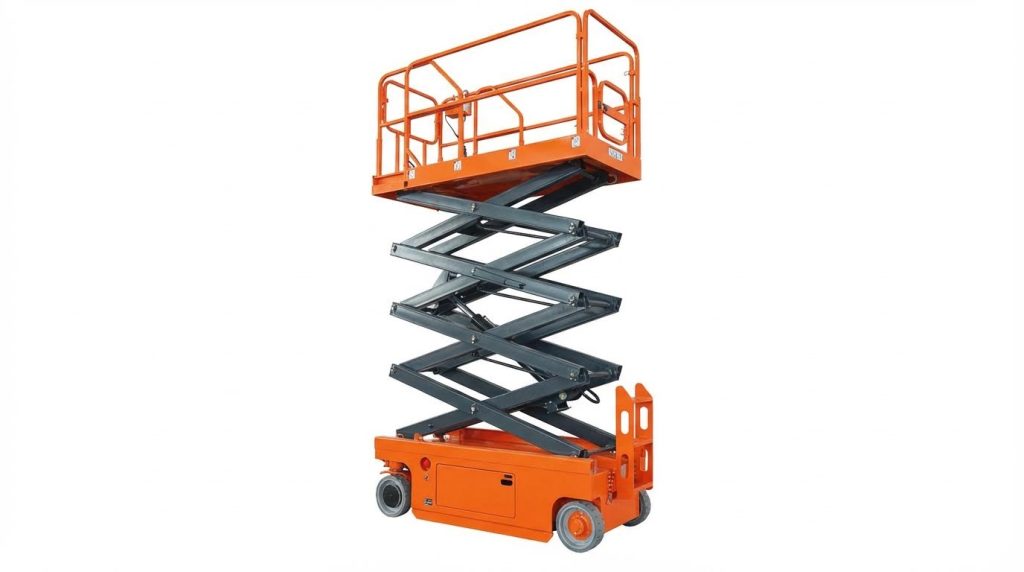
Scissor lift owners who ask “does electric scissor lifts require fire extinguishers” need answers that combine codes with engineering reality. This article explains when on‑board extinguishers are triggered, how indoor and outdoor use changes the answer, and which high‑risk jobs demand extra protection.
You will see how OSHA, MSHA, NFPA 10, and military UFC rules shape extinguisher selection, mounting, inspection, and spacing around mobile elevating work platforms. The engineering section links extinguisher class, rating, and bracket design with operator ergonomics, digital twins, and predictive maintenance. The final summary converts these rules into a practical compliance checklist that safety, maintenance, and project teams can apply on any site using electric or engine‑powered scissor lifts.
When Scissor Lifts Need On‑Board Extinguishers
Safety teams often ask does electric scissor lifts require fire extinguishers or can they rely on building systems. The answer depends on regulations, fire load, and escape risk, not only on the power source. This section explains when on‑board units move from best practice to clear requirement, indoors and outdoors. It links mobile equipment rules, travel‑distance limits, and site fire protection so engineers can document a defensible standard.
Regulatory Triggers For On‑Board Extinguishers
Rules for self‑propelled equipment focused on one core question. Could a fire or its effects block the operator’s escape. If yes, a fire extinguisher on the machine became mandatory. If no, a unit on board or within a defined distance, often 15–30 metres, was allowed.
Electric scissor lifts still carried ignition sources. Examples included battery chargers, contactors, hydraulic hoses, and wiring looms. When these operated in areas where a fire could trap the platform at height, on‑board extinguishers gave faster response than floor units. Common engineering triggers included:
- Work above a single exit or tight mezzanine.
- Operation inside congested industrial lines.
- Use in tunnels, shafts, or confined bays.
Where employers adopted “total evacuation” fire policies under OSHA, they could reduce extinguisher deployment for general staff. However, once operators stayed with equipment during emergencies or used extinguishers by procedure, portable units had to meet OSHA placement, inspection, and maintenance rules.
Differences Between Indoor And Outdoor Use
Indoors, the key design factor was travel distance to an extinguisher. OSHA and related guidance limited this to about 15 metres for Class B hazards and 23 metres for typical Class A hazards. If fixed wall units or hose stations could not meet these distances at all lift positions, an on‑board extinguisher closed the gap.
Indoor electric scissor lifts often worked near combustible packaging, stored goods, or process equipment. Smoke spread and sprinkler activation times also mattered. Engineers reviewed worst‑case lift positions, then checked whether floor‑mounted extinguishers stayed reachable without climbing down through smoke or heat.
Outdoors, natural ventilation reduced smoke buildup but introduced access problems. Lifts operated on yards, piers, or construction pads where the nearest fixed extinguisher might sit more than 50 feet away. In those cases, on‑board units became the primary means to attack small engine, battery, or hydraulic fires in the incipient stage.
Weather and contamination also influenced decisions. Outdoor floor‑mounted extinguishers suffered corrosion and damage. Mounting one on the lift, under a cover and bracket, often delivered more reliable readiness than scattered stand posts.
High‑Risk Tasks And Environments To Flag
The question does electric scissor lifts require fire extinguishers mattered most in high‑risk tasks. Risk rose whenever the lift introduced ignition near elevated fuel or added fuel near existing ignition. Typical red‑flag scenarios included:
| Scenario | Risk driver |
|---|---|
| Hot work from platform | Sparks and slag falling onto lift or floor |
| Work in paint or coating booths | Flammable vapour and overspray |
| Battery charging on or near lift | Hydrogen gas and electrical faults |
| Warehouses with high plastic load | Fast fire growth and smoke production |
In these environments, engineers treated on‑board extinguishers as engineered safeguards, not only compliance items. They selected Class C‑rated units for electrical systems and ensured adequate Class A or B capacity for surrounding materials. Activity Hazard Analyses documented why a lift carried an extinguisher, how operators used it, and when they must evacuate instead of fighting the fire.
Sites with combustible dust, combustible metals, or special chemicals needed extra care. Standard multi‑purpose dry chemical units might not suit every hazard. In such cases, the lift’s extinguisher plan had to align with the overall hazardous materials strategy for that area.
Coordination With Site Fire Protection Layout
On‑board extinguishers worked best when they fit into the site fire protection layout, not around it. Engineers started with a fire protection drawing that showed sprinklers, standpipes, hose reels, and wall‑mounted extinguishers with their coverage radii. They then plotted typical and maximum reach of each scissor lift route and work zone.
If any lift work position fell outside required travel distances, they considered three options:
- Relocate or add fixed extinguishers.
- Restrict lift travel to covered zones.
- Install on‑board extinguishers on the lift.
For mobile fleets, option three often proved more practical. Coordination also covered mounting height and visibility. Extinguishers needed to stay accessible from ground level and not interfere with guardrails, controls, or entry gates.
Digital floor plans or plant digital twins helped visualize coverage. Teams could simulate lift movements and check where extinguishers, hose lines, or suppression systems offered the fastest safe access. This approach turned the simple question does electric scissor lifts require fire extinguishers into a documented engineering decision backed by layout data and code references.
Applicable Standards: OSHA, MSHA, NFPA, UFC
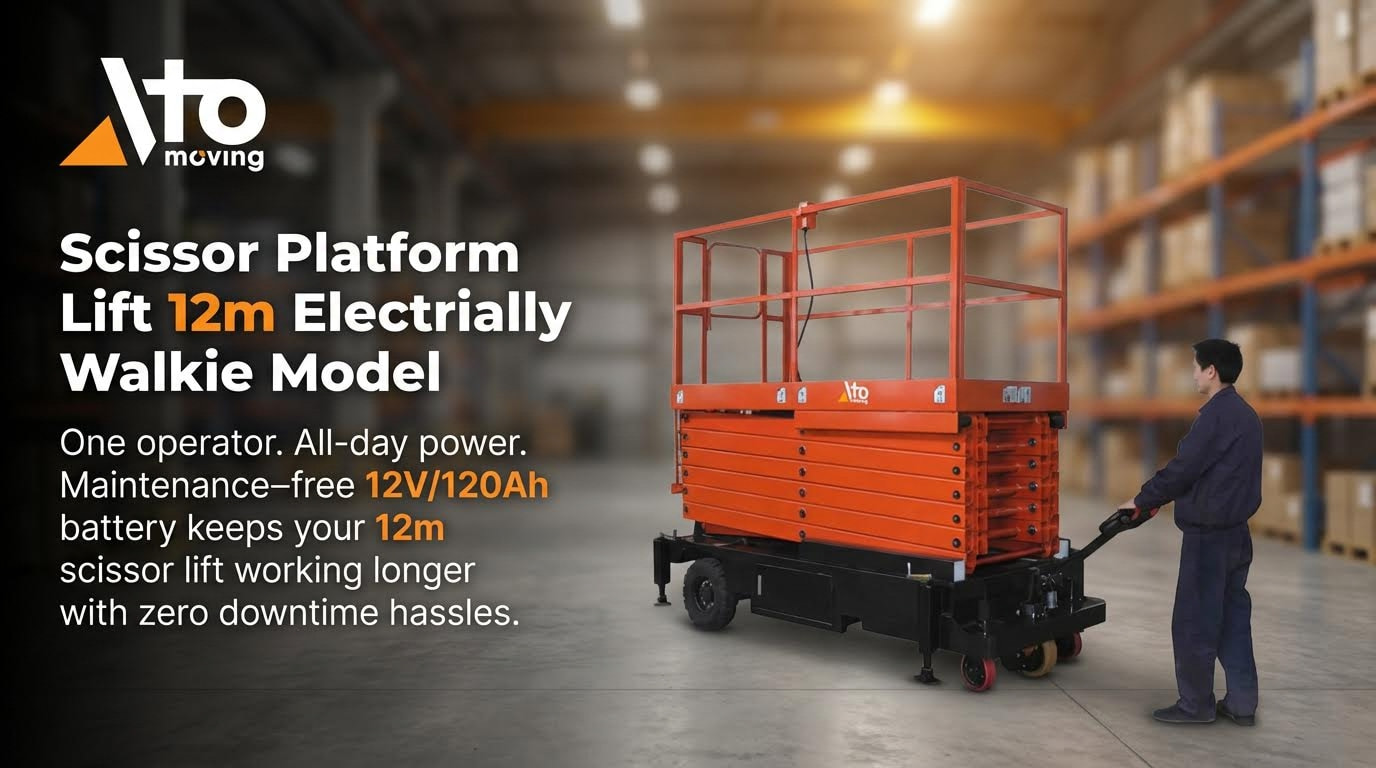
Standards that answer whether electric scissor lifts require fire extinguishers do not sit in one code. OSHA, MSHA, NFPA, and UFC each covered part of the picture. Safety teams had to read them together and then match them to the specific lift type and jobsite risks.
OSHA Rules For Portable Extinguishers On Equipment
OSHA did not name scissor lifts directly. It regulated portable fire extinguishers provided for employee use. The key trigger was employer intent. If workers might use extinguishers on or near lifts, OSHA 1910.157 applied.
OSHA required employers to:
- Provide approved extinguishers suited to the expected fire types.
- Mount and locate units so workers reached them quickly and safely.
- Keep them fully charged, operable, and in designated positions.
Electric scissor lifts used inside buildings often fell under these rules. Extinguishers could be on the platform, on the chassis, or within the travel distance limits around the work area. Where employers adopted full evacuation policies with compliant emergency action and fire prevention plans, OSHA allowed reduced deployment. Even then, many sites still mounted extinguishers on lifts as a risk control.
MSHA Requirements For Self‑Propelled Units
MSHA rules were more explicit and often answered the question directly for mine work. Self‑propelled equipment, including scissor lifts, needed an extinguisher on board when a fire or its effects could block escape. If a fire would not trap the operator but could endanger others, an extinguisher had to be on the unit or within 30 metres.
MSHA allowed a manual fire suppression system instead of a handheld unit. The system or extinguisher had to control early‑stage fires for the hazard classes present. For electric scissor lifts, this usually meant Class C capability plus Class A or B coverage, depending on nearby combustibles or fuels. Maintenance teams had to keep these systems ready for use and document checks as part of mine safety programs.
NFPA 10 Selection, Sizing, And Spacing Basics
NFPA 10 did not mandate extinguishers on scissor lifts. It defined how to select and place portable extinguishers wherever they were required by law, standard, or policy. Facility engineers therefore used NFPA 10 to size and position units that served lift operations.
Key NFPA 10 spacing rules included:
- Maximum 23 metres travel for typical Class B coverage (50 feet in related OSHA rules).
- Maximum 23 metres or 23–25 metres for many Class A layouts, depending on rating.
- Up to 23 metres for Class D in metal work areas.
For indoor electric scissor lift work, safety teams often treated the platform as a remote work area. Mounting a small ABC or BC extinguisher on the lift could simplify compliance with travel distance limits. NFPA 10 also set inspection, maintenance, and hydrostatic test cycles that had to match site procedures.
UFC And Military Project Specifications
Unified Facilities Criteria applied to Department of Defense and related projects. UFC 3‑601‑02 and linked guidance covered inspection and maintenance for extinguishers, standpipes, and fixed suppression. Project‑specific specs often went further than civilian codes.
Typical UFC‑driven requirements for mobile equipment included:
- At least one portable extinguisher on each vehicle, often 9 kg dry chemical or similar.
- Maximum 15 metres travel distance to a portable extinguisher in work zones.
- Mandatory Class C rating where electrical equipment was present.
On military or government jobs, electric scissor lifts usually carried onboard extinguishers to meet these stricter rules and to support Activity Hazard Analyses. UFC also tied extinguisher checks into broader fire watch and inspection programs, which pushed contractors to standardize brackets, mounting heights, and documentation across their lift fleets.
Engineering And Operational Best Practices
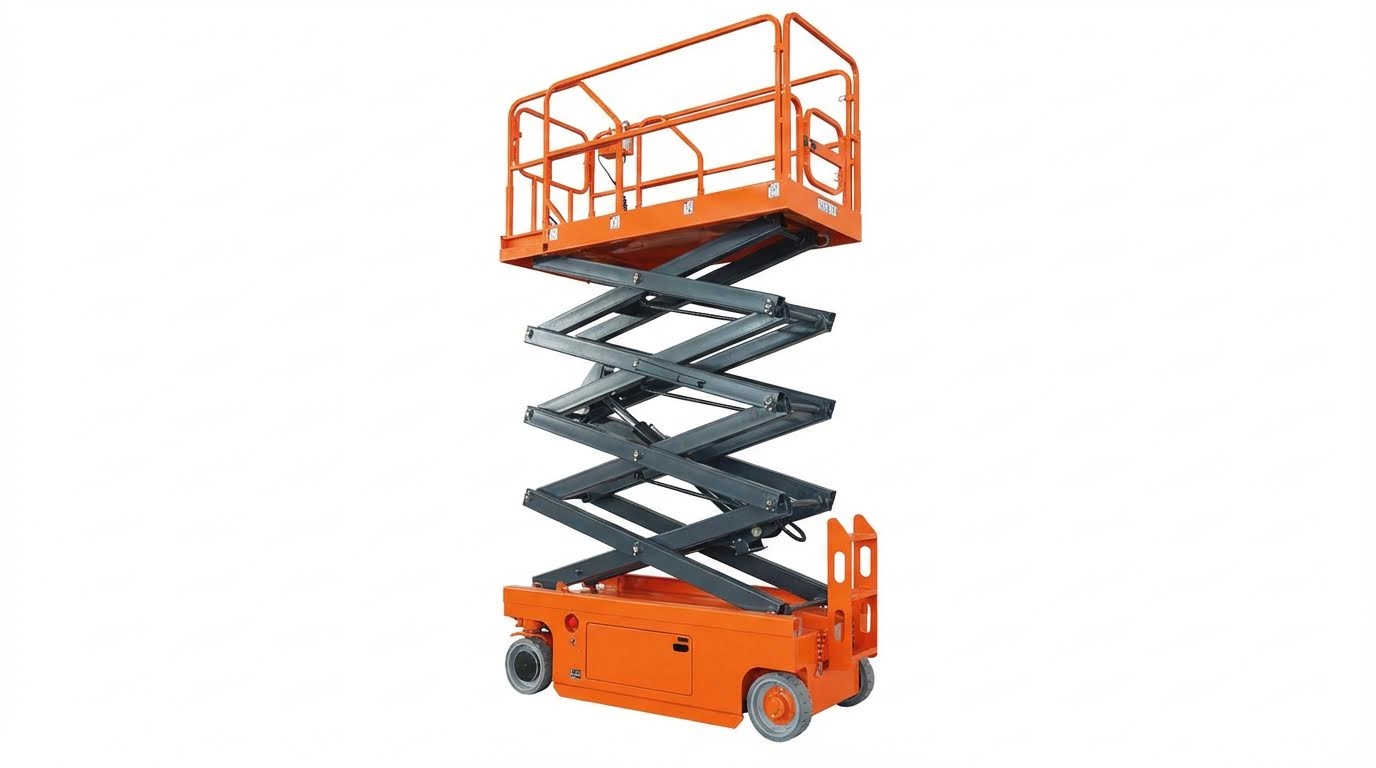
Engineering teams that ask “does electric scissor lifts require fire extinguishers” need more than a yes or no. They need a consistent method to choose, mount, and maintain extinguishers so the lift stays compliant and usable. This section focuses on practical engineering detail that safety managers, fleet owners, and project engineers can apply across mixed fleets of electric and engine powered scissor lifts.
Choosing The Right Extinguisher Class And Rating
Electric scissor lifts usually present Class A, B, and C fire hazards. Typical sources are hydraulic oil, batteries, wiring, and combustible construction materials around the platform. A multi‑purpose dry chemical extinguisher with an ABC rating usually covers these risks.
Selection should follow NFPA 10 and OSHA principles, even when a standard does not name scissor lifts directly. Key points include:
- Class A and B rating high enough for the worst credible spill or fuel load near the lift.
- Class C suitability for energized electrical parts on electric units.
- Corrosion‑resistant construction for outdoor or washdown use.
- Temperature range compatible with expected ambient conditions.
For indoor work where powder contamination is a concern, engineers sometimes add a clean agent unit nearby at ground level. For MSHA or heavy industrial sites, risk assessments may justify larger capacity units or on‑board suppression systems instead of only handheld extinguishers.
Mounting, Access, And Operator Ergonomics
OSHA required extinguishers to be “mounted, located, and identified for ready access.” On scissor lifts this means operators can reach the extinguisher fast without unsafe body positions. Common practice is a rigid bracket on the guardrail or chassis at about waist to chest height for the standing operator.
Designers should consider:
- Mounting that does not reduce clear width of the platform or snag lanyards.
- Release hardware operable with gloved hands.
- Secure restraint to prevent vibration damage and accidental discharge.
- Labels visible from the ground so supervisors can verify presence during pre‑use checks.
For rough‑terrain units, brackets must withstand high vibration. Use positive locking pins or straps and periodic checks for metal fatigue or cracked welds.
Inspection, Testing, And Maintenance Programs
Whether codes directly state that electric scissor lifts require fire extinguishers or not, once an extinguisher is installed it must follow OSHA and NFPA 10 maintenance rules. Programs should align with site procedures for all portable extinguishers to avoid gaps.
A robust program normally includes:
- Operator pre‑use checks to confirm presence, gauge in green, and no damage.
- Documented monthly visual inspections, often tied to fleet inspection apps.
- Annual maintenance by qualified personnel with tags or electronic records.
- Hydrostatic testing at the interval for the extinguisher type, with spare units available when one is removed.
Fleet managers should track extinguisher IDs to specific lift serial numbers. This helps prove compliance during audits and speeds replacement after discharge or failure.
Integrating With Digital Twins And Predictive Tools
Modern fleets increasingly use telematics and digital twins for scissor lifts. Fire extinguisher compliance can plug into the same data model. Each lift’s digital record can hold extinguisher class, rating, mount location, inspection dates, and hydrostatic test due dates.
Useful integrations include:
- Automatic work orders when inspection or test dates approach.
- Checklist prompts in pre‑start apps that require operators to confirm extinguisher status.
- Risk heatmaps that link high‑hazard tasks to lifts that must carry on‑board extinguishers.
Predictive tools can flag patterns, such as repeated damage to extinguishers on certain models or routes. Engineers can then redesign brackets or travel paths. This keeps the answer to “does electric scissor lifts require fire extinguishers” aligned with real risk, not only minimum code text.
Practical Summary And Compliance Checklist
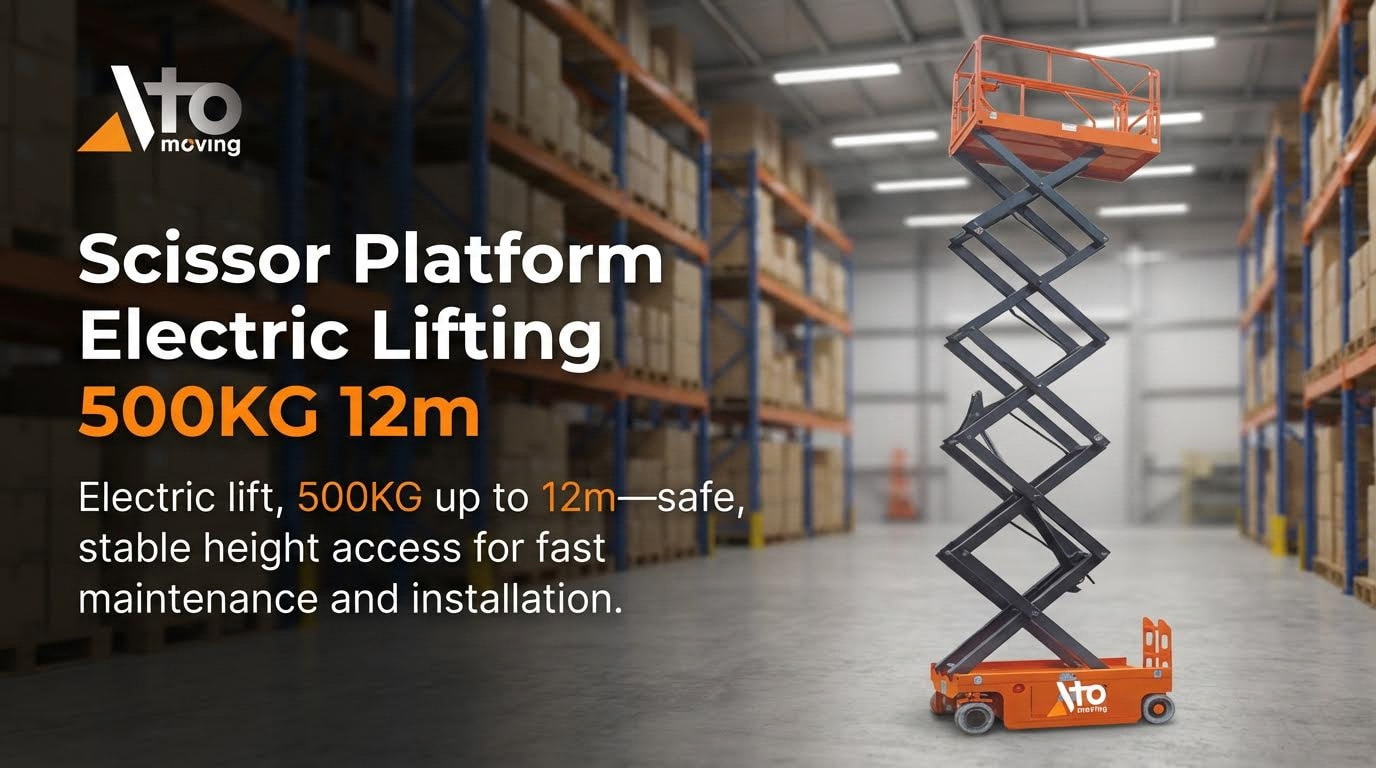
Electric scissor lift owners often ask does electric scissor lifts require fire extinguishers in every case. The answer depends on where the lift operates, how it is powered, and what hazards surround it. Safety teams should link extinguisher decisions to escape routes, travel distances, and the job hazard analysis. The checklist below helps standardize those decisions across projects and sites.
From a compliance view, MSHA rules required self‑propelled units to carry extinguishers when a fire could block escape. If escape was not blocked, an extinguisher could sit on the lift or within roughly 30 metres. OSHA and NFPA 10 instead focused on travel distance and access. For most Class A and B hazards, operators needed an extinguisher within 15–23 metres of the work position.
Use this compact checklist when deciding if an electric scissor lift needs an on‑board extinguisher:
- Is the lift self‑propelled in a mine or quarry? If yes, treat an on‑board extinguisher as mandatory.
- Could a fire under or inside the lift trap the operator at height? If yes, mount an extinguisher on the machine.
- Is the lift working more than 15 metres from the nearest wall‑mounted extinguisher? If yes, add an on‑board unit.
- Are there hot work, flammable liquids, or battery rooms nearby? Upgrade rating and keep protection on the lift.
- Can the site emergency plan prove equal or better coverage without an on‑board unit? If no, install one.
Future practice will likely combine this rule‑based approach with digital twins and fleet telemetry. Systems will track extinguisher presence, last inspection, and proximity to the task in real time. Until then, conservative placement, correct class selection, and disciplined monthly checks remain the most reliable control for electric scissor lift fire risk.