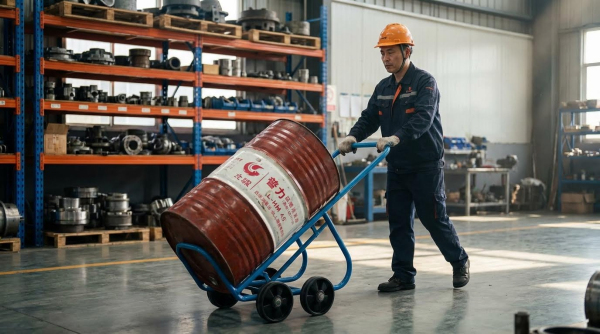
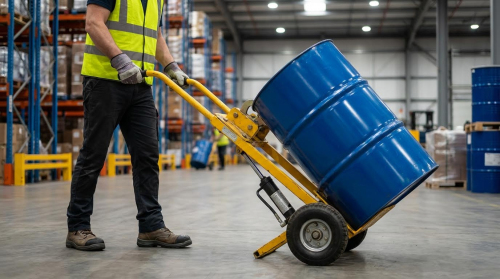
Facilities that ask how many fully loaded pallets a forklift can lift must look beyond the nameplate rating. The real answer depends on load center, lift height, attachments, and how far the combined center of gravity moves toward the stability triangle edge.
This article explains how forklift capacity, load centers, and load moment limits control safe pallet counts per trip. It then reviews when multi-pallet attachments allow two or four pallets, how to calculate safe capacity, and what layout and driving rules keep the truck stable. The final section gives practical conclusions so engineers, safety teams, and supervisors can agree on defensible limits for multi-pallet forklift use.
Forklift Capacity, Load Center, And Stability Limits
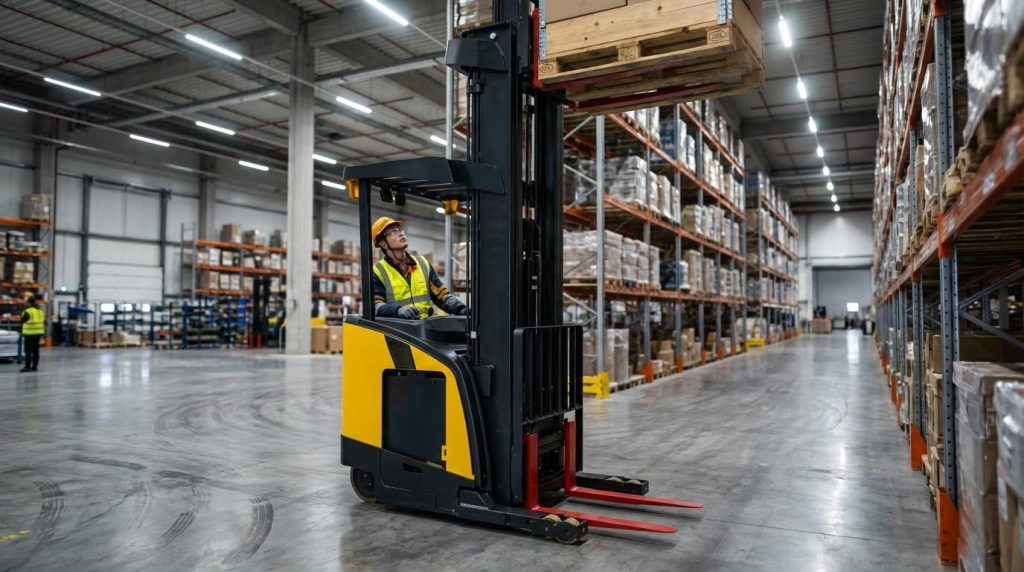
Warehouse teams that ask how many fully loaded pallets forklift lift safely must first understand capacity and stability. The answer depends on the rated capacity, load center, and how far the combined center of gravity moves from the mast. This section explains how the data plate, load moment, and derating rules define the real limit long before operators try to move two pallets. It builds the engineering base for later sections on multi-pallet attachments, operating rules, and practical conclusions.
Rated Capacity, Load Center, And Data Plate Basics
The data plate states the truck’s rated capacity, rated load center, and maximum lift height. Most counterbalance forklifts use a 600 millimetre load center, which matches a standard 1 200 millimetre pallet. The rated capacity only applies when the load’s center of gravity stays at or inside that load center and within the listed height range.
Actual safe capacity falls when the load center increases. A simple rule of thumb uses this relation: effective capacity = rated capacity × (rated load center ÷ actual load center). For example, if a truck is rated 3 000 kilograms at 600 millimetres, but the actual load center is 750 millimetres, the effective capacity drops to 2 400 kilograms. When operators ask how many fully loaded pallets forklift lift, the data plate is the first limit, and any multi-pallet plan must respect these values.
Load Moment, Stability Triangle, And Tip-Over Risk
Load moment equals load weight times the horizontal distance from the front axle pivot. Engineers treat the truck and load as a lever around this fulcrum. As the distance grows, the same weight creates a larger overturning moment and pushes the combined center of gravity forward.
The stability triangle links the two front wheels and the center of the rear axle. The combined center of gravity of the truck and load must stay inside this triangle. When lifting, tilting forward, braking hard, or cornering, the center of gravity shifts. If it crosses the triangle edge, the truck can tip. Handling two pallets increases both total weight and effective load center, so the overturning moment rises fast. That is why most safety guidance treats multi-pallet travel as a high-risk case that demands strict engineering checks and slow, controlled driving.
Derating For Height, Attachments, And Battery Weight
Capacity ratings assume a specific lift height. As mast height increases, the truck’s center of gravity rises and moves, so standards require derated capacity at greater heights. Data plates often show multiple capacities for different lift heights and load centers.
Attachments such as clamps, fork positioners, or multi-pallet handlers add weight and move the load forward. Both effects reduce capacity. The new effective load center equals the original center plus the attachment’s effective thickness. Engineers then apply the capacity formula using the new center. Electric trucks also rely on a minimum battery weight to keep the counterweight correct. Using a lighter replacement battery can reduce stability and invalidate the data plate. Before deciding how many fully loaded pallets forklift lift with an attachment, the truck must have an updated data plate that reflects the attachment and battery combination.
Why Most Trucks Are Designed For One Pallet
Standard counterbalance forklifts were designed around a single 1 200 millimetre pallet placed tight against the carriage. This layout keeps the load center near the rated value and maintains the center of gravity inside the stability triangle. Two pallets side by side or front to back push the combined center of gravity forward or sideways.
This creates several engineering penalties:
- Higher overturning moment around the front axle
- Reduced residual capacity at height
- Longer stopping distance and more brake load
- Greater mast, carriage, and fork bending stress
Because of these effects, most trucks have data plates and counterweights sized for one pallet only. Multi-pallet work normally requires a truck specifically rated for that duty and equipped with an engineered attachment. Even then, the practical answer to how many fully loaded pallets forklift lift is usually limited to two at ground-level travel under controlled conditions, not at full height or speed.
When And How A Forklift Can Handle Multiple Pallets
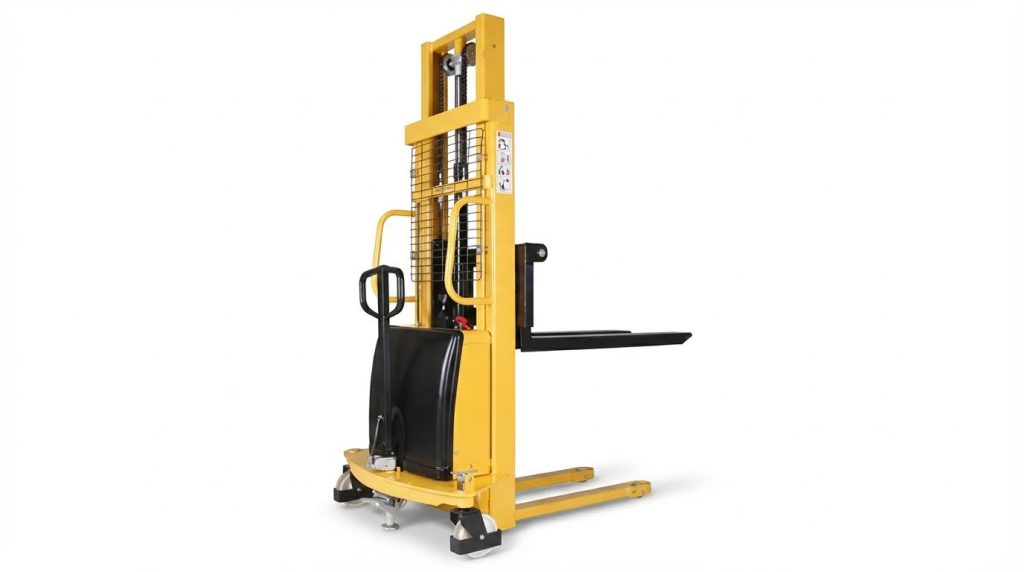
Supervisors often ask how many fully loaded pallets a forklift can lift without risking a tip-over. The answer depends on attachment design, load center, and the combined load moment, not just the truck’s nameplate capacity. Multi-pallet handling can raise pallet moves per hour, but it also shrinks the safety margin. This section explains when two‑pallet and four‑pallet work is technically defensible and how to calculate safe limits.
Single-Double And Multi-Pallet Attachments Explained
Single-double attachments let a truck handle one pallet in narrow aisles or two pallets side by side on wider runs. Multi-pallet handlers extend this idea and can present two or four pallets to a trailer face from one side. These tools add steel in front of the carriage, so they move the load center forward and reduce effective capacity.
Engineers treat the attachment thickness as added load center distance. They then update the data plate rating using the standard capacity formula. Operations teams must also consider extra width and hydraulic complexity, which affect aisle clearance and maintenance plans.
Two-Pallet And Four-Pallet Handling: Typical Use Cases
Two-pallet handling fits best in high-throughput docks and cross-dock lanes. Typical cases include loading outbound trailers with uniform grocery or FMCG pallets and unloading inbound unitized SKUs where every pallet has similar mass and geometry. Four-pallet handling usually appears in very high-volume, short-shuttle lanes with excellent floor conditions and strict pallet standards.
In practice, most sit-down counterbalance trucks safely move two fully loaded pallets only when each pallet mass is well below half the single-pallet rating. Four-pallet work usually needs higher-capacity trucks, short travel distances, and low lift heights. Engineering teams should block four-pallet travel on ramps, uneven floors, and congested aisles because dynamic shifts increase tip-over risk.
Calculating Safe Capacity With Multi-Pallet Loads
To decide how many fully loaded pallets a forklift can lift, engineers start from the data plate. The key variables are rated capacity, rated load center, and the new actual load center with the attachment and pallet pattern. A common rule is: usable capacity = rated capacity × (rated load center ÷ actual load center).
With two pallets side by side, the front-to-back load center often stays close to a single pallet, but the attachment thickness still pushes the center forward. With four pallets, telescopic forks or multi-load handlers usually increase the effective load center even more. The combined pallet mass must stay below the derated capacity at the planned lift height, not just at floor level. If the calculation is close to the limit, planners should cut pallet weight, restrict lift height, or revert to single-pallet moves.
Limits On Pallet Size, Spacing, And Load Quality
Safe multi-pallet handling assumes uniform pallets and tight spacing. Oversize pallets move the center of gravity forward and sideways, which reduces stability. Gaps between pallets increase effective load center and can twist the carriage if one pallet shifts. Poor-quality pallets can fail under clamp or fork pressure, causing sudden COG movement.
Before allowing two or four pallets per trip, sites should define strict limits for:
- Maximum pallet footprint and height
- Standard fork entry positions and pallet spacing
- Minimum deck and stringer condition
- Approved unit load weight ranges
Supervisors should also cap travel speed and turn angles when trucks carry multiple pallets. These controls keep the combined center of gravity inside the stability triangle and reduce the chance that a heavy outer pallet will drive the truck into a lateral tip.
Engineering And Operational Controls For Safe Use
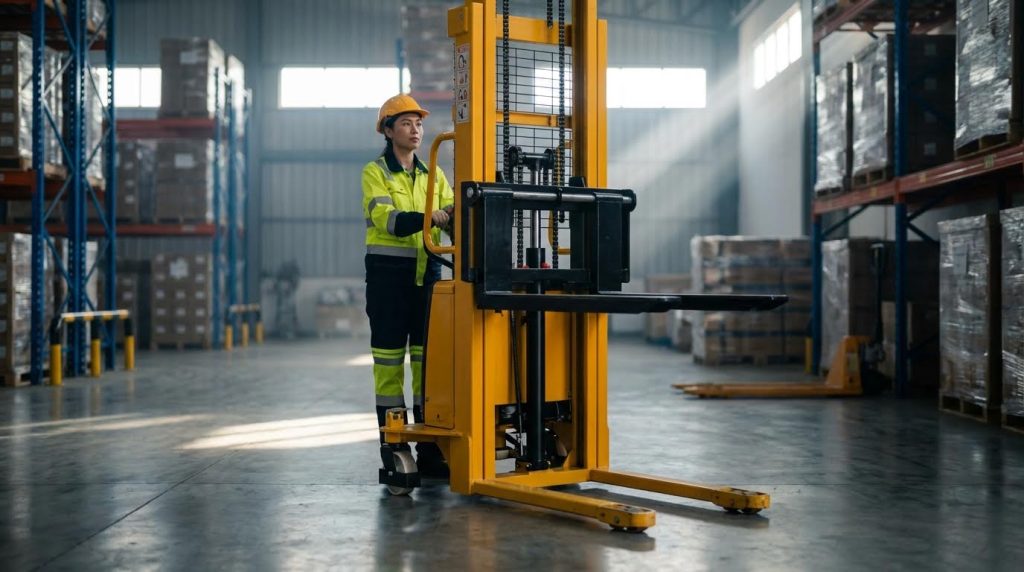
Engineering controls and operating rules decide how many fully loaded pallets a forklift can lift in real work. Standards, training, layout, and maintenance all shape the safe limit long before an operator touches the hydraulic levers. This section links regulations and day‑to‑day practices to multi‑pallet handling so teams can defend their answers when supervisors ask how many fully loaded pallets a forklift can lift without raising risk.
OSHA, ANSI B56, And Employer Safety Obligations
OSHA and ANSI rules set the minimum safety envelope for powered industrial trucks. ANSI B56 standards defined design, stability, and test methods that manufacturers used to rate capacity at a stated load center and height. OSHA tied its powered industrial truck rules to these standards and later updates, so employers could rely on the data plate when deciding if two pallets were acceptable.
For multi‑pallet handling, employers must treat each configuration as a distinct load case. Key duties include:
- Use trucks and attachments that comply with the relevant ANSI B56 edition.
- Keep data plates legible, updated for every attachment, and unaltered.
- Prove “equivalent safety” if a truck does not match the latest referenced standard.
- Ensure loads are stable, secured, and within the derated capacity.
These controls do not state a fixed number of pallets. They instead require that the combined weight, load center, and height stay inside the approved rating, whether the truck moves one, two, or four pallets.
Operator Training In Load Calculations And Handling
Operator training closes the gap between theory and what actually happens on the dock. A trained driver can explain how many fully loaded pallets a forklift can lift for a given truck by reading the data plate and applying simple math. Programs should cover the capacity formula that links rated capacity to actual load center and any attachment thickness.
Effective training content usually includes:
- How to read data plates for capacity at different heights and load centers.
- How attachments change the load center and reduce capacity.
- Examples of two‑pallet moves that stay inside the derated rating.
- Recognition of unstable pallets, damaged boards, and offset loads.
Hands‑on drills with real pallets help operators see how mast tilt, fork height, and speed change stability. After training, operators should refuse any multi‑pallet move that exceeds rated or calculated limits, even under time pressure.
Layout, Speed, And Travel Practices With Two Pallets
Warehouse layout and travel rules strongly influence whether two‑pallet handling is safe. Narrow aisles, tight dock approaches, and uneven floors push the combined center of gravity toward the edge of the stability triangle. With two fully loaded pallets on the forks, every bump or sharp turn increases the overturn moment.
Good engineering practice links layout and rules to truck limits:
| Factor | Control For Two‑Pallet Travel |
|---|---|
| Aisle width | Allow full steering without “three‑point” turns under load. |
| Floor condition | Repair holes, joints, and slopes that cause pitching. |
| Speed limits | Lower limits in cross‑traffic and near docks. |
| Ramp use | Ban multi‑pallet travel on steep grades. |
Operating rules should require low fork height, slight back tilt, and centered loads during travel. Supervisors must enforce reduced speed and wider turning radii when the truck carries two pallets, even if the math says the capacity is adequate.
Predictive Maintenance And Digital Tools For Safety
Maintenance quality affects how many fully loaded pallets a forklift can lift safely over its life. Worn chains, leaking hydraulics, or out‑of‑tolerance mast rollers reduce real capacity and increase sway. Predictive maintenance uses sensor data and work order history to service trucks before these issues become failures under multi‑pallet loads.
Digital tools now support safer capacity use in several ways:
- Telematics modules track overload events and harsh maneuvers.
- Access control systems limit multi-pallet modes to trained operators.
- On‑board displays show live estimated load and height zones.
- Fleet dashboards compare incident rates for single and multi-pallet work.
When engineering, training, layout, and maintenance data feed into one system, safety teams can set a documented, site‑specific limit on how many fully loaded pallets each forklift may lift and carry, then adjust that limit as conditions change.
Practical Conclusions On Safe Multi-Pallet Forklift Use
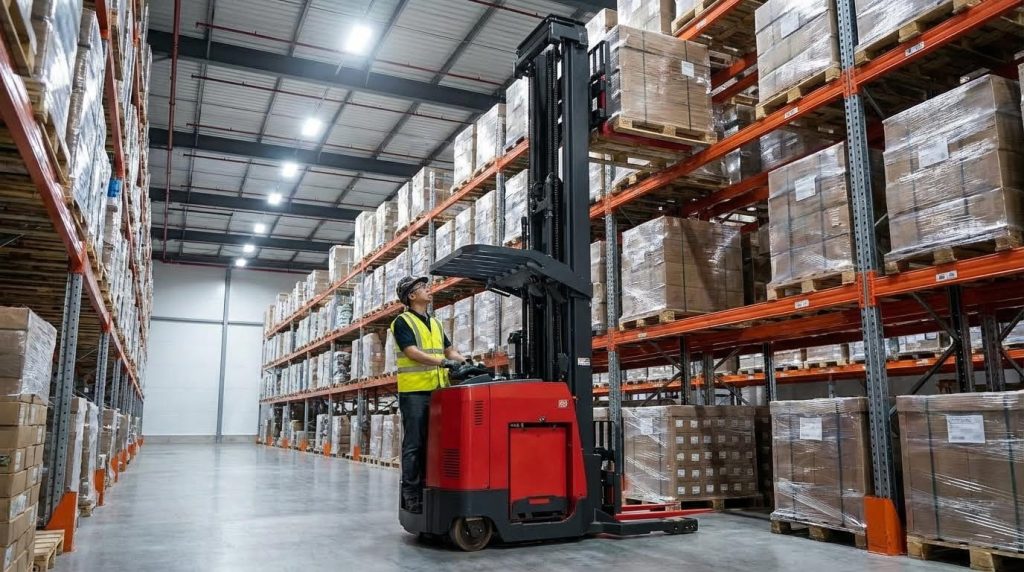
For the query how many fully loaded pallets forklift lift, there is no single number that fits every truck. The safe count always comes from the data plate, the actual load center, and the attachment in use. Most counterbalance forklifts were designed and rated to move one fully loaded pallet at a time. Multi-pallet handling is only safe when the truck, the attachment, and the load geometry all match.
Single-double and multi-pallet attachments let one truck move two or more pallets per trip. However, capacity derates as pallets move further from the mast and as fork spacing increases. The safe method is to treat the combined pallet weight as one load and recalculate using the load-center formula from the data plate. If that calculated value is lower than the planned total pallet weight, the truck must not lift that multi-pallet load.
Future practice will rely more on on-board load sensing, digital capacity calculators, and linked maintenance data. These tools will help operators see real-time limits for two-pallet travel. Yet the core rule will not change. The safe answer to how many fully loaded pallets a forklift can lift remains: only as many as the rated, derated capacity and load center allow, under trained operation and controlled travel speeds.
,
Frequently Asked Questions
How many fully loaded pallets can a forklift lift?
The number of fully loaded pallets a forklift can lift depends on the forklift’s rated capacity and the weight of each pallet. Most standard forklifts have a capacity ranging from 3,000 lbs to 158,500 lbs. For example, an electric forklift with a load capacity of 3,000 kg (approximately 6,614 lbs) can lift one or two fully loaded pallets, assuming each pallet weighs around 1,500 kg (3,307 lbs). Electric Forklift Specs.
What factors determine how many pallets a forklift can carry?
Several factors affect how many pallets a forklift can carry:
- Rated Capacity: Each forklift has a maximum weight it can safely lift.
- Pallet Weight: The combined weight of the pallets must not exceed the forklift’s capacity.
- Load Center: The distance from the vertical face of the forks to the center of gravity of the load.
- Forklift Type: Different types like electric reach trucks or rough terrain forklifts have varying capacities. Forklift Weight Guide.