
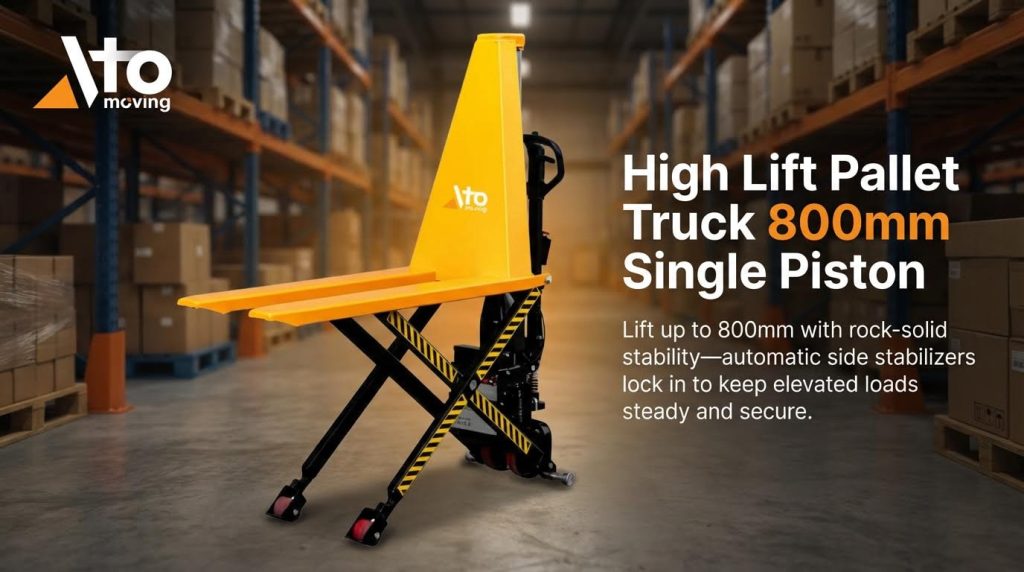
Safe, efficient operation of high‑lift walkies depends on disciplined travel practices, not just lifting skill. This guide explains what to do when traveling with a high lift pallet truck so you control speed, stability, and visibility in real warehouse conditions. You will see how operating modes, environment, technology, and maintenance all interact to prevent tip‑overs, collisions, and dropped loads. Use these rules to standardize training, reduce incidents, and keep both operators and pedestrians protected during every move.
Core Travel Rules For High-Lift Walkies
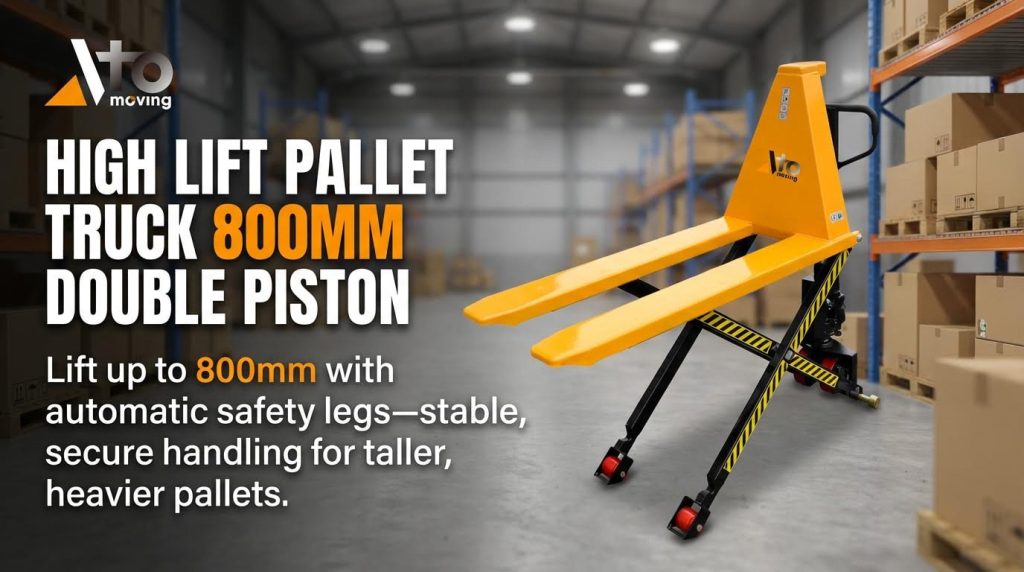
Defining “Travel” And Operating Modes
When traveling with a high lift walkie, “travel” means any powered movement of the truck with or without a load, whether the forks are raised or lowered. Operators must understand the difference between horizontal travel, travel with the mast lowered, and restricted travel with an elevated load or platform. Safe practice is to keep forks low and slightly tilted back during horizontal movement, then raise only at the destination. Travel with the platform or forks elevated should be minimized and is usually limited to low speeds and short distances. Operators must always walk beside or behind the truck, never ahead of the forks, and maintain a stable posture and clear view of the route.
- Normal travel: forks low, load stable, full visibility.
- Restricted travel: forks or platform elevated, speed limited, distance minimized.
- Ramp travel: specific direction rules and extra traction control.
Minimize travel with an elevated load or platform and never turn with the forks raised or tilted forward.
More on elevated travel limits
Travel with an elevated platform is often restricted to low speeds and moderate heights. Typical rules allow limited travel in a mid-height band and prohibit travel above high elevations except where guidance systems or inching controls are installed. Always follow site rules and the truck’s capacity plate before moving with a raised mast.
Regulatory And Manufacturer Requirements
Regulations and manufacturer instructions define what is allowed when traveling with a high lift walkie. Standards require that only trained and certified operators use this equipment, with periodic refresher training to maintain skills. Before each shift, operators must complete a pre-use inspection and remove the truck from service if critical items such as brakes, hydraulics, steering, or emergency stops are defective. Capacity plates, warning decals, and operating manuals specify maximum load, lift height, and any limits on traveling with elevated forks or platforms.
| Requirement Type | Key Focus |
|---|---|
| Regulatory | Training, PPE, traffic rules, inspection and lockout of unsafe trucks |
| Manufacturer | Capacity limits, allowed lift heights, speed limits, operating modes |
| Site Rules | Marked routes, speed zones, ramp procedures, pedestrian separation |
- Stay within rated capacity at all times; never overload to “make a move.”
- Observe internal speed limits, especially in pedestrian or intersection zones.
- Use only designated aisles, ramps, and bridge plates approved for the truck and load.
Always follow the more restrictive rule: if the site rule, regulation, and manual differ, apply the strictest limit for travel, speed, and height.
Inspection and documentation expectations
Regulations and manuals expect daily and periodic inspections with written logs. Typical checks cover batteries, cables, forks, mast, wheels, hydraulics, steering, brakes, horn, lights, and emergency stop. Any damage, leaks, or unusual noise during travel is a reason to stop, tag out the truck, and call maintenance.
Controlling Speed, Stability, And Visibility
Safe Speeds, Turning, And Ramp Travel
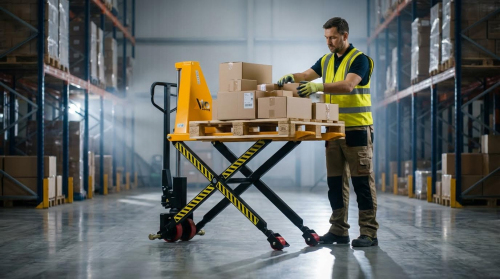
When traveling with a high lift walkie, speed control is the first safety barrier. Operators should follow site speed limits and reduce speed further in congested or low-visibility areas. Sudden acceleration, braking, or sharp steering inputs can destabilize both the truck and load, especially with elevated forks. On ramps, gradients, or dock plates, the risk of rollback, wheel slip, and tipping increases, so technique matters as much as speed.
- Travel at walking pace or slower in mixed traffic with pedestrians.
- Slow down well before corners, intersections, doors, and blind spots.
- Avoid abrupt starts, stops, or direction changes with a raised or heavy load.
- Use the horn and warning devices at crossings, aisle junctions, and exits.
- On ramps, drive loaded trucks uphill forward and downhill in reverse.
- Do not turn, load, or unload while on a ramp or dock edge.
Always operate within posted and programmed speed limits. Excess speed reduces stopping distance and increases the chance of tip-over or loss of load.
Additional ramp and surface precautions
Use only designated ramps rated for the truck and load. Avoid loose materials, wet patches, or potholes that can cause wheel slip or sudden jolts. If traction is uncertain, stop, lower the load, and reassess the route rather than forcing the maneuver.
Load Height, Fork Position, And Center Of Gravity
Stability when traveling with a high lift walkie depends on keeping the combined center of gravity inside the truck’s stability triangle. As load height increases, the center of gravity moves up and can shift outside this safe zone during turns, braking, or on uneven floors. Operators should transport loads as low and as close to the mast as practical, then raise only at the stacking or picking position. Correct fork positioning and load placement are critical to prevent tipping or dropped loads.
- Keep forks low during travel, typically just high enough to clear the floor and obstacles.
- Tilt the mast or forks slightly back when allowed by the design to improve load stability.
- Center the load across both forks; avoid lifting with one fork or off-center placement.
- Do not exceed rated capacity at the specified load center shown on the data plate.
- Avoid turning, braking hard, or traveling fast with the load elevated.
- Use suitable pallets or skids; reject damaged, decayed, or undersized platforms.
| Factor | Effect On Stability | Safe Practice |
|---|---|---|
| Load height | Higher center of gravity; more tip-over risk | Travel low; raise only at destination |
| Fork tilt | Backward tilt improves retention; forward tilt reduces stability | Transport with slight back tilt where applicable |
| Load position | Off-center loads twist the mast and truck | Center load and use both forks fully |
| Weight vs. capacity | Overload can lift drive wheels and cause tipping | Stay at or below rated capacity |
Handling awkward or unstable loads
Long, tall, round, or shrink-wrapped loads can shift unexpectedly. Use bindings, stretch wrap, or load containment where permitted. Reduce speed further, avoid tight turns, and request a spotter in confined aisles. If the load appears unstable before lifting, restack or secure it rather than attempting to “move it carefully.”
Operator Position, Line Of Sight, And Pedestrian Safety
Safe travel with a high-lift walkie depends on where the operator stands and what they can see. The operator should walk beside or slightly behind the truck, never in front of the forks or under the mast. A clear line of sight to the path, pedestrians, and obstacles is mandatory; when the load blocks forward vision, traveling in reverse is often safer on level ground. Good visibility also supports better speed judgment and smoother maneuvering.
- Always look in the direction of travel and maintain a clear view of the route.
- Operate in reverse if the load blocks forward visibility, except when climbing ramps.
- Maintain safe separation from pedestrians and other trucks; avoid tailgating.
- Use horn, lights, and alarms at intersections, doors, and blind corners.
- Never allow anyone to ride on the truck or stand under elevated loads.
- Walk in a position that allows quick step-away if the truck or load moves unexpectedly.
Pedestrians always have priority. If you are not sure the path is clear, stop, verify, and proceed only when it is safe.
Improving visibility and communication
Good lighting, floor markings, and mirrors at blind corners help the operator maintain situational awareness. Establish hand signals or radio protocols with spotters in tight or noisy areas. Encourage a “see and report” culture so operators flag poor lighting, blocked aisles, or damaged guards that reduce visibility and increase risk.
Environment, Technology, And Maintenance For Safe Travel
Aisle Design, Floor Conditions, And Traffic Zoning
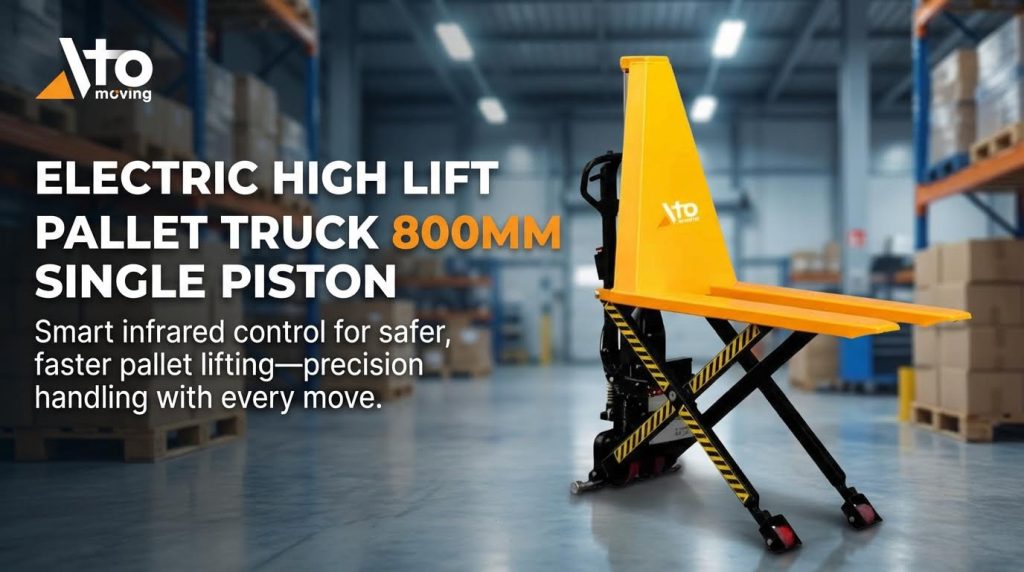
Warehouse layout strongly affects risk when traveling with a high lift walkie. Aisles must be wide enough for the manual pallet jack, load, and a safety margin, especially at intersections and rack ends. Clear, painted traffic routes help separate pedestrians from powered equipment and reduce confusion. Good lighting and housekeeping make hazards visible before the operator reaches them.
- Mark one-way and two-way travel lanes with arrows and floor striping.
- Use pedestrian crosswalks and keep them free of parked pallets or equipment.
- Install convex mirrors at blind corners and busy intersections.
- Specify minimum aisle width based on truck type, load length, and turning radius.
Floor condition is a core control. Smooth, clean, and dry floors improve traction and reduce stopping distances. Potholes, broken expansion joints, dock plates with gaps, or loose debris can destabilize a loaded truck. Extra caution is needed on ramps and transitions between surfaces, where traction and stability both change.
Always reduce speed and increase following distance on wet, dusty, or uneven floors when traveling with a high lift walkie, even if internal speed limits are in place.
More on traffic zoning and flow design
Effective traffic zoning uses visual and physical controls together. Painted lines, bollards, guardrails, and rack-end barriers keep equipment away from pedestrians and building edges. Separate loading/unloading zones from through-traffic lanes so operators are not forced to maneuver around staging pallets. Where possible, design “no-passing” zones in narrow aisles to avoid head-on conflicts and sudden evasive maneuvers.
Using Cameras, Sensors, And Programmable Limits
Modern control systems can significantly reduce incident risk when traveling with a high lift walkie. Cameras improve visibility around tall or bulky loads and in high-bay storage. Proximity sensors and obstacle detection help warn operators before a collision, especially at intersections or in congested areas. Programmable performance limits allow the truck to match site rules and operator skill levels.
- Speed limiting by zone (for example, lower speeds in pedestrian or dock areas).
- Automatic reduction of speed when forks or platform exceed a set height.
- Audible and visual alarms triggered by proximity sensors or reverse travel.
- Access control so only trained and authorized operators can start the truck.
Real-time monitoring systems can log impacts, near misses, and overload attempts. This data supports targeted training and layout changes. Integrated safety functions, such as automatic braking or cutback when steering sharply at speed, help keep the truck within a safer operating envelope.
Choosing and using electronic safety aids
When selecting cameras and sensors, consider lighting conditions, dust, and vibration. Wide-angle cameras help with blind spots but can distort distance perception, so training must cover correct interpretation of images. Sensor warning thresholds should be set to allow enough stopping distance at the site’s maximum permitted speed. After installation, verify that alarms are audible and visible over ambient noise and lighting, and include their operation in routine pre-use checks.
Inspections, Battery Care, And Hydraulic Reliability
Systematic maintenance is essential for safe travel and lifting performance. A pre-shift inspection should verify that steering, brakes, horn, emergency stop, forks, mast structure, and wheels are in safe condition. Any defect that affects control, stability, or visibility must remove the truck from service until repaired. Keeping accurate inspection and repair records supports both compliance and reliability planning.
| Area | Key Checks | Typical Issues |
|---|---|---|
| General safety | Horn, emergency stop, controls, warning lights | Non-functioning alarms, sticky controls |
| Battery & electrics | Charge level, cables, connectors, covers | Loose terminals, damaged insulation |
| Hydraulics | Fluid level, hoses, cylinders, leaks | Oil on floor, uneven lifting |
| Structure & forks | Cracks, bends, wear, mast integrity | Deformed forks, damaged welds |
Battery care directly affects performance and run time when traveling with a high lift walkie. Charging should occur only in designated, ventilated areas free from ignition sources. Operators need PPE for battery work and must report any signs of damage or leakage. Terminals should be kept clean and tight to avoid heat buildup and voltage drops.
Hydraulic reliability underpins safe lifting and lowering. Operators should monitor for unusual noises, jerky mast motion, or visible leaks. Following the manufacturer’s schedule for fluid changes, filter replacement, and hose inspections helps prevent sudden failures under load. Any change in lift speed, holding ability, or mast alignment is a reason to stop using the truck and request maintenance.
Maintenance practices that support safe travel
Align maintenance intervals with actual duty cycles, not just calendar time. High-usage trucks in multi-shift operations typically need more frequent inspections. Include tires and wheels in every check, as worn or damaged wheels increase stopping distance and can affect tracking in narrow aisles. Train operators to recognize early warning signs—such as reduced braking response, steering play, or reduced lift height—and to report them immediately rather than adapting their driving style to compensate.
Final Thoughts On High-Lift Walkie Travel Safety
Safe travel with high-lift walkies depends on how operators move, not only on how trucks lift. Geometry, speed, and visibility all interact. When operators keep forks low, loads centered, and speeds controlled, the combined center of gravity stays inside the stability zone. This reduces the chance of tip-over on turns, ramps, and rough floors.
Regulatory rules, manufacturer limits, and site procedures must work together. The safest result comes when teams always follow the strictest rule for speed, height, and route. Good aisle design, clear markings, and clean, dry floors give the truck a predictable path. Technology such as sensors, cameras, and programmable limits adds a second layer of control, but it never replaces skilled, alert operators.
Maintenance holds the whole system together. Reliable brakes, steering, hydraulics, and batteries let operators focus on the route and load, not on fighting the truck. Atomoving equipment performs best when inspections are honest and defects trigger fast repair.
The best practice is simple: plan the route, check the truck, secure the load, then travel slow and low with clear sight. If anything looks unsafe—layout, load, surface, or truck—stop and fix the problem before moving again.
,
Frequently Asked Questions
How high can a walkie stacker lift?
A walkie stacker can typically lift loads to heights of up to 6,100 mm. This makes it ideal for applications where loads need to be stored at significant heights. For more details, you can refer to this Walkie Stacker Guide.
Do you have to be certified to use a walkie stacker?
Yes, certification is often required to operate a walkie stacker safely. Training ensures operators understand safety protocols and operational standards. For more information on certification requirements, check out this Walkie Stacker Certification.