
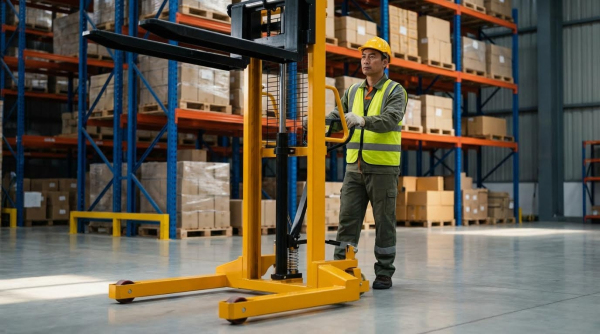
Understanding which wheels steer a counterbalanced stacker is critical if you care about tight-aisle maneuvering, wheel life, and operator effort. This article explains exactly which wheels steer a straddle stacker, how the drive and load wheels share the work, and how different steering geometries affect turning radius and stability. You will see how mechanical tillers, electronic assist, wheel layouts, and floor conditions all interact so you can match the steering system to your application. By the end, you will know what to look for in specifications, options, and maintenance practices to get safe, efficient steering in real warehouses, not just on paper.
How Straddle Stacker Steering Really Works
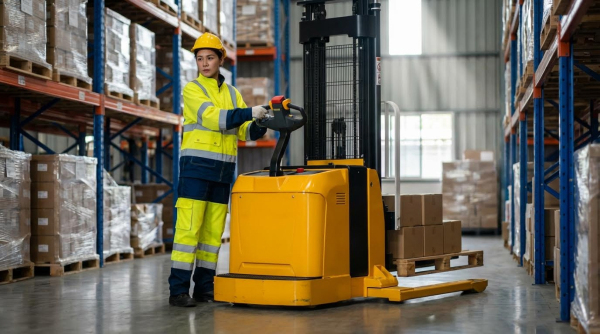
Drive wheel vs. load wheels: who does the steering?
In almost all pedestrian straddle stackers, the answer to which wheels steer a straddle stacker is simple: the single drive wheel under the tiller head does the steering. The load wheels in the straddle legs mainly carry weight and guide the truck; they do not actively change direction. The steering handle (tiller) is rigidly connected to the drive/steer unit, so when the operator swings the handle left or right, the whole drive wheel assembly rotates around a vertical axis. This rotation changes the heading of the truck while the load wheels simply follow the path set by the drive wheel.
- Drive wheel: provides traction, steering, and often braking.
- Load wheels in the legs: support the pallet and stabilize the mast.
- Center of rotation: usually near the drive wheel, which defines the turning radius.
- Effect on handling: tighter turns come from larger steering angles at the drive wheel, not from load-wheel motion.
The drive wheel is the steering wheel on a straddle stacker. Load wheels are passive followers that support and stabilize the load.
Why load wheels don’t steer
Load wheels sit in fixed yokes welded or bolted to the straddle legs. Their axles are fixed in direction, so they can roll forward and backward but cannot pivot like casters. If they tried to steer, side loads would increase tire scrub, floor damage, and component wear. Keeping them fixed simplifies the structure and keeps steering forces and complexity concentrated at the single drive/steer unit.
Mechanical tiller, electronic assist, and floating mounts
The mechanical tiller is the operator’s main interface to the steering system. In a basic design, the tiller arm connects directly through a linkage to the steering head on the drive wheel, so all steering torque comes from the operator. In more advanced electric stackers, an electronic steering assist measures tiller angle with sensors and uses a steering motor in the wheel head to reduce physical effort, especially at low speed or high load. Both approaches still steer by rotating the same central drive wheel; they differ only in how the steering torque is generated and controlled.
- Mechanical tiller
- Direct mechanical linkage to the drive wheel steering spindle.
- Simple and robust, but higher steering effort, especially when loaded.
- Steering feel is very “connected,” but shocks can transmit back to the operator.
- Electronic assist
- Sensors read tiller angle and command a steering motor in the wheel head.
- Reduces arm and shoulder load over long shifts.
- Allows features like speed‑dependent steering ratios or automatic straight‑line centering.
The drive wheel and steering assembly often use a floating mount so the wheel can move up and down relative to the chassis. In older single‑fork floating structures, the steering fork slides in a groove to let the wheel follow floor irregularities, but this can create uneven force, high steering effort, and large rotation gaps if tolerances are not perfect. Newer double‑fork steering heads use two fork arms and sliding members to guide the drive wheel vertically while keeping steering geometry tight.
- Single‑fork floating mount
- One support fork slides in a groove to provide vertical travel.
- Uneven force distribution and higher manipulation force.
- Sensitive to manufacturing precision; can develop noticeable play.
- Double‑fork floating mount
- Two fork heads with sliding members increase structural stiffness.
- Reduces rotation gap and improves steering response.
- Makes steering forces more predictable on uneven floors.
How the floating steering head is adjusted
Some designs use long vertical slots in the upper steering connectors, with sliding parts linked to the fork heads. A wedge‑shaped adjustment block sits in the slot beside a contact wheel on the connecting rod. By shifting and fixing this wedge, technicians can remove play between the sliding parts and the slot walls. This keeps the drive wheel free to float vertically while maintaining tight guidance in the steering direction, which improves tracking, reduces vibration, and keeps the answer to which wheels steer a straddle stacker unchanged: the centrally mounted, floating drive wheel.
Steering Wheel Design And Performance Factors
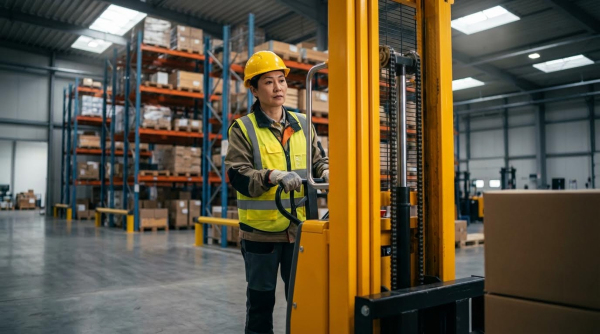
Single vs. dual steering wheel configurations
In most walkie and ride-on straddle pallet stackers, the drive wheel under the tiller does the steering, while the load wheels in the straddle legs primarily carry weight and guide the truck. Matching that geometry to your aisle widths, floor quality, and stability needs determines how easy and safe the truck is to operate.
- Narrow aisles: In tight aisles, a small turning radius around the steer/drive wheel is critical. A compact steering head and short chassis let the truck pivot around the drive wheel with minimal “swing‑out” of the straddle legs. Electronic assist on the tiller or steering wheel reduces effort when making frequent small corrections.
- Floor quality: On good, flat floors, a simple rigid connection between steering and drive components works well. On uneven floors, a floating drive unit helps keep the steer/drive wheel in contact with the ground so steering remains predictable while the load wheels follow surface variations.
- Stability and load support: The straddle legs and their load wheels provide the lateral stability, but the steering geometry determines how that stability feels to the operator. A well‑designed floating drive system allows the truck to maintain three‑point contact (drive wheel plus both straddle legs) even when the floor is imperfect, reducing mast sway and side‑to‑side rocking.
Always confirm that the minimum turning radius of the stacker is smaller than your clear aisle width, including pallet overhang and any rack protection.
How floating steering helps on poor floors
In some designs, the entire drive and steering module “floats” vertically relative to the chassis. The steering tiller or handle moves with this module. If the floating linkage is poorly designed (for example, a single‑sided fork in the steering head), steering can feel loose, require high effort, and develop play over time. Double‑fork steering heads with sliding elements spread the load and keep the steering axis aligned, improving control on wavy or cracked floors.
Selecting batteries, options, and maintenance practices
Battery choice and options do not change which wheels steer a straddle stacker, but they strongly influence how consistently that steering performs through a shift. Steering motors and drive motors both draw from the same battery, so voltage stability and available energy affect steering response, especially at low speeds and during tight maneuvering.
| Choice / Practice | Impact on Steering & Geometry in Use |
|---|---|
| Lead‑acid vs. lithium batteries | Lithium tends to hold voltage more consistently, so steering feel changes less over a shift. Lead‑acid can feel “sluggish” as voltage sags near end of discharge. |
| Battery capacity and duty cycle | Undersized batteries may cause steering electronics to limit performance under low voltage, increasing tiller effort and reducing fine control. |
| Electronic steering assist options | Reduces the physical force needed to turn the drive wheel, important in narrow aisles and for high‑turn operations. |
| Cold‑storage or harsh‑environment packages | Maintain seal integrity and lubrication in steering heads and drive units so geometry behaves predictably despite temperature or corrosion. |
| Maintenance routines | Regular checks of the drive/steer wheel, bearings, and floating linkages keep the steering axis tight and turning radius within spec. |
- Options to support precise steering:
- Adjustable speed controls for slow, precise positioning in tight rack bays.
- Integrated displays showing steering angle and travel direction, useful where operators switch between machines.
- Enhanced lighting and visibility features so operators can clearly see the drive wheel path and the outer edges of the straddle legs.
- Maintenance focus areas:
- Inspect the drive/steer wheel tread for flat spots or chunking; defects increase turning radius and steering effort.
- Check the floating mounts, sliding members, and connecting rods in the steering head for wear or play; excessive clearance turns into steering “dead band.”
- Verify hydraulic and mast components for leaks or looseness; mast sway can be misinterpreted as steering inaccuracy.
- Follow battery charging and inspection schedules so steering performance remains stable throughout the shift.
When to consider different steering configurations
If your application involves very heavy loads, long travel distances, or semi‑automated operation, you may consider more advanced steering geometries, such as dual steering wheels or additional steerable axles in larger straddle carriers. These systems can reduce turning radius further and allow diagonal or lateral movement, but they add complexity and require stricter maintenance practices to keep all steering components synchronized.
Matching Steering Geometry To Your Application
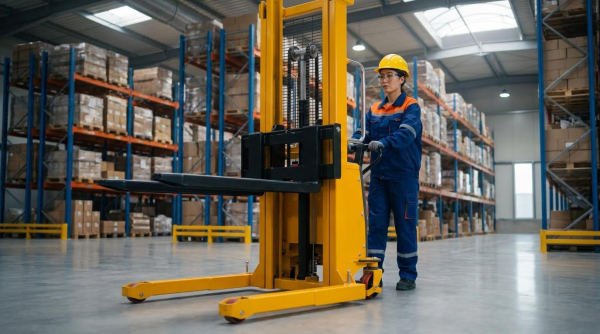
Narrow aisles, floor quality, and stability needs
When you ask which wheels steer a straddle stacker, you are really asking how the steering geometry will behave in your building. In almost all walkie and electric straddle pallet stackers, the drive wheel under the tiller does the steering, while the load wheels in the straddle legs primarily carry weight and guide the truck. Matching that geometry to your aisle widths, floor quality, and stability needs determines how easy and safe the truck is to operate.
- Narrow aisles: In tight aisles, a small turning radius around the steer/drive wheel is critical. A compact steering head and short chassis let the truck pivot around the drive wheel with minimal “swing‑out” of the straddle legs. Electronic assist on the tiller or steering wheel reduces effort when making frequent small corrections.
- Floor quality: On good, flat floors, a simple rigid connection between steering and drive components works well. On uneven floors, a floating drive unit helps keep the steer/drive wheel in contact with the ground so steering remains predictable while the load wheels follow surface variations.
- Stability and load support: The straddle legs and their load wheels provide the lateral stability, but the steering geometry determines how that stability feels to the operator. A well‑designed floating drive system allows the truck to maintain three‑point contact (drive wheel plus both straddle legs) even when the floor is imperfect, reducing mast sway and side‑to‑side rocking.
Always confirm that the minimum turning radius of the stacker is smaller than your clear aisle width, including pallet overhang and any rack protection.
How floating steering helps on poor floors
In some designs, the entire drive and steering module “floats” vertically relative to the chassis. The steering tiller or handle moves with this module. If the floating linkage is poorly designed (for example, a single‑sided fork in the steering head), steering can feel loose, require high effort, and develop play over time. Double‑fork steering heads with sliding elements spread the load and keep the steering axis aligned, improving control on wavy or cracked floors.
Selecting batteries, options, and maintenance practices
Battery choice and options do not change which wheels steer a straddle stacker, but they strongly influence how consistently that steering performs through a shift. Steering motors and drive motors both draw from the same battery, so voltage stability and available energy affect steering response, especially at low speeds and during tight maneuvering.
| Choice / Practice | Impact on Steering & Geometry in Use |
|---|---|
| Lead‑acid vs. lithium batteries | Lithium tends to hold voltage more consistently, so steering feel changes less over a shift. Lead‑acid can feel “sluggish” as voltage sags near end of discharge. |
| Battery capacity and duty cycle | Undersized batteries may cause steering electronics to limit performance under low voltage, increasing tiller effort and reducing fine control. |
| Electronic steering assist options | Reduces the physical force needed to turn the drive wheel, important in narrow aisles and for high‑turn operations. |
| Cold‑storage or harsh‑environment packages | Maintain seal integrity and lubrication in steering heads and drive units so geometry behaves predictably despite temperature or corrosion. |
| Maintenance routines | Regular checks of the drive/steer wheel, bearings, and floating linkages keep the steering axis tight and turning radius within spec. |
- Options to support precise steering:
- Adjustable speed controls for slow, precise positioning in tight rack bays.
- Integrated displays showing steering angle and travel direction, useful where operators switch between machines.
- Enhanced lighting and visibility features so operators can clearly see the drive wheel path and the outer edges of the straddle legs.
- Maintenance focus areas:
- Inspect the drive/steer wheel tread for flat spots or chunking; defects increase turning radius and steering effort.
- Check the floating mounts, sliding members, and connecting rods in the steering head for wear or play; excessive clearance turns into steering “dead band.”
- Verify hydraulic and mast components for leaks or looseness; mast sway can be misinterpreted as steering inaccuracy.
- Follow battery charging and inspection schedules so steering performance remains stable throughout the shift.
When to consider different steering configurations
If your application involves very heavy loads, long travel distances, or semi‑automated operation, you may consider more advanced steering geometries, such as dual steering wheels or additional steerable axles in larger straddle carriers. These systems can reduce turning radius further and allow diagonal or lateral movement, but they add complexity and require stricter maintenance practices to keep all steering components synchronized.
Key Takeaways On Which Wheels Do The Work
The steering behavior of a straddle stacker always comes back to one fact: the centrally mounted drive wheel does the steering, while the load wheels in the legs carry and stabilize the load. Once you accept this, the rest of the design choices focus on how well that single steering wheel can keep grip, follow the floor, and respond to the operator.
Floating steering heads, double‑fork structures, and tight adjustment of sliding parts all aim to keep the drive wheel guided in a clean vertical path with minimal play. This preserves a predictable turning radius and reduces operator fatigue, even on worn concrete. Motor type, wheel size, and battery choice then set how consistently the steering system delivers that performance through a full shift.
For engineering and operations teams, the best practice is clear. Start with your aisle width, floor condition, and load profile. Confirm that the turning radius, wheel load rating, and floating structure of the drive unit match those limits. Then support the design with stable power, electronic assist where needed, and strict inspection of the drive/steer wheel and linkages. Do this, and Atomoving straddle stackers will steer safely and repeatably in real warehouse conditions, not just in the catalog.
,
Frequently Asked Questions
Which wheels steer a straddle stacker?
A straddle stacker typically steers using the rear wheels, similar to forklifts. This design allows for better maneuverability in tight spaces by enabling the vehicle to pivot around its front wheels. Forklift Steering Guide.
Do forklifts steer with the front wheels?
No, forklifts generally steer using the rear wheels. The rear-wheel steering allows the forklift to turn sharply and maneuver easily in confined spaces. Forklift Steering Guide.
What should you do before using a straddle stacker?
Before operating a straddle stacker, perform thorough pre-operation checks. Inspect the equipment for any damages, verify fluid levels, and ensure all safety features are functioning correctly. Straddle Stacker Safety Tips.