
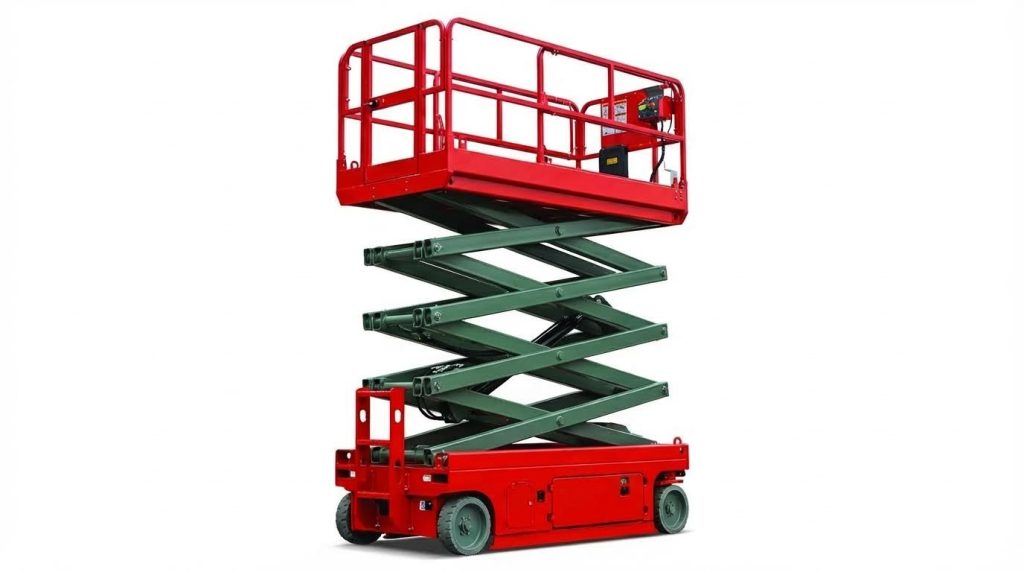
Aerial work platforms are now core equipment in modern warehouses, allowing safe, repeatable access to high-bay storage, racking, and building services. This guide explains what is aerial work platform technology in practical terms, how different platform types compare, and which specifications matter for warehouse applications. You will also find structured guidance on selection, safe operation, and maintenance aligned with current safety standards. Use it as a technical reference when evaluating new equipment, upgrading your fleet, or tightening site procedures.
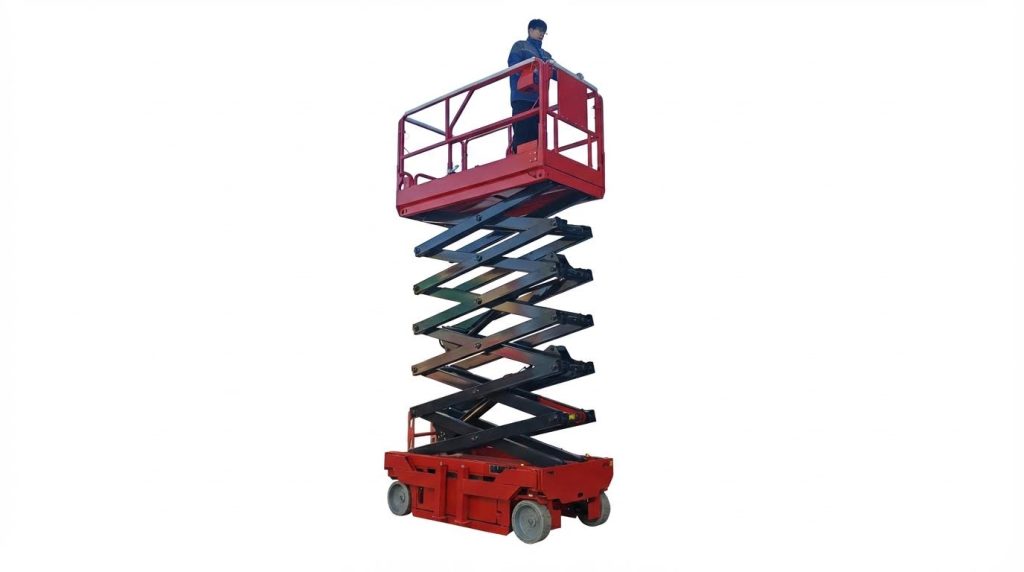
Defining Aerial Work Platforms For Warehouse Use
What Is An Aerial Work Platform (AWP/MEWP)?
An aerial work platform, also called a Mobile Elevating Work Platform (MEWP), is a mechanical device that lifts people and light materials to elevated work positions within a defined working envelope. In warehouses, these platforms provide safe, repeatable access to racking, mezzanines, building services, and overhead structures that are beyond the reach of ladders. Typical MEWP families used indoors include vertical lifts, scissor lifts, boom lifts, man lifts, and other drivable work platforms designed specifically for tight aisles and smooth floors such as vertical lifts, drivable work platforms, aerial lifts, boom lifts, scissor lifts, man lifts, and cherry pickers. From a safety and compliance standpoint, many of these machines also fall under “aerial lifts” in regulatory language and must meet applicable OSHA and ANSI requirements for elevating and rotating work platforms such as vehicle‑mounted extendable boom platforms, aerial ladders, articulating boom platforms, and vertical towers. When people search “what is aerial work platform,” they are usually looking for this category of powered access equipment that replaces ladders and scaffolding in modern warehouses, combining a guarded platform, controlled elevation, and built‑in fall protection. The core purpose is to let trained operators work at height with controlled movement, defined load limits, and engineered stability, rather than relying on improvised methods that increase fall and struck‑by risk.
Core Components And Design Principles
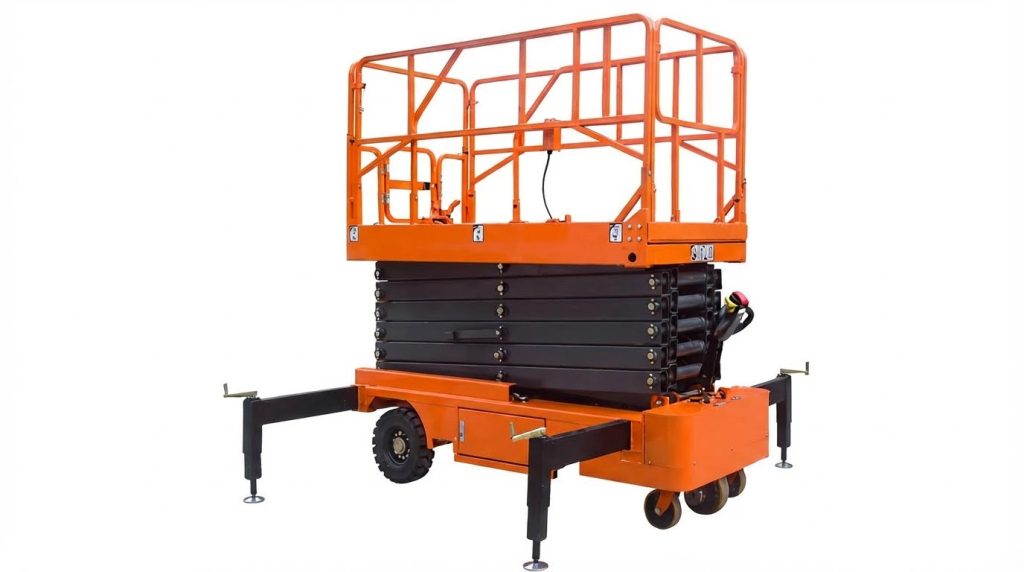
Despite many configurations, most warehouse aerial work platforms share a common architecture built around four main subsystems: chassis, lifting structure, power and control system, and guarded platform. The chassis provides the base, wheels, and in some cases outriggers, which stabilize the unit on firm, level floors and prevent tip‑over; on some models, outriggers must sit on solid pads and the brakes must be applied before elevation to maintain stability on slight slopes using pads, wheel chocks, and warning cones. Above the base, the lifting structure may be a scissor stack, telescopic mast, or articulated boom, designed to carry a rated load to a specified working height and outreach while staying within defined tilt limits, often around 5° out of level before a tilt alarm activates with alarms required beyond the maximum allowable tilt. Power and control systems typically use electric batteries for indoor warehouse duty, driving hydraulic or electromechanical actuators and providing proportional controls, emergency stop, and emergency lowering so the platform can be brought down safely in a fault condition with proportional control, automatic braking, and emergency lowering and stop functions. At the top, the work platform itself incorporates guardrails, midrails, and often toeboards, along with access gates that must remain closed, providing integrated fall protection so operators can stand on the platform floor without climbing or leaning over the rails by keeping access gates closed and avoiding climbing or leaning over guardrails. Underpinning all of these components is a design philosophy that prioritizes predictable stability, controlled motion, and compliance with standards such as ANSI A92 for MEWPs, which define training, inspection intervals, and safe operating concepts for aerial work platforms in warehouse environments including requirements for training and inspections every 90 days or 150 hours.
“`html
Key Aerial Platform Types And Technical Specs
Vertical, Scissor, And Boom Lifts Compared
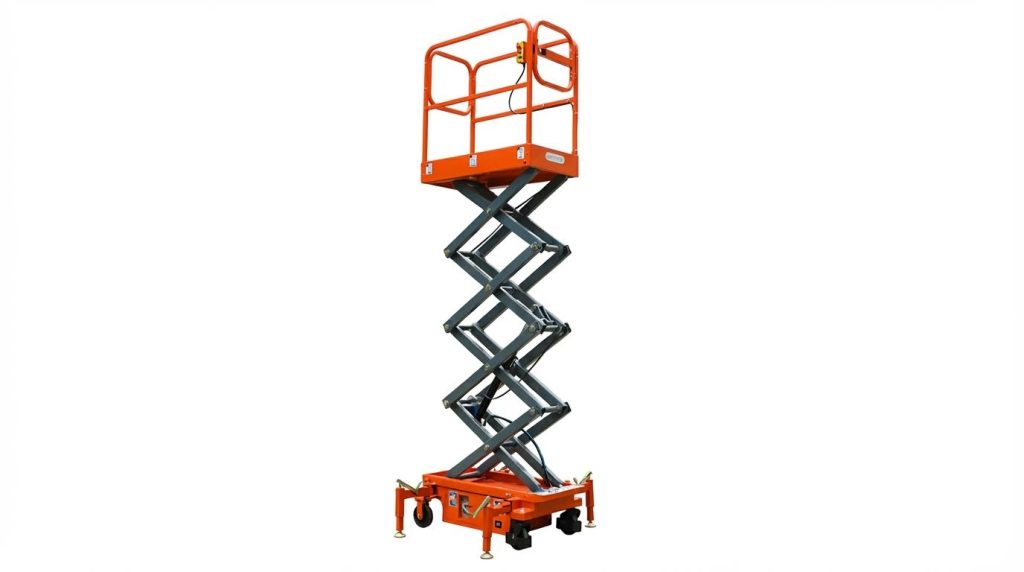
When warehouse teams ask “what is aerial platform” in practical terms, they usually mean one of three families: vertical lifts, scissor lifts, and boom lifts. All are Mobile Elevating Work Platforms (MEWPs) used to reach stock locations, conduct maintenance, or access building services in high-bay storage areas. Each type balances reach, capacity, maneuverability, and cost differently, so matching the platform to the task is critical for safe and efficient operations.
- Vertical lifts: Typically use a single or dual aluminium mast and a compact chassis. They offer platform heights in the 6–9 m range with lift capacities around 125–200 kg, powered by 24 V battery systems with about 2×12 V/120 Ah capacity for indoor warehouse use. Typical mast heights and capacities suit single-person tasks such as inventory checks and light maintenance.
- Scissor lifts: Use a criss-cross scissor mechanism to provide straight vertical elevation. Electric models are common indoors for longer runtime and low emissions, while engine-powered versions serve rougher yards or loading areas. They usually carry higher loads than vertical masts and are well suited to tasks like heavy shelf stocking or equipment installation. Electric and engine-powered scissor options allow operators to choose based on floor conditions and duty cycle.
- Boom lifts: Include telescopic or articulating booms and sometimes a jib arm for “up-and-over” access. A typical self-propelled boom with jib might provide about 11.2 m working height, 3 m horizontal outreach, and up-and-over capability around 7.9 m, with platform capacity near 200 kg for one to two occupants depending on indoor or outdoor use. These configurations are ideal when operators must reach over conveyors, mezzanines, or machinery.
Typical warehouse use-cases by lift type
Vertical lifts are best for light-duty, single-person tasks in narrow aisles. Scissor platform handle heavier tools and materials for racking work and installations. Boom lifts solve complex access problems, such as reaching behind pallet racking or over fixed process lines.
Drive Systems, Power Options, And Batteries

Drive and power choices define how an aerial work platform behaves in a warehouse: its travel speed, duty cycle, emissions, and maintenance profile. Most indoor MEWPs use electric drive and battery power to eliminate exhaust and reduce noise, while some mixed-use fleets still rely on internal combustion units for outdoor yards. Understanding these options helps operators decide what is aerial platform suitability for a given facility layout and shift pattern.
- Drive systems: Many warehouse platforms are self-propelled, allowing the operator to drive from the platform for higher productivity. Self-propelled aluminium mast units and boom platforms commonly use proportional controls and automatic braking during elevation for precise positioning and stability. Automatic braking and emergency lowering functions support safe maneuvering in congested warehouse aisles.
- Power options: Electric access vehicles dominate indoor warehouses and typically offer capacities from about 600 lb up to 2,000 lb, supporting order picking, shelf stocking, inventory work, and assembly tasks. These electric units provide clean operation and lower noise, which is important in enclosed spaces. Engine-powered scissor or boom lifts are more common outdoors or in partially open loading areas where higher power and rough-terrain capability are needed.
- Battery systems and care: Many indoor aerial work platforms use 24 V battery systems with deep-cycle lead-acid batteries sized around 120 Ah per 12 V unit for typical warehouse duty. Proper battery maintenance is critical because battery condition directly affects platform life and runtime; water levels should be checked before each use and electrolyte maintained within manufacturer limits. Routine battery inspections and lubrication practices reduce unplanned downtime and extend service intervals.
| Feature | Electric Warehouse MEWPs | Engine-Powered MEWPs |
|---|---|---|
| Typical use | Indoor aisles, smooth floors, order picking | Outdoor yards, rough terrain, construction zones |
| Emissions | Zero at point of use | Exhaust gases, ventilation required indoors |
| Noise | Low | Medium to high |
| Maintenance focus | Batteries, chargers, electrical systems | Engine, fuel, exhaust, hydraulics |
Capacity, Reach, And Stability Parameters

Capacity, vertical reach, horizontal outreach, and stability limits define the safe working envelope of any aerial work platform. For warehouse operators, these parameters determine which racking levels can be accessed, how many people and tools can be carried, and where the machine can safely travel. Understanding these limits is essential both for equipment selection and for operator training.
- Load capacity: MEWPs are rated for a maximum platform load that includes workers, tools, and materials. Electric access vehicles used indoors often span from about 600 lb to 2,000 lb capacity, while some traditional boom lifts for maintenance tasks may be limited to around 500 lb depending on the model. Published load ratings must never be exceeded, and operators should avoid using platforms as cranes or carrying objects larger than the deck area. Load capacity compliance is a core safety requirement.
- Reach envelope: A typical self-propelled boom with jib might deliver 11.2 m working height with 3 m horizontal outreach and an up-and-over height near 7.89 m, enabling access over obstacles such as conveyors or mezzanines. These envelope dimensions must be matched to racking heights and clearances in the warehouse. Vertical mast platforms with 6–9 m platform height are better suited to straight-up tasks where no horizontal outreach is required.
- Stability and tilt: Stability depends on wheelbase, outrigger use, platform height, and ground conditions. Industry guidance typically limits operation to about 5° out of level, roughly equivalent to a 10 in height difference over a 10 ft wheel span, beyond which a tilt alarm should activate. Tilt limitation rules require firm, level surfaces, proper use of brakes, and outrigger pads on solid ground. Wheel chocks and visual warnings such as cones and signs further reduce the risk of tip-over in busy warehouse traffic lanes.
Key specification checklist for warehouse AWPs
Verify maximum platform height versus top racking level, including required working height. Confirm rated capacity covers the heaviest expected combination of worker, tools, and materials. Check horizontal outreach and up-and-over height where access over conveyors or mezzanines is needed. Review tilt, slope, and outrigger requirements against actual floor conditions and dock gradients.
Selecting, Operating, And Maintaining AWPs In Warehouses
Matching Platform Type To Warehouse Applications
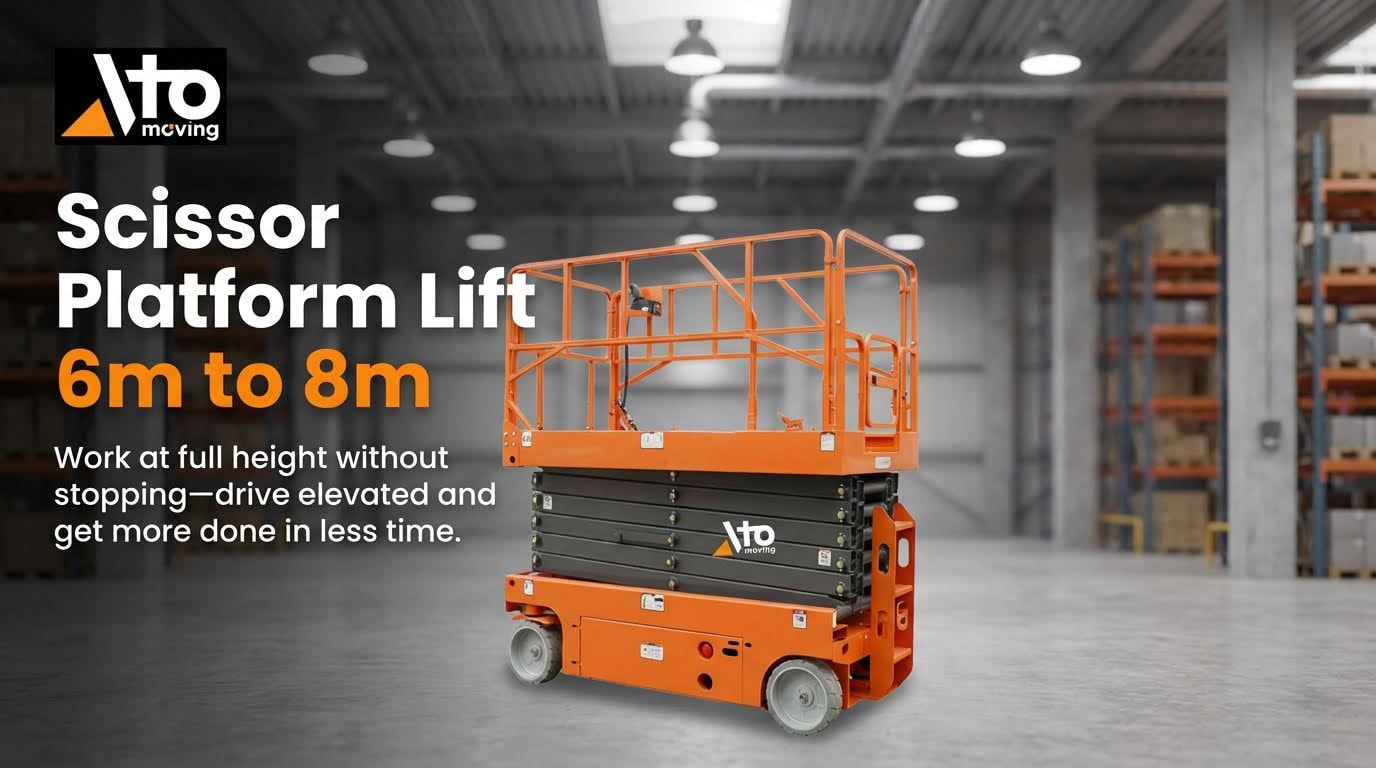
When warehouse teams ask “what is aerial work platform” in a practical sense, they are usually choosing between vertical lifts, scissor lifts, and boom‑type MEWPs for specific tasks. Vertical mast and compact self‑propelled aluminium platforms are ideal for light maintenance, cycle counting, and narrow‑aisle work because they offer platform heights around 6–9 m with slim stowed widths of roughly 0.79–1.0 m and lift capacities in the 125–200 kg range self‑propelled aluminium aerial work platform specs. Scissor lifts suit bulk picking, large‑area maintenance, and installation tasks where operators need a larger deck and straight‑up vertical reach; electric versions are preferred indoors for low noise and zero exhaust, while engine‑powered units are reserved for rough outdoor yards or dock approaches scissor lift models and use cases. Articulating or telescopic boom platforms with jibs are the best choice where technicians must reach over conveyors, mezzanines, or machinery; a typical self‑propelled boom can provide about 11.2 m working height, 3 m horizontal outreach, and up‑and‑over capability near 7.9 m, with around 200 kg capacity and different indoor/outdoor occupant limits technical data for a self‑propelled aerial work platform with jib. To select correctly, map each warehouse task (order picking, inventory, HVAC service, racking repair) to required working height, horizontal reach, aisle width, floor loading, and platform capacity, then verify that the chosen MEWP type and model meet or exceed those demands without exceeding floor, rack, or slab limits.
Typical warehouse AWP–task matching
- Order picking / shelf stocking: compact vertical mast or small electric scissor; low floor loading, high manoeuvrability.
- Inventory and cycle counts at height: vertical mast or scissor with adequate platform size for scanners and totes.
- Over‑conveyor or mezzanine access: articulating boom with jib and defined up‑and‑over reach.
- Dock canopy, façade, or yard lighting work: boom or rough‑terrain scissor rated for outdoor use and wind.
Safety Standards, Training, And Daily Inspections
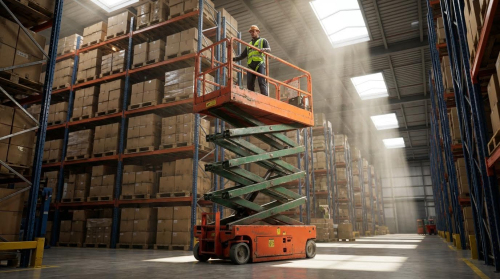
Safe warehouse use of aerial platforms hinges on three pillars: formal standards, trained operators, and disciplined inspection routines. In the U.S., employers must align MEWP programs with OSHA rules for vehicle‑mounted elevating and rotating work platforms (29 CFR 1910.67 and 1926.453), accident prevention (1926.20(b)), safety training (1926.21), and work near overhead lines (1910.333(c)(3)) OSHA aerial lift standards. Updated MEWP standards such as ANSI A92 also required that operators receive structured training on concepts like load limits, stability, and rescue procedures, and they specified that equipment must be inspected at least every 90 days or 150 operating hours, whichever came first ANSI A92 inspection interval guidance. Operator training needs to cover electrical, fall, and struck‑by hazards; recognizing unsafe conditions; correct operation for each lift type; and hands‑on demonstrations of skills, with retraining triggered by incidents, near‑misses, or changes in equipment type OSHA training requirements for aerial lifts.
Daily pre‑shift inspections should be formalized in checklists and logged. At minimum, operators or technicians should verify:
- Vehicle systems: fluid levels (oil, hydraulic, fuel, coolant), leaks, wheels/tires, battery and charger, steering, brakes, horn, lights, and backup alarm OSHA pre‑start inspection items.
- Lift structure: operating and emergency controls, guardrails and access gates, personal protective devices, hydraulic/pneumatic/electrical lines, fasteners and lock pins, placards and warning decals, outriggers, and guardrail systems lift component inspection checklist.
- Power source: battery water levels and general condition, since battery health is directly tied to MEWP life and uptime battery maintenance recommendations.
- Safety decals and markings: presence and legibility of capacity labels, hazard warnings, and control labels daily decal verification.
Before driving or elevating, the operator must also inspect the work zone for hazards such as drop‑offs, holes, debris, low ceilings, unstable or sloped floors, overhead power lines, or HVAC and rack obstructions, and must avoid operating on surfaces that exceed the lift’s tilt or slope limits work area inspection guidance. Load calculations should confirm that the combined weight of people, tools, and materials stays within the platform rating; the lift must never be used as a crane or for loads that overhang far beyond the deck load capacity rules for aerial lifts. Finally, fall protection practices—standing firmly on the platform, keeping gates closed, not climbing guardrails, and using a harness and lanyard on boom‑type platforms—are essential to keep elevated warehouse work both compliant and low‑risk fall protection guidance for aerial lifts.
Final Recommendations For Warehouse Operators
Engineering limits on capacity, reach, and tilt are not just numbers on a plate. They define the safe working envelope of every aerial work platform in your warehouse. When you respect these limits, the chassis, lifting structure, controls, and guardrails all work together to keep the machine stable and predictable.
Start by matching platform type to each task. Use vertical masts for light, narrow‑aisle work. Deploy electric scissor lifts where you need higher capacity and a larger deck. Reserve boom platforms for up‑and‑over access around conveyors, mezzanines, and fixed plant. Always confirm platform height, outreach, and rated load against racking levels, aisle widths, and slab capacity before purchase and before use.
Build your program on three pillars: standards, training, and inspection. Align procedures with OSHA and ANSI A92. Train operators on stability, load calculation, and rescue plans, not only on joystick use. Enforce daily pre‑shift checks on structure, controls, batteries, and work zones.
Finally, treat aerial platforms as engineered systems, not generic lifting tools. Choose equipment from proven suppliers such as Atomoving, maintain batteries and hydraulics on schedule, and lock out unsafe units. This disciplined approach turns aerial work platforms into a low‑risk, high‑productivity asset in any warehouse.
Frequently Asked Questions
What is an aerial work platform?
An aerial work platform (AWP), also known as a scissor lift, boom lift, or cherry picker, is a mechanical device used to provide temporary access for people or equipment to inaccessible areas, usually at height. These platforms are essential in various industries such as construction, retail, and manufacturing Aerial Work Platform Guide.
Is a scissor lift considered an aerial work platform?
Yes, a scissor lift is considered a type of aerial work platform (AWP). Specifically, it falls under Group A, Type 3 MEWPs, which are self-propelled machines with vertical lifts Scissor Lift Classification.
What are the main uses of an aerial work platform?
Aerial work platforms, including scissor lifts, are mainly used to elevate workers to high work areas. They are ideal for tasks like installing overhead lighting, cables, and HVAC pipes in buildings with high ceilings Aerial Lift Uses.
What safety precautions should be taken when using an aerial work platform?
When using an aerial work platform, ensure that:
- The lift is operated on flat, sturdy surfaces.
- Workers wear appropriate personal protective equipment (PPE) such as hard hats and safety harnesses if required.
- The area is clear of people, tools, and equipment when lowering the platform.
- Only trained and authorized personnel operate the lift Lift Safety Checklist.