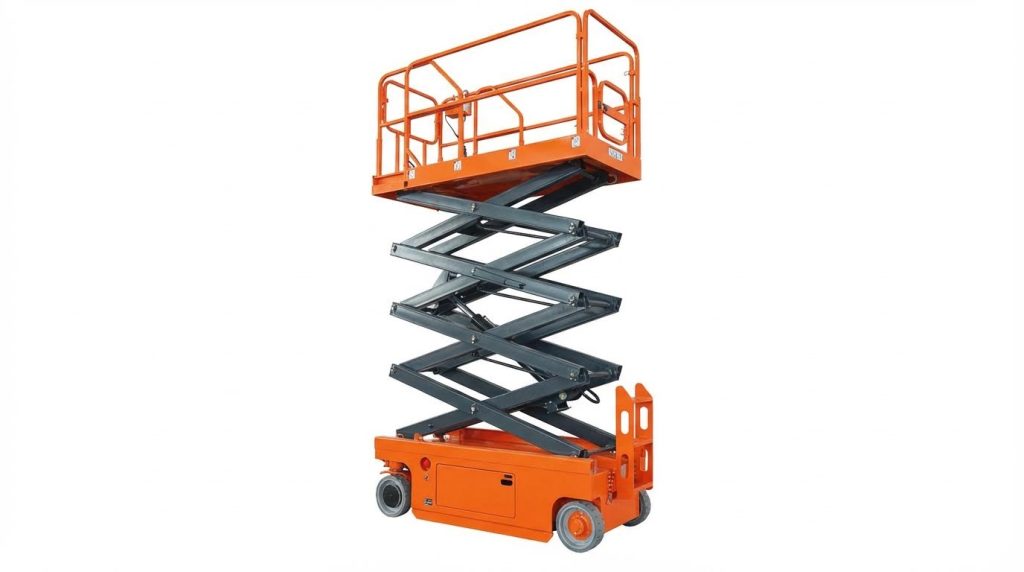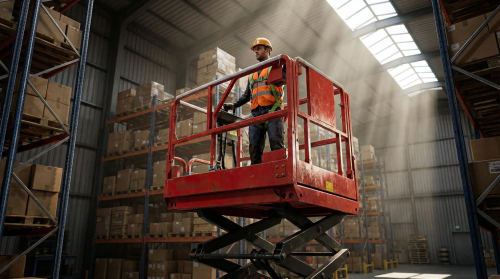
Understanding scissor lift weight capacity is critical if you specify, operate, or maintain lifting equipment. This guide explains how capacity is defined, what engineering factors actually limit it, and how to match a lift to your real platform load. You will see how geometry, structure, standards, and site conditions all interact so you can stay within safe working limits. Use it as a practical reference to reduce overload risk while improving productivity on every job.
How Scissor Lift Capacity Is Defined And Rated
Core components that carry the load
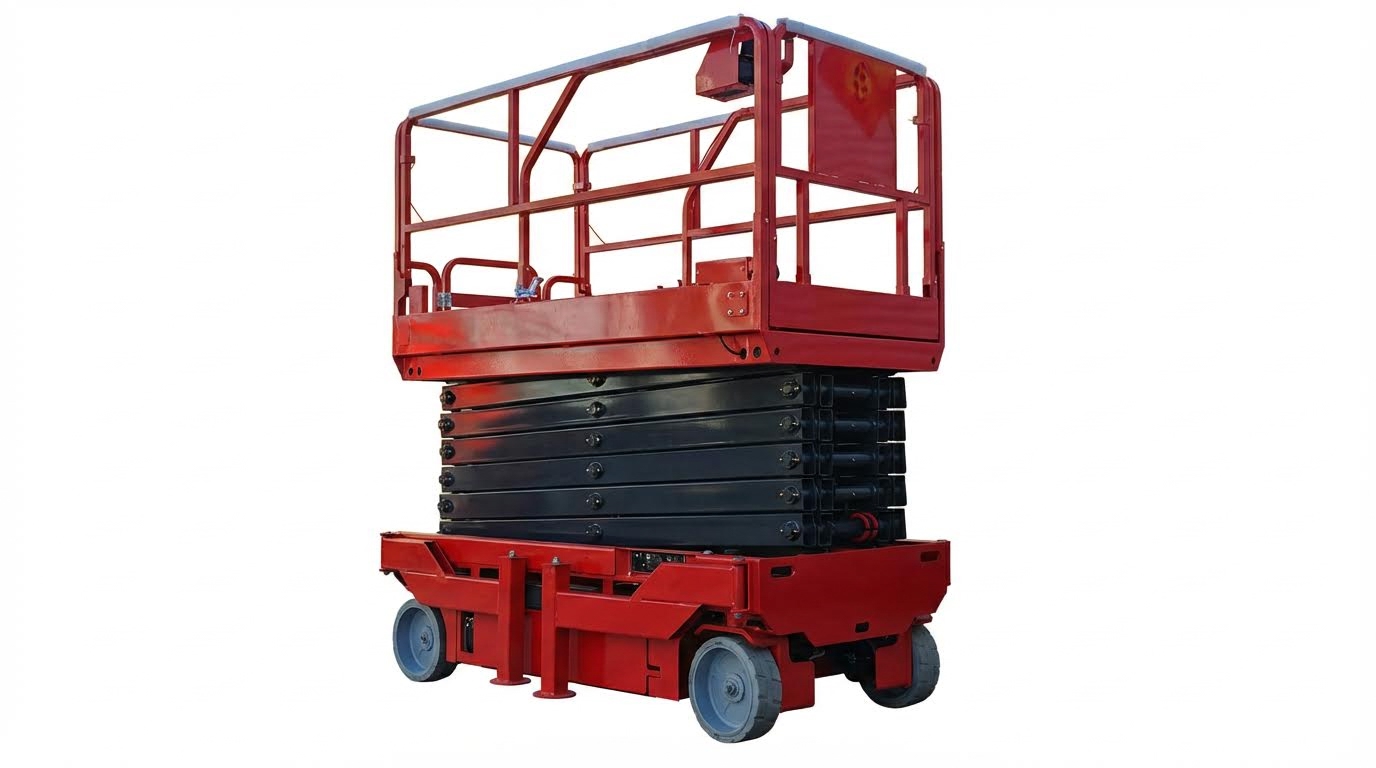
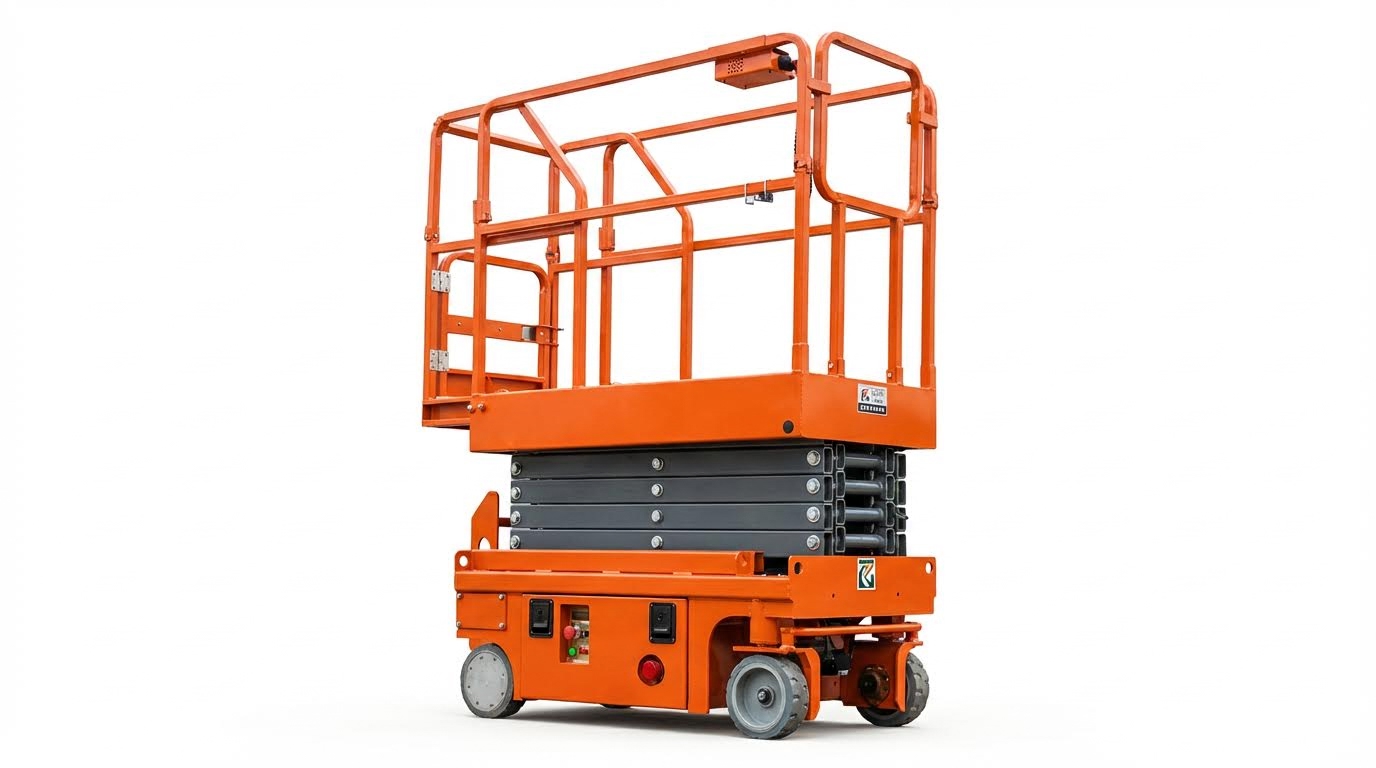
Scissor lift weight capacity starts with the components that physically carry and transmit the load from the platform down to the ground. A typical fixed or mobile scissor lift uses a platform, a base frame, a scissor arm stack, and one or more actuators (usually hydraulic cylinders) to support the rated load. The scissor arms form crossed “X” linkages that transfer vertical load into axial forces in the arms and shear/bearing forces in the pins and joints. The actuator force, arm strength, and joint design must all be sized so that, under maximum rated load, none of these parts approach their yield, buckling, or pressure limits. The base frame and its support points (wheels, outriggers, or floor anchors) then spread this load safely into the ground, assuming firm, level support conditions.
Key load‑carrying elements
- Platform: Carries personnel, tools, and materials and transfers load into the upper scissor hinges.
- Scissor arms: Crossed bars forming the “X” mechanism that directly resist compression and bending throughout the lift stroke.
- Pins and joints: Transfer forces between arms and into the base and platform; checked for shear and bearing stresses.
- Hydraulic cylinder or actuator: Provides the lifting force; limited by its rated pressure and rod/bore strength.
- Base frame and supports: Distribute the total load into the floor or ground without overstressing it.
From an engineering standpoint, scissor lift weight capacity is governed by the weakest of these elements in the worst‑case position, typically near full extension where mechanical advantage is lowest and member forces are highest. Designers verify that arm sections, pins, and cylinders all remain below their allowable stresses for axial compression, bending, shear, and buckling using standard parameters such as modulus of elasticity (E), moment of inertia (I), and effective length factor (K) in structural checks. Only after these internal checks are satisfied is a safe external rating assigned for the user.
Rated load, SWL, and safety factors
In the field, operators see scissor lift weight capacity expressed as a rated load or Safe Working Load (SWL) on the capacity plate. This number already includes engineering safety margins and regulatory requirements, so it is the absolute maximum total of people, tools, and materials allowed on the platform. Regulations require that scissor lifts be designed to support significantly more than this number in test conditions; for example, some OSHA rules require aerial equipment to support a multiple of its rated load to demonstrate structural robustness before being put into service.
Standards commonly limit SWL to a fraction of the theoretical maximum load the structure could carry. Some lifting standards specify that SWL should not exceed about 75% of the maximum load‑carrying capacity determined by the manufacturer, leaving a built‑in margin between calculated strength and what is allowed in normal use under real‑world conditions. Designers also apply safety factors typically in the range of about 1.5–3 between the predicted failure load of arms, pins, and cylinders and the rated load used on the nameplate to account for uncertainties.
| Term | What it means in practice |
|---|---|
| Maximum structural capacity | Theoretical load at which a component would reach yield or buckling in calculations or tests. |
| Design load | Internal load level used by engineers after applying safety factors to components. |
| Rated load / SWL | Value printed on the capacity plate; must never be exceeded in operation. |
Some standards describe SWL using simple formulas such as F = W × C, where W is the platform’s design load and C is a capacity factor (often around 0.75) used to derive a conservative working limit. For the end user, the key point is simple: the scissor lift weight capacity on the data plate is already reduced from what the machine can theoretically withstand. It assumes level, firm ground, proper load distribution, and compliant operating conditions, and it must be treated as a hard limit rather than a guideline.
Engineering Factors That Limit Weight Capacity
Scissor geometry and mechanical advantage
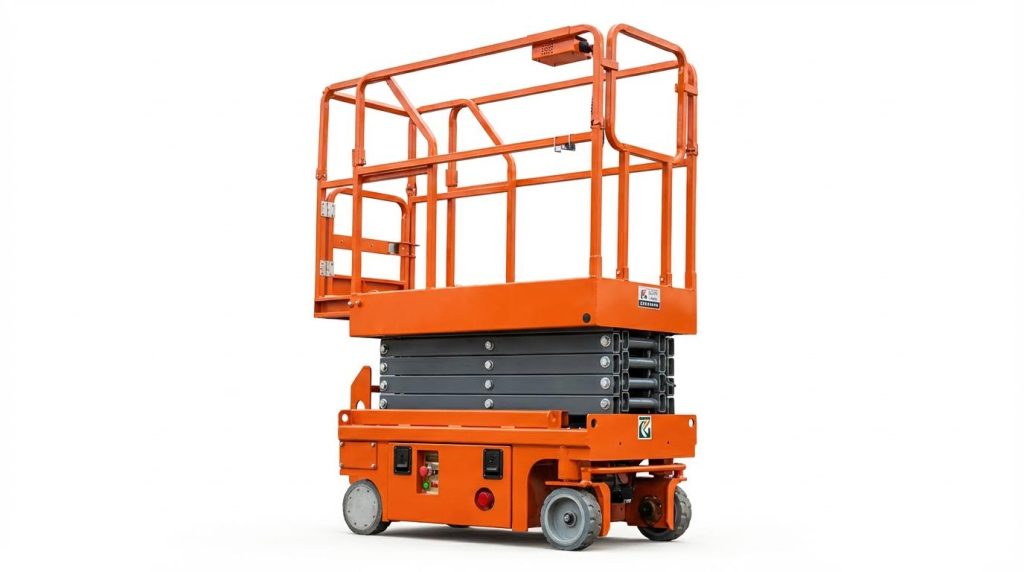
Scissor geometry is one of the primary engineering limits on scissor lift weight capacity. The “X” arms, their length, and the position of the hydraulic cylinder determine the mechanical advantage between cylinder force and platform load. As the lift rises and the arms approach the horizontal, the mechanical advantage drops sharply, so the same cylinder must work much harder for a given load at full height. In design, engineers relate arm length L, cylinder position d, and arm angle θ to calculate the mechanical advantage and resulting platform load for a given cylinder force using standard scissor-lift kinematics. Because of these geometric effects, many lifts are strongest at mid-stroke and may have reduced rated capacity at maximum elevation as manufacturers specify in their charts.
Structural checks: arms, pins, and cylinders
Even with favorable geometry, scissor lift weight capacity is capped by the strength of arms, pins, and hydraulic components. Designers verify that scissor arms do not exceed allowable bending stress and that they remain stable against buckling, using section properties like moment of inertia I and modulus of elasticity E in standard column and beam formulas. Pins and joints are checked for shear and bearing stresses, while cylinders are limited by rod buckling and rated hydraulic pressure to prevent yielding or fatigue. On top of this, engineers apply safety factors typically in the 1.5–3 range between ultimate capacity and rated load to ensure margin against overloads and dynamic effects. Regulatory guidance often requires that structures support several times the rated capacity, so the published scissor lift weight capacity is only a fraction of the true failure load in line with safety standards for lifting equipment.
Height, wind, and ground conditions
Usable scissor lift weight capacity also depends strongly on operating height and site conditions. Many lifts have a lower allowable load at full extension than at partial height because higher platforms create larger overturning moments and greater demand on the structure according to typical capacity charts. Wind adds lateral forces and can quickly erode stability; manufacturers usually rate outdoor use only up to specific wind speeds and may prohibit driving at height with full load because gusts can induce sway and tipping. Ground conditions are equally critical: soft soil, slopes beyond the rated grade, or hidden voids under slabs reduce the margin between stable and unstable operation and can cause one wheel or outrigger to sink. For safe planning, engineers and supervisors should treat the nameplate scissor lift weight capacity as valid only when the lift is on firm, level support, within wind limits, and operated according to the manufacturer’s height and travel restrictions as emphasized in operating guidance.
Matching Lift Capacity To Your Application
Calculating your real platform load
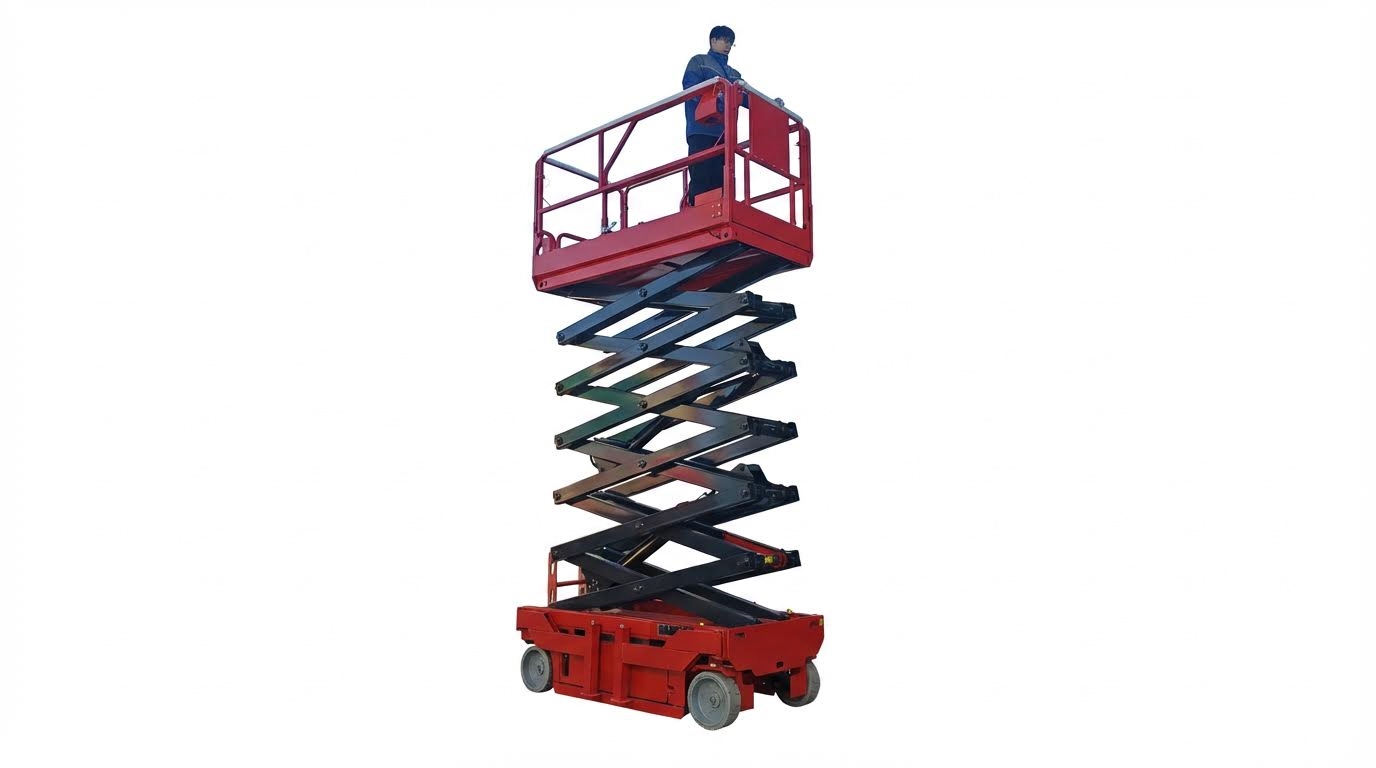
To match scissor lift weight capacity to your job, you first need a realistic platform load calculation. Count all people on the platform and assume around 90–100 kg (200–220 lb) per person including clothing and PPE for planning purposes. Then add the weight of tools, materials, and any fixed equipment.
- List powered tools (drills, saws, nailers) and use typical weights of 2–5 kg (5–11 lb) each where exact data is unknown as a conservative estimate.
- Estimate or measure material bundles (pipe, duct, cable drums, panels) and avoid stacking them in one corner of the deck.
- Add a 10–15% margin to cover small, forgotten items and weight variation in personnel and materials before comparing to the plate rating.
Once you have the total, compare it to the platform rating on the capacity plate and the operator’s manual. Remember that deploying an extension deck often reduces allowable load by about 90–115 kg (200–250 lb), and some models derate capacity at full height or in outdoor/windy use so the usable capacity can be lower than the headline figure. If your calculated load exceeds the available capacity in that configuration, you must either remove weight or select a higher-capacity lift.
Choosing capacity by lift type and use case
With a clear load estimate, you can select a scissor lift type whose scissor platform weight capacity and geometry match the work. Typical platform ratings range from about 230 kg (500 lb) on compact units to over 900 kg (2,000 lb) on heavy-duty models depending on size and duty class. Indoor slab or compact electric lifts usually cover one or two workers with light tools, while rough-terrain and industrial lifts are sized for heavier materials and more people.
| Lift type / environment | Typical capacity range | Best suited for |
|---|---|---|
| Compact / mini electric (indoor) | ≈230–300 kg (500–660 lb) typical range | 1–2 workers, light tools, maintenance |
| Standard indoor electric | ≈230–450 kg (500–1,000 lb) | Trades work with moderate materials |
| Wide-deck / material-focused | ≈350–550 kg (770–1,200 lb) | Bulkier materials, two workers |
| Rough-terrain scissor | ≈350–900 kg (770–2,000 lb) | Construction, uneven ground, heavier loads |
| Industrial / heavy-duty | ≈700–1,400 kg (1,500–3,000 lb) | Process plants, fabrication, heavy components |
Match not only capacity but also height, platform size, and terrain rating to the task, since ground conditions and wind can reduce usable capacity in real operation and increase tip-over risk if misapplied. For goods-only vertical transfer in warehouses or factories, fixed electric-hydraulic platforms with capacities around 500 kg are common, with platform dimensions tailored to the load footprint and building constraints to balance throughput and safety. Always select the smallest lift that comfortably exceeds your calculated load and operating conditions, rather than running at the limit of its rating.
“”
Key Takeaways For Safe, Compliant Operation
Scissor lift weight capacity is not a guess; it is the result of strict checks on geometry, structure, hydraulics, and stability. Engineers size arms, pins, cylinders, and frames so that, even in the weakest position at full height, stresses stay well below failure levels. They then apply safety factors and reduce this further to a Safe Working Load, which appears on the capacity plate.
Operations teams must treat that plate value as a hard limit, valid only on firm, level ground, within wind limits, and in the stated configuration. Real loads must include people, tools, materials, extensions, and any derating at height or outdoors. If the calculated platform load does not clear the rating with margin, you must either remove weight or move to a higher-capacity unit.
The safest strategy is simple: select a lift that comfortably exceeds your worst-case load and site conditions, not one that just meets them. Combine sound engineering review with disciplined load calculation and strict respect for the nameplate. When you do that, scissor lifts from suppliers such as Atomoving can deliver reliable height access with strong protection against overload, structural damage, and tip-over events.
Frequently Asked Questions
What is the weight capacity of a scissor lift?
The weight capacity of a scissor lift depends on its size and type. Smaller electric models, such as 10-foot lifts, typically support around 750 pounds (340 kg) and accommodate two people. Larger diesel-powered models, like those reaching 50 feet, can handle up to 1,500 pounds (680 kg) and carry six people. Scissor Lift Buying Guide.
How does the height of a scissor lift affect its weight capacity?
Taller scissor lifts generally have higher weight capacities, but this varies by model. For example, a 26-foot electric scissor lift may support 992 pounds (450 kg), while a 50-foot diesel lift can handle up to 1,500 pounds (680 kg). Always check the manufacturer’s specifications for precise details. Scissor Lift Size Guide.
What safety considerations should be kept in mind when using a scissor lift?
When operating a scissor lift, it’s important to stay within the specified weight limits to avoid tipping or mechanical failure. Additionally, ensure proper training for operators to prevent accidents like falls, electrocution, or entanglement. Never exceed the recommended number of people or load weight for the equipment. Scissor Lift Safety Tips.