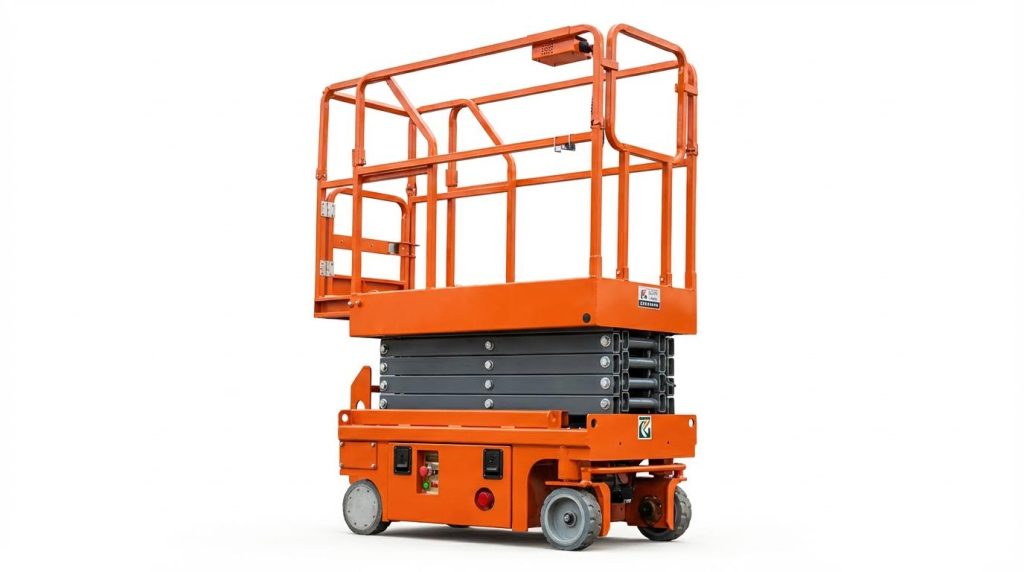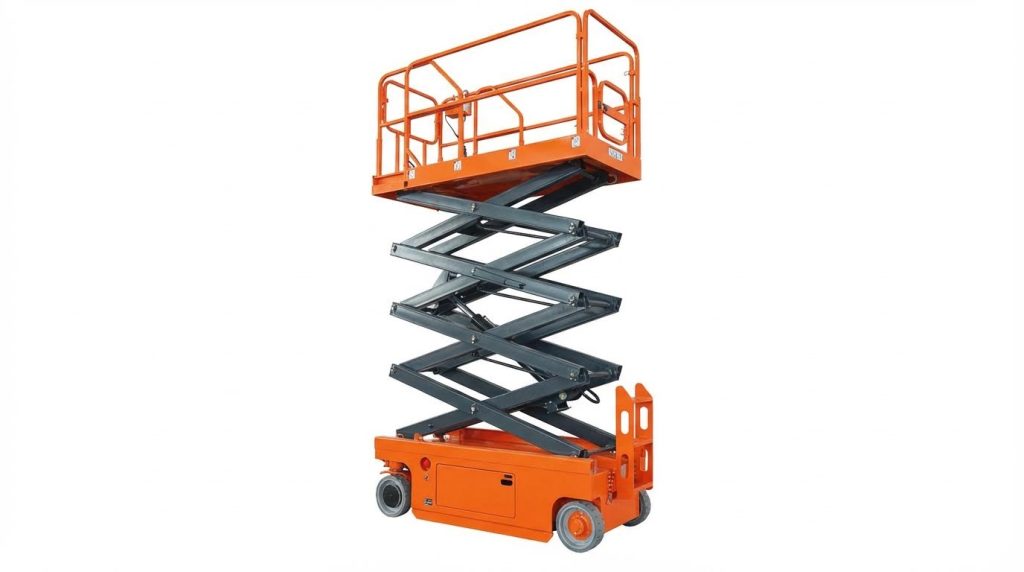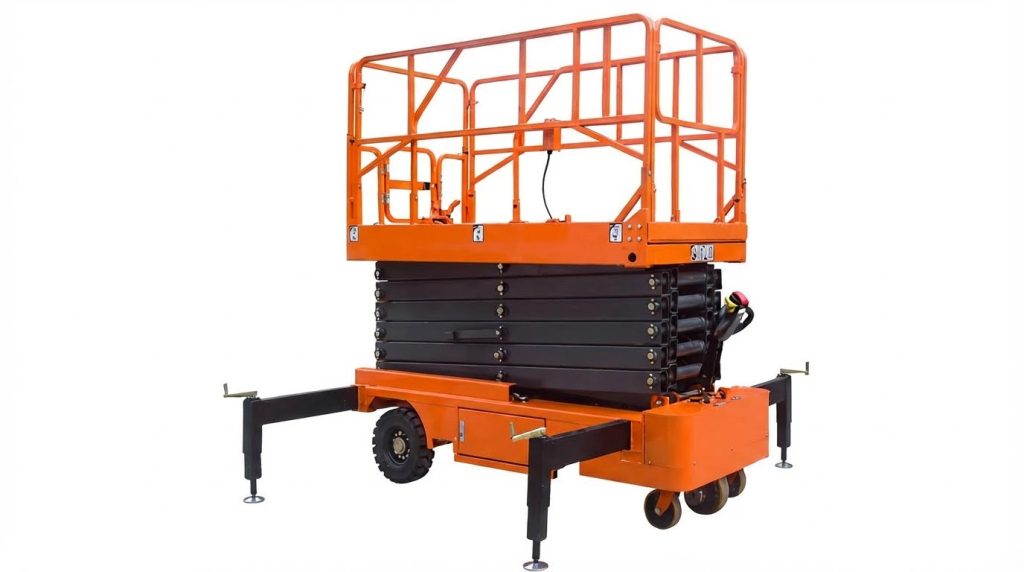
Choosing the correct scissor lift battery size is critical for safe operation, full-shift runtime, and controlling lifecycle cost. This guide walks through how duty cycle, voltage, amp‑hour capacity, and chemistry all interact so you can size batteries with engineering confidence. You will see how to move from formulas to field-ready choices, and how to match battery size to your application, environment, and charging pattern. Use it as a practical framework before you buy, upgrade, or standardize your fleet’s scissor platform batteries.
Understanding Scissor Lift Power And Battery Basics
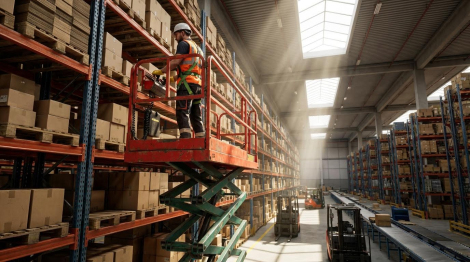
How scissor lift duty cycles drive battery demand
Duty cycle is the pattern of how often a scissor platform drives, lifts, and idles during a shift. This pattern directly controls how much energy the machine draws and therefore what scissor lift battery size you need. A lift that travels long distances, lifts to full height often, or runs multiple shifts per day will need higher amp‑hour (Ah) capacity than one used only for short indoor tasks. More frequent deep discharges also increase heating and wear in the battery, so correct sizing is important for both runtime and life.
- Heavy-duty cycles (construction, outdoor rough terrain, frequent full lifts) push current draw higher and for longer periods, so you typically size toward the upper end of available Ah ratings.
- Light-duty cycles (maintenance, short moves, low platform heights) allow smaller banks, provided you stay within recommended depth of discharge to protect battery life.
- Multi‑shift use without full overnight charging strongly favors larger capacity or higher‑efficiency chemistries so the battery can support partial charges and still deliver a full day of work. Lithium systems, for example, support short “opportunity” charges that can add up to two hours of operation from about 30 minutes of charging, and even a 5‑minute charge can power travel of around 100 feet with enough torque for loading ramps with no noticeable performance drop as state of charge falls.
In practice, you estimate daily energy use from the machine’s power draw and expected operating hours, then choose a scissor lift battery size that delivers this energy without exceeding typical depth‑of‑discharge limits. Lead‑acid batteries usually operate longest when limited to about 50–80% DoD, while lithium batteries can safely use around 80–90% of their rated capacity per cycle according to common sizing practice. Matching duty cycle to DoD is the first step to preventing mid‑shift shutdowns and premature battery failure.
Common voltages, configurations, and AH ratings
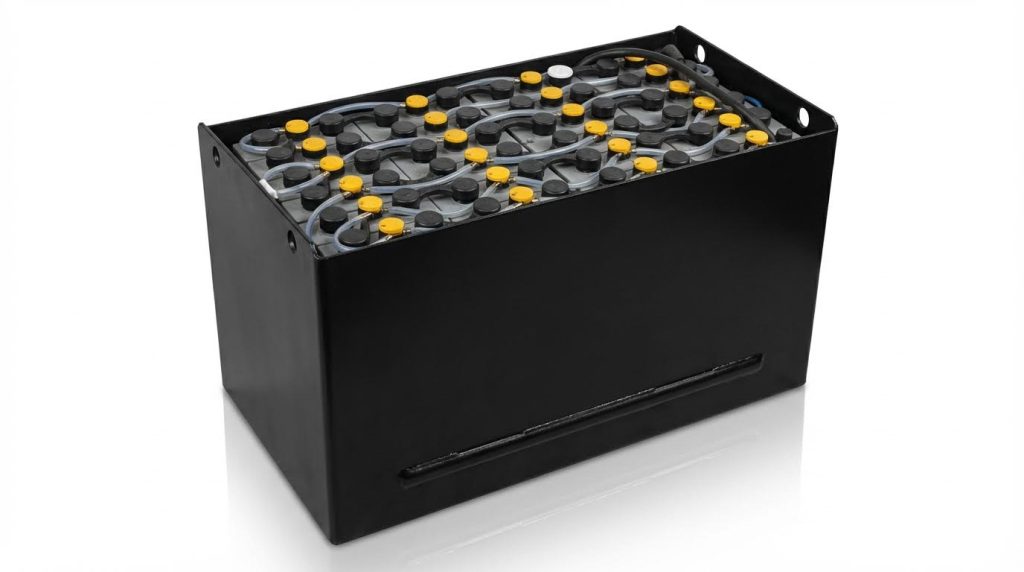
Most slab scissor lifts use low‑voltage DC traction systems built from multiple deep‑cycle batteries wired in series. A common configuration is a 24 V system using four 6 V batteries in series, typically in group size GC2 for a proper mechanical fit in the tray and to provide useful counterweight. Each of these 6 V batteries often weighs about 55–60 lb, and their combined weight helps stabilize the machine at height while the amp‑hour rating determines how long the lift can operate between charges.
- Typical 24 V scissor lifts commonly use four 6 V deep‑cycle batteries with minimum capacities around 220 Ah for many aerial applications as a baseline for acceptable runtime.
- Larger or higher‑demand models may use 48 V systems made from eight 6 V batteries in series, where minimum capacities of about 370 Ah are typical to support higher power draw and longer runtime in more demanding aerial work.
- Lithium 24 V packs for scissor lifts are often available in the 105–200 Ah range but deliver more usable energy because they can safely discharge to a higher DoD and maintain nearly constant voltage with low self‑discharge and integrated battery management.
Typical scissor lift battery configurations
| System voltage | Series configuration | Typical minimum capacity | Notes for sizing |
|---|---|---|---|
| 24 V (lead‑acid) | 4 × 6 V GC2 | ≈220 Ah minimum | Common on small–medium lifts; check tray size and counterweight needs for capacity guidance |
| 48 V (lead‑acid) | 8 × 6 V GC2 | ≈370 Ah minimum | Used on larger platforms needing higher power and longer runtime with more demanding duty cycles |
| 24 V (lithium) | Single pack | ≈105–200 Ah | Higher usable capacity per Ah, low self‑discharge, integrated BMS for monitoring and protection |
When you select a scissor lift battery size, you must keep voltage, series count, and tray dimensions fixed by the machine, then choose the highest practical Ah rating that fits these constraints and your duty cycle. Higher Ah in the same voltage and form factor extends runtime but increases weight and cost, so the goal is to meet your daily energy demand with some safety margin rather than oversize dramatically. Understanding these common voltages and configurations helps you quickly narrow down suitable options for both replacement and upgrade scenarios.
Engineering Battery Sizing: From Formula To Field
Using load, runtime, and DoD to size capacity
Engineering the correct scissor platform battery size starts with a clear view of load and runtime. First, estimate average power draw in watts from the lift’s nameplate data and duty cycle (drive, lift, idle). Then apply a standard capacity formula: C = (P × t) / (V × DoD × η), where C is capacity in Ah, P is power in watts, t is operating hours, V is system voltage, DoD is allowable depth of discharge, and η is system efficiency. This relationship ensures the pack can deliver the required energy while respecting discharge and system losses. Battery capacity can be calculated using C = P × t ÷ (V × DoD × η).
- For lead‑acid, engineers often limit DoD to about 50–80% to protect cycle life. Typical DoD ranges for lead‑acid are 50–80%.
- Lithium chemistries can run deeper, around 80–90% DoD, which increases usable capacity for the same nameplate Ah. Lithium‑ion batteries typically allow 80–90% DoD.
- System efficiency is usually in the 0.85–0.95 range and must be applied in the denominator so the calculated scissor platform lift battery size is realistic. Typical system efficiency is about 0.85–0.95.
After you compute theoretical capacity, add a 10–20% safety margin for aging, temperature, and unexpected load spikes to avoid mid‑shift brownouts. A 10–20% capacity margin is commonly recommended. In cold climates, you may need an additional 20–50% capacity to offset reduced performance, especially for outdoor construction lifts. Battery capacity can drop enough in low temperatures to require a 20–50% increase. The result is a scissor platform lift battery size that is grounded in physics, not guesswork, and robust enough for real‑world use.
Voltage, series strings, and tray fit constraints
Once capacity is defined, you must configure voltage and physical layout to match the machine. Many slab scissor lifts use 24 V systems built from four 6 V deep‑cycle batteries sized to group GC2. Typical scissor lifts use four 6‑V GC2 batteries in 24‑V systems. Rough‑terrain or larger platforms may use 48 V, commonly implemented with eight 6 V batteries.
| System voltage | Typical configuration | Minimum Ah guideline |
|---|---|---|
| 24 V | 4 × 6 V in series | ≈220 Ah minimum |
| 48 V | 8 × 6 V in series | ≈370 Ah minimum |
These minimums come from field experience with aerial lifts. A 24‑V aerial lift often uses four 6‑V batteries at around 220 Ah, while a 48‑V version uses eight 6‑V batteries at around 370 Ah. Each GC2 battery typically weighs about 55–60 lb, which also helps counterbalance the platform. GC2 6‑V batteries usually weigh 55–60 lb and are used as counterweight.
Tray dimensions and cable routing are hard constraints when selecting scissor lift battery size in Ah and in physical form. The series string must fit the OEM tray footprint and height, maintain required clearances, and allow access for service or BMS wiring. When switching chemistries (for example, from flooded lead‑acid to lithium), you may achieve the same or higher usable energy with fewer or lighter modules, but you still need to keep system voltage and connector locations compatible with the lift’s harness.
Comparing lead‑acid, AGM, and lithium options
The chemistry you choose changes how much usable energy you get from a given rated scissor lift battery size. Flooded lead‑acid is the traditional choice and usually the lowest first cost, but it delivers only about half its nameplate capacity in daily use if you limit DoD to around 50% to protect life. Lithium chemistries can safely use a much larger share of nameplate capacity, often 80–90%, so a lower Ah rating can deliver similar runtime. LiFePO4 batteries can typically discharge 90–100% of capacity, while lead‑acid is closer to 50%.
Cycle life and maintenance impact
Lithium packs offer far more cycles at deeper DoD than lead‑acid, which extends service life and stabilizes runtime over years. LiFePO4 batteries can reach 3,000–5,000 cycles at 80% DoD, versus roughly 500–1,000 cycles for lead‑acid at 50% DoD. AGM is a sealed lead‑acid variant that removes watering and reduces spill risk but still behaves like lead‑acid in terms of charge time and usable DoD. AGM batteries are sealed, spill‑proof lead‑acid with somewhat longer life and similar charge times.
Charge time and opportunity charging also affect the “effective” scissor lift battery size you need. Lithium systems can often fully charge in a few hours and accept frequent opportunity charges without harming life, which lets you size closer to the calculated capacity. Some lithium‑powered scissor lifts can fully charge in about 3.5 hours on a standard charger and support short opportunity charges that add hours of runtime. Lead‑acid and AGM usually need 8–10 hours for a full recharge, so you may upsize Ah to cover a full shift when overnight charging is the only option. Conventional lead‑acid packs often require 8–10 hours to recharge and lose performance as state of charge drops.
Finally, lithium packs with integrated battery management systems can deliver higher energy density in the same tray volume and operate across a wider temperature range, which is useful for outdoor or multi‑shift fleets. LiFePO4 scissor lift batteries in 24‑V series can offer around 105–200 Ah with three times the energy storage of conventional batteries and include BMS for safety and temperature monitoring. By comparing usable capacity, cycle life, charge profile, and maintenance, you can select a chemistry and scissor lift battery size that meets both engineering and total cost of ownership targets.
Selecting The Best Battery For Your Application
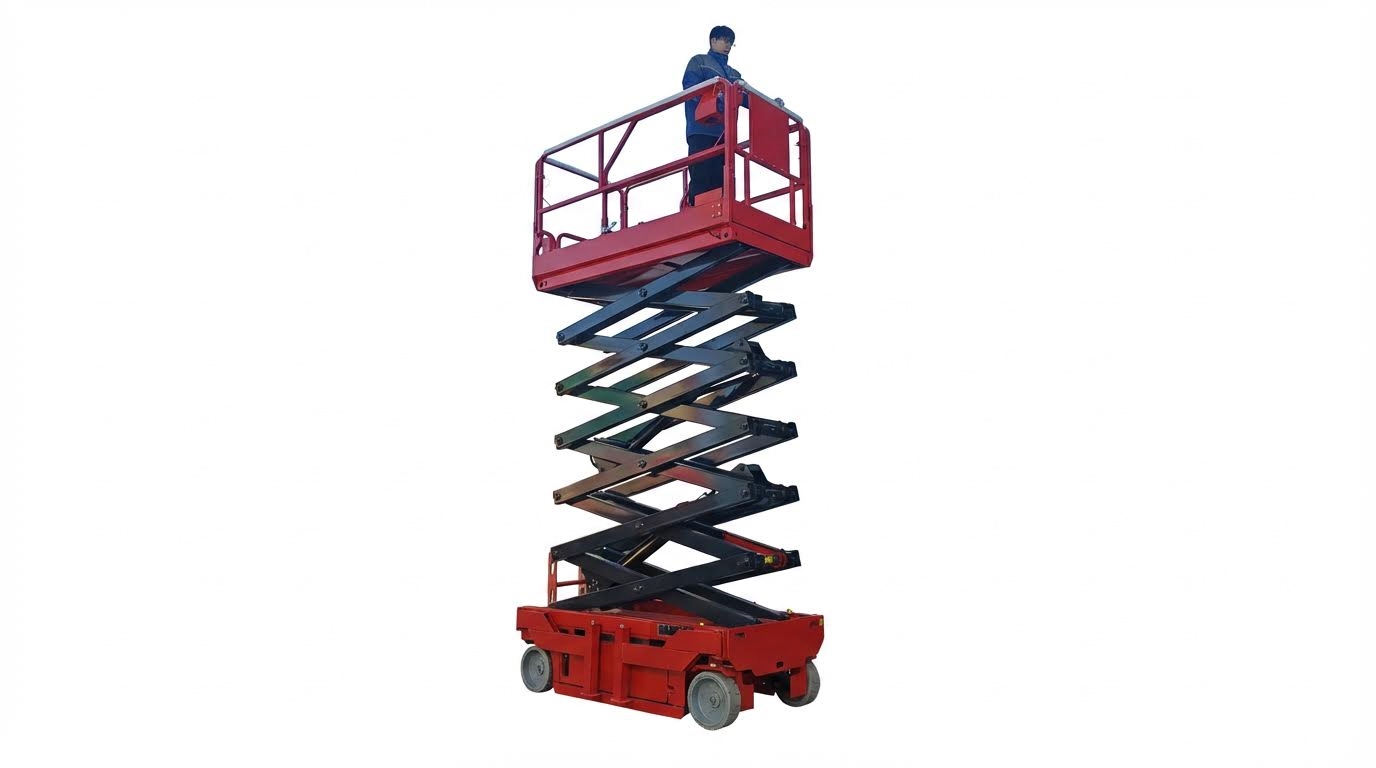
Matching battery size to shift pattern and charging
Start by mapping your actual duty cycle: hours of lift use per shift, number of shifts per day, and available charging windows. For a given scissor lift battery size, you want one full shift of work without dropping below the recommended depth of discharge, typically 50–80% for lead-acid and up to 80–90% for lithium. Depth of discharge and efficiency must be included in capacity calculations so the pack can deliver the required runtime without being oversized. Once you know your amp‑hour requirement, you can decide whether to meet it with traditional deep‑cycle lead‑acid, AGM, or a smaller‑AH but higher‑usable‑capacity lithium pack.
- If you run a single 8‑hour shift with overnight charging available, flooded lead‑acid or AGM with adequate AH and a 24 V set of four 6 V deep‑cycle batteries is often sufficient. Most scissor lifts use 6 V GC2 batteries in 24 V systems, and higher AH extends runtime.
- For multi‑shift or rental fleets with short breaks, lithium becomes attractive. Some lithium‑powered scissors could fully charge in about 3.5 hours on a standard charger and around 2.5 hours on a high‑power charger, supporting more than 20 hours of use per day without performance drop. Fast charge capability and stable performance at low state of charge are key advantages.
- Opportunity charging is a major design lever. Lithium packs can gain up to two hours of operation from about 30 minutes of charging, and even a 5‑minute charge may deliver enough energy to travel 100 feet with loading torque. If your work pattern includes frequent short breaks, you can run a slightly smaller scissor lift battery size and rely on these opportunity charges to carry the shift.
- Lead‑acid typically needs 8–10 hours to charge fully, and charging efficiency is lower than lithium, so you must size AH conservatively to avoid deep discharges late in the shift. Lithium chemistries often reach full charge in 1–2 hours with 95–98% charge efficiency versus 8–12 hours and 70–85% for lead-acid, which directly affects how much capacity you need on board.
Practical sizing tip
For planning, calculate the AH needed for your longest expected shift, add 10–20% safety margin, then check if your charging windows and charger power can reliably restore that energy before the next shift. If not, either increase scissor lift battery size, improve charging infrastructure, or move to a chemistry that tolerates higher DoD and faster charging.
Accounting for temperature, safety, and compliance
Ambient temperature has a strong impact on usable capacity and therefore on the required scissor lift battery size. Cold conditions can require increasing calculated capacity by 20–50% to offset reduced performance, especially for lead‑acid. Lithium iron phosphate systems for access equipment operate over a wide thermal range, with some designs working from approximately -20°C to +75°C and optional heaters allowing charging at low temperatures. This stability helps preserve usable capacity without oversizing as much for cold climates.
- Safety and environmental rules on your site should guide chemistry choice. Lithium iron phosphate packs eliminate liquid acid and gassing, reducing spill and ventilation concerns and meeting strict indoor and clean‑area requirements. AGM is spill‑proof but still contains acid and lead.
- From a lifecycle and compliance standpoint, you must also consider replacement frequency and waste. Lithium scissor lift batteries can reach roughly 3,500+ cycles compared with a few hundred cycles for many lead-acid packs, which reduces the number of battery changes and associated handling risk over the machine’s life.
- Maintenance capability is another constraint. Flooded lead‑acid needs watering, cleaning, and equalization; poor maintenance quickly shortens life. Tasks such as replenishing electrolyte, cleaning terminals, and periodic equalization charges are necessary to reach full life. If your operation cannot support this, sealed AGM or maintenance‑free lithium reduces safety incidents and unplanned downtime.
- Finally, align scissor lift battery size with standards and OEM constraints. Stay within the designed voltage and tray dimensions, and maintain the required counterweight mass while meeting your AH target. When in doubt, add a 10–20% capacity margin for aging, temperature variation, and unplanned loads rather than running consistently at maximum DoD. This safety margin improves reliability and supports compliance with internal safety policies.
Checklist: environment, safety, compliance
Before final selection, verify: (1) lowest and highest operating temperatures, (2) indoor air and spill restrictions, (3) maintenance resources and training level, (4) required runtime at those conditions, and (5) any site or regional rules on hazardous materials and recycling. Use these to fine‑tune chemistry and capacity rather than relying only on nameplate AH.
“”
Key Takeaways For Scissor Lift Battery Sizing
Correct scissor lift battery sizing is an engineering decision, not a guess. Duty cycle, depth of discharge, and system efficiency set the real energy demand. Voltage, series layout, and tray dimensions then limit what you can physically install. Within those limits, capacity, chemistry, and weight must work together to deliver runtime, stability, and safety.
Lead‑acid, AGM, and lithium do not give the same usable energy from the same amp‑hours. Lead‑acid usually needs higher nameplate capacity and strict DoD limits. Lithium can use deeper discharge and faster charging to achieve equal or longer runtime with fewer amp‑hours. Cold weather, multi‑shift use, and poor charging access all push you toward higher usable capacity and robust chemistries.
The best practice is clear. First, calculate required amp‑hours from load and runtime, including DoD and efficiency. Second, add 10–20% margin and adjust for temperature. Third, check that the chosen configuration fits OEM voltage, tray size, and counterweight needs. Finally, match chemistry to your charging pattern, maintenance ability, and safety rules. Use this structured approach when you select or upgrade Atomoving scissor lift batteries to reduce downtime, extend life, and keep operators safe.
Frequently Asked Questions
What kind of batteries do scissor lifts use?
Scissor lifts typically use either lead-acid or lithium-ion batteries. Lead-acid batteries are a traditional and cost-effective choice, while lithium-ion batteries offer better efficiency and require less maintenance. Battery Comparison Guide.
What voltage are scissor lift batteries?
Most scissor lifts operate on a 24V system. This setup usually requires four 6V batteries with a minimum rating of 220 amp-hours to meet the power demands. Battery Power Requirements.
Can you put lithium batteries in a scissor lift?
Yes, lithium batteries can be used in scissor lifts. Lithium-ion batteries provide a maintenance-free solution and deliver better performance compared to traditional lead-acid options. Lithium Battery Benefits.