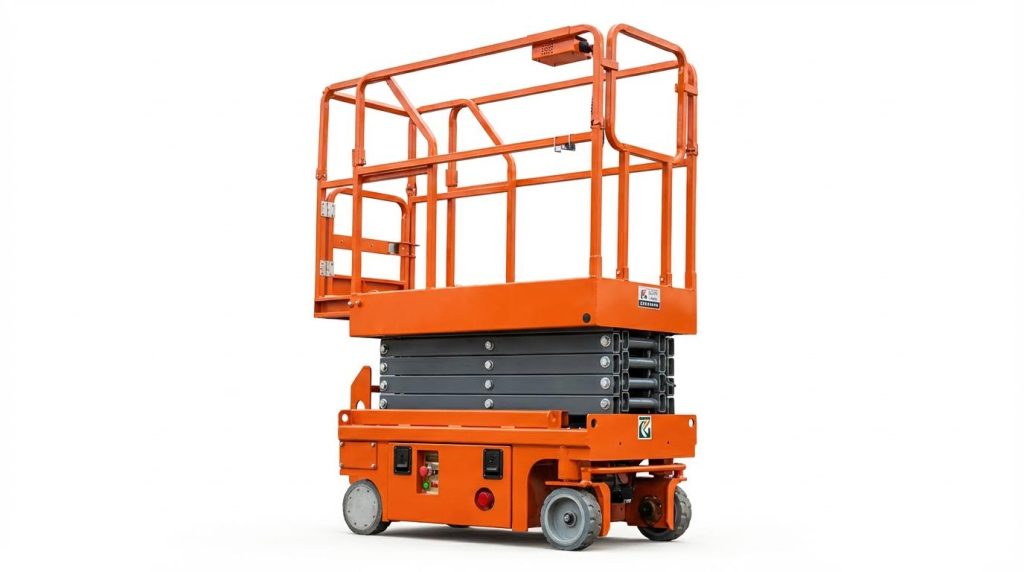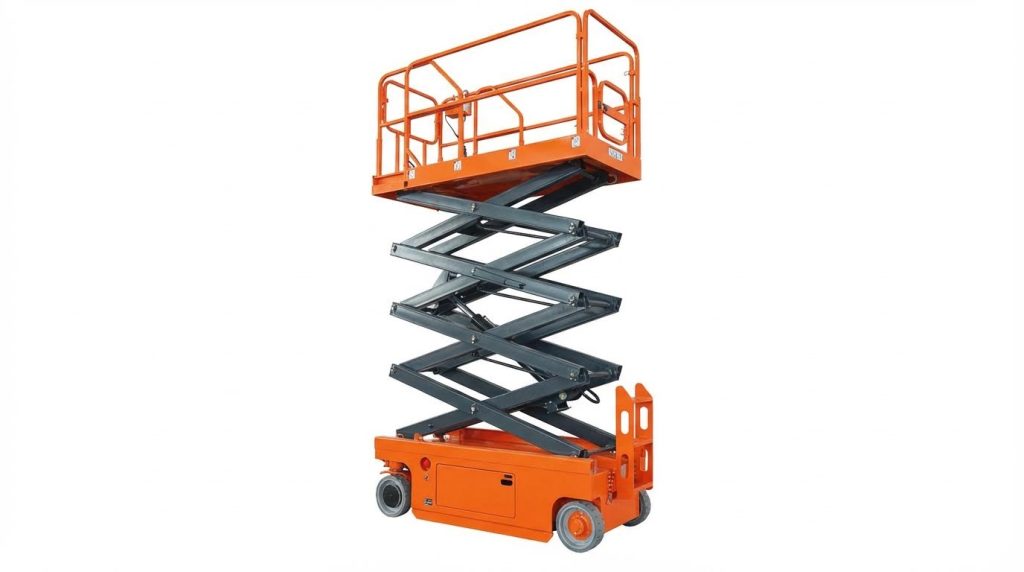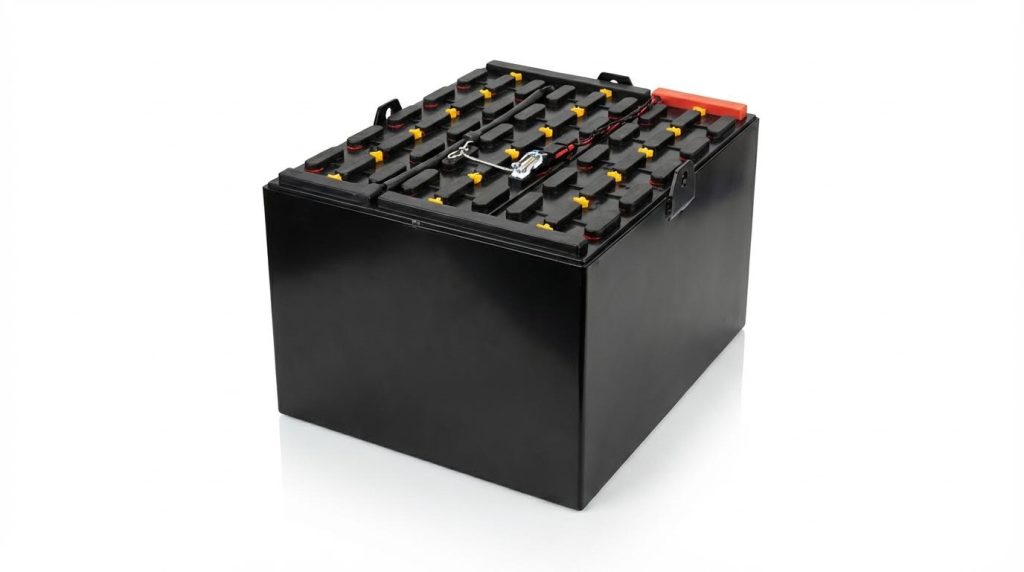
Understanding scissor lift charging time is critical for planning shifts, minimizing downtime, and protecting your battery investment. This guide explains how battery chemistry, capacity, temperature, and charger sizing affect real-world charge times, from overnight lead-acid charging to fast-turn lithium systems. You will see how engineering choices in batteries, chargers, and duty cycles translate into uptime, safety, and total cost of ownership. Use these principles to align charging strategy with your operation so your lifts are ready when your crews are.
“`html
Key Factors That Determine Scissor Lift Charge Time
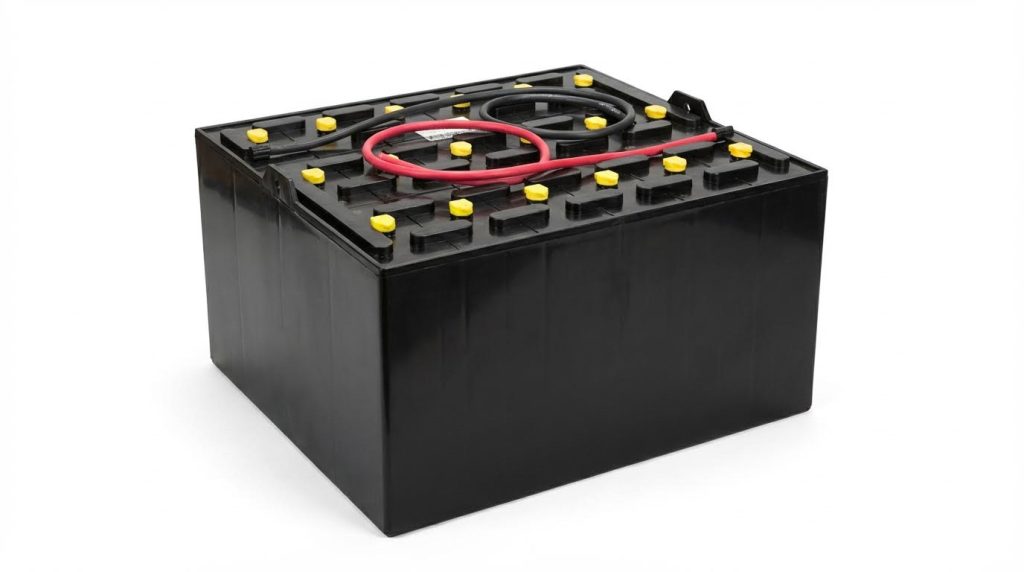
Typical charge times by battery chemistry
The biggest driver of scissor lift charging time is battery chemistry. Lead‑acid batteries are still common and typically need a full overnight charge. Lithium-ion packs support much faster turnaround and opportunity charging, which can reshape shift planning.
- Lead‑acid batteries: A typical 24 V, 400 Ah lead‑acid pack on a matched charger often needs about 8–10 hours to reach full charge under ideal conditions at around 25°C for a standard work platform. In practice, many facilities plan for a full overnight window.
- Lithium‑ion batteries (general range): Typical scissor lift lithium packs charge in roughly 2–4 hours from low state of charge, depending on capacity and charger rating according to industry charger data. This shorter scissor lift charging time allows same‑shift turnaround instead of overnight dependence.
- Example – lithium at partial SOC: A 48 V, 200 Ah lithium pack on a 48 V, 60 A charger can recover from about 50% state of charge in roughly 2–3 hours, even at a slightly cool 20°C ambient based on published examples.
- High‑power lithium charging: Some lithium scissor lifts can fully charge in about 3.5 hours with a 650 W charger and in roughly 2.5 hours with a 900 W charger, and can also use short “top‑up” sessions during breaks according to field reports.
In some applications, charging a scissor lift battery enough for a full workday took about six hours, while other electric aerial work platforms needed 12–16 hours for a complete charge window depending on model and battery. Facilities should therefore treat chemistry choice as a strategic lever when they plan scissor lift charging time and overnight infrastructure.
How capacity, SOC, and temperature change timing
Beyond chemistry, three variables dominate scissor lift charging time: battery capacity, starting state of charge (SOC), and temperature. These factors interact with the charger rating and profile to set real‑world turnaround times.
- Battery capacity: Higher amp‑hour (Ah) capacity stores more energy but also takes longer to refill. For any chemistry, a larger pack will need more hours on the same charger, which is why some large electric AWPs require 12–16 hours for a full charge window in heavier‑duty configurations.
- State of charge (SOC): A nearly empty battery always takes longer to recover than one that returns to the charger at a higher SOC. A pack at 20% SOC will need significantly more time than one at 60% SOC to reach the same final level under the same charger. Regular opportunity charging and avoiding deep discharges can therefore reduce daily charging windows.
- Temperature: Charging is most efficient in a moderate band, roughly 10–27°C (50–80°F) per common charging guidance. Cold slows the electrochemical reactions and lengthens charge time, while high heat can force chargers or battery management systems to limit current to protect the pack.
- Capacity loss at low temperatures: A battery that delivered full capacity at about 80°F may only provide around 65% at 32°F and roughly 40% at 0°F in typical industrial experience. This means more frequent charging events and longer apparent scissor lift charging time in cold warehouses or outdoor winter work.
Facilities can improve predictability by keeping chargers and lifts in temperature‑controlled areas when possible and by standardizing when operators plug in (for example, at 40–50% SOC instead of waiting for deep discharge). Matching charger output to battery capacity, monitoring SOC trends, and controlling temperature will give the most consistent, repeatable charging times across a fleet.
“`
Engineering The Charge: Batteries, Chargers, And Duty Cycles
Lead-acid vs. lithium-ion charging profiles
Lead-acid and lithium-ion batteries behave very differently during charging, and this directly affects scissor lift charging time. Typical lead-acid packs on scissor lifts need about 8–12 hours for a full charge under normal conditions for a full charge, with many fleets planning on overnight charging. A 24 V, 400 Ah lead-acid battery paired with a 40 A charger may require around 8–10 hours at about 25°C to reach full charge to charge fully under optimal temperature conditions. Lithium-ion systems typically charge in roughly 2–4 hours for a full cycle, and in some configurations 2–3 hours from 50% state of charge, even at about 20°C at a moderate state of charge lithium-ion batteries typically charge within 2–4 hours. Their higher charge acceptance at elevated currents and better efficiency near full capacity support much shorter scissor lift charging time windows and more frequent opportunity charging during breaks higher energy density and efficiency.
Sizing chargers and estimating charge duration
Correct charger sizing is critical to achieve predictable scissor lift charging time without damaging the battery. Charge duration is driven mainly by battery amp-hour capacity, initial state of charge, and the charger’s current or power rating. For example, a 48 V, 200 Ah lithium-ion pack on a 60 A charger can recover from 50% state of charge in roughly 2–3 hours under moderate temperatures may take approximately 2–3 hours to charge. In another case, a single scissor lift can fully charge in about 3.5 hours with a 650 W charger, or around 2.5 hours with a 900 W charger, illustrating how higher charger power directly shortens charge time when matched correctly to the battery fully charge in 3.5 hours with a standard 650W charger, and in 2.5 hours with an optional 900W charger. For lead-acid, many facilities plan 6–10 hours to reach a usable level for a full shift, and up to 12–16 hours for some electric aerial platform, depending on depth of discharge and charger size approximately six hours to charge a scissor lift sufficiently for a full workday lead-acid batteries require 8–12 hours for a full charge. Whatever chemistry you use, charger voltage must match the battery system (for example, a 24 V lift requires a compatible 24–25.2 V charger) to avoid overheating or failure to charge otherwise, overheating or failure may occur.
Safety, standards, and maintenance best practices
Safe charging practices protect both personnel and battery assets while keeping scissor lift charging time consistent over the life of the fleet. Before charging, operators should park the lift in a clean, well-ventilated area away from flammable materials, power the machine off, and inspect connectors for dirt or oxidation that could restrict current flow inspect the battery connectors for dirt or oxidation. Maintaining moderate ambient temperature, roughly 10–27°C, helps the battery charge efficiently and prevents capacity loss that occurs in very cold or hot environments optimal charging temperature is between 10°C–27°C a battery fully charged at 80°F will operate at only 65% capacity at 32°F. For lead-acid batteries, regular checks of water level, corrosion, and wiring insulation are essential to avoid hot spots, short circuits, and unplanned downtime; water should be topped up with distilled or deionized water after charging on a defined schedule maintaining appropriate water levels in lead-acid batteries battery water levels should be checked weekly. Using chargers with automatic shutoff and avoiding repeated interruption of charge cycles help prevent overcharge, sulfation, and overheating, supporting longer battery life and more predictable performance across every duty cycle auto-cutting function that stops charging once the battery reaches full capacity interrupting the charging process can lead to partial charges.
“`html
Matching Charging Strategy To Your Operation
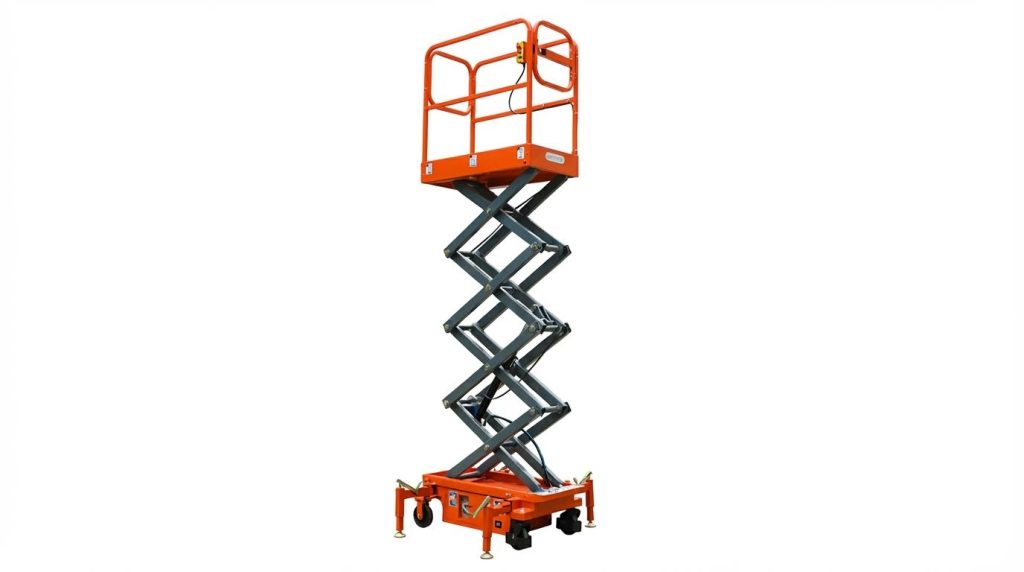
Planning shifts, opportunity charging, and downtime
To plan around scissor lift charging time, start by mapping when lifts actually move, lift, and sit idle across a full week. A typical lead‑acid unit may need 8–12 hours for a full recharge, which fits best into a single overnight window for most facilities. Lithium‑ion lifts, by contrast, often recharge in 2–4 hours and can accept higher charge rates efficiently, which makes them well suited to split shifts and multiple breaks during the day without extending downtime. This difference is critical when you design work patterns around the required runtime and the available charging windows.
- For single‑shift, 8–10 hour operations, you can usually run lead‑acid lifts all day and charge them once overnight, accepting the longer scissor lift charging time.
- For two‑ or three‑shift operations, you often need either larger battery capacity, additional machines, or faster‑charging lithium‑ion systems to avoid mid‑shift outages.
- Where breaks are predictable (lunch, shift handover), opportunity charging works well for lithium‑ion, which can gain several hours of runtime from short plugs in; in some cases, 30 minutes of charge can yield a couple of hours of power for a scissor lift without harming battery life.
When you plan downtime, separate “hard” downtime (lift unavailable due to low charge) from “soft” downtime (lift parked but ready). Lead‑acid batteries should not be repeatedly shallow‑charged and unplugged mid‑cycle, as this can shorten life over time if done as a routine practice. Lithium‑ion packs, however, are designed to tolerate frequent partial charges and are ideal where you can plug in during every natural pause. The more precisely you align work patterns, break schedules, and charger locations, the fewer extra units you need to cover charging gaps.
Choosing battery technology for TCO and uptime
Selecting between lead‑acid and lithium‑ion should start with a clear view of required uptime and acceptable scissor lift charging time. Lead‑acid batteries usually cost less up front but need 8–12 hours to fully recharge and more frequent maintenance, including watering and cleaning, which adds hidden labor and downtime over the life of the fleet compared with faster chemistries. Lithium‑ion batteries charge in roughly 2–4 hours and can sometimes reach full charge in as little as 2–3.5 hours depending on charger power, which directly improves fleet availability in multi‑shift environments for many models. They also last longer in terms of charge cycles and tolerate deeper discharge without the same penalty on lifespan, which influences total cost of ownership over several years in demanding duty cycles.
| Factor | Lead‑acid | Lithium‑ion |
|---|---|---|
| Typical full charge time | About 8–12 hours | About 2–4 hours |
| Best use pattern | Single shift, overnight charging | Multi‑shift, frequent opportunity charging |
| Maintenance | Regular watering, cleaning, inspections | Minimal routine maintenance |
| Cycle life | Lower; sensitive to deep discharge | Higher; handles deeper discharge |
| Up‑front cost | Lower | Higher |
From a TCO perspective, lead‑acid can be economical in low‑utilization fleets where overnight charging is sufficient and labor to maintain batteries is readily available. In high‑utilization fleets or facilities with strict uptime and limited floor space, the faster charging, longer cycle life, and reduced maintenance of lithium‑ion often offset the higher purchase price over the equipment life. Environmental and safety requirements also matter: lithium‑ion eliminates watering and acid spill risks, which can be critical in clean, sensitive, or regulated spaces such as healthcare or data environments where contamination must be tightly controlled. By comparing your duty cycle, shift pattern, and maintenance capacity against these trade‑offs, you can choose the battery technology that delivers the best balance of uptime and total cost for your scissor lift fleet.
“`
“”
Summary: Optimizing Scissor Lift Charging For Your Fleet
Scissor lift charging time is not a fixed number. It is the result of engineering choices across chemistry, capacity, charger size, and temperature control. Lead-acid favors low capital cost and overnight charging. Lithium-ion favors fast turnaround, opportunity charging, and high utilization. Neither is “better” in every case. The right choice depends on your duty cycle and shift plan.
Facilities that run single shifts with long idle nights can design around 8–12 hour lead-acid charging. They must accept stricter maintenance and avoid partial charges. High-intensity or multi-shift sites gain more from lithium systems. They can recover in 2–4 hours and use short top-up windows during breaks. This reduces the number of lifts needed for the same work.
Whatever you choose, match charger voltage and current to the battery, keep charging areas within the 10–27°C band, and standardize plug-in rules by state of charge. Treat charging as part of the production plan, not an afterthought. When you apply these engineering principles with Atomoving scissor lifts and chargers, you turn battery management into predictable uptime, safer operation, and lower total cost across the fleet.
Frequently Asked Questions
How long does it take for a scissor lift to charge?
Most electric scissor lifts typically take about 8 to 10 hours to fully charge. However, some models may require up to 12 hours for a complete charge. For optimal battery life, it is recommended to follow the 8-8-8 Rule: 8 hours of operation, 8 hours of charging, and 8 hours of cooling. Electric Scissor Lift Guide.
Can you overcharge a scissor lift battery?
Yes, overcharging a scissor lift battery can cause permanent damage and may even lead to a fire. It is essential to monitor the charging process and disconnect the charger once the battery is fully charged. Scissor Lift Charging Safety.