Electric forklifts are now the default choice for indoor warehouses, but many teams still ask how high can an electric forklift lift while staying safe, stable, and productive. This guide walks through typical lift ranges by truck type, the engineering limits behind tall masts, and how rack design and aisle layout drive your real “usable” height. You will see how factors like mast deflection, load center, and capacity derating affect what you can actually store at the top beam. Use it as a practical framework to match lift height, truck type, and warehouse design so you get the reach you need without compromising safety or efficiency.
How High Electric Forklifts Can Safely Lift
Typical lift heights by electric truck type
When people ask how high can an electric forklift lift, the answer depends strongly on truck type and mast design. In everyday warehouse work, electric counterbalance trucks typically handle lift heights around 10–15 feet for dock work and low racking in standard configurations. Purpose‑built high‑reach equipment pushes much higher, but always within the rated capacity at the specified load center.
| Electric truck type | Typical max lift height range | Typical application |
|---|---|---|
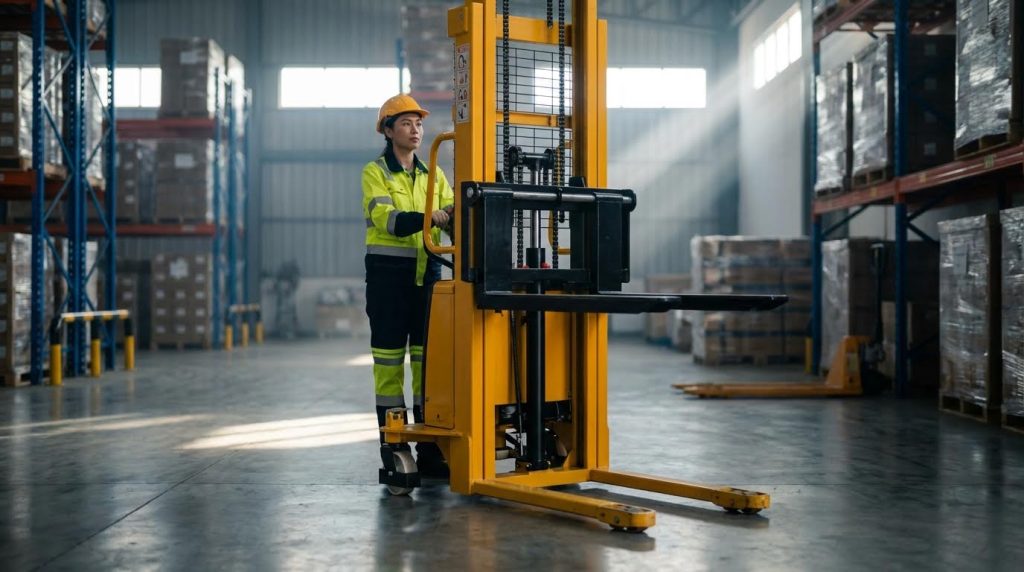
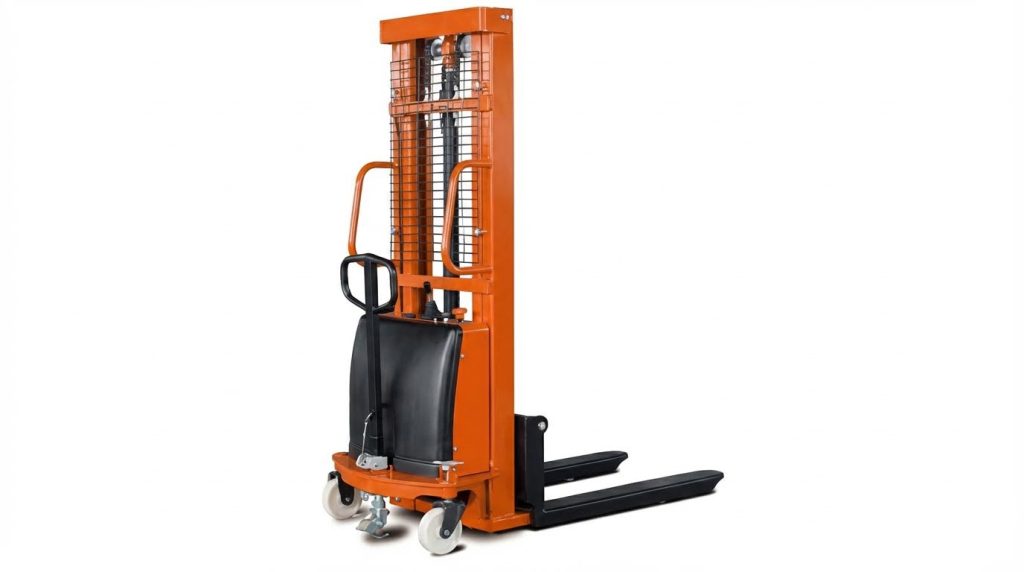
| counterbalanced stacker | 3–6.5 m (≈10–21 ft) for common models | Light pallet stacking, back‑of‑store |
| Electric counterbalance | Up to ≈7.5 m (≈25 ft) in standard warehouse setups for typical designs | Dock work, floor storage, low–medium racking |
| Electric reach truck | ≈8.5–10.5 m (≈28–34 ft) for standard and high models in narrow aisles | High‑bay storage, narrow aisles |
| Very narrow aisle / turret truck | ≥12 m (≈39+ ft) in specialized aisles with guided operation | Very high‑bay racking in tight aisles |
Electric forklifts are often chosen specifically because they can handle lighter loads at higher elevations in tall racking systems in modern warehouses. For most general warehousing, standard racks of 3–5 m height are adequate, and many electric trucks are optimized around this band to balance cost and performance. High‑bay systems at or above 8 m require equipment with higher masts and additional stabilization features, which is where reach and turret trucks become the correct answer to how high can an electric forklift lift safely in practice.
Rated lift vs. “usable” lift in real operations
The nameplate rating on an electric forklift shows the maximum lift height and capacity under ideal test conditions, but the usable lift in your operation is usually lower. Capacity derates as the mast extends and as the load center moves away from the carriage; most trucks are rated at a 24‑inch load center, and shifting the center of gravity beyond this triangle increases tip‑over risk according to stability‑triangle principles. In real warehouses, operators also need headroom below sprinklers, lights, and ceiling structures, so the highest pallet position is often set 200–300 mm below the mechanical mast limit to maintain clearance.
Safe usable lift height is further reduced while traveling. Industry guidance recommends carrying loads only 10–15 cm (4–6 in) above the floor during travel to keep the center of gravity low and reduce tip‑over risk on typical warehouse surfaces. Traveling with a raised load significantly increases the chance of instability, collision with racking or overhead structures, and loss of load, so the full mast height is intended only for stacking and retrieval, not for horizontal transport in normal practice. From an engineering and safety standpoint, the real answer to how high can an electric forklift lift is therefore: as high as the data plate allows at the actual load center, minus the safety margins you build in for clearance, stability, and visibility in your specific site.
Engineering Factors That Limit Lift Height
Mast design, stages, and deflection
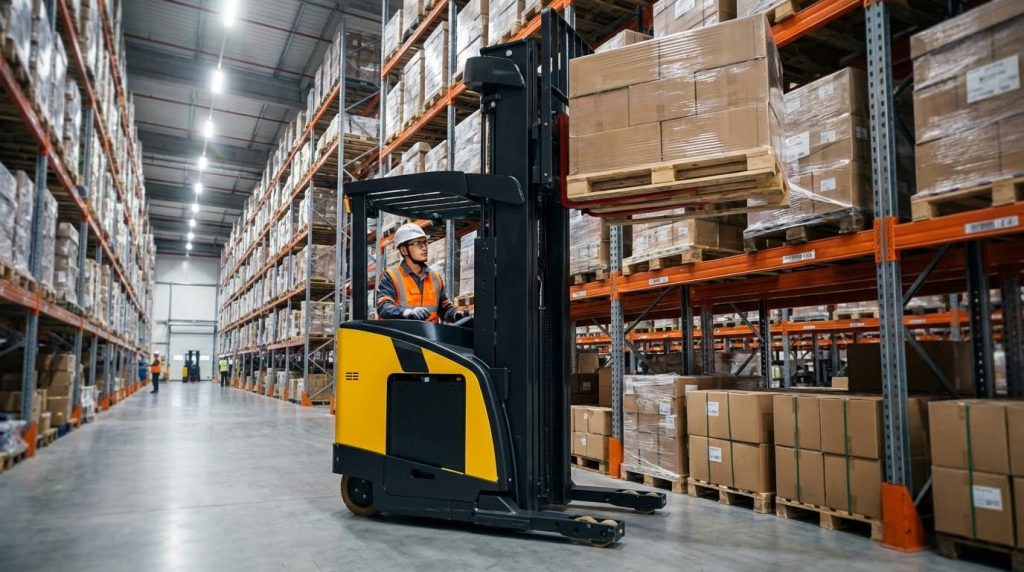
When you ask how high can an electric forklift lift, the mast structure is the first hard limit. Two‑stage masts are simple and rigid but usually serve low to mid rack levels, while three‑ and four‑stage “quad” masts reach higher but flex more under load. As height increases, mast channels, chains, and rollers see higher bending and compressive loads, so engineers size sections and bearings to keep deflection within safe limits. Excessive mast deflection reduces clearance to racks, increases load sway, and can force manufacturers to cap maximum lift height even if the hydraulics could raise the carriage higher.
- Higher masts need larger mast rails and cross‑members to control bending.
- More stages add joints and clearances, which increase play and sway at full height.
- Side‑shifters, clamps, and attachments increase overhang, magnifying deflection.
Designers balance visibility, collapsed height, and maximum lift so trucks still fit under doors and mezzanines. For very high‑bay work above typical reach‑truck ranges of about 8.5–10.5 m standard and high‑reach truck lift heights, operations often move to specialized turret trucks or stacker cranes instead of pushing a conventional electric forklift mast beyond its stiffness envelope.
Load center, capacity derating, and stability
Load center and stability usually answer the practical question of how high can an electric forklift lift a given pallet. Most industrial forklifts are rated at a 24‑inch load center, roughly the middle of a standard pallet typical rated load center. If the load is longer, or not fully against the backrest, the effective load center increases and the truck must be derated. At height, the combined center of gravity of truck and load moves upward and can shift outside the stability triangle defined in OSHA 29 CFR 1910.178 stability triangle principles, so manufacturers reduce the allowable capacity as lift height increases.
- Capacity charts show how rated load drops as mast height and load center increase.
- Attachments add weight and move the load forward, further derating capacity.
- Traveling or turning with a raised load greatly increases tip‑over risk raised‑load tipping hazards.
Safe practice is to keep forks low during travel, typically 10–15 cm above the floor recommended fork travel height, and only lift to full height when stacking. Engineers therefore size counterweights, wheelbase, and axle placement so the truck remains inside its stability triangle at the highest rated lift, but they still limit nameplate capacity to maintain a margin for dynamic effects like braking and steering inputs.
Powertrain, batteries, and duty cycle at height
The electric powertrain and battery system also constrain how high can an electric forklift lift repeatedly in a real shift. Lifting a load is pure hydraulic work drawn from the traction battery, so higher masts and heavier loads demand larger pumps, valves, and motors, and they drain the battery faster. In warehouse duty cycles where trucks run multiple hours per shift, engineers must balance maximum lift height against required runtime, often targeting at least six hours of loaded operation in factory environments typical factory operating requirements.
- Higher lift speeds and heights require more powerful hydraulic circuits, increasing energy use per cycle.
- Battery voltage sag at low state of charge can slow lift and reduce usable height late in the shift.
- Thermal limits on motors, controllers, and hydraulic oil restrict continuous high‑lift operation.
Modern electric forklifts use continuously variable speed control to smooth acceleration and reduce load sway benefits of electric drive indoors, which is especially important at height. But this control strategy, plus safety interlocks that slow travel and hydraulic functions with elevated loads, means the theoretical maximum lift height on the data plate may be achievable only at reduced speeds and with a lighter load than the truck’s base capacity.
Matching Lift Height To Your Warehouse Design
Rack heights, aisle width, and truck selection
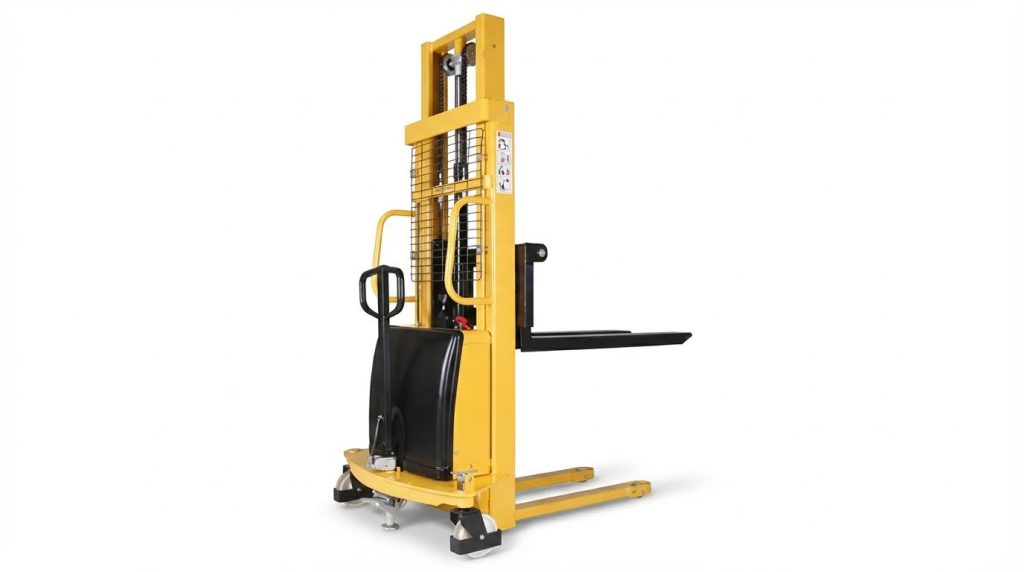
Start by mapping your rack profile: standard pallet racks of 3–5 m can be handled by basic counterbalance trucks or counterbalanced stacker, while high-bay racks at or above 8 m demand reach trucks, turret trucks, or stacker cranes with stabilizing systems for safe operation. Standard racks and high-bay rack guidance When you ask how high can an electric forklift lift in your building, you also need to check clearances to lights, sprinklers, and beams; the truck’s maximum lift should stay below the lowest overhead obstruction with a safety margin. Aisle width then narrows the choice: conventional counterbalance trucks need wide aisles, while reach, trilateral, and bilateral turret trucks can work in aisles down to about 1.5–1.8 m, and automated stacker cranes operate in similar very narrow aisles. Typical aisle widths by truck type Electric forklifts are usually the better fit for indoor warehouses because of their compact dimensions, smooth variable-speed control, and zero emissions, which all help in tight racking layouts. Indoor suitability of electric forklifts
Quick selection checklist
- Measure top beam height and lowest overhead obstacle.
- Define required “usable” lift (top pallet plus clearance).
- Check aisle width against truck minimums.
- Match truck family (counterbalance, reach, turret, stacker crane) to height and aisle constraints.
Safety standards, visibility, and operator training
Warehouse design must support safe answers to how high can an electric forklift lift in daily use, not just on the spec sheet. As lift height increases, stability margins shrink, so layouts should respect OSHA stability principles and keep loads within the truck’s rated capacity and load center to avoid shifting the combined center of gravity outside the stability triangle. Stability triangle and load center concepts Racks, cross-aisles, and travel paths should be laid out so operators can keep forks low when traveling—typically 10–15 cm (4–6 in) above the floor—to maintain a low center of gravity and reduce the risk of tipping or striking overhead structures. Recommended fork height during travel Elevated loads also cut forward visibility, so good warehouse design includes clear sightlines, marked pedestrian routes, and, where needed, mirrors or cameras to help operators see around tall pallets. Visibility issues with high loads Finally, your lift-height strategy only works if operators are trained on load centering, full fork insertion, controlled mast tilt-back, and the specific hazards of traveling and turning with raised loads, supported by regular maintenance to keep masts, forks, and tires in safe condition. Training focus areas for high-load work Impact of maintenance on safe load height
“”
Key Takeaways On Electric Forklift Lift Height
Safe electric forklift lift height is never just a mast number. It comes from how mast stiffness, load center, and stability limits interact with your rack layout and clearances. As height rises, deflection, reduced capacity, and a higher center of gravity all eat into the nameplate rating, so your real “usable” lift is lower than the catalog figure.
Engineering teams should start with the warehouse: top beam height, lowest overhead obstacle, and aisle width. From there, choose the truck family that naturally fits those limits, rather than stretching a counterbalance or reach truck beyond its ideal range. Always size capacity at the true load center, including attachments, and enforce travel rules that keep forks low and speeds reduced with elevated loads.
Operations leaders must back this up with clear procedures, operator training, and maintenance that keeps masts, chains, forks, and tires within spec. When in doubt, add margin: set top pallet positions below the mechanical limit, derate for awkward loads, and favor stability over a few extra centimeters of reach. This approach lets Atomoving customers achieve high‑bay storage while protecting people, product, and uptime in daily work.
Frequently Asked Questions
How high can an electric forklift lift?
An electric forklift’s maximum lift height depends on its design and mast configuration. Standard electric warehouse forklifts with a quad mast can reach heights of up to 20 feet (6 meters). Warehouse Forklift Rentals.
- Quad mast forklifts can extend to heights of 278 inches (approximately 23 feet or 7 meters).
- Specialized models, like high-capacity reach trucks, can lift loads as high as 45 feet (13.7 meters).
What factors determine the lifting height of an electric forklift?
The lift height is influenced by the mast type, forklift model, and intended application. For example:
- A triple or quad mast allows for higher stacking in warehouses.
- Electric reach trucks are designed for narrow aisles and greater heights compared to standard pallet jacks.
For more details on mast configurations, refer to this guide: Forklift Mast Guide.