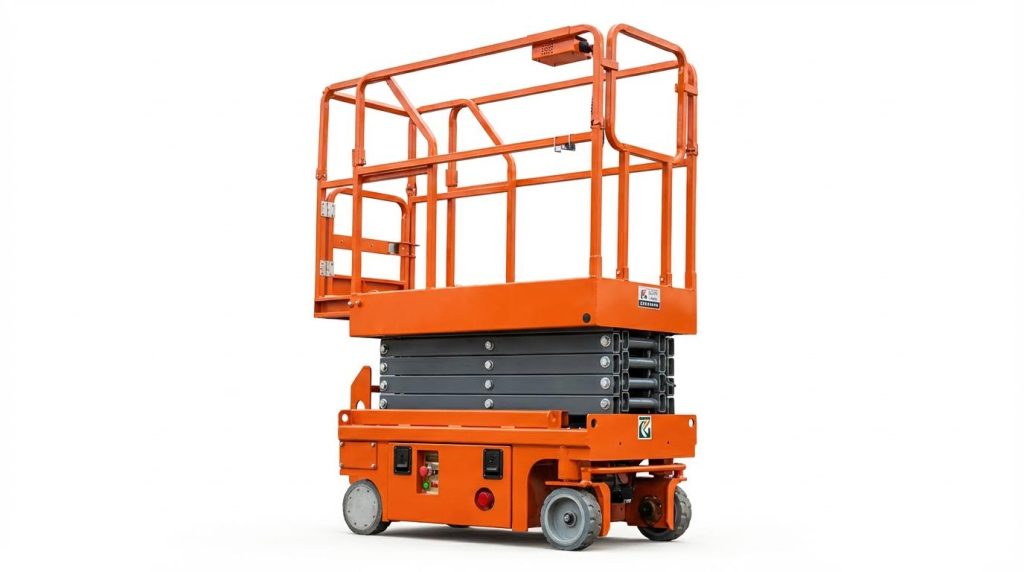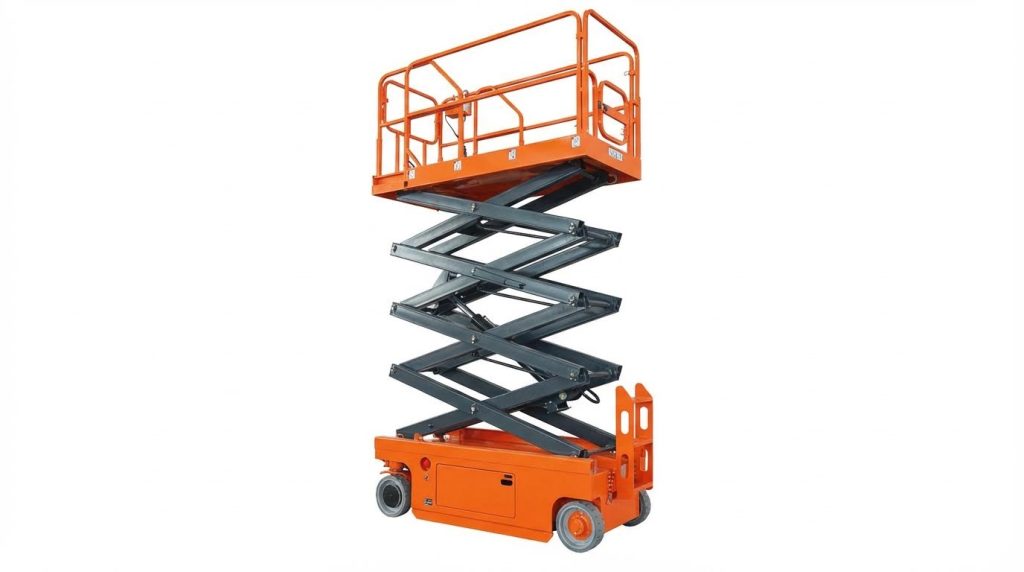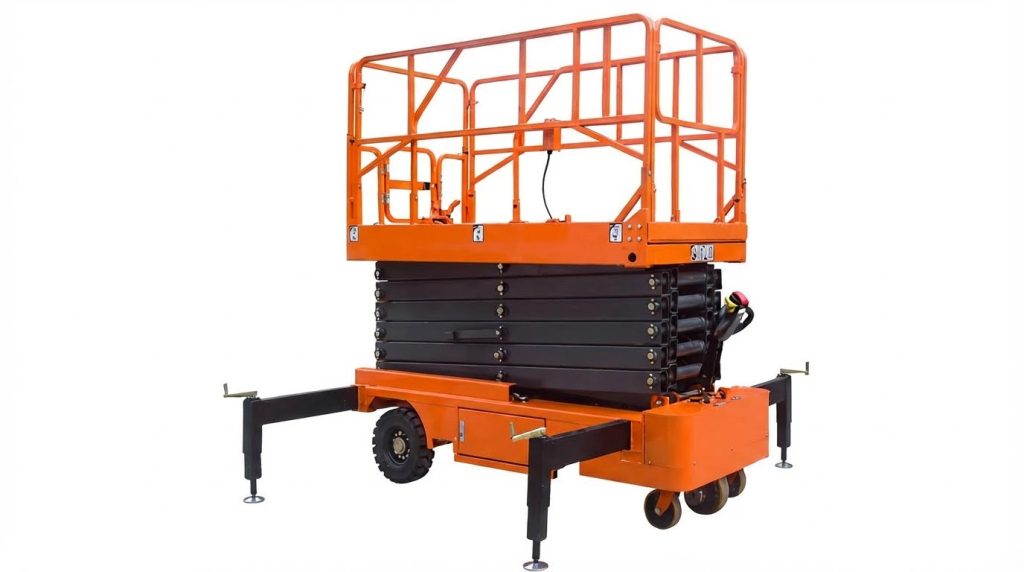
Scissor lift harness requirements are not as simple as “always” or “never.” The right answer depends on how OSHA and ANSI classify the lift, whether guardrails are compliant, and what your site rules and local codes demand. This article explains when a harness is legally required, when it is a best-practice control, and how wind, ground conditions, and loading change your fall protection decisions. Use it as a practical guide to align safety policies, operator training, and procurement specs with current fall protection expectations for scissor platform lifts.
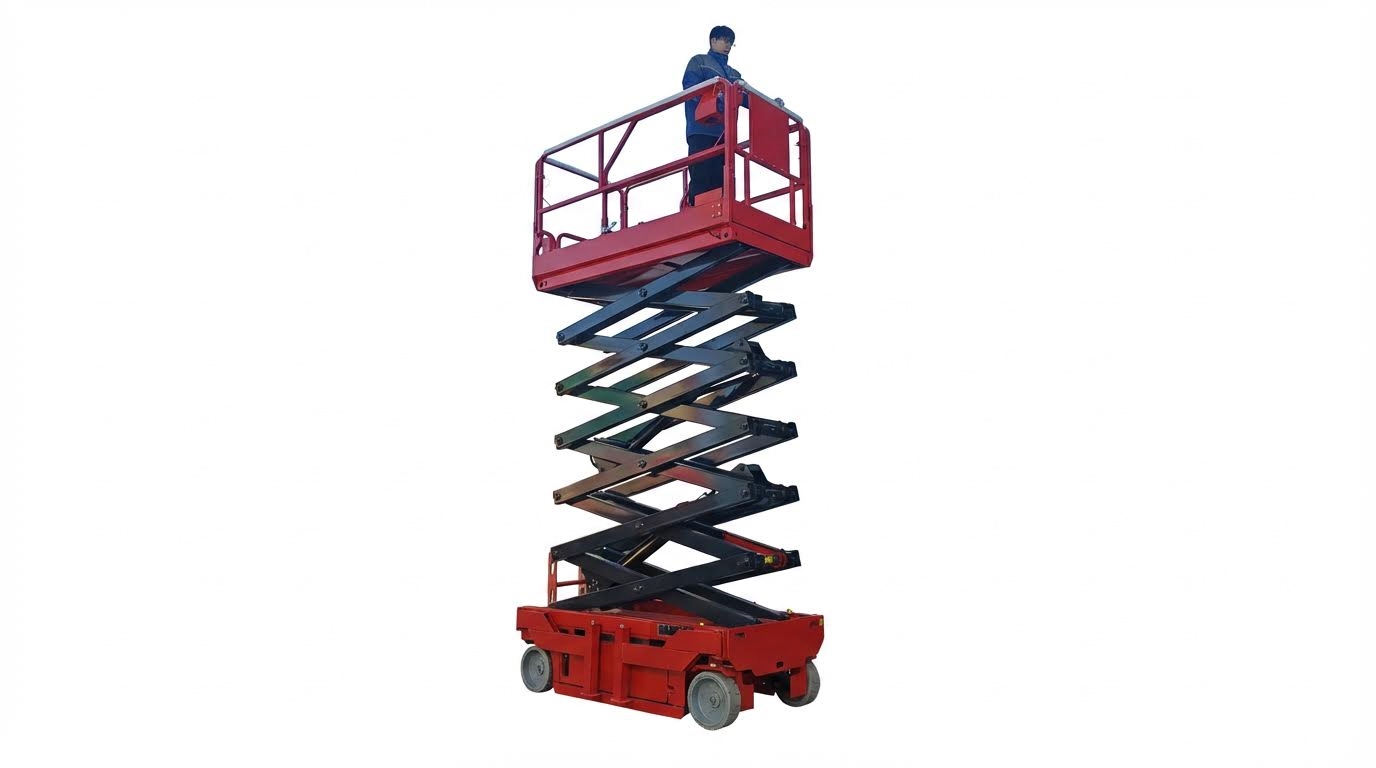
Understanding Scissor Lift Fall Protection Rules
How OSHA And ANSI Classify Scissor Lifts
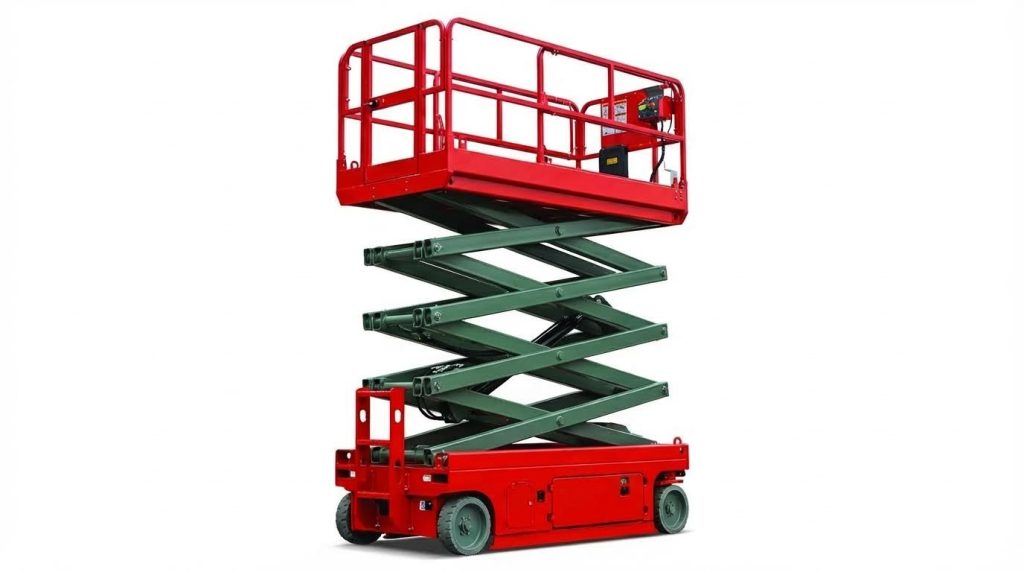
OSHA treated most scissor lifts as a type of scaffold or mobile elevated work platform, not as cranes or hoists. Fall protection for these platforms relied first on a compliant guardrail system under 29 CFR 1926.451(g) and 1910.29(b). Properly installed mid‑rails and top rails around the work platform were considered primary protection against falls. When those guardrails were in place and used correctly, a personal fall arrest system was usually not required under federal scissor lift harness requirements.
Key regulatory points
- OSHA required guardrails on scissor lifts used as scaffolds to prevent falls. Guardrail systems had to meet dimensional and strength criteria.
- ANSI/SIA A92.6-1990 classified scissor lifts as self-propelled elevating work platforms equipped with guardrails that typically provided adequate fall protection. That interpretation confirmed PFAS was not automatically required.
- OSHA expected employers to train workers to stand only on the platform floor and never on the guardrails or added devices like planks or ladders. Using external devices to gain height on the platform was specifically prohibited.
In practice, this meant compliance teams focused first on guardrail integrity, platform behavior, and operator training. A harness requirement was triggered when the guardrail system was missing, damaged, or did not meet OSHA or ANSI criteria, or when other standards (manufacturer, local code, or site rules) imposed stricter scissor lift harness requirements.
Guardrails Versus Personal Fall Arrest Systems
For scissor lifts, OSHA and ANSI treated guardrails as the default fall protection method, while personal fall arrest systems were a secondary control. When all rails, mid‑rails, and toe boards were present and workers stayed within the platform, regulators considered that configuration adequate for most tasks. A harness and lanyard became necessary if any part of the guardrail system was removed, compromised, or if the work practice increased fall exposure, such as leaning far outside the rails or working at unprotected edges.
Comparison of protection methods
| Aspect | Guardrails | Personal Fall Arrest System (PFAS) |
|---|---|---|
| Regulatory baseline | Required on scissor lifts under OSHA scaffold and walking‑working surface rules when used as elevated work platforms | Required only if guardrails are absent, inadequate, or when specified by other rules or manufacturer instructions under ANSI/SIA A92.6-1990 interpretation |
| Primary function | Prevents the worker from reaching the fall edge | Limits fall distance and arrest forces after a fall occurs |
| Typical use on scissor lifts | Standard, always installed and inspected before use | Used when guardrails are compromised or when site, local code, or manufacturer demands a harness |
OSHA guidance stated that scissor lifts with compliant guardrails generally did not need additional PFAS, unlike boom lifts where a full‑body harness and lanyard were mandatory. For boom‑type platforms, PFAS was always required, but for scissor lifts it was conditional. However, many employers and some state‑plan jurisdictions adopted stricter internal scissor lift harness requirements, mandating a harness and approved anchor point whenever workers operated at height, especially in higher wind, congested, or high‑traffic environments.
When A Harness Is Required On A Scissor Lift
Regulatory Triggers For Harness Use
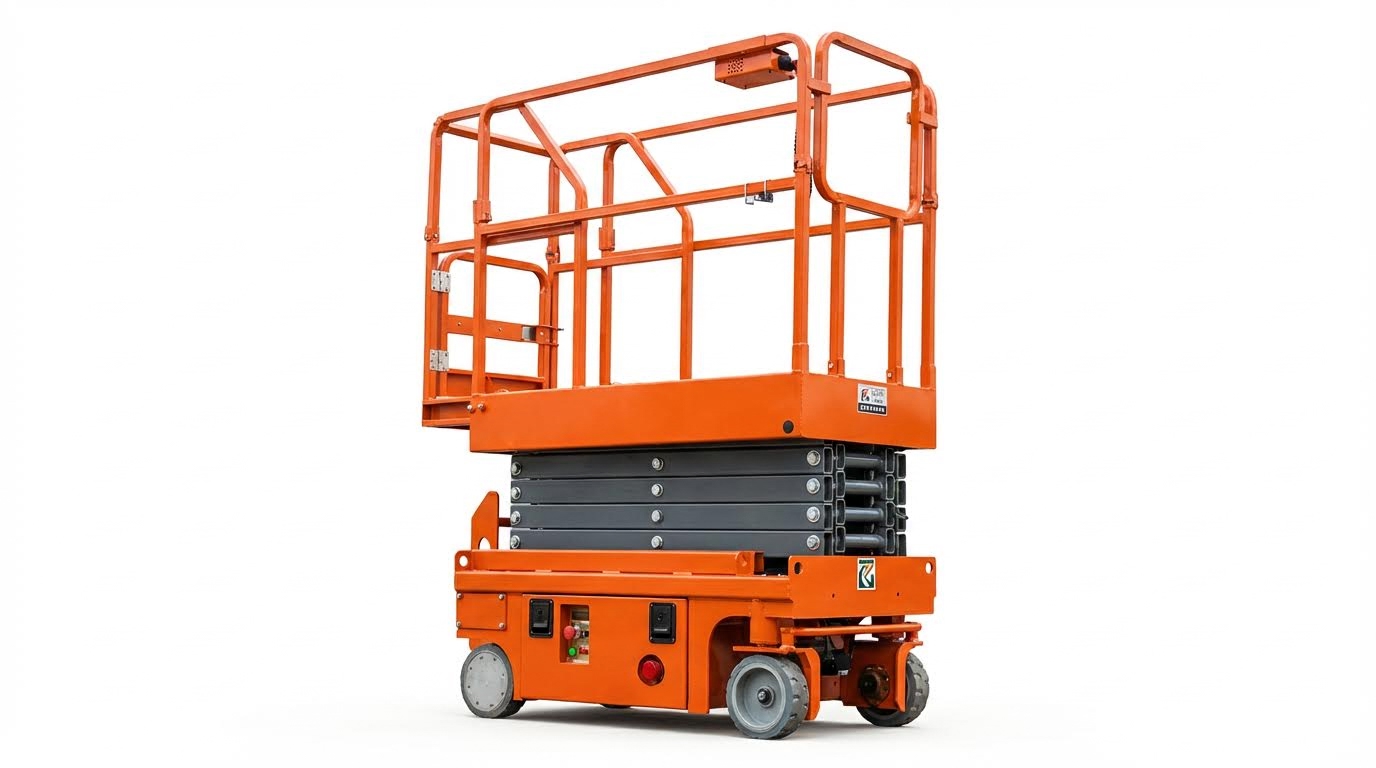
Under OSHA and ANSI, guardrails are the primary fall protection on scissor lifts. Where guardrails are complete, at proper height, and used correctly, they normally meet scissor lift harness requirements and a personal fall arrest system (PFAS) is not automatically mandated. OSHA guidance notes that scissor lifts equipped with compliant guardrails typically provide adequate fall protection, and PFAS is required only if guardrails are absent or do not meet safety criteria ANSI/SIA A92.6-1990. However, general fall protection rules still apply: if there is a risk of falling more than 4 ft in general industry or 6 ft in construction, the employer must provide some form of fall protection, which may include a harness where guardrails are compromised or removed OSHA fall protection thresholds.
Key regulatory situations that trigger harness use
- Any missing, damaged, or lowered guardrail, mid-rail, or toe-board.
- Use of the lift in a way not covered by the normal guardrail protection (for example, access through a removed gate).
- Jurisdictions or site rules that mandate a body harness and lanyard on all mobile elevating work platforms, regardless of guardrail condition local fall protection protocols.
Jobsite, Manufacturer, And Local Code Requirements
Even when federal OSHA does not explicitly require a harness on a scissor lift with intact guardrails, other layers of control can trigger stricter scissor lift harness requirements. Manufacturer instructions may require a full-body harness and lanyard on specific models or for certain operations, such as driving elevated or working outdoors in higher exposure conditions; those instructions are legally enforceable as part of safe-use requirements. Some state or provincial regulators go further and mandate that operators of mobile elevating equipment wear a full-body or 5‑point harness attached to the platform, and they prohibit tying off to external structures due to tip-over risk regional harness mandates.
- Jobsite owners often adopt “harness-at-height” rules that exceed OSHA minimums to standardize controls across different lift types.
- Rental agreements increasingly spell out fall protection responsibilities, reference OSHA/ANSI standards, and list required safety accessories such as harnesses and lanyards for certain applications rental agreement guidance.
- Failure to follow these documented requirements can lead to OSHA citations and significant fines per violation, especially for repeat or willful non-compliance non-compliance consequences.
Engineering Risk Factors: Wind, Ground, And Load
Engineering risk factors often turn a “guardrails only” situation into one where a harness is a prudent or required control. Outdoor wind exposure is a primary driver: most scissor lifts rated for outdoor use are limited to maximum wind speeds around 28 mph; operating in higher winds has led to documented overturn incidents when gusts exceeded 50 mph scissor lift wind stability guidance. On marginal or sloping ground, or near drop-offs, the combined risk of tip-over and ejection increases, so many safety plans require a harness and short lanyard to keep the operator inside the guardrail envelope.
| Risk Factor | Engineering Concern | Typical Harness Implication |
|---|---|---|
| Wind speed and gusting | Reduced stability, risk of overturn | Harness often required or strongly recommended as wind approaches rated limit. |
| Ground condition | Soft, uneven, or obstructed surfaces increase tip risk | Harness used as an extra layer when level, firm support cannot be fully assured. |
| Load and reach | High platform load or workers leaning out alters center of gravity | Short lanyard or SRL used to prevent climbing or overreaching beyond guardrails. |
Safe operating plans also restrict moving the lift while elevated unless the surface is free from holes, ramps, or other irregularities that could destabilize the machine elevated travel limitations. Where elevated travel is allowed, many organizations add harness requirements because dynamic motion increases the chance of ejection if the lift stops suddenly or encounters an obstacle. In practice, engineering judgment, supported by a documented site risk assessment, should link wind limits, ground conditions, and loading to clear, task-specific scissor lift harness requirements.
Engineering Best Practices For Safe Harness Use
Selecting Anchor Points, Lanyards, And SRLs
Engineering best practice starts with using only manufacturer-approved anchor points on the scissor platform. Anchor labels and tie-off points must be intact, clearly marked, and verified during pre-use inspections; missing or damaged anchor labels are a red flag and should sideline the unit until corrected. Inspection protocols before rental emphasize checking guardrails and tie-off points. To meet scissor lift harness requirements, anchor locations must allow the worker to move within the platform without creating trip hazards or sharp-edge contact on the lanyard.
Use full-body harnesses with fall-arrest-rated D-rings and compatible connectors.
Select lanyard or SRL types and lengths that keep free-fall distances within regulatory limits and prevent impact with lower levels.
Ensure lanyards and SRLs are dedicated to the lift anchor point, never tied off to guardrails, adjacent structures, or other equipment, which can introduce swing-fall and structural overload risks.
Self-retracting lifelines (SRLs) can reduce free-fall distance, but the housing must be mounted where it will not interfere with controls or emergency access. When the lift is used outdoors, wind limits and stability become part of the harness engineering decision: many units are restricted to wind speeds below 28 mph; operation above that can destabilize the lift and increase the likelihood of a fall or tip-over, so more conservative tie-off and work-positioning practices are needed. OSHA notes that outdoor-rated scissor lifts are generally limited to winds under 28 mph. All components of the personal fall arrest system must be inspected before each use for cuts, UV damage, deformation, and faulty locking mechanisms, and removed from service immediately if defects are found.
Integrating Harness Use Into Site Risk Assessments
Harness use should be embedded in the site’s formal risk assessment, not treated as an add-on. A structured assessment reviews ground conditions, weather, overhead hazards, power lines, and interaction with other equipment before deciding how to apply scissor lift harness requirements. Site-specific risk assessments evaluate ground firmness, levelness, and environmental factors. Where the assessment identifies increased risk—such as work near unprotected edges, potential vehicle impact, or frequent platform repositioning—personal fall protection should be treated as mandatory, even if guardrails are compliant.
Document when and why harnesses are required (e.g., outdoor work, elevated movement, congested structures, or exposure to high winds).
Align harness rules with local regulations that may be stricter than federal OSHA, some of which mandate body harnesses and lanyards whenever a scissor platform lift is used.
Integrate daily equipment inspections so that guardrails, brakes, and anchor points are verified before authorizing work at height. Pre-use inspections should confirm guardrail integrity and component condition.
Training and competency are critical elements of the risk assessment. Operators must understand when guardrails alone are acceptable and when conditions trigger harness use, based on both regulations and the company’s internal standard. OSHA-based training covers equipment operation, fall protection, and site-specific hazards. Safety managers should periodically review incident data, near misses, and audit findings to tighten harness criteria over time, ensuring that engineering controls, administrative controls, and personal fall protection work together as a single, documented system.
“”
Key Takeaways For Procurement And Safety Teams
Scissor lift harness policy must start with how OSHA and ANSI classify the platform and treat guardrails. When guardrails are complete and used correctly, they usually satisfy the legal baseline. However, engineering risk factors such as wind, marginal ground, high loads, and elevated travel raise the chance of ejection or tip-over. In those cases, a full-body harness tied to an approved anchor becomes a critical second barrier.
Procurement teams should select scissor platforms and accessories that support this layered approach. Specify units with clearly rated anchor points, outdoor wind limits that match expected use, and documentation that aligns with your internal rules. Coordinate lift purchases, harnesses, lanyards, and SRLs as one integrated system, not as separate items.
Safety teams should embed harness rules inside site risk assessments and training. Define clear triggers for harness use based on height, environment, and task, not just minimum OSHA language. Require pre-use inspections of guardrails, anchors, and PFAS, and ban tie-off to external structures. Over time, use incident data and near-miss reports to tighten criteria. A consistent, engineering-led standard—applied to every Atomoving scissor platform and to all comparable lifts—will cut fall risk, reduce violations, and give operators simple, reliable rules at height.
Frequently Asked Questions
Is a harness required in a scissor lift?
No, a harness is not legally required when using a scissor lift if the guardrails are in place and meet safety standards. However, it is strongly recommended to wear one if guardrails are missing or incomplete. OSHA Scissor Lift Rules.
What type of harness should be used on a scissor lift?
A full-body harness with a lanyard attached to an authorized anchorage point is recommended for added safety. This is especially advised on machines without a 30-inch (76 cm) maximum lanyard length limit. JLG Fall Protection Guide.
When is fall protection necessary on a scissor lift?
Fall protection, such as a harness, becomes necessary when the scissor lift’s guardrails are missing, incomplete, or do not meet OSHA standards. In such cases, a full-body harness or fall restraint system is critical to prevent accidents.
Are there any general recommendations for scissor lift safety?
- Always inspect the scissor lift before use to ensure guardrails and other safety features are intact.
- Use a full-body harness if working in conditions where falls are more likely.
- Follow manufacturer guidelines for proper operation and fall protection equipment. Scissor Lift Safety Tips.