
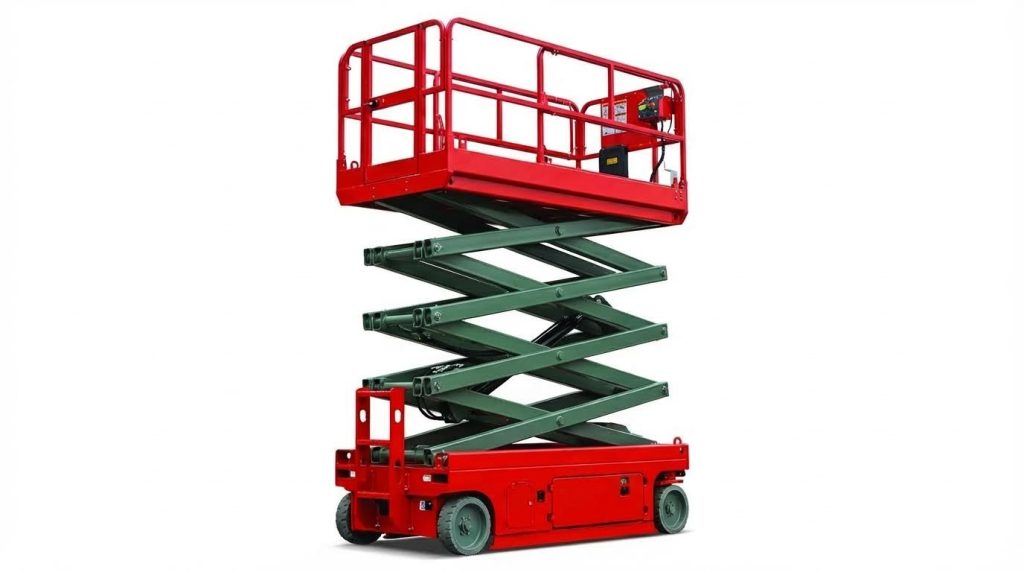
When people ask “what is aerial work platform,” they usually want one thing: a safe, efficient way to get people and tools up where the work actually happens. This guide walks through the main aerial platform types, how their engineering affects reach and capacity, and how to match them to real job sites. You will also see the core safety and inspection practices that keep operators protected and equipment productive. By the end, you will be able to choose and manage scissor platform using hard data, not guesswork.
What Is An Aerial Work Platform?
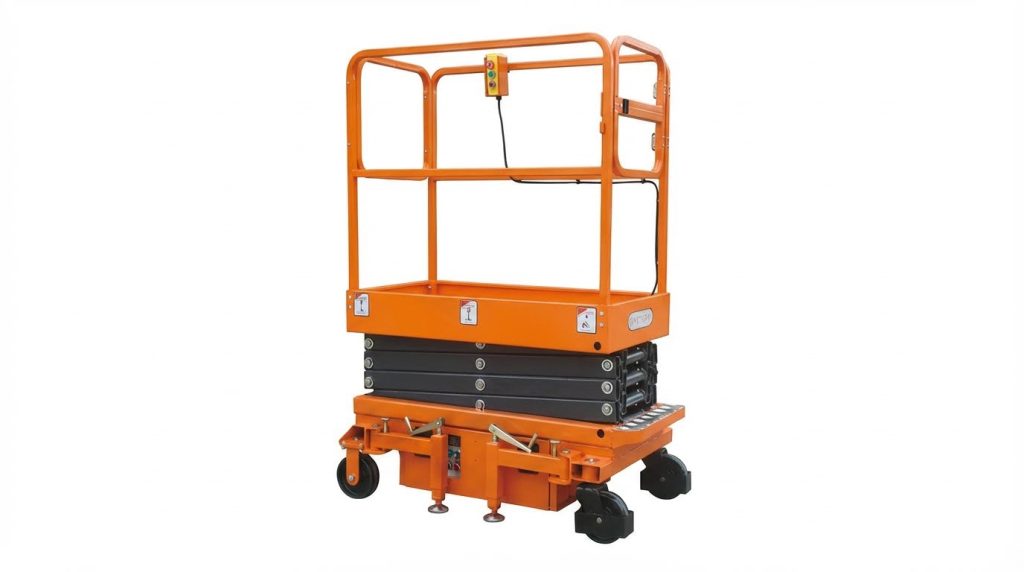
Core definition and key components
When people ask “what is aerial work platform,” they usually mean any powered, temporary access device that safely lifts workers, tools, or materials to height. It is a mobile alternative to fixed scaffolding, designed for repeatable, controlled elevation and positioning.
In engineering terms, an aerial platform (AWP) is a mechanically actuated structure (scissor, boom, mast, etc.) mounted on a mobile base, with integrated controls and safety systems to protect personnel while working at elevation.
Typical core components include:
- Platform / basket – Standing area for workers and tools, with guardrails and toe boards.
- Lift structure – Scissor stack, telescopic mast, or articulated boom that creates vertical and/or horizontal motion.
- Base chassis – Wheeled or tracked undercarriage that carries the load and houses major systems.
- Power source – Electric batteries, internal combustion engine, or hybrid energy system.
- Control systems – Ground and platform controls for driving, lifting, and emergency stop functions.
- Hydraulic system – Pumps, cylinders, hoses, and valves that convert power into controlled movement.
- Stability systems – Outriggers, leveling jacks, and anti-tip geometry to keep the machine upright under load.
- Safety devices – Overload sensors, limit switches, emergency descent, and interlocks to prevent unsafe operation. Modern scissor and boom lifts commonly integrate overload alarms, collision sensors, and emergency descent systems.
Why AWPs replaced much of traditional scaffolding
AWPs offer faster setup, repeatable positioning, and built‑in fall protection. They reduce manual handling, cut erection/dismantling time, and allow precise access in congested or high‑risk areas where scaffolding would be slow or impractical.
Main AWP categories and configurations
To fully answer “what is aerial work platform” from a practical standpoint, you need to understand the main categories. Different mechanisms deliver different reach, capacity, and maneuverability.
The two most common engineered types in industrial and construction work are scissor platform and articulating boom lifts.
| AWP type | Primary motion | Typical working height | Typical max load | Key advantages | Main limitations |
|---|---|---|---|---|---|
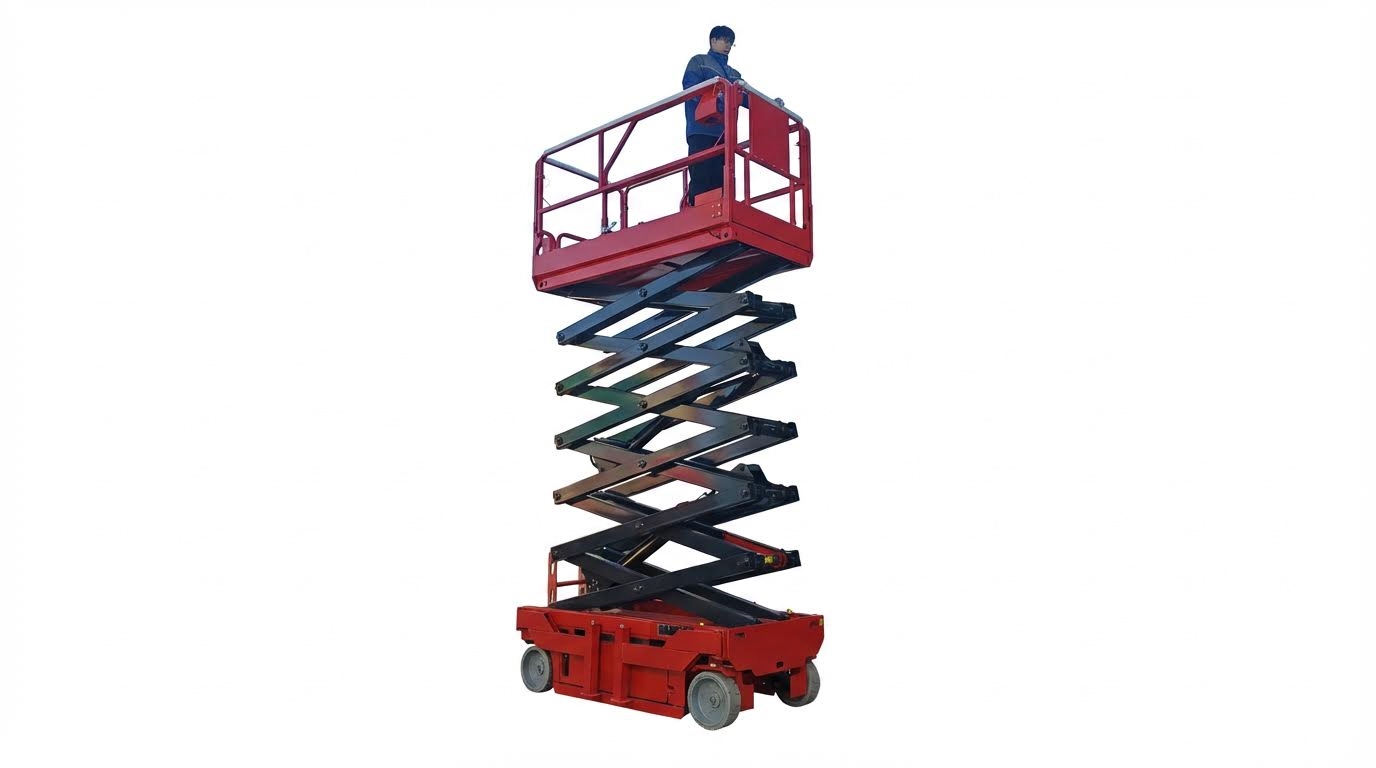
| Scissor lift | Vertical only (straight up/down) | ≈ 6–15 m; some industrial units up to ≈ 20 m cited range | Up to ≈ 450 kg for heavy-duty models cited value | High stability, simple operation, cost‑effective, strong for tools + multiple workers | No real horizontal outreach; platform size and access around obstacles are limited |
| Articulating boom lift | Vertical + horizontal with multi‑jointed arm | ≈ 10–40 m; some telescopic variants can exceed ≈ 50 m cited range | Often around ≈ 250 kg rated capacity cited value | Can reach over/around obstacles; precise positioning on façades, roofs, and structures | Lower load rating than heavy scissor lifts; higher complexity; needs more space for safe operation |
Each of these AWP categories can be further configured for specific sites and tasks.
- Power configuration
- Electric – Low noise, zero on‑site emissions; preferred for indoor work and clean environments.
- Engine‑powered – Higher power output for rough terrain and long duty cycles; typically diesel‑driven.
- Hybrid / battery‑dominant – Extends run time and reduces fuel use; emerging trend in boom lifts. Battery-powered boom lifts already offered up to about 8 hours of runtime.
- Mobility configuration
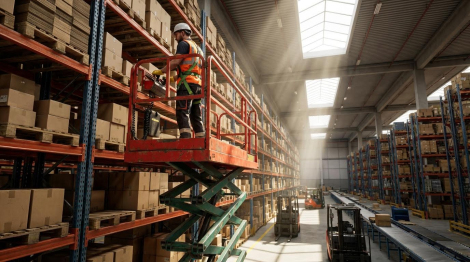
- Slab / indoor – Smooth tires for flat concrete; compact footprint for aisles and warehouses.
- Rough‑terrain – Large tires or tracks and higher ground clearance for mud, gravel, or slopes. Tracked or rugged‑tire boom lifts were commonly used on muddy or uneven ground.
- Size / transport configuration
- Compact / lightweight – Easier to tow or move with light trucks; suited to tight indoor spaces.
- Heavy / high‑reach – Higher mass and footprint; often require trailers and transport permits. Lighter scissor lifts could be moved on small trucks, while larger boom lifts needed trailer transport.
How to choose between scissor and articulating boom as AWP types
Use a scissor lift if the work is mainly vertical, on relatively flat ground, and you need higher load capacity and platform stability. Choose an articulating boom when you must reach over obstacles, work on façades or roofs, or access areas that are not directly above the machine. For many buyers and renters, understanding these two baseline categories is the first step in answering what is aerial work platform in a real‑world, job‑site context.
“”
Matching Aerial Platforms To Jobs And Sites
Application-based selection criteria
When teams ask “what is aerial platform good for on this job?”, the right answer depends on height, reach, surface conditions, and load. Selection should always start from the task and the site, not from what machine happens to be available.
Use the quick comparison below to narrow down the best aerial platform type for typical job scenarios.
| Job / Site Scenario | Recommended AWP Type | Key Reasons |
|---|---|---|
| Indoor facility or warehouse, flat floor, straight-up access to 6–15 m | Scissor lift | Vertical lift only, good stability and payload >450 kg for tools and teams Cited Text or Data |
| Facade, roof edge, or structure with obstacles (pipes, canopies, trees) | Articulating boom lift | Multi-jointed arm, vertical + horizontal reach, can work around obstacles and over barriers Cited Text or Data |
| Heavy tools or 2–3 workers, limited reach, repetitive up/down work | Scissor lift | Higher load capacity (up to about 450 kg) and good platform stability Cited Text or Data |
| High elevation (10–40 m) with offset from building | Articulating boom lift | Greater working height and horizontal outreach compared with scissor lifts Cited Text or Data |
| Indoor, low-noise, zero‑emission requirement | Electric scissor or electric/hybrid boom | Electric units operate quietly with no exhaust emissions Cited Text or Data |
| Rough, muddy, or sloped terrain outdoors | Articulating boom lift (rough‑terrain) | Tracks or rugged tires handle uneven ground better than small scissor chassis Cited Text or Data |
| Sites with tight storage or frequent transport | Compact scissor lift | Lower weight (about 1,000–2,000 lbs) and smaller footprint, easy to transport and store Cited Text or Data |
To move from “what is aerial platform” in theory to the right unit on a real site, use a simple engineering checklist.
- Required working height and outreach – Define maximum platform height and any horizontal offset from the work face.
- Load case – Sum worker weight, tools, and materials; compare with typical 250 kg for booms vs ~450 kg for scissor lifts.
- Access path and footprint – Measure door widths, aisle clearances, turning radii, and set-up zones.
- Ground conditions – Check bearing capacity, slopes, pits, and underground services that affect stability.
- Power and environment – Decide between electric, hybrid, or diesel based on ventilation, noise, and duty cycle.
- Safety and compliance – Confirm tie-off policies, guardrail needs, and operator authorization in line with OSHA expectations Cited Text or Data.
When a boom lift is the wrong choice
Even if a boom can physically reach, it may be sub‑optimal where floor loading is low, emissions are restricted, or the task is repetitive and purely vertical. In these cases, a scissor lift gives better stability, higher payload, and often lower total cost.
TCO, maintenance, and predictive upkeep
Total cost of ownership (TCO) for any aerial work platform combines purchase or rental rates with energy, maintenance, inspections, and downtime. For many fleets, maintenance and unplanned outages quietly consume more budget than the initial machine cost over the life cycle.
The table below contrasts typical cost and maintenance patterns for common aerial work platform types.
| Cost / Maintenance Factor | Scissor Lifts | Boom / Articulating Lifts |
|---|---|---|
| Typical purchase price | ≈ $10,000–$30,000 per unit Cited Text or Data | ≈ $50,000–$200,000+ per unit Cited Text or Data |
| Typical daily rental | ≈ $100–$200/day | ≈ $300–$800/day Cited Text or Data |
| Power and fuel | Mainly electric, low energy and no fuel handling Cited Text or Data | Mainly diesel, higher fuel and emissions; newer electric/hybrid options emerging Cited Text or Data |
| Maintenance intensity | Lower; simpler mechanisms and electric drive, fewer high‑load joints | 30–50% higher maintenance cost due to diesel engines, hydraulics, and complex booms Cited Text or Data |
| Typical service life (with proper care) | ≈ 5–8 years | ≈ 8–12 years Cited Text or Data |
| Transport and storage | Lighter (about 1,000–2,000 lbs), easier to move and store Cited Text or Data | Heavier (about 3,000–8,000 lbs), often needs trailer and permits Cited Text or Data |
Preventive and predictive maintenance are the main levers to reduce life‑cycle cost and downtime for any aerial work platform fleet.
- Daily checks – Inspect structure, tires, guardrails, stabilizers, and test all lift and rotation controls; verify emergency stop and descent systems Cited Text or Data.
- Fluid and filter management – Check hydraulic fluid, engine oil, and coolant daily; replace air and hydraulic filters at least quarterly to prevent internal damage Cited Text or Data.
- Mechanical integrity – Tighten critical bolts and fasteners weekly; lubricate joints, boom sections, and cylinder pins monthly to control wear Cited Text or Data.
- Electrical and battery health – Inspect cables, connectors, sensors, and battery state monthly; poor charging practices shorten service life and increase failures Cited Text or Data.
- Formal inspections and load tests – Arrange annual professional inspections and load capacity tests to verify structural integrity and safe working load Cited Text or Data.
- Preventive maintenance intervals – Plan structured preventive maintenance every 3–6 months based on usage and conditions; this can cut unexpected downtime by up to about 30% Cited Text or Data.
Predictive maintenance and data-driven uptime</ “”
Final Thoughts On Safe, Efficient AWP Deployment
Safe aerial work starts with engineering fit. Teams must match platform geometry, reach, and capacity to the job, not to habit. Scissor lifts give strong vertical access and higher payload, so they suit repetitive, straight‑up tasks with heavy tools. Articulating booms trade payload for outreach and articulation, so they suit façades, roofs, and work over obstacles.
Stability and ground conditions control risk more than height alone. Engineers must check load cases, floor bearing, slopes, and access paths before any unit arrives on site. Power choice links to the air and noise limits of the job. Electric and hybrid units protect indoor air and reduce running cost, while engine units support long outdoor duty cycles.
Long life and low TCO depend on discipline, not luck. Daily checks, planned service, and formal inspections keep structures, hydraulics, and controls within design limits. Predictive maintenance and clear defect reporting turn data into uptime.
The best practice is simple. Define the task in numbers, pick the platform that fits those numbers, and maintain it to spec. When buyers and planners follow this method, Atomoving aerial platforms deliver safe access, higher productivity, and predictable operating cost across the fleet.
Frequently Asked Questions
What is an aerial work platform?
An aerial work platform (AWP), also known as a mobile elevating work platform (MEWP) or scissor lift, is a mechanical device used to provide temporary access for people or equipment to inaccessible areas, usually at height. These machines are essential for tasks like maintenance, construction, and emergency access Aerial Work Platform Guide.
What are the main uses of an aerial work platform?
Aerial work platforms are mainly used to safely move workers vertically and to different locations in industries such as construction, retail, entertainment, and manufacturing. They help workers reach high areas while minimizing risks associated with climbing ladders or scaffolding OSHA Guidelines.
What are the safety concerns when using an aerial work platform?
Common safety concerns include tip-overs, falling objects, overhead hazards, electrocution, and falls from height. Workers must be properly trained, use guardrails or fall protection, and follow operational guidelines to prevent accidents Safety Tips.
Do you need training to operate an aerial work platform?
Yes, OSHA requires workers to be trained and certified before operating an aerial work platform. Training covers safe operation, hazard recognition, and compliance with workplace standards to ensure safety Training Requirements.