
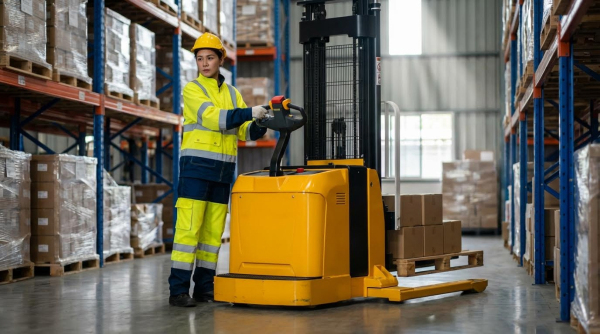
Understanding how does a straddle stacker lift work starts with three core systems: the straddle legs for stability, the hydraulic power unit for lifting, and the mast and forks for load support and height. This article breaks those systems down into simple, visual engineering concepts so you can link specs to real warehouse performance. You will see how hydraulic circuits, mast types, and straddle widths affect safety, capacity, and maneuverability. Use it as a practical guide when comparing models, planning aisles, or writing your next stacker specification.
Core Mechanics Of Straddle Stacker Lifting
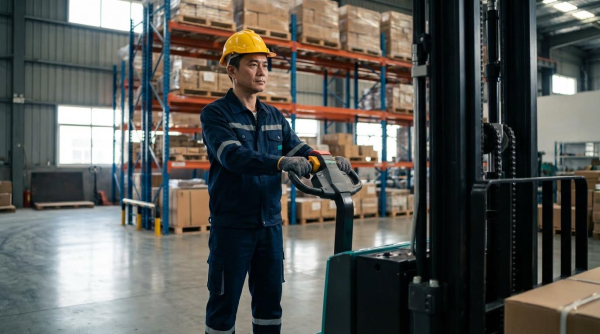
If you want to understand how does a straddle stacker lift work, you must first understand its basic geometry and stability. The straddle legs define the support polygon on the floor, while the forks, mast, and load center define the overturning moment. This section breaks down how the leg structure, wheelbase, and fork/load relationship work together to keep the machine upright and within rated capacity.
Straddle Leg Structure And Stability
Straddle stackers use two low, projecting legs that “straddle” the pallet or load. These legs carry the wheels and take most of the stabilizing reactions, while the mast sits between them. The goal is a low center of gravity and a wide support base so the truck resists tipping as the mast raises the load.
- Legs extend forward under or around the pallet, shifting the support polygon closer to the load.
- Wheels at the leg tips increase the effective wheelbase and reduce pitch-over risk.
- Low-mounted batteries or counterweights keep the center of gravity near the floor for better stability. Low-center-of-gravity designs reduce rollover risk under offset loads
- Frame stiffness and cross-bracing between legs limit twisting when one wheel hits an uneven spot.
- Optimized wheelbase and width improve stability during turns and on slight ramps. Wider stance and suitable wheelbase improve stability and maneuverability
Many straddle stackers allow the leg width to adjust. This lets the same truck handle different pallet types or closed-bottom skids while keeping the load inside the leg footprint as much as possible.
| Design Aspect | Effect On Stability | Engineering Note |
|---|---|---|
| Straddle leg width (outside–outside) | Wider legs increase side-to-side stability | Too wide reduces aisle clearance |
| Leg length (front overhang) | Longer legs move support polygon under the load | Improves forward stability but increases turning radius |
| Wheelbase (drive wheel to front load wheels) | Longer wheelbase resists forward/backward tipping | Trade-off with maneuverability in tight aisles |
| Center-of-gravity height | Lower CG reduces rollover risk when turning or on ramps | Battery placement is a key design lever |
| Frame stiffness | Reduces mast and leg deflection under load | Less sway and more predictable handling |
Stability is also influenced by ground contact. Tires and any suspension elements must keep all wheels in contact with the floor so the support polygon is always effective, even on uneven surfaces.
- Industrial tires spread the load and maintain grip, reducing rollover risk under high loads. Appropriate tire design disperses weight and reduces rollover risk
- Simple suspension or compliant mounts absorb shocks from floor joints and ramps, keeping forces away from the mast welds.
- On electric models, control systems can limit travel speed or lift height when the load is heavy to preserve stability. Advanced stability control adjusts speed and lifting to avoid instability
How leg structure ties back to “how does a straddle stacker lift work”
The hydraulic system creates the lifting force, but the straddle legs make that lift usable and safe. Without a wide, low, and stiff leg structure, the overturning moment from the elevated load would exceed the support polygon quickly, even at moderate heights.
Load Center, Forks, And Rated Capacity
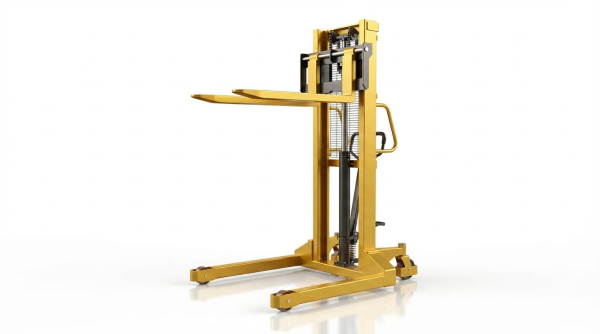
When engineers or operators ask how does a straddle stacker lift work in real warehouses, the load center and fork geometry usually decide whether a lift is safe or not. The rated capacity is always defined at a specific load center distance and at a given mast position.
- Load center is the horizontal distance from the fork heel (vertical face of the forks) to the load’s center of gravity.
- Rated capacity assumes a standard load (typically uniform, cube-shaped) at this nominal load center.
- If the actual center of gravity moves forward (long pallets, overhanging loads), the effective capacity drops.
- As mast height increases, the same load center creates a larger overturning moment due to the higher center of gravity.
| Parameter | What It Means | Impact On Safe Lifting |
|---|---|---|
| Nominal load center (e.g., 500 mm) | Rated design point for capacity | Longer loads beyond this reduce safe capacity |
| Actual load center | Real CG position of the pallet or load | Must be estimated for non-standard loads |
| Fork length | Maximum reach under the load | Forks must support at least 2/3 of load length |
| Fork spacing | Distance between forks, adjustable | Set to keep CG centered between forks |
| Mast height | Lift height of the carriage and forks | Higher mast = lower allowable capacity at top |
Forks on a straddle stacker are usually forged to handle repeated bending cycles without permanent deformation. Forging improves grain flow and toughness, which is critical at the fork heel where bending stress is highest. Adjustable forged forks allow different load sizes while maintaining durability and load-bearing capacity
- Operators should adjust fork spacing so that each fork is equally loaded.
- Fork tips should extend near the back of the pallet to avoid tip-over of the pallet boards.
- Loads should sit flat on both forks, not on one fork or on the fork tips only.
- Off-center loads increase side-to-side tipping risk, even within rated capacity.
Why rated capacity changes with height
As the mast raises, the combined center of gravity of truck plus load moves upward and often slightly forward. This increases the overturning moment about the front wheels. Even though the hydraulic system can still generate the lifting force, stability becomes the limiting factor, so capacity charts always derate at higher lift heights.
Speed also plays a role in how does a straddle stacker lift work safely. Typical lift speeds for warehouse stackers are in the range of a few meters per minute, with slower speeds under load and faster when empty. Example warehouse trucks reach lift speeds around 5–6 m/min loaded and higher when empty
- Lower lift speeds under load reduce dynamic forces on the mast and forks.
- Controlled lowering speeds prevent shock loading when the pallet contacts the floor or racking.
- Travel speeds are usually limited when the forks are raised to keep the center of gravity as stable as possible. Typical warehouse equipment limits travel to around walking speed (≈6 km/h)
Quick engineering checklist before lifting
To apply this in practice: verify the pallet length against fork length, estimate the load center, check that the load sits inside the straddle legs as much as possible, and confirm that the lift height you need is within the derated capacity on the nameplate. If any of these fail, the truck can still physically lift, but it may not remain stable.
Hydraulic System And Mast Operation Explained
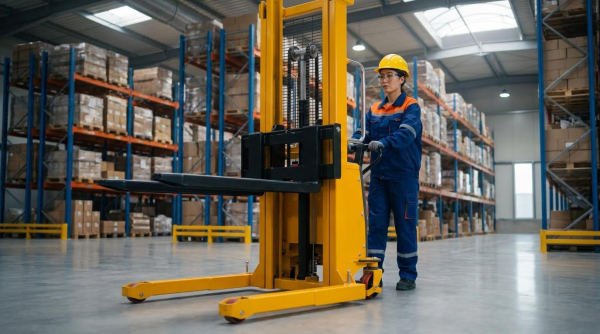
Hydraulic Power Unit, Cylinders, And Chains
To understand how does a counterbalanced stacker lift work, you first need to understand its hydraulic power path. The power unit pressurizes oil, lift cylinders convert pressure to linear force, and chains multiply that stroke into useful fork travel.
| Component | Main Function | Typical Design Features / Notes |
|---|---|---|
| Hydraulic power unit (HPU) | Generates oil flow and pressure for lifting and tilt | Electric motor + gear or vane pump, reservoir, suction strainer, return filter, relief valve for overload protection hydraulic power units and relief valves |
| Lift cylinders | Convert hydraulic pressure into vertical force | Single-acting cylinders on most stackers; chrome rods, end cushions, internal or external flow controls |
| Chains & sheaves | Multiply cylinder stroke into mast and fork movement | Cylinder rod anchors to mast; chain runs over sheave to carriage. 1:2 ratio is common (1 m cylinder stroke ≈ 2 m fork lift) chain-driven lifting mechanisms |
| Control valves | Meter oil to lift, lower, and tilt functions | Spool valves with fine metering; integrated reliefs and load-holding features in modern systems hydraulic control elements |
| Filtration & protection | Maintain oil cleanliness and protect components | Full-system filtration, suction strainers, return filters, and overload relief valves to prevent damage and unsafe pressures filtration and relief valves |
In operation, the motor drives the pump, which sends oil through the control valve to the lift cylinders. As the cylinders extend, they pull the chains over the sheaves, raising the carriage and forks smoothly even under high load, similar to larger container straddle equipment that used hydraulics for heavy vertical lifting and suspension tasks. hydraulic lifting for container handlers
Key hydraulic design advantages in straddle stackers
Hydraulic systems give stackers high lifting force in a compact package, precise low-speed control, and inherent overload protection via relief valves. Modern electrohydraulic controls also allow fine tuning of lift speed and smooth starts and stops, improving safety and reducing mast shock loads. advantages of hydraulic systems
Lift, Lower, And Tilt Control Logic
Control logic is where “how does a battery-powered stacker lift work” becomes real for operators. The valves, levers, and electronics translate hand inputs into controlled oil flow and safe mast motion.
- Lift command
- Operator pulls a lever or presses a lift button.
- Solenoid or mechanical spool shifts, routing pressurized oil to the base of lift cylinders.
- Cylinders extend; chains move the carriage upward at a controlled speed.
- Lower command
- Lever or switch moves to “lower.”
- Lowering valve opens a metered path from cylinder to tank.
- Gravity lowers the carriage while the valve limits speed to avoid free-fall. controlled gravity lowering
- Tilt command (if equipped)
- Separate tilt cylinders at the mast heel receive oil to tilt the mast forward or backward.
- Backward tilt improves load retention; forward tilt helps pallet entry and exit.
On electric straddle stackers, an electronic controller often supervises these valve actions. It can limit lift speed at high mast heights, reduce travel speed when the mast is raised, or even block further lift if sensors detect overload, similar to advanced load-sensing and stability control used in other modern material handling equipment. electrohydraulic control and load sensing advanced stability control in electric stackers
Typical lift and lowering speed ranges
Many warehouse stackers used lift speeds in the order of 5–6 m/min when loaded and around 10–12 m/min when empty, with lowering speeds slightly higher but still controlled by valves and flow restrictors. These values were similar to other warehouse lifting trucks that operated around 5.5 m/min laden and 12 m/min empty for lift, and 8–11 m/min for lowering. lift and lowering speed ranges
Mast Types, Free Lift, And Height Performance
The mast design defines how high a electric platform stacker can place a pallet and how much of that lift occurs without the mast extending above the truck frame. This is critical in low doorways and inside containers.
| Mast Type | Stages | Free Lift Capability | Typical Use Case |
|---|---|---|---|
| Simplex (standard) | Single stage | Low to moderate free lift | Low-rack warehouses with generous overhead clearance |
| Duplex | Two stages (outer + inner) | Moderate to high free lift | Medium lift heights where doorways and beams limit overall mast height |
| Triplex | Three stages | High free lift | High-bay storage, mezzanines, or container work with tight overhead limits |
| Full free lift mast | Any stage count | Forks rise significantly before inner rails protrude above the collapsed height | Loading inside trailers, containers, or low-ceiling areas |
| Non-free lift mast | Any stage count | Inner rails begin to extend as soon as forks rise | Applications with no overhead restrictions |
Structurally, straddle stacker masts follow the same principles as other lift trucks. They use high-strength steel rails, cross-members, rollers, bearings, lift chains, and hydraulic cylinders arranged so pressurized oil in the cylinders raises the inner rails and carriage, while controlled oil release lowers them under gravity. mast construction and hydraulic operation
- Height performance factors
- Rated capacity typically decreases as lift height increases, due to stability and mast deflection limits.
- Lift speed is often reduced near maximum height by the control system to limit sway and improve load placement accuracy.
- Free lift length must match your racking beam height and any doorway or mezzanine constraints.
- Safety and maintenance considerations
- Observe the capacity plate limits for each lift height.
- Inspect chains, rollers, and cylinder rods regularly for wear or damage.
- Keep mast rails clean and properly lubricated to avoid binding and uneven lifting. mast safety and inspection points
How mast design ties back to hydraulic system sizing
Taller, multi-stage masts require higher cylinder stroke and often higher operating pressure to maintain capacity at height. That drives pump sizing, relief valve settings, and cooling needs, similar to larger hydraulic lifting equipment where system design had to balance force, speed, and heat generation. hydraulic design trade-offs
Applying Straddle Stackers In Real Warehouses
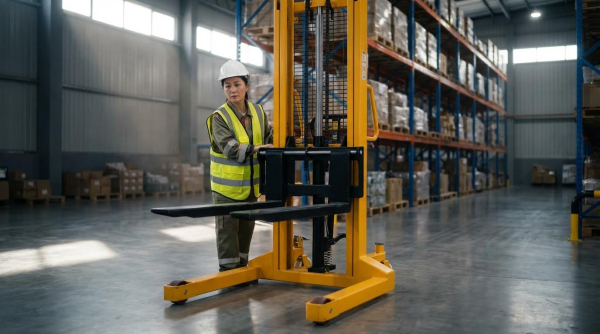
Matching Straddle Width To Pallets And Aisles
In real warehouses, straddle leg geometry decides where the truck can actually work. To understand how does a straddle stacker lift work in practice, you must match leg width, fork spread, and aisle width to your pallet mix and rack layout.
Start with your most common pallet types and the tightest aisle you plan to use. Then size the straddle stacker so the legs never clash with pallet feet, rack uprights, or dock edges.
| Design Item | Typical Engineering Target | Why It Matters In The Aisle |
|---|---|---|
| Inside straddle width (between legs) | Pal. width + 40–80 mm clearance each side | Legs pass around pallet without rubbing blocks or feet. |
| Outside straddle width | Rack clear opening – safety margin | Avoids contact with uprights when entering lower beam level. |
| Fork spread range | Covers narrowest to widest pallet stringer spacing | Allows correct fork placement under multiple pallet styles. |
| Minimum working aisle | Truck length + load length + 200–400 mm | Space to turn, square up, and back out safely. |
| Ground clearance under legs | Higher than floor defects and dock plates | Prevents leg hang‑ups and shock loading of the mast. |
Because the legs carry the load reaction into the floor, their width and wheelbase also affect stability. A wider stance and longer wheelbase increase resistance to tipping when lifting at high mast heights, similar to how low‑center‑of‑gravity designs improve stability in counterbalanced stacker by optimizing width and wheelbase for turning and ramp work in warehouse operations.
- Measure real pallet sizes (including any overhang) before choosing inside leg width.
- Check rack upright clear openings at the lowest beam level where legs must enter.
- Verify that dock plates, thresholds, and floor joints do not interfere with the legs.
- Confirm the tightest turning space at ends of aisles and in staging zones.
Engineering checks before freezing leg width
Before you lock in a straddle width, walk the route the truck will use. Check floor flatness, slopes, and any ramps. Remember that loaded travel speeds for similar material handling equipment are often limited to about 0–3.5 km/h to maintain stability on ramps and uneven ground in container-handling carriers. If your floor conditions are poor, consider slightly wider legs and larger wheels to reduce shock loads into the mast and chassis.
Choosing Power Source, Duty Cycle, And TCO
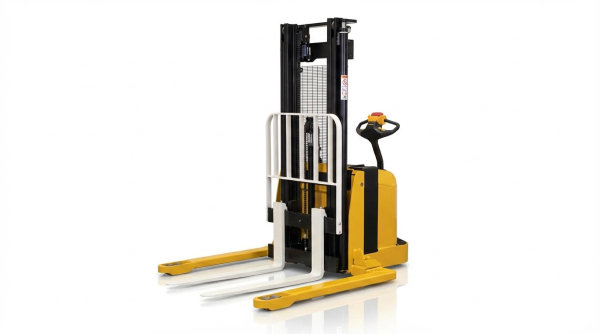
The way a straddle stacker lifts, travels, and cycles in your warehouse defines the best power source and long-term cost. Electric drive systems adjust power output with load to keep speed stable and avoid instability from lack of power, while maintaining smooth motion and low vibration under varying loads in electric stackers.
Hydraulic power units, pumps, and cylinders do the lifting work. Similar port and logistics equipment uses high‑pressure pumps, cylinders, control valves, and hydraulic power units to provide high lifting force and precise control under heavy loads in demanding duty cycles. The same principles apply on a smaller scale in warehouse stackers.
| Selection Factor | What To Quantify | Impact On TCO |
|---|---|---|
| Daily duty cycle | Lifts/hour, hours/shift, shifts/day | Drives battery size, charger spec, and maintenance interval. |
| Lift profile | Average vs. maximum lift height and load | Influences hydraulic pump sizing and motor power. |
| Travel pattern | Percentage of time loaded vs. empty | Affects energy use; similar machines see lower speeds and higher draw when loaded in container carriers. |
| Power source | Battery type, charger location, grid capacity | Upfront vs. running cost, opportunity charging options. |
| Hydraulic system quality | Filtration, relief valves, pump type | Better filtration and overload protection reduce failures and downtime in stacker-style equipment. |
- For light, intermittent use, a smaller battery and simpler hydraulic package often suffice.
- For multi‑shift or high‑bay work, prioritize robust hydraulics, fast lift speeds, and larger battery capacity.
- Plan charging and battery change areas into the warehouse layout from the start.
Hydraulic systems can deliver very high force with compact components and precise control, but they need clean oil and thermal management to stay efficient. In heavy material handling equipment, contamination, corrosion, and heat generation were key challenges that required filtration, corrosion protection, and cooling systems to maintain performance and extend life in port operations. Applying the same discipline to warehouse stackers reduces hydraulic failures and lowers lifecycle cost.
Maintenance and reliability planning
To keep the way your straddle stacker lift works consistent over its life, build maintenance into your TCO model. Regular fluid analysis, filter changes, and seal inspections were used to protect hydraulic pumps and valves in harsh logistics environments where uptime was critical. The same practices in a warehouse reduce unplanned downtime, protect the mast structure, and keep lift and lower speeds predictable for operators.
“”
Final Engineering Takeaways For Specifying Stackers
Straddle stacker performance always comes back to three linked elements: geometry, hydraulics, and mast design. Leg width, wheelbase, and fork layout set the support polygon and define how much overturning moment the truck can resist. Hydraulic power units, cylinders, and chains then turn motor power into controlled lifting force, while valves and electronic controls keep motion smooth and protect against overloads. Mast type and free lift decide where you can place pallets and how capacity falls off at height.
Engineering and operations teams should treat these as one system, not separate checkboxes. Start from the load and aisle: pallet size, weight, and racking heights. Then choose straddle width, fork length, and mast type so the load center stays inside the legs and within the derated capacity chart. Match hydraulic and power specs to real duty cycle, not catalog maximums, and budget for filtration and maintenance to keep lift speeds stable over the truck’s life.
When you compare models, or evaluate Atomoving stackers, insist on capacity‑versus‑height data, clear leg geometry, and documented hydraulic protection. If any element is marginal, the truck may still lift, but it will not stay stable or economical in daily use.
Frequently Asked Questions
How does a straddle stacker lift work?
A straddle stacker lifts loads using a hydraulic system that raises and lowers the forks. The forks are positioned on either side of the load, allowing it to lift pallets or other items securely. This design provides stability and is ideal for lifting in tight spaces. Straddle Stacker Overview.
What should you do before using a straddle stacker?
Before operating a straddle stacker, always perform pre-operation safety checks. Inspect the equipment for damages, verify fluid levels, and ensure all safety features are functional. Following these steps helps prevent accidents and ensures smooth operation. Safety Tips for Straddle Stackers.
Should a straddle stacker be used on an incline?
No, a straddle stacker should never be used on an incline. These machines are designed for flat surfaces, and using them on slopes can increase the risk of tipping over. Always adhere to manufacturer guidelines to maintain safety during operation. Straddle Stacker Safety Guidelines.