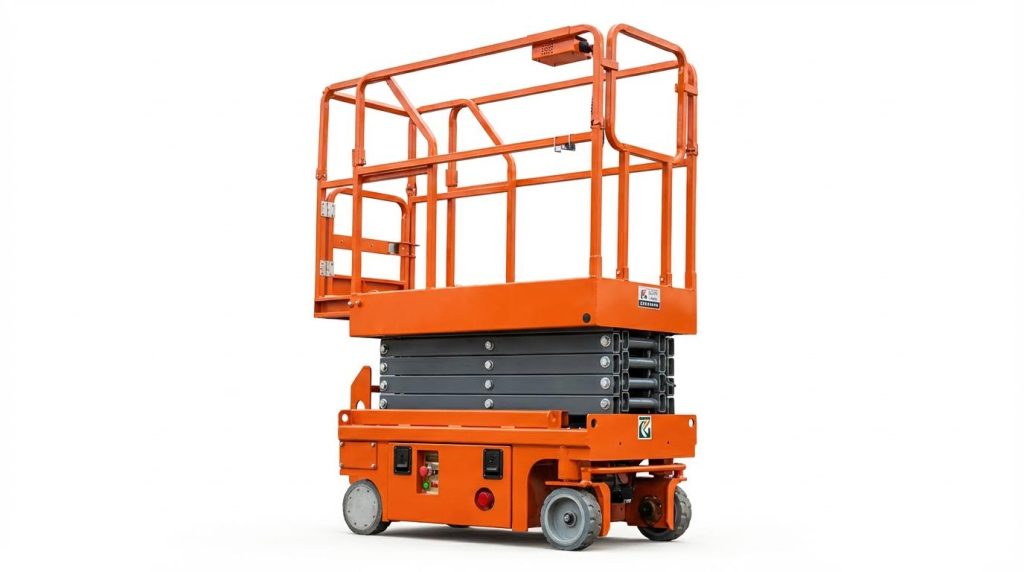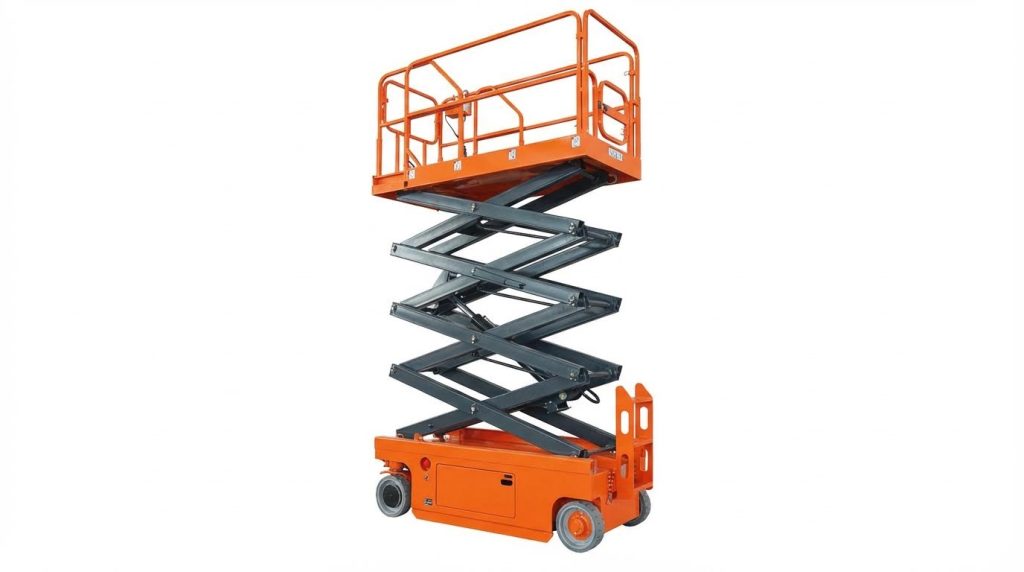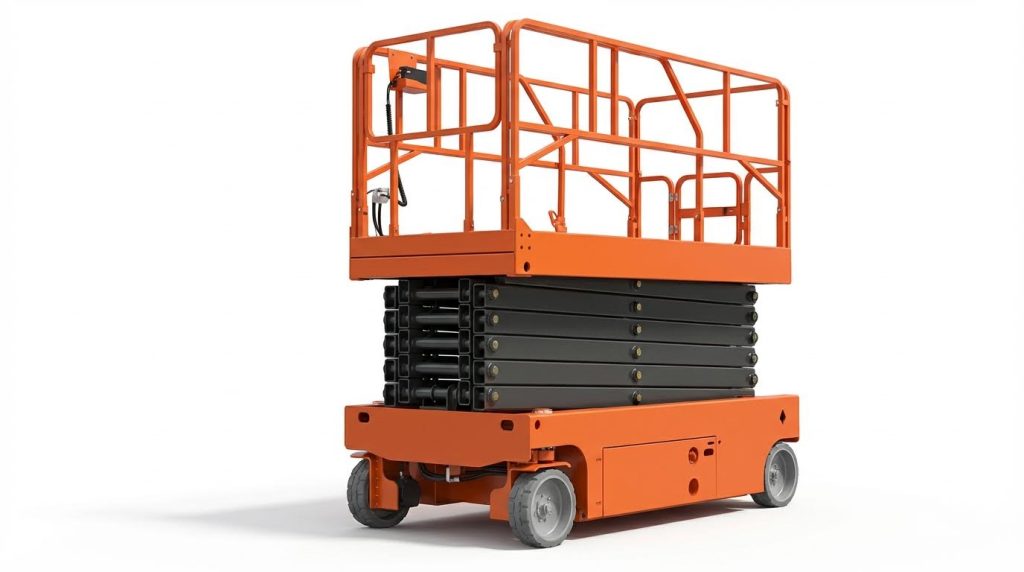
On a jobsite, the real question is not just how many people can fit on an electric scissor lift, but how many can work there safely within the machine’s engineered limits. This guide breaks down capacity, platform space, and stability so you can turn a vague headcount into hard numbers. You will see how standards, weight calculations, and site conditions combine to set a safe crew size for any lift. Use it as a practical framework before you send workers, tools, and materials up in the air.
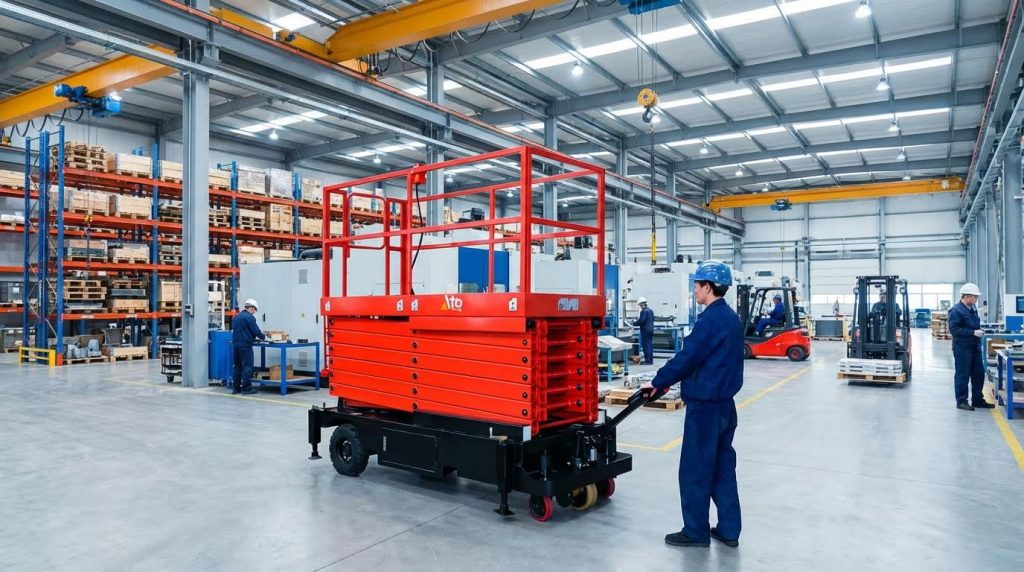
Understanding People Capacity On Electric Scissor Lifts
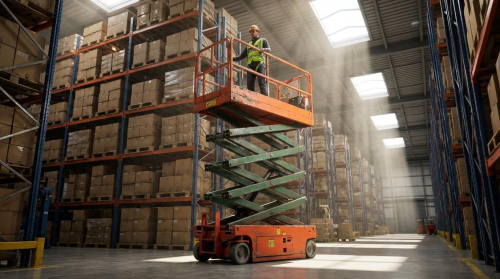
Why “How Many People” Is The Wrong First Question
Asking “how many people can fit on an electric scissor lift” puts headcount ahead of physics and regulations. The real limit is always total load and stability, not how many boots you can squeeze on the deck.
Before you decide crew size, you must account for:
- Rated platform capacity (workers + tools + materials)
- How that load is distributed on the deck
- Lift height and whether it reduces usable capacity
- Ground conditions, slopes, and surface quality
- Wind and other environmental effects
The platform’s maximum capacity is a single combined number for people, tools, and materials. Exceeding it increases the risk of instability, tipping, or structural failure by overloading the structure and hydraulics. A practical planning rule is to estimate 90–100 kg (200–220 lb) per worker including clothing and personal gear, then add tools and materials on top to compare against the rated capacity.
On a typical compact electric unit, that often means two fully equipped workers plus modest tools; larger indoor or wide‑deck lifts may safely handle three or more, but only if the total calculated load stays within the nameplate rating. Wind, uneven ground, or use of an extension deck can further reduce the practical safe capacity even when the stamped rating has not changed.
Why headcount alone is a bad safety metric
Two light workers with hand tools can weigh less than one heavy worker with a loaded tool bag and materials. The same “two people” can represent very different total loads. Overloading is a leading cause of scissor lift accidents, including tip‑overs and structural failures because the center of gravity shifts beyond the stable base. That is why capacity planning must start from kilograms or pounds, not from how many people can fit on an electric scissor lift in a physical sense.
How Scissor Lifts Are Classified Under OSHA And ANSI
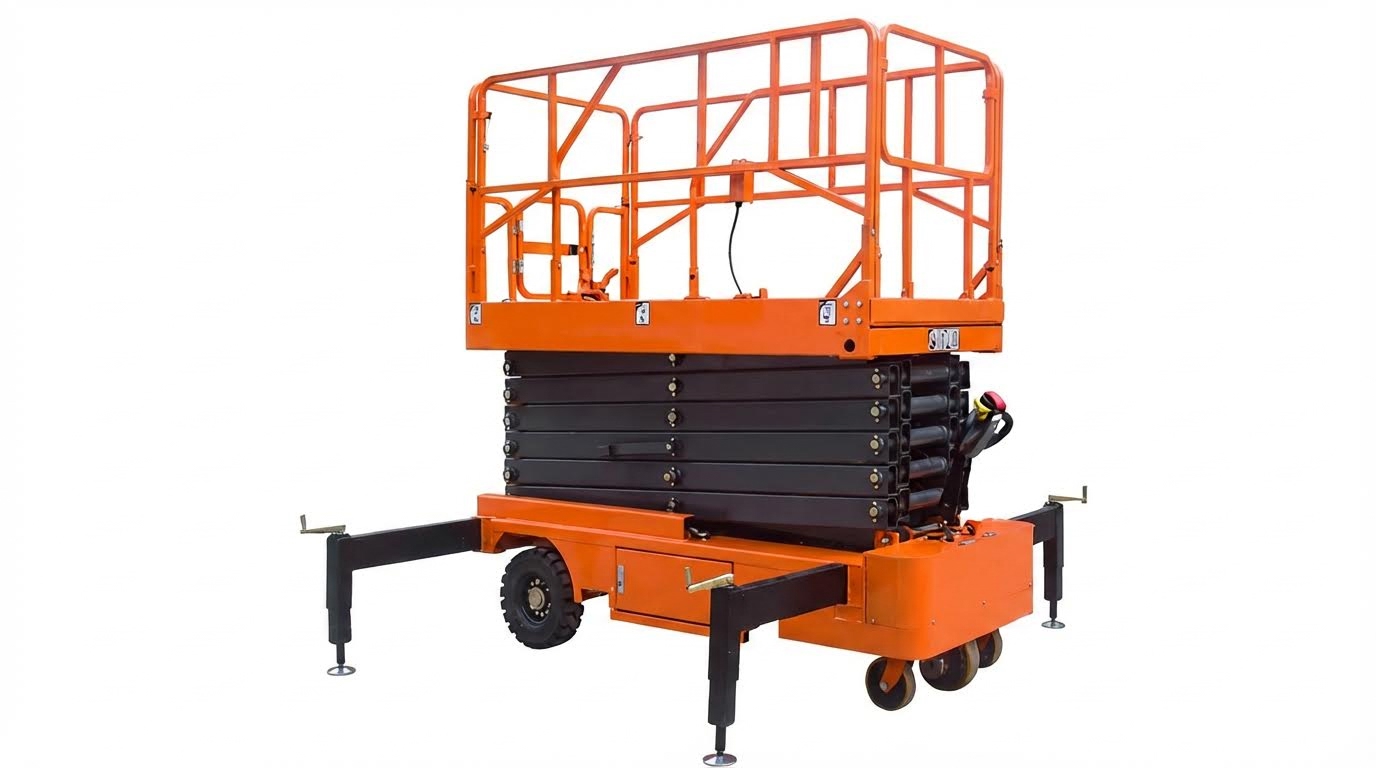
From a standards standpoint, electric scissor lifts are treated differently from boom‑type aerial lifts. They meet the criteria for scaffolds, so they must follow scaffold‑related safety rules rather than aerial‑lift‑only regulations under OSHA guidance.
This classification drives several key rules that directly affect how many people you should actually put on the platform:
- The total load must never exceed the rated platform capacity on the data plate including workers, tools, and materials.
- The number of employees on a personnel platform must not exceed either the design maximum or the number actually required to perform the work, whichever is lower per federal construction rules.
- Guardrails are mandatory fall protection on the platform, and workers must not climb or sit on them to “create” more standing room.
OSHA also treats scissor lifts as mobile scaffolds when moved with people aboard. The surface must be within about 3° of level and free of pits, holes, and obstructions, and travel speed must be adjusted to conditions to preserve stability. A height‑to‑base‑width ratio of 2:1 or less is required while moving unless the unit is specifically designed and tested for higher ratios to meet recognized stability standards.
| Regulatory Aspect | What It Says | Impact on People Capacity |
|---|---|---|
| Equipment classification | Scissor lifts are treated as scaffolds, not boom‑type aerial lifts under OSHA/ANSI definitions | Scaffold rules on load, access, and fall protection apply when deciding crew size. |
| Platform occupancy | Number of employees on a personnel platform must not exceed design maximum or the number needed for the task whichever is lower | You cannot justify extra people “because there’s room” if the work does not require them. |
| Load limit | Operators must ensure the lift does not exceed its load limit in use including all occupants and gear | Headcount is always capped by total calculated weight versus rated capacity. |
| Surface and movement | When moving with workers onboard, surface must be within 3° of level and free of holes or obstructions; travel speed must match site conditions to avoid instability | More people mean higher center of gravity, so marginal ground or fast travel may become unsafe sooner. |
| Height‑to‑width ratio | Height‑to‑base‑width ratio must be ≤ 2:1 during movement unless specially designed and tested for higher ratios | At greater heights, extra workers can push the system closer to its stability envelope. |
| Fall protection | Guardrails must be used correctly; workers must not climb or stand on them to gain reach or space | You cannot increase usable capacity by having people “perch” on rails or outside the guarded area. |
Combined, these rules mean you determine safe staffing by engineering and regulation, not by how many people can physically stand shoulder‑to‑shoulder. For any given lift, you start from the rated platform capacity, factor in tools, materials, and conditions, then check that the resulting headcount does not exceed either the design occupancy or what the job genuinely needs.
Engineering Limits: Weight, Space, And Stability
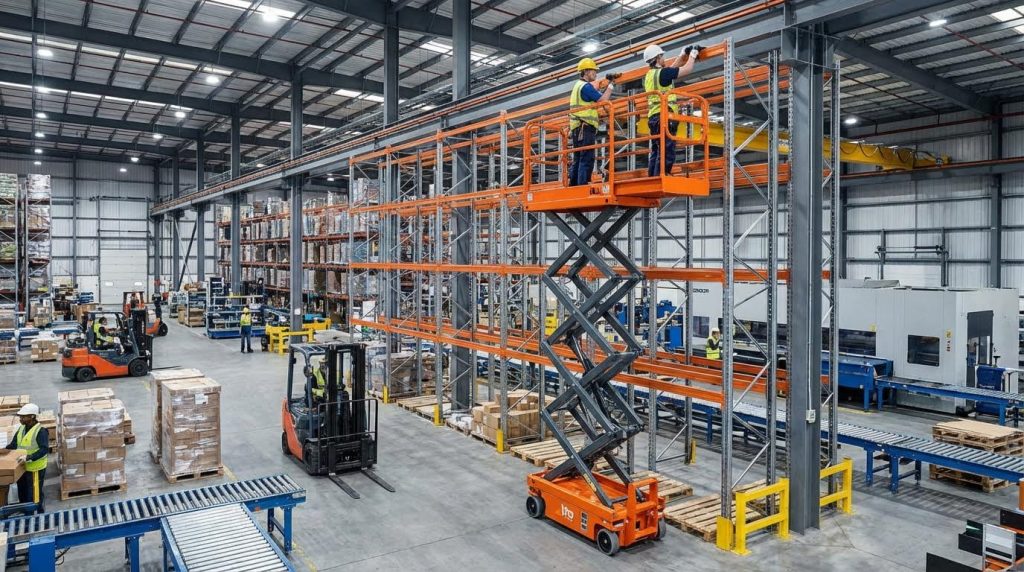
Translating Weight Capacity Into Number Of Workers
To decide how many people can fit on an scissor platform safely, you must convert the rated platform capacity into a people‑plus‑tools budget. The capacity plate always covers the total load: workers, tools, and materials together. Exceeding that rating risks instability, tip‑over, or structural failure. The maximum weight capacity of an electric scissor lift refers to the total load it can safely support.
| Lift type (typical electric) | Typical capacity range | Approx. workers only* | Typical safe crew with tools* |
|---|---|---|---|
| Compact / mini indoor | 230–300 kg (500–660 lb) typical ranges | 2–3 | 1–2 |
| Standard indoor electric | 230–450 kg (500–1,000 lb) | 2–4 | 2–3 |
| Wide‑deck electric | 350–550 kg (770–1,200 lb) | 3–5 | 3–4 |
| Small rough‑terrain electric | 350–500 kg (770–1,100 lb) | 3–5 | 2–4 |
*Worker counts assume roughly 90–100 kg (200–220 lb) per person including clothing and personal gear. Using 90–100 kg per worker is a common engineering allowance.
Instead of asking only how many people can fit on an aerial platform physically, treat it as a load‑balancing exercise.
- Start from rated platform capacity (from the capacity plate or manual).
- Subtract the estimated total weight of tools and materials.
- Divide the remaining capacity by 90–100 kg (200–220 lb) per worker.
- Apply a 10–15% safety margin to cover weight variation and forgotten items. A 10–15% margin is commonly recommended.
Example: Converting capacity to safe crew size
Assume a standard electric lift rated at 320 kg. Two workers weigh 95 kg and 90 kg. Tools and materials total 85 kg. The raw total is 270 kg. Adding a 10% margin (27 kg) gives 297 kg, which fits under 320 kg, so two workers are acceptable, but there is no room for a third. This mirrors the example calculation method where workers, tools, and materials are summed, then a margin is added. An example totaling 270 kg and adding 10% to reach 297 kg illustrates this approach.
Remember that capacity can change with configuration. When the extension deck is deployed, many platforms reduce allowed load by about 90–115 kg (200–250 lb), which is clearly marked on the capacity plate. Extension decks commonly lower usable capacity. That reduction often equals one fully equipped worker, so it directly affects how many people can fit on an scissor platform lift safely.
Platform Size, Layout, And Usable Floor Space
Even if the weight calculation says more workers are possible, the platform must give each person enough room to work without defeating the guardrail system or creating trip hazards. Larger platforms generally carry more weight and give better movement space than smaller ones. Platform size is a key factor in capacity.
| Factor | Effect on “how many people” | Practical implication |
|---|---|---|
| Platform length & width | Sets total standing area and traffic lanes | More area supports more workers and materials without crowding. |
| Guardrail geometry | Defines safe standing envelope | Workers must stay inside rails; no climbing or leaning out. Guardrails are required to prevent falls. |
| Entry gate location | Creates a high‑traffic zone | Too many workers near the gate raise fall and trip risk. |
| Extension deck use | Shifts workers away from the chassis | Capacity on the extension section is often lower than the main deck. |
| Tool & material footprint | Reduces free floor space | Large items (drywall, buckets, welders) can block egress and crowd workers. |
To convert floor space into a safe headcount, think in terms of work zones, not just “bodies on the deck.”
- Allow each worker a clear standing zone with at least one stable stance away from the guardrail edge.
- Keep a continuous path to the gate or ladder clear for emergency exit.
- Store heavy or bulky items low and tight to the centerline to preserve both space and stability.
- If materials or tools consume more than roughly one‑third of the floor area, reduce the number of workers even if weight is still under capacity.
Why floor space often limits crew size before weight does
Common electric scissor lifts can support several hundred kilograms, yet the platform is only long enough for two workers to pass each other carefully. When you add tool bags (10–20 kg each), power tools, and items like 5‑gallon buckets or drywall sheets, the free floor space shrinks quickly. Typical tool and material weights show how fast space and capacity are consumed. Crowding forces people against guardrails or over materials, which is unsafe even if the weight limit is not reached.
Stability Factors: Height, Ground, And Wind Effects
Stability is the third engineering limit that controls how many people can safely work on an scissor platform lift. Rated capacity assumes level, firm ground and acceptable wind. As conditions move away from that ideal, the practical safe load often drops.
| Stability factor | Key requirements / effects | Impact on crew size |
|---|---|---|
| Ground level & firmness | Scissor lifts must sit on firm, stable, level surfaces; moving with workers aboard requires the surface to be within about 3° of level and free of pits, holes, and obstructions. Surface conditions are tightly controlled. | On marginal ground, reduce load and workers, or do not elevate. |
| Height‑to‑base ratio | When moving, the height‑to‑base width ratio must be 2:1 or less unless specially designed and tested for higher ratios. This controls tip‑over risk while traveling. | At full height, avoid unnecessary movement and extra personnel. |
| Wind and outdoor exposure | Wind loading uses part of the stability margin. Many lifts have a maximum wind speed, often around 28 mph (45 km/h). Manufacturers typically specify a maximum wind speed. Outdoor‑rated lifts should not be used above their wind limit. Wind speed limits are critical for outdoor use. | In gusty conditions, treat capacity conservatively and consider fewer workers. |
| Load distribution | Uneven loading can overload one side of the platform and reduce stability. Proper distribution is essential for stability. | Do not cluster workers and materials at one end or on the extension deck. |
- Inspect the ground for slopes, bumps, holes, soft spots, and debris before elevating. Operating on firm, level surfaces away from obstructions is critical for stability. Ground condition hazards must be corrected or avoided.
- Never exceed the platform load limit, especially when conditions are less than ideal. Operators must ensure lifts do not exceed load limits.
- In higher winds or at maximum height, reduce the number of workers even if weight is under the plate rating, because wind and sway eat into the stability margin.
How stability ties back to “how many people can fit”
On paper, a wide‑deck electric scissor lift might support the weight of four or five workers. In practice, if the lift is near full height, outdoors, and on a surface that is only just within level tolerance, the margin against tip‑over is smaller. Wind, sudden movements, or an emergency maneuver can create dynamic loads that the static rating does not cover. Overloading and poor conditions are leading contributors to scissor lift accidents. In those cases, the safe answer to how many people can fit on an electric scissor lift is fewer than the theoretical maximum, because stability—not just weight and space—sets the real limit.
Applying The Rules On Site: Planning Crew Size
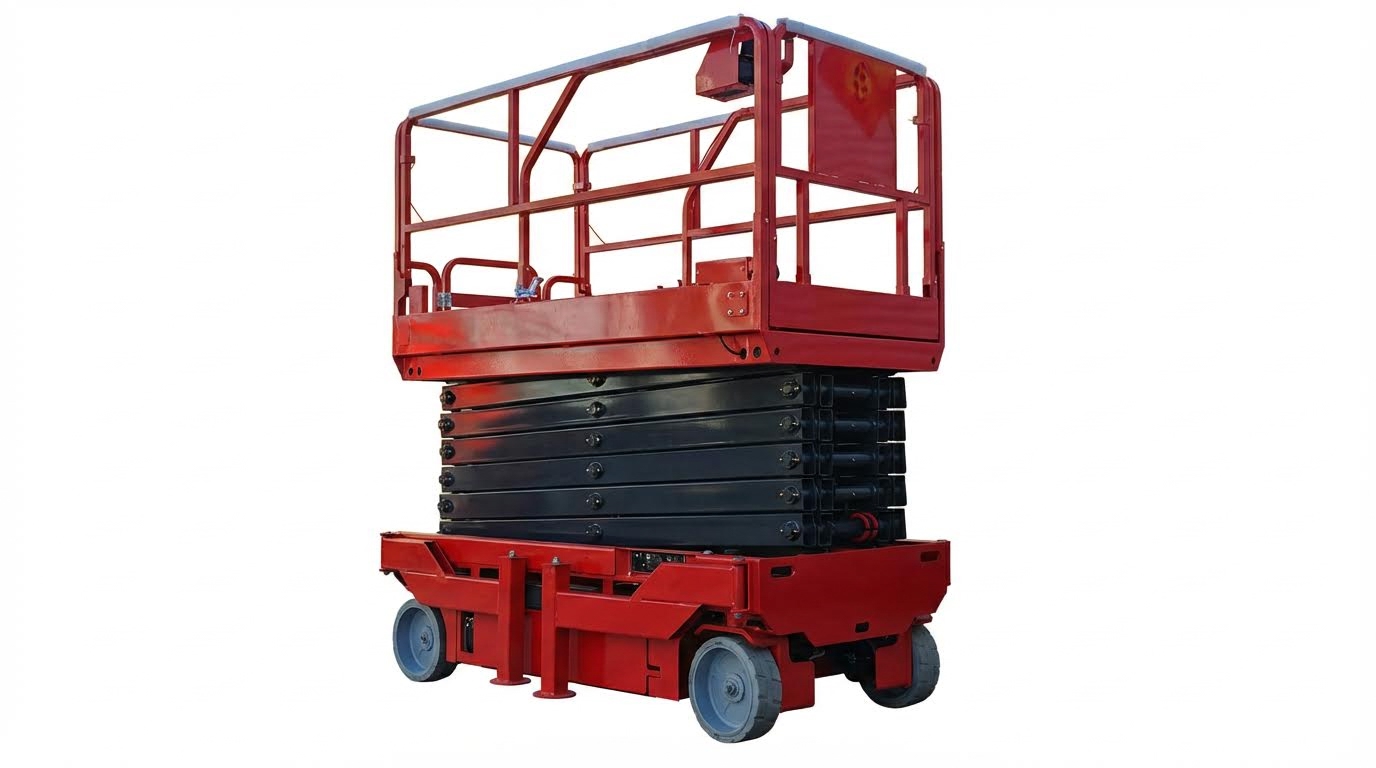
Step‑By‑Step Load Calculations For Real Jobs
To decide how many people can fit on an scissor platform safely, you must treat it as a load calculation problem, not a headcount guess. Use a simple, repeatable process so every supervisor and operator gets the same answer on every job.
- Start with the lift’s rated platform capacity
- Read the platform capacity plate or operator’s manual for the exact model.
- Remember this rating already includes workers, tools, and materials together. Exceeding this limit can cause instability or structural failure.
- Estimate worker weights
- Use a standard allowance of 90–100 kg (200–220 lb) per worker, including clothing and personal gear. This is a common planning value.
- Use actual known weights if they are higher than the allowance.
- List tools and portable equipment
- Identify what must go on the platform (per pair of workers):
- Loaded tool bag: typically 10–20 kg (22–44 lb)
- Cordless drill/driver: 2–3 kg (5–7 lb)
- Saw/grinder: 2–5 kg (5–11 lb)
- 5‑gallon bucket: 20–25 kg (44–55 lb)
- Small welder: 15–25 kg (33–55 lb)
Typical weights for common tools are well documented.
- Identify what must go on the platform (per pair of workers):
- Add materials that will be on the deck
- Examples:
- Drywall sheet: about 25–30 kg (55–66 lb) each
- Boxes of fasteners, fittings, small parts
- Short lengths of pipe, duct, or cable drums
- Only count what is actually on the platform at one time, not the whole day’s material.
- Examples:
- Apply a safety margin
- Add 10–15% to cover weight variations and forgotten items. This margin is widely recommended for planning.
- Never “use up” this margin intentionally; treat it as reserve only.
- Adjust for configuration and conditions
- If the extension deck is out, use the reduced capacity shown on the plate. Many lifts drop capacity by 90–115 kg (200–250 lb) with the deck extended. Extension decks commonly reduce usable capacity.
- For outdoor work, consider wind and ground conditions; practical safe capacity may be less than the plate value in poor conditions. Wind and slopes reduce stability margin.
- Compare total planned load to rated capacity
- If the calculated load plus margin is ≤ adjusted rated capacity, the plan is acceptable.
- If it exceeds capacity, reduce people, tools, or materials, or select a higher‑capacity lift.
Worked example: turning capacity into a crew size
Scenario: You want to know how many people can fit on an electric scissor lift with a 320 kg (705 lb) indoor platform rating, no extension deck, doing light installation work.
| Item | Quantity | Assumed unit weight | Subtotal |
|---|---|---|---|
| Workers | 2 | 95 kg (209 lb) | 190 kg (418 lb) |
| Loaded tool bags | 2 | 15 kg (33 lb) | 30 kg (66 lb) |
| Power tools (shared) | 1 set | 15 kg (33 lb) | 15 kg (33 lb) |
| Small materials | — | 20 kg (44 lb) | 20 kg (44 lb) |
| Subtotal | 255 kg (561 lb) | ||
| Safety margin (10%) | 25 kg (55 lb) | ||
| Total planned load | 280 kg (617 lb) |
Result: 280 kg is below the 320 kg rating, so 2 workers are acceptable with this tool and material set. Adding a third worker would add roughly 95 kg, pushing the total to about 375 kg, which would exceed capacity. In this case, the safe answer to “how many people can fit on an electric scissor lift” is two workers for this task and this model, not three.
Configuring Tasks, Tools, And Movement Safely
Even when the weight math works, you still need to configure the work so the platform remains stable and compliant with site rules and standards. Capacity, layout, and movement all interact.
- Match crew size to the actual task need
- Do not put more people on the lift than the work truly requires, even if capacity allows it. Regulations limit platform occupancy to the number the platform was designed for or the number needed for the work, whichever is lower.
- Use fewer workers on the deck and more support at ground level when possible.
- Distribute load correctly on the platform
- Keep heavy items near the platform center, not at the guardrails.
- Avoid stacking heavy materials on one side; uneven loading reduces stability. Poor load distribution can exceed local capacity on one side.
- Limit how many workers stand on an extension deck at the same time; follow any separate deck rating.
- Control ground and environmental conditions
- Operate only on firm, level surfaces cleared of holes, debris, and drop‑offs. Uneven or soft ground is a major tip‑over factor.
- When moving with people on the platform, keep the surface within about 3° of level and free of pits or overhead hazards. Guidance for moving scissor lifts stresses level, unobstructed surfaces.
- Monitor wind speed for outdoor use; many lifts are limited to around 28 mph. Exceeding the rated wind speed is prohibited.
| Planning factor | Key question | Typical action on site |
|---|---|---|
| Rated capacity | Is the total planned load (with margin) below the plate rating? | Reduce workers/tools or choose a higher‑capacity lift if not. |
| Task type | Do we really need this many people on the platform? | Re‑sequence work so fewer workers are aloft at once. |
| Load distribution | Are heavy items centered and evenly spread? | Re‑position materials; keep weight away from guardrails and corners. |
| Extension deck | Is the deck extended and does it have a lower rating? | Apply the reduced deck capacity; limit people and materials on the extension. |
| Ground conditions | Is the surface firm, level, and free of hazards? | Improve the surface, relocate the lift, or reduce height/crew size. |
| Wind and overhead hazards | Are wind and obstacles within limits? | Delay work, lower the platform, or change position if conditions are unsafe. |
Movement and positioning with workers on the platform
Before moving the lift with people on it:
- Lower the platform as much as practical before travel.
- Ensure the travel path is level within about 3° and free of pits, holes, or deck openings. Guidance requires level, unobstructed paths when moving with occupants.
- Keep speed low and matched to surface conditions; slow further on rough or congested areas. Travel speed must be adjusted to workplace conditions.
- Use a ground guide in busy work zones to prevent collisions. Traffic control measures are recommended around mobile platforms.
These controls do not change the numeric answer to how many people can fit on an electric scissor lift, but they strongly influence whether that number is safe in real‑world movement and positioning.
When you combine a clear load calculation with disciplined task planning and movement rules, your crew size decisions become defensible, repeatable, and safe on every electric scissor lift job.
Final Considerations For Safe Scissor Lift Staffing
The safe number of people on an electric scissor lift always comes from engineering limits, not convenience. Weight capacity, platform space, and stability form one connected system. If you push any part, you cut into the safety margin of the whole machine.
When you plan crew size, you must first turn the nameplate rating into a full load budget. Count workers, tools, and materials, then add a clear safety margin. Next, check that the platform layout still gives each worker real room to move, a clear escape path, and proper use of guardrails. Finally, look at height, ground, and wind. If conditions are less than ideal, you reduce the practical headcount, even when the math says the weight fits.
The best practice is simple: staff to the task, not to the maximum theoretical capacity. Use the step‑by‑step calculation method on every job, and treat stability and floor space as equal partners to weight. Supervisors should document these decisions and train operators to follow the same process. When in doubt, choose fewer people on the platform and better support from the ground or a higher‑capacity lift from Atomoving.
Frequently Asked Questions
How many people can fit on an electric scissor lift?
The number of people that can fit on an electric scissor lift depends on the lift’s weight capacity and the average weight per person. Most electric scissor lifts have a maximum capacity ranging from 200 kg to over 500 kg. For example, a lift with a 500 kg capacity could accommodate approximately 4-6 people, assuming an average weight of 70-80 kg per person.
- Check the manufacturer’s specifications for exact capacity limits.
- Never exceed the rated load to ensure safety and compliance with OSHA standards.
What factors determine the capacity of an electric scissor lift?
The capacity of an electric scissor lift is determined by its design, intended use, and platform size. Factors like motor power, material strength, and stability also play a role. For instance, lifts designed for heavy-duty industrial applications typically have higher capacities than those used in light commercial settings. Always refer to the equipment manual or consult a professional for specific details. Lift Capacity Guide.