
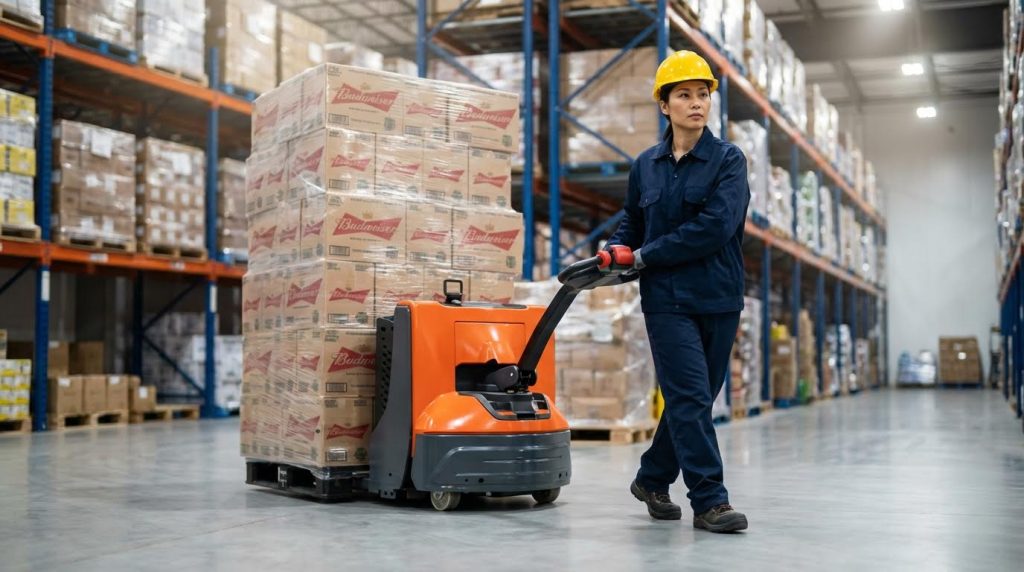
Safe pallet jack operation is not guesswork; it is a repeatable process built on training, inspection, and disciplined technique. This guide walks you step by step through how to safely use a pallet jack, from core safety principles and daily checks to load handling, travel on ramps, and pedestrian control. You will also see how maintenance, battery care, and structured compliance programs reduce breakdowns and incidents. Use this as a practical framework to tighten safety, cut damage, and keep every move under control.
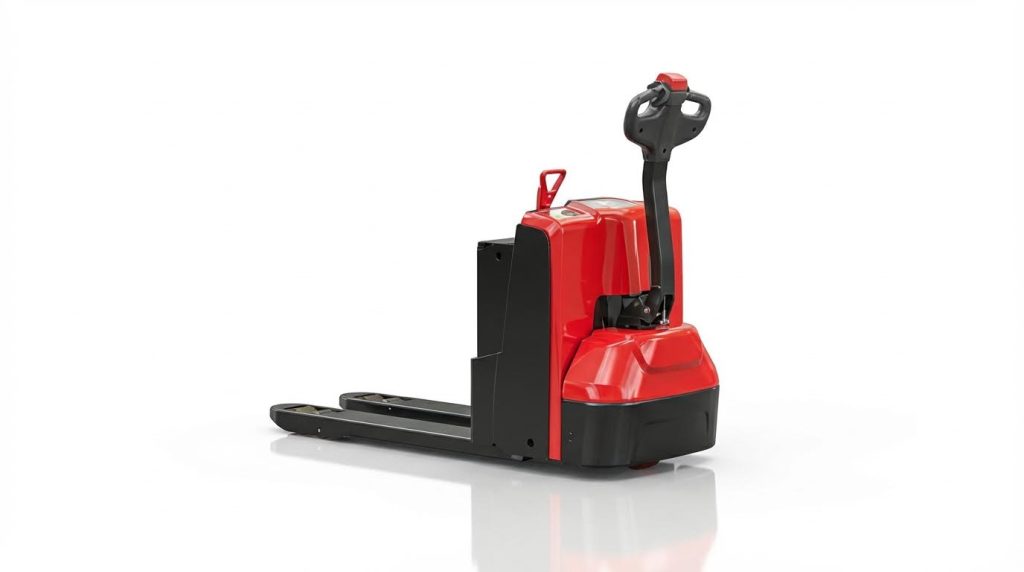
Core Safety Principles For Pallet Jack Operation

OSHA classification and operator training
Understanding how to safely use a pallet jack starts with knowing how regulators classify the equipment and what training operators need. Electric pallet jacks fall under powered industrial truck rules, which drive requirements for age, instruction, and evaluations. Manual pallet jacks are simpler but still demand structured safety training.
- OSHA classification
- Electric pallet jacks are Class III powered industrial trucks under OSHA 29 CFR 1910.178. This class includes low-lift electric pallet trucks and walkie-riders.
- They follow the same training, evaluation, and documentation rules as other powered industrial trucks.
- Manual pallet jacks are not classified as powered industrial trucks but still require employer safety instruction.
- Who can operate electric pallet jacks
- Operators must be at least 18 years old.
- They must complete formal instruction, hands-on training, and an employer performance evaluation before solo operation. Certification is mandatory for powered units.
- Core training structure
- Formal instruction (online or classroom) covering regulations, equipment types, hazards, and safe operation. Many courses last about two hours and require passing quizzes and a final exam. Typical pass marks are 80% for quizzes and 70% for final exams.
- Practical training on actual pallet jacks used on-site, including controls, maneuvering, and emergency stops.
- Performance evaluation by the employer to confirm the operator can demonstrate how to safely use a pallet jack in real facility conditions.
- Employer responsibilities
- Provide site-specific training on the exact pallet jack models, including control layout, braking, and battery systems.
- Cover facility hazards: narrow aisles, slopes, mixed traffic, cold rooms, and emergency routes. Training must match the actual workplace.
- Document training, evaluations, and any refresher sessions.
- Certification validity and refreshers
- Electric pallet jack certification typically remains valid for three years. Employers must re-evaluate operators before expiration.
- Refresher training is required after incidents, near misses, unsafe operation, or major layout/equipment changes.
Key topics every pallet jack safety course should include
- Equipment types and main components.
- Control functions and emergency stop devices.
- Rated capacity, load center, and stability concepts.
- Driving, stopping, and cornering techniques.
- Pedestrian interaction and visibility management.
- Pre-use inspections and defect reporting.
- Basic maintenance reporting and ergonomics.
Pre-use inspections and checklists
Safe operation starts before the first move. A structured pre-use inspection prevents accidents caused by damaged components or failed controls. Checklists standardize how to safely use a pallet jack at the beginning of every shift.
For powered and manual jacks, inspections should be quick but systematic. Any defect that affects steering, lifting, or stopping must trigger immediate lockout and reporting.
| Inspection Area | What to Check | Risk if Ignored |
|---|---|---|
| Forks and chassis | Cracks, bends, deformation, loose or missing hardware, pallet stop damage | Fork failure under load, dropped pallets, structural collapse |
| Wheels and rollers | Flat spots, cracks, excessive wear, debris jammed in wheels | Poor tracking, higher push/pull force, sudden stops or loss of control |
| Hydraulic system | Oil leaks, damaged hoses, jerky lift, abnormal noises | Inability to lift, sudden lowering, slip hazards from oil |
| Controls (powered) | Forward/reverse, lift/lower, speed control, dead-man or tiller switch | Runaway truck, uncommanded movement, collision risk |
| Brakes (powered) | Service brake response, plug braking, parking brake hold | Long stopping distance, roll-away on slopes |
| Horn and warning devices | Horn tone, any lights or alarms | Reduced warning to pedestrians at blind spots |
| Emergency stop / reverse | Emergency stop button and emergency reverse belly switch where fitted | Inability to stop quickly in an emergency |
| Battery and cables (powered) | Charge level, damaged cables, loose connectors, corrosion | Unexpected shutdown, electrical faults, fire risk |
Industry guidance stressed that operators must perform pre-operational checks before using an electric pallet jack, including forks, tires, brakes, and all controls. Any defect should remove the unit from service until repaired.
- How to run a fast pre-use inspection
- Walk around the pallet jack and scan for visible damage, leaks, or missing parts.
- Check forks and frame for cracks, bending, or weld damage.
- Inspect wheels and rollers for wear, debris, and free rotation.
- Operate lift/lower to confirm smooth, controlled motion.
- On powered units, test forward/reverse, steering, horn, and emergency stop.
- Verify the data plate is legible so you can confirm capacity before loading.
- Report and tag out any unit that fails checks; never “use it just this once.”
Why checklists matter for everyday operations
- They standardize inspections between shifts and operators.
- They create a written record that supports safety audits and compliance.
- They help new operators remember every step of how to safely use a pallet jack.
- They make it easier to spot recurring defects and maintenance trends.
Understanding capacity, load center, and stability
Knowing how much you can safely lift and how the load is placed on the forks is critical. Capacity, load center, and stability work together to keep the pallet jack upright and controllable. Misunderstanding any of these is a common root cause of tip-overs and dropped loads.
| Concept | What It Means | Practical Operator Rule |
|---|---|---|
| Rated capacity | Maximum load the pallet jack can safely handle at a specified load center | Never exceed the weight shown on the data/nameplate, including pallet and packaging. Overloading causes instability and mechanical failure. |
| Load center | Horizontal distance from fork face to the load’s center of gravity | Keep the heaviest part of the load tight against the fork heel and centered between the forks. |
| Stability | How resistant the truck and load are to tipping or losing balance | Low, even, and compact loads are more stable than tall, uneven, or offset loads. |
Safe loading techniques are a core part of how to safely use a pallet jack. Guidance emphasized that operators must position the load evenly on the forks, avoid unstable stacks, and place heavier items at the bottom to keep the center of gravity low and centered. Stack height should still allow clear visibility.
- Practical rules for capacity and stability
- Read the data plate before use and match it to typical pallet weights in your facility.
- Include pallet, packaging, and dunnage in total weight when estimating load.
- Keep forks fully under the pallet with the load against the fork backrest or heel.
- Center the pallet between the forks; avoid side loading on one fork.
- Avoid tall, top-heavy stacks; if you must stack higher, reduce travel speed and increase following distance.
Common stability mistakes to avoid
- Lifting loads that are above rated capacity “just for a short move.”
- Carrying pallets with long overhang beyond the fork tips.
- Running with forks too high, which raises the center of gravity.
- Turning sharply with a raised, heavy load.
- Ignoring damaged or leaning pallets that already compromise stability.
Technical Operating Practices To Reduce Risk
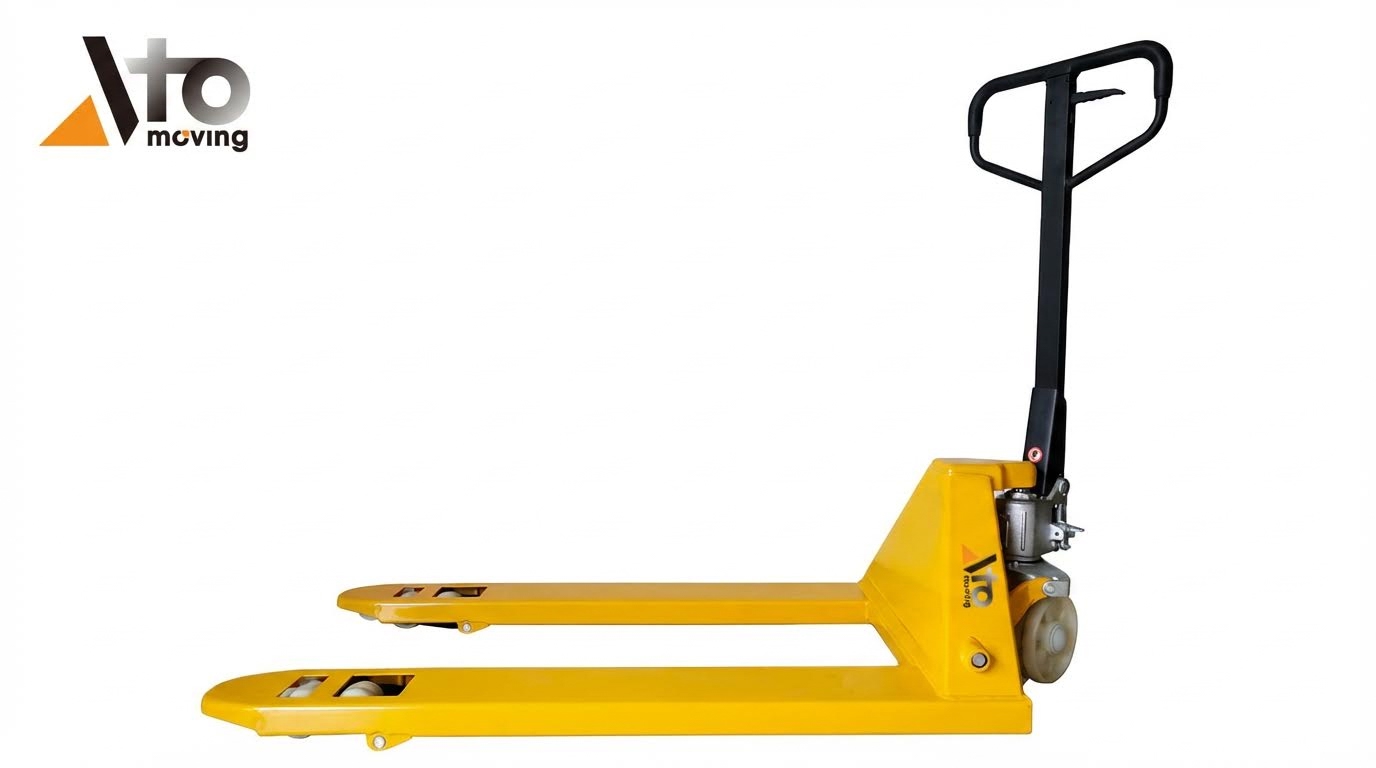
Technical operating practices turn theory about how to safely use a pallet jack into day‑to‑day habits. The focus is simple: keep the load stable, keep the machine under control, and keep people and property out of the danger zone.
Building stable loads and positioning the forks
Stable loads are the backbone of safe pallet jack operation. Poorly built pallets are a root cause of tip‑overs, falling product, and damage. Use these rules every time you pick, stack, and engage a pallet.
- Verify that the total weight of the pallet, packaging, and product does not exceed the pallet jack’s rated capacity shown on the data plate to prevent instability and mechanical failure.
- Place the heaviest items on the bottom layer, lighter items on top, to keep the center of gravity low and within the footprint of the pallet for better stability.
- Distribute weight evenly across both forks; avoid “one‑sided” stacks that pull the center of gravity toward a single fork.
- Keep stack height low enough for clear forward or side visibility; if you cannot see over or around the load, change the orientation or reduce height to avoid blind travel.
- Avoid leaning or “pyramiding” stacks; use stretch wrap, strapping, or corner boards when needed to bind unstable items.
- Reject pallets that are broken, have missing boards, or loose nails that can let forks punch through or drop product.
Correct fork positioning is just as critical as good stacking when you look at how to safely use a pallet jack. The goal is full support of the pallet with minimal clearance to avoid ground strikes.
| Fork Positioning Practice | Why It Matters | Key Safety Notes |
|---|---|---|
| Center forks under the load | Keeps center of gravity between the forks | Reduces risk of side tipping when turning or braking |
| Fully insert forks through pallet | Supports the entire pallet length | Prevents “nose heavy” loads that can fall off the tips |
| Keep forks low during travel | Improves stability and reduces trip hazard | Typical guidance is a few centimeters off the floor to clear minor floor defects |
| Square up to the pallet before lifting | Avoids twisting forces on forks and pallet | Do not lift while turning the steering tiller |
| Check load stability before moving | Prevents collapse during first movement | Gently “test pull” to see if anything shifts |
Quick load‑building checklist
- Is the pallet sound and undamaged?
- Is the total weight within the rated capacity?
- Is the heaviest product at the bottom and centered?
- Is the stack height low enough for clear vision?
- Are forks fully inserted and the load stable when nudged?
Traveling, turning, and working on ramps
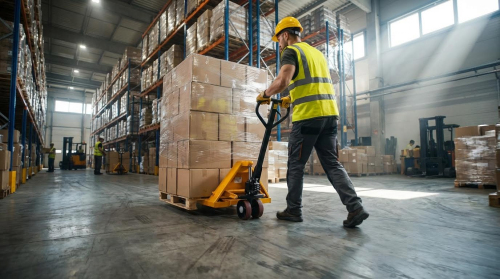
Most pallet jack incidents happen while the truck is moving, not while it is parked. Speed, turning radius, and slope management are the three levers you control every second of travel.
- Travel at walking speed or slower, especially in congested or mixed‑traffic areas.
- Keep forks low (a few centimeters off the floor) during travel to limit potential energy and trip hazards as part of safe operating procedures.
- Use smooth, progressive acceleration and braking; avoid sudden starts, stops, or direction changes that can shift the load.
- Take turns wide and slow; never cut tight corners with a high or top‑heavy load.
- Keep hands, feet, and legs clear of pinch points and under‑ride zones near the forks and chassis.
Ramps and slopes add gravity to the equation, which quickly multiplies risk if you do not respect it. Your orientation to the load—uphill versus downhill—is the most important decision on any incline.
| Ramp/Incline Rule | Correct Practice | Risk if Ignored |
|---|---|---|
| Load orientation on ramps | Keep the load on the uphill side of the operator at all times to prevent runaways | Truck or load can roll away and crush the operator or pedestrians |
| Turning on slopes | Move in a straight line; do not turn on the incline to avoid lateral forces | Lateral forces can shift the load or tip the truck sideways |
| Speed control on ramps | Use low speed and controlled braking; never coast | Loss of control, extended stopping distance, or jack “chasing” the operator |
| Parking on slopes | Do not park loaded pallet jacks on ramps or slopes because brakes may not hold long‑term | Unattended roll‑away, product loss, and collision hazards |
| Manual jack technique on slopes | Descend backward with the load uphill; push rather than pull on level ground to protect feet and back | Strain injuries, loss of footing, or the load running over the operator’s feet |
Emergency stop and control habits
- Know exactly where the emergency stop or belly button switch is and how it behaves when pressed or released before you enter traffic areas.
- Practice “release to stop” behavior in a safe area so it is automatic in a real emergency.
- Never ride on the forks or allow others to ride; pallet jacks are designed for loads, not passengers.
Managing pedestrians, floors, and visibility

Even perfect equipment handling is not enough if you ignore people and the surface you drive on. Managing pedestrian interaction and floor conditions is central to how to safely use a pallet jack in real workplaces.
- Always yield to pedestrians, even in “equipment priority” zones; people are the most vulnerable road users and must have the right of way.
- Use the horn at blind corners, intersections, and doorway exits, and reduce speed before entering these zones.
- Maintain a buffer distance from pedestrians—at least several pallet lengths in open areas, more in tight aisles.
- Follow marked travel lanes and keep pedestrian walkways clear of parked jacks and pallets.
- Make eye contact or use clear hand signals before passing near workers who are picking or stacking.
Floor conditions directly affect traction, stopping distance, and steering control. Small defects in the floor can create large forces at the wheels and forks, especially with heavy loads.
| Floor / Visibility Factor | Safe Practice | Typical Hazard |
|---|---|---|
| Debris and spills | Scan ahead for debris, shrink wrap, strapping, and wet spots; stop and have them removed or cleaned before proceeding | Loss of traction, wheel lock, or sudden steering changes |
| Cracks and uneven joints | Approach slowly and at a shallow angle; lower speed and keep forks low | Shock loads to the frame, dropped product, or operator loss of control |
| Lighting and visibility | Do not drive into poorly lit areas with high loads; adjust route or reduce stack height | Hidden pedestrians, obstacles, and racking uprights |
| Obstructed sightlines | Travel in reverse when a stable load blocks forward view, as long as this does not put your body in a crush zone | Collisions with pedestrians, doors, or equipment |
| Congested aisles | Wait for a clear path; avoid forcing the jack through tight gaps around people or equipment | Side swipes, product damage, and foot injuries |
Pedestrian and floor‑safety micro‑routine
- Before moving: quick 360° scan for people, pallets, and floor hazards.
- During travel: eyes 3–5 meters ahead, not fixed on the forks.
- At intersections: stop, horn, creep forward, and confirm it is clear.
- After a near miss: report it so routes, markings, or training can be improved as part of continuous safety improvement.
Maintenance, Batteries, And Compliance Programs
Daily and scheduled mechanical maintenance
Mechanical maintenance is the backbone of how to safely use a pallet jack day after day. A simple, disciplined routine prevents failures, reduces push/pull forces, and cuts accident risk. Use the following structure: quick daily checks by operators, deeper weekly/monthly service, and periodic professional inspections.
Daily operator inspection checklist (before each shift)
- Visually inspect forks, frame, and handle for cracks, bends, or loose hardware Cited Text or Data
- Check wheels and rollers for flat spots, chunks missing, or seized rotation Cited Text or Data
- Test horn (if powered), brakes, forward/reverse travel, and steering response
- Verify lift and lower functions are smooth, without jerks or delays Cited Text or Data
- Look for hydraulic oil leaks around cylinder, hoses, and fittings Cited Text or Data
- Confirm emergency reverse or stop controls work on powered units Cited Text or Data
- Lock out and tag out any unit with abnormal noise, sluggish lifting, or erratic movement; report to a supervisor immediately Cited Text or Data
Scheduled mechanical maintenance tasks
| Interval | Key tasks | Why it matters for safe pallet jack use |
|---|---|---|
| Weekly |
|
|
| Monthly |
|
|
| Periodic (per manufacturer / hours of use) |
|
|
Professional inspections and documentation
- Schedule professional inspections based on usage intensity and manufacturer guidance Cited Text or Data
- Maintain a maintenance log for each pallet jack: inspections, defects, repairs, and parts replaced
- Use logs during audits to prove that equipment used in your facility is safe and fit for service
Battery care, charging, and ventilation safety
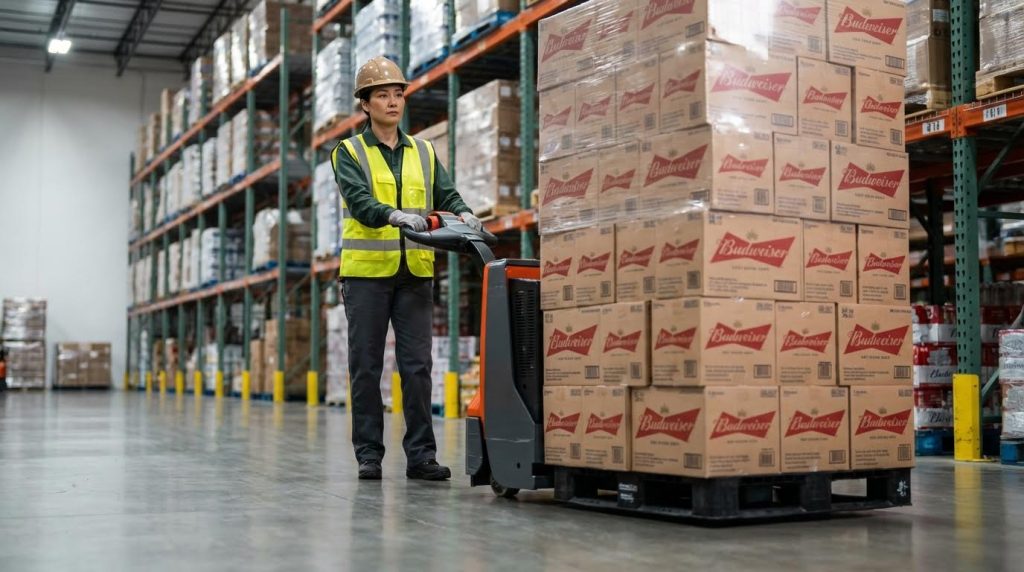
Battery systems are a critical safety component on electric pallet jacks. Poor charging habits or neglected batteries can lead to acid leaks, fire risk, and unexpected loss of power while handling loads. Good battery care is part of how to safely use a pallet jack in any warehouse.
Daily and routine battery care
- Charge batteries fully and regularly; avoid deep discharge to extend life Cited Text or Data
- Inspect battery case for cracks, swelling, or leaks before use
- Check cables and connectors for frayed insulation or loose lugs
- Clean terminals to remove corrosion that can reduce efficiency and cause overheating Cited Text or Data
- Store batteries and parked electric pallet jacks in cool, dry conditions away from heat sources Cited Text or Data
- Track charge cycles and runtime to plan replacements before performance becomes a safety risk Cited Text or Data
Safe charging and ventilation practices
| Aspect | Safe practice | Risk controlled |
|---|---|---|
| Charging location |
|
|
| During charging |
|
|
| Damaged batteries |
|
|
Link to overall safe operation
Well-maintained batteries ensure that travel, braking, and lifting functions respond predictably. This is essential when you move rated-capacity loads, work on ramps, or operate in tight aisles. Battery failures under load can turn a routine move into a serious incident.
Incident reporting, refresher training, and audits
Strong compliance programs close the loop between daily operation and long-term safety performance. Reporting, training, and audits provide the data that shows whether people really know how to safely use a pallet jack and whether your controls work in practice.
Incident and near-miss reporting
- Require reporting of all incidents, from minor damage to serious injuries, as well as near misses Cited Text or Data
- Use simple, fast reporting forms: who, what, where, when, equipment ID, and conditions
- Investigate root causes: training gaps, floor conditions, maintenance issues, traffic layout
- Feed findings into updates to procedures, layouts, and training content
Refresher training and certification control
| Trigger / interval | Required action | Purpose |
|---|---|---|
| Every 3 years for powered pallet jack operators | Re-evaluate operator performance and renew certification Cited Text or Data | Confirms skills stay current and aligned with regulations |
| After any incident or near miss | Provide targeted refresher training on the behaviors and hazards involved Cited Text or Data | Closes specific gaps that contributed to the event |
| When equipment or layout changes | Deliver site-specific training on new pallet jack models, controls, and traffic patterns Cited Text or Data | Ensures operators understand new hazards and control layouts |
- Core topics to reinforce: rated capacity, load center, stability, pedestrian interaction, pre-use inspections, and emergency procedures Cited Text or Data
- Include maintenance reporting responsibilities so operators know when and how to tag out unsafe equipment
Safety and compliance audits
- Conduct periodic audits of pallet jack operation, maintenance records, and training files
- Observe real work: load building, travel speeds, ramp use, and pedestrian management
- Verify that pre-operation checklists are completed and defective units are removed from service Cited Text or Data
- Use audit findings to set measurable improvement actions with due dates and owners
Final Thoughts On Safe Pallet Jack Use
Safe pallet jack use is not one rule or device; it is a complete system. Training gives operators the judgment to read capacity plates, spot unstable loads, and manage pedestrians. Geometry and physics then take over. When operators keep the center of gravity low, within the pallet footprint, and between the forks, the truck stays predictable, even in tight aisles and on ramps.
Disciplined inspections and maintenance close the mechanical gaps. Daily checks catch cracks, leaks, and control faults before they cause a failure under load. Scheduled service and battery care keep lifting, braking, and steering responses consistent, which is vital when you work at rated capacity or on slopes.
Compliance programs tie everything together. Incident reporting, refresher training, and audits show whether safe habits actually exist on the floor. Operations and engineering teams should treat pallet jacks as critical handling assets, not simple carts. Set clear rules, enforce pre-use checks, and remove any unit or practice that falls short. When you combine sound training, stable loading, careful travel, and structured maintenance, you cut injuries, protect product and racking, and keep Atomoving pallet jacks working safely for the long term.
Frequently Asked Questions
What is the safest way to use a pallet jack?
To use a pallet jack safely, always inspect it before operation. Check the wheels, handle, and hydraulic lift for damage or wear. Ensure the forks are evenly inserted under the pallet and avoid overloading by adhering to the weight limit. Lift the load slowly and move it carefully to adapt to changing surroundings. Pallet Jack Safety Guide.
Should you push or pull a pallet truck?
Whenever possible, push the load rather than pulling it. Pushing is safer as it provides better control and reduces the risk of strain or injury. Always ensure your hands and feet are clear of the pallet jack while operating. Pallet Jack Safety Tips.
Do you need certification to operate a pallet jack?
OSHA requires certification for electric pallet jack operators, which includes formal training. While manual pallet jack operators do not need certification, they should still receive proper safety training. Understanding safe operation techniques is essential for all users. OSHA Pallet Jack Certification FAQs.