
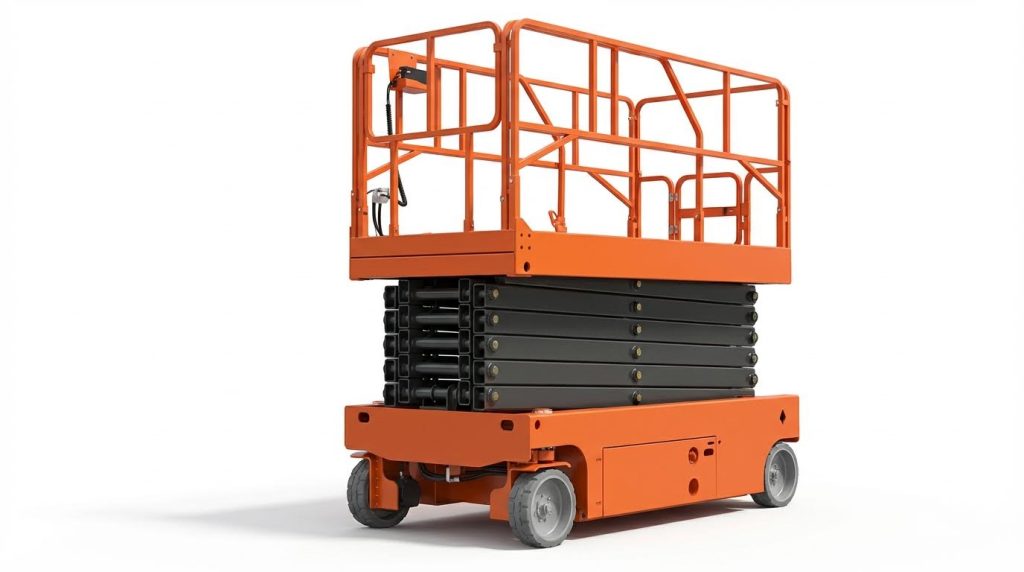
Understanding what is aerial platform training is critical if you manage people who work at height, specify MEWPs, or sign off on safety plans. This guide breaks down exactly what operators learn, how courses are structured, and which OSHA and ANSI A92 requirements drive the content. You will see how engineering limits, load charts, and control systems translate into practical checklists, assessments, and certification cycles. Use it as a blueprint to align your site procedures, documentation, and refresher training with current MEWP standards.
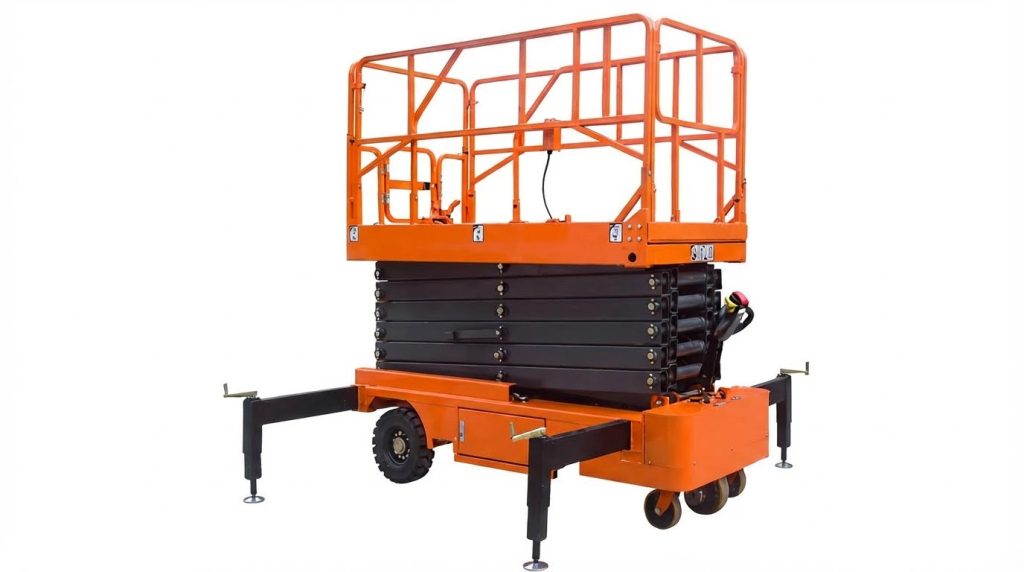
What Aerial Work Platform Training Covers
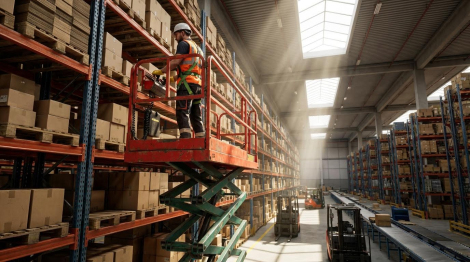
MEWP classifications and design basics
When people ask “what is aerial work platform training,” this part of the course explains what equipment you are actually certified to use and how it is engineered to stay stable. Operators learn how modern standards classify mobile elevating work platforms (MEWPs) by group and type, and how basic structural and hydraulic design choices affect safe reach, load, and motion.
- MEWP groups (what the platform can do)
- Group A: Platforms that only move vertically and stay inside the tipping lines of the chassis. Typical scissor and vertical lifts fall in this group.
- Group B: Platforms where the boom or structure can extend beyond the wheelbase or tipping lines, creating higher overturning potential. Articulating and telescopic booms are common examples.
- MEWP types (how the unit can travel)
- Type 1: Travel allowed only with the platform in the fully stowed position.
- Type 2: Unit can travel elevated, but travel controls are on the chassis.
- Type 3: Unit can travel elevated, and travel controls are on the platform. Modern self‑propelled MEWPs are typically Type 3.
- Basic design and construction standards
- Training explains that aerial lifts must meet specific design and construction rules taken from ANSI A92 series standards, including requirements on structure, hydraulics, controls, and guarding.
- Older units had to be upgraded to meet ANSI A92.2-1969 or removed from service by the mid‑1970s. This requirement locked in a minimum design safety level.
- Operators also learn that any field modification outside the original design needs written engineering approval and must preserve ANSI safety levels. Unapproved weld‑ons or structural changes are prohibited.
- Key engineering concepts covered
- How center of gravity shifts when the platform extends or slews, and why Group B booms are more sensitive to side loading.
- Why hydraulic and pneumatic components must meet minimum bursting safety factors, typically at least 2:1 for noncritical parts. Critical components require even higher margins.
- How guardrails, platform dimensions, and control layouts are engineered to reduce fall and crush hazards.
How this section answers “what is aerial work platform training?”
For searchers asking what is aerial work platform training, this module is where operators learn which MEWP group and type they will be certified on, how the machine’s structure and hydraulics are designed to keep them stable, and why ANSI design rules matter to daily operation. It connects the name on the card to real engineering limits in the field.
Core safety rules, OSHA and ANSI A92 compliance
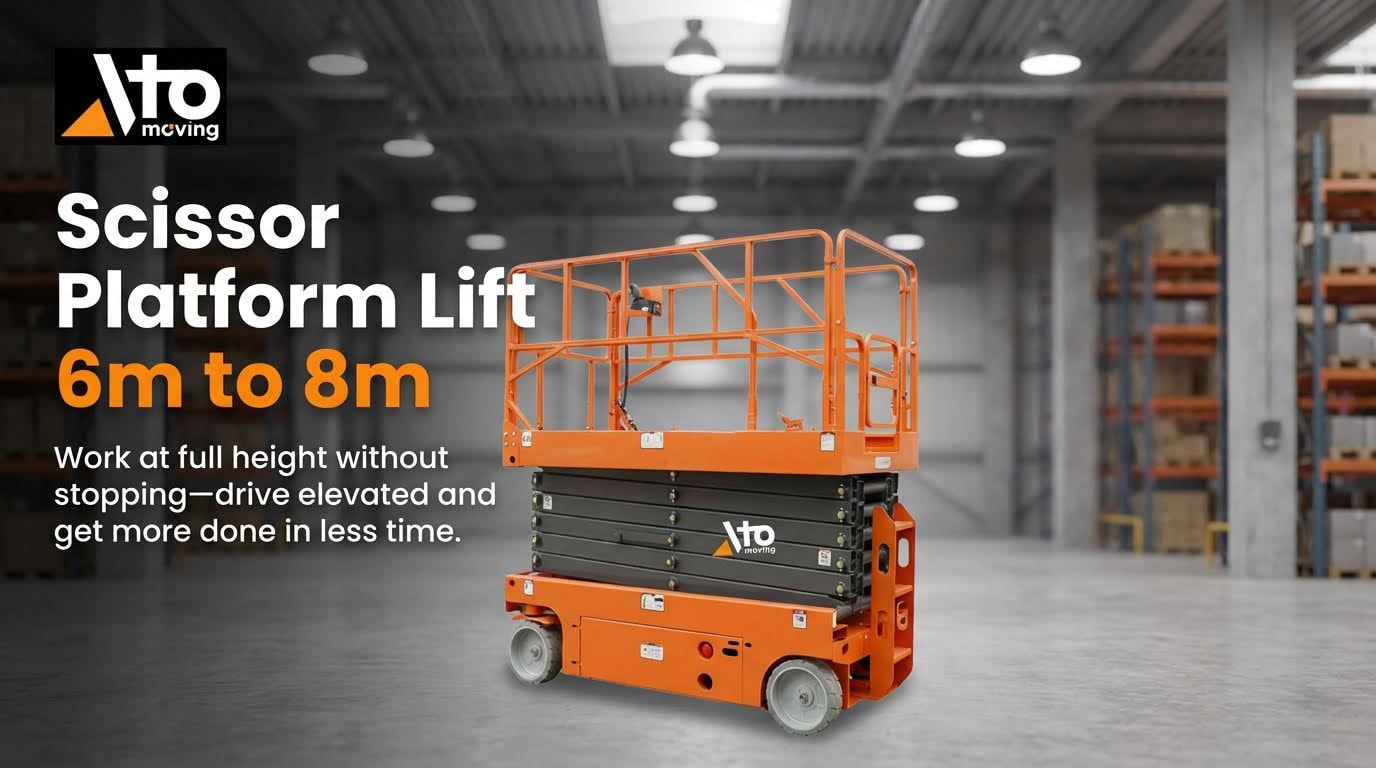
This part of aerial work platform training focuses on the rules that keep people alive: who may operate, how to control risk, and how to comply with OSHA and ANSI A92. It turns engineering limits into practical do‑and‑don’t rules that operators must follow on every job.
- Regulatory framework and responsibilities
- Courses explain that only “authorized” and trained personnel may operate aerial lifts under OSHA interpretations. Authorization is a formal employer decision.
- Operators review OSHA construction rules for aerial lifts and the corresponding ANSI A92 provisions on design, safe use, and training.
- Training also covers that operators must be retrained if there is an accident, a near miss, a change in equipment type, or observed unsafe operation. This keeps skills aligned with current risk.
- Fall protection and platform behavior
- Operators learn that guardrail systems are the primary fall protection on most MEWPs, and they must keep firm footing on the platform floor. Stepping or climbing on rails is not allowed.
- Courses explain when personal fall arrest systems are required, especially if guardrail or footing rules are not fully met under ANSI criteria.
- Movement restrictions are emphasized: an aerial lift truck must not be driven with the boom elevated and personnel in the basket unless the unit is specifically engineered and rated for that purpose. This prevents tip‑overs and ejections.
- Load limits, stability, and ground setup
- Training stresses that boom and platform load limits from the manufacturer must never be exceeded. This includes tools, materials, and workers.
- Operators learn to factor in dynamic effects such as wind, slewing, braking, and person movement when approaching capacity.
- Courses cover correct brake setting and outrigger use: brakes must be set during work, outriggers placed on pads or solid surfaces, and wheel chocks installed on inclines where safe to do so. These steps create a stable base for the upper structure.
- Control systems and daily functional checks
- Operators are taught that articulating and extensible boom platforms must have both upper and lower controls, with lower controls able to override platform controls in an emergency. Functions must be clearly marked.
- Training requires that all controls be tested daily before use to confirm safe operation and correct function.
- Courses also explain why insulated portions of certain lifts must not be altered, because any change can reduce electrical insulation performance below ANSI test requirements. This is critical near energized conductors.
- Pre‑use and pre‑travel inspections
- Courses walk through structured pre‑use inspections that check structure, hydraulics, tires, controls, and safety devices before the machine leaves the ground. Operators verify maximum intended load and stability factors.
- Before travel, operators must confirm booms are properly cradled and outriggers stowed as required by the manufacturer and OSHA rules.
| Safety topic in training | Key OSHA / ANSI expectation | What the operator must do in the field |
|---|---|---|
| Authorization to operate | Only employees formally approved by the employer may run aerial lifts. OSHA interpretation | Carry proof of training, follow site rules, and refuse to operate if not authorized. |
| Guardrails and fall protection | Guardrails are primary protection; PFAS required when ANSI guardrail/footing rules are not met. OSHA guidance | Stay inside rails, maintain firm footing, use PFAS when required by site or standard. |
| Load limits and stability | Manufacturer’s boom and basket ratings must not be exceeded. Federal requirement | Calculate total platform load, consider wind and motion, and stay within charted limits. |
| Daily control checks | Controls must be tested each day before use. OSHA/ANSI alignment | Run every function from lower and upper controls before elevating personnel. |
| Movement with boom elevated | Truck‑mounted lifts must not be moved with personnel aloft unless designed for it. Specific restriction | Lower the platform or confirm the unit is rated and configured for elevated travel before moving. |
Why these rules matter in everyday operation
For anyone researching what is aerial work platform training, this safety and compliance block is where theory becomes enforceable practice. Operators leave knowing exactly which OSHA and ANSI A92 rules apply to their work, how to set up the machine, how to test controls, and when to stop the job because a load, surface, or procedure falls outside the engineered safety envelope.
Course Structure, Assessments, And Certification
Theory modules and hands‑on practical training
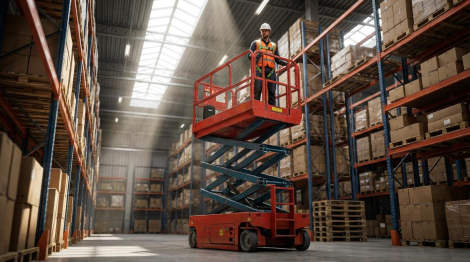
When people ask “what is aerial work platform training,” they usually mean the full package of theory plus hands‑on operation. A typical MEWP course blends classroom content with supervised practice on the aerial platform to build both knowledge and muscle memory.
| Component | Typical content / focus | Typical duration |
|---|---|---|
| Classroom theory | OSHA rules, ANSI A92 classifications, hazards, stability, fall protection, inspections, manuals | About 4–5 hours for a complete operator course general training duration |
| Model‑specific familiarization | Control layout, safety devices, emergency lowering, limits for that exact MEWP | About 1 hour familiarization training duration |
| Practical evaluation block | Pre‑use checks, maneuvering, positioning, safe shutdown | Roughly 30 minutes per operator and MEWP group/type practical evaluation duration |
The theory section of what is aerial work platform training usually covers the full risk picture and the rule framework.
- OSHA requirements for authorized operators and safe use of aerial lifts authorized operation
- ANSI A92 design and operating standards, including legacy A92.2 requirements for lift construction and modifications aerial lift design standards and field modifications
- MEWP groups and types (e.g., Group A vs Group B, Types 1–3) and where each should be used MEWP classification training
- Hazard recognition: tip‑over risks, crushing, electrocution, weather effects, surface conditions course content overview
- Stability and load: maximum intended load, center of gravity, boom and basket load limits load limit compliance
- Fall protection basics, guardrails, and when personal fall arrest systems are required fall protection systems
- Pre‑use and periodic inspections, maintenance responsibilities, and recordkeeping pre‑use inspection procedures
Hands‑on training then moves operators from theory to controlled practice on real MEWPs.
- Walk‑around and function checks, including daily control testing before use daily control testing
- Demonstration and student repetition of basic maneuvers: raising, lowering, slewing, driving, and positioning at height
- Use of brakes, outriggers, and wheel chocks on slopes where they can be safely applied brake and outrigger use
- Safe approach to work areas, maintaining clearances from power lines and fixed structures
- Emergency procedures: platform‑down controls, lower‑level override controls, and rescue planning control system requirements
Typical PPE and participant requirements for the practical session
Most providers require operators to arrive with basic PPE suitable for elevated work. This usually includes a hardhat, safety glasses, work gloves, sturdy work boots, and a reflective vest or jacket during practical exercises. safety equipment requirements Harness use is addressed based on the specific MEWP and site policy.
Evaluation methods, scoring, and recertification cycles
Competent MEWP operation is proven, not assumed. That is why what is aerial work platform training always includes formal written and practical assessments.
| Evaluation type | What is checked | Typical criteria |
|---|---|---|
| Written exam | Rules, hazards, load limits, inspections, safe procedures | Passing score commonly set at 80% or higher minimum score requirement |
| Practical evaluation | Pre‑use inspection, control use, maneuvering, hazard control | Must demonstrate safe, consistent operation on each MEWP type/group used operator practical evaluation requirement |
| Course duration and ratio | Blended theory and practice | Commonly 4–6 hours with about 1:15 instructor‑to‑student ratio course duration and instructor ratio |
- Written tests verify that operators understand regulations, MEWP classifications, and site‑specific rules before they touch the controls.
- Practical evaluations confirm they can translate that theory into safe behavior on real equipment, including pre‑use inspections and maneuvering in confined spaces. practical evaluation for MEWP operators
- Each distinct MEWP group and type the worker will use requires a specific hands‑on evaluation to prove competency on that configuration. operator practical evaluation requirement
Certification is not permanent. Both regulatory guidance and industry best practice require periodic recertification and retraining.
- Most operator cards are valid for about three years, after which a refresher course and re‑evaluation are required. certification validity
- Retraining must happen sooner if there is an accident, near miss, observed unsafe operation, or major change in equipment or work environment. retraining frequency
- Guidance also recommends recertification on roughly a three‑year cycle to keep operators current with new standards and best practices. refresher training frequency
Typical outputs of a successful course
On successful completion of what is aerial work platform training, operators normally receive a wallet card or certificate listing the MEWP groups and types they are qualified to use, the evaluation date, and the expiry date. Employers keep copies of these records to prove only trained, evaluated workers are assigned to MEWP tasks. course content for MEWP operator certification
Train‑the‑trainer requirements and documentation
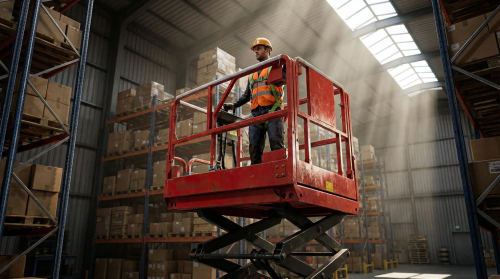
Safe MEWP programs depend on competent in‑house trainers, not just external courses. Train‑the‑trainer programs turn experienced operators or supervisors into qualified instructors who can deliver and document what is aerial work platform training on site.
| Element | Typical expectation | Notes |
|---|---|---|
| Course duration | Multi‑day, often around 3 days | Allows time for advanced theory, teaching methods, and multiple practice teaches train‑the‑trainer course duration |
| Participant profile | Experienced MEWP users, supervisors, or safety staff | Must already understand MEWP operation and site procedures |
| Maximum class size | Small groups (e.g., up to 4 people) | Supports detailed coaching and evaluation of each candidate instructor maximum of four participants |
- Content goes beyond operator skills to cover legislative requirements, relevant OSHA and ANSI standards, and company policy integration. legislative requirements and safe operating procedures
- Trainer candidates learn how to teach hazard identification, safe operating procedures, and emergency response in a structured way.
- There is a strong focus on communication skills: coaching at the controls, correcting unsafe behavior, and giving clear, concise instructions. effective communication techniques
Robust documentation is a core deliverable for any train‑the‑trainer program.
- Standardized lesson plans and slide decks for theory modules.
- Checklists for pre‑use inspections, practical exercises, and evaluation scoring sheets.
- Template sign‑in sheets, training records, and operator cards to prove compliance during audits.
- Clear rules for when retraining and re‑evaluation are required after incidents or equipment changes. retraining triggers for MEWP operators
How in‑
Engineering, Operations, And Equipment Selection
Engineering decisions around stability, controls, and maintenance turn “what is aerial work platform training” from theory into safe daily operation. This section links classroom concepts to real-world MEWP selection, setup, and lifecycle care so you can match equipment to the task and keep risk within acceptable engineering limits.
Stability, load charts, and structural safety factors
Stability and structure are the backbone of every MEWP. Training on what is aerial work platform training always includes how to read load charts, respect limits, and understand why safety factors exist in the first place. Operators must know that exceeding any limit is not a “suggestion break”; it is a direct attack on the machine’s stability envelope and structure.
Key stability elements covered in engineering‑focused training:
- How center of gravity shifts with outreach, platform height, and personnel movement.
- Effect of wind, slope, and ground bearing pressure on tipping risk.
- Why manufacturer load charts and decals are the only acceptable reference for capacity.
- Role of outriggers, wheel chocks, and brakes in enlarging the stability base.
- Interaction between dynamic forces (braking, slewing, sudden stops) and overturning moments.
Standards place explicit safety factors on hydraulic and pneumatic components to keep structural failure probability low even under abnormal loads. Critical pressure lines and components must comply with bursting safety factor requirements specified in ANSI A92.2 section 4.9, while noncritical components must have a minimum bursting safety factor of 2:1 according to federal regulations. This is why engineering‑driven training stresses “never modify pressure settings or components in the field” without formal approval.
| Stability / Structure Topic | What Operators Learn | Engineering / Regulatory Basis |
|---|---|---|
| Load limits | Never exceed boom or basket load ratings; account for people, tools, and materials. | Manufacturer capacity charts; boom and basket load limits must not be exceeded as required by regulation. |
| Outriggers & brakes | Set brakes before elevation; deploy outriggers on pads or solid surfaces; use wheel chocks on safe inclines. | Safe operation rules for brake setting, outrigger support, and wheel chock use in aerial lift standards. |
| Travel with boom elevated | Do not move the truck with personnel in an elevated basket unless the unit is specifically designed for that function. | Movement restrictions for aerial lift trucks with elevated booms and personnel are codified in federal rules. |
| Field modifications | Never weld on, add attachments to, or otherwise modify platforms/booms without written engineering approval. | Field modifications beyond intended use require written certification from the manufacturer or equivalent lab and must maintain ANSI A92.2 compliance by regulation. |
| Insulated sections | Do not drill, grind, or modify insulated booms; treat them as critical dielectric components. | Insulated portions must not be altered in ways that reduce insulating value per aerial lift requirements. |
| Structural integrity & welding | Only qualified welding to recognized codes is acceptable on structural members. | Welding must follow applicable AWS standards such as AWS B3.0, D8.4, D10.9, and D2.0 as referenced in regulations. |
From an equipment selection standpoint, engineering‑aware buyers choose MEWPs whose rated capacities, outreach, and wind ratings match the heaviest realistic task, not the “average” task. Training on what is aerial work platform training reinforces that you must also consider floor loading limits, slab thickness, and underground services when selecting wheel loads and outrigger reactions during planning.
Engineering checklist for selecting a stable MEWP
Use this quick checklist before you commit to a model for a job:
- Confirm required platform height, horizontal reach, and working envelope.
- Calculate total live load on the platform (people + tools + materials + contingencies).
- Check the machine’s load chart at the exact outreach and configuration you need.
- Verify ground bearing capacity versus outrigger or wheel loads.
- Assess wind exposure, indoor/outdoor use, and any gust or tunnel effects.
- Review slope and level conditions; decide if outriggers and chocks are mandatory.
- Confirm the machine is designed for any planned travel while elevated.
Control systems, inspections, and maintenance practices
Control logic, inspection routines, and maintenance regimes are where engineering design meets daily operations. A major part of what is aerial work platform training is teaching operators how the control architecture is laid out, which tests must be done before every shift, and how maintenance history affects risk. Only authorized personnel assigned by the employer are allowed to operate aerial lifts under federal interpretations, so training also ties directly into authorization procedures.
Control system design requirements include:
- Articulating and telescopic boom platforms must have both upper (platform) and lower controls.
- Upper controls must be within easy reach of the operator in the platform.
- Lower controls must be able to override upper controls when needed.
- Control functions must be clearly and permanently marked.
- Lower controls are operated only with the knowledge or permission of the person in the platform, except in emergencies as required by aerial lift rules.
Before each work shift, all lift controls must be function‑tested to verify safe working condition per federal regulations. Training programs on mobile elevated work platforms include detailed pre‑use inspection procedures, focusing on maximum intended load, load capacity, and stability as part of the curriculum. This connects classroom checklists to actual walk‑around inspections on the job.
| Operational Aspect | Training / Procedure Focus | Engineering or Regulatory Link |
|---|---|---|
| Daily control testing | Test all functions (lift, lower, slew, drive, emergency stop, emergency lowering) before use. | Controls must be tested daily to ensure safe working condition under aerial lift regulations. |
| Pre‑use inspection | Visual checks for leaks, cracks, loose fasteners, tire condition, guardrails, decals, and fall protection anchor points. | Training courses emphasize pre‑use inspection, load capacity, and stability checks as core content. |
| Electrical testing | Ensure periodic dielectric testing for insulated lifts follows the manufacturer’s schedule and method. | Electrical tests must conform to ANSI A92.2 section 5; approved DC tests may substitute for AC when allowed by regulation. |
| Maintenance planning | Follow manufacturer maintenance intervals for hydraulics, structural inspections, and controls; document all work. | Training on MEWPs includes inspections, maintenance, and manufacturer requirements as part of the operator curriculum in certification programs. |
| Safe operation & fall protection | Use guardrails and maintain firm footing; apply personal fall arrest only when guardrail and footing rules are not met. | Platforms must have guardrail systems, and employees must maintain firm footing; PFAS is required when these conditions are not met according to OSHA interpretations. |
| Design compliance | Verify that any lift in service conforms to applicable design and construction standards. | Aerial lifts must conform to ANSI A92.2 design requirements; older units had to be modified or removed from service to comply under federal rules. |
Modern MEWP operator courses combine theory on regulations, stability, controls, inspections, and maintenance with hands‑on practical evaluation to confirm competency as part of certification. That is why any serious answer to what is aerial work platform training must include not just classroom hours, but also engineered procedures for control testing, inspection, and preventive maintenance that keep the equipment operating within its original design envelope for its entire service life.
“”
Final Considerations For Safe MEWP Implementation
Safe MEWP use depends on one integrated system: sound engineering, disciplined operation, and structured training. Classifications, load charts, and safety factors define a hard envelope that the machine cannot exceed without losing stability. OSHA and ANSI A92 rules then turn that envelope into clear duties for employers, trainers, and operators. Daily inspections, control checks, and strict respect for manufacturer limits keep each lift operating inside its original design strength.
For engineering and operations teams, the message is direct. Select equipment based on worst‑case reach, load, ground conditions, and wind, not on optimistic averages. Lock in a training program that blends classroom theory with hands‑on evaluation for every MEWP group and type in use. Use train‑the‑trainer models to keep this knowledge alive on site and to maintain accurate, audit‑ready records.
The best practice is simple: treat “what is aerial work platform training” as an ongoing engineering control, not a one‑time class. Align procurement, maintenance, and authorization procedures with the same standards that govern design. When you do that, operators, supervisors, and safety staff all work from one shared rulebook, and each lift—from compact Atomoving platforms to large booms—stays within a proven, predictable safety margin.
Frequently Asked Questions
What is an aerial work platform?
An aerial work platform (AWP), also known as a boom lift, cherry picker, or scissor lift, is a mechanical device used to provide temporary access for people or equipment to elevated areas. These platforms are commonly used in construction, maintenance, and inspection tasks. Aerial Work Platform Overview.
How long is aerial work platform training valid?
Aerial work platform training typically needs to be refreshed every three years to ensure operators stay up-to-date with safety protocols. However, the validity period may vary depending on local regulations or company policies. It’s important to check specific guidelines applicable to your region. MEWP Training Guidelines.
What are examples of tasks performed using aerial work platforms?
Aerial work platforms are versatile and used in various industries for tasks such as:
- Building and construction
- Safety inspections
- Window cleaning and repairs
- Tree trimming and orchard work
- Electrical wiring repair
- Entertainment and broadcasting setups