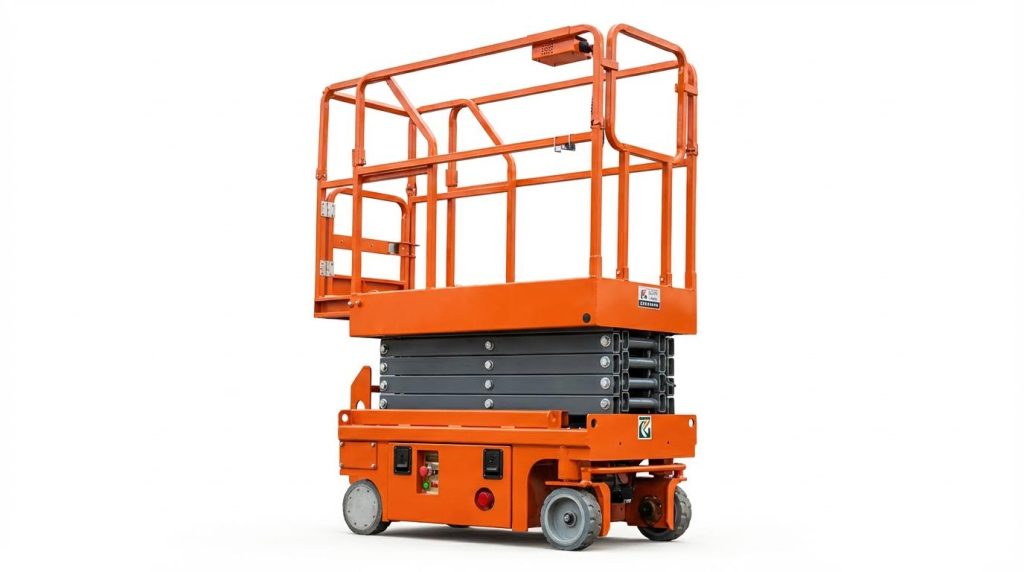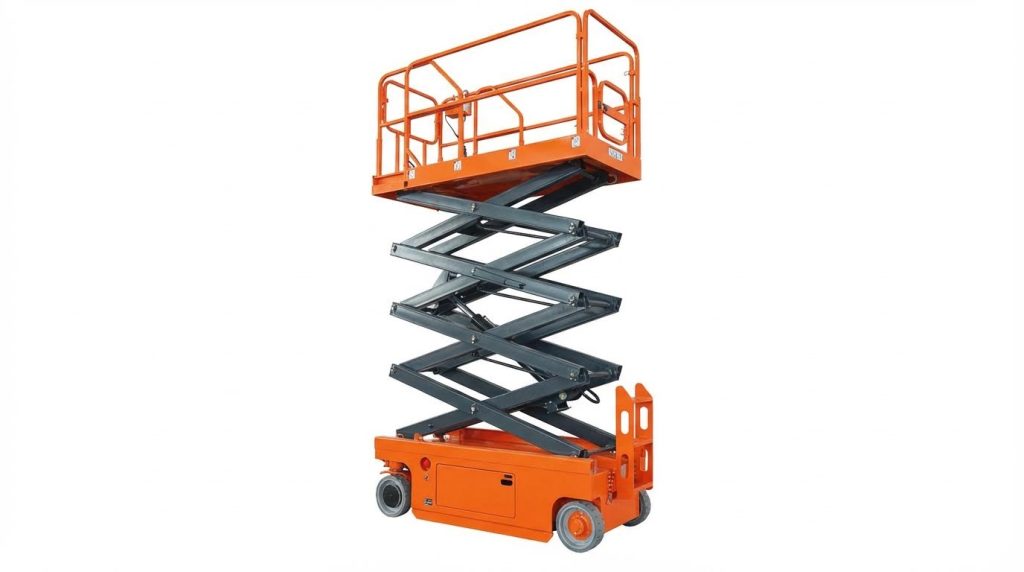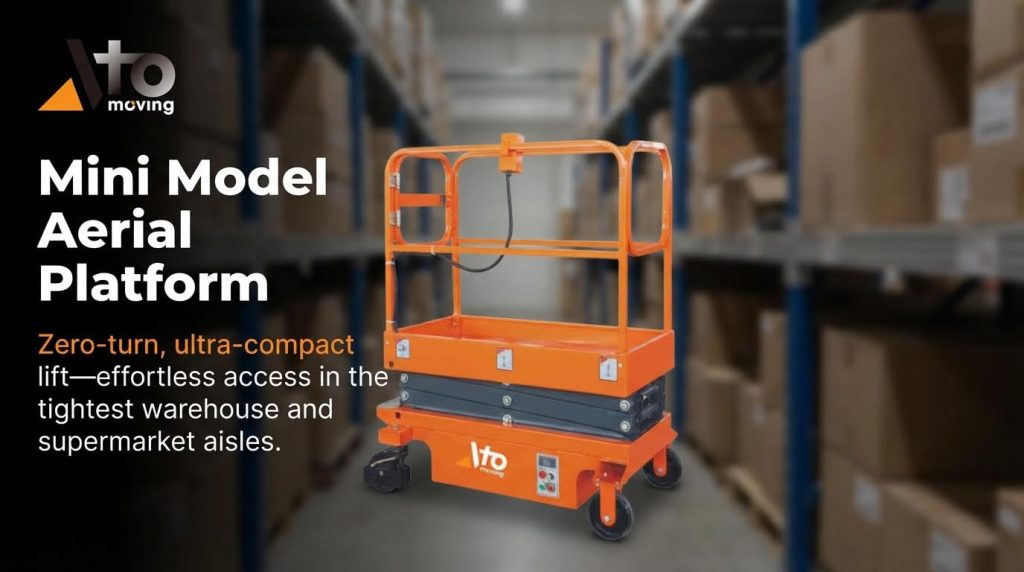
Understanding 26-foot scissor lifts starts with three basics: how high they reach, how much they weigh, and how safely you can move them between jobsites. This guide explains typical platform and working heights, machine weights, and key dimensions so you can answer questions like “how much does a 26 foot scissor lift weigh” with confidence. You’ll also see how power systems, stability, and safety features affect daily operation, and how to select and transport a lift that fits your aisles, floor loads, and compliance requirements.
Key Specs Of 26-Foot Scissor Lifts
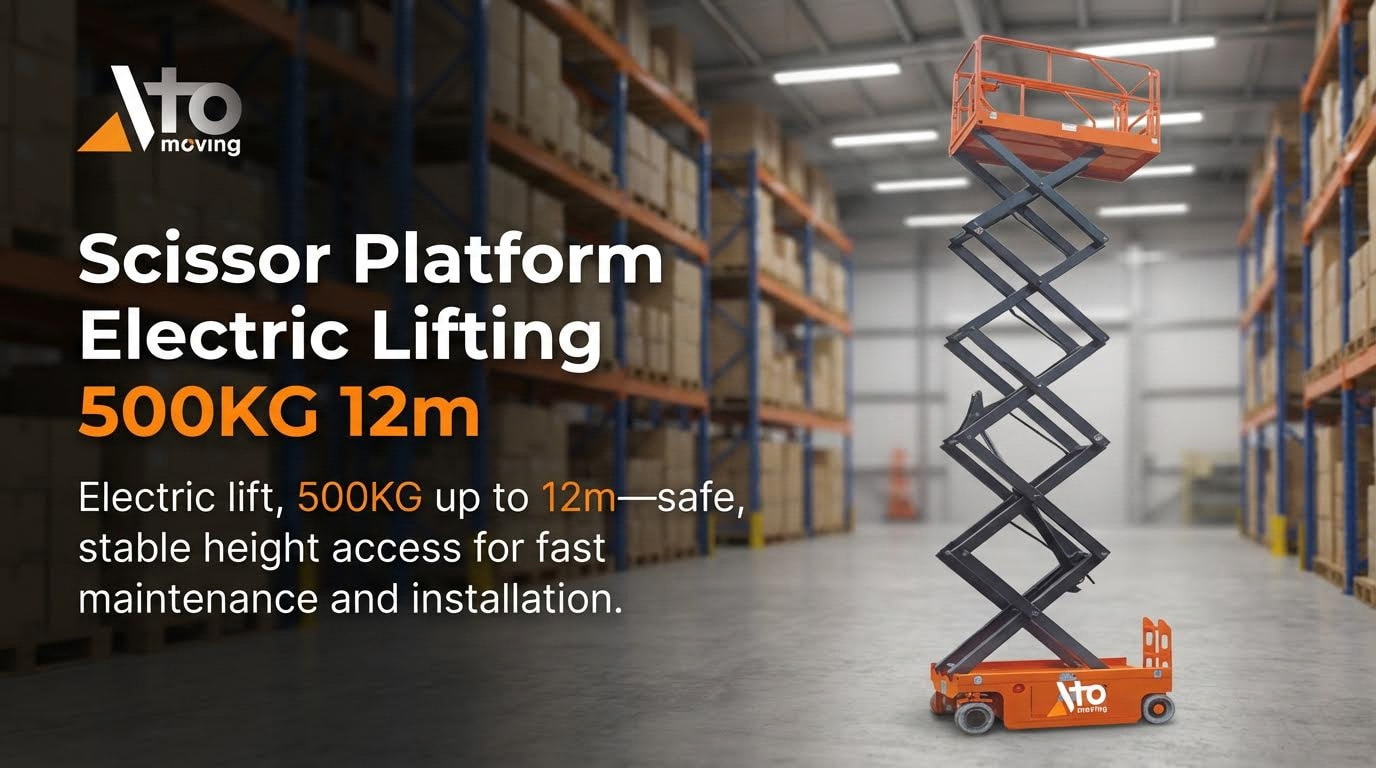
Platform height, working height, and capacity
A 26-foot scissor lift is defined by its platform height, not its working height. Platform height is the vertical distance from the floor to the platform deck when fully raised, typically about 26 ft for this class. Working height adds the operator’s reach, so a 26 ft platform usually delivers about 31–33 ft of working height. This is enough for many indoor ceilings and light commercial exterior work.
- Platform height (nominal): 26 ft
- Typical working height: about 32 ft (platform height + operator reach)
- Use cases: indoor maintenance, light construction, MEP work, warehouse racking
Capacity is a critical spec because it controls how many people and how much material you can safely carry. Most 26-foot scissor lifts are designed to take two workers indoors and often only one outdoors, depending on wind rating and local rules. Payload ratings commonly fall in the mid-range for slab scissor lifts and must include people, tools, and materials together.
| Key Capacity Parameters | Typical Range/Notes |
|---|---|
| Rated platform capacity | Moderate load range (often hundreds of kg / several hundred lb) |
| Indoor occupancy | Commonly up to 2 persons (check data plate) |
| Outdoor occupancy | Often restricted to 1 person |
| Platform use | Tools, light materials, service parts |
Always use the data plate on the specific lift as the governing limit for platform height, working height, and maximum capacity. Never “estimate” safe load based on a similar machine.
How capacity affects stability and job planning
Higher platform loads raise the center of gravity and increase overturning moments, especially at full height. When planning work, consider the heaviest likely load case: two workers, full tool kits, and any materials staged on the deck. If that total approaches the rated capacity, reduce stored materials on the platform or increase the number of lift cycles instead of overloading a single trip.
Typical machine weights and overall dimensions
Contractors often ask, “how much does a 26 foot scissor lift weigh?” because this drives floor loading, trailer sizing, and elevator selection. Actual machine weight varies by design, powertrain, and options, but many 26-foot slab scissor lifts fall in a mid-weight range for indoor equipment. Published examples show weights around 4,450 lb for some models, while rough-terrain versions can reach roughly 2,900–3,000 kg, depending on undercarriage type.
| Weight & Size Aspect | Typical Information |
|---|---|
| Typical machine weight (slab type) | Several thousand pounds; some listings ≈4,450 lb |
| Typical machine weight (rough-terrain) | On the order of 2,900–3,000 kg |
| Narrow-width examples | About 32 in wide, 74 in long for compact indoor units |
| Other overall dimensions | Approx. 2,475 mm long, 1,340–1,390 mm wide |
| Stowed height (rails folded vs. up) | About 1,865–2,460 mm, depending on rail position |
These overall dimensions determine whether the lift fits through standard doors, into freight elevators, or between warehouse racks. Narrow 26-foot scissor lifts are designed to pass through typical commercial doorways and maneuver in tight aisles. Wider or rough-terrain variants trade compactness for stability, tire size, and off-slab performance.
- Check door clear width and height against the lift’s stowed dimensions.
- Compare machine weight to floor load ratings and elevator capacity.
- Confirm trailer or truck payload and deck length before transport.
Before scheduling delivery, verify the exact model’s weight and size from the manufacturer’s data sheet. Do not rely only on generic answers to “how much does a 26 foot scissor lift weigh” when planning floor loading or transport.
Why weight and dimensions matter for transport and site logistics
Machine weight affects tie-down requirements, axle load distribution, and whether a half-ton, three-quarter-ton, or heavier truck is needed. Overall length and width control how many units fit on a single trailer and whether you can position them to keep axle loads within legal limits. Stowed height is critical for low doorways, mezzanine access, and indoor transport under pipework or cable trays.
Engineering Details: Power, Stability, And Safety
Platform size, load rating, and gradeability
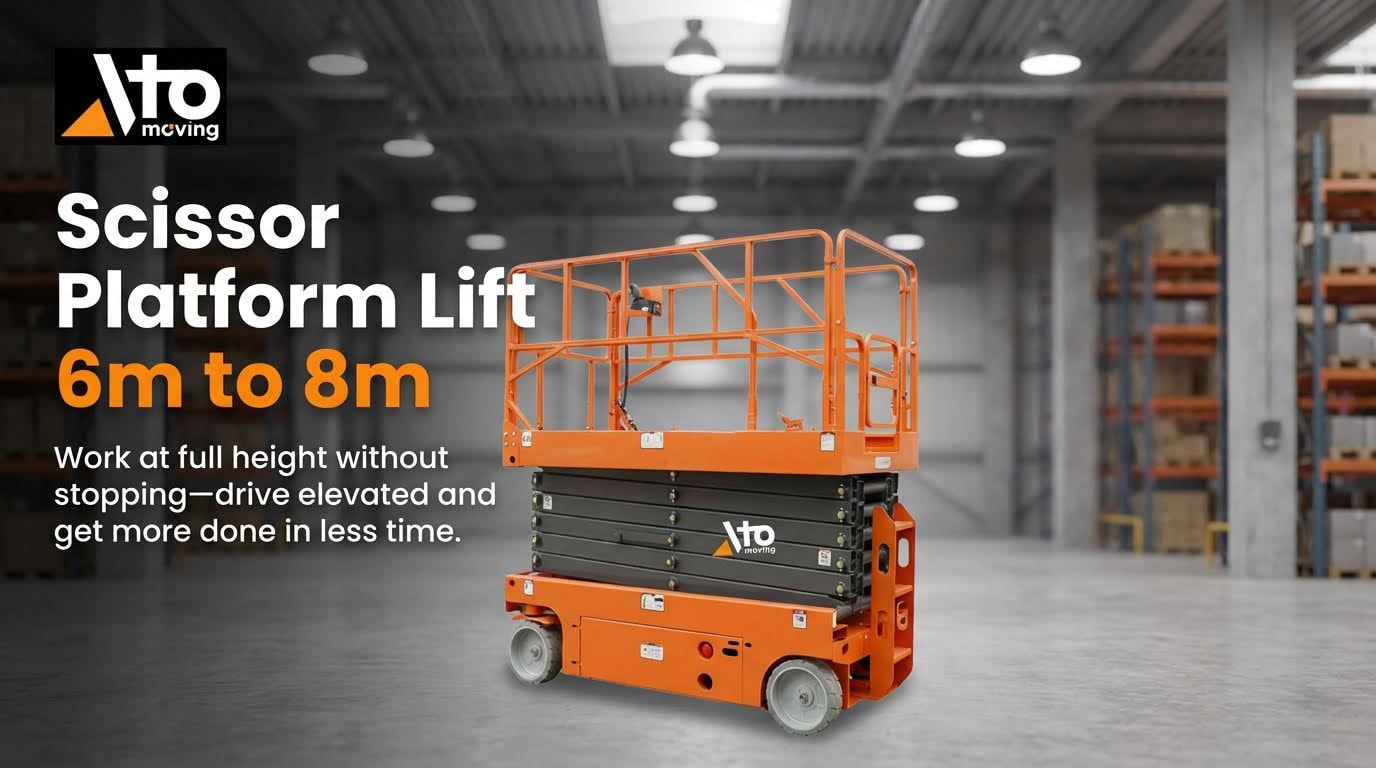
Platform geometry and structural rating control how safely a 26‑foot scissor lift can work at full height. Typical platforms are sized to take two workers indoors and one outdoors, with extensions for extra reach. Load charts limit total weight (people, tools, and materials) to a defined capacity so the center of gravity stays inside the stability envelope. Gradeability ratings define how much slope the machine can climb or cross safely when stowed.
- Typical platform dimensions: roughly 2.2–2.3 m long with about 1.1 m width, plus an extension deck.
- Load capacity range: commonly in the few-hundred‑kilogram band; check the data plate for exact value.
- Indoor vs outdoor rating: outdoor work often has lower allowed occupants or capacity due to wind and stability.
- Gradeability: often around 25–30% in stowed travel; working slope limits are much lower (around a few degrees).
| Parameter | Engineering Impact |
|---|---|
| Platform size | Affects reach, worker ergonomics, and door/aisle clearance |
| Rated load | Sets safe payload and influences structural design of scissor stack |
| Gradeability | Controls where the lift can be driven and loaded on ramps |
| Working slope limit | Defines when stabilizers, cribbing, or relocation are needed |
Never exceed the rated capacity or operate above the stated slope limits, even if the machine “feels” stable. Stability margins are engineered around those numbers.
How gradeability and weight affect transport
When you ask how much does a 26 foot scissor lift weigh, remember that higher weight improves stability but increases ramp loads. Gradeability must be high enough that the machine can climb onto trucks or trailers without wheel slip. Always compare ramp angle, surface friction, and the lift’s gradeability before loading.
Battery systems, drive trains, and duty cycles
Most 26‑foot slab scissor lifts use electric battery packs and compact drive trains to reduce noise and emissions indoors. Common systems use multiple 6 V batteries in series to supply a 24 V or 48 V DC bus for drive and lift functions. Electric drive motors, hydraulic pumps, and control valves convert this stored energy into traction and lifting force. Duty cycle depends on battery capacity, motor efficiency, and how much driving versus lifting the job requires.
- Battery type: often flooded lead‑acid or AGM; some newer designs use lithium packs for longer life and faster charging.
- Configuration: multiple 6 V units wired to achieve the system voltage and amp‑hour rating specified by the manufacturer.
- Drive train: electric wheel motors or hydraulic drive motors fed by an electric pump.
- Controls: proportional joysticks for smooth acceleration, deceleration, and lift speed.
| Design Aspect | Typical Engineering Consideration |
|---|---|
| Battery capacity | Must support a full shift under worst‑case drive/lift usage |
| Charger | Automatic, voltage‑compensating to protect batteries and maximize life |
| Drive motors | Sized for required tractive effort and gradeability in stowed condition |
| Hydraulic pump | Selected for required lift speed and load while limiting current draw |
Undersized or poorly maintained batteries reduce lift speed, travel speed, and safe operating time, even if the mechanical structure is in good condition.
Duty cycle and battery life tips
To extend duty cycle, avoid long drives at full speed and minimize unnecessary platform raises. Keep batteries fully charged and watered (for flooded types). When evaluating how much does a 26 foot scissor lift weigh, remember that larger battery packs add weight but usually extend run time and stability.
Safety systems, serviceability, and maintenance
Modern 26‑foot scissor lifts integrate multiple active and passive safety systems to control motion and protect occupants. Typical features include emergency stop buttons, automatic brakes, tilt sensors, and alarms for motion, descent, and overload. Pothole protection and non‑skid decks improve stability and reduce slip risk. Electrical and hydraulic components are often enclosed in dedicated compartments to protect them from damage and leaks.
- Core safety systems: emergency stops, tilt and overload sensors, automatic brakes, motion and descent alarms.
- Structural safety: guardrails with top and mid‑rails, toe boards, and interlocked gates or chains.
- Serviceability features: swing‑out trays, lubrication‑free bearings, and grouped inspection points.
- Maintenance tasks: inspections, lubrication, battery care, hydraulic fluid checks, and functional tests.
| Area | Key Maintenance Focus |
|---|---|
| Structure & scissor stack | Check for cracks, corrosion, loose pins, and worn bushings |
| Hydraulics | Inspect hoses, fittings, cylinders, and fluid condition |
| Electrical/battery | Check charge level, cables, terminals, and protective covers |
| Controls & safety devices | Test E‑stops, tilt sensors, brakes, alarms, and interlocks |
Pre‑shift inspections are a safety requirement, not an option. Many tip‑overs and failures traced back to skipped or rushed checks.
Service planning and total cost of ownership
Consistent preventive maintenance lowers lifetime cost, even if the initial question is how much does a 26 foot scissor lift weigh or what it costs to buy. Regular lubrication, battery care, and scheduled inspections reduce breakdowns and rental replacement costs. Keeping detailed service records also supports compliance audits and resale value.
Selecting And Transporting A 26-Foot Scissor Lift
Matching lift specs to jobsite and aisle constraints
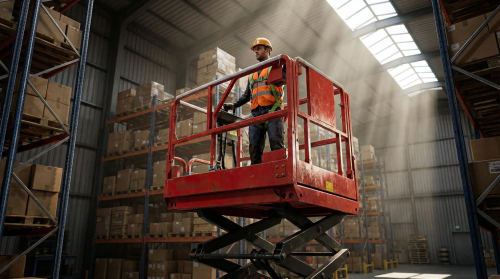
When you ask “how much does a 26 foot scissor lift weigh,” you are really asking if the jobsite can safely support, move, and store the machine. Typical 26‑foot units fall in a wide weight band because designs vary, so you must check the data plate and manual for each lift you use. Weight, footprint, and platform size all affect floor loading, aisle clearance, and whether the lift can pass through doors or ride elevators.
- Key questions before selection:
- What is the exact machine weight and wheel load?
- Do doorways, aisles, and racking give enough width and turning space?
- Is the floor rated for the lift’s concentrated loads?
- Is the work indoors, outdoors, or mixed use?
- Typical 26‑ft scissor lift geometry:
- Platform height: about 26 ft; working height: about 32 ft.
- Overall width often around 0.8–1.4 m (32 in up to roughly pallet width).
- Overall length commonly under 2.5 m to fit in tight aisles.
| Selection factor | Why it matters | What to verify |
|---|---|---|
| Machine weight | Impacts floor loading and elevator capacity | Compare lift weight to slab/elevator rating |
| Overall width & length | Determines if it fits aisles and doorways | Measure narrowest aisle and doorway clear opening |
| Platform size & capacity | Controls crew size and tools you can carry | Indoor vs outdoor rating, kg/lb capacity |
| Gradeability & slope limits | Affects movement on ramps and uneven yards | Maximum grade (e.g., 25–30%) and allowable work slope |
Never assume two 26‑foot scissor lifts weigh the same. Always design your jobsite plan around the heaviest unit that may be used.
Floor loading and aisle planning tips
Check structural drawings or consult a structural engineer if you are unsure of slab capacity. Avoid expansion joints, trenches, and mezzanines with unknown ratings. In warehouses, confirm that turning radii do not push the lift into pallet racking or columns, especially when the platform is elevated. Where aisles are tight, consider lifts with narrower chassis and shorter overall length, even if they have similar working height.
Transport methods, tie-downs, and compliance checks
For transport, the same question—how much does a 26 foot scissor lift weigh—drives trailer selection, axle loading, and tie‑down planning. A transport vehicle must be rated for the combined weight of the lift, any accessories, and the trailer itself. The platform should be fully lowered and any folding guardrails locked to reduce transport height and lower the center of gravity.
- Choosing a transport method:
- Use a flatbed truck or trailer with adequate deck length and load rating.
- Verify ramp or lift‑gate capacity exceeds machine weight.
- Confirm approach angle is shallow enough to avoid grounding the chassis.
- Basic loading and securing steps:
- Park the truck or trailer on level, firm ground.
- Lower the platform completely and fold guardrails if required.
- Drive or winch the lift on slowly, keeping it centered on the deck.
- Apply parking brake and use wheel chocks at both sides of the drive wheels.
- Attach chains or ratchet straps only to marked tie‑down points.
- Cross‑strap front and rear to control forward, rearward, and lateral movement.
| Transport consideration | Engineering concern | Action |
|---|---|---|
| Vehicle & trailer rating | Axle overload, brake performance | Compare gross weight to manufacturer and legal limits |
| Tie‑down selection | Resisting inertial loads during braking and cornering | Use rated chains/straps; follow local cargo securement rules |
| Overall loaded height | Bridge and overhead obstruction clearance | Measure ground to highest point with platform lowered |
| Route conditions | Rough roads and slopes can shift loads | Drive slowly; recheck tie‑downs on long trips |
Secure the scissor lift at all designated tie‑down points. If the lift can move in any direction, it is not properly secured.
Compliance and safety checklist before moving
Verify that all emergency stops are reset and controls are neutral before loading. Confirm that no personnel ride on the platform during loading or transport. Check local regulations on oversize or overweight loads and obtain permits if required. Inspect straps and chains for wear, damaged hooks, or bent hardware and remove any defective gear from service. After the first few miles of travel, stop in a safe area and re‑tighten all tie‑downs to account for settling.
Final Thoughts On 26-Foot Scissor Lift Selection
Choosing and using a 26-foot scissor lift safely depends on matching engineering limits to real jobsite conditions. Platform height, working height, and capacity define what tasks you can reach and how much crew and material you can lift. Machine weight, wheel loads, and overall dimensions then decide where the lift can travel, which floors can support it, and what trailers can carry it.
Power, drive, and battery systems control how far the lift can run in a shift and how reliably it climbs ramps. Safety devices, from tilt sensors to overload alarms, only work if operators respect data plates and slope limits and complete pre-shift checks. Ignoring those numbers quickly removes the design safety margin.
The best practice is simple but strict. Start with the exact model data sheet, not generic weight or capacity figures. Verify floor ratings, aisle widths, ramp angles, and transport limits against that data. Plan for the heaviest load case and the worst slope you will see, then build in extra margin.
When you apply these steps consistently, a 26-foot scissor lift becomes a predictable, low-risk tool instead of an uncertainty. Atomoving can support that process with clearly documented specs and safe transport guidance.
,
Frequently Asked Questions
How much does a 26-foot scissor lift weigh?
A 26-foot scissor lift typically weighs between 4,400 lbs (2,000 kg) and 4,700 lbs (2,130 kg). The exact weight can vary depending on the manufacturer and model. For example, one model weighs approximately 4,729 lbs (2,145 kg), making it convenient to transport. Scissor Lift Specifications.
What factors influence the weight of a scissor lift?
The weight of a scissor lift is influenced by several factors, including:
- Platform size and capacity
- Material used in construction
- Battery or fuel system weight
- Additional features like extendable platforms or safety enhancements
For instance, models with higher platform capacities or additional features may weigh more due to added components. LGMG Scissor Lift Details.