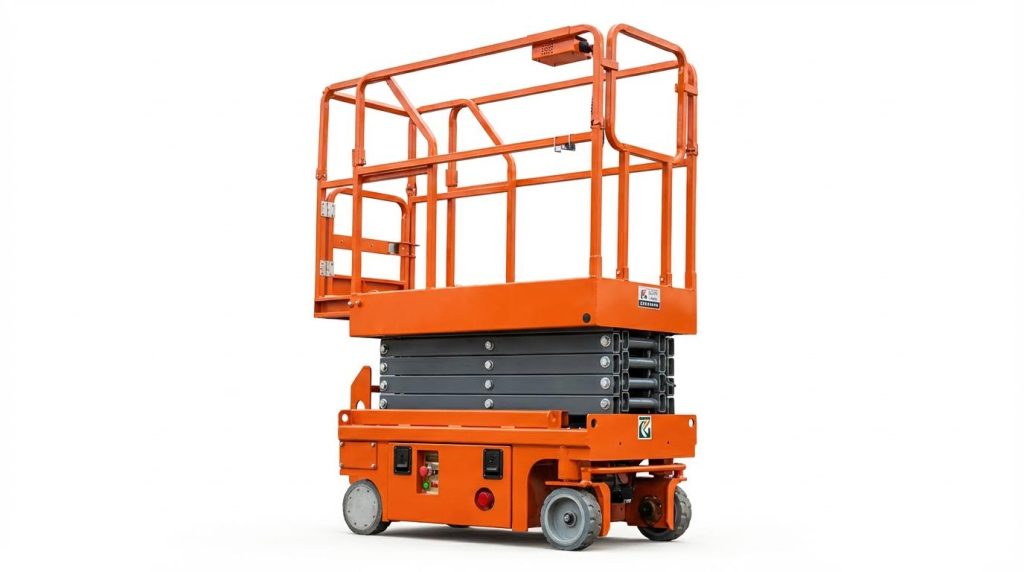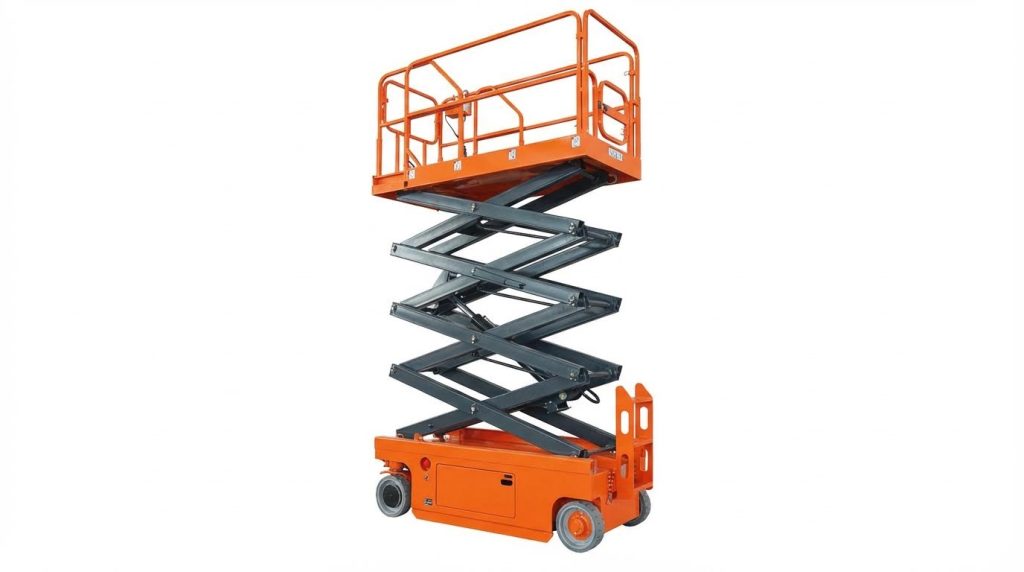
Electric compact scissor lifts provided a clean, quiet way to reach work at height in constrained industrial and commercial spaces. Engineers evaluated these machines using design metrics such as compact geometry, platform capacity, drive performance, battery duty-cycle, stability, and control interfaces. Their applications ranged from indoor manufacturing plants and data centers to public venues and integrated automated systems. Understanding advantages, limitations, and selection criteria helped engineers define the best use cases and key engineering considerations for these lifts.
Key Design Features And Performance Metrics
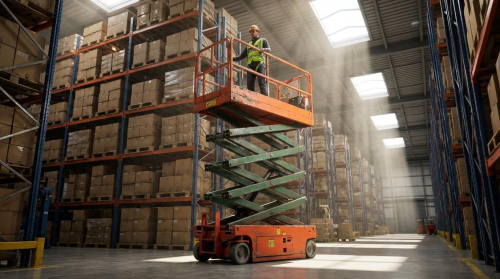
Electric compact scissor lifts answered the question “what are the applications of an electric compact scissor lift” through their geometry, powertrain, and control architecture. Their design targeted safe vertical access in constrained industrial and commercial spaces. Engineers balanced platform capacity, duty cycle, and stability against floor loading and maneuverability limits. The following subsections break down the critical design parameters that governed suitability for different applications and work environments.
Compact Geometry, Reach, And Platform Capacity
Compact electric scissor lifts used short wheelbases and narrow chassis, typically below 0.8 m width, to pass standard doorways and aisles. Stowed heights often remained under 2.0 m, which allowed transport in freight elevators and access to mezzanines. Working heights for compact units usually ranged from 5 m to about 12 m, with some extended models reaching 18–20 m. Engineers sized platform dimensions to balance reach tasks such as ceiling services with access in tight corridors.
Platform capacities typically ranged from 230 kg to about 550 kg for compact electric models. Higher capacities up to roughly 750 kg appeared in larger indoor units, but these reduced maneuverability. Load ratings always applied to uniformly distributed loads and derated when platform extensions deployed. Designers used structural FEA and EN 280 / ANSI A92 load factors to define safe capacities. For applications like electrical installation or ductwork, engineers selected platforms that carried two technicians plus tools with at least 20% margin.
Drive Systems, Gradeability, And Floor Loading
Electric compact scissor lifts typically used electric drive motors with integrated reduction gearboxes at the drive wheels. This architecture delivered smooth low-speed control, which was critical in congested industrial aisles and data halls. Gradeability for indoor-focused machines commonly sat around 25% for travel in stowed mode. For strictly flat-floor facilities, engineers often accepted lower gradeability in exchange for reduced motor power and battery size.
Non-marking, solid tires distributed loads over sensitive finished floors. Floor loading remained a key design and selection metric, especially for mezzanines, raised access floors, and cleanrooms. Manufacturers specified maximum wheel loads and overall ground pressure in kilonewtons per square metre. Engineers compared these values to structural floor ratings and local codes. For applications in data centers or hospitals, low point loading and controlled acceleration reduced vibration transmission to equipment and occupants.
Steering systems delivered tight turning radii, and micro-sized units achieved near zero inside turning radius. This capability defined where the lift could operate, for example between densely racked warehouse aisles or server rows. Travel speed in elevated mode stayed deliberately low to maintain stability. Speed-limiting logic linked to platform height and steering angle further controlled dynamic floor loading and safety.
Battery, Charging, And Duty-Cycle Considerations
Compact electric scissor lifts typically used lead-acid battery banks in 24 V configurations, with capacities around 100 Ah or higher. These systems suited multi-shift indoor operations where overnight charging was available. Engineers sized batteries based on duty cycles that combined drive time, lift cycles, and auxiliary loads. Typical design targets aimed for a full shift between charges under normal use. Opportunity charging reduced battery life, so best practice favored full overnight cycles.
As of mid-2025, some platforms adopted lithium-ion packs with higher energy density and faster charging. These systems supported partial charging during breaks without significant degradation. Integrated battery management systems provided state-of-charge, charge history, and fault codes via onboard displays or telematics. For facilities with high utilization, engineers evaluated charger power (for example 24 V / 30 A) and grid capacity. They also considered ventilation and compliance with battery room regulations for large fleets.
Duty-cycle analysis linked directly to “what are the applications of an electric compact scissor lift” in a given facility. Light maintenance tasks in offices or museums imposed low daily energy draw, allowing smaller battery packs. Intensive construction fit-out or distribution center work required higher capacities or additional units to avoid downtime. Predictive monitoring via IoT platforms helped align charging schedules with actual use patterns and reduce unexpected outages.
Stability, Tilt Sensing, And Control Interfaces
Stability performance depended on scissor platform lift geometry, base width, and center-of-gravity control across the operating envelope. Engineers used worst-case load positions, including fully extended platforms with workers at the guardrails, to validate tip resistance. Variable tilt technology appeared in advanced models, which allowed limited operation on slight slopes while automatically derating height or travel speed. However, compact indoor units still assumed firm, level surfaces for safe use.
Tilt sensors monitored chassis inclination in longitudinal and lateral directions. When tilt exceeded preset thresholds, control systems inhibited lift functions or triggered alarms. Some designs dynamically adjusted permitted platform height based on measured tilt. This approach supported controlled operation on gently sloped slabs while preventing unsafe extension on ramps. For facilities with marginal floor flatness, engineers reviewed tilt-derating curves before specifying lift types and working zones.
Control interfaces used intuitive joysticks and push-button panels with clear pictograms to reduce operator error. Proportional controls enabled fine positioning near ceilings, pipe racks, or equipment. Interlocks ensured that gates closed and outriggers, where fitted, deployed before elevation. Emergency-stop and emergency-lower circuits complied with relevant safety standards. For high-throughput applications, ergonomic control layout reduced fatigue and improved cycle times while maintaining precise maneuvering in tight spaces.
Typical Industrial And Commercial Applications
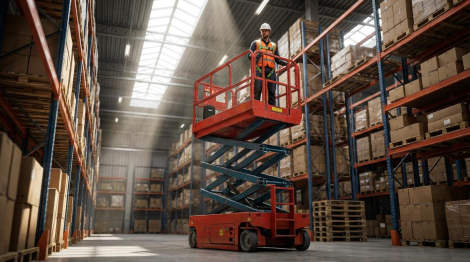
Electric compact scissor lifts answered the question “what are the applications of an electric compact scissor lift” across a wide range of industries. Their compact footprint, low noise, and zero local emissions made them a default choice for indoor and semi‑indoor work at height. Engineers evaluated use cases based on access geometry, required working height, load profile, and surface conditions. The following subsections outline the dominant application patterns in industrial and commercial environments.
Indoor Use In Plants, DCs, And Clean Facilities
In manufacturing plants, engineers deployed electric compact scissor lifts for overhead utilities, process piping, and conveyor maintenance. Typical working heights ranged between 5 m and 12 m, with platform capacities from 230 kg to about 550 kg. Non‑marking tires and narrow chassis widths, often below 0.8 m, allowed travel through standard internal doorways and between production lines. In distribution centers, operators used them for high‑bay lighting, sprinkler inspection, racking repair, and sensor installation where boom lifts could not maneuver efficiently.
Clean facilities such as food-processing areas and light cleanrooms favored electric units due to zero exhaust emissions and low particulate release. Maintenance teams accessed HVAC plenums, HEPA housings, and cable trays without introducing combustion by‑products. Battery power eliminated the need for local ventilation adjustments during work. Where floor loading limits applied, engineers selected lightweight scissor platform to stay below slab design loads while still achieving required reach.
Construction, Fit-Out, And Building Maintenance
On construction and fit‑out projects, electric compact scissor lifts supported interior trades once the building envelope was closed. Drywall crews, electricians, and sprinkler installers used them for ceiling grids, trunking, and ductwork up to roughly 12–14 m working height. Their straight vertical elevation and rectangular platforms offered efficient coverage for linear tasks such as ceiling panel installation or bulkhead framing. Compared with ladders or mobile towers, they improved productivity and reduced fall‑from‑height risk.
In existing buildings, facility teams relied on compact scissors for periodic maintenance tasks. Typical jobs included repainting atriums, replacing luminaires, cleaning glazing, and inspecting façade interfaces from internal courtyards. Quiet electric drives minimized disruption in occupied offices or residential blocks. For mixed indoor–outdoor work on firm, level surfaces, engineers sometimes specified units with higher gradeability, around 25%, to handle ramps and loading dock transitions safely.
Data Centers, Healthcare, And Public Venues
Data centers represented a major application cluster for electric compact scissor lifts. Operators used them to access overhead cable trays, busways, and containment systems above cold aisles, often under tight aisle-width constraints. Machine widths below 0.9 m and zero inside turning radius on newer micro models enabled navigation between racks without contact. Low point loading and lightweight designs protected raised access floors and substructures. Noise limits in live facilities also favored quiet electric drives.
Hospitals and healthcare campuses applied similar criteria. Staff used compact scissors for medical gas manifolds, nurse-call infrastructure, and corridor services while maintaining low noise and good indoor air quality. Non‑marking tires prevented floor damage in operating theaters and imaging suites. In public venues such as airports, museums, casinos, and stadiums, operators scheduled night‑shift work for signage changes, AV rigging, and ceiling maintenance. Electric units allowed work near occupants without exhaust fumes and with reduced acoustic impact, supporting strict safety and comfort requirements.
Integration With Cobots And Automated Systems
Electric compact scissor lifts increasingly interfaced with cobots and automated systems for repetitive work-at-height tasks. In some warehouses, engineers mounted barcode scanners, vision systems, or light‑duty manipulators on the platform to automate inventory audits at upper rack levels. The lift provided vertical positioning, while the cobot handled scanning or pick‑assist functions within the platform envelope. Stable scissor mechanisms and controlled lift speeds helped maintain positional accuracy for these sensors.
In advanced manufacturing environments, lifts integrated into maintenance workflows via fleet management and IoT platforms. Operators dispatched a specific unit to a work zone based on battery state-of-charge, travel distance, and required working height. Interfaces with building management systems allowed coordinated shutdown of local HVAC or power circuits before elevation. Although fully autonomous self‑driving scissors remained limited by safety regulations and navigation complexity, semi‑automated positioning and remote diagnostics already reduced downtime and improved utilization.
Advantages, Limitations, And Selection Criteria

Electric compact scissor lifts offered clear advantages for indoor and low-emission sites but also had defined limits. Engineers needed to balance safety, productivity, and lifetime cost against surface conditions, height, and load demands. Understanding these trade-offs helped answer what are the applications of an electric compact scissor lift in each facility. The following criteria supported structured selection and specification work.
Safety, Productivity, And Lifecycle Cost Drivers
Electric compact scissor lifts provided guarded platforms, integrated emergency stop, and overload protection to reduce fall and crush risks. Typical rated capacities ranged from about 230 kilograms to 550 kilograms, with some models reaching roughly 750 kilograms. This allowed safe lifting of one to three technicians plus tools for electrical, mechanical, or cleaning tasks. Wide bases and scissor link geometry delivered high static stability on flat floors. Non-marking tires and proportional controls improved positional accuracy, which reduced near-miss events in congested aisles. Productivity gains came from faster elevation cycles versus ladders and reduced repositioning time, especially with platform extensions. Lifecycle cost drivers included battery life, tire wear, and hydraulic or electric actuator reliability. Proper battery care often extended service life from one year to roughly three years. Designs with fewer cylinders, simplified wiring, and good component access lowered scheduled service time and unplanned downtime. For high-utilization fleets, features such as onboard diagnostics and remote condition monitoring reduced troubleshooting time and supported predictive maintenance strategies.
Surface Conditions, Height, And Load Constraints
Electric compact scissor lifts worked best on flat, rigid surfaces such as concrete slabs, epoxy-coated floors, and tiled corridors. Operators needed to avoid soft soil, gravel, or large floor discontinuities because small-diameter wheels could sink or hang up. Typical maximum working heights ranged from about 5 meters for micro units to around 20 meters for larger compact models. Above these heights, designers often preferred boom lifts or larger rough-terrain scissors. Engineers had to check both rated capacity and any derating for extended decks, since extension sections usually carried lower allowable loads. Gradeability values around 25% defined safe ramp usage between levels and loading docks. For applications in warehouses or data centers, selection often prioritized narrow machine width, for example near 0.76 meters, to pass through standard doors and aisles while still supporting required payload. When projects demanded higher reach, heavy tooling, or outdoor use on uneven ground, compact electric scissor lifts became secondary options and required careful risk assessment.
Energy Efficiency, Noise, And Emissions Benefits
Electric compact scissor lifts used battery-electric drive and lift systems, which eliminated tailpipe emissions at the point of use. This suited indoor applications in logistics centers, production plants, hospitals, schools, and public venues where air quality limits and ventilation constraints applied. Quiet electric motors and hydraulic power units reduced sound levels compared with internal combustion machines, which benefited night work, occupied offices, and noise-sensitive environments. Energy-efficient designs with optimized hydraulic circuits or fully electric actuators lowered power draw per duty cycle. Some recent models used energy recovery concepts to cut consumption by up to about 70% compared with older designs. Engineers sized battery capacity based on duty cycle: number of lift cycles, travel distances, and average load per shift. Chargers with outputs around 24 volts and 15 to 30 amperes supported overnight charging, which avoided opportunity charging that shortened battery life. For facilities targeting low-carbon operation, electric compact scissor lifts aligned with decarbonization roadmaps and reduced indirect emissions when paired with low-carbon electricity.
Maintenance, IoT Monitoring, And Digital Twins
Maintenance strategies for electric compact scissor platform focused on structural integrity, lifting mechanisms, and energy systems. Regular inspections covered scissor arms, pivot pins, guardrails, and fasteners to detect cracks, deformation, or corrosion. Technicians checked hydraulic hoses, fittings, and cylinders for leaks and verified fluid cleanliness where hydraulics remained. Battery maintenance required periodic cleaning, electrolyte level checks for lead–acid units, and adherence to manufacturer charging procedures. Poor maintenance could reduce battery life to about one year, while good practice extended life to roughly three years. Advanced platforms incorporated self-diagnostics, which reported fault codes and sensor data to simplify troubleshooting. IoT fleet management systems transmitted utilization, state of charge, and alarm histories for remote monitoring. This enabled predictive maintenance schedules and reduced unexpected downtime. Digital twin concepts allowed engineers to model duty cycles, structural stress, and energy usage virtually, then refine specifications before procurement. Over time, aggregated field data from connected lifts improved reliability models and informed design updates for future equipment generations.
Summary Of Best Uses And Engineering Considerations
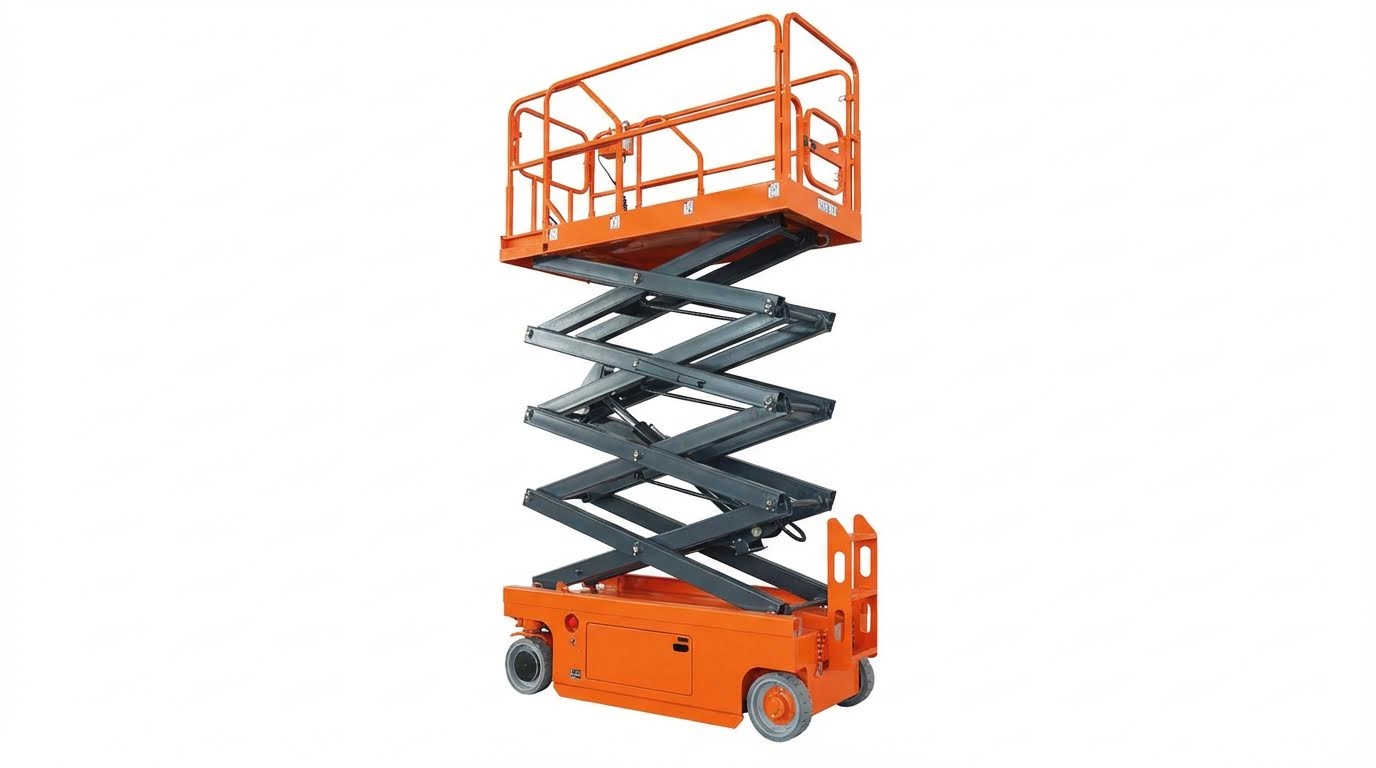
Electric compact scissor lifts worked best wherever operators needed frequent, controlled access to low and medium heights with strict constraints on noise, emissions, and floor loading. Typical answers to the query “what are the applications of an electric compact scissor lift” included indoor construction fit‑out, MEP trades, racking installation, stock picking, cleaning, and event rigging in facilities such as warehouses, data centers, hospitals, airports, schools, and public venues. Their compact geometry, non‑marking tyres, and zero local emissions allowed use on finished floors and in narrow corridors while still supporting platform capacities in the 230–550 kg range and working heights up to roughly 6–20 m, depending on model.
From an engineering perspective, best use cases aligned with flat, firm substrates, moderate grades, and well‑defined working envelopes where vertical access, not outreach, dominated the task. Designers and specifiers needed to balance platform capacity, floor bearing pressure, and gradeability against door widths, lift car dimensions, and turning radii, especially in retrofit projects and data‑rich environments like server rooms or healthcare facilities. Battery sizing, charger rating, and duty‑cycle assumptions strongly influenced availability; poorly specified energy systems led to mid‑shift downtime and accelerated battery wear, while right‑sized packs and disciplined overnight charging extended service life to several years.
Future trends pointed toward micro‑compact units with zero inside turning radius, higher energy efficiency, and integrated IoT telematics for fleet optimization, condition monitoring, and remote diagnostics. Digital twins of high‑utilization fleets enabled simulation of traffic patterns, charge scheduling, and maintenance interventions, reducing total lifecycle cost and unplanned downtime. However, engineers still needed to recognise fundamental limitations: constrained rough‑terrain capability, finite platform capacity at extension, and sensitivity to wind loading at height. The most robust selection processes therefore combined site surveys, task analysis, and standards compliance checks with quantitative comparisons of energy use, stability margins, and lifecycle cost, ensuring that electric compact scissor lifts were deployed where their specific advantages in safety, productivity, and environmental performance were fully realised.