If you are asking “where can I find ANSI standards for aerial work platforms,” you are really asking how to get the exact A92 documents that match your machines, your jobsites, and your training needs. This guide walks through the key ANSI A92 standards for MEWPs and related aerial platform, then explains practical ways to access them through official stores, subscriptions, and internal company systems. You will see how these standards connect to OSHA rules, and how to use them in real-world specification, design, and safety programs so your fleet stays compliant and your people stay protected.
Key ANSI A92 Standards For Aerial Platforms
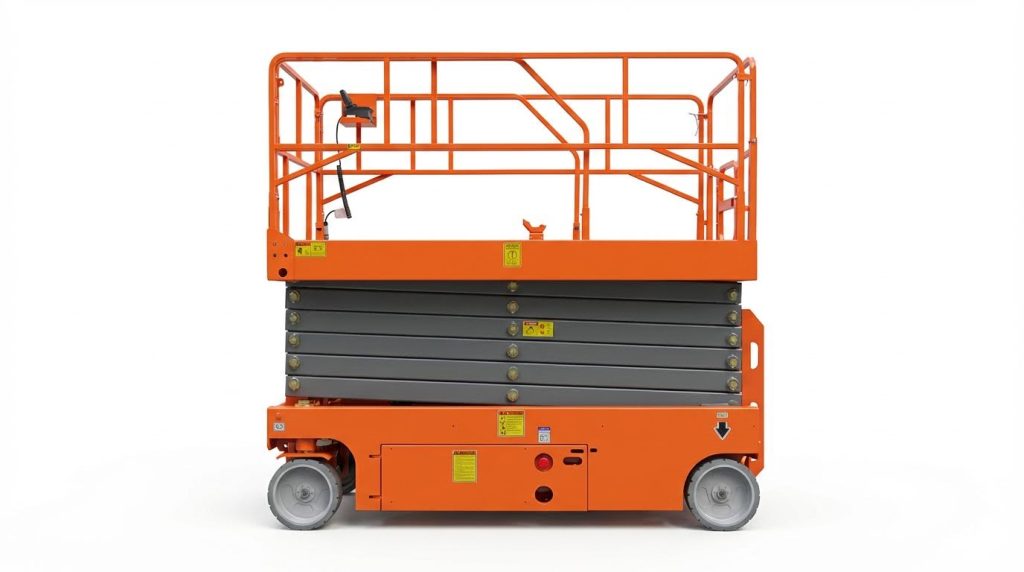
Core MEWP standards you must know
When safety teams ask “where can i find ansi standards for aerial work platforms,” they usually mean three core MEWP documents. ANSI/SAIA A92.20 defines how Mobile Elevating Work Platforms (MEWPs) must be designed, calculated, tested, and protected with safety systems. ANSI/SAIA A92.20-2021 covers design, calculations, safety requirements, and test methods for MEWPs. A92.22 and A92.24 then govern how you use those machines and how you train people to operate and maintain them. ANSI/SAIA A92.22-2021 defines safe-use requirements, while A92.24-2018 sets operator and supervisor training requirements for MEWPs. Together, these three parts are the baseline reference for specifying new aerial platform, writing procedures, and verifying that site practices match current consensus standards.
- A92.20: Use when you are engineering, selecting, or evaluating the machine’s design and safety features.
- A92.22: Use when you build your safe use program, risk assessments, and rescue planning around MEWPs.
- A92.24: Use when you structure operator, supervisor, and maintenance training and qualification.
Beyond boom and scissor lifts, other A92 parts cover specific aerial equipment families. ANSI/SAIA A92.9-2023 applies to mast-climbing work platforms and A92.10-2023 to transport platforms. Older A92.2, A92.3, A92.5, A92.6, and A92.8 documents still describe legacy categories such as vehicle-mounted, self-propelled, and manually propelled aerial platforms and their responsibilities for manufacturers, owners, and users. These parts define scope, exclusions, and use conditions for vehicle-mounted and integral-chassis platforms. If you manage a mixed fleet with older aerial lifts and newer MEWPs, you often need both the current A92.20/.22/.24 set and the applicable legacy A92 part to fully cover your equipment.
How ANSI A92 aligns with OSHA rules
OSHA regulations set the legal minimum, while the ANSI A92 series provides the detailed “how-to” for aerial work platforms. OSHA 29 CFR 1926.453 defines aerial lifts as vehicle-mounted devices used to elevate personnel and requires that only authorized employees operate them. OSHA 1926.453 mandates authorized operators and recognizes ANSI A92.22 and A92.24 for detailed safe-use and training guidance. In practice, OSHA inspectors often look to current ANSI A92 standards as “national consensus standards” when they evaluate whether your MEWP program reflects industry best practice. OSHA treats up-to-date ANSI MEWP standards as national consensus references even though OSHA’s own aerial lift rule is older and less detailed.
- OSHA answers the compliance question: “What must I do at minimum?”
- ANSI A92 answers the engineering and safety question: “What does good practice look like for this specific MEWP type?”
Training is where the alignment becomes very concrete. ANSI A92.24 requires theory, hands‑on practical training, and a documented operator evaluation by a qualified person. A92.24 specifies content such as MEWP categories, inspection steps, load calculations, fall protection, and jobsite risk assessment. Building your program around A92.22 and A92.24 makes it much easier to show that your answer to “where can i find ansi standards for aerial work platforms” is not only documented, but also integrated into day‑to‑day operations and OSHA-required training.
Where And How To Get The Right ANSI A92 Documents
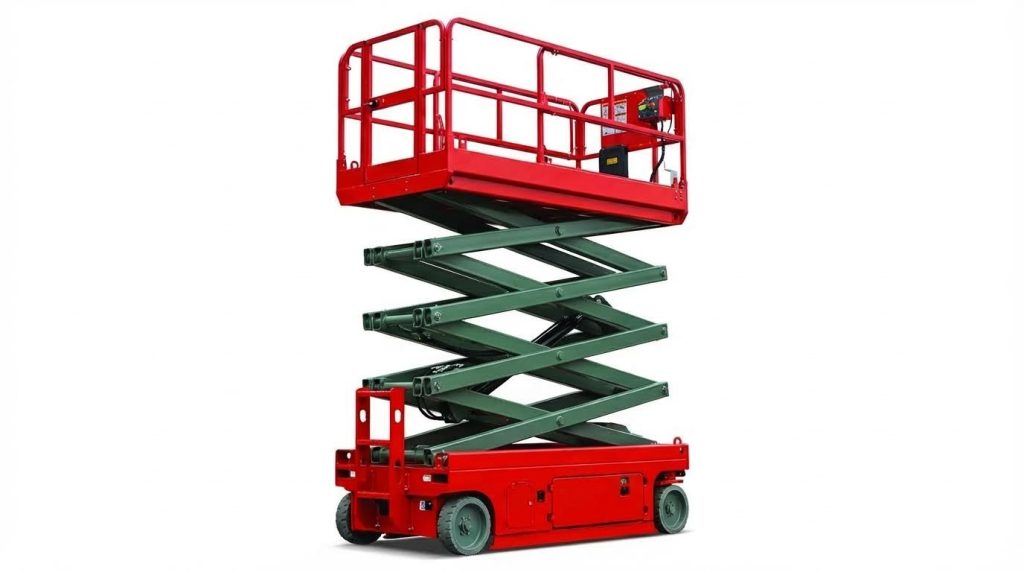
Direct purchase from ANSI and SAIA
If you are asking “where can I find ANSI standards for aerial work platforms,” the most authoritative sources are the ANSI and SAIA online stores. The consolidated ANSI/SAIA A92 series for modern Mobile Elevating Work Platforms (MEWPs) is available as individual parts, including A92.20 for design and testing, A92.22 for safe use, and A92.24 for training requirements. These parts are sold as digital PDF or hard copy, and you can usually buy single-user or multi-user licenses depending on how many people must access them. For mast-climbing work platforms and transport platforms, you will also find dedicated parts such as A92.9 and A92.10 in the same catalog. ANSI/SAIA A92.20-2021, A92.22-2021, A92.24-2018, A92.9-2023, and A92.10-2023 are all listed in the SAIA standards shop. This is the best route when you need the latest official text for engineering design, safety programs, or compliance documentation.
Using company subscriptions and standards aggregators
Many larger contractors, manufacturers, and engineering firms do not buy ANSI A92 standards one by one. Instead, they use enterprise subscriptions from standards aggregators or directly from ANSI’s webstore, which bundle multiple safety and design standards into one searchable platform. This approach is cost-effective if your team needs both historic A92 documents (such as A92.2, A92.3, A92.5, A92.6, and A92.8) and the current MEWP-focused series for aerial platforms. Older parts still matter when you support legacy vehicle-mounted or self-propelled aerial devices that were designed to previous editions. For example, the ANSI/SIA A92.2 standard covers design, testing, inspection, maintenance, use, training, and operation for vehicle-mounted aerial devices used to position personnel. ANSI lists A92.2, A92.5, A92.6, A92.8 and earlier A92.10 among its aerial work safety standards. With a subscription, safety managers can quickly pull the right document for each platform type without separate purchases every time.
Choosing the correct A92 part for your equipment
Selecting the right ANSI A92 document starts with how your aerial equipment is built and used. Modern MEWPs generally fall under the trio A92.20 (design), A92.22 (safe use), and A92.24 (training), so most new scissor platforms and boom lifts will reference these as their primary standards. A92.20 specifies design, calculations, safety requirements, and test methods for MEWPs, A92.22 covers safe use, and A92.24 defines training requirements. For specialized platforms, you must match the standard to the equipment category: mast-climbing work platforms are addressed in A92.9, while transport platforms are covered in A92.10. The A92.9 standard applies to mast-climbing work platforms and A92.10 sets guidelines for transport platforms. If you maintain older manually propelled or self-propelled integral chassis aerial platforms, legacy parts such as A92.3, A92.5, and A92.6 from the ANSI webstore may still be relevant for understanding original design intent and responsibilities..
Applying ANSI Standards In Specification And Design
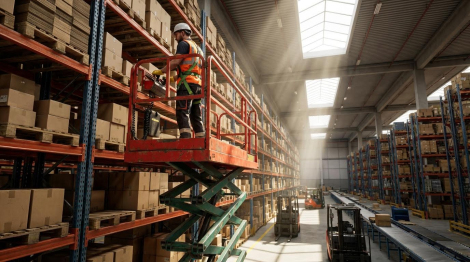
Linking MEWP classes to A92.20/.22/.24
When engineers ask “where can i find ansi standards for aerial work platforms,” they usually also need to know which part of A92 applies to each MEWP class. ANSI/SAIA A92.20 defines the design, calculations, safety requirements, and test methods for MEWPs ANSI/SAIA A92.20-2021. A92.22 covers safe use requirements, including responsibilities of owners, users, and operators ANSI/SAIA A92.22-2021. A92.24 sets out training requirements for operation, inspection, testing, and maintenance ANSI/SAIA A92.24-2018.
- Use A92.20 when you specify structural design, stability, guardrails, gates, platform load ratings, and control logic for any MEWP.
- Use A92.22 when writing operating procedures, safe-use checklists, and job planning requirements for each MEWP group and type.
- Use A92.24 when defining operator, supervisor, and inspector training content and verification processes.
A92.20, A92.22, and A92.24 are built around MEWP Groups (A/B) and Types (1/2/3) used in modern training programs ANSI training content and MEWP categories. In your specifications, always state both the MEWP Group/Type and the governing A92 parts, for example “MEWP Group B, Type 3, designed to ANSI/SAIA A92.20; used and maintained per A92.22; training per A92.24.” This keeps design, operating rules, and training aligned and makes it easy for safety and procurement teams to answer internally when someone else asks “where can i find ansi standards for aerial work platforms” for a given machine.
Integrating ANSI rules into TCO and safety programs
Integrating A92.20, A92.22, and A92.24 into your specification process improves safety and also total cost of ownership (TCO). A92.22 requires a formal safe-use program, risk assessment for each job, and a rescue plan for each lift, which are now common elements of aerial lift training Three jobsite safety components and training content. A92.24 requires theory training, practical hands-on training, and operator evaluation by a qualified person, which directly reduces incident rates and unplanned downtime Certification process requirements.
- In TCO models, include line items for A92.24-compliant training cycles, recertification intervals, and operator refreshers.
- Include A92.22-required inspections and documentation in your preventive maintenance plan and utilization assumptions.
- Use A92.20 design requirements when evaluating options like load-sensing systems and platform gates, which influence both safety and maintenance costs.
From a program standpoint, document in your corporate safety standard which A92 parts apply to each equipment family and where can i find ansi standards for aerial platform (typically your standards library or subscription portal). Then link your procurement specs, site procedures, and training matrices back to those A92 clauses. This closes the loop between design, safe use, and training, and gives management a clear, standards-based justification for lifecycle costs and safety investments.
“”
Final Thoughts On Accessing ANSI Aerial Standards
Accessing the right ANSI A92 standards is not just a paperwork task. It is the backbone of safe aerial work platform design, purchase, and operation. A92.20, A92.22, and A92.24 work together as a closed loop. Engineers use A92.20 to lock in structural strength, stability, controls, and guarding. Safety and operations teams then apply A92.22 to build real job planning, inspections, and rescue processes around each MEWP group and type. Training leaders follow A92.24 to shape theory, hands‑on practice, and evaluation so operators use that engineering margin correctly.
The way you access these standards must support this loop. Centralize current and legacy A92 parts in a controlled library or subscription. Map each Atomoving platform and every other aerial device in your fleet to a specific A92 part set. Then reference those parts in specifications, procedures, and training records. When you treat “where can I find ANSI standards for aerial work platforms” as a standing system question, not a one‑time search, you reduce risk, improve compliance with OSHA, and gain a clear, defensible basis for lifecycle cost and safety decisions.
Frequently Asked Questions
Where can I find ANSI standards for aerial work platforms?
ANSI standards for aerial work platforms can be accessed through several methods. Some standards are available for free via the CSA Community Group, though registration is required. Additionally, you can purchase copyrighted ANSI standards directly from authorized sellers or access them through the ANSI IBR Portal, which provides access to standards incorporated by reference in U.S. regulations.
Can I access ANSI standards for free?
Yes, some ANSI standards are available for free through specific platforms like the CSA Community Group. However, many ANSI standards, especially those related to aerial work platforms, may need to be purchased due to copyright restrictions. Always check official resources for the most accurate and up-to-date information.