Compact scissor lift applications have become central to modern warehouse operations, especially where vertical reach and tight-aisle maneuvering are critical. This article explains what makes a lift truly “compact,” how performance and safety standards affect daily use, and where these units add the most value on the floor. You will see how to match lift specs to aisle width, racking height, and load profiles so you can choose the right machine for each task. The goal is to help engineers, facility managers, and safety teams deploy compact scissor platform lift that improve productivity without compromising compliance or uptime.
What Makes A Scissor Lift “Compact” In Warehousing
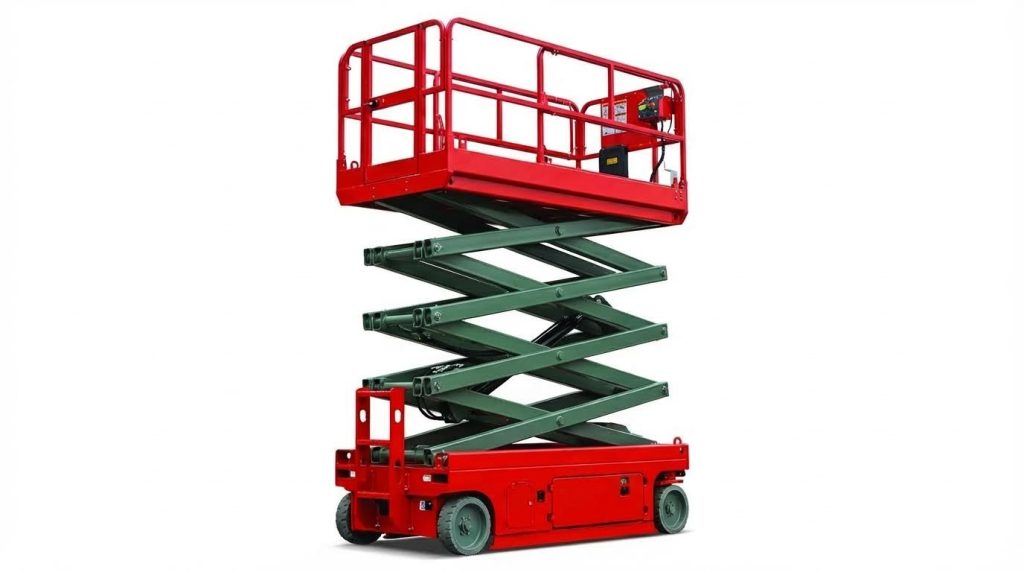
Core design and space-saving dimensions
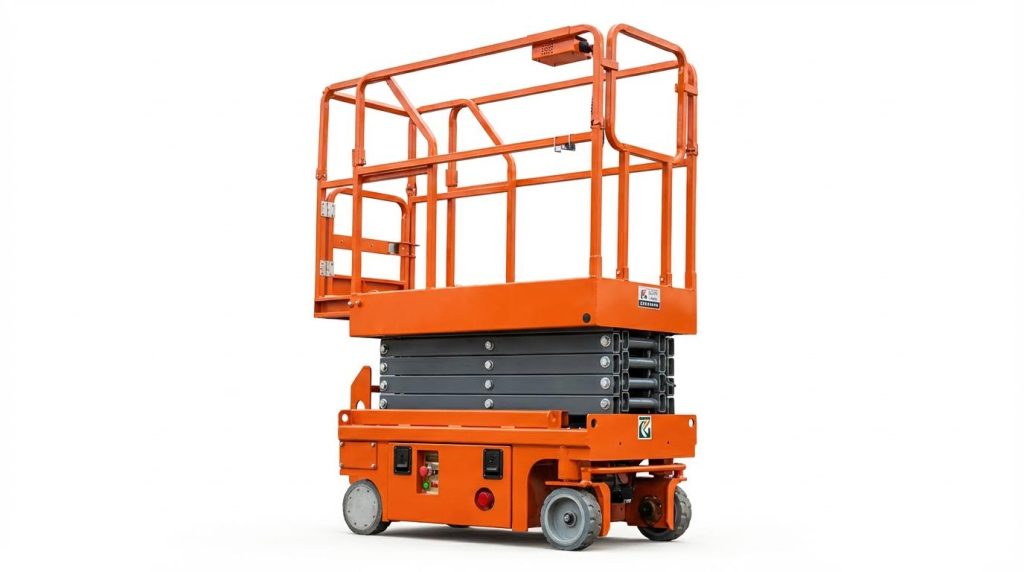
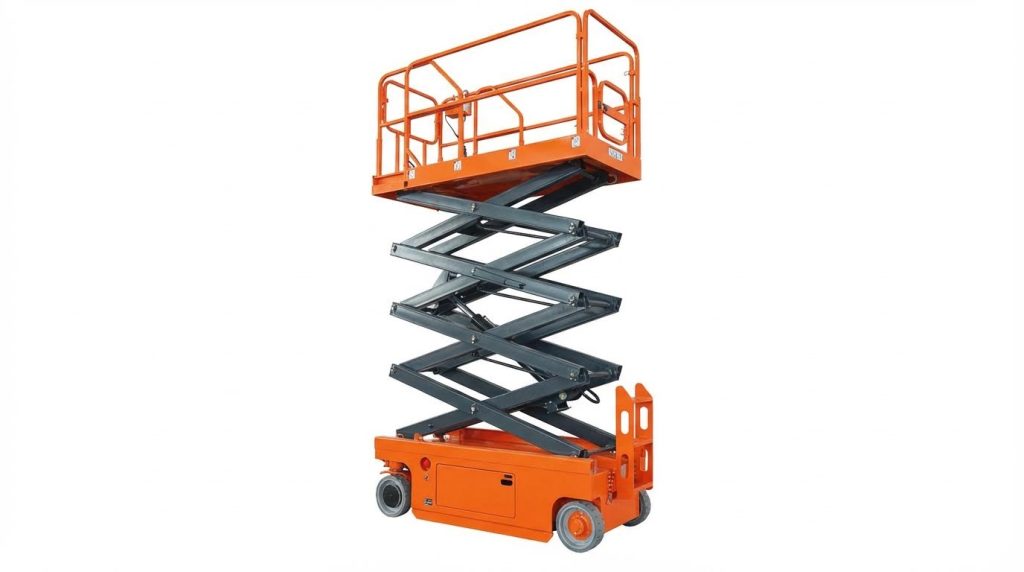
In warehousing, “compact” refers mainly to footprint, weight, and maneuverability, not just overall height. A typical ultra-compact unit can be as narrow as 760 mm, so it can pass through standard personnel doors and narrow aisles without reconfiguring racking or traffic routes in many models. Weight is also reduced, often in the 650–930 kg range, which allows towing with smaller warehouse tugs and reduces floor loading on mezzanines and older slabs for certain designs. A tight turning radius, around 1400 mm on some ultra-compact scissor lifts, lets operators turn within the aisle instead of making multi-point maneuvers, which is critical for safe, efficient compact scissor lift applications in dense storage zones in many indoor units.
Typical compact warehouse geometry
| Key dimension | Typical compact range | Why it matters in warehouses |
|---|---|---|
| Overall width | ≈ 760 mm | Fits standard doors and narrow aisles |
| Machine weight | ≈ 650–930 kg | Lower floor loading; easier towing and repositioning |
| Turning radius | ≈ 1400 mm | Can turn inside tight aisles and staging areas |
| Working height | ≈ 5–6.8 m | Covers most warehouse lighting, sprinklers, and low–medium racking |
Data ranges based on indoor ultra-compact designs for confined spaces used in warehouses and similar facilities.
Platform geometry also defines how “compact” a unit is in practice. Typical platforms around 1170 × 600 mm give enough room for one operator plus tools while still staying within pallet-rack aisle envelopes on many indoor models. Maximum working heights in the 5,000–6,800 mm range cover a large share of warehouse maintenance and light picking tasks without forcing a move to larger, heavier machines for some compact designs. Together, these factors let operations deploy compact scissor lift applications in areas where conventional lifts would block traffic, overload floors, or violate aisle-clearance rules.
Power, drive and lift performance metrics
Power and drive systems on compact units are optimized for indoor, high-density warehousing. Many use battery power, for example dual 12 V / 80 Ah packs, which deliver zero local emissions and low noise suitable for enclosed warehouse, retail, or logistics environments in typical indoor applications. Travel speeds often reach about 4 km/h when the platform is stowed and reduce to around 0.8 km/h when raised, balancing productivity with stability during elevated travel for many compact scissor lifts. Climbing ability typically sits in the 10–15% range, which is enough for dock approaches and mild ramps between warehouse zones without over-stressing the drive system on several indoor-rated models.
- Lift / lower cycle times of about 20–30 seconds reduce idle time between picks or maintenance points, which directly improves labor productivity in repetitive compact scissor lift applications for many hydraulic units.
- Hydraulic steering gives fine control in congested staging areas and around rack uprights, minimizing collision risk and product damage in several compact designs.
- Stability envelopes are typically limited to small working angles, such as about 2°, which is adequate for smooth warehouse slabs and encourages correct use on level surfaces only on some indoor units.
Load and duty-cycle capability must also match the warehouse task. Typical compact platforms for personnel access carry one worker plus tools, while industrial scissor tables can range from about 500 lb up to 4,000 lb capacities for pallet-height work positioning scissor platform. Rise times on these heavier-duty tables can vary from roughly 16 to 54 seconds depending on stroke and motor size, which is important when sizing equipment for repetitive loading, kitting, or line-feed tasks in the warehouse scissor platform lift. By aligning these power, speed, and capacity metrics with aisle layouts and process needs, facilities can select compact scissor lifts that deliver high utilization without oversizing equipment or compromising safety.
Safety, Compliance And Maintenance In Daily Use
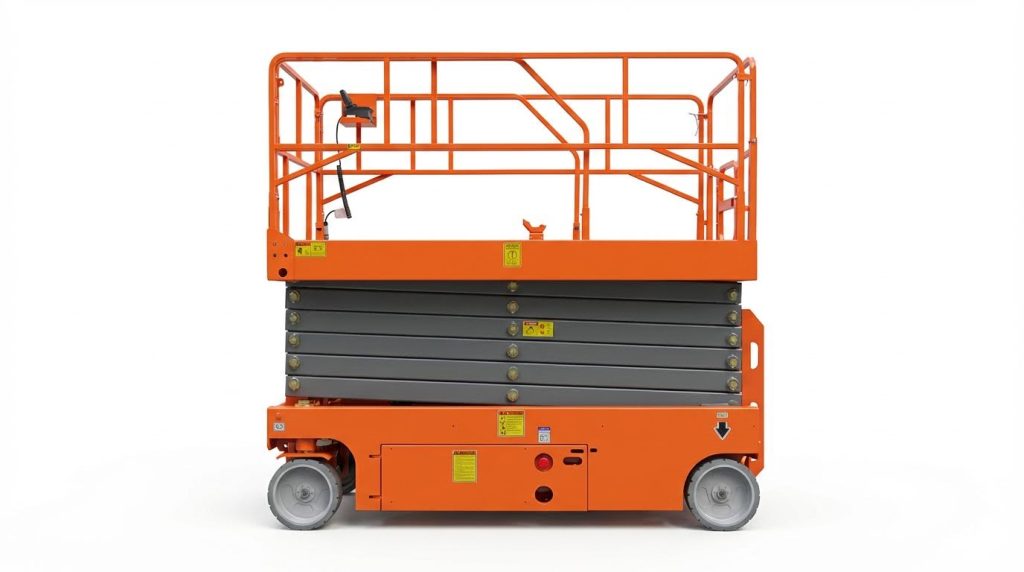
Meeting OSHA/ANSI and facility safety standards
For any compact scissor lift applications in warehousing, the starting point is compliance with OSHA and ANSI aerial platform standards, plus your own facility rules. That means treating every lift as a powered industrial truck–type risk: operators must be trained, evaluated, and authorized, with clear understanding of load limits, platform controls, and emergency procedures. Regulations required guardrails and fall protection where there is a risk of falling; many compact units already include full-height guardrails and non-slip platforms to reduce that risk with integrated safety features such as guardrails, emergency stop buttons, and anti-slip surfaces. Facilities also needed written procedures for pre-use inspections, lockout/tagout when a lift is unsafe, and traffic rules that control speed and right-of-way in aisles and at dock doors.
- Train operators on safe positioning, including staying clear of power lines and fixed obstacles to avoid collisions and overhead hazards.
- Apply fall protection practices, using guardrails and harnesses with suitable anchor points where required to prevent fall injuries.
- Standardize shift-start checks of controls, brakes, and emergency systems before the lift enters service as part of OSHA-style pre-operation inspections.
Built-in safety systems and stability limits
Modern compact scissor lift applications rely heavily on built-in safety systems to manage risk in tight warehouse aisles. Typical equipment includes emergency stop buttons at the platform and base, plus emergency or manual lowering systems so a raised platform can be brought down safely if there is a power or control failure with emergency stop and manual lowering functions for safe operation during emergencies. Automatic braking or drive interlocks prevent unintended movement when the platform is elevated, which is critical when working near racking or mezzanines using automatic brake systems to prevent unintended movement. Some compact units were designed to remain stable only within a small allowable tilt or working angle, for example around 2°, so operators needed to understand that these were strictly “indoor, level-floor” machines with stability maintained on uneven surfaces only up to a maximum working angle of about 2°.
- Guardrails and non-slip platforms reduce the chance of falls during picking, inventory, and maintenance work by providing physical barriers and anti-slip surfaces.
- Pre-operation checks should confirm that brakes hold firmly and that the lift does not creep when elevated as part of control and brake testing before each shift.
- Warehouse procedures should define “no-go” zones such as steep ramps or dock edges, since compact electric lifts were optimized for smooth, level indoor floors.
Preventive and predictive maintenance practices
Safe compact scissor lift applications depend on disciplined preventive maintenance that keeps hydraulic, structural, and electrical systems within design limits. Daily or shift-based inspections should look for hydraulic leaks, damaged hoses, loose fasteners, and visible structural cracks to catch wear or damage early and avoid costly repairs. At least monthly, teams should check cylinders and hoses more thoroughly, test emergency lowering systems, and verify that drive components are in good condition including hydraulic system inspection, drive system checks, and emergency lowering tests.
- Lubricate scissor arms, pivot pins, and rollers at the intervals in the maintenance manual to reduce wear and keep motion smooth.
- For battery-powered units, keep batteries clean, fully charged, and free of corrosion to avoid unexpected downtime and extend battery life.
- Schedule periodic professional inspections to check structural integrity, rust, and fatigue, especially for units that see heavy daily use through biannual or annual structural inspections and calibration of controls.
- Store lifts indoors on level, dry floors, with control panels protected from dust and moisture to prevent rust, weather damage, and electrical issues.
Maintenance checklist example for warehouse teams
A simple in-house checklist for each compact unit can include: visual walk-around, hydraulic leak check, guardrail and gate condition, platform and controls test, brake test, tilt or out-of-level warning check (if equipped), battery state, and confirmation that the unit’s last scheduled service is still within date. This structured approach keeps safety, compliance, and uptime aligned for every shift.
Top Warehouse Applications And Selection Criteria
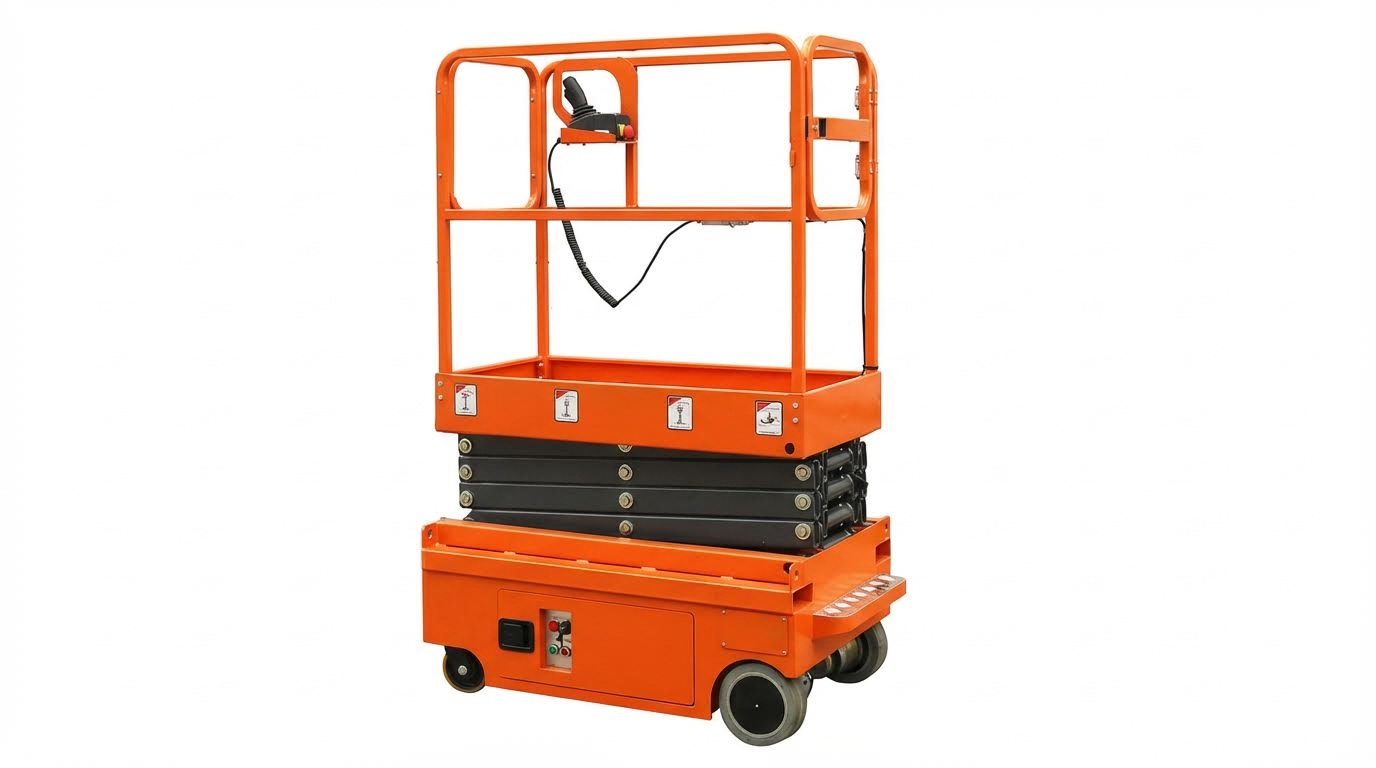
Typical warehouse tasks and workflows
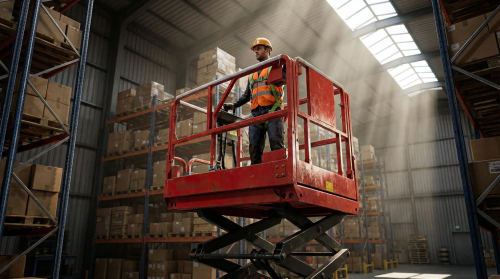
In warehousing, the most common compact scissor lift applications center on repetitive, low-to-medium height access in tight spaces. Typical tasks include pallet rack put-away and picking, cycle-counting, label changes, and light maintenance on lighting, sprinklers, and sensors. Compact units are designed to work where larger machines cannot, navigating narrow aisles and congested storage zones with ease in confined areas and narrow aisles. This makes them a strong alternative to ladders or rolling stairs for frequent, short-duration tasks.
- Order picking and restocking: Operators can elevate to the second or third rack level to pick cartons or cases, then lower and reposition quickly. Many compact models reach working heights around 5–6.8 m, which covers a large share of light-duty warehouse racking with maximum working heights from 5000 mm to 6800 mm.
- Inventory, audits, and inspections: Compact platforms allow one or two people plus handheld scanners or tablets to work safely at height, with guardrails and non-slip decks improving operator security using guardrails and anti-slip surfaces.
- Facility and equipment maintenance: Tasks such as repairing conveyors, sensors, or ducting above aisles benefit from fast lift cycles; many compact lifts complete a full raise in roughly 20–30 seconds, which reduces non-productive time per job with lift and lower operations completed within 20–30 seconds.
- Light material handling: Some compact units are used as mobile worktables or ergonomic lift tables to raise cartons, totes, or components to a safe working height. Capacities can range from a few hundred pounds up to roughly 4000 lb, depending on design with lifting capacities from 500 lbs to 4000 lbs.
Battery-powered compact scissor lifts fit well in 24/7 warehouse operations because they run with low noise and zero local emissions, which is important in enclosed storage and mezzanine areas where battery power supports emission-controlled environments. Their maneuverability and short turning radius also reduce the time lost to repositioning between pick faces or work zones, directly improving workflow efficiency.
Key advantages of compact lifts over ladders in warehouses
Compared with ladders, compact scissor lift applications provide a guarded platform, stable footprint, and powered elevation. This reduces fall risk, allows operators to carry tools and small parts safely, and cuts time spent climbing. For repetitive work at 3–7 m, this usually improves both productivity and ergonomics.
Matching specs to aisle width, height and load
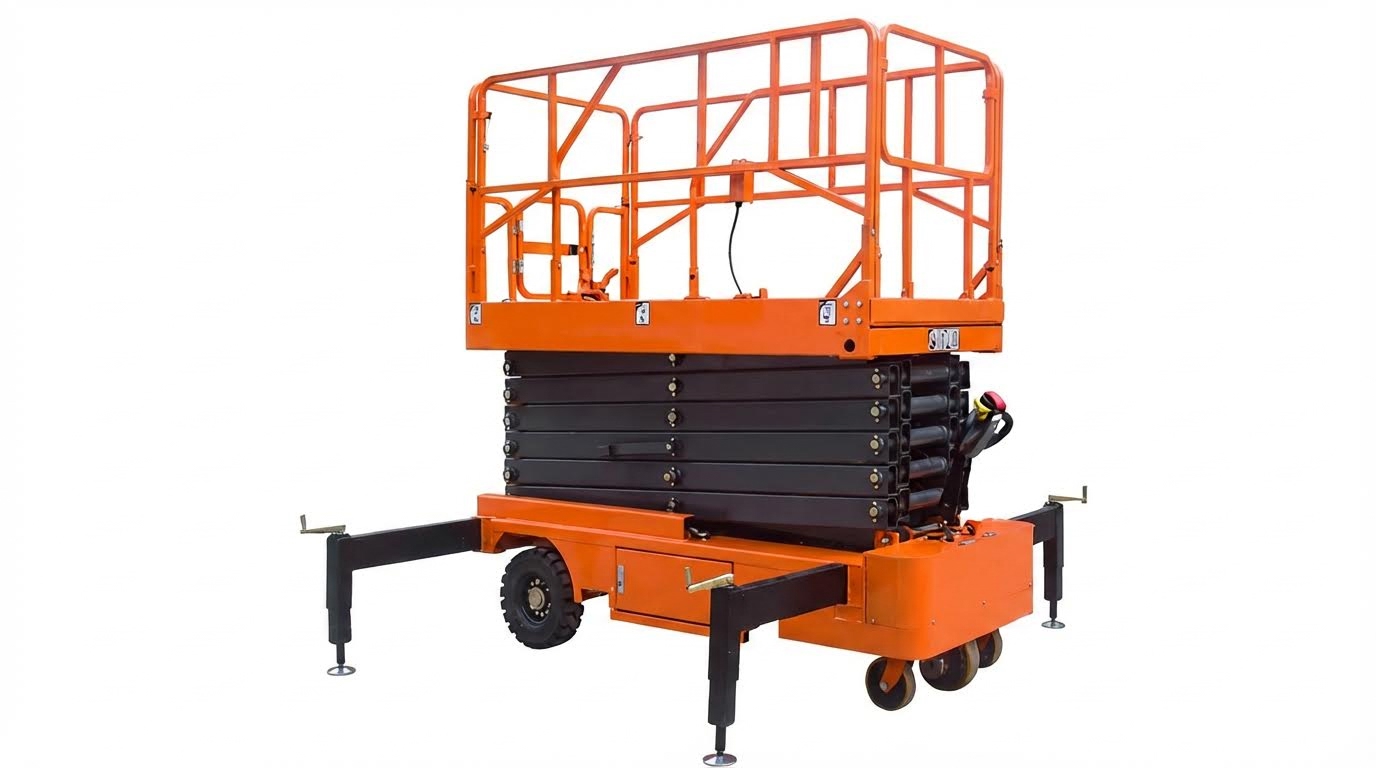
Selecting the right compact scissor lift for a warehouse starts with three constraints: aisle width, required working height, and load profile. Aisle and doorway clearances dictate maximum machine width and turning radius; many ultra-compact models use widths around 760 mm so they can pass through standard doors and narrow aisles while still turning in tight cross-aisles with 760 mm widths and 1400 mm turning radii. Working height must cover the highest task, such as top beam picking or light maintenance, with a margin for operator reach.
| Selection factor | Typical warehouse guideline |
|---|---|
| Aisle width | Choose lift width at least 150–300 mm narrower than the tightest aisle to allow safe passing and turning. |
| Working height | Match maximum working height to rack top plus operator reach; many compact units offer 5–6.8 m working heights from 5000 mm to 6800 mm. |
| Platform size | Balance maneuverability with workspace; platforms around 1170 × 600 mm suit single-operator picking and small parts handling with similar platform dimensions. |
| Load capacity | Size capacity for operator plus tools and product, referencing ranges from about 500 lb for light-duty work up to 4000 lb for heavy material handling manual pallet jack. |
Drive and lift performance also matter when evaluating compact scissor lift applications for busy warehouses. Typical compact units travel around 4 km/h when stowed and slow to roughly 0.8 km/h when elevated to protect stability, which is adequate for most intra-aisle repositioning with drive speeds of 4 km/h stowed and 0.8 km/h raised. Lift times in the 20–30 second range keep pick cycles short, while battery systems around 2×12 V / 80 Ah support a full shift in many light-duty applications if charging practices are managed well using 2×12V/80Ah batteries.
- Stability and floor conditions: Check the maximum rated working angle; some compact models are limited to about 2° and must operate on relatively level warehouse floors with stability up to a 2° working angle.
- Weight and mezzanines: Where lifts operate on mezzanines or elevated slabs, compare machine weight (often in the 650–930 kg range for ultra-compact models) with floor load ratings with weights from 650 kg to 930 kg.
- Duty cycle: For multi-shift operations, prioritize higher battery capacity, fast chargers, and easy access to components for maintenance to control downtime and lifecycle cost.
Quick checklist before specifying a compact warehouse lift
Confirm the tightest aisle, doorway, and turning clearances. Map the highest regular work point and required working height. List maximum live loads per task. Check floor load ratings, especially on mezzanines. Finally, align travel speed, lift time, and battery capacity with your throughput targets so the lift supports, rather than constrains, your warehouse workflow.
“”
Final Thoughts On Deploying Compact Scissor Lifts In Modern Warehouses
Compact scissor lifts deliver their real value when geometry, performance, and safety rules all align with the warehouse design. Narrow footprints, low machine weight, and tight turning radii let engineers place powered access directly inside rack aisles without reworking layouts or overloading slabs. Correctly matched working height and platform size then turn high-frequency tasks at 3–7 m into short, repeatable cycles instead of ladder work.
Power and drive choices must reflect duty cycle and floor conditions. Battery systems, controlled travel speeds, and short lift times support dense, 24/7 workflows, but only if charging and maintenance stay disciplined. Safety systems, OSHA/ANSI training, and strict limits on slope and floor quality close the loop. They keep a compact lift behaving like a stable work platform rather than a mobile risk.
The best practice is simple: start with aisle width, top task height, and load profile, then check floor ratings and safety standards before looking at price. Use Atomoving specifications and maintenance guidance to lock in the right capacity, geometry, and service plan. When you treat compact scissor lifts as engineered parts of the material handling system, they raise productivity while keeping incident rates and downtime under tight control.
Frequently Asked Questions
What are the applications of an electric compact scissor lift?
An electric compact scissor lift is commonly used in indoor environments where space is limited and emissions must be minimized. These lifts are ideal for tasks such as inventory management, equipment maintenance, and facility repairs. They are widely employed in warehouses, manufacturing plants, and retail spaces due to their quiet operation and zero-emission design. Electric Scissor Lift Guide.
Why choose an electric scissor lift over other types?
Electric scissor lifts are preferred for indoor applications because they run on batteries, eliminating the need for fuel and reducing noise levels. Unlike hydraulic or diesel-powered lifts, they do not emit fumes, making them safe for enclosed spaces. Their compact design allows for easy maneuverability in tight areas, which is essential for tasks like electrical installations or HVAC maintenance. Scissor Lift Applications.