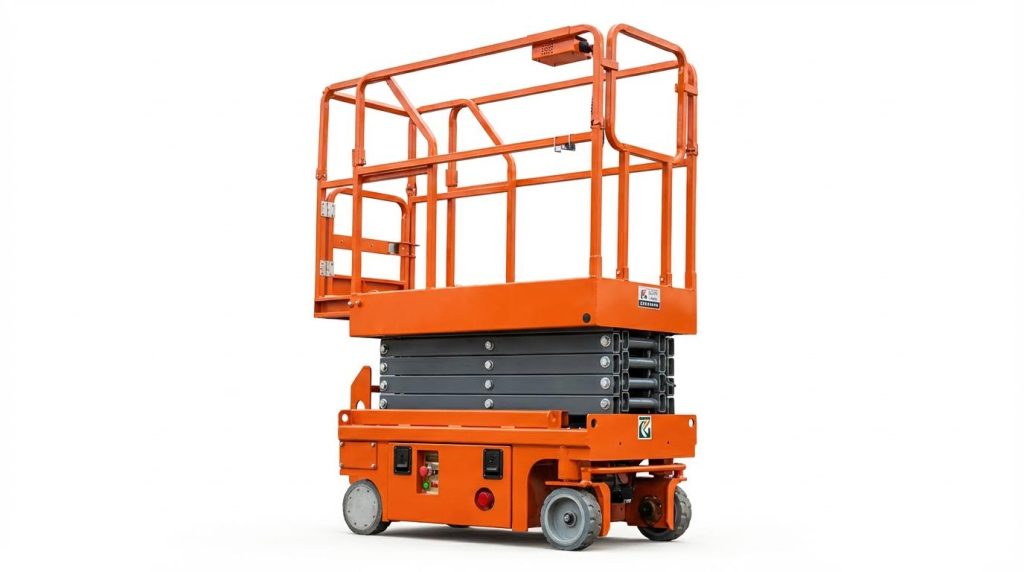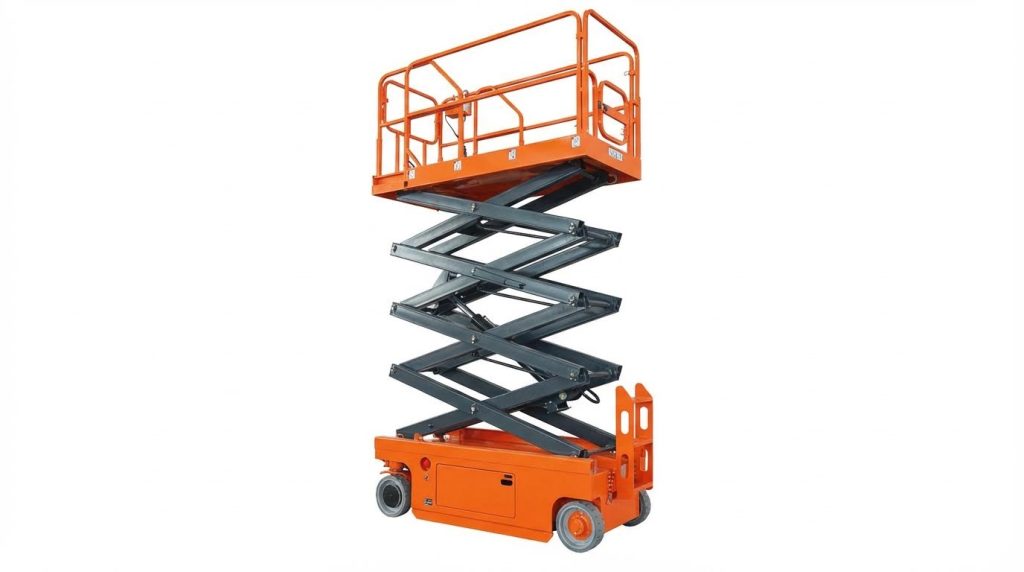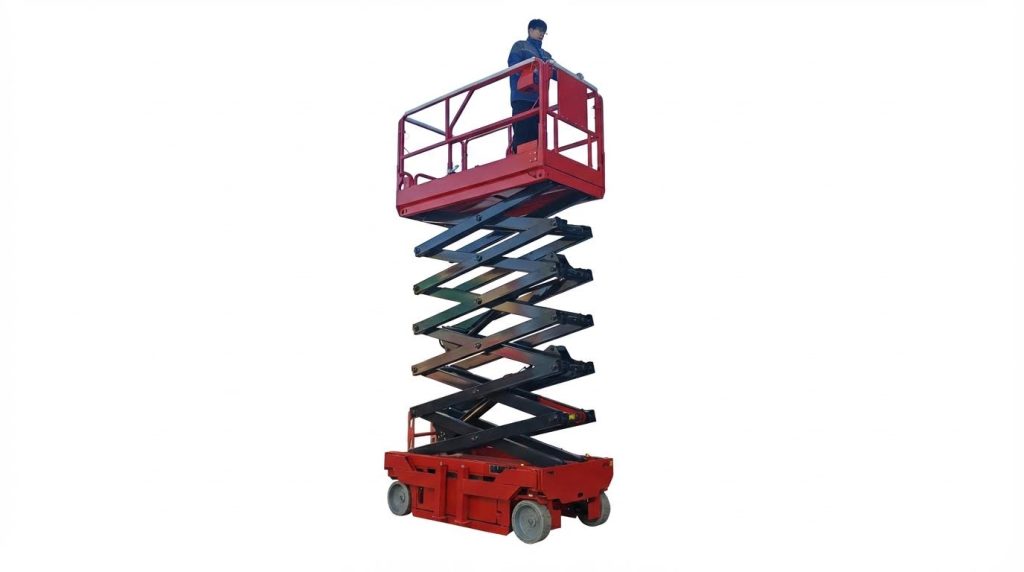
Working with mobile elevating work platforms on grades, cambers, and rough ground adds serious tip‑over and stability risks. This guide explains how to read slope ratings, assess ground, and use engineering controls so you know exactly what is safe and what is not. You will see how to choose the right machine, manage loads, and react correctly if alarms sound when traveling on a slope aerial platform. Use it as a practical, engineering-based checklist to plan safer MEWP operations on sloping sites.
Understanding MEWP Slope Limits And Stability
Slope, grade, and stability fundamentals
Safe use of any mobile elevating work platform on uneven ground starts with understanding how slope and grade affect its stability envelope. When traveling on a slope mobile elevated work platform operators must stay within the manufacturer’s limits to avoid loss of traction, side loading, and tip-over.
| Term | How it is expressed | Typical use on MEWPs |
|---|---|---|
| Slope | Degrees (°) of incline | Used for level sensors and tilt alarms, often around 5° out-of-level limit for alarms to trigger for boom-supported platforms |
| Grade | Percent (%) = rise/run × 100 | Used to describe travel capability on ramps and site roads (e.g. 25% grade) |
| Travel grade (stowed) | % grade or ° slope | Maximum incline the MEWP can drive on with platform fully lowered |
| Operating slope (elevated) | % or °, usually much smaller | Maximum out-of-level condition allowed with platform raised; often near 5% or 3°–5% in practice per common guidance |
Slope and grade describe the same incline in different ways. Slope is the angle in degrees, while grade is the vertical rise divided by horizontal distance, expressed as a percentage (for example, 25% grade is about a 14° slope) as explained in industry guidance. Exceeding either the travel grade or the elevated operating slope increases overturning moment and can overload the chassis, steering, and hydraulic systems.
Example: grade calculation on site
If a ramp rises 12 in over 144 in of horizontal distance, the grade is (12 ÷ 144) × 100 = 8.3% using the standard method. That 8.3% must be compared to the MEWP’s rated gradeability before driving up or down it.
Different MEWP designs tolerate very different grades when stowed. Self-propelled slab scissor lifts typically handle up to about 25% grade (≈14°) on smooth floors, crawler scissors up to 30% (≈16.7°), and rough-terrain models up to about 35% (≈19.3°) on steep, uneven ground, often with reduced load at the upper end (for example, 50% of rated load at 35% grade) according to published ranges. These travel figures never mean it is safe to elevate on the same grades.
- Travel ratings apply with the platform fully lowered and within specified speed limits.
- Elevated operation usually requires near-level conditions and full use of stabilizers where fitted.
- Side slopes are more critical than up/down slopes because they reduce the effective base width and increase lateral overturning risk.
- Soft, wet, or loose ground reduces effective grade capability even if the numerical grade is within limits.
Ignoring these slope fundamentals can lead to hydraulic leaks, structural stress, excessive tire wear, and, most seriously, tip-overs; tip-overs account for a significant share of aerial platform accidents as industry data shows. For this reason, operator training should always include how to read grade, how to measure it, and how to compare it to the machine’s stated capabilities before traveling or elevating.
Standards, manuals, and rating plate data
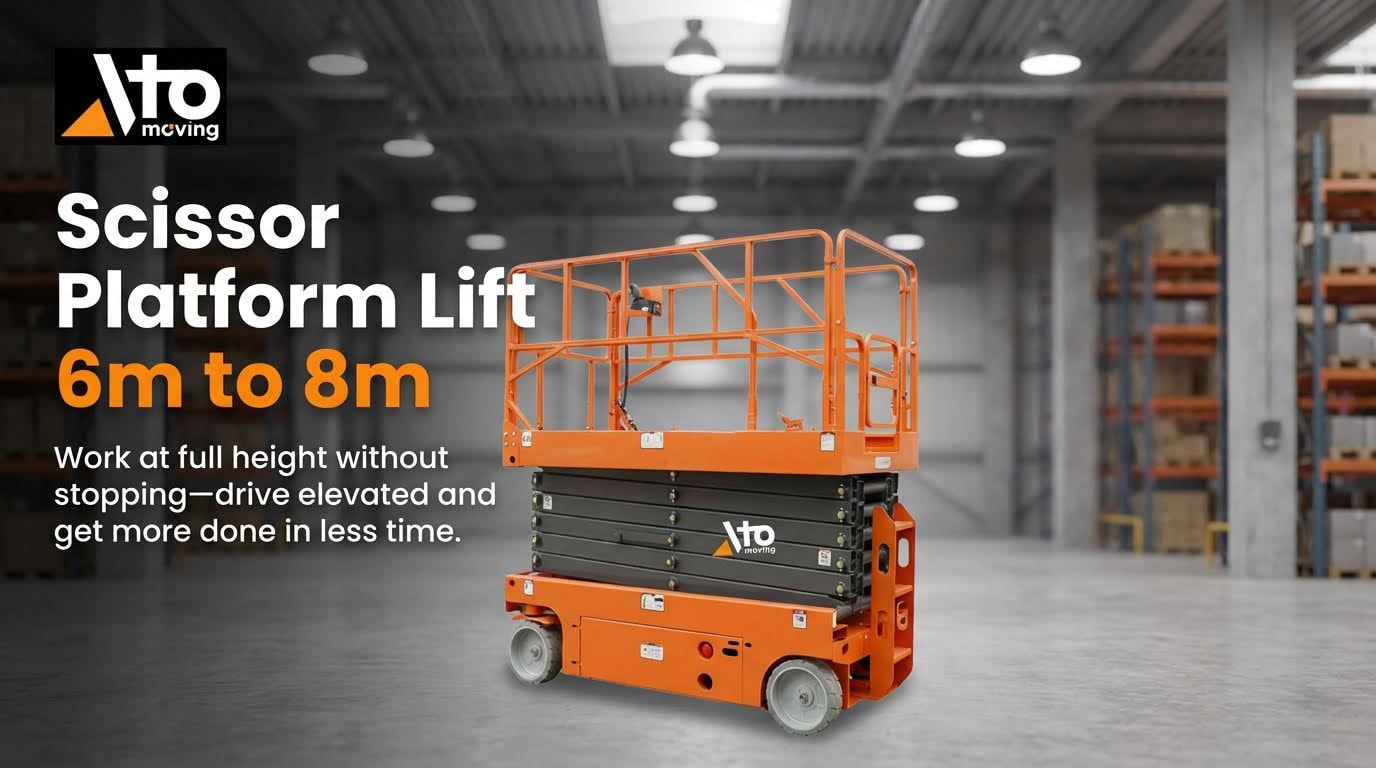
Stability limits for MEWPs on slopes are not guesswork; they come from design standards, formal testing, and the specific machine’s documentation. When traveling on a slope mobile elevated work platform operators must treat the rating plate and operator’s manual as the final authority.
| Information source | What it provides | Relevance to slopes and uneven ground |
|---|---|---|
| ANSI/SAIA A92 family | Design and test requirements for MEWPs and vehicle-mounted platforms | Defines stability factors, maximum out-of-level limits, and requirements for level alarms and indicators for several platform types |
| EM 385 / OSHA and similar guidance | Use, inspection, and training rules | Requires firm, level support, pre-use surveys for drop-offs, ditches, and soft ground, and prohibits operation when out of level beyond design limits for aerial platforms |
| Rating plate on the MEWP | Key operating limits in a compact form | Lists maximum platform load, maximum platform height, maximum allowable side force, and often maximum gradeability and allowed operating slope |
| Operator’s manual (kept on the machine) | Detailed instructions and restrictions | Specifies maximum travel grade, whether elevation is allowed on a given slope, use of outriggers, and any derating on inclines as emphasized in safe-use guidance |
| Tilt/level alarms and indicators | Real-time feedback on out-of-level condition | Warn when the base exceeds the allowed angle, commonly around 5° out of level for boom-type units, triggering automatic interlocks or alarms for boom-supported MEWPs |
Standards require that the operating manual be physically available on the equipment and that access gates or chains are closed during operation for aerial work platforms. For boom-supported machines, an automatic level alarm must activate if the chassis is more than a set number of degrees out of level, typically around 5°; once that alarm sounds, elevation or certain movements are restricted until the unit is brought back within limits under common rules.
- Always locate and read the rating plate before operating on a new site or slope.
- Use the operator’s manual to confirm whether elevation is allowed at the measured slope, not just travel.
- Respect any load derating instructions for work on inclines or rough ground.
- Never bypass or ignore tilt alarms or level indicators; they are part of the certified stability system.
Why manuals and rating plates override “rules of thumb”
Industry articles sometimes mention typical values, such as elevated operation being limited to about 5% grade. These figures are only general guidance. The tested stability of a specific MEWP, its tire type, optional outriggers, and attachment configuration can shift the safe limits up or down. Only the manufacturer’s documentation and rating plate reflect the tested configuration of the actual machine on site.
In practice, a disciplined operator will measure the slope, check it against the rating plate and manual, and then monitor level indicators while moving and elevating. That combination of standards-based design, clear documentation, and real-time feedback is what keeps a mobile elevating work platform stable on slopes and uneven ground.
“”
Operating Practices And Equipment Selection
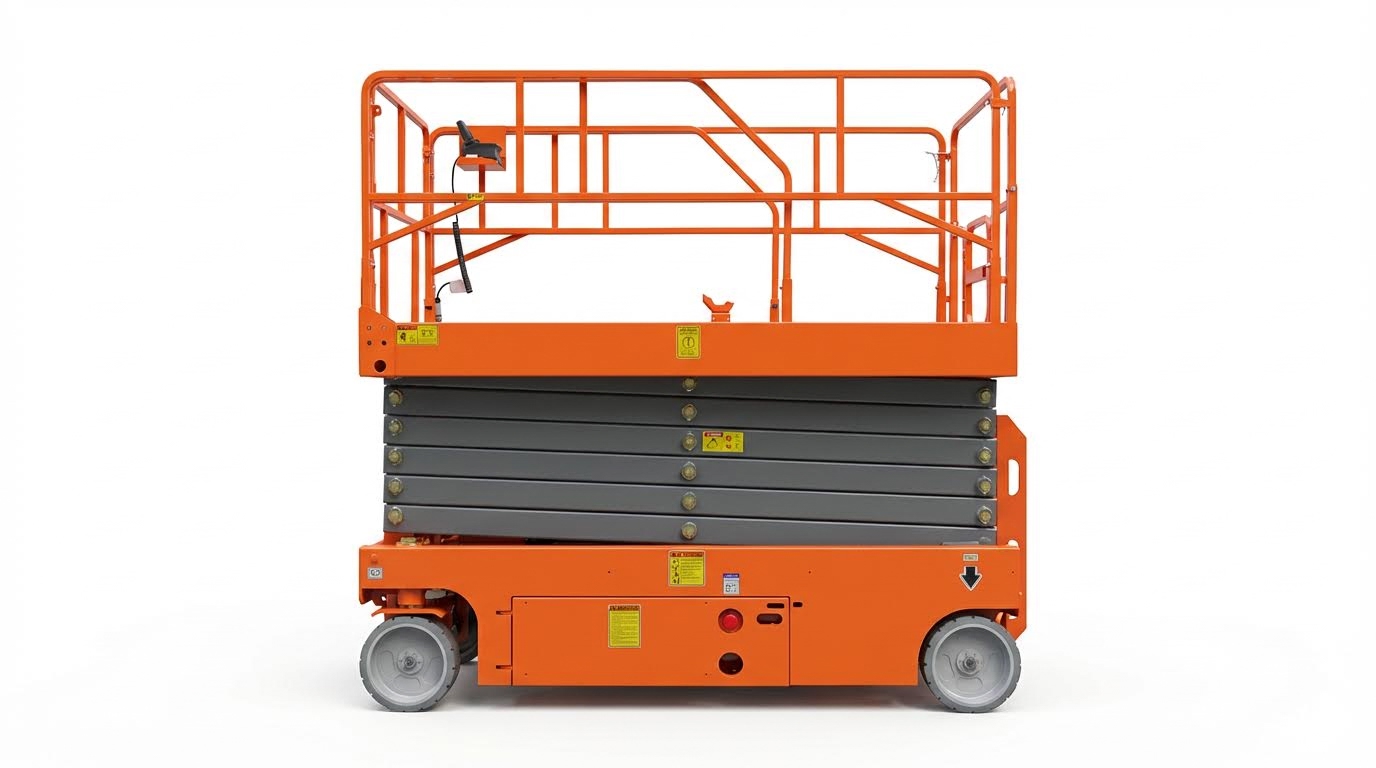
Driving, lifting, and load management on grades
Safe technique matters as much as machine choice when traveling on a slope mobile elevated work platform. The goals are simple: keep the center of gravity low, stay within the rated slope and load, and avoid sudden dynamic shocks.
- Always confirm the maximum allowable grade and elevated-grade limits in the operator’s manual and on the rating plate before entering a sloped area. The manual is normally stored in a weatherproof compartment on the MEWP.
- Measure the actual slope using an inclinometer or smartphone app before you drive the machine onto it. Digital tools can quickly calculate slope or grade percentage.
- Never operate the MEWP if the measured slope exceeds the manufacturer’s limit for that configuration (stowed or elevated). If the slope is too steep, you must relocate or use different equipment.
- Plan travel paths to go straight up or straight down the slope where possible; avoid driving across side slopes, which create higher rollover risk. Side slopes significantly increase tipping forces.
- Keep travel speed low on grades and avoid sudden steering, braking, or acceleration that could destabilize the platform.
- Do not lift while moving on a slope unless the manufacturer explicitly allows it; most guidance advises against lifting on the move. Lifting while traveling on slopes is a known tip-over contributor.
- When elevated on any incline, stay well below the maximum platform load and avoid adding suspended or side loads that can shift the center of gravity.
- Before driving onto bridges, suspended slabs, or truck decks, verify the surface load rating against the combined machine and payload weight. Overloading elevated surfaces is a common cause of instability.
- Never tether the platform to a building or structure to “hold” it on a slope; this can introduce dangerous side loads and prevent proper movement if the ground settles.
- Continuously monitor tilt indicators and alarms. If a tilt alarm sounds, stop, lower the platform, and move to level ground following the manufacturer’s sequence.
Typical elevated operation precautions on slopes
When the platform is raised on any grade, risk margins shrink. Many manufacturers limit elevated operation to very small grades, often around 5% or less, and only on firm, level, and verified ground. Outriggers or stabilizers, if fitted, must be fully deployed and secured before lifting. Operators should avoid potholes, transitions between hard and soft ground, and any obstacle that can cause one wheel or outrigger to drop suddenly. Best-practice guidance stresses slow, deliberate movement and strict respect of slope limits.
Selecting the right MEWP type and configuration
The safest way to work on slopes is to choose a MEWP whose design, drive system, and stabilizing method match the grade and ground conditions. Equipment selection should be based on required working height, outreach, surface type, and measured slope.
| Application / Site Condition | Preferred MEWP Characteristics | Engineering Rationale For Slopes |
|---|---|---|
| Indoor, smooth floors with mild ramps | Self-propelled scissor or vertical mast; non-marking tires; limited grade rating | Designed for flat, high-friction surfaces; modest grade capacity reduces risk on loading docks and access ramps. |
| Outdoor paved yard with moderate slopes | Rough-terrain scissor or boom; 4×4 or assisted traction; higher grade rating | Increased ground clearance and traction handle small irregularities; higher allowable grade in stowed travel. |
| Soft or uneven ground, construction sites | Crawler scissor or tracked boom; outriggers or stabilizers; large outrigger spread | Tracks reduce ground pressure; outriggers level the chassis and transfer loads through spreader pads. |
| Steep access roads but level working pad | Machine with strong gradeability for travel (e.g., rough-terrain) plus outriggers for final setup | Separates travel requirement (high tractive effort) from working requirement (level, stabilized base). |
| Confined urban sites with mixed ground quality | Compact boom or scissor with precise drive control; ability to use spreader plates under wheels or outriggers | Compact footprint plus controlled movement reduces dynamic loads on marginal pavements or covers. |
Gradeability and elevated slope limits differ by machine type and configuration. For example, some self-propelled scissor lifts can travel on smooth surfaces up to about a 25% grade in stowed condition, while crawler or off-road variants may handle grades of roughly 30–35% on suitable terrain, often with reduced load at the higher end. Manufacturers commonly require load derating at maximum grades and prohibit lifting on steep slopes.
- Use the site survey to match MEWP type to ground conditions: soft soil, backfilled trenches, suspended slabs, or hidden voids may require tracked units and larger spreader plates under outriggers.
- For tasks needing horizontal outreach on sloping ground, favor boom-type MEWPs with effective leveling systems and verified slope ratings rather than trying to “stretch” a scissor lift beyond its limits.
- When frequent repositioning is needed on grades, choose machines with fine drive modulation and strong braking to avoid sudden movements.
- On sites with variable or deteriorating ground (rain, thaw, heat-softened asphalt), select equipment that can be frequently repositioned and re-leveled without complex setup, and plan for temporary ground reinforcement where necessary. Steel plates, timber mats, or similar can spread outrigger or wheel loads.
- Confirm that any boom-supported MEWP used on a sloping site has a functional automatic level or tilt alarm, as required by applicable standards, and that operators understand the required response if the alarm activates. Standards require alarms when the base is more than a specified angle out of level.
Checklist for choosing a MEWP for sloping sites
Before committing to a specific MEWP on a sloping or uneven site, verify: required working height and outreach; maximum measured slope on access routes and at work positions; ground type and bearing capacity; need for outriggers, spreader plates, or temporary reinforcement; required gradeability for stowed travel; elevated slope limits and any load derating; and availability of tilt alarms, level sensors, and digital tools for quick access to manuals and checklists. Digital platforms can support correct selection and pre-use checks.
Final Considerations For MEWPs On Sloping Sites
Safe MEWP work on slopes depends on treating stability as a design limit, not a judgment call. Geometry, ground conditions, and load path all interact. Once you exceed the tested slope or load, the safety margin disappears very fast. Measuring grade, checking it against the rating plate, and following the manual turns those abstract limits into clear go/no‑go decisions.
Engineering controls then close the loop. Outriggers, spreader plates, and ground reinforcement create a wider, stiffer base so the machine can resist overturning forces. Tilt alarms and level sensors give real‑time feedback and must trigger an immediate response: stop, lower, and relocate. When operators respect those signals, the system works as designed.
Equipment choice and driving technique decide how close you run to the edge. Matching MEWP type to terrain, keeping the platform low while traveling, avoiding side slopes, and staying below rated load on any incline all cut risk. For Atomoving users and fleet owners, the best practice is clear: treat slope assessment as part of every site survey, select machines by measured grade and ground bearing, and enforce strict compliance with manuals and alarms. That disciplined, engineering‑led approach is what keeps MEWPs upright on challenging ground.
Frequently Asked Questions
What should you do if you are on a mobile elevated work platform and something is out of reach?
If something is out of reach while on a mobile elevated work platform, the safest action is to reposition the platform. Avoid leaning or extending outside the safety boundaries of the platform. Always prioritize safety in elevated work situations. Platform Safety Tips.
What personal protective equipment (PPE) should be worn when using a mobile elevated work platform?
Operators and platform workers should wear the correct PPE, including hard hats, safety harnesses, and non-slip footwear. Proper use of PPE minimizes the risk of injury and ensures a safer working environment. MEWP Safety Guide.
Can you operate a scissor lift on an incline?
Standard electric scissor lifts are designed to be safely operated on firm, level surfaces. The lift can only function on level ground, making the unit inoperable on inclines with the platform unable to be raised. Scissor Lift Safety Tips.