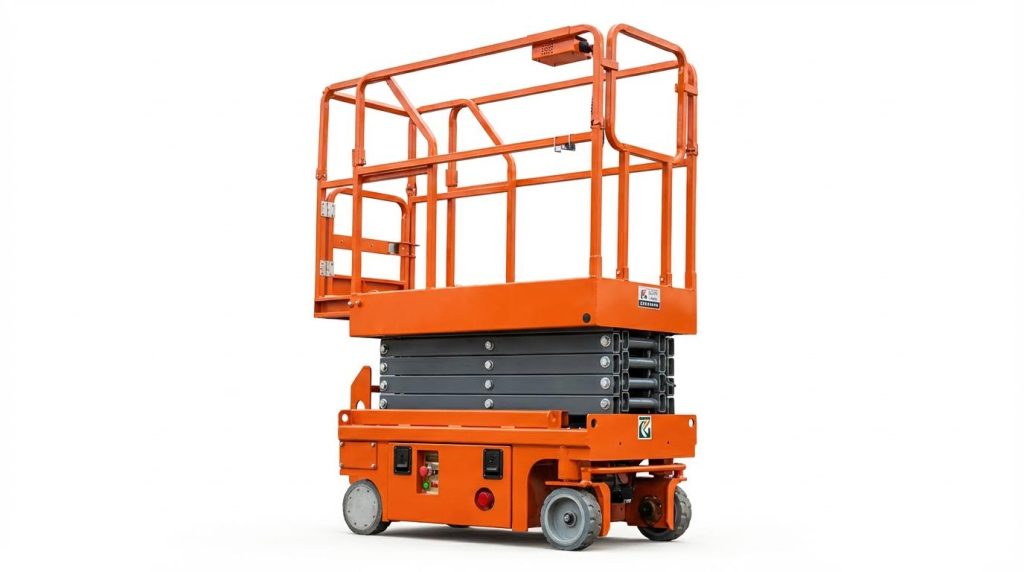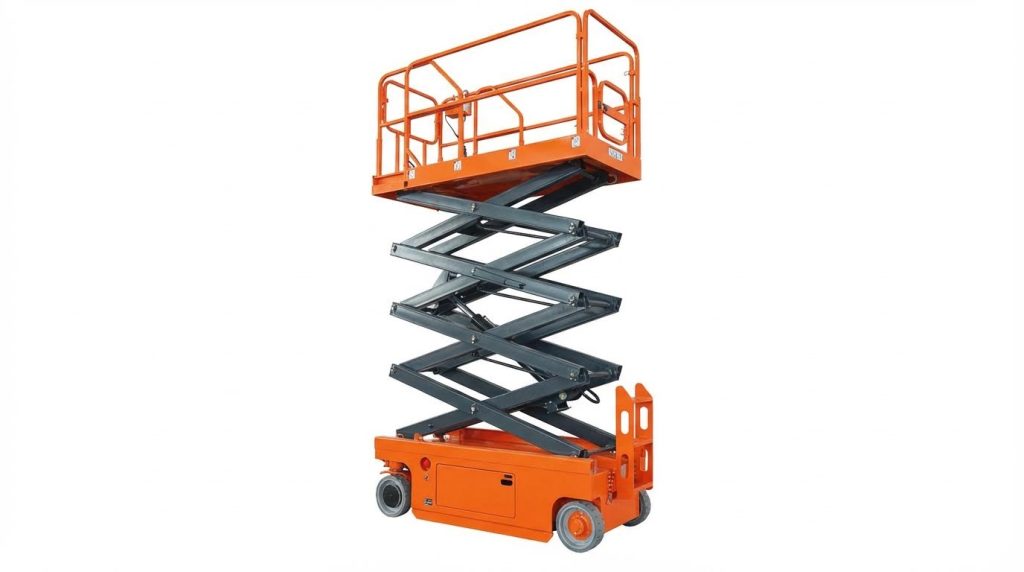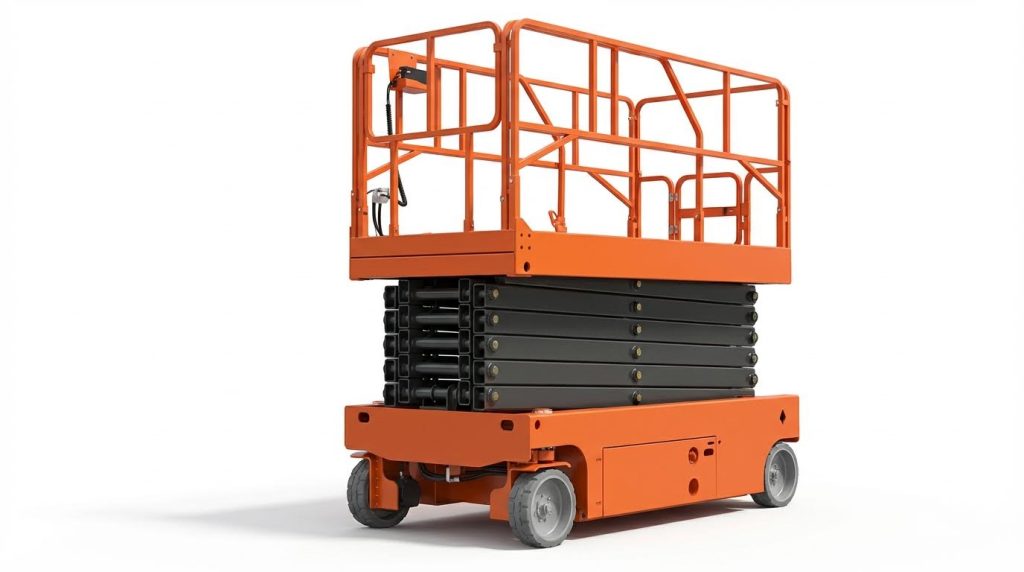
Knowing how to load a scissor platform safely is a mix of standards, physics, and disciplined procedure. This guide walks through the full process: from OSHA- and ANSI-aligned inspections and training, to engineering the right ramp angle, surface friction, and vehicle choice, to step‑by‑step loading, tie‑down geometry, and unloading. You will see where stability is won or lost, how to control risk on slopes and during braking, and how to secure the lift so it behaves as part of the truck, not as loose cargo. Use it as a practical field reference to make scissor platform lift transport safe, repeatable, and compliant.
“`html
Core Safety Standards Before Loading

Relevant OSHA And ANSI Requirements
Before you focus on how to load a scissor lift, you must align the equipment and procedures with OSHA and ANSI rules. These standards define how the lift is built, how it is stabilized, and how operators are protected from falls and tip-overs.
- Use a scissor lift that complies with applicable aerial lift design standards such as ANSI A92-series, which govern structural integrity, hydraulic and pneumatic safety factors, and critical component design to prevent free fall or uncontrolled motion. Critical hydraulic and pneumatic components must meet defined safety factors.
- Ensure all welding and structural repairs on the lift comply with recognized welding standards to avoid hidden structural weaknesses under transport loads. Welding must conform to applicable AWS standards.
- Provide fall protection whenever there is a risk of a worker being on the platform during loading, unloading, or pre-transport checks. Guardrails must be in place, and harnesses with lanyards must be anchored to approved points on the lift. OSHA requires guardrails and personal fall protection on scissor lifts.
- Stabilize the lift on a firm, level surface before any loading maneuver. Engage brakes and apply wheel chocks on slopes as required to meet OSHA expectations for tip-over prevention. Tip-over prevention guidance includes level setup and chocking on slopes.
- Respect manufacturer load limits at all times. The combined weight of the machine, any tools, and occupants during loading must not exceed rated capacities for the lift, the ramp, or the transport vehicle. Standards require strict adherence to manufacturer load limits.
- Keep the lift away from overhead power lines and energized conductors during staging and loading. OSHA aerial lift rules require clearance from electrical hazards and prohibit any modification that would reduce insulation or protective features. The insulated portion of an aerial lift must not be altered.
Why standards matter for loading and transport
OSHA and ANSI rules were written mainly for operation at height, but the same physics apply when you are driving up a ramp or securing the machine. High center of gravity, narrow wheelbase, and dynamic loads during braking and cornering make a scissor lift vulnerable if you ignore stability rules. Treat loading and transport as an extension of normal aerial lift safety, not a separate activity.
Pre-Transport Inspection And Lockout
A disciplined pre-transport inspection is the backbone of safe, repeatable scissor lift loading. It ensures the machine will not fail mechanically while climbing the ramp or while chained on the deck.
- Walk around the lift and check for leaks, loose parts, damaged tires, and structural cracks. Look especially at the base frame where chains or straps will attach. Pre-transport guidance calls for inspection of loose parts, leaks, and mechanical issues.
- Verify guardrails, toe boards, and access gates are in place and locked. This protects anyone who may step onto the platform for inspection or positioning before transport. OSHA requires guardrails on scissor lifts for fall protection.
- Test all controls and emergency stop functions before moving toward the ramp. Confirm drive, steer, lift, and brake functions respond correctly. Daily control testing is required to ensure safe working conditions.
- Lower the platform completely, retract any extensions, and secure the scissor stack with any provided transport pins or locking devices. This reduces height and removes the risk of unintended elevation during transport. Guidance recommends retracting and locking lift arms in the lowest position and lowering the platform fully.
- Disconnect or isolate power when the lift design or site rules require it, especially for long-distance transport or when maintenance is pending. Pre-transport steps include disconnecting power sources where applicable.
- Confirm the work area and travel path to the truck are free of holes, curbs, steep slopes, and overhead obstructions. Tip-over prevention guidance stresses inspection for curbs, slopes, holes, and uneven ground.
Basic pre-transport checklist (quick reference)
Use this short checklist every time you plan how to load a scissor lift for road transport.
- Visual inspection: leaks, damage, loose parts, tire condition.
- Controls and brakes: tested and functioning.
- Platform: fully lowered, extensions retracted, gates closed.
- Lockout: transport pins or mechanical locks engaged where provided.
- Power: disconnected or isolated if required by procedure.
- Path to truck: inspected and cleared of hazards.
Operator Training And Responsibilities
The best hardware and procedures still fail if the operator does not understand them. Training must cover both aerial work and the specific steps of loading, securing, and unloading.
- Ensure every operator has formal training on scissor lift operation, including load limits, hazard recognition, and basic maintenance needs. Training must cover weight limits, hazard navigation, and recognizing maintenance needs.
- Provide additional instruction on transport-specific topics: ramp use, approach speeds, spotter communication, and tie-down methods. This bridges the gap between standard aerial work and the physics of loading.
- Train workers on fall and electrical hazards, including how to keep clear of overhead power lines and how to use personal fall protection correctly if anyone is on the platform. Operator training must address electrical and fall risks, hazard precautions, and capacity limits.
- Make it clear that the operator is responsible for verifying brakes are set, wheel chocks are installed where needed, and outriggers or stabilizers are used according to the manual before anyone approaches the ramp. Outriggers and wheel chocks are part of standard tip-over prevention.
- Require operators to perform and document the daily control test and pre-transport inspection before each loading cycle. Standards call for daily testing of lift controls.
- Assign a spotter or signal person when visibility is limited on the ramp or trailer deck. Train both operator and spotter to use clear, agreed hand signals or radios so the machine never moves without coordinated communication.
Minimum training topics before allowing loading/transport
Before an employee is allowed to load a scissor lift, at minimum they should be trained on:
- Basic lift operation and emergency lowering.
- Manufacturer weight limits and center-of-gravity effects.
- Recognizing unstable ground, slopes, and edge hazards.
- Correct use of ramps, chocks, and brakes during loading.
- Selection and placement of chains and straps for transport.
- Fall protection use and electrical hazard awareness.
“`
Engineering The Loading Setup: Ramps And Vehicles
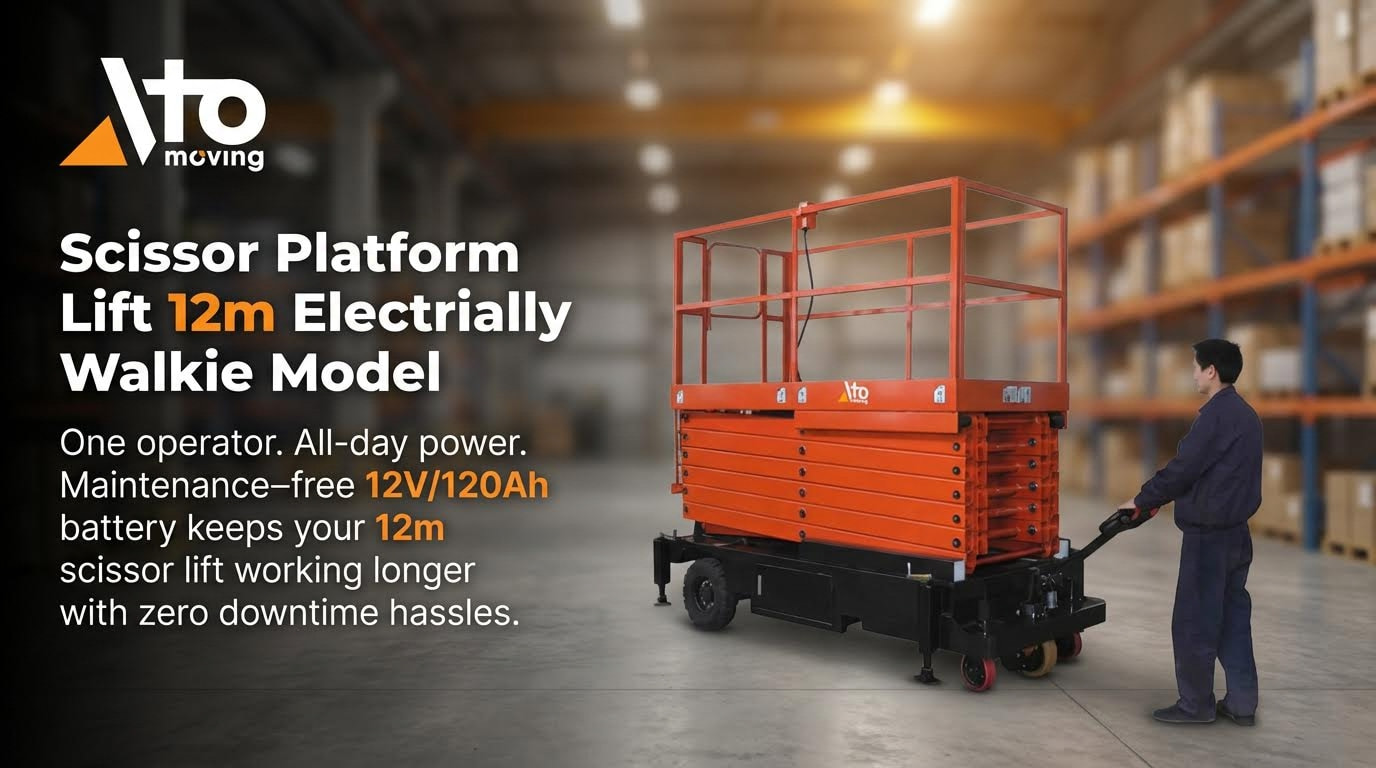
Engineering the loading setup is the backbone of safe, repeatable scissor lift transport. If you want to master how to load a scissor lift without incidents, you must match the lift to the right vehicle, ramp, and stabilization strategy. The goal is simple: keep the center of gravity low, supported, and under control from ground to deck and back again.
Choosing The Right Truck Or Trailer
Selecting the wrong vehicle is one of the fastest ways to overload axles, over-steepen ramps, or run out of deck length. Your choice should be driven by weight, wheelbase, and ground clearance of the scissor lift, plus your site conditions.
- Use a flatbed truck or trailer with a full-width deck and clear tie-down points.
- Confirm the vehicle’s payload rating exceeds the scissor lift’s operating weight plus any accessories. Overloading the transport vehicle is a primary risk factor.
- Prefer low-deck trailers to reduce ramp angle and improve stability when learning how to load a scissor lift.
- Ensure the deck is long enough so the lift sits fully on the bed with some buffer to the rear edge.
- Verify access for loading and unloading: turning radius, overhead clearance, and ground conditions where the truck will park.
Vehicle selection checklist for site planners
When planning a fleet or a recurring route, standardize on trailer types that match your most common scissor lift class. Confirm that typical job sites can accept the truck length and have a level pad for loading and unloading.
Key engineering considerations when pairing vehicle and lift include axle loading, deck deflection, and ramp geometry. You also need a parking area where the truck can sit level, away from overhead hazards and power lines. Scissor lifts must be positioned on stable, level surfaces and away from overhead hazards, and that principle extends to the transport vehicle location.
Ramp Capacity, Angle, And Surface Friction
The ramp is the most critical engineered component in the loading chain. It must safely carry weight, keep the angle within the lift’s gradeability limit, and provide enough friction so the tires do not slip.
| Ramp Parameter | Engineering Consideration | Typical / Example Data | Why It Matters For How To Load A Scissor Lift |
|---|---|---|---|
| Rated load capacity | Must exceed scissor lift operating weight with safety margin | Example: ramp supporting > 2 tons for heavy equipment demonstrates typical heavy-duty capacity | Prevents structural failure when the lift is mid-ramp, where bending moment is highest. |
| Ramp angle range | Must stay within lift manufacturer’s max grade rating | Adjustable test ramps can vary from 0° to 30° for different conditions | For transport, you normally keep angles low (often under 15°) to reduce rollback and tip risk. |
| Ramp length | Longer ramps reduce angle for a given deck height | Example: 27 m total length including a 3 m transition section on test ramps to smooth entry/exit | Longer, gentler ramps are safer for inexperienced operators and wet conditions. |
| Ramp width | Must exceed wheel track with steering margin | Example: 7 m wide test ramp gives generous maneuvering room for vehicles | Extra width allows for minor steering corrections without risk of dropping a wheel. |
| Surface friction / texture | Needs high friction under wet, dusty, or muddy tires | Surface roughness in the 16–36 grit range is used to enhance traction and prevent slippage on test ramps | High-friction surfaces reduce wheel spin and uncontrolled rollback while loading. |
| Edge protection | Prevents wheels from rolling off sides | Protective edges and guardrails are used on engineered ramps to contain vehicles | Critical when the lift is narrow relative to ramp width or when operators are inexperienced. |
In practical terms, when you plan how to load a scissor lift, you want the flattest ramp you can reasonably deploy. Portable ramps must be rated for the full weight of the lift, and they should be secured to the truck or trailer so they cannot kick out. If the ramp is not built-in, use a portable ramp explicitly rated for the lift’s weight and fix it in place before you move the machine. Portable ramps are standard practice when no integrated ramp exists.
- Confirm ramp capacity ≥ lift operating weight with at least a 25–50% engineering margin where possible.
- Keep ramp angle within the lift’s rated incline/grade limit, especially in wet or dusty conditions.
- Check surface condition: remove oil, mud, ice, and loose gravel that reduce friction.
- Use ramps with side curbs or edges whenever there is a risk of misalignment.
- Never improvise with pallets, loose planks, or un-rated steel sections as “temporary” ramps.
Why low ramp angles matter
As ramp angle increases, more of the lift’s weight acts parallel to the ramp, increasing the tendency to roll back. The center of gravity also shifts relative to the wheelbase, raising tip risk. Keeping angles low gives the operator more control and reduces dependence on perfect traction.
Positioning, Stabilization, And Brake Use
Even with the right truck and ramp, poor positioning and stabilization can turn loading into a high-risk task. The entire setup must be level, restrained, and free of external hazards before the lift moves an inch.
- Park the truck or trailer on firm, level ground, away from curbs, holes, or soft fill that could settle under load. Tip-over prevention starts with a stable, level surface and hazard inspection.
- Position the vehicle so the ramp line is straight, with no side slope across the ramp width.
- Engage the truck’s parking brake and, where applicable, apply air or mechanical parking brakes on the trailer.
- Install wheel chocks on the transport vehicle before loading, especially on any incline. Best practice for aerial equipment requires brakes set and chocks on inclines.
- Inspect the scissor lift’s own brakes and controls before starting the loading cycle. Controls and brakes should be tested before each shift.
Good positioning also includes overhead and side clearance. Keep the loading lane away from power lines and fixed obstacles. Scissor lifts should always be positioned away from power lines and overhead hazards, and this applies when they are being driven onto or off a trailer as well.
- Lower the platform fully and retract the lift structure before approaching the ramp. Preparing for transport includes lowering and locking the lift in its lowest position.
- Verify that all stabilizers, outriggers, or extendable components on the lift are stowed before driving onto the ramp. Outriggers should be properly stowed before moving mobile lifts.
- Keep the lift aligned with the ramp centerline; avoid steering corrections halfway up unless absolutely necessary.
- Use a spotter at ground level to monitor wheel position and clearances while you focus on smooth control inputs.
Brake strategy during loading
On level ground, you typically release the lift brakes only when you are ready to move and re-apply them immediately if you stop on the ramp. On steeper ramps or with heavier units, consider using a winch to assist motion so that the lift is always under positive control rather than relying solely on service brakes and traction. Winch-assisted loading is recommended for heavier lifts to maintain control.
When all three elements—vehicle, ramp, and stabilization—are engineered together, how to load a scissor lift becomes a controlled, repeatable process instead of a high-risk improvisation. The upfront planning time pays off every time the machine goes on or off the truck without incident.
Step-By-Step Loading, Securing, And Unloading
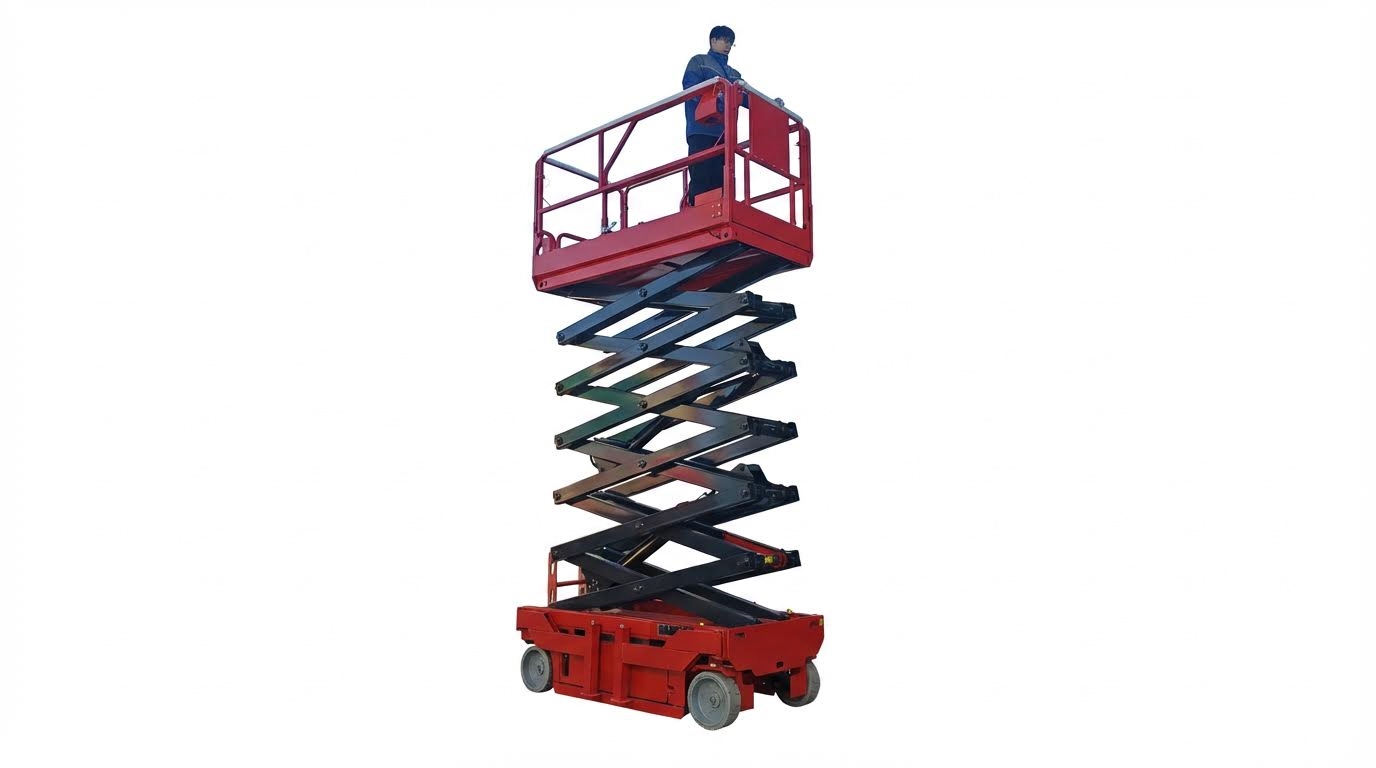
This section turns “how to load a scissor lift” into a repeatable field procedure. Use it as a checklist to control ramp travel, tie‑down geometry, and unloading risks.
Controlled Ascent And Descent On Ramps
Controlled movement on the ramp is the highest tip‑over and run‑off risk in the entire transport cycle. The goal is simple: keep the lift slow, straight, and fully stable from ground to deck and back.
- Park and prepare the transport vehicle
- Park on firm, level ground; set parking brake and deploy stabilizers or outriggers if fitted. Tip‑over prevention starts with a stable base.
- Chock trailer wheels on any slope to prevent movement. Wheel chocks are recommended on sloped surfaces.
- Verify ramp or beavertail is fully deployed and locked.
- Set up and verify the ramp
- Confirm ramp capacity exceeds lift weight (machine + fuel + any accessories).
- Keep ramp angle as shallow as site allows; steep angles increase backward flip risk.
- Check surface traction; use high‑friction or grit surfaces where possible. Rough surfaces in the 16–36 grit range improve traction.
- Confirm side rails or raised edges are in place to prevent run‑off. Protective edges keep vehicles from sliding off ramps.
- Prepare the scissor lift for ramp travel
- Lower the platform fully and retract/lock the scissor stack before moving. Transport should start with the platform fully lowered.
- Ensure guardrails and gates are closed and secure. OSHA requires guardrails as primary fall protection.
- Verify brakes and controls function correctly before approaching the ramp. Controls and brakes should be tested before each shift.
- Drive or winch up the ramp (loading)
- Keep the heaviest end of the lift facing uphill for better stability.
- Use the lowest travel speed and avoid sudden throttle or steering inputs.
- Travel in a straight line centered between ramp edges.
- For heavy or marginal‑traction situations, use a winch to pull the lift via approved attachment points. Winches add control on steeper ramps.
- Controlled descent (unloading)
- Back down slowly with the heavy end uphill, or follow manufacturer guidance.
- Use a spotter at ground level to watch ramp alignment and clearances.
- Avoid braking hard on the ramp; use smooth deceleration to prevent skidding.
Key ramp and movement safety checks
- Vehicle parked level, brakes set, wheels chocked.
- Ramp locked, capacity verified, surface provides good friction.
- Lift platform fully lowered and secured.
- Controls and brakes tested before movement.
- Use winch assist when traction, slope, or weight is questionable.
Tie-Down Points, Chains, And Strap Geometry
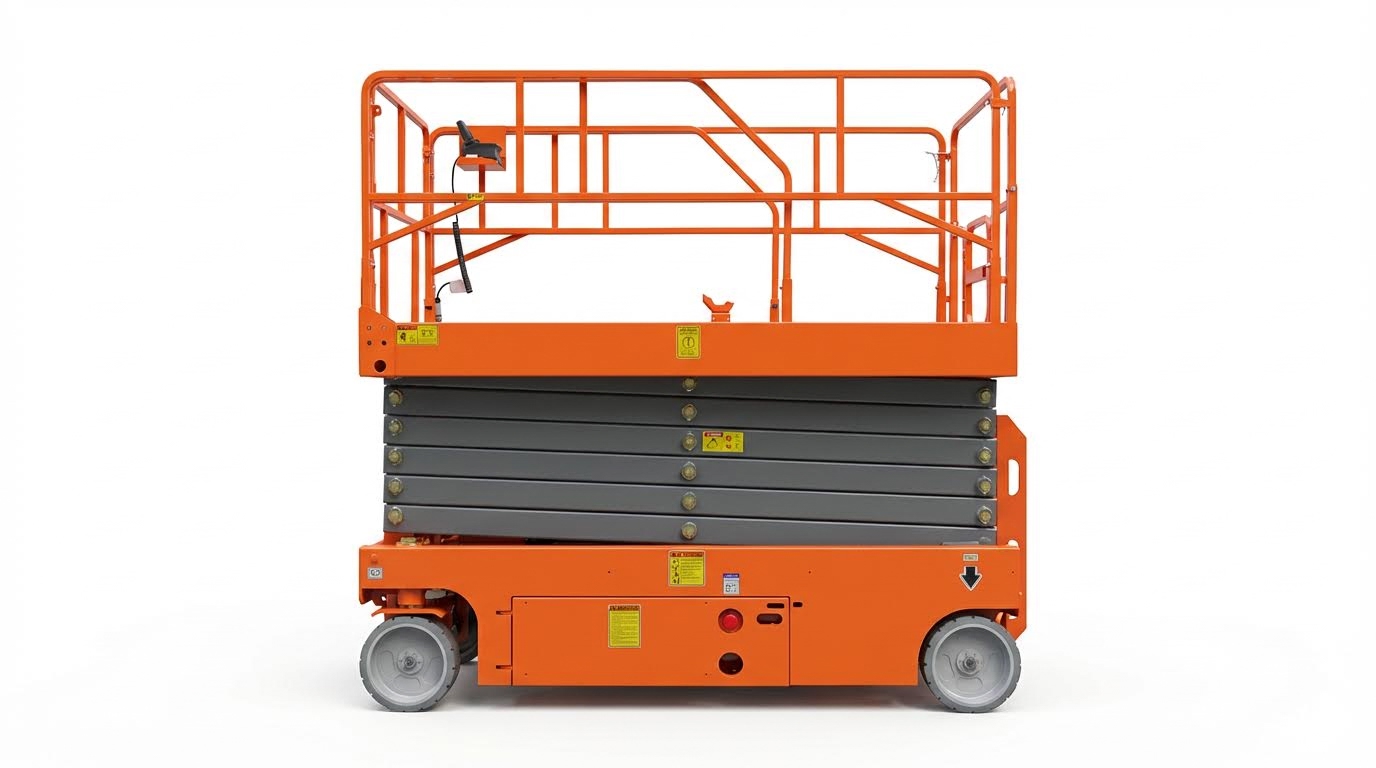
Once the lift is on the deck, securement is what keeps it there under braking, cornering, and impact loads. Understanding strap geometry is central to “how to load a scissor lift” safely for highway speeds.
| Aspect | Good Practice | Engineering Rationale |
|---|---|---|
| Tie‑down points | Use designated lugs or the base frame only | Structural members carry load without bending covers or guardrails |
| Number of tie‑downs | Minimum four (one in each quadrant) | Prevents movement in all directions and distributes forces |
| Strap / chain angle | 30°–60° from deck in both length and width directions | Creates downward clamp plus fore‑aft and lateral restraint |
| Front–rear pattern | Opposed “X” pattern where practical | Resists both forward and backward motion during braking and acceleration |
| Post‑tightening check | Push the lift by hand; no visible shift | Quick functional verification of tie‑down system |
- Positioning before tie‑down
- Park the lift centered on the deck with adequate clearance from trailer edges.
- Set the lift’s parking brake and, if needed, apply wheel chocks.
- Shut off power and remove key to prevent unintended movement.
- Selecting and attaching chains/straps
- Use heavy‑duty ratchet straps or chains rated above the lift’s total weight. Guidance recommends heavy‑duty chains or ratchet straps.
- Attach only to strong points such as the base frame; avoid guardrails, doors, or control boxes. Weak or movable parts must not be used as anchor points.
- Keep straps away from sharp edges or protect them with sleeves.
- Creating effective strap geometry
- Run front tie‑downs forward and outward; rear tie‑downs backward and outward.
- Aim for downward angle so each strap adds vertical clamping force.
- Use an “X” pattern where space allows to resist side loads in turns.
- Tensioning and verification
- Ratchet each strap or chain evenly; avoid over‑tightening that could damage components.
- After initial tension, recheck all binders in sequence.
- Try to rock the lift by pushing at the platform; movement indicates more tension or additional tie‑downs are needed. A gentle push test is recommended after securing.
Common tie‑down mistakes to avoid
- Hooking to guardrails or platform structure instead of the base frame.
- Using too few tie‑downs for the lift’s weight and height.
- Running straps nearly horizontal, which gives little downward clamping force.
- Allowing chains or straps to rub on sharp deck edges.
En Route Checks, Height Limits, And Unloading
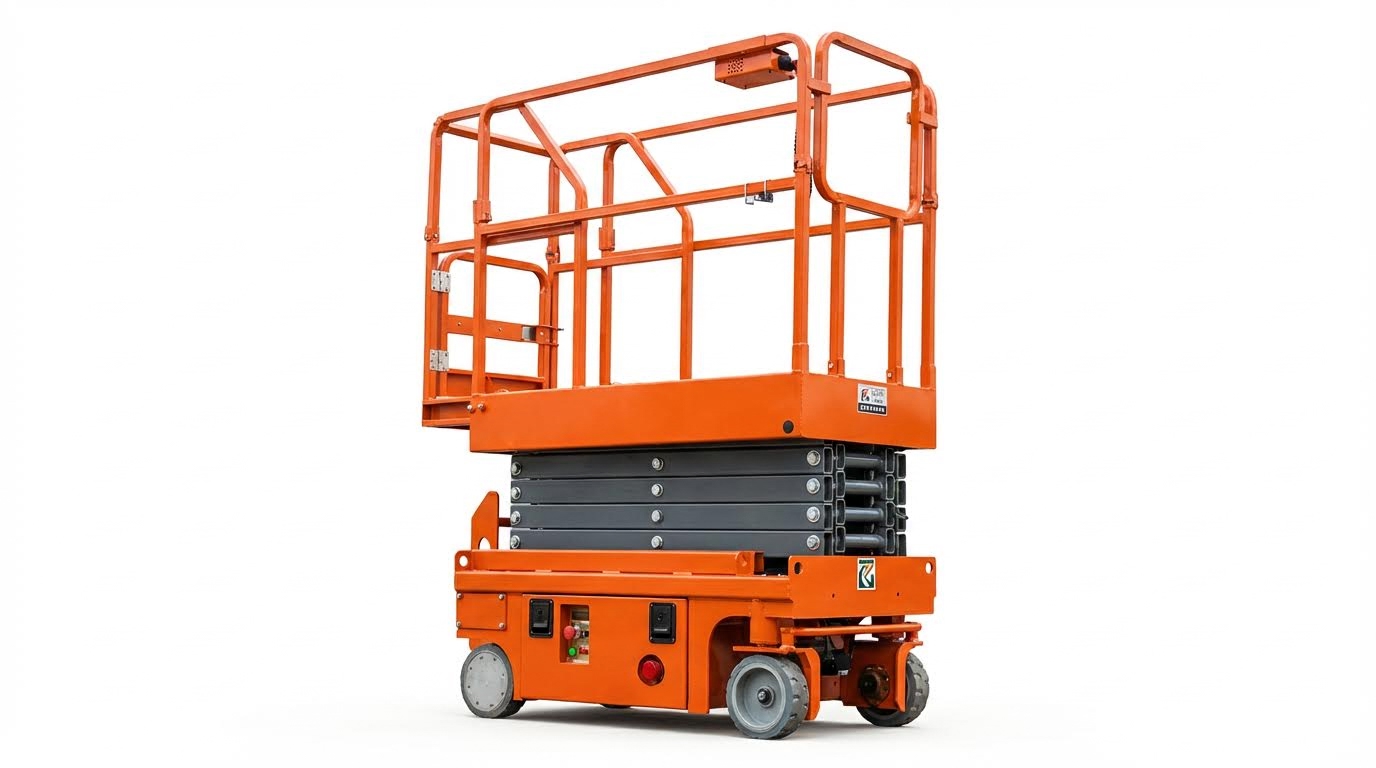
The transport risk does not end once the lift is tied down. Road shocks, vibration, and weather can loosen securement, and bridge or tunnel clearances can become critical if you misjudge total height.
- Pre‑departure checks
- Confirm platform is fully lowered and locked, with no loose materials on the deck. Preparation before transport includes lowering and locking the platform.
- Verify brakes on the lift are set and any wheel chocks are correctly placed.
- Walk around the rig to check all chains, straps, and binders are locked.
- Height, width, and route planning
- Measure total transport height (deck + lift) and compare with route restrictions.
- Plan a route that avoids low bridges, tight tunnels, and narrow lanes where possible. Transport guidance emphasizes monitoring height and width limits.
- Consider weather and wind, especially for taller lifts; high crosswinds increase rollover risk. Operation in high winds above 25–28 mph is discouraged.
- Driving and en route inspections
- Drive smoothly, avoid sudden braking, sharp turns, or high speeds, especially on rough roads. Safe transport calls for cautious driving and avoiding sudden movements.
- Stop after the first 10–20 minutes to re‑check and retighten tie‑downs as they settle.
- On long trips, inspect chains and straps at each fuel or rest stop.
- Safe unloading sequence
- Park on a flat, level surface away from overhead power lines or obstacles. Position lifts away from power lines and fixed hazards.
- Set vehicle brakes, deploy stabilizers if fitted, and chock wheels.
- Only then release chains and straps, standing clear of the line of tension.
- Deploy and lock the ramp, verify traction, and inspect the ground for holes, slopes, or debris where the lift will roll. Worksite inspection for curbs, slopes, and holes reduces tip‑over risk.
- Guide the lift slowly down the ramp, using a winch for control if conditions are marginal. Winch‑assisted unloading is recommended in some cases.
Quick end‑of‑job checklist
- No damage to ramp, deck, or tie‑down hardware.
- Lift inspected for leaks or new defects after travel.
- All keys, controls, and safety systems ready for the next use.
- Transport and loading notes captured to improve the next move.
Final Considerations For Safe, Repeatable Transport
Safe scissor lift transport depends on how well you connect standards, engineering, and field discipline. OSHA and ANSI rules define the baseline: stable setup, guarded platforms, and trained operators. Your ramp and vehicle choices then turn those rules into physics that work in your favor. Low ramp angles, high‑friction surfaces, and level parking keep the center of gravity inside the wheelbase and reduce rollback risk.
Tie‑down geometry finishes the job. When you choose strong anchor points, use at least four rated chains or straps, and set proper angles, the lift behaves like part of the truck under braking and cornering. Regular checks during the trip catch loosening before it becomes movement.
The best practice for operations teams is simple but strict. Treat every move as a repeatable procedure, not a one‑off task. Use written checklists for inspection, ramp setup, loading, securement, and unloading. Train operators and spotters together and audit real jobs, not just paperwork. When you apply these steps consistently, your Atomoving scissor platforms travel as safely on the road as they work at height on site.
Frequently Asked Questions
How do you load a scissor lift onto a trailer?
Loading a scissor lift requires proper equipment and safety measures. The best option is to use a dedicated scissor lift trailer, as standard trailers like hydraulic tipping or tradesman models are not suitable. Ensure the trailer has a ramp designed for heavy equipment loading. Secure the scissor lift with straps or chains to prevent movement during transport.
- Use a dedicated scissor lift trailer for safe transport.
- Avoid using unsuitable trailers like hydraulic tipping models.
- Secure the lift with straps or chains to prevent shifting.
For more details on transportation methods, refer to this guide: Scissor Lift Transport Tips.
What factors determine the allowable load for a scissor lift?
The allowable load of a scissor lift depends on its design specifications and calculations. A common formula used is W = Load to be lifted, where structural parameters such as arm length (L), angle (α), and other forces are considered. Always check the manufacturer’s load rating before operation.
- Check the manufacturer’s specified load capacity.
- Understand the structural calculations involved in load determination.
For an in-depth explanation of these calculations, see: Scissor Lift Load Calculations.