This ladders and elevated working platforms guide gives safety officers a structured way to control fall risk, standardize equipment, and meet regulatory duties. You will see how design loads, stability, and common failure modes translate into practical rules for selection, training, and inspection. The article links engineering concepts with real-world incident patterns so you can justify controls, procurement choices, and safe work methods. Use it as a reference when writing procedures, auditing sites, or briefing supervisors on safe elevated access.
Core Concepts In Elevated Access Safety
Key Definitions And Equipment Types
For any ladders and elevated working platforms guide aimed at safety officers, clear definitions are the starting point. Elevated access equipment falls into a few core groups, each with distinct risk profiles and control measures.
- Ladders
Includes portable step, extension, and fixed ladders. Portable ladders must only be used for the applications for which they were designed, and must not be loaded beyond their working load rating (intended use and maximum load). Conductive (metal) ladders are prohibited near exposed energized lines unless a nonconductive ladder would create a greater hazard (conductive ladders). - Work platforms and scaffolding
Modular work platforms provide a walkable surface with integrated guardrails and anti-slip, self-draining treads that are designed to be non-bounce and corrosion resistant (platform stability features). Traditional scaffolds offer larger work areas but rely heavily on correct assembly, guardrails, and plank condition to avoid catastrophic falls (scaffold safety risks). - Elevating work platforms and MEWPs
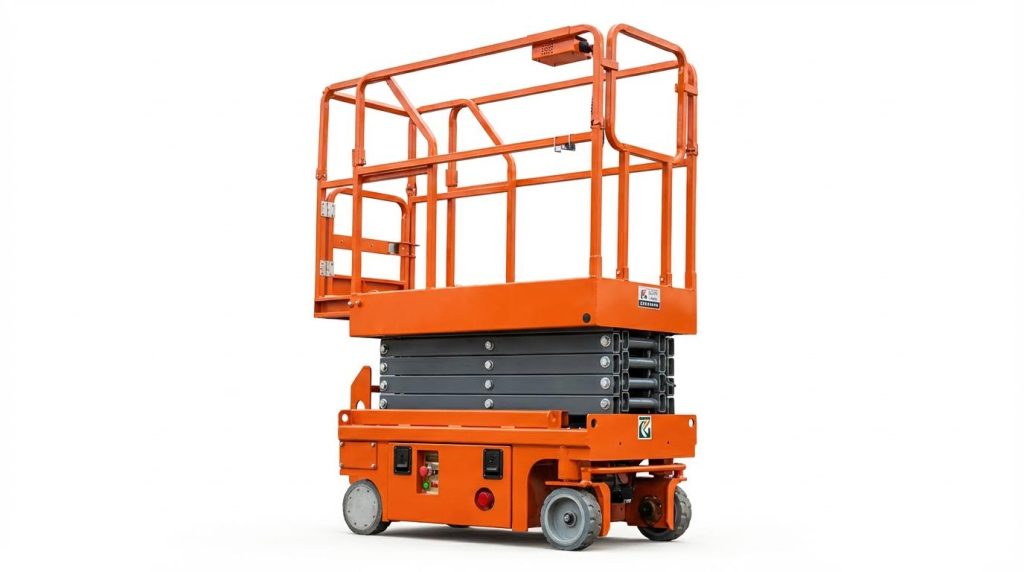
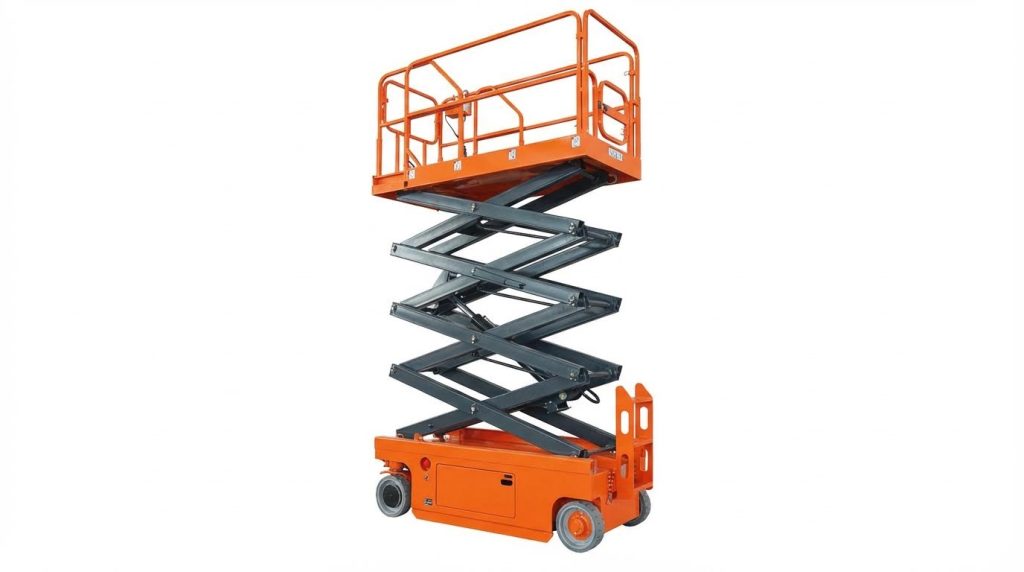
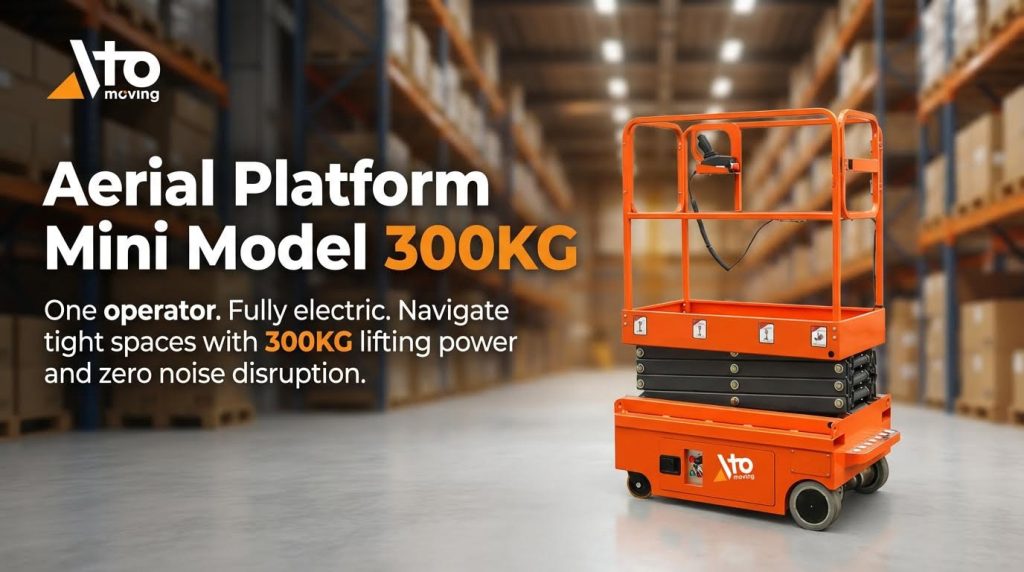
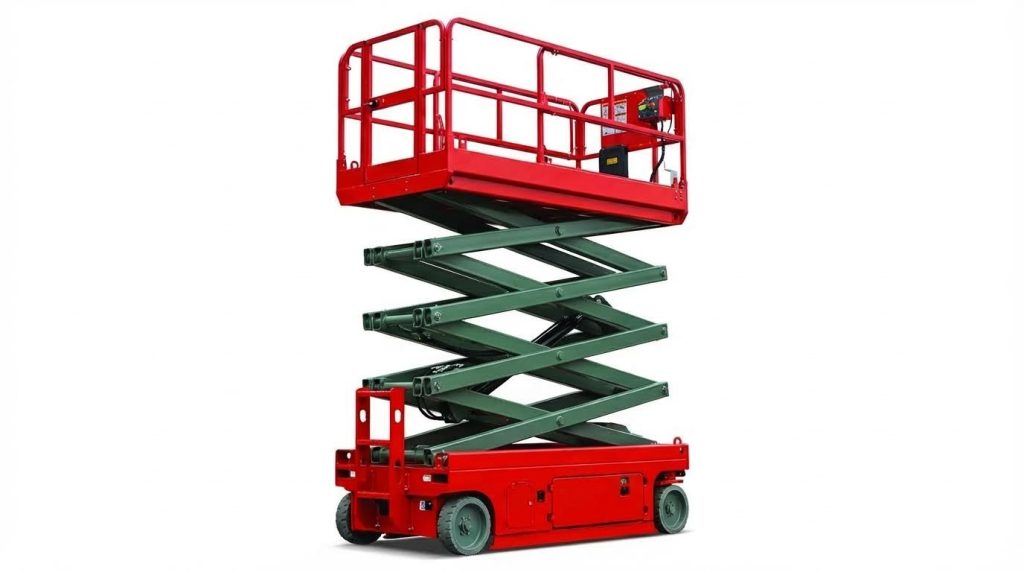
Elevating platforms and mobile elevating work platforms (MEWPs) include scissor lifts and boom-type devices. Aerial lifts are defined to include extendable boom platforms, aerial ladders, articulating boom platforms, vertical towers, and combinations of these aerial platform. These systems integrate guardrails, harness attachment points, and automatic controls to improve stability and reduce fall risk compared with basic ladders or scaffolds (safety advantages of elevating platforms).
Why these definitions matter for safety officers
Ladders demand three points of contact and careful positioning, and misuse such as overreaching or poor angle is a major cause of falls (ladder safety requirements). Platforms and MEWPs shift risk from balance and body position to engineering controls, inspection quality, and operator training. Knowing which category a piece of equipment falls into allows you to apply the right standard, inspection regime, and training content in your internal ladders and elevated working platforms guide.
Regulatory Framework And Design Loads
For elevated access, design loads and regulatory limits define what “safe” means in measurable terms. Safety officers should translate these rules into simple site standards and pre-use checks.
| Equipment Type | Key Regulatory Load Requirement | Practical Safety Implication |
|---|---|---|
| Portable ladders | Must support at least four times the maximum intended load for most types; extra-heavy-duty type 1A metal or plastic ladders must sustain at least 3.3 times the maximum intended load (portable ladder design load). | Never exceed the manufacturer’s rated capacity, and factor in tools, PPE, and materials in the “intended load.” |
| Fixed ladders | Must support at least two loads of 250 lb each between any two attachments, plus any additional anticipated loads (fixed ladder design load). | Design and inspection must assume at least two workers in the same span, plus tools or rescue loads. |
| Portable ladders & platforms (utility work) | May not be loaded beyond the working loads for which they are designed and must be secured to prevent dislodgement (maximum load and securing in place). | Require both capacity checks and positive restraint (ties, anti-slip feet, or other securing methods). |
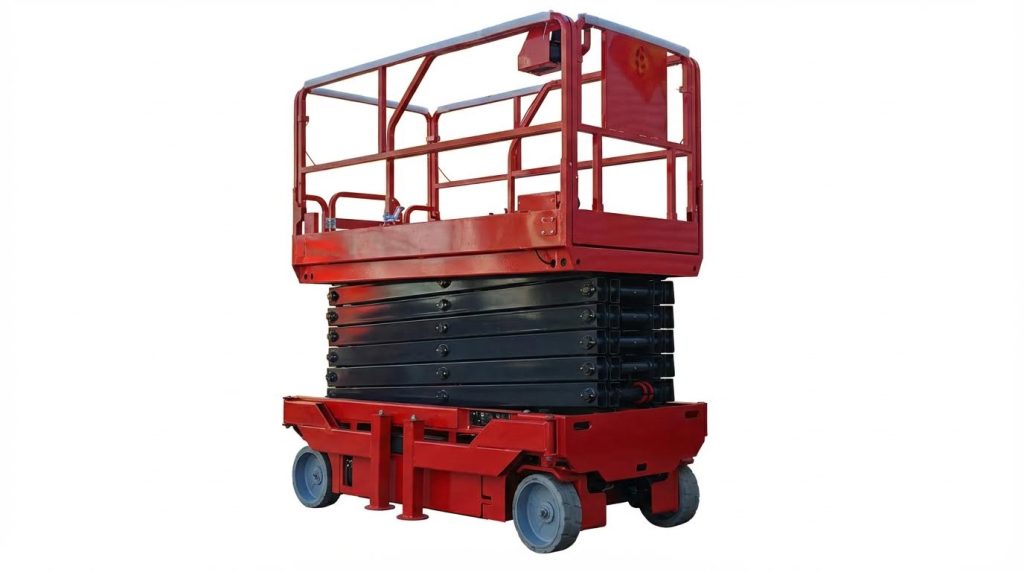
For scissor platform and MEWPs, regulations and guidance focus on system-level hazards rather than just static load values. Key requirements include:
- Load and stability – Operators must not exceed load-capacity limits and must not use the lift as a crane or carry oversized objects that affect stability (operation, traveling, loading). Outriggers must be set on solid surfaces, with brakes engaged and wheel chocks used on slopes to maintain stability in the work zone (stability in work zone).
- Electrical and overhead hazards – Metal ladders are restricted near energized lines, and aerial lift operators must treat all overhead lines as energized and stay at least 10 ft away, or ensure de-energization by the utility (conductive ladders) (overhead protection).
- Training and inspection – Aerial lift training must cover electrical, fall, struck-by, and falling-object hazards; maximum intended load and capacity; and how to inspect the equipment before use (training requirements). Pre-start inspections must verify both vehicle components and lift systems, including controls, hydraulic systems, guardrails, placards, and emergency devices (pre-start inspection).
How to use this framework in your internal procedures
Convert regulatory load factors into simple selection rules, such as “never exceed the ladder’s duty rating, including tools” and “use MEWPs where frequent repositioning or heavy tools are involved.” Integrate OSHA ladder and aerial lift requirements into checklists and toolbox talks, emphasizing that falls from ladders alone caused over 160 fatalities and nearly 17,000 serious injuries in a recent year (workplace fall statistics). This ties the regulatory framework directly to your ladders and elevated working platforms guide and to day-to-day risk reduction.
Engineering, Risk, And Compliance Deep Dive
Structural Design, Load Ratings, And Stability
From an engineering standpoint, ladders, work platforms, and MEWPs must be selected and used so that actual loads always remain below the rated design load, with the required safety factors. Portable ladders in construction, for example, must support at least four times the maximum intended load, while extra‑heavy‑duty type 1A metal or plastic ladders must sustain at least 3.3 times that load (29 CFR 1926.1053). Fixed ladders must support two 250‑pound loads between any two attachments, plus other anticipated loads, so safety officers should verify that anchorage, wall fixings, and cage or fall‑arrest systems are compatible with these requirements. For MEWPs and aerial lifts, stability depends on a combination of structural strength, center of gravity, and support conditions; outriggers must be set on solid pads, brakes engaged, and wheel chocks used on slopes to maintain stability in the work zone OSHA aerial lifts guidance. In a ladders and elevated working platforms guide, it is critical to emphasize that equipment may not be loaded beyond its working load and must only be used for its intended application, with non‑conductive designs selected where there is any risk of contact with energized equipment OSHA 1926.955.
Common Failure Modes And Accident Causation
Most serious incidents on ladders and elevated work platforms arise from a small number of repeatable failure modes. For ladders, typical causes include overreaching, incorrect setup angle, slippery rungs, and failure to maintain three points of contact, all of which increase the chance of tipping or sudden loss of balance ladder safety analysis. Falls from ladders accounted for 161 fatalities and about 16,930 injury cases with days away from work in 2020, while falls from scaffolds caused 52 fatalities and roughly 4,500 injuries, highlighting why substitution with more stable platforms is often justified on a risk basis 2020 fall statistics. For aerial lifts and MEWPs, dominant hazards include falls from the platform, objects falling from height, tip‑overs, ejections, structural failures, electric shock, and entanglement or impact with overhead objects OSHA aerial lift hazards. A robust ladders and elevated working platforms guide should therefore link each failure mode to specific controls, such as securing portable ladders against displacement, prohibiting conductive ladders near energized lines, enforcing guardrail use, and ensuring fall‑arrest systems are correctly anchored to approved points.
Inspection, Maintenance, And Emerging Technologies
Engineering controls only work if equipment remains in the condition assumed by the design, which makes structured inspection and maintenance central to risk management. For MEWPs, daily or pre‑shift checks should cover vehicle systems (fluids, wheels, brakes, steering, alarms) and lift components (operating and emergency controls, guardrails, personal protective devices, hydraulic systems, fasteners, cables, and stabilizers) before the platform is released for use pre‑start inspection guidance. More detailed post‑project inspections should add structural checks for cracks, dents, loose bolts, tire or track wear, hydraulic leaks, decal legibility, and verification that all safety devices, tilt sensors, load‑sensing systems, and emergency stops operate correctly, with findings documented and maintenance scheduled before redeployment MEWP inspection practices. For modular platforms and fixed access systems, safety officers should require periodic verification of anti‑slip surfaces, guardrail integrity, corrosion, and any field modifications, using standardized checklists or digital inspection templates to ensure consistency across sites inspection template concepts. Emerging technologies such as integrated load‑sensing, telematics for usage tracking, and smart inspection workflows can help safety officers move from reactive repairs to predictive maintenance, embedding compliance into everyday operation of all ladders and elevated work platforms. Consider utilizing tools like aerial platform, scissor platform, and manual pallet jack to enhance operational efficiency and safety.
Selecting The Right Solution For Each Task
Risk-Based Selection: Ladder Vs Platform Vs MEWP
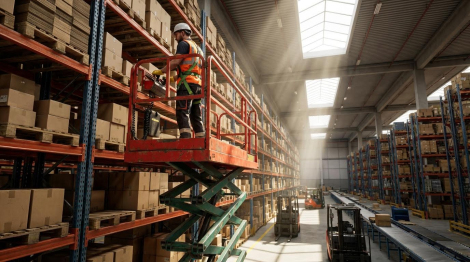
For a safety officer, the core decision is not “what is available?” but “what controls risk to an acceptable level for this task?”. Ladders, work platforms, and MEWPs each sit at a different point on the risk hierarchy, and the ladders and elevated working platforms guide should reflect that. Ladders are suitable only for short-duration, light work where the user can maintain three points of contact and avoid overreaching. Fixed or modular platforms and MEWPs are generally preferred where work is repetitive, at height for more than a few minutes, involves tools or materials, or requires both hands free.
- Ladders: use only for low-risk, short tasks, with light tools and materials, and when users can maintain three points of contact. They must not be loaded beyond their design working load and must be used only for their intended purpose (no overloading, no misuse). Portable ladders must also be secured to prevent displacement in use (secured in place).
- Work platforms (fixed or modular): provide a stable, guarded work surface and are better when work at height is frequent, prolonged, or requires handling materials. Modular platforms with non-slip, self-draining treads and OSHA-compliant guardrails significantly reduce slip and fall risk compared with ladders or basic scaffolds (anti-slip treads and guardrails).
- MEWPs (aerial lifts, scissor lifts, booms): are generally the safest choice for high elevation, complex access, or where workers need to carry tools and materials. They offer guardrails, fall-arrest anchorage, and engineered stability, and can reach heights beyond 20 m, far exceeding typical ladders or small platforms (height capability and stability).
Risk-based selection should explicitly consider fall consequence and exposure time. Falls from ladders have historically produced far more fatalities and serious injuries than falls from properly designed platforms, due to instability and misuse such as overreaching or incorrect angle (ladder accident causation). Where the task is repetitive or involves more than occasional repositioning, a platform or MEWP normally offers both lower risk and higher productivity because workers are not constantly climbing, descending, and moving equipment (efficiency comparison). Your internal ladders and elevated working platforms guide should therefore push users toward platforms or MEWPs by default for anything beyond very short, low-risk tasks.
Practical Criteria For Procurement And Standardization
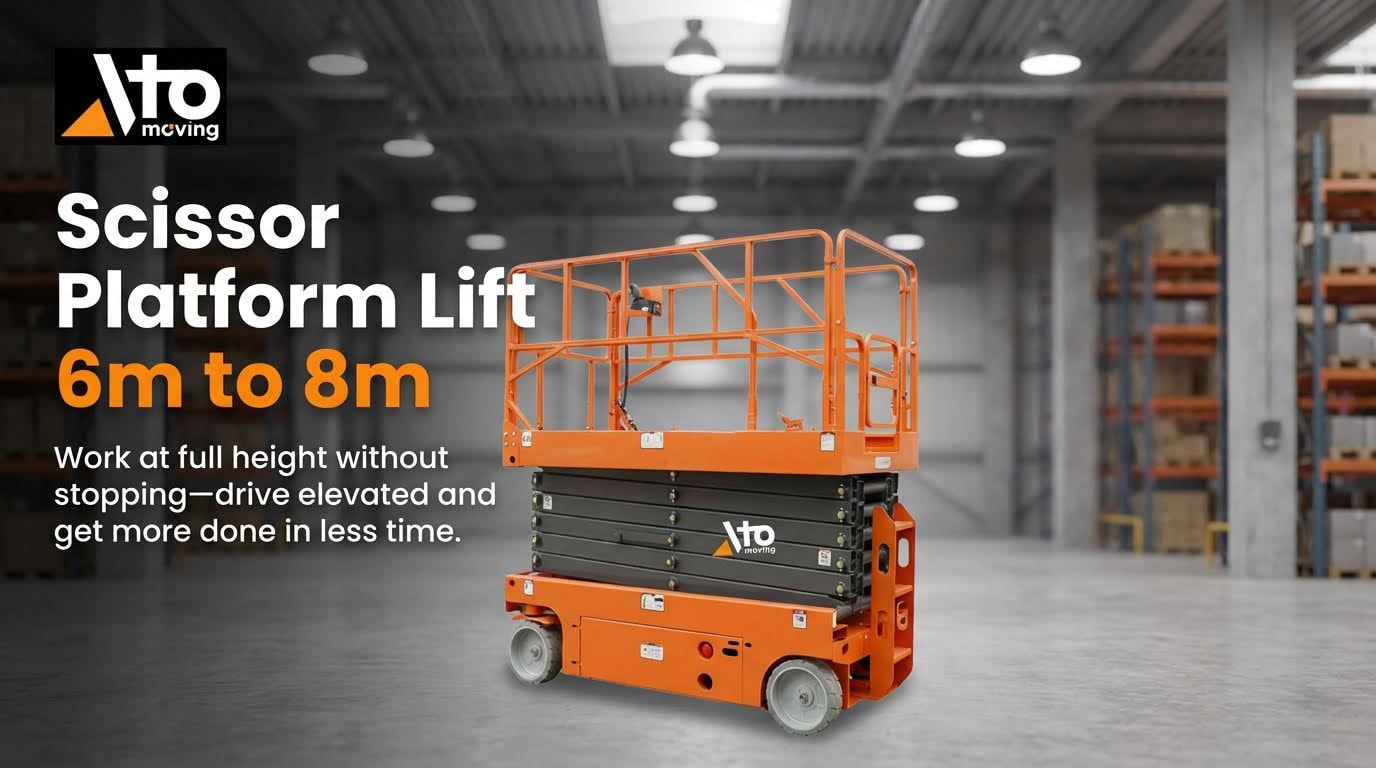
From a fleet-planning view, safety officers should define a standard decision matrix so supervisors do not improvise at job level. The matrix should weigh height, reach, task duration, load, environment, and frequency of use. It should also bake in regulatory constraints, such as design load factors for ladders and the need to keep conductive ladders away from energized systems (portable and fixed ladder design loads) (conductive ladder restrictions).
Key selection and procurement criteria
- Height and reach envelope: Above roughly 2–3 m working height, prioritize guarded platforms or MEWPs. For very high work (e.g., over 10–12 m), plan for MEWPs as the default, given their superior reach and integrated fall protection (platform height capability).
- Task duration and frequency: For tasks repeated daily or lasting more than a few minutes per job, invest in modular access platforms or MEWPs. They reduce time wasted on repositioning and climbing and improve productivity for multi-hour tasks (efficiency of platforms vs ladders).
- Load and tooling: Ladders should only be used within their rated working load, which by regulation is below the design load safety factor of at least 3.3–4.0 times the maximum intended load for many portable ladders (ladder design load factors). Where workers must handle heavy components or multiple tools, platforms or MEWPs with rated platform capacity are the safer procurement choice.
- Mobility and layout: For fixed production lines or repetitive maintenance points, modular platforms with guardrails and optional locking casters can serve multiple stations, eliminating many ladder tasks while retaining mobility (platform mobility options).
- Environmental and electrical hazards: In areas with overhead power lines or energized equipment, specify nonconductive access equipment and favor MEWPs or platforms that allow safe stand-off distances and integrated fall protection, while respecting minimum approach distances to power lines (aerial lift electrical hazards and clearances).
To support standardization, many organizations adopt a simple table in their internal ladders and elevated working platforms guide that maps common tasks to approved equipment types and minimum controls. Procurement then targets a limited set of ladder types, modular platform modules, and MEWPs that cover these use cases, simplifying training and inspection. Aligning purchases with inspection templates and checklists for MEWPs and platforms ensures that every asset can be managed under a consistent regime of pre-use inspection, maintenance scheduling, and documentation for regulatory compliance (inspection templates for elevated work platforms)..
“”
Final Recommendations For Safety Officers
Safety officers should treat elevated access as an engineered system, not a collection of tools. Load ratings, stability limits, and electrical clearances set hard boundaries that procedures and supervision must enforce. When you respect these limits, you keep structural margins intact and prevent tip-overs, collapses, and electric shocks.
Use ladders only for short, low-load tasks where workers can maintain three points of contact. For repeated work, higher elevations, or heavier tools, move up the hierarchy to guarded platforms or MEWPs. This shift cuts exposure to the most common ladder failure modes and aligns with incident data and regulatory expectations.
Build a standard selection matrix and link it to procurement. Stock fewer ladder types and more modular platforms and MEWPs that match your main task profiles. Pair each asset type with a clear inspection checklist, training module, and maintenance plan.
Finally, use technology to lock in these controls. Integrated load-sensing, telematics, and digital inspections help you verify that equipment like Atomoving aerial and scissor platforms operates within design limits. When selection, design loads, and inspection work together, elevated access becomes predictable, defensible, and far safer across all sites.
Frequently Asked Questions
What is an elevated work platform?
An elevated work platform (EWP) is a device used to lift and position workers above ground level. These platforms are also commonly referred to as aerial work platforms or lifts. Examples include scissor lifts, boom lifts, and other aerial devices. They can be vehicle-mounted or self-propelled and may feature telescoping, articulating, or both types of movement. NL OHS Guide.
Is scaffolding considered an elevated work platform?
Scaffolding is a temporary elevated platform used to support workers and materials at height. While it serves a similar purpose to EWPs, it is not classified as an EWP because it is typically stationary and assembled on-site. However, like EWPs, scaffolding often includes guardrails to protect workers from falls. WorkSafeNB Scaffolding Guide.
What safety practices should be followed when using elevated work platforms?
When working on elevated platforms, always wear the appropriate personal protective equipment (PPE). Use proper fall protection, such as a full-body harness, and attach it to designated anchor points. Ensure the harness is properly adjusted and paired with a suitable lanyard or self-retracting lifeline to minimize fall risks. SEGAMAC Safety Tips.