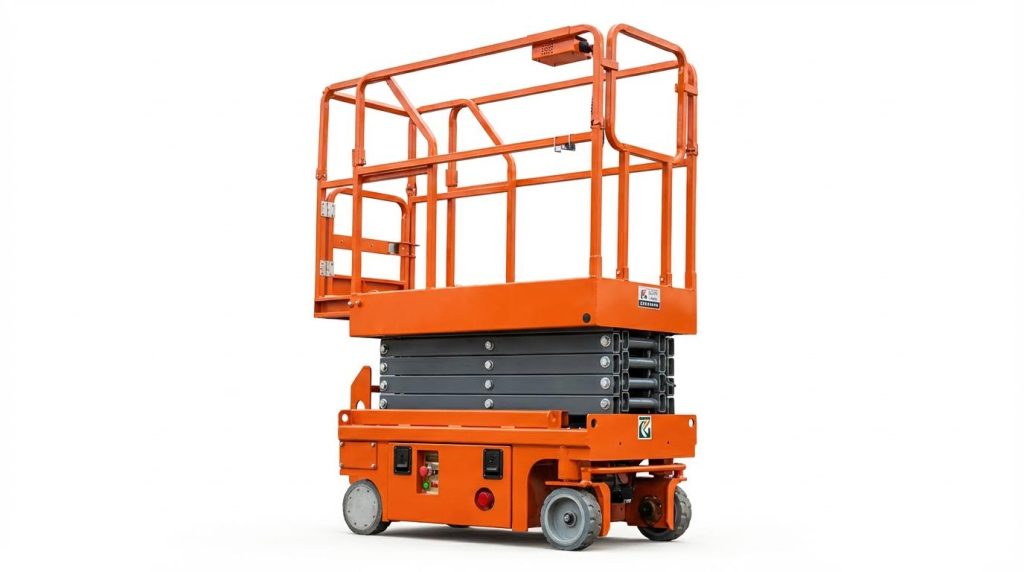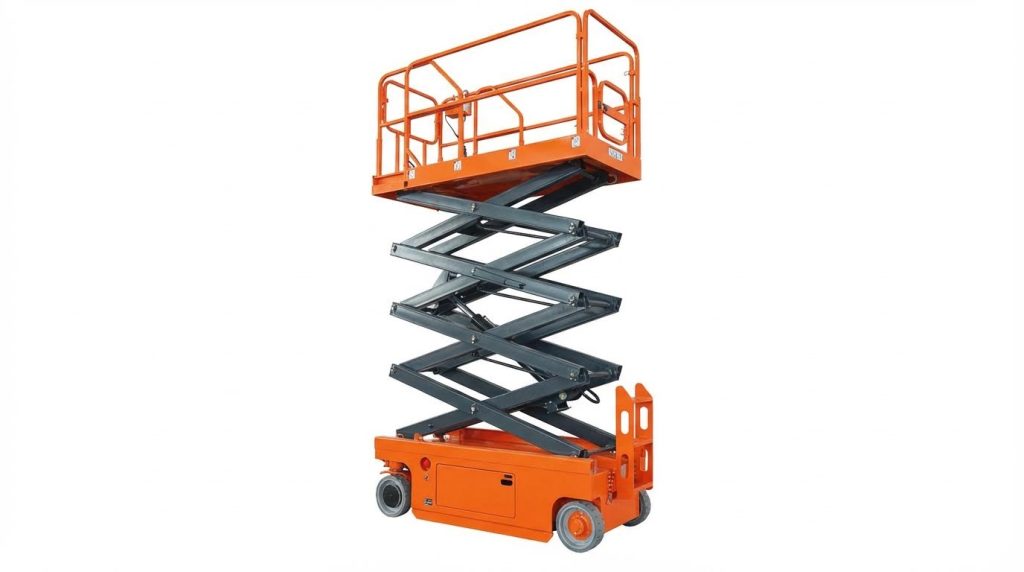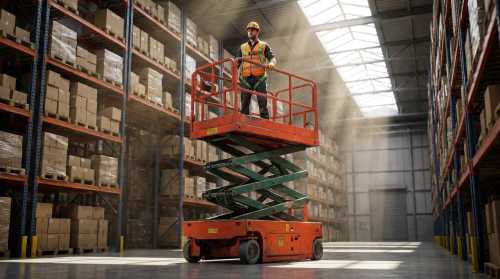
Many people ask “do you need a license for a scissor platform” and get conflicting answers from coworkers, rental yards, and safety manuals. This guide explains what “license” really means for scissor lift operators, how OSHA and ANSI rules apply, and where employer authorization fits in. You will see how training, evaluations, and documented safe-use plans tie directly to legal duties and liability. Use this as a practical roadmap to keep operators qualified, jobsites compliant, and scissor platform lift work both efficient and safe.
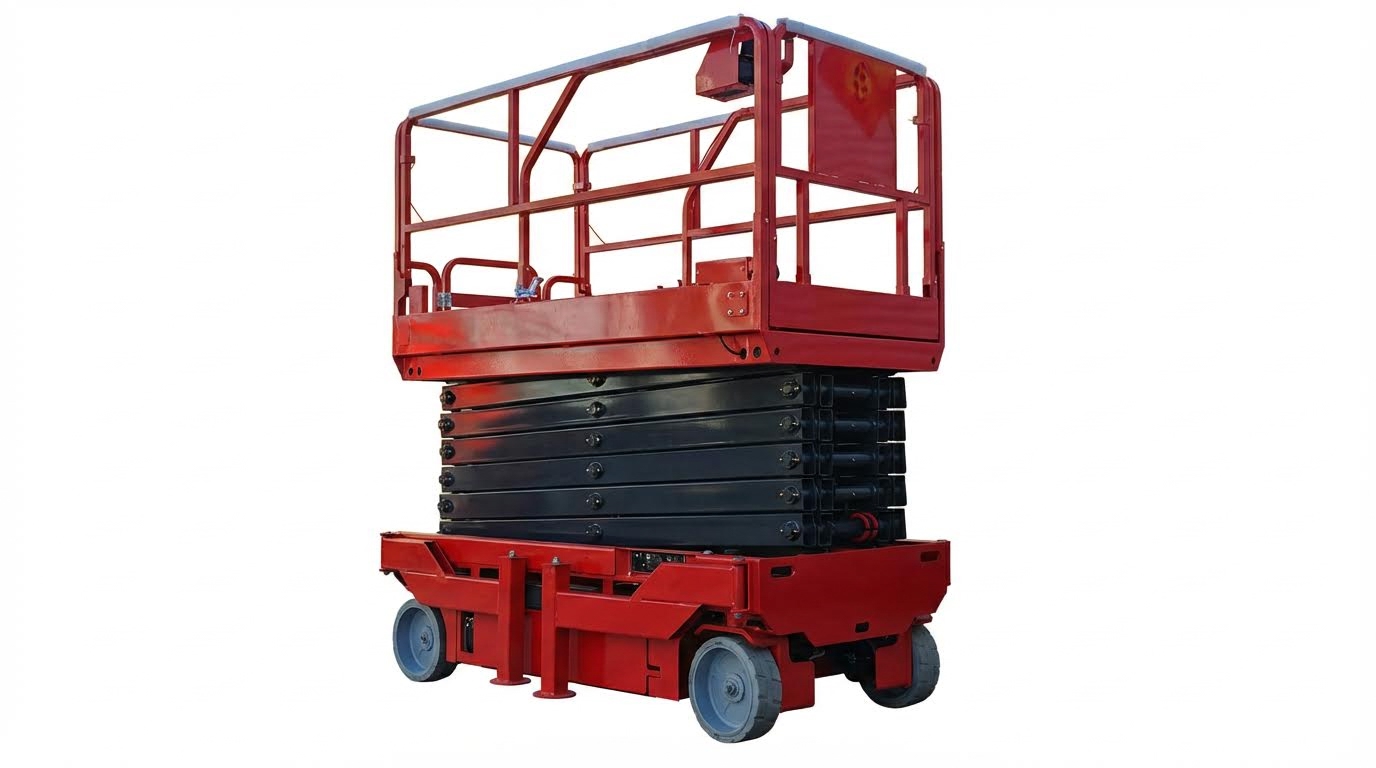
What “License” Means For Scissor Lift Operators
How OSHA And ANSI Classify Scissor Lifts
When people ask “do you need a license for a scissor lift,” they are really asking how OSHA and ANSI classify the machine and what training that triggers. Both agencies treat scissor lifts as powered, elevated work platforms with strict rules for design, safe use, and operator competence.
- OSHA treats scissor lifts as mobile supported scaffold work platforms that raise workers vertically using a scissor mechanism with a crossed-beam structure.
- They must have a compliant guardrail system and be used with fall protection practices focused on staying inside the platform and not overreaching to prevent falls.
- OSHA standards also require training on stabilization, positioning, load limits, and hazard recognition for these lifts before independent operation.
- Under modern ANSI A92 rules, scissor lifts fall under the broader category of Mobile Elevating Work Platforms (MEWPs), Group A, because they move vertically but stay within the tipping lines of the chassis unlike boom-type platforms.
- MEWPs are further split into Types 1, 2, and 3 based on where the controls are and whether the unit can travel while elevated; most jobsite scissor lifts are Group A, Type 3 platforms controlled from the work deck with drive controls at height.
ANSI A92.22 and A92.24 require employers to develop a documented safe-use plan and to train operators, occupants, and supervisors on MEWP hazards and controls including scissor lifts. That classification is what drives the “license” style training and evaluation requirements, even if OSHA does not literally issue a scissor lift driver’s license.
Key regulatory triggers for scissor lifts
Because scissor lifts are treated as powered elevating work platforms, they trigger requirements for:
- Formal and practical operator training with evaluation before solo use under OSHA training rules.
- Regular inspections and maintenance checks on brakes, hydraulics, controls, and safety devices before each use.
- Written safe-use plans and site risk assessments for MEWPs under ANSI A92.22 including rescue planning.
License Vs. Certification Vs. Employer Authorization
The phrase “do you need a license for a scissor lift” mixes three different concepts: third-party certification, regulatory “license” language, and the employer’s legal duty to authorize operators. These terms overlap in practice but are not the same thing.
| Term | Who Issues It | What It Proves | Typical Validity | Regulatory Basis / Notes |
|---|---|---|---|---|
| License / Certification (formal training card) | Accredited training provider or qualified employer | Operator completed required formal and practical training and passed evaluation on that equipment class | Often 3–5 years depending on program and standard | Operator certifications for lifting equipment under OSHA rules were valid for 5 years in some standards before renewal; many scissor lift courses issue 3‑year cards after 2.5–4 hours of training. |
| Employer Authorization | Current employer | Employer has verified training, evaluated performance on their specific equipment and site conditions, and allows the person to operate | Only while employed / until revoked or re-evaluation is required | OSHA requires employers to train, evaluate, and authorize operators before they use powered lifting equipment independently with re-evaluation at least every 3 years or after incidents. |
| Regulatory “License” (government-issued) | State or federal agency | Legal permission similar to a driver’s license | Varies by jurisdiction where such licenses exist | OSHA standards for scissor lifts focus on training and employer duties rather than a government operator license; some local codes may add their own licensing rules. |
OSHA and ANSI both require that scissor lift operators receive formal instruction, hands-on practice, and an evaluation before operating on their own with retraining at least every three years or when deficiencies appear. Many training providers call the resulting wallet card a “license,” but in regulatory language it is a certificate of training and evaluation, and the employer still has to formally authorize each operator for their own site and machines.
- Training programs for scissor lift and MEWP operators typically take a few hours and include theory, hazard recognition, and a practical skills test before issuing a 3‑year wallet card.
- OSHA expects re-evaluation whenever there is an accident, near miss, unsafe behavior, or major change in equipment or environment not just on a calendar cycle.
- ANSI requires that operators be trained not only on controls but also on the site-specific safe-use plan and rescue procedures for the MEWP so paperwork alone is not enough.
In practice, an operator is fully compliant only when three pieces line up: documented training and certification on scissor lifts or MEWPs, a current employer authorization based on on-site evaluation, and ongoing refresher or retraining when performance, equipment, or conditions change. That is the real regulatory answer behind the everyday question “do you need a license for a scissor lift.”
“”
Employer Duties, Operator Limits, and Best Practices
Employer Responsibilities And Liability Exposure
When people ask “do you need a license for a scissor lift,” they are really asking about employer duties as much as operator cards. Regulations make employers the controlling entity for training, authorization, safe use planning, and equipment condition. If those controls are weak, the company carries the liability exposure, not just the person on the platform.
At a minimum, employers must treat every scissor lift as a mobile supported scaffold and a powered industrial truck–style MEWP, and align site rules with OSHA and ANSI requirements. That includes written programs, documented training and evaluations, and proof that the machine is inspected and maintained before use. Without this structure, any incident can quickly turn into a regulatory and legal problem.
- Define and document a scissor lift safety program (policies, roles, and procedures).
- Limit operation to trained, evaluated, and employer-authorized personnel only.
- Integrate scissor lift controls into broader site safety (traffic, electrical, and fall protection).
- Use digital or paper systems to prove inspections, maintenance, and training occurred.
- Continuously review incidents, near misses, and behavior to trigger retraining when needed.
Key regulatory expectations behind “employer responsibility”
OSHA requires employers to train operators on fall protection, stabilization, positioning, and hazard recognition for scissor lifts including staying within load limits and identifying electrical hazards. Formal instruction, hands‑on practice, and evaluation are required before an operator works independently, with re‑evaluation at least every three years or sooner after unsafe behavior, incidents, or significant changes in equipment or environment per powered industrial truck–style requirements. ANSI A92.22 and A92.24 add that employers must develop a risk assessment and safe use plan, and ensure operators, occupants, and supervisors receive appropriate MEWP training for the specific MEWP class, including scissor lifts.
Because scissor lifts are group A MEWPs that move vertically within their tipping lines, most accidents come from predictable failure modes: falls, tip‑overs, power‑line contact, and caught‑between injuries. These events have historically accounted for a significant share of aerial lift fatalities, so regulators expect employers to show that they controlled those hazards through design, training, and supervision.
| Employer Duty Area | What Is Required | Risk If Ignored |
|---|---|---|
| Training & Evaluation | Provide formal and practical training plus evaluation before solo operation; re‑evaluate at least every 3 years or after incidents or unsafe acts as applied to scissor lifts. | Citations for inadequate training; increased accident probability; higher negligence exposure. |
| Safe Use & Risk Assessment | Develop a documented safe use plan and site risk assessment for MEWPs, including scissor lifts per ANSI A92.22. | Uncontrolled hazards (traffic, power lines, ground conditions); weak defense after incidents. |
| Equipment Condition | Perform pre‑shift inspections of brakes, steering, tires, hydraulics, controls, safety devices, and guardrails; repair before use as part of daily checks. | Mechanical failures, unexpected movement, or collapse; regulatory penalties for unsafe equipment. |
| Fall Protection | Ensure functional guardrails and train workers to stay on the platform, keep work within reach, and avoid leaning outside the rails as required for scissor lifts. | Falls from height; potential willful citations if guardrails or training are missing. |
| Stabilization & Positioning | Limit use to firm, level surfaces; observe wind limits (typically below 28 mph outdoors); maintain safe distances from power lines and traffic per OSHA guidance. | Tip‑overs, contact with vehicles, or electrocution due to poor site controls. |
| PPE & Safety Culture | Provide PPE (safety footwear, high‑visibility garments, hard hats, gloves, eye protection) and enforce use as part of employer responsibilities. | Higher injury severity; additional violations for PPE non‑compliance. |
From a liability standpoint, the question is less “do you need a license for a scissor lift” and more “can you prove that your operators were properly trained, evaluated, authorized, and supervised.” Certifications from accredited providers often last 3–5 years, but employers still must verify skills on their own jobsites and issue their own authorization before allowing operation.
- Keep copies of training certificates, evaluation forms, and any “license” or wallet cards on file.
- Issue written or digital proof of employer authorization tied to specific equipment types.
- Use digital inspection tools to timestamp pre‑use checks, photos, and maintenance requests to simplify audits.
- Document corrective actions and retraining after near misses or unsafe behavior.
- Include scissor lift rules in contractor onboarding and site orientations.
Operator-In-Training Rules And Supervision Limits
Operator‑in‑training controls are where many employers quietly fail. Trainees are often “helping” on a job and end up driving or elevating the lift without full supervision. That practice directly conflicts with modern MEWP standards, which expect continuous oversight until the operator is fully trained, evaluated, and employer‑authorized.
During training, the core idea is simple: the trainer controls the risk, not the trainee. That means the trainer decides when and where the lift moves, how high it goes, and what tasks are allowed. The more complex the site or the closer the hazards (traffic, power lines, overhead congestion), the tighter that supervision must be.
- Classify anyone without full training, evaluation, and employer authorization as an “operator‑in‑training.”
- Prohibit unsupervised operation, including travel, elevation, and positioning near hazards.
- Require a qualified trainer or supervisor to stay within immediate communication range.
- Limit trainee tasks to those covered in current training modules and the safe use plan.
- Stop training and correct behavior immediately if unsafe acts occur.
Regulatory view of supervision and “in‑training” limits
Standards for powered lifting equipment require that operators receive formal instruction, practical training, and evaluation before operating independently, with re‑evaluation at least every three years or after unsafe operation, incidents, or changes in equipment or environment applied to scissor lifts under OSHA 29 CFR 1910.178. During training, operators must be continuously monitored by a qualified trainer, with only very short breaks allowed if tasks and limits are clearly communicated in advance per operator‑qualification requirements. ANSI A92.24 further requires that MEWP operators, occupants, and supervisors receive role‑appropriate training, and that operators provide limited familiarization to occupants in the platform to reduce risk while maintaining productivity.
In practice, supervision limits should be tied to task complexity and operator experience. A new trainee practicing basic functions in a controlled yard can be supervised at a short distance. The same trainee working near live traffic or 10 ft from energized lines must have a trainer close enough to intervene instantly. That distinction should be written into your safe use plan.
| Training Phase | Allowed Activities | Supervision Level | Typical Controls |
|---|---|---|---|
| Classroom / Theory | Review hazards, regulations, load charts, and safe use plans. | Instructor present; no equipment operation. | Slides, manuals, videos, written tests. |
| Basic Practical (Yard) | Mounting/dismounting, controls, low‑level travel, basic elevation. | Trainer in immediate area with direct line of sight and communication. | Flat, level surface; no overhead or traffic hazards; set speed limits. |
| Intermediate Practical (Simulated Job) | Positioning near structures, material handling within load rating, use of guardrails and PPE. | Trainer close enough to physically intervene; may allow brief solo tasks with clear instructions. | Marked hazards, spotters as needed, controlled access to area. |
| Final Evaluation | Full work cycle: pre‑use inspection, travel, elevation, task execution, shutdown. | Evaluator observes entire cycle; no public or high‑risk environment until passed. | Standardized checklist; pass/fail criteria documented. |
| Post‑Authorization (New Operator) | Independent operation within scope of training and safe use plan. | General supervision by competent person; spot checks and coaching. | Periodic audits; trigger retraining after unsafe acts or near misses. |
To keep operator‑in‑training controls tight and defensible, employers should formalize the transition from trainee to authorized operator. That transition is where “do you need a license for a scissor lift” becomes a documented combination of external certification and internal sign‑off.
- Use a standardized checklist for practical evaluations and keep it with training records.
- Specify in writing which MEWP types and heights each operator is authorized to use.
- Prohibit trainees from working alone on off‑shift or remote jobs.
- Require supervisors to verify current authorization before assigning lift tasks.
- Schedule refresher or remedial training whenever site conditions or equipment change or when performance shows gaps.
Final Thoughts On Scissor Lift Licensing And Compliance
Scissor lift “licensing” is not a single card or government permit. It is a system that links OSHA and ANSI rules, formal training, and employer control into one safety chain. When that chain is strong, operators stay inside design limits, platforms stay stable, and jobs finish without injuries or citations.
Engineering controls such as guardrails, load ratings, and MEWP stability limits only work when people respect them. That respect comes from clear training, realistic practice, and tight supervision during the in‑training phase. Employer authorization then ties those skills to specific Atomoving scissor platforms, site conditions, and safe‑use plans.
Operations and safety teams should treat each lift task as a controlled engineering process. Define the hazard envelope, choose the right platform, verify inspections, and confirm the operator’s current authorization. Lock this into written procedures and digital records so you can prove compliance at any time.
The best practice is simple but strict: no untrained or unauthorized operation, no use outside the safe‑use plan, and no gaps in inspection or maintenance. When you treat “do you need a license for a scissor lift” as a question about system design and proof, not just a wallet card, your site will be both safer and easier to defend.
Frequently Asked Questions
Do You Need a License or Certification to Operate a Scissor Lift?
Operating a scissor lift does not typically require a government-issued license, but proper training and certification are mandatory. According to OSHA standards, employers must ensure that workers are trained to safely operate scissor lifts, recognize hazards, and follow safety protocols. OSHA Scissor Lift Training.
- Training covers safe operation and hazard recognition.
- Certification is often required by employers for compliance.
What Are the Consequences of Operating Without Proper Training?
Operating a scissor lift without proper training can lead to accidents, injuries, and legal penalties. Employers may face fines if they allow untrained workers to use aerial work platforms. All operators must complete training programs to meet safety standards. Certification Requirements.
- Untrained operators risk accidents and injuries.
- Employers face fines for non-compliance with OSHA rules.