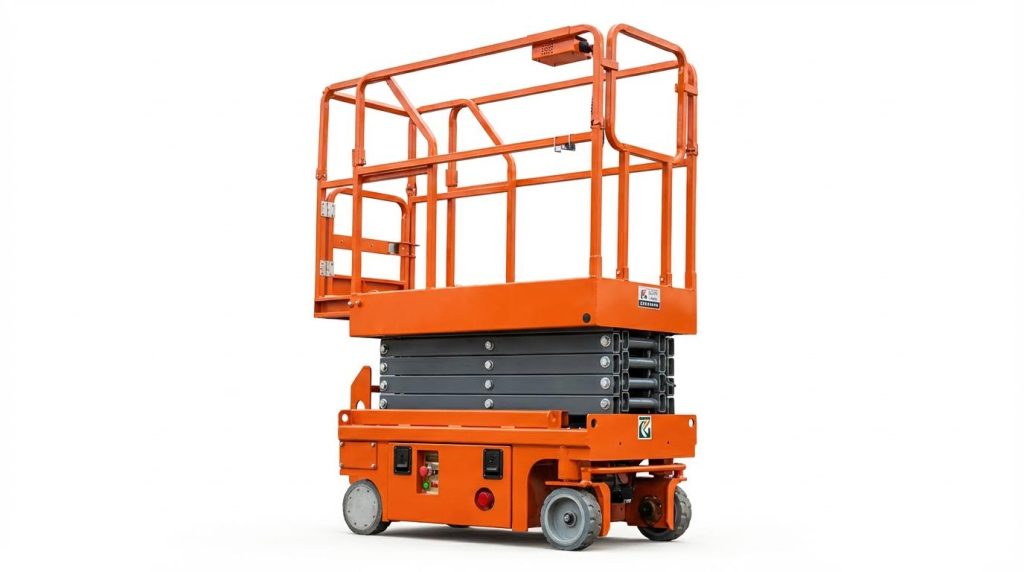
Scissor lift platform lift trucks combined mobile supported scaffolds with powered elevating platforms for precise, repeatable access at height. Their design, drive systems, and stability characteristics governed usable load capacity, duty cycle, and suitability for indoor or rough-terrain applications across construction and maintenance tasks.
Regulatory frameworks such as OSHA 29 CFR, ANSI A92 series, and FMVSS 403/404 defined minimum requirements for structural integrity, fall protection, safe operation, and vehicle-mounted lift integration. Effective ownership also depended on disciplined inspection regimes, battery management, and adoption of emerging technologies like advanced monitoring, diagnostics, and all-electric architectures.
This article examined core design and performance characteristics, mapped the safety and compliance landscape, and detailed maintenance and battery strategies. It concluded with strategic selection guidance to align scissor lift platform lift truck choices with technical requirements, worksite risks, and lifecycle cost objectives.
Core Design And Performance Characteristics
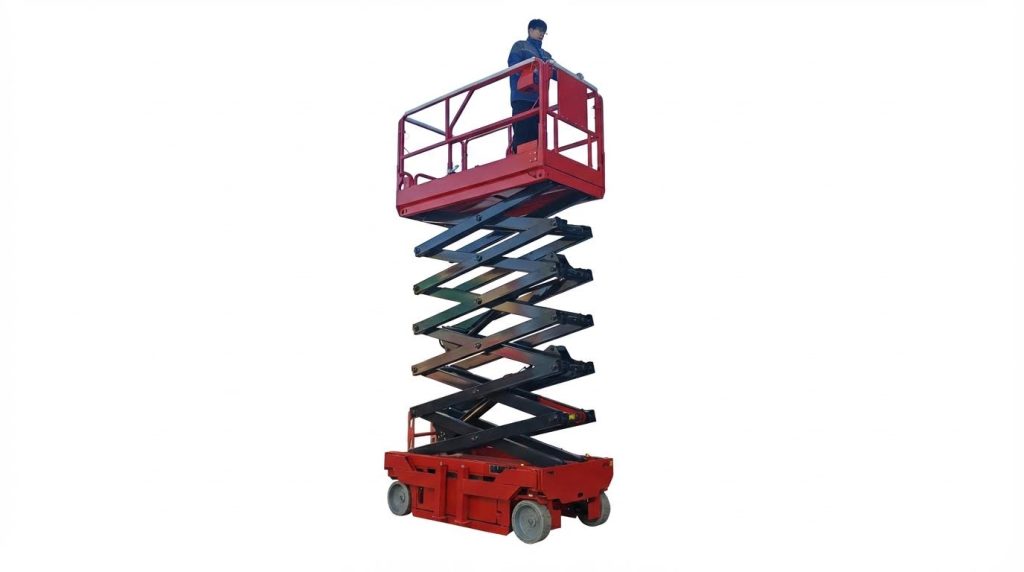
Scissor lift platform trucks used in construction and facility maintenance relied on a compact vertical lifting geometry. Engineers balanced structural stiffness, drive selection, and stability margins to meet OSHA and ANSI A92 safety expectations. Design decisions affected not only rated capacity and working height, but also transport weight, maneuverability, and lifecycle maintenance cost. Understanding these core characteristics allowed specifiers to match machines to task profiles, from indoor fit‑out work to rough‑terrain construction sites.
Scissor Mechanism And Lift Kinematics
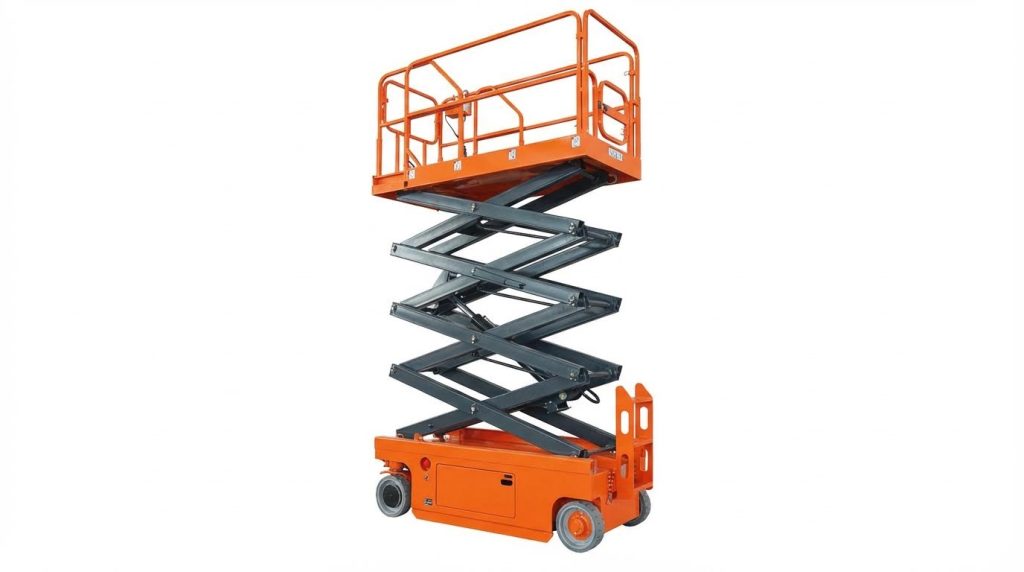
The scissor mechanism used pairs of crossed structural arms that rotated about pinned joints to raise the platform. As the actuator extended, the arm angle opened, converting horizontal actuator motion into vertical platform displacement. Designers sized arm sections, pins, and welds to limit deflection and maintain platform rigidity under rated loads and side forces. Kinematic layout determined lift stroke, collapsed height, and mechanical advantage, which in turn drove actuator force requirements and hydraulic or electric drive sizing. Proper kinematic design also ensured smooth motion, minimized platform sway, and maintained sufficient clearance between arms, hoses, and cables over the full travel range.
Platform Lift Truck Configurations And Ratings
Scissor lift platform trucks appeared in several configurations, including slab electric units for finished floors and rough‑terrain models with higher ground clearance. Engineers specified maximum platform height, working height, and horizontal outreach where applicable, along with overall width and turning radius for access planning. Ratings included platform load capacity in kilograms, often with separate limits for personnel, tools, and materials, and sometimes reduced capacities for extension decks. Labels and placards on compliant machines displayed these ratings clearly, aligning with OSHA and ANSI A92 requirements for operator information. Configuration choices, such as narrow chassis or extended deck options, directly influenced stability envelopes and allowable duty cycles.
Drive Systems: Hydraulic, Electric, And Hybrid
Traditional hydraulic cylinders powered by engine‑driven or electric power packs to generate lifting force. Electric slab lifts typically used battery‑powered electric motors driving hydraulic pumps, while rough‑terrain units often used diesel or dual‑fuel engines with hydrostatic drive systems. All‑electric architectures, such as designs that eliminated hydraulic circuits, reduced leak risks and simplified maintenance by cutting the number of serviceable components. Hybrid configurations combined engine and battery systems, allowing quieter, low‑emission indoor operation with engine assist available for outdoor or high‑duty tasks. Drive system selection affected energy efficiency, noise levels, environmental performance, and the complexity of service routines and diagnostics.
Stability, Load Capacity, And Duty Cycles
Stability depended on the relationship between the combined center of gravity of machine and load and the support polygon defined by the wheels or outriggers. Designers set load capacity so that, under rated loads and specified platform positions, the overturning moment remained well below the restoring moment with defined safety factors. Standards and manufacturer data limited operation on slopes and restricted use in wind; outdoor‑rated scissor lifts typically carried wind speed limits near 12.5 m/s. Duty cycle definitions considered lift frequency, travel time, and charging opportunities, especially for battery‑powered units where deep cycling reduced battery life. Proper matching of duty cycle to design capability minimized thermal loading of motors and hydraulics and extended component and battery lifespans while maintaining safe performance margins.
Safety Standards, Compliance, And Risk Mitigation
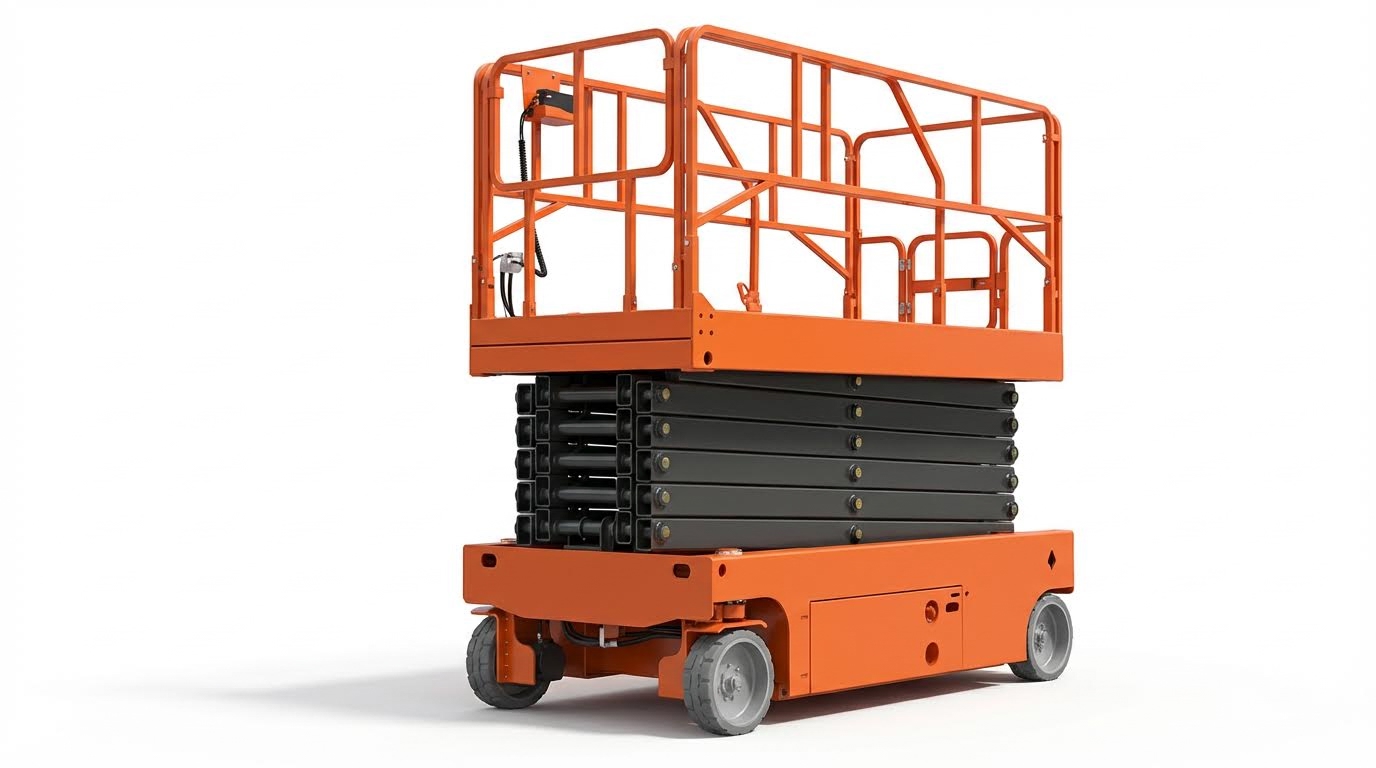
Safety standards for scissor lift platform lift trucks formed a layered framework that covered equipment design, operation, and maintenance. OSHA regulations in 29 CFR addressed work-at-height hazards, while ANSI A92 standards defined design and use requirements specific to mobile elevating work platforms. For vehicle-mounted platform lifts, FMVSS 403 and 404 set mandatory performance and installation rules to protect passengers with reduced mobility. Effective risk mitigation depended on integrating these standards into site procedures, training, and equipment selection.
OSHA, ANSI A92, And FMVSS 403/404 Requirements
OSHA standards in 29 CFR 1910 and 1926 required employers to control fall, tip-over, and electrical hazards associated with scissor lifts. Sections such as 1910.27 and 1926.451 treated scissor lifts as mobile supported scaffolds, triggering requirements for guardrails, stable support, and safe access. ANSI A92.3 and A92.6 provided consensus requirements for design, testing, labeling, and safe operation of self-propelled elevating work platforms, including platform load ratings and stability margins. FMVSS 403 and 404 applied when platform lifts were installed on road vehicles, specifying structural integrity, lighting levels, control locations, and documentation so that mobility-impaired passengers could embark safely. Compliance programs needed documented procedures that cross-referenced OSHA for workplace use, ANSI A92 for equipment capabilities, and FMVSS for any road-going lift installations.
Fall Protection, Guardrails, And Safe Access
Scissor lifts relied primarily on engineered fall protection through guardrail systems around the work platform. OSHA guidance required workers to verify the presence and integrity of top rails, mid-rails, and toe boards before use, and to stand only on the platform floor. Operators had to enter and exit through designated gates or doors rather than climbing over rails, which reduced slip and trip risks. ANSI A92 specified gate latching performance, minimum rail heights, and toe-board dimensions to prevent both person and object falls. Safe access procedures prohibited using the lift as a ladder substitute, standing on guardrails, or leaning out excessively to reach work, which historically led to ejection incidents.
Positioning, Traffic Control, And Electrical Hazards
Correct positioning of scissor lifts reduced crushing, collision, and electrocution risks. OSHA recommended placing lifts on firm, level surfaces and maintaining at least 3 m clearance from exposed energized power lines, with larger distances for higher voltages. Work planners needed to avoid overhead obstructions such as beams, soffits, or bridge decks that could trap workers between the platform and fixed structures. Traffic control around the lift, using barriers, cones, and ground guides, helped segregate pedestrian and vehicle movements in busy warehouses or construction sites. Incident histories, including past overturns in high winds, showed why operators had to respect manufacturer wind limits, typically below about 12.5 m/s for outdoor-rated units, and avoid operation in thunderstorms or severe gusts.
Operator Training, Worksite Assessment, And Permits
Regulations required that only trained and authorized personnel operate scissor lift platform trucks. Training covered equipment controls, load charts, rated capacity, emergency lowering procedures, and recognition of site-specific hazards such as drop-offs, floor openings, or overhead lines. Employers needed to perform documented worksite assessments before deployment, identifying ground conditions, traffic interfaces, electrical sources, and weather exposure, then implementing controls like exclusion zones and signage. Permit-to-work systems were useful for high-risk tasks, for example operation near live electrical equipment or in public traffic areas, ensuring formal review and sign-off. Refresher training and periodic evaluations helped maintain operator competence as standards evolved and new technologies, such as advanced diagnostics and all-electric platforms, entered fleets.
Maintenance, Batteries, And Emerging Technologies
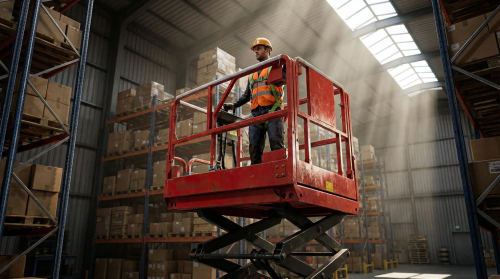
Maintenance strategies for scissor lift platform trucks directly affected safety, uptime, and lifecycle cost. Operators and technicians relied on structured inspection regimes, battery care programs, and adherence to OEM manuals and OSHA guidance. In parallel, manufacturers introduced advanced monitoring, diagnostics, and all‑electric architectures that reduced hydraulic complexity and extended service intervals. This section examined how daily practices and new technologies combined to optimize fleet performance and regulatory compliance.
Daily Inspections And Preventive Maintenance
Daily pre-start inspections formed the foundation of safe scissor lift operation. Technicians performed a walkaround to identify leaks, dents, cracks, and structural damage on scissor arms, centering links, and platform gates. They verified hydraulic fluid levels, machine decals, guardrail integrity, emergency stop function, and that operator and maintenance manuals were present on the machine. Function tests occurred in a clear area free of overhead and ground obstructions to validate drive, steering, brakes, lift, and descent performance.
OSHA-aligned checklists also covered tires and wheels for wear and structural defects, battery charge status, horns, lights, and backup alarms. Any damaged or non-functional component required removal from service until repair restored full compliance with the manufacturer’s specifications. Preventive maintenance extended beyond daily checks to scheduled structural inspections of hydraulic, pneumatic, and electrical systems, fasteners, cables, outriggers, stabilizers, and guardrails. Work zone controls such as barriers and signage complemented mechanical maintenance by reducing collision and tipping risks.
Battery Types, Care, And Lifecycle Cost Control
Batteries represented a major operating cost for electric scissor lifts, particularly in high-utilization fleets. Poorly maintained lead-acid batteries often required replacement in approximately one year, while well-maintained units typically achieved up to three years of service life. Routine care included cleaning cases and terminals to remove dirt and corrosive deposits, checking electrolyte levels with distilled water, and avoiding overfilling that could cause overflow during charging. Monthly wiring inspections ensured tight, corrosion-free connections and reduced the likelihood of shorts.
Charging practices strongly influenced lifecycle cost. Operators maximized capacity and cycle life by charging after each use and employing smart chargers that prevented undercharging below approximately 7 V DC per 12 V block and overcharging above roughly 14.8 V DC. AGM batteries offered spill-proof, maintenance-free operation and higher cycle life than flooded lead-acid units, improving safety and reducing service labor. Lithium-ion batteries further reduced maintenance, provided higher efficiency, and typically delivered a superior return on investment despite higher acquisition cost, especially where duty cycles involved frequent cycling and opportunity charging.
Advanced Monitoring, Diagnostics, And Digital Twins
Advances in electronics and connectivity enabled more sophisticated monitoring and diagnostics for scissor lift fleets. Embedded controllers recorded fault codes, operating hours, and duty cycles, allowing technicians to perform targeted troubleshooting rather than broad component replacement. Some modern platforms integrated self-diagnostic routines that checked sensors, actuators, and safety circuits at startup, reducing the likelihood of undetected failures. These systems decreased unplanned downtime and improved the effectiveness of preventive maintenance.
Battery monitoring systems tracked state of charge, state of health, and charge-discharge histories to prevent abusive use patterns. Fleet managers used this data to optimize charging schedules, balance utilization between machines, and predict end-of-life for batteries and key components. Digital twin concepts, although still emerging for smaller lift trucks, built virtual models of the machine and its subsystems using real-time and historical data. This approach supported predictive maintenance strategies, life estimation of structural and hydraulic elements, and scenario analysis for new duty cycles or environments.
Energy Efficiency And All‑Electric Lift Platforms
Energy efficiency improvements in scissor lifts reduced operating costs and extended runtime between charges. Design measures included low-loss drive electronics, efficient hydraulic circuits or direct electric drives, and optimized duty cycle control algorithms. All-electric platforms eliminated hydraulic oil in the lift and drive systems, removing leak risks and reducing the number of serviceable components. This shift also simplified environmental compliance and cleanup requirements at sensitive worksites such as food processing or healthcare facilities.
One representative all-electric model operated on a single lithium-ion battery with design life exceeding 120 months, used regenerative lowering and braking, and achieved energy consumption reductions of approximately 70% versus conventional configurations. Fast charge times
Summary And Strategic Selection Considerations
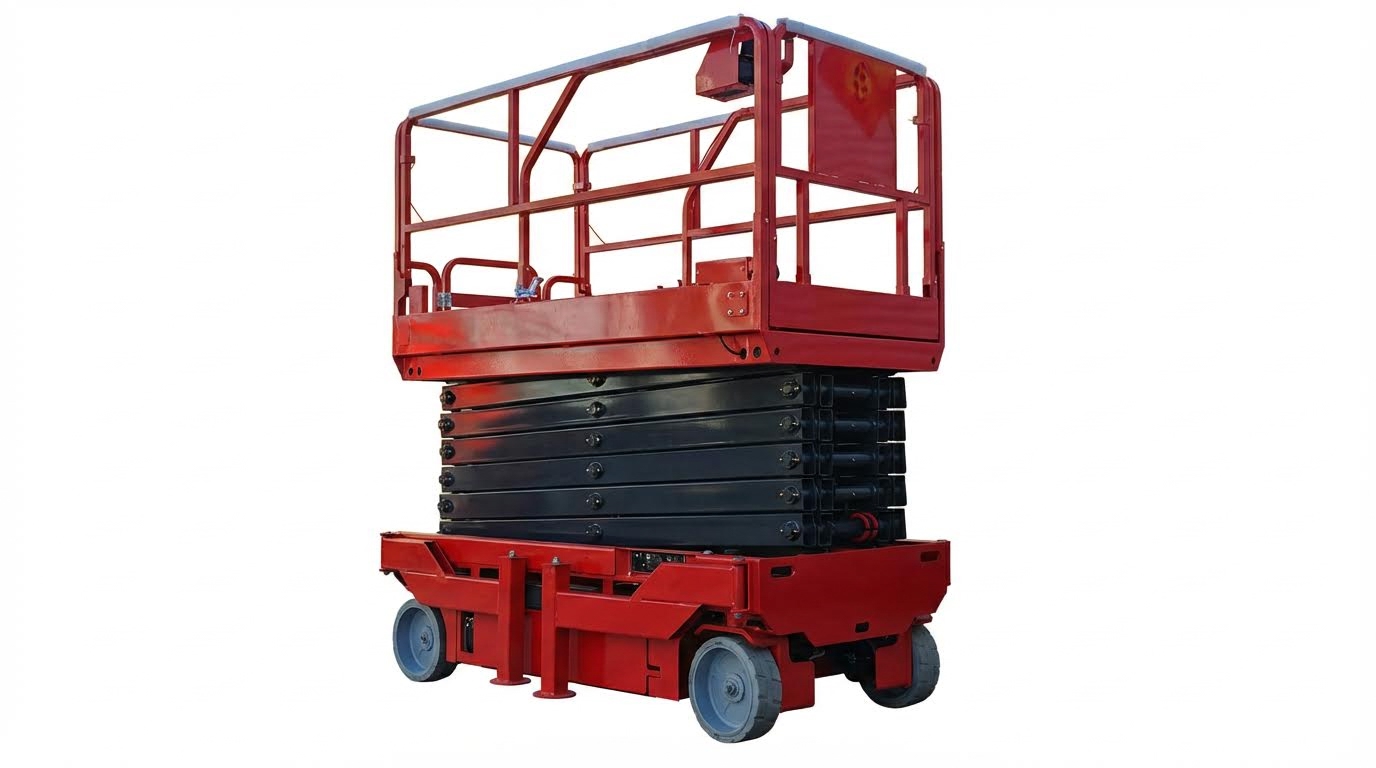
Scissor lift platform trucks provided vertically mobile work platforms with controlled access, integrated guardrails, and defined load ratings. Their design combined scissor kinematics, electric or hydraulic drives, and stability controls to deliver safe elevation for construction, maintenance, and industrial tasks. Safety frameworks such as OSHA 29 CFR, ANSI A92 series, and FMVSS 403/404 established requirements for guardrails, access, controls, lighting, and worksite practices. Effective ownership depended on systematic inspections, battery stewardship, and adoption of newer all‑electric and digitally monitored platforms.
From a strategic standpoint, selection started with task analysis: required platform height, horizontal reach via truck positioning, rated load including tools, and duty cycle per shift. Indoor projects with level floors favored compact electric scissor lifts with non‑marking tires and low acoustic emissions. Rough‑terrain or outdoor work required higher ground clearance, larger tires, and models specifically rated for outdoor use with defined maximum wind speeds, typically below 13 m/s. Engineers and safety managers also evaluated powertrain architecture, comparing hydraulic systems with higher service demands against all‑electric architectures that reduced leak risks and maintenance hours.
Lifecycle economics played a central role. Capital price differences between lead‑acid, AGM, and lithium battery packages had to be weighed against battery life, charging flexibility, and downtime costs. Well‑maintained batteries lasted multiple years, while neglected units failed in roughly one year, driving up total cost of ownership. Advanced monitoring, self‑diagnostics, and digital maintenance logs supported condition‑based servicing, reduced unexpected failures, and improved regulatory documentation. Owners increasingly specified platforms that integrated these features to align with lean maintenance strategies and data‑driven safety programs.
Looking ahead, industry trends pointed toward broader deployment of all‑electric lifts with zero hydraulics, high‑efficiency drives, and long‑life lithium packs. Energy recovery, smart charging, and remote telemetry improved energy intensity per operating hour and supported environmental goals. At the same time, regulatory expectations around training, worksite assessment, and documentation continued to tighten. A balanced selection strategy therefore combined robust mechanical design, compliant safety systems, and digitally enabled maintenance with rigorous operator training and hazard analysis. Organizations that integrated these dimensions achieved higher utilization, fewer incidents, and more predictable lifecycle costs for their scissor lift platform truck fleets.