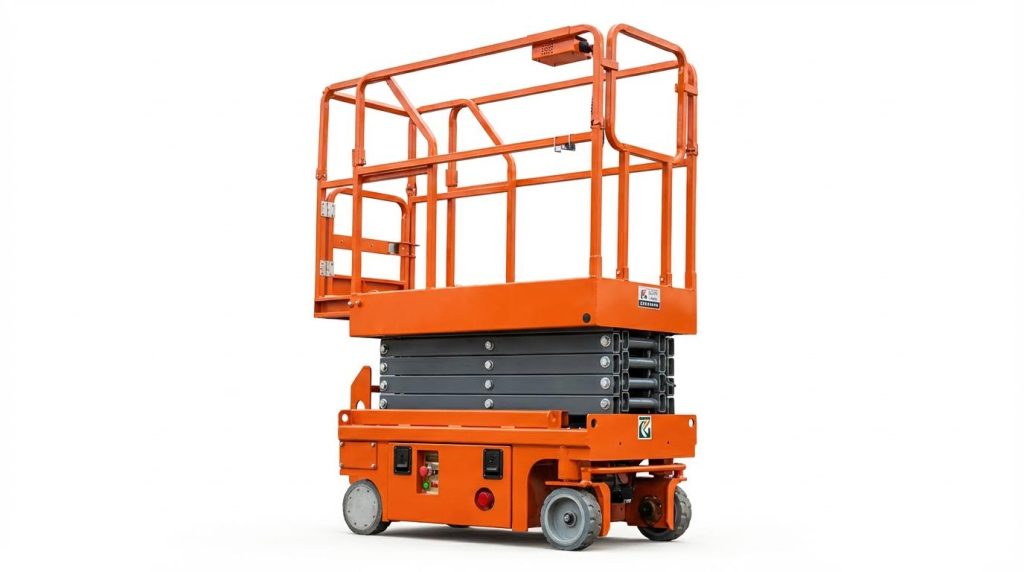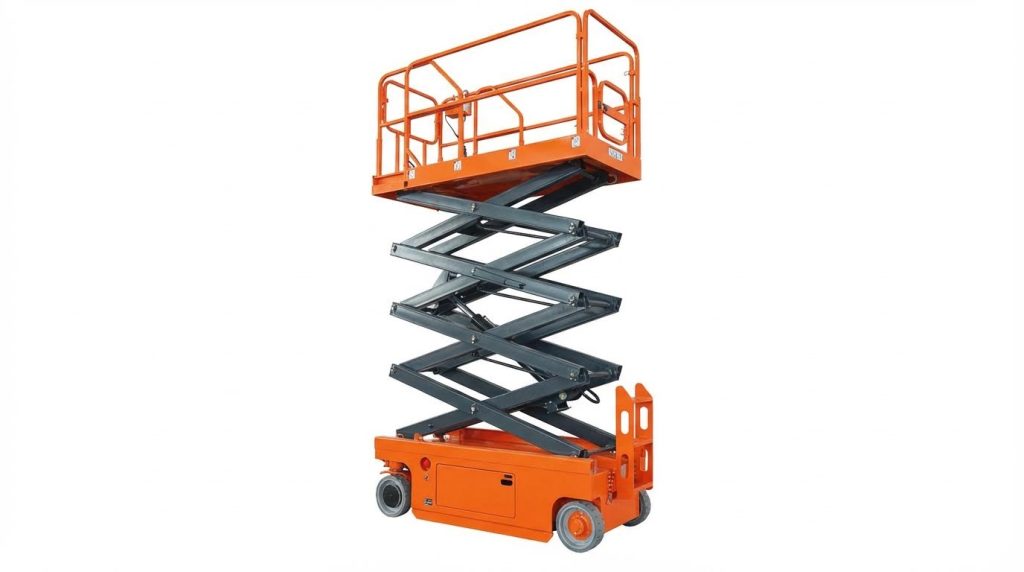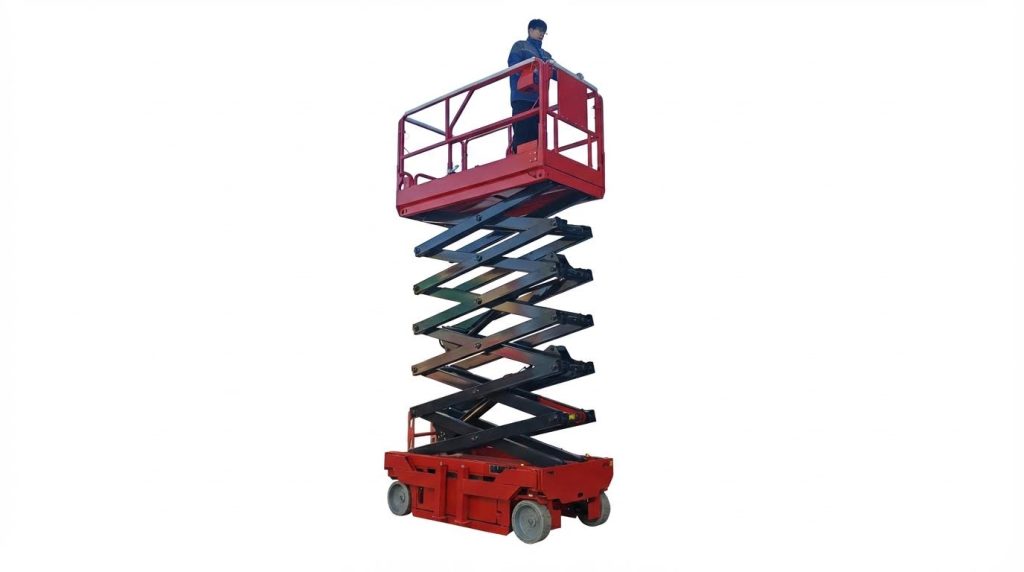
Electric and engine-powered scissor lifts introduced concentrated ignition sources, hydraulic fluids, and high-energy batteries into compact work platforms. These hazards raised recurring questions about when regulations actually required on-board fire extinguishers and what configurations best protected operators. This guide structured those answers around federal rules such as 30 CFR, 49 CFR, OSHA references, NFPA 10, and state-level aerial work platform standards. It then connected regulatory triggers to practical engineering decisions on extinguisher selection, mounting, inspection, and lifecycle management so safety managers could decide when electric scissor platform lift required fire extinguishers and how to keep those systems compliant over time.
When Scissor Lifts Need On‑Board Fire Extinguishers
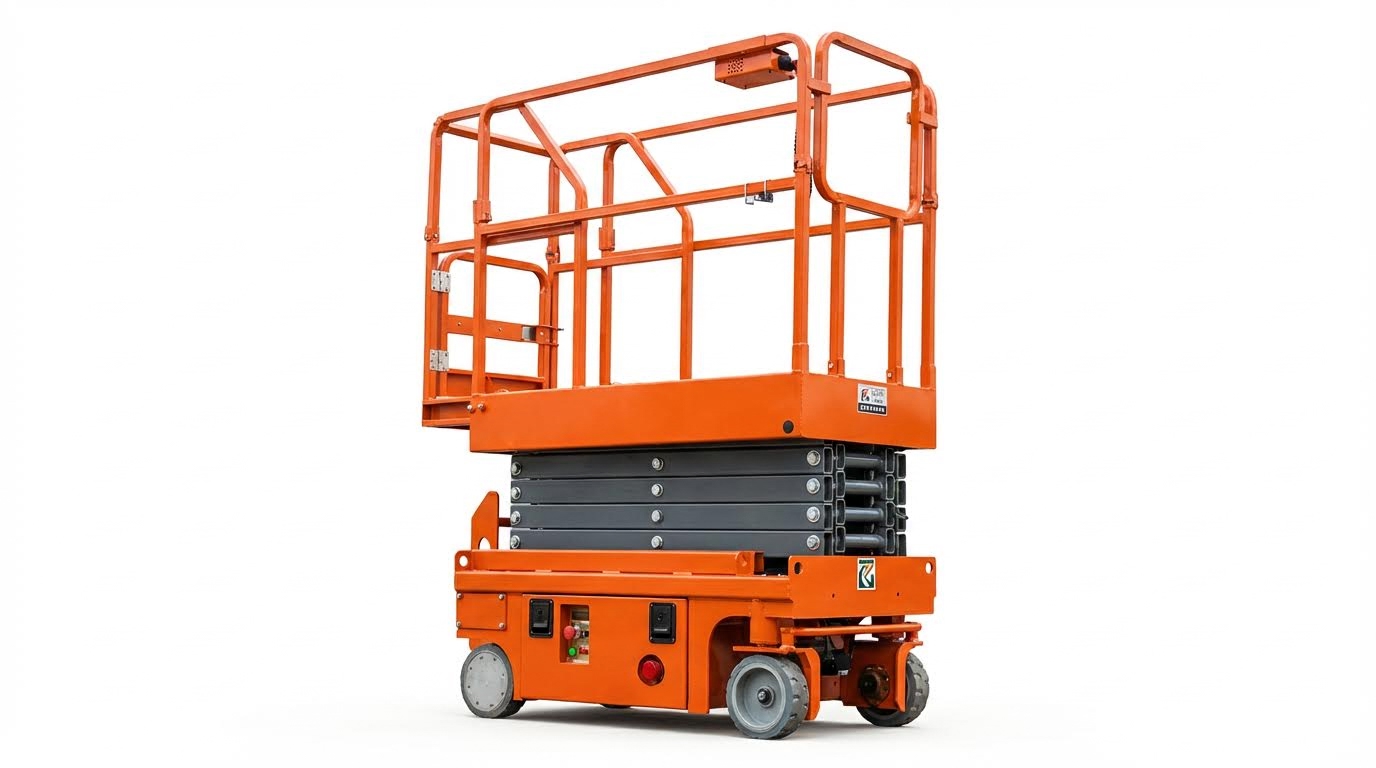
Electric scissor lift owners often ask a focused question: does electric scissor lifts require fire extinguishers under federal or state rules. The answer depends on the regulatory framework that applies to the worksite, the fire risk profile, and the escape paths for operators and nearby workers. Engineers and safety managers must interpret overlapping OSHA, MSHA, NFPA, transport, and state-level provisions, then translate them into clear site rules and equipment specifications. Understanding these layers helps define when an extinguisher must be mounted on the scissor platform, when a nearby wall unit is acceptable, and when a suppression system is preferable.
Differentiating OSHA, MSHA, and state requirements
OSHA did not prescribe a universal rule that every electric scissor lift must carry an onboard extinguisher. Instead, 29 CFR 1910.157 required employers to provide and maintain portable extinguishers, ensure accessibility, and train operators. For general industry and construction, this meant extinguishers needed to be within required travel distances and sized per NFPA 10, but not necessarily mounted on the platform. MSHA rules differed because they addressed self‑propelled equipment in mines under 30 CFR 56.4230 and 57.4230. Those sections required a fire extinguisher, or a manually activated suppression system, on self‑propelled equipment whenever a fire or its effects could impede escape or endanger others nearby. State plans and administrative codes, such as Michigan’s rules referencing ANSI A92 aerial work platform standards, sometimes added detail but usually deferred fire‑fighting equipment to separate fire‑safety parts. As a result, whether an electric scissor lift required an onboard extinguisher depended on whether it operated under OSHA-only rules, MSHA jurisdiction, or a state code that embedded additional obligations.
Mining operations: MSHA rules for self‑propelled lifts
In mining environments, the question “does electric scissor lifts require fire extinguishers” had a more prescriptive answer. Under 30 CFR 56.4230 for surface mines and 57.4230 for underground mines, self‑propelled equipment required fire protection if a fire could impede escape or affect others. A portable extinguisher mounted on the lift or a manually activated onboard suppression system both satisfied the rule, provided they could control early‑stage fires from the equipment’s inherent hazards, such as electrical faults, hydraulic leaks, or tire fires. If a fire on the lift would not impede escape but could affect others, MSHA allowed the extinguisher either on the equipment or within 30 m of it. MSHA also required the device to be appropriately sized, accessible, and suitable for the likely fire classes, which typically meant at least a multipurpose dry‑chemical unit covering Class A, B, and C risks. For electric scissor lifts used as self‑propelled work platforms in mines, engineers therefore treated an onboard extinguisher or suppression system as a de facto requirement in almost all risk assessments.
General industry and construction: typical expectations
Outside mining, OSHA’s general industry and construction standards focused on overall workplace coverage rather than specific scissor lift mounting. Under 29 CFR 1910.157, employers needed to install and maintain portable extinguishers, perform initial and monthly inspections, and ensure units were visible, accessible, and appropriate for the present hazards. NFPA 10 provided the technical basis for selection and placement, such as maximum travel distances and mounting heights. For electric scissor lifts, this meant an onboard extinguisher was not automatically mandatory, provided a compliant extinguisher sat within the required travel distance and remained unobstructed. However, many safety programs still specified a Class C or multipurpose extinguisher directly on the lift to control equipment fires before they escalated. This practice reduced response time when an electrical, battery, or hydraulic fire originated on the platform, especially when lifts operated away from building-mounted extinguishers.
Site‑specific policies and insurance requirements
Even when federal rules did not explicitly state that electric scissor lifts require fire extinguishers onboard, site policies and insurers often filled the gap. Large industrial plants, logistics centers, and construction projects frequently adopted internal standards that exceeded OSHA minimums. These policies might require every mobile elevating work platform to carry a rated extinguisher, typically a 2A:10B:C or higher, mounted at the base or on the platform guardrail. Insurers sometimes conditioned coverage or favorable premiums on documented fire‑protection measures, including onboard extinguishers, operator training, and inspection records aligned with NFPA 10. Project specifications for high‑risk environments, such as hot‑work areas or facilities with flammable liquids, also commonly mandated onboard protection. In practice, safety managers often answered the question “does electric scissor lifts require fire extinguishers” by defaulting to “yes” in procedures, even when regulations allowed equivalent nearby coverage, because the incremental cost of a mounted unit was low compared with the risk of uncontrolled equipment fires.
Fire Protection Options For Scissor Lifts
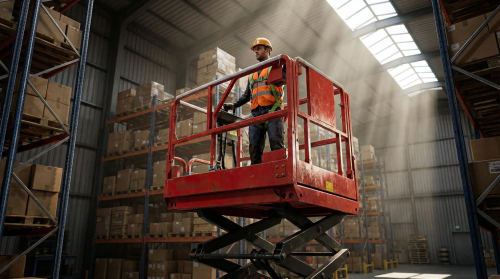
Fire protection on electric scissor lifts revolves around two main options: portable fire extinguishers and on‑board suppression systems. Both approaches must satisfy regulatory expectations from MSHA, OSHA-aligned standards, and NFPA 10, while answering the practical question “does electric scissor lifts require fire extinguishers” for a given site. Engineers and safety managers must match the protection method to the lift’s fire load, operating environment, and escape risk profile. The following sections compare technologies, selection criteria, and integration with modern monitoring and telematics.
Portable extinguishers vs. on‑board suppression systems
Portable extinguishers mounted on the guardrail or chassis provide the simplest option for electric scissor lifts. They support manual response to early‑stage fires involving batteries, hydraulic components, or nearby combustibles. In mining applications governed by 30 CFR 56.4230 and 57.4230, a portable extinguisher or a manually activated suppression system must be on the lift whenever a fire could impede escape. If a fire would not impede escape but could affect others, the extinguisher may be within 30 m of the equipment instead of on‑board. On‑board suppression systems typically use fixed nozzles directed at engine compartments, battery trays, or hydraulic manifolds and discharge after manual actuation. These systems suit high‑risk environments where an scissor platform operates continuously near fuels, dust, or confined headings and where rapid flame knock‑down is critical for egress.
Selecting extinguisher class, rating, and size
Electric scissor lifts introduce mixed fire hazards: Class A (platform debris, packaging), Class B (hydraulic fluids), and Class C (energized electrical components). A multipurpose dry chemical extinguisher with at least 2A:10B:C rating typically covers these hazards for general industry and construction. In mining or heavy industrial service, engineers often specify higher ratings, such as 4A:40B:C or larger, to address greater fire load and limited egress paths. The selected unit must comply with NFPA 10 and 49 CFR 173.309 for construction, charging gas quality, and burst strength. For lithium‑ion traction batteries, risk assessments may justify additional agents such as clean agents or water‑mist units positioned near the lift, because conventional dry chemical mainly suppresses surface flames and does not stop thermal runaway. The chosen size must remain operable by a harnessed operator, so excessive mass or nozzle reaction is undesirable despite higher rating.
Mounting, access, and operator ergonomics
Mounting design strongly affects whether a fire extinguisher on an electric scissor lift is usable during an emergency. NFPA 10 recommended that portable units remain visible, unobstructed, and mounted with the handle no higher than about 1.5 m above the standing surface for heavier units. On a scissor platform lift, engineers often place the bracket at the platform entrance or mid‑rail so a tethered operator can reach it without overreaching or stepping onto mid‑rails. Brackets must withstand vibration, shock, and corrosion from outdoor exposure, which aligns with transportation and coating requirements in 49 CFR 173.309. Quick‑release mechanisms should allow a gloved operator to remove the extinguisher with one hand while maintaining three points of contact. Designers also consider ground‑level access; some fleets add a second unit on the chassis so ground personnel can attack a fire if the platform is elevated or blocked.
Integration with AI‑based monitoring and telematics
Modern electric scissor lifts increasingly integrate fire protection with AI‑based monitoring and telematics. Temperature, current, and gas sensors near battery packs and power electronics can feed anomaly‑detection algorithms that flag overheating long before visible flames occur. Telematics modules then transmit alerts to site control rooms or fleet managers, supporting quicker decisions on whether to lower and isolate the lift. When a manually activated suppression system is installed, position switches or pressure transducers can report discharge events, enabling automated work orders and regulatory reporting. Digital records help demonstrate compliance with MSHA and NFPA 10 documentation expectations, especially where risk assessments addressed whether aerial platform require fire extinguishers or fixed systems. Integration with digital twins allows engineers to simulate heat release, ventilation, and escape routes, then adjust extinguisher location, agent type, and sensor thresholds to keep residual risk within corporate and insurer tolerances.
Compliance, Inspection, And Lifecycle Management
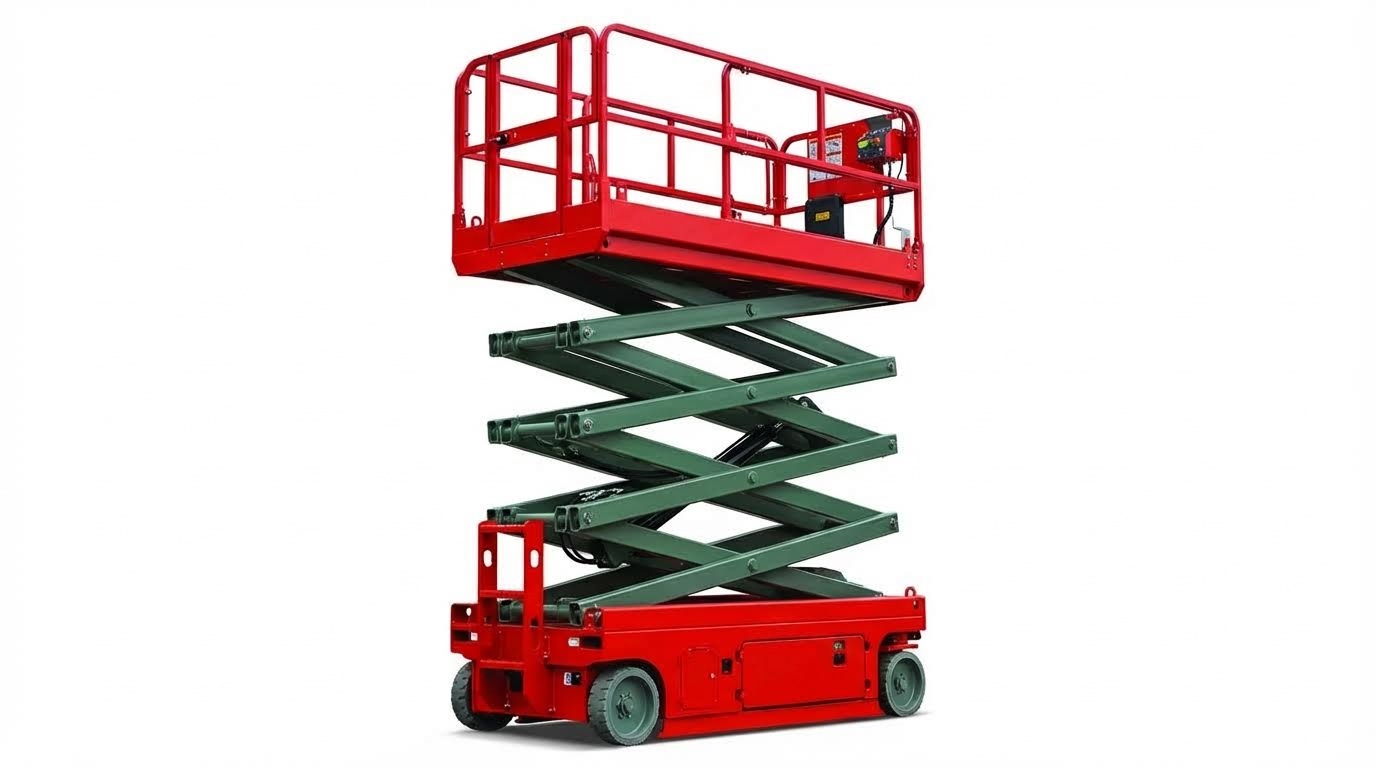
Compliance for fire extinguishers on electric scissor lifts linked directly to the question “does electric scissor lifts require fire extinguishers” required a code-based approach rather than assumptions. Engineers and safety managers had to interpret MSHA, DOT, NFPA, OSHA, and local rules together, then embed those requirements into procurement, inspection, and lifecycle plans for each lift fleet. The goal was not only to answer whether extinguishers were required, but to ensure that any installed units stayed functional, documented, and compatible with the lift’s duty cycle and environment.
Applying 30 CFR, 49 CFR, NFPA 10, and local codes
For mining operations, 30 CFR 56.4230 and 57.4230 governed self-propelled equipment, which included self-propelled electric scissor platform lift. Under these rules, a fire extinguisher or manually activated suppression system had to be on the lift whenever a fire could impede the operator’s escape; if escape was unaffected but others nearby were at risk, an extinguisher could be either on the lift or within 30 m. This meant that in surface or underground mines, the answer to “does electric scissor lifts require fire extinguishers” was usually yes, unless a defensible risk assessment proved otherwise. NFPA 10 defined selection, installation, inspection, and testing of portable extinguishers used on or near lifts, while 49 CFR 173.309 applied when extinguishers were shipped with new or refurbished machines, dictating cylinder design, burst pressure, markings, and packaging. Local and state rules, such as Michigan’s separation of aerial platform design standards from firefighting equipment standards, often referenced ANSI A92 series for platform design while pushing fire extinguisher details into separate fire or general industry codes, so site safety plans had to bridge that gap explicitly.
Inspection, testing, and documentation routines
Once an electric scissor lift carried an extinguisher, NFPA 10 and OSHA 29 CFR 1910.157 drove the inspection regime. A competent person had to perform an initial inspection at installation and monthly visual checks afterward, confirming that the extinguisher stayed in its bracket, remained visible, accessible from the platform or ground, and showed no mechanical damage, leakage, or low pressure. Monthly tags or digital records needed the date and inspector’s name, typically retained for at least 12 months for audit readiness. Annual maintenance by a certified technician included disassembly as required, verification of the extinguishing agent and expellant, and replacement of damaged components. Internal examinations and hydrostatic tests followed NFPA 10 intervals, for example a 6‑year internal exam for dry chemical units and 5‑ or 12‑year hydrostatic testing depending on cylinder type. Fleet managers increasingly tied these cycles into computerized maintenance management systems so that lift PM work orders automatically included extinguisher checks, keeping the compliance answer to “does electric scissor lifts require fire extinguishers” synchronized with real-world readiness.
Managing corrosion, vibration, and environmental exposure
Scissor lifts exposed extinguishers to vibration, impacts, and weather that accelerated degradation compared with wall-mounted units. 49 CFR 173.309 required non-corrosive agents and corrosion-resistant coatings on cylinders, but field conditions still demanded additional controls. Mounting brackets had to restrain the cylinder against continuous vibration and platform movement without deforming the shell or obstructing quick release. Inspectors looked for paint loss, rust, denting, or powder caking, especially on lifts used outdoors, in coastal sites, or in corrosive industrial atmospheres. In cold climates, engineers verified that the selected agent and charge pressure stayed within manufacturer limits at low ambient temperature to avoid pressure loss and nozzle blockage. Where electric scissor lifts operated in washdown or chemically aggressive environments, stainless hardware, sealed pins, and protective covers reduced the risk that a required extinguisher would fail when needed.
Cost, reliability, and digital twin–based maintenance
Lifecycle management balanced the cost of extinguishers and inspections against fire risk, downtime, and regulatory exposure. A single 5 kg ABC or BC unit had low capital cost, but recurring inspections, hydrostatic testing, and replacements scaled quickly across large fleets of electric scissor lifts. Reliability engineering treated extinguishers as safety-critical components with defined failure modes, such as loss of charge, mechanical damage, or inaccessible mounting. Digital twin approaches extended this by linking each lift’s utilization profile, environment, and maintenance history to predictive models that estimated when an extinguisher’s failure probability rose above acceptable thresholds. Integrating inspection data, telematics, and digital twins allowed operators to move from fixed-interval servicing to risk-based maintenance, while still meeting NFPA 10 and CFR requirements. In practice, this meant that when a site’s risk assessment concluded that electric scissor lifts required fire extinguishers, engineers could support that decision with a robust, data-driven lifecycle plan rather than treating extinguishers as static, low-priority accessories.
Summary: Practical Compliance And Safety Conclusions
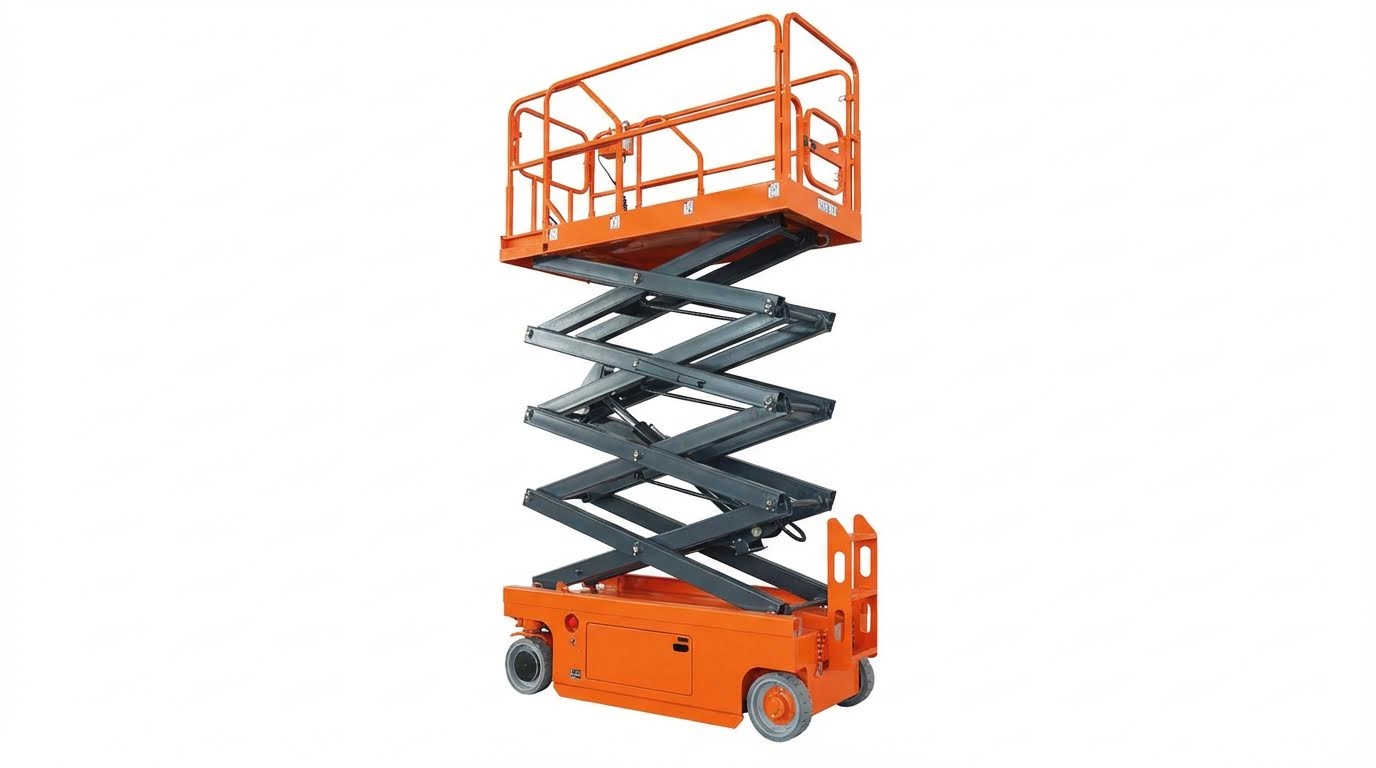
Electric scissor lifts did not always require on-board fire extinguishers under every standard, but recent rules created clearer triggers. Mining regulations in 30 CFR 56.4230 and 57.4230 required extinguishers or manually activated suppression systems on self-propelled equipment whenever a fire could impede escape or affect others. In those cases, an extinguisher on the lift or within 30 m remained mandatory, and it had to match the inherent hazards, including electrical and hydraulic fires. Outside mining, OSHA and state rules referenced NFPA 10 and aerial platform standards, which focused on accessible extinguishers on the site rather than explicitly on each lift.
For operators asking “does electric scissor lifts require fire extinguishers,” the practical answer depended on environment, risk, and authority having jurisdiction. In mining or high-risk industrial sites with congested egress, on-board units or suppression systems were effectively required. In general industry, employers met obligations if extinguishers of the correct class and rating were within travel-distance limits and kept visible, accessible, and maintained per NFPA 10. Site policies, insurers, and telematics-based safety programs increasingly pushed toward standardizing a Class C or multipurpose unit mounted on the platform or chassis.
Future trends pointed toward integrated protection rather than simple add-on extinguishers. AI-supported monitoring and digital twins already supported condition-based maintenance for extinguishers and suppression systems, reducing failures from vibration, corrosion, and environmental exposure. As data accumulated, regulators were likely to tighten expectations for self-propelled access equipment, especially in enclosed or underground spaces. A balanced strategy treated on-board fire protection for electric scissor lifts as part of a broader risk-engineered system: correct agent selection, compliant transport under 49 CFR 173.309, disciplined NFPA 10 inspection routines, and documented operator training on when and how to use the equipment versus evacuating.