Drum spill pallets were engineered to answer a simple question: what are drum spill pallets and how do they keep hazardous liquids contained in real plants. This article walked through their core functions and regulatory requirements, including how EPA, OSHA, SPCC, and global rules defined minimum sump capacity and secondary containment performance. It then compared types, materials, and design features, from drum counts and deck heights to LLDPE versus steel construction, fork pockets, drain plugs, and low-profile layouts. Finally, it translated these concepts into engineering sizing and selection methods so you could right-size drum spill pallets for your specific inventory, traffic patterns, and inspection regime while maintaining safe, compliant drum containment.
Core Functions And Regulatory Requirements
Engineers who ask “what are drum spill pallets” usually want to understand both function and compliance. This section explains how spill pallets work inside real plants, which regulations drive their design, how to size sump capacity, and where facilities typically fall short. It focuses on practical, calculation-ready guidance that links engineering decisions to EPA, OSHA, SPCC, and comparable global rules.
What Drum Spill Pallets Actually Do In A Plant
Drum spill pallets act as secondary containment for drums holding hazardous liquids. They sit under 200 litre or 55 gallon drums and capture leaks, drips, and catastrophic failures. The pallet deck supports the drum weight, while the integrated sump stores released liquid. Typical units range from single-drum pallets with about 42 litres capacity to 10-drum platforms with up to 1600 litres. Plants use them to isolate spills from floor drains, soil, and surface water, reducing clean-up time and limiting contamination. They also create a defined storage zone, which simplifies inspections and inventory control. In loading areas, low-profile decks improve ergonomics and reduce lift height for manual pallet jack equipment. Fork pockets or pallet jack access allow safe relocation of fully loaded containment modules.
Key EPA, OSHA, SPCC And Global Rules
Regulations answered the question “what are drum spill pallets for” by defining secondary containment performance. In the United States, EPA 40 CFR 264.175 required containment systems to hold at least 10% of the total stored volume or 100% of the largest container, whichever was larger. SPCC rules in 40 CFR 112.7 applied similar logic to oil storage near navigable waters. OSHA hazardous materials standards focused on worker protection, mandating stable storage, spill control, and safe access. Other regions followed comparable approaches, such as the UK’s PPG26 and Oil Storage Regulations 2001, or national dangerous goods storage codes. Fire codes and standards like AS 1940:2017 restricted plastic bunds for flammable liquids in some jurisdictions, pushing steel or concrete solutions. Across these frameworks, inspectors expected documented calculations, compatible materials, and maintained containment integrity.
How To Calculate Required Sump Capacity
Engineers size drum spill pallet sumps using simple volumetric rules. First, convert all container sizes to litres and sum the total stored volume on the pallet. Then calculate 10% of this total and compare it to the volume of the single largest container. The required minimum containment equals the larger of these two values. For example, a four-drum pallet storing four 200 litre drums had a total of 800 litres. Ten percent equalled 80 litres, while the largest single drum equalled 200 litres, so the minimum compliant sump was 200 litres. A typical 4-drum pallet with a 250 litre sump exceeded this requirement with a margin. For large multi-pallet installations, designers often sized the overall bunded area, not each individual pallet, but still documented the same comparison. Always verify whether local rules require 110% of the largest container, which increased the design volume.
Common Compliance Gaps In Real Facilities
Real plants often installed drum spill pallets yet failed full regulatory compliance. A frequent gap involved undersized sumps; for instance, decks with 80 litres capacity used under four 200 litre drums that required at least 200 or 220 litres. Another issue arose when operators mixed incompatible chemicals in a single containment area, creating reaction risks during a multi-drum failure. Outdoor storage introduced further problems, where uncovered pallets filled with rainwater and lost effective free volume for actual spills. Facilities sometimes blocked fork pockets or inspection access with adjacent racking, which hindered emergency response and routine checks. Cracked grates, UV-degraded plastic, or corroded steel sumps remained in service without leak testing or repair. Documentation gaps also caused findings, especially missing sizing calculations, inspection records, and written procedures for emptying and cleaning sumps. Addressing these issues required both engineering corrections and disciplined operational controls.
Types, Materials, And Design Features
When engineers ask “what are drum spill pallets” in practice, they focus on capacity, materials, and handling features. This section explains how drum counts, deck heights, construction materials, and design details influence compliance and day‑to‑day plant performance. It links real dimensions and sump volumes to regulatory rules so selection decisions stay defensible and auditable.
Drum Counts, Deck Heights, And Layout Options
Drum spill pallets answered the question “what are drum spill pallets” by acting as compact bunded platforms for 55‑gallon drums. Configurations typically ranged from 1‑drum units at about 670 x 670 x 150 millimetres to 10‑drum platforms around 3400 x 1600 x 460 millimetres. A 4‑drum pallet measuring roughly 1330 x 1330 x 430 millimetres with a 488‑litre sump illustrated how designers balanced footprint, ergonomic access, and containment volume. Low‑profile decks, often near 150 millimetres high, reduced lifting effort and enabled manual pallet jack or small pallet trucks to load drums safely. Plants chose between square 4‑drum layouts for dense storage, linear 2‑drum decks for aisle access, and multi‑module systems that locked together to create longer containment runs. Layout decisions had to consider egress routes, eye‑wash access, and fork‑truck turning radii as well as regulatory bund volume.
LLDPE, Steel, And Hybrid Construction Choices
When evaluating what are drum spill pallets from a materials perspective, engineers compared linear low‑density polyethylene (LLDPE), steel, and mixed or hybrid systems. LLDPE pallets used rotationally moulded one‑piece sumps that resisted corrosion from oils, many acids, and alkalis, and they offered UV‑stabilised performance for outdoor exposure. Typical LLDPE units supported drum loads up to roughly 2000 kilograms for 2‑drum models and 3000 kilograms for 4‑drum models, provided loads were evenly distributed. Steel spill pallets, often 3–4 millimetres thick, handled flammable liquids and high‑temperature environments where plastic bunds were restricted by standards such as AS 1940‑2017. Hybrid strategies combined plastic pallets for corrosives with steel units for flammables on the same site, simplifying compliance mapping and emergency response planning.
Load Ratings, Fork Pockets, And Grating Design
Understanding what are drum spill pallets also required attention to structural design and handling features. Static load ratings had to exceed the combined mass of full drums plus safety factors, so a 4‑drum pallet storing four 200‑litre drums typically needed to support at least 3000 kilograms. Engineers checked that fork pockets provided either two‑way or four‑way entry and allowed clearance for standard fork dimensions without striking the sump. Grating systems, usually removable polyethylene or steel, distributed drum loads while allowing leaked liquid to drain into the sump. Anti‑slip textures and closed edges reduced trip risks and drum creep under vibration from traffic. Removable grates simplified inspection and cleaning, which improved the reliability of leak detection and sump integrity checks over the pallet’s service life.
Drain Plugs, Warning Colors, And Low-Profile Decks
From a functional standpoint, what are drum spill pallets without controlled emptying and clear visual cues. Drain plugs or bungs, often threaded polymer or metal fittings, allowed operators to decant captured liquid into recovery containers without dismantling the drum layout. Engineers specified plug sizes and chemical‑resistant seals that matched site transfer hoses and avoided cross‑threading failures. High‑visibility warning colors, such as yellow or orange, increased pallet detectability in congested warehouses and reinforced the presence of a controlled bund area. Low‑profile designs around 150 millimetres high reduced manual handling strain and enabled easier loading from floor level, especially for 2‑ and 4‑drum decks with capacities between roughly 70 and 165 litres. Together, drains, color coding, and reduced deck heights turned basic containment platforms into integrated safety devices that supported both compliance and lean material flow.
Engineering Sizing And Selection For Your Site
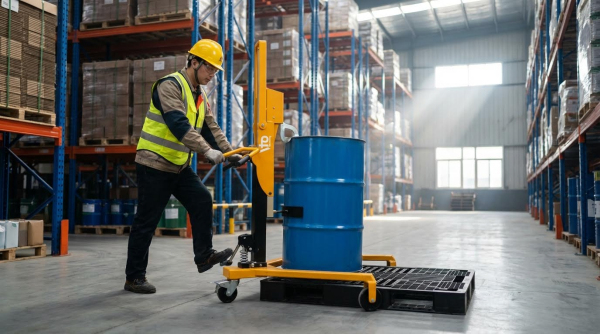
Engineering the right drum spill pallet solution starts with understanding what drum spill pallets are in relation to your specific inventory, flow, and risk profile. Correct sizing and selection depend on drum count, containment capacity, chemical compatibility, and how operators move and handle loads. This section explains how to translate regulations and traffic patterns into concrete pallet dimensions, materials, and lifecycle strategies that work in real plants.
Matching Pallet Size To Drum Inventory And Flow
Engineers should start by mapping actual and forecast drum counts by area, not just total site inventory. Convert container sizes into litres, then size spill pallets so each group of drums sits on a platform with compliant secondary containment. Typical configurations range from single-drum units around 67 x 67 x 15 centimetres with a 42 litre sump to 10-drum platforms near 340 x 160 x 46 centimetres with a 1600 litre sump. For 200 litre or 55 gallon drums, a 4-drum pallet with a 488 litre sump usually exceeded the 110 percent of largest-container rule and the 10 percent-of-total rule. However, engineers still needed to verify this against local regulations and worst-case leak scenarios.
Flow analysis mattered as much as static storage. High-throughput transfer zones benefited from low-profile decks around 150 millimetres high because they reduced manual handling effort and ramp lengths. Bulk storage zones worked better with taller, higher volume bunded pallets that prioritised sump capacity over access height. Layout planning should align pallet footprints with aisle widths, forklift turning radii, and emergency egress. Grouping drums by chemical family on dedicated pallets also simplified labelling, inspection, and emergency response.
Material Compatibility And Chemical Resistance
Material selection depended on what drum spill pallets are exposed to during their service life, including vapours, wash-down chemicals, and UV radiation. Linear low-density polyethylene (LLDPE) pallets offered broad resistance to oils, fuels, and many acids and alkalis, and their seamless rotationally moulded construction reduced leak risk. They suited most general chemical warehouses, pharmaceutical plants, and food-related applications where corrosion-free, easy-to-clean surfaces were important. Steel or stainless steel spill pallets fit flammable liquids, high-temperature drums, and situations where local standards discouraged plastic bunds for flammable storage. Galvanized steel versions tolerated outdoor exposure but could react with aggressive acids or strong alkalis, so engineers needed to check chemical compatibility charts for each substance class.
Hybrid strategies often worked best. Facilities sometimes used steel pallets under flammable solvents and LLDPE pallets for oxidisers or corrosives. Engineers should also consider long-term degradation from UV and thermal cycling, especially outdoors. UV-stabilised LLDPE extended life under solar exposure, while painted or coated steel required periodic inspection for coating breakdown. Compatibility decisions should include emergency conditions such as firewater runoff and mixed-chemical spills, not only normal operating contact.
Indoor Vs Outdoor Use, Traffic, And Handling
Indoor and outdoor locations imposed different engineering constraints on drum spill pallets. Outdoors, engineers had to consider rainfall entering open bunds, snow loading, and UV ageing. In such areas, larger sumps, weather covers, or integration with roofed storage reduced the risk of overtopping during storms. Galvanized steel or UV-stabilised LLDPE with documented temperature ratings performed better in exposed yards. Indoors, floor flatness, doorway clearances, and interaction with racking dictated maximum pallet height and footprint. Low-profile decks around 150 millimetres high eased hydraulic pallet truck access in tight production cells.
Traffic patterns and handling equipment strongly influenced design choices. Four-way fork pockets improved manoeuvrability in dense layouts and reduced the need for long reversing manoeuvres. Engineers should verify static and dynamic load ratings against worst-case conditions, for example four 3000 kilogram rated drums plus impact factors from forklift placement. Anti-slip grating and high-visibility colours improved safety where operators frequently stepped onto decks. Where pallets sat in high-traffic forklift aisles, recessed or protected drain plugs and robust corner geometry reduced damage from glancing impacts.
Inspection, Testing, And Lifecycle Cost Control
Engineering selection should include a plan for inspection and testing to maintain performance over the pallet’s life. Facilities benefited from standardised checklists covering sump integrity, surface cracking, corrosion, grating condition, and fork-pocket deformation. Periodic leak tests with water or dyed liquid verified that what drum spill pallets are designed to do in theory still occurred in practice. For plastic units, engineers monitored for UV chalking, embrittlement, or distortion. For steel units, they checked for coating failure, rust pitting, and weld cracks, especially around sumps and corners.
Lifecycle cost control came from matching durability to risk and usage intensity rather than buying solely on purchase price. Heavy-duty models with reinforced structures and higher load ratings cost more upfront but reduced failure risk and unplanned replacements in high-load areas. Drain plugs and removable grates lowered cleaning and waste-handling costs by simplifying sump emptying. Standardising on a limited set of footprints and capacities reduced spare parts complexity and training time. Engineers should document expected service life, inspection intervals, and retirement criteria so that drum spill pallets remained reliable secondary containment assets rather than unverified legacy equipment.
Summary: Safe, Compliant Drum Containment Choices
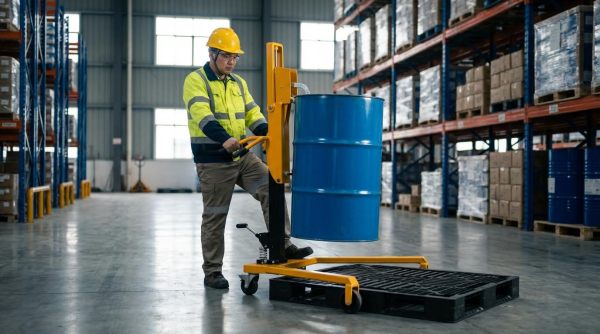
Drum spill pallets answered the core question “what are drum spill pallets” by functioning as engineered secondary containment for drums holding hazardous liquids. They supported 55 gallon (≈200 liter) drums and captured leaks, drips, and catastrophic failures before liquids reached soil, drainage systems, or work areas. Correctly sized systems met EPA 40 CFR 264.175 and SPCC capacity rules, OSHA hazardous materials handling requirements, and comparable global regulations by providing at least 110% of the largest single container or 10% of the total stored volume, whichever was greater. Plants that applied these rules consistently reduced environmental risk and avoided penalties for non‑compliance.
Engineering selection focused on matching drum count and flow to sump capacity and footprint. Typical ranges ran from single drum units with ≈42 liter sumps to 10 drum platforms with ≈1600 liter sumps. Designers evaluated layout, deck height, and handling routes to keep drum transfer ergonomic while preserving forklift or walkie pallet truck access. LLDPE constructions offered broad chemical resistance and UV stability for corrosive or outdoor duty, while steel and hybrid designs supported flammable liquids or high point loads. Low profile decks, fork pockets, non slip grating, and drain plugs simplified daily operations, cleaning, and periodic spill testing.
Future practice in drum containment pointed toward more data driven compliance and lifecycle optimization. Facilities increasingly integrated standardized inspection routines, periodic load and leak testing, and documented chemical compatibility checks into environmental management systems. Engineers also considered lifecycle cost by balancing purchase price against durability, reparability, and failure consequences. Well specified drum spill pallets, sized with conservative capacity margins and aligned with site traffic patterns, provided a robust, long term barrier between hazardous liquids and the environment while keeping operations efficient and audit ready.