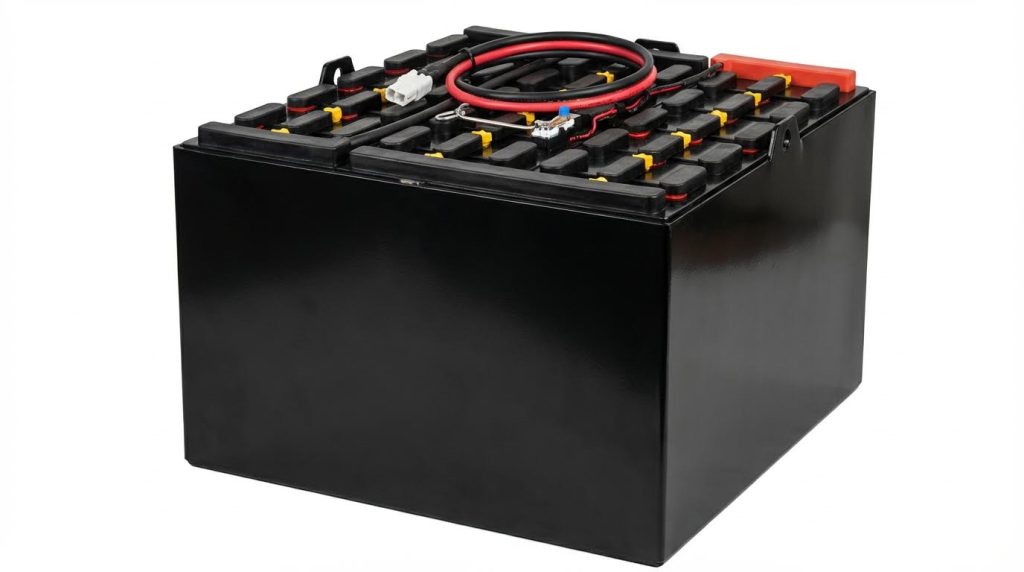
Electric forklift battery life decides how many hours you can run per shift, how often you change packs, and your true cost per pallet moved. This guide explains how long an electric forklift battery lasts in real operations, what controls runtime and cycle life, and which engineering practices keep performance high for years. You will see clear differences between lead-acid and lithium systems, plus practical ways to manage charging, temperature, and maintenance. By the end, you can answer “how long does an semi electric order picker battery last” for your own fleet and design a data-based plan to extend it.
Understanding Forklift Battery Runtime And Cycle Life
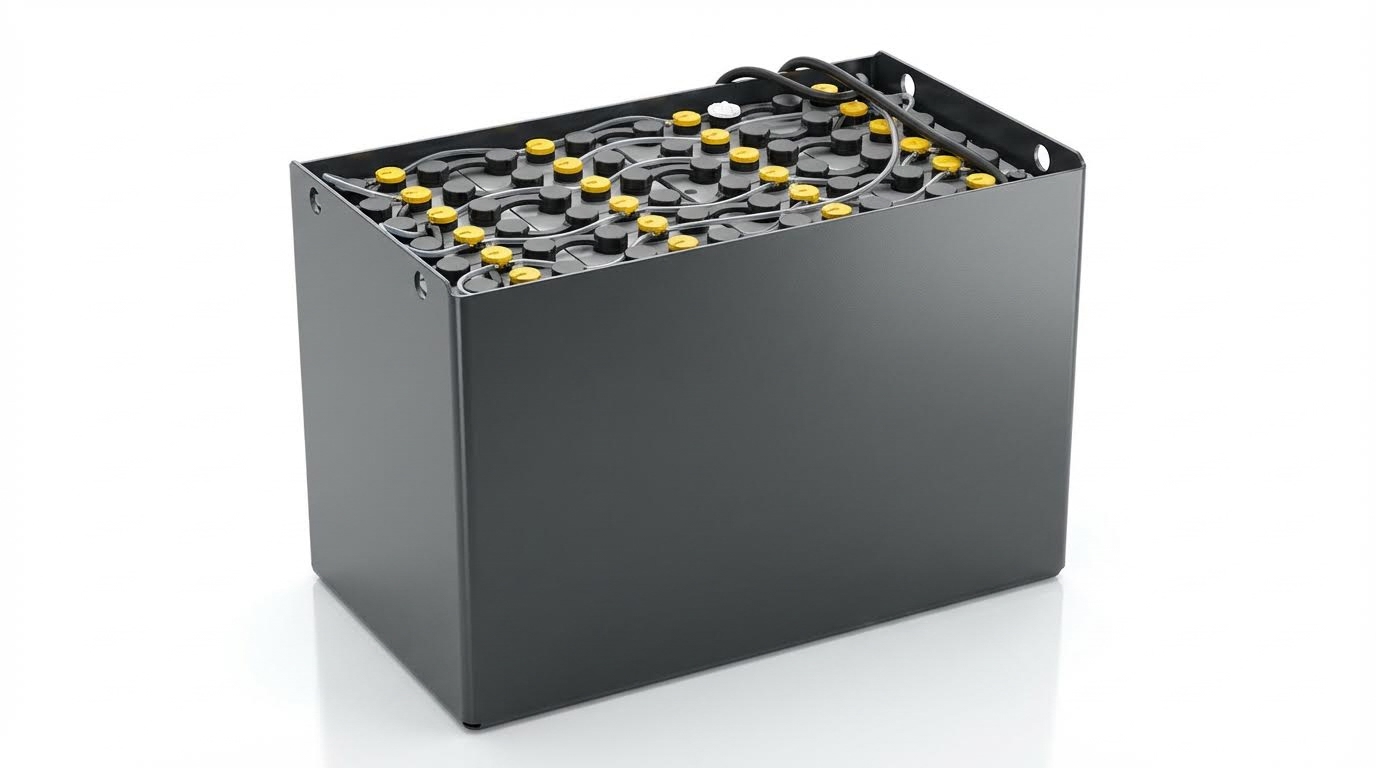
Defining runtime, shift length, and duty cycles
When managers ask “how long does an electric forklift battery last,” they usually mean two things: hours of runtime per charge and years of service life. This section focuses on runtime per shift and how duty cycle shapes that runtime.
In simple terms, runtime is the number of productive hours a truck can operate from a full charge down to its safe cut‑off state of charge (SoC). Actual hours depend on truck size, battery voltage/Ah rating, and how aggressively the truck is driven.
- Shift length: The planned working window, often 8, 10, or 12 hours.
- Runtime per charge: The usable operating hours you get from one battery before it must be recharged or swapped.
- Duty cycle: The pattern of work during that shift—how much time is spent lifting, driving, idling, and braking.
- Utilization: Percentage of the shift the truck is actually moving or lifting, not parked.
- Energy intensity: How “hard” the work is (heavy loads, long travel distances, ramps, high lift heights).
Why duty cycle matters more than nameplate capacity
Two trucks with the same battery can see very different runtimes. A high‑throughput warehouse with continuous lifting, long travel, and aggressive acceleration can drain a pack in half the hours of a light‑duty application. Regenerative braking can recover about 15% of braking energy and save roughly 18–22 kWh over a 12‑hour shift in some electric forklift applications, which effectively extends runtime in stop‑and‑go work by reducing net energy draw.
Runtime is also shaped by charging strategy. Lithium packs support opportunity charging, so a 15‑minute top‑up can add around 25% capacity, keeping a truck running for 22+ hours per day in multi‑shift operations when scheduled correctly without harming cycle life. Lead‑acid batteries, by contrast, typically need full discharge/charge cycles and cooling time, which caps practical runtime to about 16 hours per day in most fleets because partial charging promotes sulfation.
Cycle life expectations for lead-acid vs lithium-ion
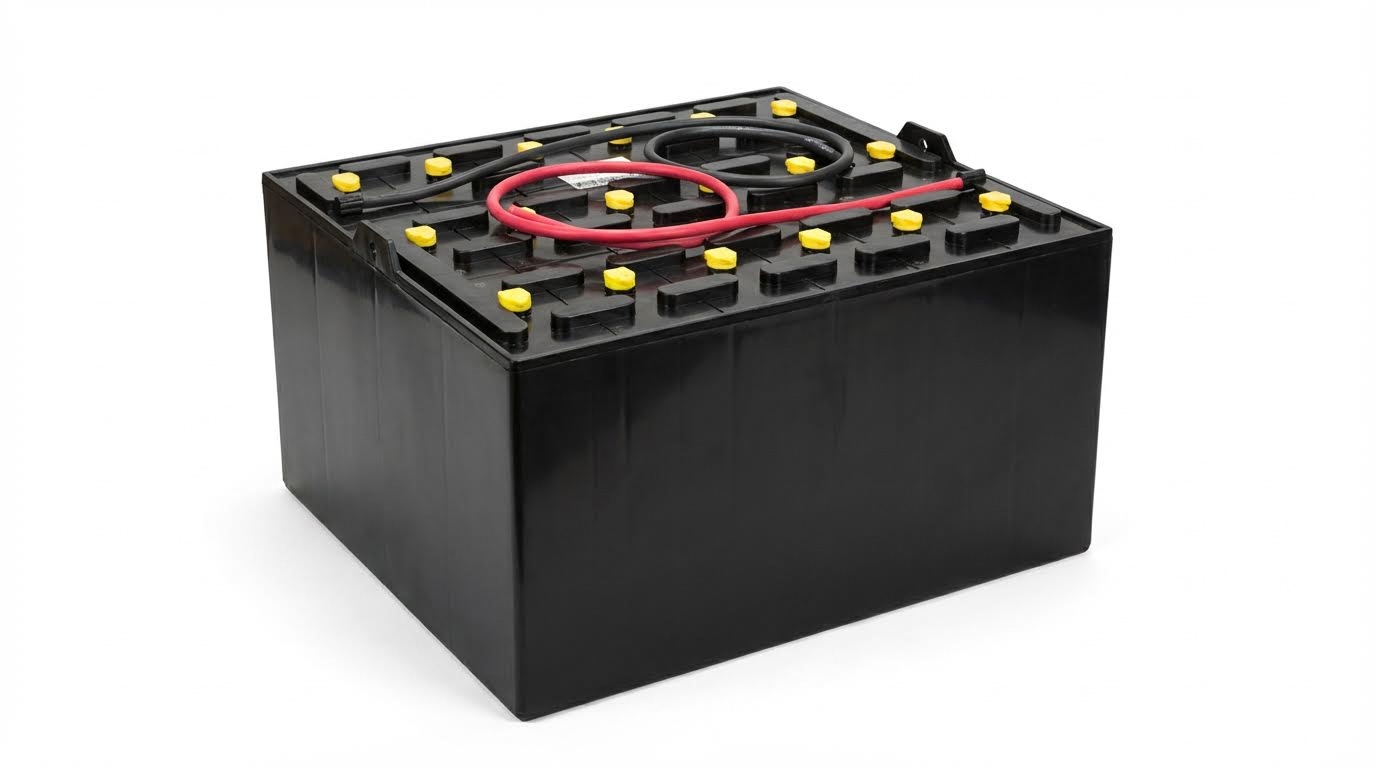
Cycle life answers the second half of “how long does an electric forklift battery last”: how many charge/discharge cycles you can expect before the pack drops to about 70–80% of original capacity. Chemistry, depth of discharge, temperature, and charging habits all control this.
| Parameter | Lead-acid Forklift Battery | Lithium-ion / LiFePO4 Forklift Battery |
|---|---|---|
| Typical cycle life (to ~70–80% capacity) | ≈ 500–1,000 full cycles under standard industrial use | ≈ 2,000–4,000+ cycles with proper charging and temperature control |
| Preferred depth of discharge (DoD) | Regular deep cycles; avoid chronic undercharging to prevent sulfation and schedule equalization | Shallow cycles (about 20–80% SoC window) maximize life; deep discharges below ~20% can degrade cells up to 3× faster in industrial service |
| Temperature sensitivity | Every 10°C above ~25°C can halve service life due to accelerated corrosion and water loss so hot charging rooms are costly | Best longevity in roughly 15–35°C; exposure above 45°C or below 0°C sharply accelerates degradation and can cause lithium plating if charging is not controlled |
| Charging time and pattern | Full charge: about 6–8 hours plus 4–8 hours cooling, giving up to 12 hours total turnaround so spare batteries are common | Full charge: about 1–3 hours; supports frequent opportunity charging during breaks without life penalty when kept in moderate temperatures and proper chargers are used |
| Maintenance impact on life | Requires regular watering, cleaning, and equalization; poor maintenance can sharply cut cycle life and increase safety risk through sulfation and corrosion | Generally maintenance‑free; onboard BMS protects against overcharge, over‑discharge, and overheating to preserve cycles and logs data for fleet optimization |
| Typical daily runtime strategy | Best used in one deep cycle per day; opportunity charging is limited and, if mismanaged, can shorten life because undercharging drives sulfation | Supports multi‑shift operation with partial charges; 20–80% SoC operation can deliver 4,000–6,000 equivalent cycles in optimized fleets when temperature and charge rates are controlled |
From an engineering standpoint, the answer to “how long does an electric forklift battery last” is therefore conditional. A well‑maintained lead‑acid pack in a single‑shift operation might deliver several years of service and around 500–1,000 cycles, but it will need strict watering, cleaning, and charging discipline to get there. A lithium‑ion or LiFePO4 pack, run between roughly 20–80% SoC, kept within its temperature limits, and charged with a matched CC/CV profile, can realistically provide 2,000–4,000+ cycles and support heavier multi‑shift usage before capacity loss becomes operationally limiting with lower maintenance burden.
“”
Engineering Practices To Extend Forklift Battery Performance
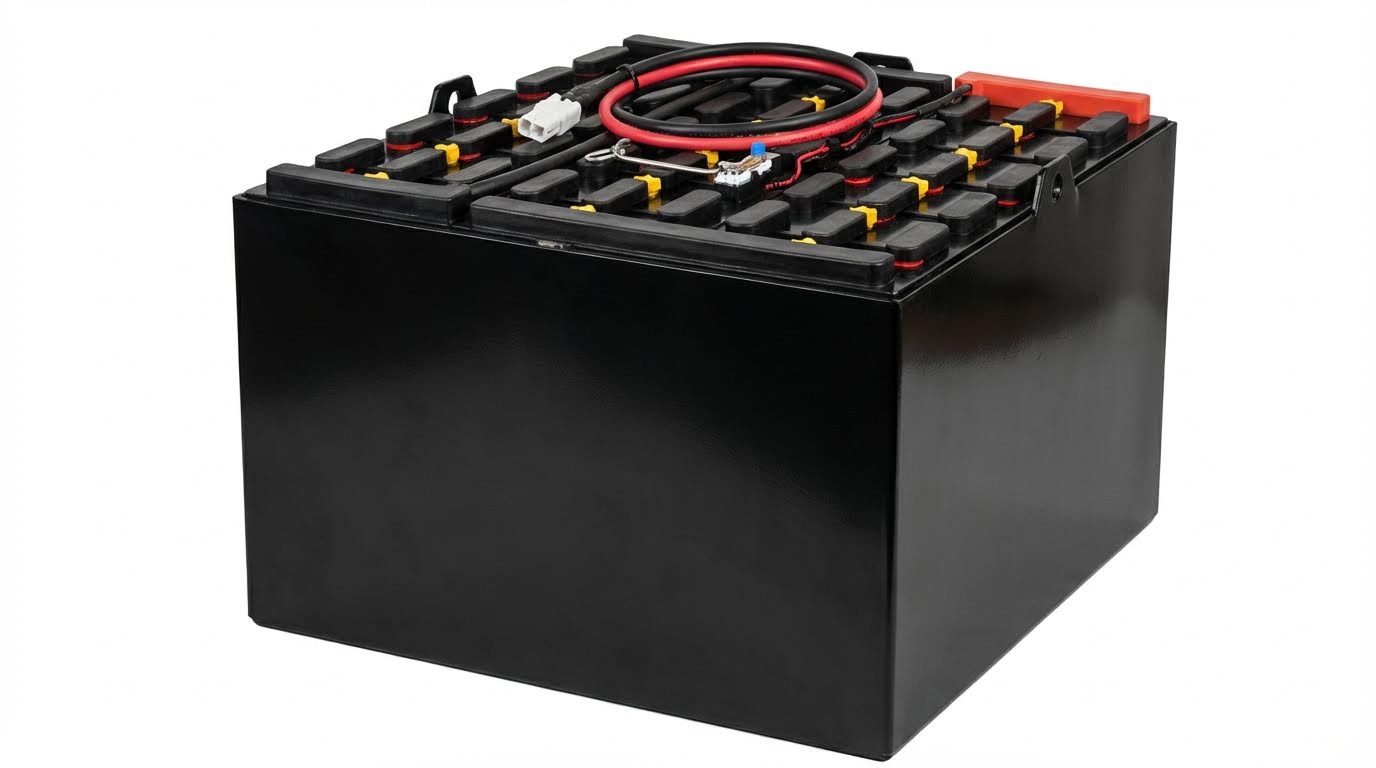
Opportunity charging, load management, and routes
Good engineering practice focuses on how the truck actually works day to day. Charging windows, load patterns, and route design all decide how long does an electric forklift battery last in real service, not just in the datasheet.
Use the following principles to stretch runtime, reduce heat, and increase cycle life for both lithium and lead-acid fleets.
- Keep lithium batteries in a mid‑SoC window (typically 20–80%) to maximize cycle count and reduce stress on cells Battery Lifespan Optimization.
- Plan opportunity charging during breaks, shift handovers, and low‑demand periods instead of long, single daily charges.
- Balance truck workloads and avoid chronic overloading, which drives up current draw and internal heating Load Management.
- Optimize routes to cut deadheading, sharp accelerations, and unnecessary lifts, which saves several kWh per shift Energy Efficiency Advantages.
- Use regenerative‑braking modes where available and train operators to brake smoothly so more kinetic energy is recovered Energy-Efficient Operation.
Why opportunity charging strategy must differ for lithium vs lead-acid
Lithium batteries support frequent partial charges and can even gain about 25% capacity in 15 minutes with suitable systems Opportunity Charging Flexibility. Lead-acid chemistry, however, needs full charges and regular equalization to avoid sulfation, so it is better suited to planned, longer charging windows rather than constant top‑ups Charging Protocol Effects on Lifespan.
| Practice Area | Lithium (Li-ion / LFP) | Lead-acid | Effect on real-world battery life |
|---|---|---|---|
| Typical charge time | ≈1–3 hours full charge Charging Time | ≈6–8 hours charge + 4–8 hours cooling Charging Time | Faster turnaround allows more, shorter charge windows without impacting availability. |
| Opportunity charging | Preferred: frequent partial charges (e.g., 20–80% SoC) Battery Lifespan Optimization | Use with caution; avoid constant short top‑ups and ensure full charges to prevent sulfation Charging Protocol Effects on Lifespan | Correct strategy extends cycle life and keeps runtime predictable. |
| Daily discharge target | Avoid below ~20% SoC to limit degradation Daily Practices for Forklift Battery Life Extension | Recharge around 20–30% remaining to protect plates Charging Best Practices | Shallower cycles increase total usable cycles and answer how long does an electric forklift battery last in years, not months. |
| Load and route management | Use lighter, more efficient trucks and plan smooth routes to exploit high efficiency (≈95%) Energy Efficiency | Avoid long, high‑load runs that heat batteries and increase gassing Load Management | Smoother duty cycles reduce temperature peaks and extend service life. |
Maintenance routines for Li-ion and lead-acid fleets
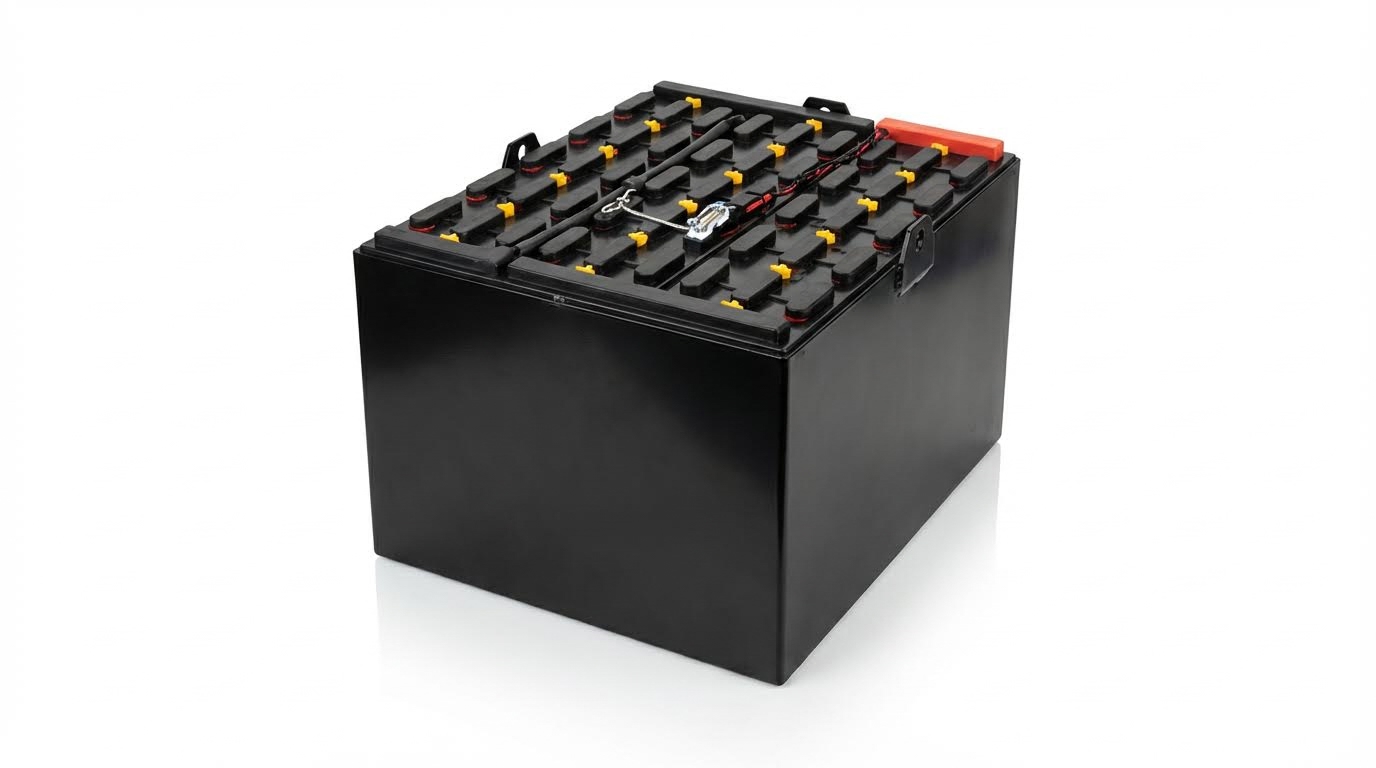
Maintenance discipline is the biggest lever you control after duty cycle. Different chemistries need different routines, but the goal is the same: keep resistance low, temperatures controlled, and cells balanced so runtime stays close to nameplate over the full life.
Use structured checklists by chemistry and by frequency to standardize practices across shifts and sites.
- Separate preventive maintenance plans for lithium and lead-acid; do not treat them as interchangeable systems.
- Align inspection intervals with shift patterns so checks happen when trucks are already offline.
- Log SoC, voltage, and temperature trends; use this data to refine charging windows and route planning Forklift Battery Inspection Frequency.
| Task Area | Li-ion / LiFePO4 Practices | Lead-acid Practices | Impact on performance & life |
|---|---|---|---|
| Routine inspections | Monthly checks for corrosion, swelling, leaks, and hotspots using thermal imaging Routine Maintenance of LiFePO4 Packs | Weekly checks for electrolyte level, cables, and corrosion Forklift Battery Inspection Frequency | Early detection of issues prevents sudden runtime loss and unplanned downtime. |
| Electrolyte / watering | Not required; cells are sealed and maintenance‑free Maintenance Requirements | Check levels weekly or every 5–10 charge cycles; top up with distilled water after cooling Watering and Cleaning (Lead-Acid Batteries) | Correct levels prevent plate exposure, sulfation, and permanent capacity loss. |
| Terminal care | Monthly cleaning, contact inspection, and dielectric grease every three months to limit resistance rise Maintenance for Uptime Maximization | Weekly visual checks and cleaning with neutralizing solution 3–6 times per year Watering and Cleaning (Lead-Acid Batteries) | Low resistance keeps voltage sag down and sustains lift speed late in the shift. |
| Charging protocol | Use LiFePO4‑specific CC/CV chargers; favor 20–80% SoC windows and avoid fast charging above 1C Optimal Charging Practices for LiFePO4 Batteries | Recharge when 20–30% discharged and always complete full charge cycles; perform equalization as specified Charging Best Practices | Correct charging is the main determinant of how long does an electric forklift battery last in cycles. |
| Temperature control | Keep charging between 0–45°C and avoid operation above 45°C where cycle life can halve Temperature’s Role in LiFePO4 Longevity | Target 15–25°C storage; every 10°C above 25°C roughly halves life Temperature’s Role in Battery Degradation | Lower and more stable temperatures slow chemical aging and preserve runtime. |
| BMS and diagnostics | Run monthly BMS diagnostics, firmware updates, and cell‑balancing checks; log SoC/voltage/temperature Maintenance for Uptime Maximization | Use voltage and temperature logs to predict failures even without a full BMS Forklift Battery Inspection Frequency | Predictive maintenance avoids sudden capacity drops and protects high‑duty trucks. |
- Train operators to perform quick pre‑shift checks for cracks, corrosion, leaks, and loose cables Operator Tips for Safe Battery Use.
- Torque terminals correctly and re‑check after heavy vibration duty to prevent micro‑movement and resistance increase Vibration and Shock Impact on LiFePO4 Batteries.
- Plan for extended closures: keep chargers powered, refresh‑charge about every three months, and recheck electrolyte afterwards Battery Maintenance During Closure.
Quick maintenance checklist by frequency
Daily / per shift
- Visual inspection of cables, casing, and connectors.
- Check SoC before and after shift; schedule opportunity charges if needed.
- Confirm chargers, ventilation, and cooling fans are operating.
Final Thoughts On Maximizing Electric Forklift Battery Life
Electric forklift battery life is not fixed at purchase. Engineering choices in duty cycle, charging, and temperature control decide real results. When you match runtime targets to shift length and energy intensity, you size packs correctly and avoid chronic deep discharge. That keeps voltage higher, trucks faster, and operators safer late in the shift.
Lead-acid fleets need strict watering, cleaning, and full-charge routines. If you skip these, sulfation grows, resistance rises, and runtime falls long before rated cycle life. Lithium fleets shift the focus to SoC window control, correct CC/CV chargers, and BMS data use. If you keep cells between roughly 20–80% SoC and within their temperature band, you can unlock multi-shift operation with stable runtime for years.
The best practice is simple. Start with measured duty-cycle data. Choose chemistry and capacity for that profile. Then lock in clear rules for charging, maintenance, and temperature control, backed by logged SoC and temperature trends. Treat batteries as critical power systems, not consumables. When you do this across every truck—from a single pallet mover to a high-lift semi electric order picker from Atomoving—you cut downtime, extend replacement intervals, and lower cost per pallet moved.
Frequently Asked Questions
How Long Does an Electric Forklift Battery Last?
The lifespan of an electric forklift battery depends on its type, usage, and maintenance. Lead-acid batteries typically last 5 to 8 years with proper care, while lithium-ion batteries can last over 10 years. Factors like frequent charging cycles, operating conditions, and regular maintenance play a significant role in determining the battery’s longevity. For more details, check this Battery Lifespan Guide.
How Long Do Pallet Jack Batteries Last?
Pallet jack batteries usually have different lifespans based on their type. Lead-acid batteries generally last 3 to 5 years, whereas lithium-ion batteries can endure 5 to 8 years with appropriate usage and care. Lithium-ion batteries also offer benefits like faster charging times and longer lifespans. Learn more about pallet jack batteries from this Warehouse Battery Guide.