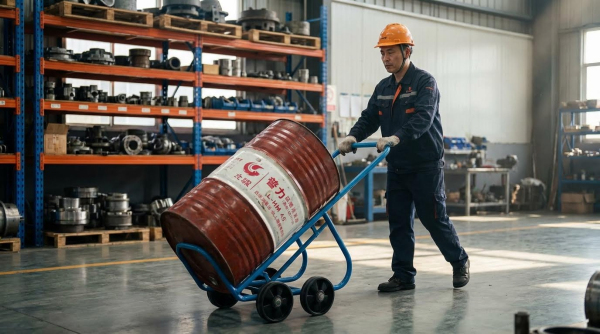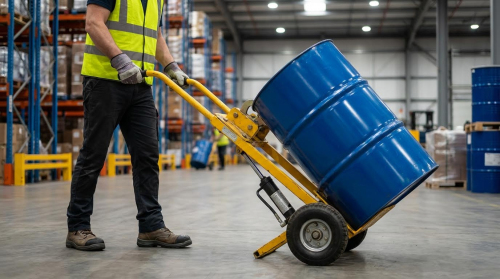
Industrial forklifts supported high-throughput material handling in warehouses, factories, ports, construction sites, and agricultural operations. This article examined core forklift architectures, comparing internal combustion and electric powertrains, hydraulic lifting behavior, stability, and ergonomic attachments.
It then analyzed warehouse and logistics use cases, including counterbalanced stacker on docks, reach and turret trucks in high-bay storage, and pallet equipment in fulfillment environments under strict safety regulations. Subsequent sections explored manufacturing cells, construction and field deployment, telescopic and multidirectional trucks, and how digital tools, predictive maintenance, and energy strategies optimized fleet performance.
Core Forklift Types And Functional Principles
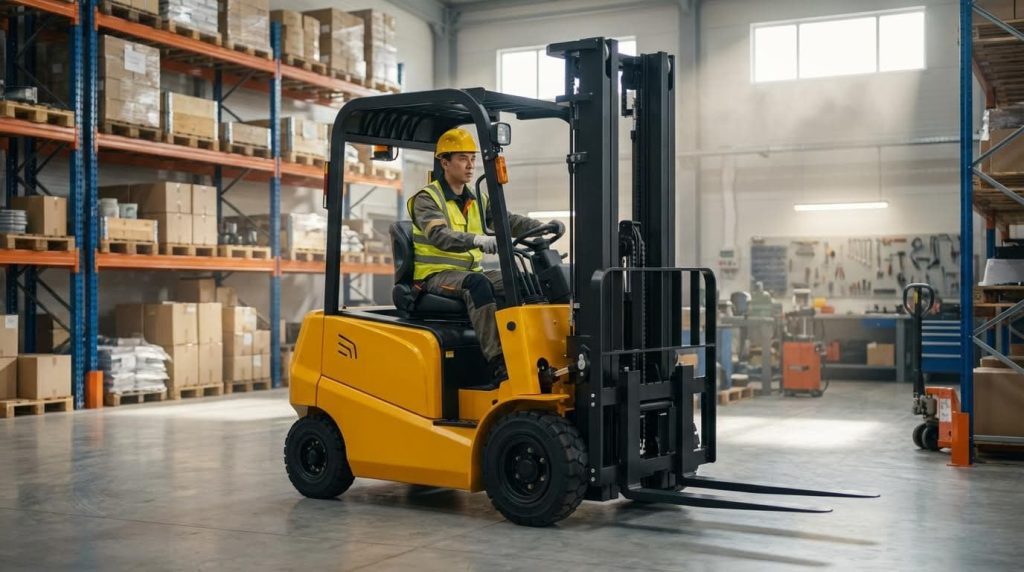
Core forklift types shared common functional principles that governed lifting, travel, and stability. Understanding these principles allowed engineers to match trucks to tasks, environments, and regulatory constraints. The following subsections outlined the key subsystems and design choices that defined performance, safety, and lifecycle cost.
Main Subsystems: Power, Chassis, Mast, And Electrics
Forklifts consisted of four primary subsystems: power unit, chassis, working device, and electrical equipment. The power unit included an internal combustion engine or an electric drive motor with associated transmission. The chassis integrated frame, axles, steering system, counterweight, overhead guard, and operator compartment, defining wheelbase, turning radius, and rated capacity envelope. The working device comprised the mast, carriage, forks, and hydraulic cylinders, forming the load path from ground to frame. Electrical equipment controlled traction, lifting, lighting, alarms, and safety interlocks, and in electric trucks included battery management and motor controllers. Coordinated design of these subsystems determined acceleration, braking behavior, mast deflection, and energy efficiency.
Internal Combustion Vs. Electric Powertrains
Internal combustion (IC) forklifts used gasoline, diesel, liquefied petroleum gas, compressed natural gas, or dual-fuel engines. They provided high continuous power, fast refueling, and strong performance in outdoor or high-duty-cycle applications. Electric forklifts used traction batteries and AC drive motors, offering zero local exhaust emissions and low noise, which suited warehouses, food storage, and retail distribution centers. Electric counterbalance trucks operated effectively indoors and outdoors when floor conditions permitted, with torque characteristics that favored precise low-speed control. Powertrain choice required analysis of duty cycle, ventilation, ambient temperature, fuel infrastructure, and charging windows, as well as total cost of ownership and regulatory limits on emissions and noise.
Hydraulic Lifting, Load Centers, And Stability Basics
The lifting system relied on hydraulic pumps driven by the power unit, feeding cylinders in the mast and tilt system. The mast and carriage supported the load through chains, rollers, and rails, while the hydraulic circuit controlled lift speed, lowering speed, and tilt angle. Rated capacity assumed a specified load center distance, typically 500 mm for standard pallets, with the load modeled as a rigid block. Increasing load center, mast height, or tilt angle reduced the stability margin around the longitudinal and lateral tipping axes. Engineers and operators had to consider ramp gradients, surface friction, and dynamic effects such as braking or turning with elevated loads. Stability calculations underpinned capacity plates and compliance with standards like ANSI and OSHA requirements.
Attachments, Fixtures, And Ergonomic Tilt Tables
Attachments modified the standard fork carriage to handle specific load geometries or processes. Common devices included clamps, side-shifters, rotators, and telescopic forks, each altering the effective load center and residual capacity. Special fixtures and tilt tables allowed controlled rotation or inclination of assemblies, improving ergonomics and reducing musculoskeletal injury risks during manual tasks. Additional hydraulic functions and control valves supported these attachments, requiring careful routing and protection of hoses along the mast. Engineers had to recalculate capacity, verify mast and carriage stress levels, and update nameplates whenever attachments changed. Proper integration ensured that enhanced functionality did not compromise stability, visibility, or compliance with safety standards. For instance, a hydraulic pallet truck could be used for efficient material handling, while a manual pallet jack offered flexibility in tight spaces. Additionally, a low profile pallet jack might be ideal for operations involving low clearance areas.
Warehouse And Logistics Forklift Applications
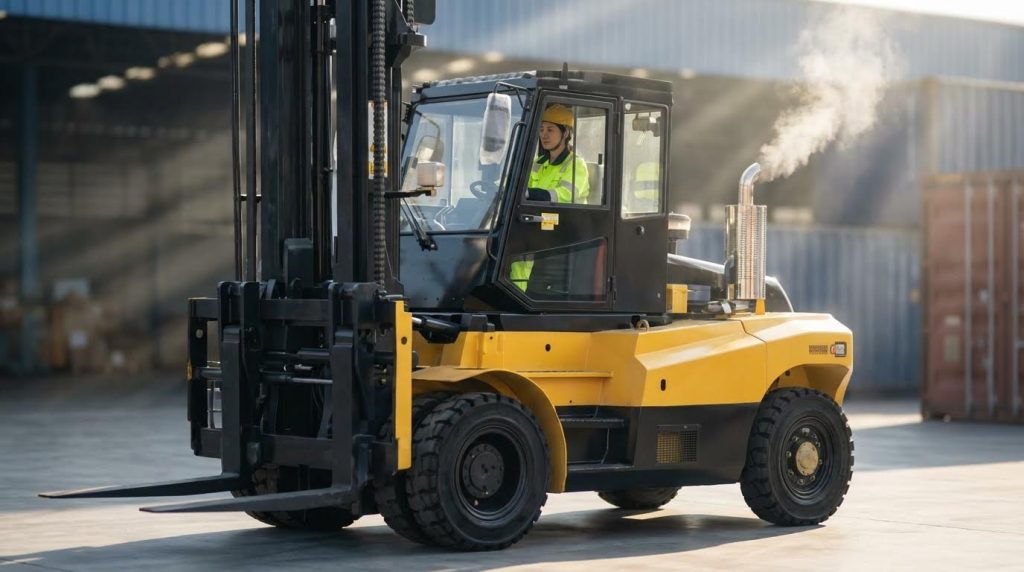
Warehouse and logistics operations relied on forklifts to connect receiving, storage, picking, and shipping with minimal manual handling. Different truck classes addressed distinct tasks, from dock work to very-narrow-aisle storage and case-level picking. Correct matching of truck type, aisle width, and racking pattern reduced travel, damage, and congestion. Safety frameworks, especially OSHA and ANSI standards, defined how these trucks operated around pedestrians and other equipment.
Counterbalance Trucks In Loading And Dock Operations
Counterbalance forklifts handled most truck and container loading, unloading, and cross-dock transfers. Their rear counterweight allowed direct driving into trailers, railcars, and containers without outriggers. Units under 3 tonnes operated effectively inside cabins, train cars, and standard shipping containers at ports and freight stations. Electric counterbalance trucks worked well on docks that required low emissions and reduced noise, while internal combustion units supported outdoor yard work and heavy pallets. Proper load management at the dock required operators to respect rated capacity at the specified load center and to avoid off-center or unstable loads.
Reach, Turret, And VNA Trucks For High-Density Storage
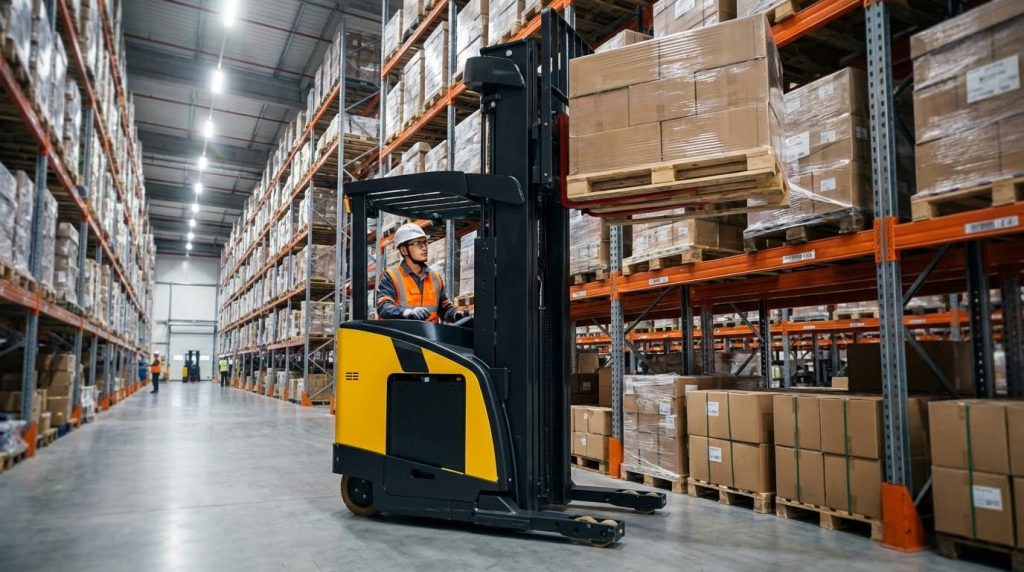
Reach trucks and turret trucks supported high-density storage by operating in narrower aisles than standard counterbalance forklifts. Stand-up reach trucks and sit-down reach trucks used extending masts or pantograph mechanisms to place pallets deep into racking while the chassis stayed in the aisle. Turret stockpickers and man-up or man-down very narrow aisle (VNA) trucks rotated forks 180–270 degrees, enabling storage and retrieval on both sides of an aisle without turning the truck. These systems allowed warehouses to expand vertically instead of horizontally, reducing real-estate and construction costs. However, they required precise floor flatness, defined aisle widths, and carefully designed rack interfaces to maintain stability and throughput.
Pallet Trucks, Stackers, And Order Pickers In Fulfillment
Pallet trucks, both manual and electric, formed the backbone of short-distance pallet movement in warehouses, supermarkets, and logistics centers. Manual pallet trucks offered low cost, high maneuverability, and suitability for confined or fire- and explosion-sensitive areas, while electric pallet trucks supported higher throughput and heavier loads. Walkie pallet trucks and rider pallet trucks operated on docks, in freezers, and within distribution centers to shuttle palletized goods between staging areas and storage. Walkie stacker trucks and pallet stackers created low-cost vertical storage and elevated work platforms for assembly or light stacking. Order pickers and various picker systems, including RF and acousto-optic solutions, combined trucks with barcode or sensor technology to guide operators, improving picking accuracy and reducing search time.
Traffic Segregation, Pedestrian Safety, And OSHA Compliance
Safe warehouse forklift operation depended on strict traffic segregation and adherence to regulations such as OSHA 29 CFR 1910.178. Facilities used marked pedestrian walkways, physical barriers, and dedicated forklift aisles to reduce interaction between trucks and foot traffic. Operators received formal training and evaluation on topics including load capacities, stability, visibility, and speed control, with retraining at least every three years. Recommended practices limited travel speed to about 2.2 m/s (5 mph) and required slowing in congested or slippery areas, at intersections, and near doors. Daily inspections, compliant powered industrial trucks, and ANSI-aligned safety devices, such as horns, lights, and mirrors, reduced mechanical failure risks and supported consistent, auditable safety performance.
Manufacturing, Construction, And Field Environments
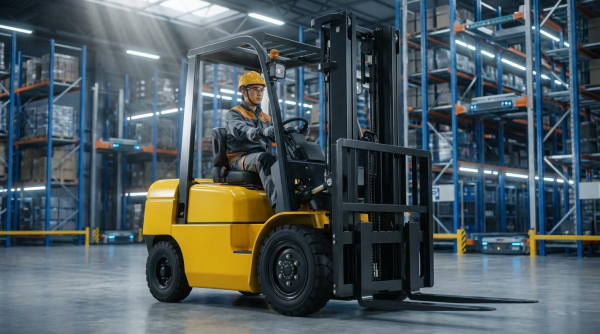
Industrial forklift deployment in manufacturing, construction, and field environments required careful matching of truck type to task, terrain, and duty cycle. Engineers balanced maneuverability, load capacity, emissions, and energy constraints against safety and regulatory requirements. Integration with line-side logistics, outdoor handling, and digital maintenance systems allowed fleets to support lean and highly variable operations. The following subsections describe typical application patterns and technical considerations across these demanding use cases.
Line-Side Supply, Tow Trains, And AGV Integration
Manufacturing plants relied on forklifts and tow trains to feed lines with parts, subassemblies, and packaging materials on takt time. Four-wheel counterbalance trucks, three-wheel electric forklifts, walkie pallet trucks, and walkie stackers supplied pallets and stillages to supermarkets and point-of-use racks. Tow tractors pulled cart trains along fixed or flexible routes, enabling batch delivery and rapid cart exchange while reducing individual forklift trips. Automated guided vehicles (AGVs) and, more recently, autonomous mobile robots (AMRs) integrated into this flow, taking over repetitive routes between warehouses, kitting areas, and production cells.
Engineers designed line-side logistics around standardized load carriers, aisle widths, and turning radii to minimize handling interfaces. Forklifts typically handled dock, buffer, and staging operations, while tow trains and AGVs managed repetitive internal flows. Safety engineering included clearly marked AGV lanes, speed limits, and interlocks at intersections, plus traffic management rules for mixed manual and automated fleets. Data from AGVs and truck telematics supported continuous improvement by revealing congestion points, underutilized assets, and unsafe driving behaviors.
Telescopic, Multidirectional, And Heavy-Duty Trucks
Telescopic forklifts, or telehandlers, operated where high reach, outreach, and rough-terrain capability were required. Their extendable booms lifted loads to elevated work areas or over obstacles on construction sites, highway projects, and water conservancy works. Fittings such as forks, buckets, pipe clamps, hooks, and augers converted a telehandler from a simple lift truck into a multi-function tool carrier. Engineers evaluated load charts carefully, since rated capacity decreased significantly with boom extension and angle.
Multidirectional and four-directional forklifts handled long loads such as lumber, steel profiles, and panels in constrained yards and warehouses. Their steerable wheels allowed lateral, diagonal, and rotational travel, reducing required aisle width and collision risk with racking or building columns. Heavy-duty lift trucks and reach stackers served steel mills, ports, and heavy manufacturing, where individual loads exceeded the capabilities of standard counterbalance trucks. These machines used reinforced masts, high-capacity hydraulic systems, and wide wheelbases to maintain stability under large load moments.
Selection criteria for these specialized trucks included maximum load, load geometry, lift height, ground condition, and required maneuver envelope. Regulatory compliance demanded adherence to stability standards and clear operator visibility, often supported by cameras and proximity sensors. Maintenance regimes accounted for high structural and thermal stresses, with frequent inspections of booms, welds, and hydraulic cylinders.
Agriculture, Ports, Airports, And Special Conditions
In agriculture, telescopic forklifts equipped with bale clamps or pallet forks loaded and stacked hay, feed, and bulk materials in uneven field environments. Their off-road tires, high ground clearance, and four-wheel drive provided strong traction on mud, gravel, and slopes. Ports and terminals applied electric and internal combustion counterbalance trucks, reach trucks, and reach stackers to handle containers, pallets, and breakbulk cargo. Operations in ship holds, railcars, and containers favored compact trucks under 3 tonnes with tight turning radii.
Airports required forklifts with stable driving characteristics and high load capacity for unit load devices and palletized cargo. Ground support fleets often combined electric counterbalance trucks for indoor cargo buildings with diesel or LPG units for apron operations, subject to strict emissions and noise controls. Special conditions included freezer warehouses, hazardous material storage, and explosion-risk zones, where truck design followed temperature ratings and intrinsic safety or EX-protection requirements. Engineers specified low-temperature hydraulic fluids, sealed electrical systems, and corrosion-resistant components to maintain reliability.
Across these sectors, traffic planning and segregation of pedestrians, forklifts, and other vehicles remained critical. Marked lanes, barriers, and speed limits reduced collision risk in busy ports and terminals. Training addressed ramp navigation, container interior work, and visibility constraints around aircraft and ship structures.
Digital Twins, Predictive Maintenance, And Energy Use
Digital twins of forklifts and logistics flows allowed engineers to simulate duty cycles, aisle layouts, and charging strategies before physical deployment. These models incorporated load profiles, travel distances, and lift heights to estimate energy consumption and battery sizing for electric fleets. Predictive maintenance used sensor data on vibration, hydraulic pressure, temperature, and battery health to forecast failures and schedule service during planned downtime. This approach reduced unexpected breakdowns and supported compliance with safety inspection requirements.
Energy management focused on matching truck type and powertrain to utilization patterns. Electric counterbalance trucks and hydraulic pallet trucks reduced local emissions and noise in warehouses and manufacturing plants, while fast or opportunity charging strategies minimized battery-related downtime. For internal combustion fleets, fuel monitoring and idle-time reduction programs improved efficiency and lowered operating costs. Integrated fleet management platforms combined utilization, fault codes, and safety events into dashboards that supported continuous improvement.
In advanced operations, digital tools linked forklift data with warehouse management and manufacturing execution systems. This integration improved slotting decisions, dock scheduling, and line-side replenishment timing. Over the lifecycle, analytics informed replacement timing, retrofit decisions, and the transition from internal combustion to electric or hybrid solutions based on total cost of ownership and environmental targets.
Summary Of Forklift Selection, Safety, And Lifecycle
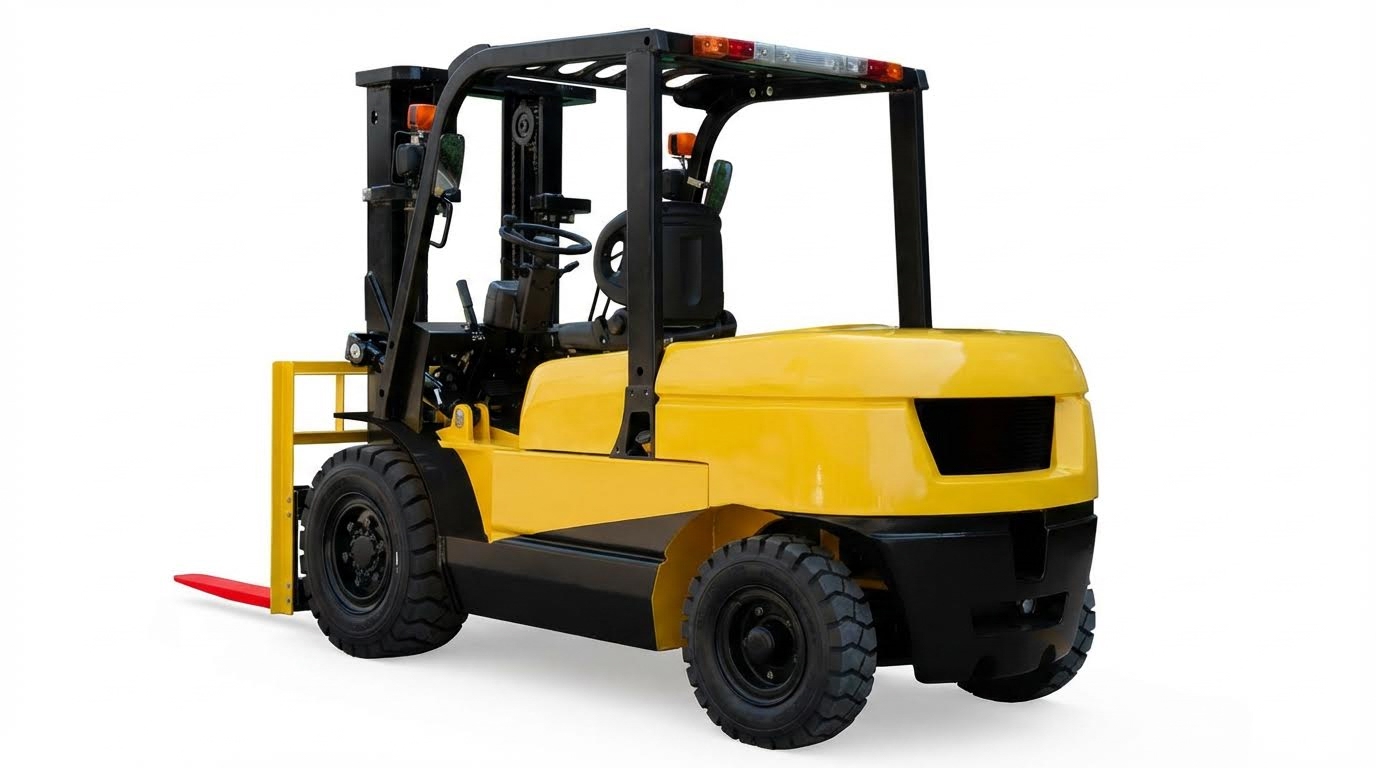
Industrial forklift deployment required a system-level view that linked equipment selection, operator safety, and lifecycle cost. Technically, engineers evaluated load spectrum, duty cycle, aisle geometry, gradients, and environment to choose between counterbalance, reach, VNA, pallet trucks, tow tractors, AGVs, and heavy-duty units. Powertrain choice depended on indoor air-quality limits, noise constraints, and energy infrastructure, with electric fleets benefiting from structured charging strategies and battery management. Attachments, from clamps to tilt tables, expanded functionality but reduced residual capacity, so engineers recalculated rated loads and stability envelopes.
Regulatory frameworks such as OSHA 29 CFR 1910.178 and relevant ANSI standards defined baseline requirements for training, retraining intervals, speed limits, pedestrian segregation, and equipment design. Fact-based incident analyses showed that inadequate load management, poor visibility, and mixed traffic flows increased collision and tip-over risk, especially at docks, intersections, and blind corners. Facilities that enforced 5 km/h class speed policies, clear right-of-way rules, and designated walkways reduced pedestrian incidents. Using purpose-designed work platforms instead of improvised lifting solutions improved compliance when elevating personnel.
Lifecycle performance depended heavily on preventive maintenance and documented inspections. Daily pre-shift checks, weekly lubrication and functional tests, and 250–500 hour preventive maintenance intervals extended component life and reduced unplanned downtime. Digital maintenance systems and, increasingly, telematics and digital twins enabled predictive interventions based on actual usage, fault codes, and energy profiles. In parallel, safety culture and continuous training ensured that technical safeguards translated into behavior on the floor.
Looking forward, higher adoption of electric trucks, energy-efficient drive systems, and data-driven fleet optimization would lower total cost of ownership and emissions. However, engineers needed to balance advanced automation and AGV integration with legacy traffic, clear human–machine interaction rules, and robust cybersecurity. Organizations that treated forklifts as engineered systems rather than generic tools achieved safer operations, higher throughput, and longer asset lifecycles across warehouses, manufacturing plants, and field environments. Additionally, integrating specialized equipment like walkie pallet trucks could further enhance material handling efficiency.