Safe forklift operation on ramps and rough surfaces depended on understanding both engineering limits and operator practices. This article outlined how grades, ramp angles, surface strength, and truck gradeability set the safe operating envelope for different forklift types. It then described correct procedures for travel, load orientation, speed control, visibility, and parking on slopes in line with OSHA guidance. Finally, it discussed how to select and maintain lift stackers for rough ground, and summarized best practices and compliance considerations for long-term, standards-aligned operation.
Engineering Limits For Grades, Ramps, And Surfaces
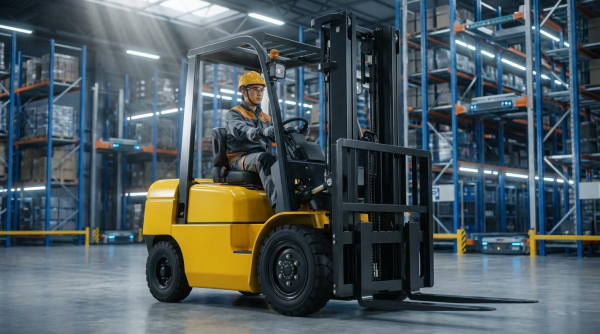
Engineering limits defined how far a forklift could safely operate on slopes and imperfect ground. These limits combined grade geometry, truck stability, and surface capacity. Understanding them allowed engineers and safety managers to set defensible site rules. It also ensured that equipment selection and ramp design stayed within manufacturer and regulatory constraints.
Defining Grades, Ramp Angles, And Gradeability
A ramp, slope, or incline was typically defined as any surface steeper than a 10% grade. Grade equaled rise divided by run, so a 5 ft rise over 25 ft of run corresponded to a 20% grade. OSHA used the 10% threshold to trigger special operating rules, such as driving loaded trucks with the load upgrade. Manufacturers specified “gradeability” as the maximum grade a forklift could ascend and stop on with rated load. This rating depended on engine or motor torque, traction, and braking capability. Engineers compared site ramp grades with these ratings to confirm that the truck could start, stop, and hold on the slope without wheel slip or rollback.
Stability, Tipover Risk, And Center Of Gravity
Forklift stability relied on keeping the combined center of gravity (truck plus load) within the stability triangle formed by the wheels. On grades, the center of gravity shifted downhill and forward or backward, shrinking the stability margin. Driving a loaded truck downgrade increased the risk of longitudinal tipover, which was why regulations required the load to face upgrade on grades above 10%. Lateral stability also decreased if the truck turned or crossed a slope diagonally, especially on rough or uneven surfaces. Raising the load height moved the center of gravity upward, increasing overturning moments, so standards required loads to stay low, typically about 0.15–0.20 m above the ground. Stability systems such as electronic or hydraulic active stability reduced risk but did not replace correct orientation and speed control.
Matching Truck Types To Slopes And Terrain
Not all forklift classes were engineered for grades or rough ground. Sit-down counterbalanced trucks and stand-up counterbalanced trucks could handle moderate grades when the manufacturer allowed it. Guidance from major OEMs indicated that narrow aisle and very narrow aisle trucks were unsuitable for grades and should remain on flat, smooth floors. Stand-up counterbalanced units tolerated short, steep transitions such as dock plates up to about 15% grade but not extended ramps. Rough-terrain forklifts and telehandlers combined higher ground clearance, four-wheel drive, and aggressive tread tires to maintain traction on mud, gravel, and uneven soil. For pallet trucks, engineering limits were tighter: recommended loaded operation on grades typically did not exceed about 5%, and operators were instructed not to ride them on slopes. Selecting the wrong truck class for a ramp or rough surface significantly increased tipover and loss-of-control probability.
Surface Strength, Friction, And Ground Conditions
Surface or ground conditions had to support the combined mass of truck, load, and operator with an adequate safety factor. Engineers checked slab thickness, subgrade bearing capacity, or compacted gravel strength against wheel loads, which could concentrate several tonnes on small contact patches. The surface needed sufficient friction to prevent skidding on grades; contaminants such as oil, grease, water, or loose sand reduced the available coefficient of friction. On ice, snow, mud, or loose gravel, the risk of both skidding and tipover increased, especially when the truck bounced or lost continuous ground contact. Best practice required avoiding hazardous surfaces when possible or treating them with absorbent or traction materials before use. Crossing unavoidable uneven areas at an angle helped maintain at least one drive wheel in firm contact, preserving steering and braking control. Aisles and travel paths had to remain free of holes, debris, and overhead obstructions, and operators were advised to walk unfamiliar rough routes first to identify critical hazards.
Operating Procedures On Ramps And Inclines
Ramp procedures governed safe forklift operation on grades above 10%. Operators applied strict orientation, speed, and stopping rules to control tipover risk.
Load Orientation: Upgrade Vs. Downgrade Rules
Standards such as OSHA required loaded trucks to travel with the load upgrade on grades above 10%. This rule kept the combined center of gravity toward the uphill side, which reduced forward overturn risk. On an upgrade with a load, operators drove forward with forks low, typically 0.15–0.20 m above the surface, and mast slightly tilted back. On a downgrade with a load, they reversed downhill with the load still pointing upgrade and the operator looking downgrade. With no load, they reversed the fork orientation: forks pointed downgrade in both directions to keep the truck stable and maintain steering traction. Manufacturers also limited pallet trucks to lower grades, often around 5%, and required forks downgrade and raised just enough for clearance.
Travel Direction, Speed, And No-Turn Zones
Operators always traveled straight up or straight down ramps and avoided diagonal paths. Turning on a slope increased lateral instability and shifted the center of gravity toward the downhill wheels, which raised the tipover probability. Guidelines typically recommended maximum speeds of about 20 km/h outdoors and 10 km/h indoors, but actual ramp speeds stayed far lower. Operators reduced speed further on wet, oily, or uneven grades to maintain tire grip. They completed steering corrections and alignment on level ground before entering the ramp, then held a steady line without sharp inputs. Crossing speed bumps, dock plates, or rail tracks occurred slowly and at roughly 45° to maintain wheel contact and steering control. Where ramp grade exceeded the truck’s rated gradeability, operators did not enter, since stopping distance and rollback risk exceeded design limits.
Visibility Management, Spotters, And Pedestrians
Operators always looked in the direction of travel, which sometimes meant twisting the torso when reversing on grades. If the load blocked forward vision on an upgrade, procedures required a trained spotter with clear line of sight. The spotter stayed outside the truck’s path, used agreed hand signals, and never walked directly in front of the forklift. Operators reduced speed at ramp intersections, blind corners, and doorways, and they used horns and warning lights where installed. Facilities controlled pedestrian access on ramps with barriers, markings, and signage to maintain separation distances. Operators kept forks low to preserve sightlines while still ensuring ground clearance and avoided stacking loads so high that they obscured mirrors or direct vision.
Parking, Stopping, And Emergency Practices
Operators did not park forklifts on ramps or inclines except during controlled emergencies. Normal parking occurred only on level surfaces with forks lowered, controls in neutral, parking brake applied, and power shut off. On ramps, they ensured the truck could stop within its rated capability before entering, especially with full loads. During an emergency stop on a grade, operators braked progressively to avoid load shift or skid, kept the truck aligned with the slope, and did not turn. If a truck stalled on a ramp while loaded, the operator held the service brake, applied the parking brake, and kept the load upgrade until assistance arrived. In a developing tipover, training emphasized staying inside the cab, bracing with feet, holding the steering wheel, and leaning away from the direction of the fall, rather than attempting to jump clear.
Forklift Selection And Maintenance For Rough Ground
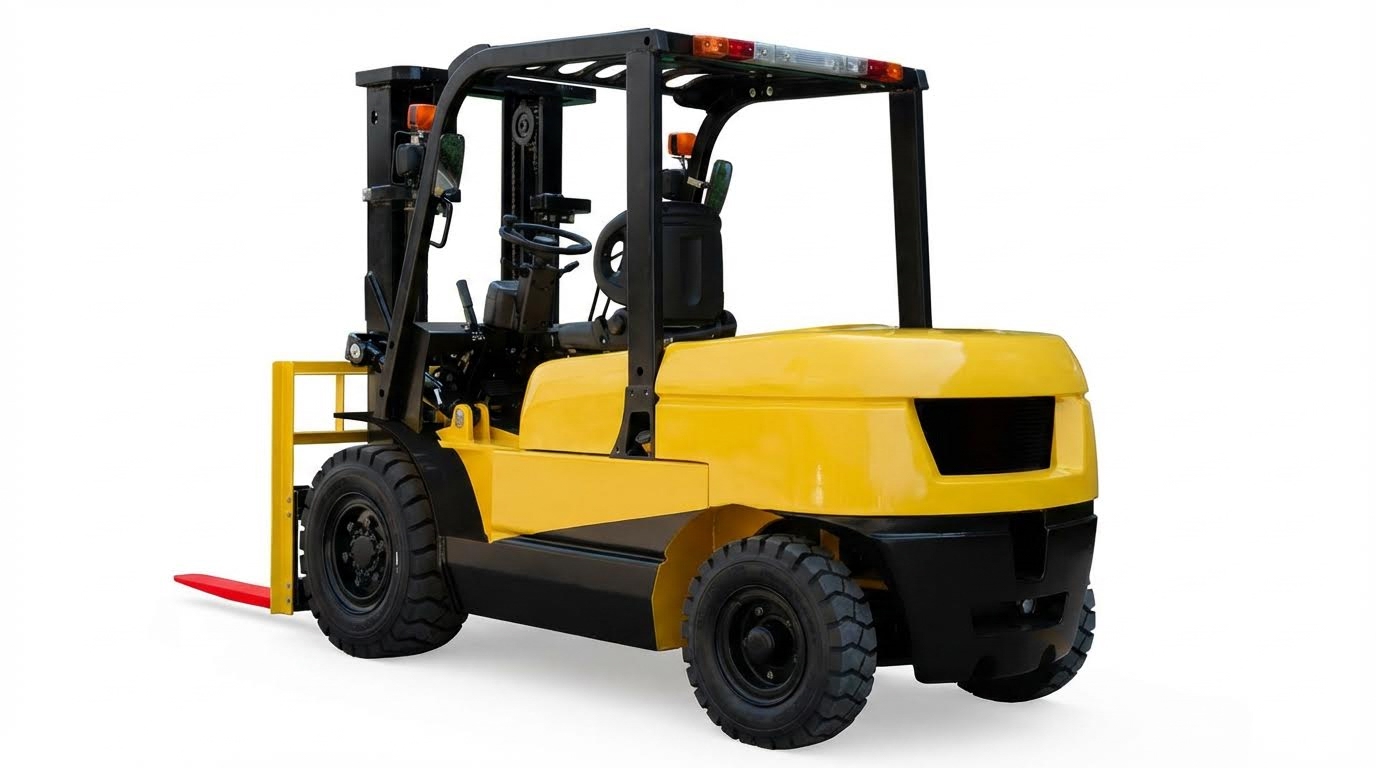
Forklift selection for rough ground required a systems view of traction, stability, and durability. Engineers and safety managers evaluated tires, chassis geometry, drive layout, power, and hydraulic robustness against site conditions. Rough terrain operation accelerated wear and magnified any mismatch between machine capability and grade or surface profile. Proper maintenance intervals and condition monitoring then preserved performance and compliance over the machine life.
Tire Types, Tread, And Ground Clearance
Tire specification largely determined traction and shock loading on rough ground. Pneumatic tires with deep, open tread patterns provided grip in mud, gravel, and loose dirt, while solid or cushion tires suited only firm, smooth floors. Heavy-duty off-road patterns reduced slippage but increased rolling resistance, so users balanced traction against fuel consumption and steering effort. Operators who checked tire pressure at least weekly reduced replacement costs because underinflation increased sidewall flex, heat buildup, and puncture risk on rocks.
Ground clearance governed whether the undercarriage contacted rocks, ruts, or debris. Rough-terrain forklifts typically used at least 200 mm of clearance to prevent damage to differential housings, axle boots, and hydraulic lines. Low-clearance warehouse trucks bottomed out on uneven surfaces, transferring impacts into the frame and mast. High clearance also improved approach and departure angles on ramps and transitions such as dock plates or slab edges.
Tire construction influenced vibration transmission to the mast and hydraulics. Pneumatic tires absorbed shocks better than solid tires, reducing seal fatigue and chassis cracking under constant vibration. In very abrasive or puncture-prone environments, foam-filled pneumatics or solid pneumatics traded comfort for reliability, but operators still needed to control speed to limit bouncing. Tread wear patterns helped diagnose alignment, load bias, or chronic overloading issues on rough routes.
Powertrain, Drive Configuration, And Capacity
Powertrain and drive configuration set the usable envelope on grades and soft ground. Diesel engines between roughly 55 kW and 100+ kW supported continuous operation with high hydraulic demand and frequent grade climbing. Four-wheel drive improved traction on bumpy or loose surfaces by distributing torque and reducing wheel spin, especially when combined with limited-slip or locking differentials. On steep or extended ramps, manufacturers specified gradeability ratings that defined the maximum slope for starting, climbing, and stopping with rated load.
Capacity selection had to reflect both mass and lift height on uneven terrain. Telehandlers and rough-terrain forklifts with capacities from about 2 000 kg to over 10 000 kg derated significantly at extended boom reach or high mast elevations. Engineers applied manufacturer load charts, considering dynamic effects from bouncing or braking on grades. Oversizing capacity slightly for rough applications improved stability margins and reduced structural fatigue. Transmission choice, such as powershift or hydrostatic, affected low-speed controllability on ramps and in confined, obstacle-rich areas.
Cooling systems and driveline protection also mattered on rough routes. Long climbs at low speed and high load generated heat in engines, transmissions, and torque converters. Adequate radiator sizing, fan airflow, and guarding against debris buildup were essential. Skid plates and reinforced housings protected powertrain components from rock strikes. Operators needed clear procedures to avoid lugging engines or riding brakes on slopes, both of which increased maintenance demands.
Hydraulic Sealing, Filtration, And Service Intervals
Rough surfaces introduced high vibration and contamination loads into hydraulic systems. Seals cycled under shock as masts and attachments bounced, so synthetic sealing materials rated for wide temperature ranges improved life. Inline filtration at around 10 micrometres captured fine particles that otherwise scored cylinder rods and valve spools; industry data indicated that small particulate contamination caused most hydraulic failures. In dusty or muddy environments, maintenance teams shortened inspection and filter-change intervals below generic schedules.
Typical service plans changed engine oil every 250 operating hours and hydraulic fluid around 500–600 hours, with transmission and differential oils often extended beyond 1 000 hours. On rough ground, technicians inspected hoses, fittings, and cylinders every 40–50 hours for abrasion, leaks, and clamp loosening due to vibration. Documented maintenance records supported regulatory compliance and warranty claims, while trend analysis of leak frequency or pressure anomalies indicated emerging issues. Keeping mast channels, chains, and tilt cylinders clean reduced abrasive wear and prevented binding when the truck operated on grades.
Hydraulic performance directly influenced safe ramp behavior. Proper
Summary Of Best Practices And Compliance Considerations
Safe forklift operation on ramps and rough surfaces required a combined focus on engineering limits, operating discipline, and equipment configuration. Standards such as OSHA and ANSI defined minimum requirements for grades, stopping capability, and operating practices, while manufacturers published gradeability and ramp-use limits for each model. Operators and supervisors had to treat those documents as hard design constraints, not suggestions, when planning routes and procedures.
Key technical practices on ramps included always keeping the load upgrade on grades above 10%, driving straight up or down without turning, and limiting lift height to roughly 0.15–0.20 m above the surface for ground clearance. Loaded trucks traveled forward uphill and in reverse downhill, while unloaded trucks kept forks downgrade. Operators maintained low speeds, typically below 5 km/h on ramps and below 10–20 km/h on level ground depending on indoor or outdoor use, and they avoided abrupt acceleration, braking, or steering inputs that shifted the center of gravity toward the stability boundary.
On rough or low-friction surfaces, safe operation depended on adequate surface strength, friction, and contact. Sites had to support the combined mass of truck, load, and operator with sufficient bearing capacity and minimal defects. Good practice included specifying heavy-duty pneumatic or deep-tread tires, at least 0.2 m ground clearance for off-road work, and four-wheel drive where traction margins were low. Regular inspections of tires, hydraulic components, and braking systems, combined with documented maintenance intervals for oils and filters, reduced failure risk under vibration and contamination.
From a compliance and future-trend perspective, fleets increasingly relied on stability-assist systems, speed limiters, and digital monitoring to enforce ramp rules and detect unsafe behavior. However, these technologies complemented rather than replaced operator training and certification, which remained mandatory and time-limited. Organizations that integrated engineering data, regulatory requirements, and real-world surface conditions into their site traffic plans achieved lower incident rates and higher productivity, while maintaining a balanced view of technology as an aid to, not a substitute for, disciplined operating practice.